Book review posts, Uncategorized

March 2026 Reads

I read 4 books in March. Here is a blurb of each of the books I read in March.
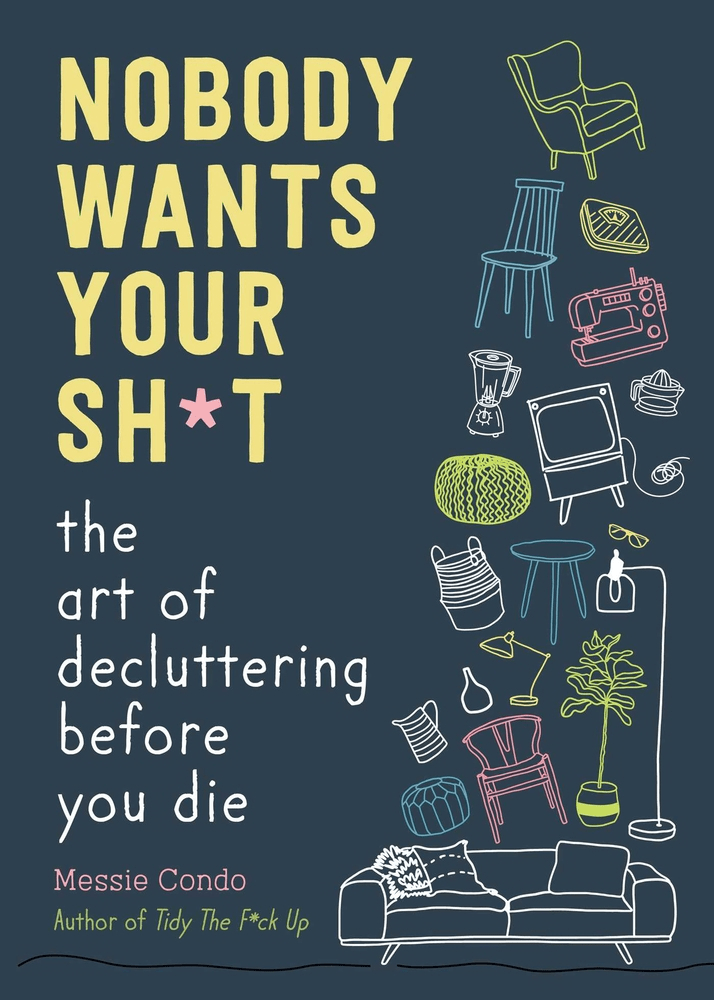
Nobody Wants Your Sh*t: the art of decluttering before you die” was written by Messie Condo. This book was inspired by The Gentle Art of Swedish Death Cleaning and contains funny, unpretentious advice you need to hear most. Here are some main points.

Clutter is nothing but delayed decisions. Delay long enough, and someone else will have to make those decisions. It’s not going to get any easier while you keep accumulating crap. You’re never going to “get around to it.” If you want a clutter-free house, you have to make it a priority, or someone else will be forced to when you’re gone.

A thing is not a memory. It’s just a thing. You can share your memories long after a thing is gone. Ex: people, pets, vehicles, toys. Your need to hold onto things was always about the feelings those things inspired. The things themselves are just conduits.

It’s time to let go of who you used to be and embrace who you are now. Get rid of clothes that haven’t fit you in ages, sports equipment you no longer use, and anything else from your past life. Let go of old dreams and hobbies and make room for new ones.

Stuff that stirs up good memories is only worth the space it’s taking up if you’re able to actively enjoy it. Attics, basements, garages, and storage units are prime locations for lazy clutter – the kind you allow to take up space because it’s not in your direct eyesight nagging you. Just because you have the space to store something doesn’t mean you should. You won’t miss what you haven’t laid eyes on in years. By decluttering from a place of appreciation, you free yourself from the hold your stuff has over you.

Getting rid of stuff you don’t want, need, or use isn’t wasteful. Letting it take up space in your home or keeping it when someone else could be using it is. You paid good $ for it? You paid good $ for your home.

Benefits of declutttering:

  • better sleep and overall mental health
  • more energy and creativity
  • a deeper appreciation for what you have
  • more control over your life
  • fewer arguments with loved ones
  • more self-confidence
  • more time, room, and $ for what you want
  • easier decisions
  • clearer priorities
  • less laundry
  • fewer things to dust = fewer allergens
  • the ability to quickly find what you need
  • a sense of accomplishment
  • a clutter-free space you can be proud of

I highly recommend this book, especially to maximalists.

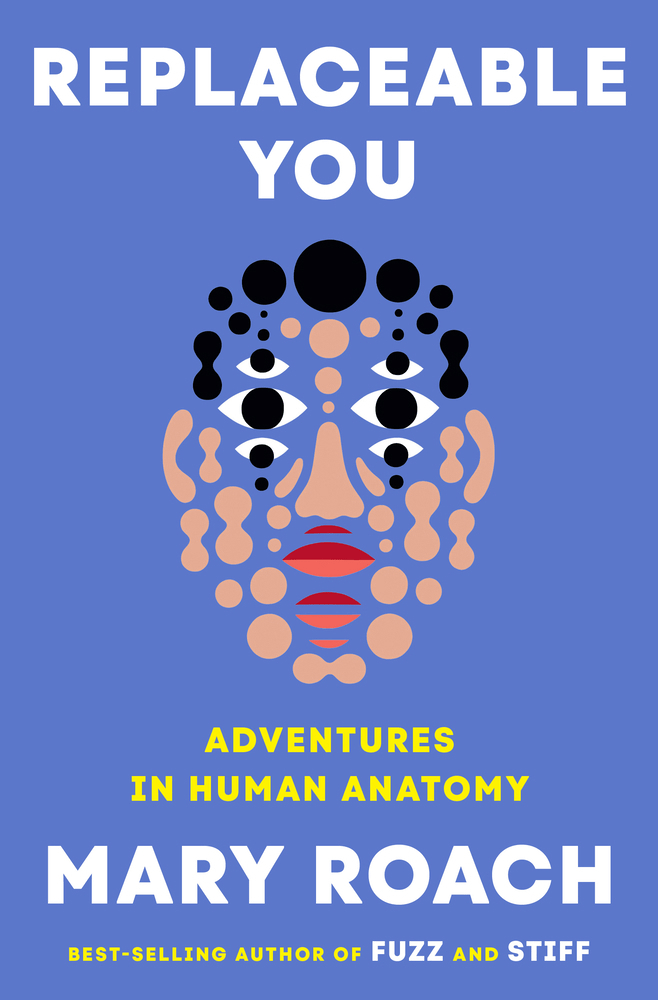
Replaceable You: Adventures in Human Anatomy” was written by Mary Roach, author of seven best-selling works of nonfiction. This book was fascinating, although, admittedly, some parts were a bit over my head. Here are some interesting takeaways:

  • With major burns, surgeons quickly run out of graftable (unburned) skin. Sometimes they have to use the soles of the feet, the scalp, or even the scrotum. Areas that have been harvested can be reharvested after they’re healed, but that can take 2-3 weeks. In the meantime, an allograft (skin from another human, typically a deceased tissue donor) or a xenograft (skin from another species) protects the wound. Eventually, an allograft for a bad burn will be replaced with a permanent graft of the patient’s own skin.
  • China has a lack of organ donors. Also, in China, death is still defined by cessation of the heartbeat rather than by brain death. Thus, the only potential organ donors are terminally ill patients on life support whose families agree to have that support shut off inside an operating room set up for organ recovery. Also, Confucian tenets include reincarnation, so people want to go to heaven with an intact body for the next life.
  • The cornea is one of the few body parts that can be transplanted without strict immune matching because it has no blood vessels.
  • Cataract surgery is one of the most successful medical procedures worldwide, yet access varies dramatically by region.

Skin is the largest organ and one of the hardest to replace because it must stretch, sense, protect, and regulate temperature. Synthetic skin exists but lacks the full functionality of natural skin, especially sweat glands and hair follicles.

Feet are sold separately. A prosthetic foot and ankle attach to a prosthetic leg, and over the foot goes a “foot shell” to fill out a shoe. Shells come in a palette of skin tones, and if you like, you can buy a pair with a space between two toes for wearing sandals. Prosthetists make, fit, and adjust the sockets. The socket is the cup or bucket into which one slides one’s residual limb. A socket will need to be adjusted as the muscles of the residual limb atrophy and if the wearer gains or loses weight. This prevents rubbing, blisters, and ingrown hairs.

Demand for donated human tissue is high. Donors aren’t scarce, but eligible donors are. 96% of people who consent to donating tissue are ruled out because some element of their medical history or social behavior has created an unacceptable risk for the people who would receive their tissue. Regardless of a person’s wishes or the dot on their driver’s license, tissue cannot be recovered until the next of kin has answered the eligibility questions.

I recommend this intriguing book for anyone who wants to learn more about the science of replacing body parts.

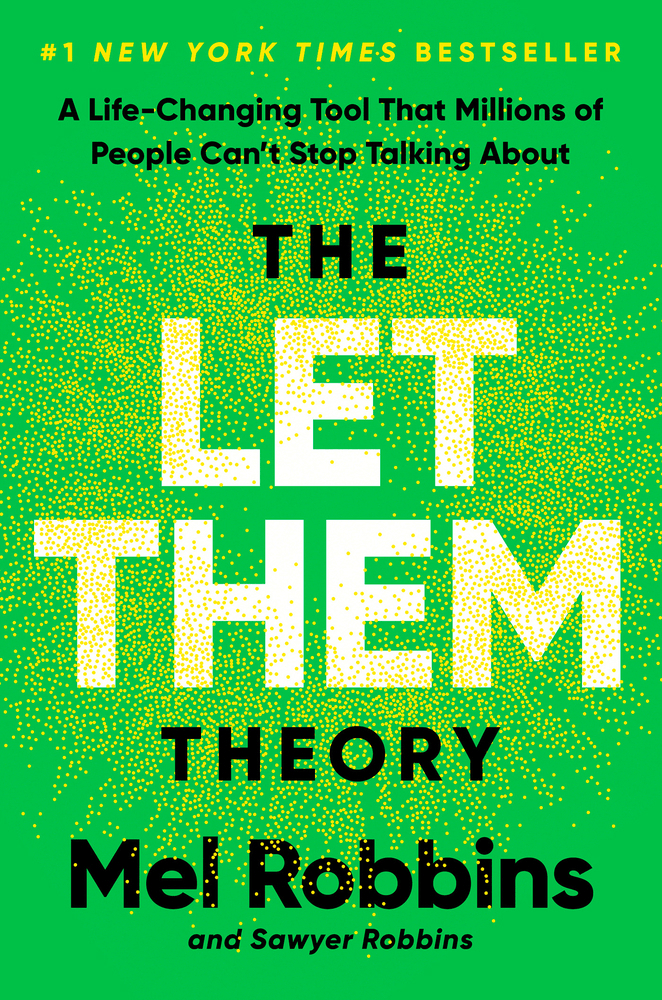
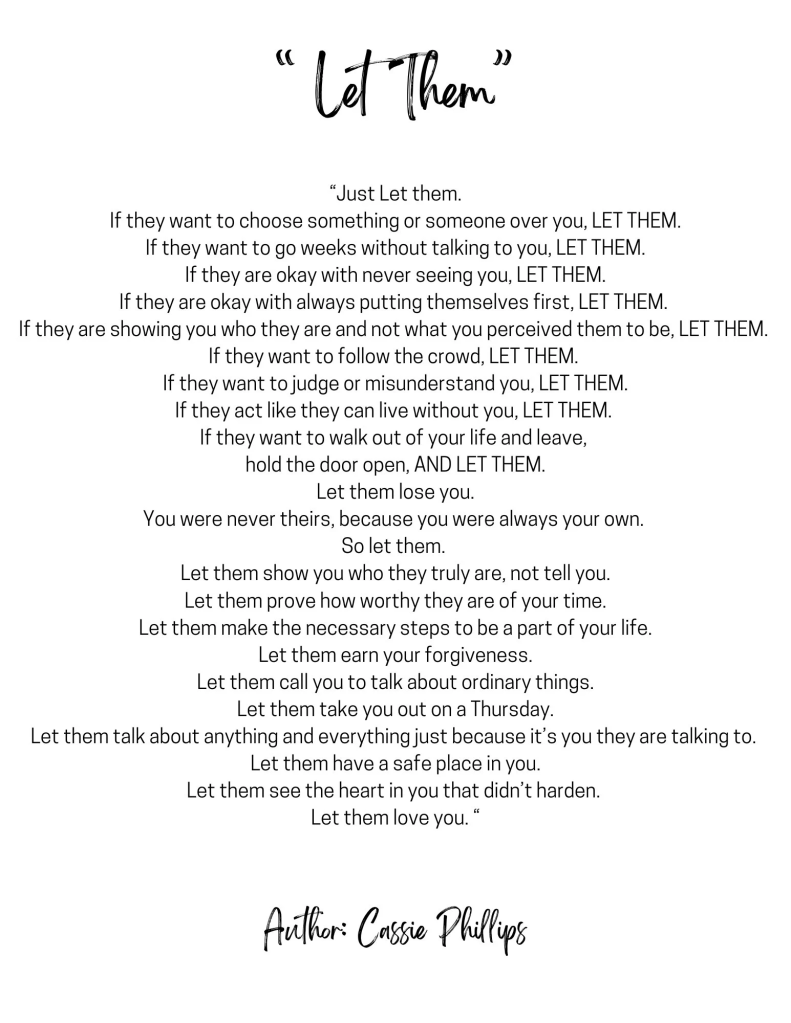
The Let Them Theory” was written by Mel Robbins and Sawyer Robbins. Mel is a New York Times bestselling author and host/producer of The Mel Robbins podcast, which airs in 194 countries and is one of the top-ranked podcasts in the entire world. I got a lot out of this book and wish I had read it earlier. It would have saved me so much time and energy when I was trying to control things I couldn’t. Here are some key points.

There has been online discussion suggesting that Mel Robbins’ Let Them Theory resembles ideas previously shared by other creators. These claims are circulating on social media and in commentary spaces, but they have not been substantiated by verified evidence.

The Let Them Theory is about freedom. It will free you from the burden of trying to manage other people. When you stop obsessing over what people think, say, or do, you finally have the energy to focus on your own life.

  • Humans have a hardwired need for control. No matter how hard you try, you will never be able to control or change another person. The only person you are in control of is you – your thoughts, actions, and feelings.
  • The urge to control things comes from a very primal place: fear. Fear of being excluded, of not being liked, of things falling apart if we’re not in control. Control gives us the illusion of safety. We can’t control people. They will do what they want to do. The more you try to control something you can’t, the more anxious and stressed out you become.
  • It is not your responsibility to manage another adult’s emotional reactions. Most adults have the emotional capacity of an eight-year-old and you can’t change that. Most people have never done the work to understand themselves, heal their past, or manage their own emotions. If they haven’t done that for themselves, they are incapable of doing that for you and showing up in a way that you deserve.

Someone is always going to be disappointed by the decisions you make. Don’t let it be you. Don’t let guilt drive your decisions.

  • There are 3 pillars to adult friendship: proximity, timing, and energy.
    • When you say Let Them, you release the need to cling to friendships that no longer serve you, making space for connections that truly matter.
    • When you say Let Me, you take charge of your social life, reaching out, initiating, and cultivating the kind of friendships that reflect your values and bring you happiness.
    • The connection you have with another person rarely breaks. It’s just the proximity and timing that make you lose touch with them.
  • The more you try to rescue someone from their problems, the more likely they will continue to drown in them. When you enable others with your money, words, and actions, you hinder their healing and prolong their suffering, their debt, their breakdown, and in turn, your own. Stop rescuing people and start acting as if you believe in their ability to face them. Teach them that they are capable of doing hard things themselves.
  • People only heal when they are ready to do the work. You will be ready for them to heal before they are. Constantly stepping in to solve their issues creates dependency and frustration and hinders their ability to take responsibility for themselves. Don’t shield them from the consequences of what they choose. $ without condition is enabling.

Let Them be who they are. Let yourself prioritize your own happiness, pursue your dreams with passion, set boundaries that protect your peace, choose relationships that uplift and inspire you, and love yourself enough to walk away when it no longer works.

I highly recommend this book! 4.5 stars

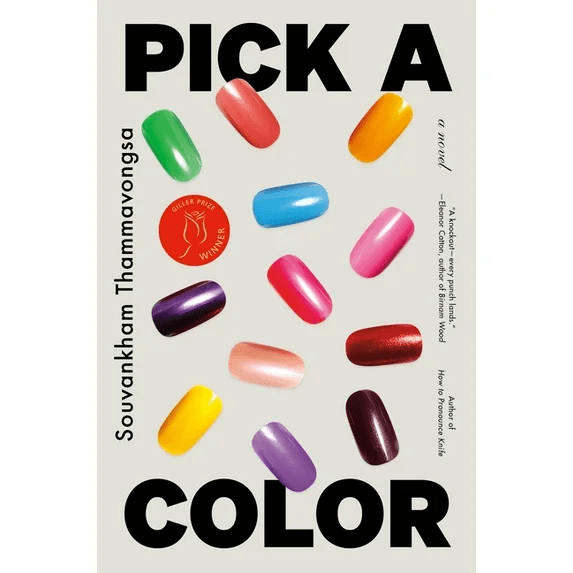
Pick a Color: a novel” was written by Souvankham Thammavongsa and contained a sharp look at immigrant labor and power but left more to be desired. Here are some things that stood out to me.

  • “In our line of work, you better get used to hearing about babies, affairs, love, married people, weddings. And you better look interested when it comes up.”
  • “A lot of people are mothers, and you don’t get paid for any of it. Seems like a lifetime internship. You never know if you’re doing things right, and someone is always telling you the ways you’re doing it wrong.”

My biggest gripe — which is also, ironically, part of the author’s point — is the deliberate lack of character development and the recurring image of the missing finger. One character, a retired boxer, is repeatedly described as missing a finger, yet the book never explains why. After digging deeper, I learned that the absence is symbolic: a reminder of everything the world doesn’t bother to know about her, and a reflection of how her identity is invisible to others.

This is the novel’s central point: immigrant women are flattened into roles rather than recognized as full people. The interchangeable “Susans,” the sparse backstories, the unexplained injuries . . . all of it underscores how society reduces them to function rather than individuality. Even a character who insists she’s “in charge” does so while kneeling at a client’s feet.

3 out of 5 stars

Book review posts, Uncategorized

February 2026 Reads

I read 3 books in February. Here is a blurb of each of the books I read in February.

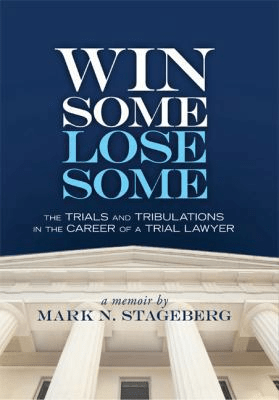
Win Some, Lose Some: The Trials and Tribulations in the Career of a Trial Lawyer – a memoir” was written by Mark N. Stageberg, who is a Minnesota attorney specializing in personal injury and wrongful death cases. He originally did defense work before transitioning to plaintiff work. Mark has spent his career as a trial lawyer, completed over 175 jury trials, and has had 7 cases with million-dollar jury awards. This book was a candid look at both victories and failures and contained interesting stories of unusual clients, unexpected courtroom twists, and behind-the-scenes legal drama. Here are some of my many takeaways:

The vast majority of the litigation clients who walk into your office do not have cases with all 3 necessary elements for a good lawsuit: good liability, extensive damage, and enough insurance coverage. Cases with good liability and big damages can often be easily resolved with a policy-limit settlement without litigation. The limits of the defendant’s liability insurance coverage govern the outcome of many good liability and damage cases.

What is interesting about pro bono legal work is that many of a lawyer’s promising cases can turn into unintended pro bono work. Payment for plaintiff’s personal injury work is dependent on contingent fees, and if a case isn’t won, it can be a waste of a lot of legal time and money.

An interesting and quite lucrative area of personal injury legal work involves airplane crashes. 4 primary causes for airplane crashes:

  • some mechanical failure (in the plane itself – leading to a product liability claim)
  • some inaccurate or incomplete information from air traffic controllers
  • a maintenance or service error by a mechanic
  • pilot error

The government, through the National Transportation Safety Board, does a thorough investigation of every accident and publishes a report from its experts identifying the probable cause of the crash. Much of the investigation is done by the government, but the case must be put together with privately retained experts.

This book contained a couple “hot takes.” These are not my personal opinion or the opinion of my employer.

“A common misperception among the general public is that our judges have some level of superior legal knowledge that justified their appointment as the final arbitrators of our unresolved disputes. Most judges are selected because of political connections unrelated to their experience, expertise, or intellect. The cream of every law school class garners the top law firm positions and after a few years, they’re making more money than the judges in the state or federal courts.”

“Most of the criminal lawyers serving as county attorneys or taking public defender positions were not the top scholars in their law school classes and took those jobs because nothing better had been offered. Prosecuting attorneys have the police, or the FBI and U.S. attorneys in the federal system, to do all of the workup on the cases. The prosecuting attorney only has to present the evidence to the jury and argue that they have met the burden of proof. Similarly, the defense seldom has to prove much of anything and instead sits back and picks away at the prosecution’s witnesses, arguing strenuously that they have not met their burden to prove the defendant guilty beyond a reasonable doubt.”

I think this statement is overly simplified. I respectfully disagree with this perspective.

I highly recommend this book to anyone interested in learning more about the career of a civil attorney.

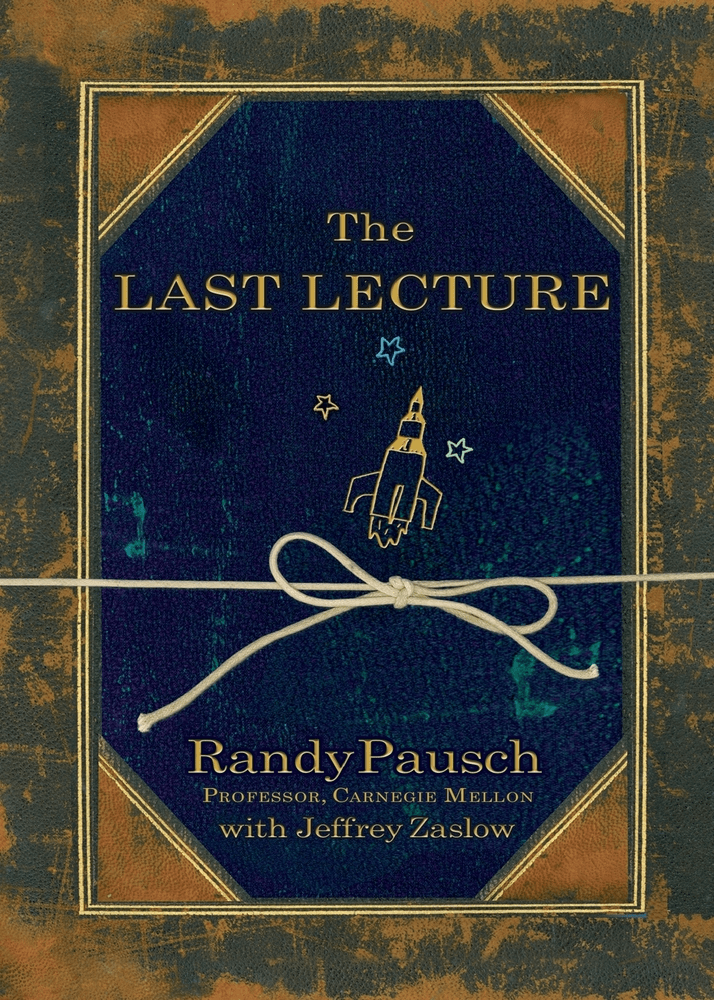
The Last Lecture” was written by Randy Pausch with Jeffrey Zaslow. Randy was a professor at Carnegie Mellon and an award-winning teacher and researcher who had worked with Adobe, Google, Electronic Arts (EA), and Walt Disney Imagineering and pioneered the Alice Project. At the time of this writing, he had ten tumors on his liver and had pancreatic cancer, and he wrote this book with Jeffrey Zaslow to teach his 3 young children what he would have taught them over the next 20 years. Many college professors are asked to consider their demise and to ruminate on what matters most to them. For years, Carnegie Mellon had a “Last Lecture Series” – which was renamed to “Journeys” – reflections on personal and professional journeys. Here are some lessons:

  • When you see yourself doing something badly and nobody’s bothering to tell you anymore, that’s a bad place to be. You may not want to hear it, but your critics are often the ones telling you they still love you and care about you and want to make you better.
  • Self-esteem – there’s really only one way to teach kids how to develop it: You give them something they can’t do, they work hard until they find they can do it, and you just keep repeating the process.
  • When we send our kids to play organized sports, for most of us, it’s not because we’re desperate for them to learn the intricacies of the sport. What we really want them to learn is far more important: teamwork, perseverance, sportsmanship, the value of hard work, and an ability to deal with adversity.
  • Brick walls are there for a reason. They give us a chance to show how badly we want something.

Look for the best in everybody. If you wait long enough, people will surprise and impress you. In the end, people will show you their good side. Just keep waiting. It will come out.

This book isn’t quite what I expected. It was more about Randy’s life and career rather than a “Last Lecture Series.” Given that the Last Lecture Series was renamed to “Journeys” – reflections on personal and professional journeys – this book seems to fit that description. Still, this book has some great lessons.

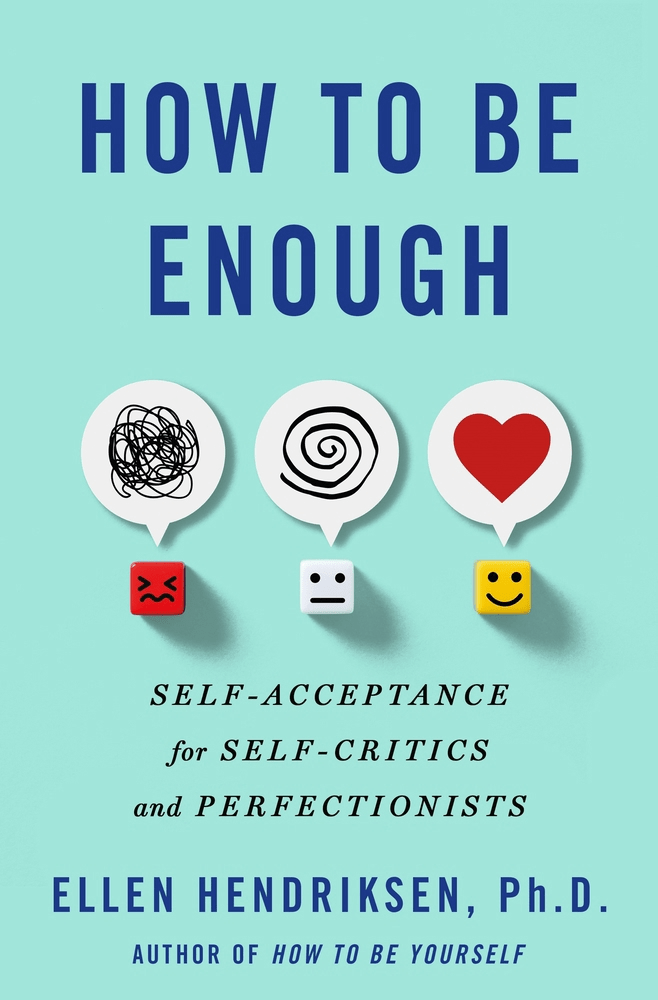
How to Be Enough: Self-Acceptance for Self-Critics and Perfectionists” was written by Ellen Hendriksen, Ph.D., a clinical psychologist at Boston University. The overall theme of this book is that you become “enough” not by perfecting yourself, but by letting go of harsh self‑judgment and recognizing your inherent worth as you already are. Here are some key points.

People-pleasing aims to control other people’s reactions and emotions toward us. What they want is what we want, because we want to avoid devaluation, disapproval, disappointment, and dislike. Of all the people you work so hard to please, be sure to include yourself.

  • We don’t have to be good at something to enjoy it. What’s the value in not being great? Connection. It’s hard to relate to experts. They’re aspirational, not relatable.
  • The opposite of control is trust – trust that we can handle whatever happens, both internally and externally.
  • When self-worth depends on flawless performance, even small mistakes create a cycle of self-doubt and emotional exhaustion. Achievement doesn’t soothe self-doubt. It often raises the bar higher. Self-criticism becomes a default setting. Self-criticism makes us feel inadequate, grinds motivation to a halt, leaves us sensitive to others’ criticism, is stressful, takes the fun out of the process, and hinders connection.

Some tools mentioned in the book:

  • Revise the rigid rules. Consider what the rule buys you and what it costs you. Consult your values and what’s meaningful and important to you. Focus on what works given the contest. Consider feasibility and workability. What would work for my goals and values, given this context?
  • Foster positive emotions towards yourself. Failure and positive self-regard are allowed to co-exist. We can’t go through life expecting to make zero mistakes, have zero lapses in judgement, or encounter zero insurmountable challenges.
  • Take stock to understand your procrastination: unrealistic standards? fear of failure? self-criticism? Break tasks down into ridiculously small steps and picture your future self.
  • Move away from all-or-nothing thinking. Try “I’m a (valued trait/quality) person who sometimes (exception).” Examples:
    • I’m a capable person who sometimes screws up.
    • I’m a disciplined person who sometimes lets myself go.
    • I’m a hard worker who procrastinates.
  • Reflect on what people-pleasing is costing you. Identify an opportunity to state an opinion, communicate a need, or set a limit that is meaningful to you. Try it out and consider the results. Rinse and repeat.

I highly recommend this book to anyone who is a self-critic or perfectionist!
Book review posts, Uncategorized

September 2025 Reads

Open When: A Companion for Life’s Twists and Turns” was written by Dr. Julie Smith, who has over 10 years of experience as a clinic psychologist and is one of TikTok’s top 100 creators. You can find Dr. Julie on Instagram/TikTok/Youtube at drjulie. This book covered advice for navigating anger, setting boundaries, comparison, confidence, friendships, parenting, arguing, seeking help, overwhelm, priorities, grief, apologies, and much more. Here are some of the many insights that resonated with me.

Whether it’s the good news or the bad, if you have to keep parts of your life under wraps to fit in, that’s not a friendship that is going to nourish and bring out the best in you. Search for acceptance and belonging in the right places. Consider: Is this a place I truly want to belong? Would being recognized as part of this group be a positive in my life? How much of myself, my beliefs, or my values would I be expected to change in order to be accepted? Is that okay with me?

Comparison can lead to constructive forward motion and be a good thing. If it leads to envy, resentment, bitterness, and a loss of self-worth, then we are getting it all wrong, and both our efforts and our attention have been misplaced. Questions to ask yourself: What do I feel envious of specifically? What specific skills do they have that I would like to have also? Would learning those skills help me with achieving my own goals? How did they get there? Can I imitate any of that process to help me get closer to my personal goals?

Confidence is the bus that never arrives while you sit waiting. It usually makes an appearance after you have decided to walk and you’re almost at your destination. So get to work on making some progress, and the bus will likely arrive once you’re a little way down the road.

I highly recommend this book!

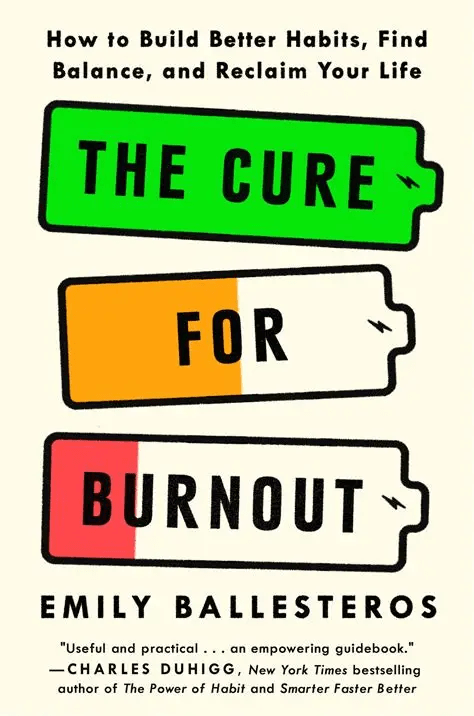
The Cure for Burnout” was written by Emily Ballesteros, who has a burnout management coaching business. This book outlines five areas in which you can build healthy habits to combat burnout: mindset, personal care, time management, boundaries, and stress management. I learned so much from this book. Here is just a snippet.

  • Burnout is a state of exhaustion, stress, or misalignment with the direction your life is heading in for an extended period of time. Tangibly, burnout will consume your calendar, sabotage your relationships, and harm your physical health. Intangibly, it will steal the best years of your life while you have your head down in survival mode. It will destroy your mental health and cause exhaustion and possibly depression.
  • There are three kinds of burnout, and people can suffer from more than one type:
    • burnout by volume – burnout as a result of a high volume of responsibilities, a compact schedule, and very little downtime
    • social burnout – burnout as a result of interpersonal demands that exceed your available social resources – these people become the person everyone confides in, vents to, or asks for favors because they are pleasant and reliable
    • burnout by boredom – burnout as a result of chronic disengagement and disinterest in the items in your life

Think of personal care as the equivalent of getting gas on a road trip: there is never a convenient time to stop. The personal care pillar mandates that we go out of our way, stop to refuel, and sacrifice the time we could spend “productively” on something else.

  • Think of your minimum non-negotiables – getting a minimum amount of sleep, eating food at certain intervals, getting movement, having alone time, etc.
  • To manage stress, pause/postpone projects that you’ve loved but are currently bringing more stress than joy, simplify projects, delegate/outsource tasks, and quit doing unnecessary tasks.
  • Set boundaries. What boundaries might help reinforce the changes you want to make?

This book was packed with information, and I highly recommend it!

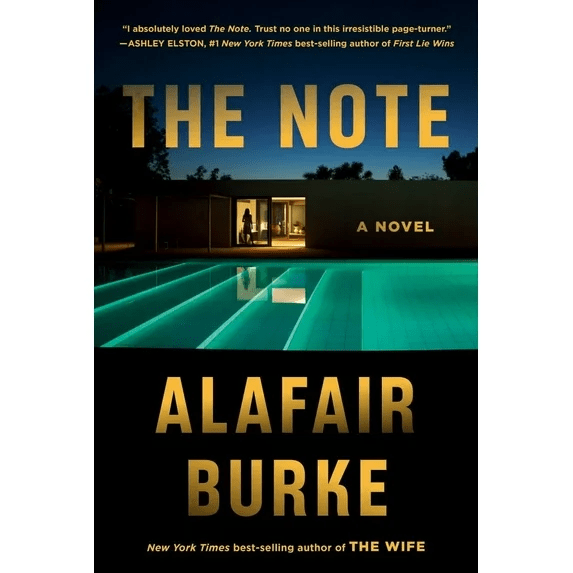
The Note” was written by Alafair Burke, an Edgar-nominated New York Times bestselling author of fifteen novels of suspense and professor of Criminal Law. The main storyline of this book is that a vacation in the Hamptons went terribly wrong for three friends with a complicated history. A prank involving a mysterious note led to a missing tourist and a police investigation, unraveling layers of secrets and betrayals. I don’t typically read fiction books, and I won’t spoil this one. Overall, it was an interesting changeup from the books I typically read. This book kept me interested, but it contained overloaded themes of cancel culture, racism, anti-Asian hate, true crime obsession, and more. It seemed that the author wanted to mention many different issues in the book.

Build the Life You Want” was written by Arthur C. Brooks and Oprah Winfrey. Arthur C. Brooks is a professor at Harvard Business School and teaches courses on happiness and is also an acclaimed author and speaker. Oprah Winfrey is a global media leader and public figure. This book covered the four big happiness pillars: family, friendships, work, and faith. Here are some of my many takeaways:

  • Ask yourself the good questions: What does living well mean – for me, not according to someone else’s model – and how do I do it? What is genuinely worth striving for? What can I offer, and how can I serve? What lessons can I glean from my experiences, especially the toughest ones? How do I make the best use of my limited time on this earth?
  • Stop caring what others think. “We all love ourselves more than other people, but care more about their opinions than our own.” “Care about people’s approval and you will be their prisoner.”
  • The key to finding meaningful work is to feel a sense of accomplishment and to believe that your job is making the world a better place. Look for a fundamental match between an employer’s values and your own. At the same time, put some space between your job and your life, and make friends and spend time with people who have no connection to your work.

Our impulses, amplified by the consumer economy, entertainment, and social media push us to spend our time idolizing money, power, pleasure, and prestige. These idols all stand in the way of enjoyment, satisfaction, and purpose. They substitute pleasure for enjoyment, make satisfaction harder to attain and keep, and focus us on things that are trivial and not meaningful. The four idols are distractions to numb us to emotional circumstances we dislike and feel we can’t control.

I highly recommend this book for those interested in learning more about finding happiness in family, friendships, work, and faith.

Book review posts

July 2025 Reads

It’s been a while since I’ve posted on this blog since I have had other priorities. I read 4 books in July. Here is a blurb of each of the books I read in July.

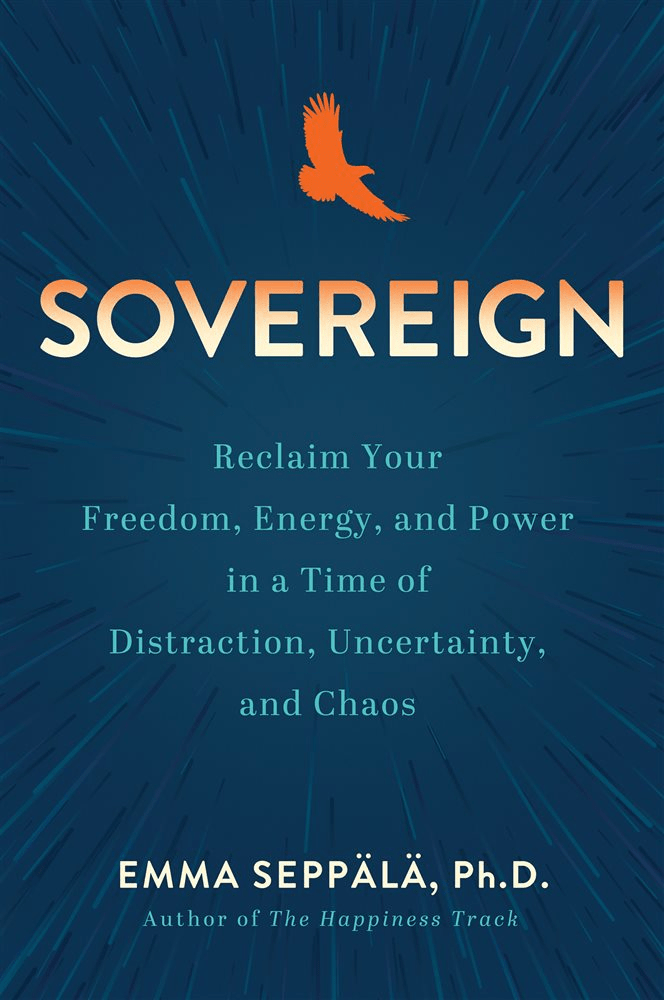
Sovereign: Reclaim Your Freedom, Energy, and Power in a Time of Distraction, Uncertainty, and Chaos” was written by Emma Seppala, a Yale lecturer and international keynote speaker. This book was insightful! It was packed with tips to recharge your life and change the way you think and act – from your emotions, mind, relationships, intuition and body. Here are some of my many takeaways:

  • Sovereignty is reclaiming your right to exist as you. It involves courage, awareness, and self-honoring. Consider what would happen if you loved and cared for yourself as much as you do for others.

Some of the many tips covered:

  • Sovereign self
    • Listen to the state of your mind and body. Ask yourself what you need.
    • Prioritize what fills your cup – what brings you rest, rejuvenation, energy, vitality, upliftment, inspiration, and joy.
  • Sovereign emotions
    • Remember: when you run from your feelings, you run from your healing. Feel instead of suppressing.
    • Remember that emotions are energy in motion. Take care of your basic needs: sleep, diet, exercise, and yourself.
  • Sovereign mind
    • Create boundaries around your media. Don’t go on social media to look at what other people are doing or selling.
    • Observe and discern: What are the intentions of the messaging. Is it giving you freedom or binding you in fear? Do you wish to engage with it?
  • Sovereign relationships
    • 6 keys of positive relational energy
      • caring for, being interested in, and seeing the best in others
      • providing support for one another, including offering kindness and compassion
      • avoiding blame and forgiving mistakes
      • inspiring one another and focusing on what’s going right
      • emphasizing meaningfulness
      • treating others with basic human values like respect, gratitude, trust, honesty, humility, kindness, an integrity
  • Sovereign intuition
    • Consult your gut feelings.
    • Unplug from technology. Create opportunities for contemplation. Schedule idle time.
  • Sovereign body
    • Relate to your body as your best friend because that’s what it is. Learn to love it, care for it, listen to it, and live in harmony with its needs.
    • Reflect on these questions: Do you honor and care for your body the way you would a child? If not, what would it look like if you did?

This is one of the best books I have read this year, and I highly recommend it to everyone!

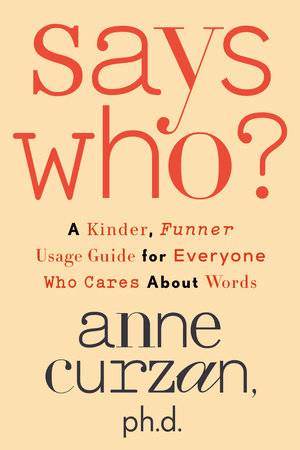
Says Who? A Kinder, Funner Usage Guide for Everyone Who Cares About Words” was written by Anne Curzan, professor of English Language and Literature, Linguistics, and Education at the University of Michigan. This book was intriguing, although some readers may find it overwhelming or too academic. Here are some things that resonated with me:

One key point for everyone who uses dictionaries is that dictionary editors are trying to walk a fine line between capturing words as they are used and providing guidance about the contexts in which some words are generally accepted or not accepted. While the editors of today’s dictionaries are usually trying to describe actual usage, we as dictionary users often erroneously assume that they are prescribing correct usage. Attitudes at the language change over time!

  • English has lots of synonyms in many areas of the lexicon, and they demonstrate the remarkable creativity we as humans bring to language, the many languages that have contributed to the English lexicon, the diversity of our linguistic identities, and the nuanced choices we get to make as speakers and writers.
  • Dictionary editors determine which pronunciations get recorded as standard and which get labeled as nonstandard – and which don’t get included at all.
  • What’s correct depends on where, when, and to whom you’re speaking. Formal writing has different expectations than casual conversation.
  • Many grammar rules are based on tradition, not logic. Usage evolves, and what was once “wrong” can become accepted over time. Examples:
    • Peruse” has long meant “to read thoroughly” – but now people use it to mean “to glance over, skim” – which is becoming more acceptable.
    • Literally” is used to mean “in the literal sense” AND “figuratively.”

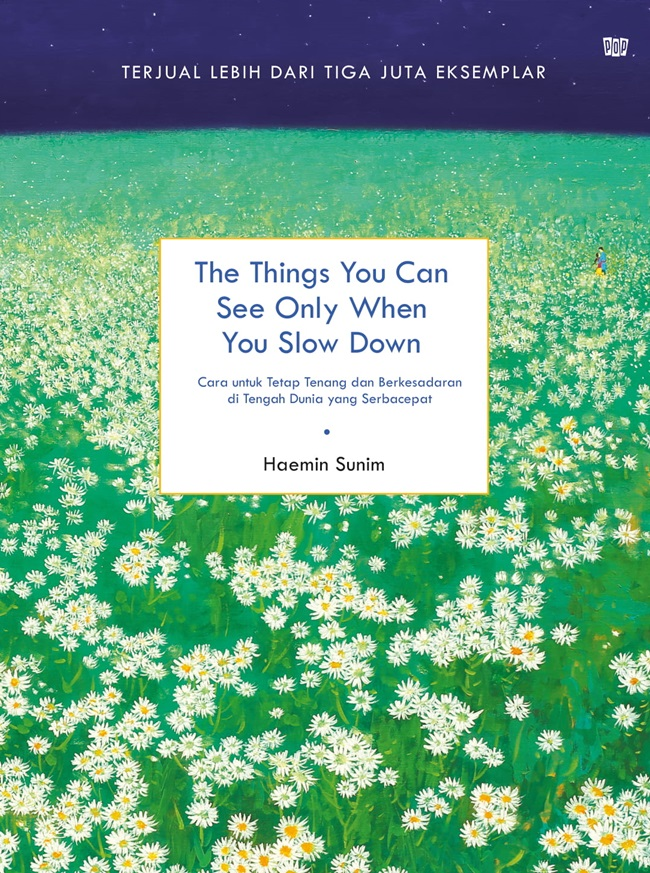
The Things You Can Only See When You Slow Down” was written by Haemin Sunim and contained so many life lessons and a guide to mindfulness. I got a lot out of this book. Here are some takeaways:

  • According to some psychologists, happiness can be assessed with two simple questions: First, do you find meaning in your work? Second, do you have good relationships with those around you?
  • We like to get involved in other people’s business, thinking we are doing so for them. We offer unsolicited help and interfere with their lives. We take away their power and make them feel incapable. This stems from our desire for control and recognition. It has little to do with love.
  • A bad driver brakes often. A bad conversationalist also brakes often – interrupting the flow with his own stories.
  • Being a good boss requires much more than just having a lot of technical knowledge. It is important to have integrity and a positive relationship with the staff, to give timely feedback and professional mentoring, and to advocate for what the team needs.

I really enjoyed the lessons from this book and highly recommend it.

I Could Live Here Forever: a novel” was written by Hanna Halperin. This is a fiction book and is not what I typically read. This book was described as “a gripping portrait of a tumultuous, consuming relationship between a young woman and a recovering addict.” I agree with that description. Since this was a fiction book, I didn’t take many notes, but these quotes resonated with me:

“The nice thing about writing was it took pain and warped it into something useful. I could shape it into a beginning and a middle and an end. It was manageable that way . . . by the time I was done with it, it was just a story.”

Overall, I wanted more character development.

Book review posts

June 2025 Reads

It’s been a while since I’ve posted on this blog since I have had other priorities. I read 3 books in June. Here is a blurb of each of the books I read in June.

The novel “Motherhood” by Sheila Heti follows a woman in her late 30s as she grapples with whether or not to have children. This book was not plot-driven; it was more like a long internal monologue in which the woman constantly questions what it means to be a mother and whether motherhood would enhance or diminish her life. I didn’t like the writing style, but it was thought-provoking at times. Here are some key lessons from this book:

  • the pressure of societal expectations for women to have children
  • motherhood as a choice, not an obligation
  • motherhood is often tied to a woman’s identity
  • the cost of motherhood – sacrifice of time, freedom, and sometimes the dreams or ambitions women may have for themselves
  • Women are often expected to become mothers, while men are not held to the same societal standards.

Do I want children because I want to be admired as the admirable sort of woman who has children? Because I want to be seen as a normal sort of woman, or because I want to be the best kind of woman, a woman with not only work, but the desire and ability to nurture, a body that can make babies, and someone who another person wants to make babies with?

We are miserly with ourselves when it comes to space and time. But doesn’t having children lead to the most miserly allotment of space and time? Having a child solves the impulse to give oneself nothing. It makes that impulse into a virtue.

Whether I want kids is a secret I keep from myself. On the one hand, the joy of children. On the other hand, the misery of them. On the one hand, the freedom of not having children. On the other hand, the loss of never having had them.”

Change Your Mind and Your Life Will Follow: 12 Simple Principles” was written by Karen Casey, a speaker and author of 16 books. Here are some lessons that resonated with me:

  • Tend your own garden. Focusing outside ourselves and attempting to control other people is a clever avoidance technique that helps us escape having to look at our own sometimes troubling behavior.
  • We are not in charge of others! Not their behavior, their thoughts, their dreams, their problems, their successes, or their failures.
  • Let go of outcomes. No matter what we do or how perfect our input, we are never in control of the outcome of any situation. You are responsible for making the effort – nothing more.
  • Don’t let the mood swings of others determine how you feel.

Any thought can be released. We are fully responsible for our thoughts and can take charge of them whenever we need or want to. No one can take charge of your thoughts, and thus your life, without your compliance.

Be vigilant about your choices. If what you are seeking is peace, you must be vigilant about the choices you make. The ego will often beckon you to choose gossip, criticism, comparisons, judgements, jealousy, fear, and anger – none of these choices will lead you to peace.

The Mindful Catholic” is based on an eight-week program called Mindfulness-Based Stress Reduction and was written by Gregory Bottaro, the director of the Catholic Psych Institute and the developer of the Catholic Mindfulness Online Course. Here are some takeaways:

Mindfulness = paying attention to the present moment without judgment or criticism. Curiosity is the disposition of mind that we are seeking to cultivate when we practice mindfulness. Mindfulness does not mean turning off the thoughts in your mind but using them as a door to greater awareness of yourself.

Tendencies vs. Mindfulness:

This book also covered mindfulness exercises. As someone who isn’t experienced with mindfulness, here is my favorite:

  • Sacramental pause – Start with prayer (“Ever-present God, here with me now, help me to be here with you“). Open your awareness to any thoughts, emotions, or physical sensations, then narrow your focus to the physical sensation of your breath alone, and finally expand the focus to the physical sensations of your whole body.
Book review posts, Uncategorized

April 2025 Reads

It’s been a while since I’ve posted on this blog since I have had other priorities. I read 5 books in April. Here is a blurb of each of the books I read in April.

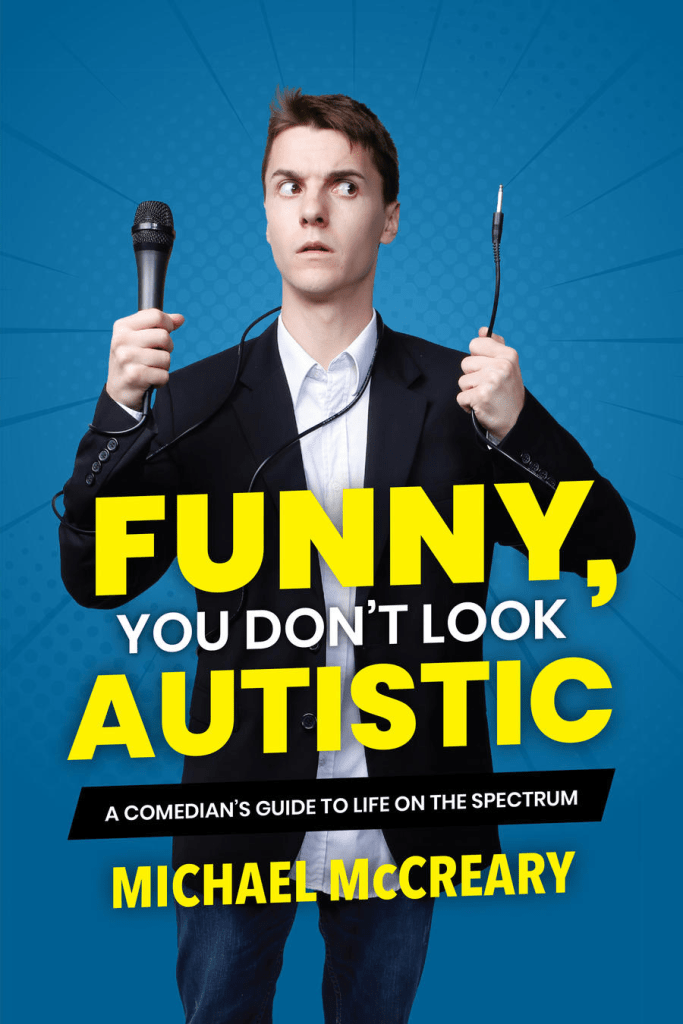
Funny, You Don’t Look Autistic: A Comedian’s Guide to Life on the Spectrum” was written by Michael McCreary, who does stand-up comedy about being on the autism spectrum and uses comedy to help demystify autism and break down stereotypes. He has performed across North America and lives in Toronto, Canada. Although this is not a comprehensive educational book, I learned more about autism. Here are some takeaways.

Everyone with autism spectrum disorder (ASD) is different. People with ASD have many of the same thoughts and feelings as anyone else. The difference is in the intensity of those feelings and the degree to which they affect functioning.

The DSM-5 defines autism as a “triad of impairments” that presents challenges in these areas:

  1. social interaction
  2. communication
  3. repetitive behaviors

Some people have heightened senses and can’t handle sudden bursts or noise or tags on clothes, while others are under-sensitive to sensory information and need to seek out stimulation. This is known as “stimming” and can include rocking, staring at lights, repetitive blinking, tapping, making sounds, spinning objects, rubbing your skin, clapping, or leg-shaking.

The author took improv classes. Improv requires you to listen to people, respond to them, and go with the flow: “Improv taught me more about social skills than any learning strategies ever could.”

When I’d seen comics lean on a mic stand, I always thought it was a power move. I soon realized that it was meant to make your shaking less obvious.

In media, the characters often seem like a checklist of symptoms rather than real people, a collection of quirks that have been mistaken for a personality. The problem with presenting autism on-screen is that it becomes the crux of the character. Having autism is a characteristic, not a character.

Although this book provided some useful information, it left more to be desired.

The Unclaimed: Abandonment and Hope in the City of Angels” by Pamela Prickett and Stefan Timmermans is a powerful work of narrative nonfiction that explores what happens when people die with no one to claim them. Prickett, a sociology professor and former broadcaster, and Timmermans, a UCLA sociologist known for his work on death investigations, follow the lives of four individuals in Los Angeles who died between 2012 and 2019—some with family and means, others without—revealing how easily people can become invisible. Alongside their stories, the authors introduce us to the scene investigators, notification officers, and crematorium workers who step in when no one else will. I found the book deeply moving and full of surprising insights. Here are just a few that stayed with me.

  • Today, more and more relatives are abandoning their dead, leaving it to local governments to dispose of the bodies. Up to 150,000 Americans now go unclaimed each year.
  • The term of choice for those sent to the potter’s field is no longer indigent but unclaimed reflective of relatives’ inability or unwillingness to take care of their dead.
  • There is no federal agency to track or oversee the unclaimed – just a patchwork of ad hoc local practices.
  • Los Angeles – “Over five hours, the men poured 1,461 boxes and envelopes into the grave – a year’s worth of ashes.”

Just because a family might be indigent does not mean a decedent is. To access a decedent’s $, the family needs a death certificate. The medical examiner’s office would not release the death certificate until the family hired a private funeral home to transfer the body from the crowded crypt. Quick access to the death certificate was one of the few carrots the office had to entice hesitant families to claim.

Patterns that increase likelihood of being unclaimed: social isolation caused by eroding family ties, never getting married, estrangement

I highly recommend this fascinating book! I learned so much about the unclaimed.

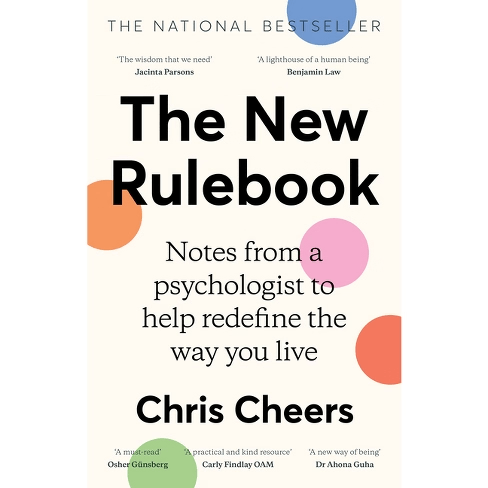
The New Rulebook: Notes from a psychologist to help redefine the way you live” was written by Dr. Chris Cheers, an Australian psychologist and educator with a focus on elevating mental health in the arts and LGBTQIA+ communities. In this book, Dr. Cheers compassionately asks readers to examine 5 key areas of their lives: self-care, emotions, work, love, and body, and offers evidence-based solutions to redefine their lives not based on expectations of how they should live but led by what they need. Here are some reflections.

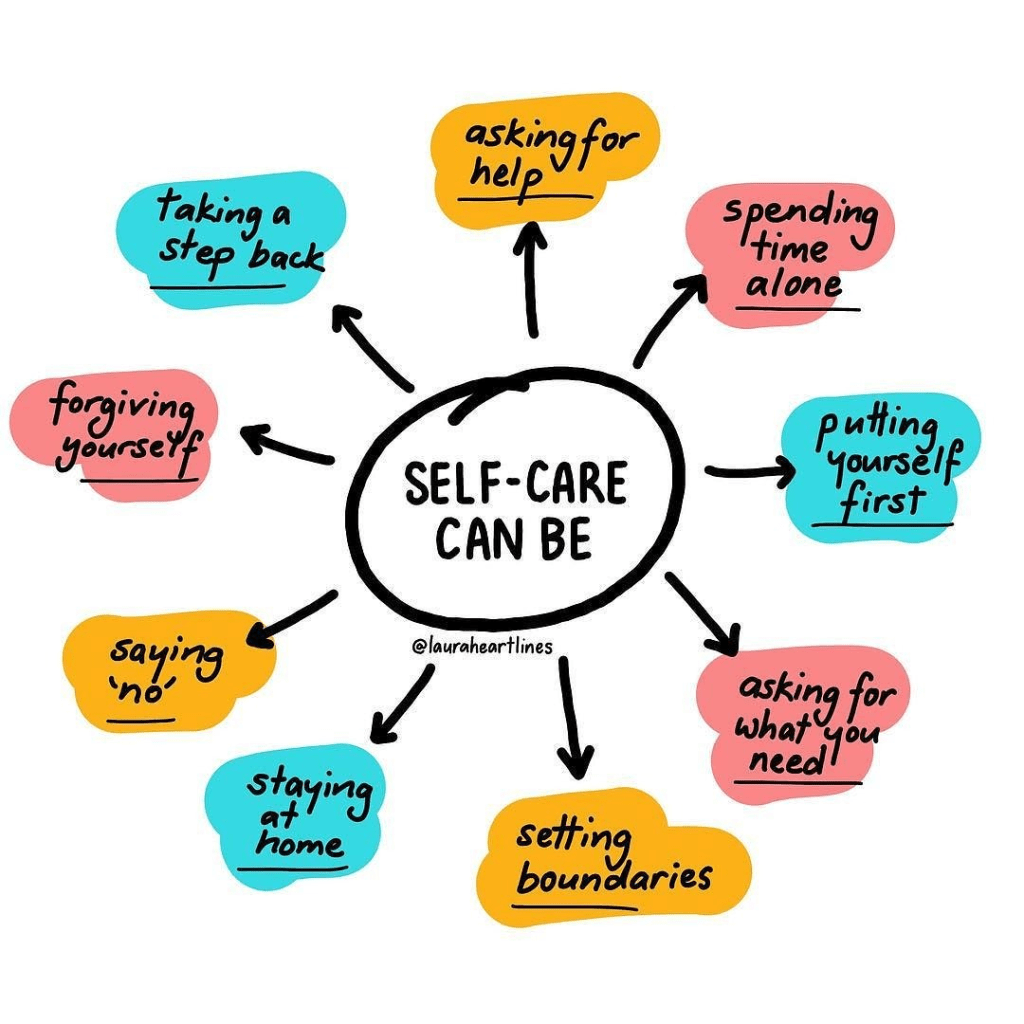
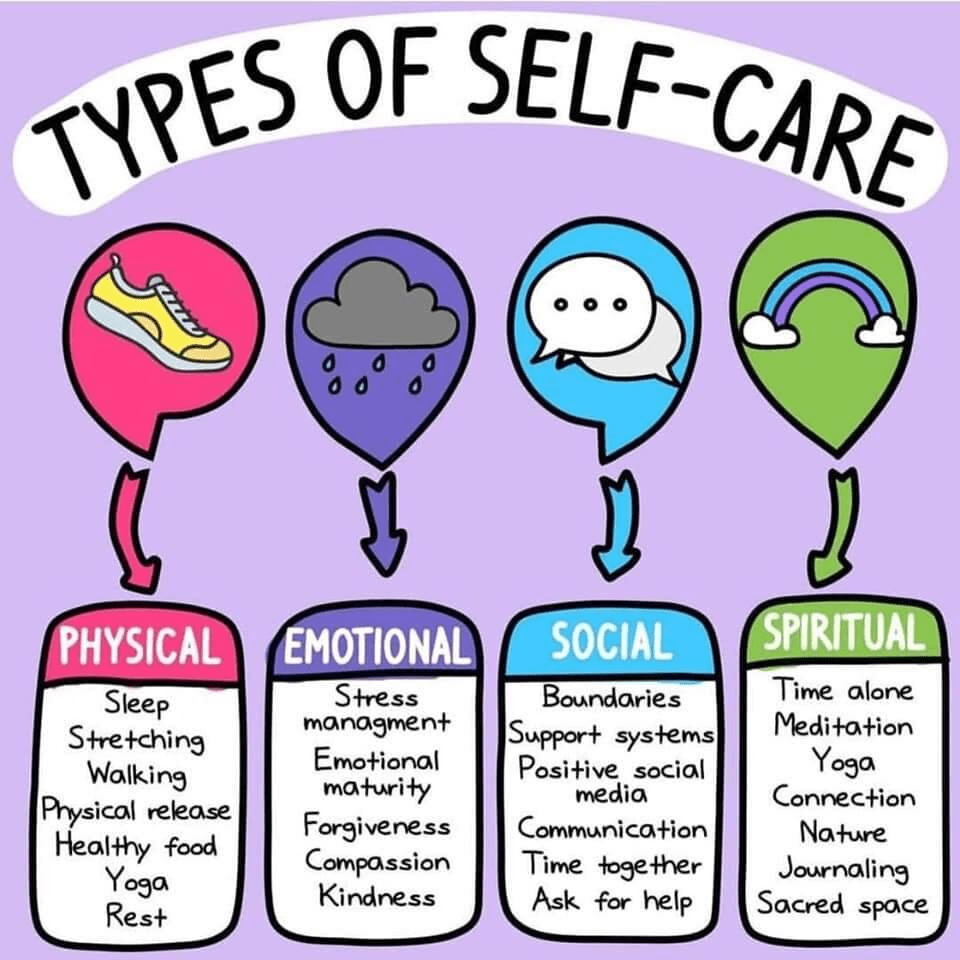
If you only focus on self, you start to view self-care as something that is a solo effort – something you buy for yourself, do alone, etc. Many of the worthwhile actions of self-care are carried out in relation to other people, such as communicating boundaries, saying no, or standing up for yourself.

We often recognize that we’re unhappy in our relationships, at work, or in daily life, but we rarely see major change as a real option. Instead, we try to feel better about the lives we already have and convince ourselves that change is too hard or simply not possible. In that process, self-care can become a soothing distraction rather than a solution. If your version of self-care is helping you cope with something that truly needs to change, it may not be care at all. It may be a quiet form of self-neglect.

  1. How can I care for myself today?
  2. What are the barriers to making that happen? Can they be challenged?
  3. What can I do to help make that care happen?
  4. What positive impact will this care have not only for me, but for my community and the people in my life?

Values – How do you want people to describe you? What words do you want them to use to describe what you have held as most meaningful and important in your life? These are your values.

  • Values are useless if they just remain an ideal. Our daily actions become our life and identity. Consider how your actions have aligned with your values over the last six months and consider which behavior you could limit to make space for more meaningful actions.

We promote belonging in our relationships through intentional gathering. Safety comes from clear communication and trust. Trust is earned through actions that show accountability, integrity, and reliability. We can also promote a sense of safety in our relationships through learning how to have a difficult conversation, apologize, and come together after conflict.

I recommend this book to anyone who wants to examine the 5 key areas of their lives: self-care, emotions, work, love, and body.

Bibliotherapy: Books to Guide You Through Every Chapter of Life” was written by Molly Masters, a writer, podcaster, director and CEO of Aphra, and CEO of Bookshop Limited. Bibliotherapy is the application of literature towards a therapeutic goal. This book was a bibliotherapy concierge for confidence and courage, adulting, empowerment, first loves and great loves, heartbreak, self-love and self-discovery, LGBTQIA+ identity, new beginnings, new parents, creativity and inspiration, escapism, your mind, grief and loss, and feeling directionless.

This book was split into sections and provided one-sentence blurbs about most books recommended. I wrote several titles down to research more or read, and I highly recommend this book if you want book recommendations for the categories listed above! I will not be sharing titles recommended at this time because I don’t want to endorse books I have not read yet.

.

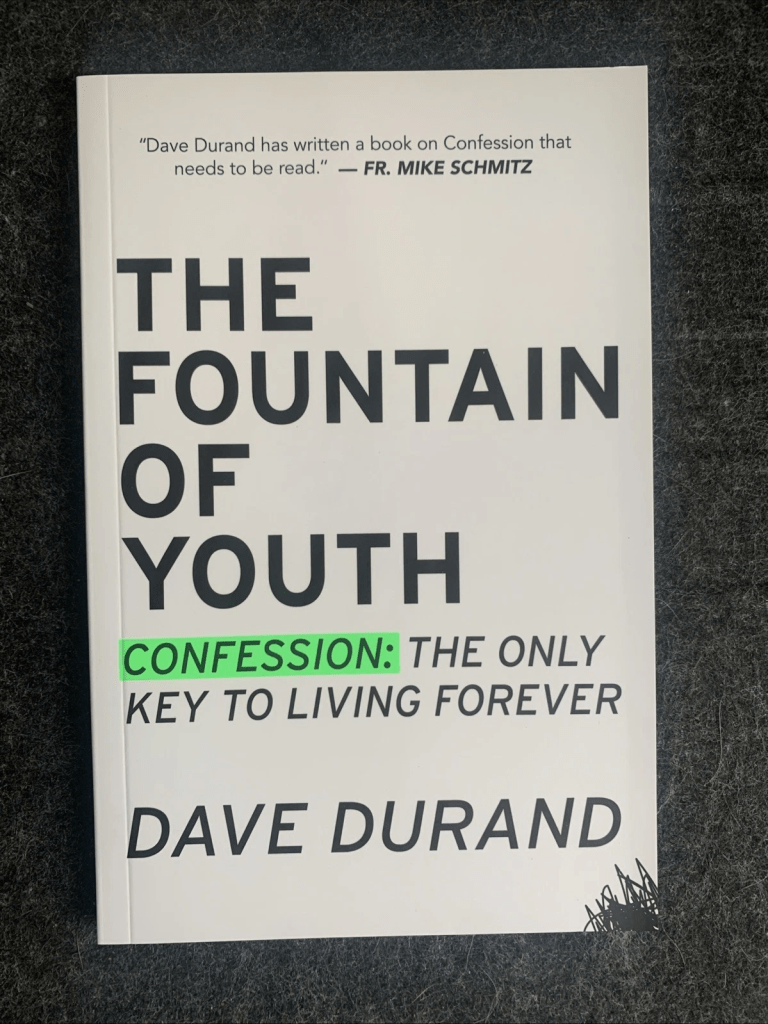
The Fountain of Youth – Confession: The Only Key to Living Forever” was written by Dave Durand. This book was handed out by my Catholic church and explores a topic that many Catholics (and Christians in general) struggle with: the Sacrament of Confession. Dave Durand takes a direct approach, addressing common excuses people make for avoiding confession, and offering responses rooted in Scripture and Church teaching. Here’s a brief look at a few of those points:

  1. “It is not necessary to go to a priest. I can just tell my sins to God directly.”
    Durand reminds us that Jesus gave His apostles the authority to forgive sins—a gift passed down through the Church.
  2. “At least I’m not as bad as others.”
    The book challenges the idea that God “grades on a curve” and instead invites us to humbly acknowledge our need for grace, just as many saints once did.
  3. Self-Justification
    Rather than justifying our actions, confession helps us confront our faults honestly before God, which can lead to deeper transformation in all areas of life.
  4. “Who is the Church to say what’s a sin?”
    Durand addresses this with a reminder that moral truth doesn’t change based on opinion and that Jesus established the Church for guidance and accountability.
  5. “I keep committing the same sin—what’s the point?”
    He encourages persistence in confession, noting that repeated sin doesn’t mean failure if we sincerely strive to grow in virtue with God’s help.
  6. Emotional Blocks
    Past negative experiences can make confession difficult, but Durand gently urges readers not to let one painful moment keep them from God’s healing grace.

Overall, The Fountain of Youth offers a clear and convicting view of confession within the Catholic faith grounded in both Scripture and the Catechism. Whether you’re a lifelong Catholic or simply curious about the sacrament, it presents a perspective worth reflecting on.

Book review posts, Uncategorized

January 2025 Reads

I read four books in January. Here is a blurb of each of the books I read in January.

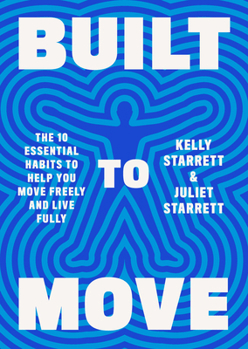
Built to Move: The 10 Essential Habits to Help You Move Freely and Live Fully” was written by Kelly Starrett and Juliet Starrett, the cofounders of San Francisco CrossFit and coauthors of the Wall Street Journal Bestseller Deskbound. Kelly is also the cofounder of The Ready State. This book included different movements and tips to incorporate them into daily life. Here are some takeaways:

  • The range of motion and body positioning relates to health, ease of movement, and the presence and absence of pain.
  • This book included measurable and repeatable diagnostics that will help you assess your current condition, where you need to go, and how you’re going to get there. This book also included mobilization techniques for reducing stiffness and resolving pain.
  • Think about how you want to live your life, take into consideration that the body naturally gets stiffer and weaker with age, and undertake strategies to counter those potential erosions before they set in. To be able to keep moving when you’re older, you need to get or keep moving now.
  • Sit-and-rise test – getting up and down off the floor without using your hands, knees, or losing balance – determines when you have good range of motion in your hips and gauges leg and core strength and balance and coordination
  • Incorporate various ground-sitting positions into your day: cross-legged sitting, sitting with your legs out in front of you, one-leg-up sitting, etc.
  • Find your balance. Do the one-leg stand test with your eyes closed for twenty seconds. How steady you are on your feet depend on your feet, your inner ear, sensory receptors in the muscles, tendons, fascia, joints, and eyesight.
  • Aim to limit sitting to six hours per day. Set up a standing workstation and move around every thirty minutes.

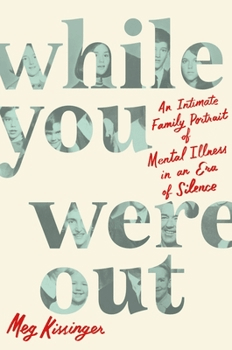
While You Were Out: An Intimate Family Portrait of Mental Illness in an Era of Silence” was written by Meg Kissinger, who teaches investigative reporting at Columbia Journalism School. Meg spent more than two decades traveling across the country to report on America’s mental health system for the Milwaukee Journal Sentinel and has won dozens of accolades. This book was frank and revelatory and was a personal and painful narrative. I highly recommend this book! Here are some of the many things that resonated with me:

  • Meg details the family dynamics of alcoholism, mental illnesses, and two of her siblings committing suicide and how the shame and practice of “not talking about it” impacted her and her family.
  • 5.6% of adults suffer from serious and persistent mental illness, and more than 1/3 of them don’t get treatment. A person with serious mental illness is 10x more likely to be incarcerated than hospitalized.
  • Jails and prisons have become the nation’s de facto mental health hospital system. By 2010, almost 90% of the hospital beds across the country that were once available for the sickest psychiatric patients had been eliminated.

“Suicide prevention experts I’d interviewed over the years told me repeatedly that we can do a lot more to stop people from killing themselves. Knowing the warning signs for suicide and how to talk to those who are considering it will save lives. So why weren’t we able to stop our siblings? Because we had been discouraged from talking about it. I could not help but wonder what life would have been like if we had grown up in a more transparent era.”

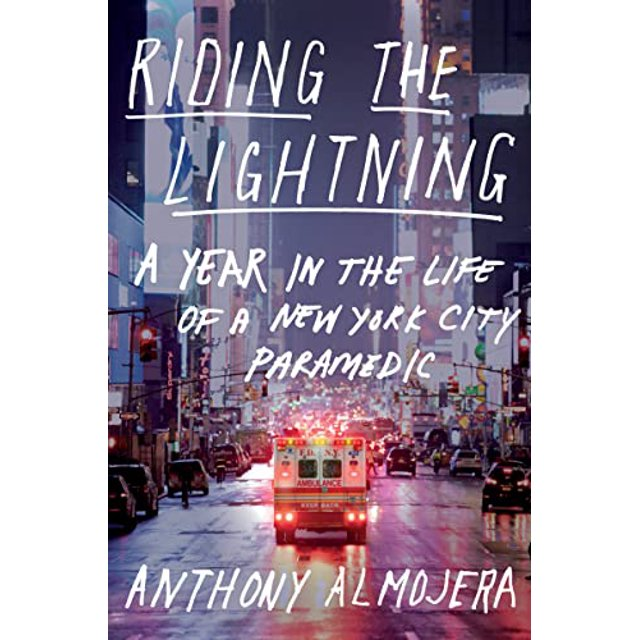
Riding the Lightning: A Year in the Life of a New York City Paramedic” was written by Anthony Almojera, an EMS lieutenant with the Fire Department of New York City who has also been featured in various media outlets. This book was devastating, candid, and vital, and guides readers, one month at a time, through the first year of COVID-19 from the perspective of a paramedic in New York City. I recommend this book to readers who want a glimpse of how COVID-19 changed EMS each month in 2020. Here are some takeaways:

  • In the beginning of COVID-19, every EMT and paramedic who transported a patient with suspected coronavirus was instructed to wear gloves, a gown, goggles or a face shield, and an individually fitted N95 mask, then throw everything away after each patient contact. Originally, the health department recommended that ambulances be aired out for two hours after every fever/cough call. (!)
  • Protocols were shifting constantly – what protective equipment to wear, how to deal with a cardiac arrest, whether to consult telemetry about where to take a patient, whether to notify the hospital that you were transporting a suspected case of COVID, how often to change your N95 mask, etc.

Surgical masks are made of polypropylene, a nonwoven paper substance that allows air to pass through it but not droplets of moisture. They don’t stop airborne particles from passing into your nose and mouth. For that, you need an N95.

  • In March 2020, the New York City COVID-19 deaths averaged over 400 per day. On March 30, 2020, New York City EMS received 7,253 calls – one call every 12 seconds!
  • The telemetry office couldn’t keep up. There was 1 physician fielding all questions from EMS crews in a city of over 8 million people!
  • Hospitals didn’t have enough ventilators or CPAP machines. For all the people who were dying in the hospital, many more were dying before they even got there – at home, in ambulances, or in lines to the emergency departments.
  • At one point, the author had 14 calls in 16 hours, and every patient died!

Patients’ families want to believe that something can be done, that the outcome will change if the patient goes to the hospital. But the medical system was so swamped during the pandemic that our protocols had changed. As of March 31, 2020, we were transporting patients only if we got a pulse back at the scene. Hospitals didn’t have the resources to try to resuscitate them, and we didn’t have the resources to transport them, so we had to pronounce these patients dead then and there.” By April 2020, if there was no pulse or electrical activity in the heart after 20 minutes, paramedics/EMS were instructed to stop CPR and pronounce the patient dead.

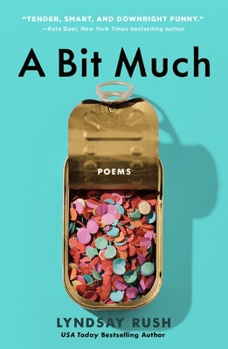
A Bit Much: Poems” was written by Lyndsay Rush, a comedy writer and the poet behind the popular Instagram account @maryoliversdrunkcousin. This book was great, and I highly recommend it!

When your surroundings begin to feel cold and uninhabitable and your environment no longer offers the support or sustenance you need, I hope you migrate. I hope, as you make your way down south, that you find another silly goose to fly with, too – in such a tight-knit formation that Wikipedia would refer to your crew as plump. And I hope that no matter how long the journey takes you, the wind is always at your back; nudging you closer to home.

Starting something new is like a one-man show for a one-man audience; the only applause worth seeking is your own. Don’t rob yourself of that while you wait for approval from somewhere else. Sometimes winning yourself over is the greatest show on earth.

A great philosopher once said I saw the sign and it opened up my eyes (I saw the sign). But when you see the world through rose-colored glasses, it can be hard to recognize a red flag. So what I have learned is this: If they’re mean to the waiter, they’ll be mean to you. If they never follow through, they will never show up. If it hurts your stomach, it will hurt your heart. You can’t temper a storm, but you can sure as hell evacuate the beach.

If cauliflower can be pasta, you can be whatever you want.

Thoughtful Thursday posts, Uncategorized

Thoughtful Thursday – January 30, 2025

It’s been over a month since I’ve posted a Thoughtful Thursday post. I am discerning whether to continue with weekly Thoughtful Thursday posts or whether to post those less often so that I can post more book posts. With that said, here are some of the most interesting things I’ve learned this month!

The Mel Robbins Podcast – The Top Expert Advice of the Year

  • People will consistently give you what you allow them to give you. You are in control of two things in this world: what you give and what you accept. 
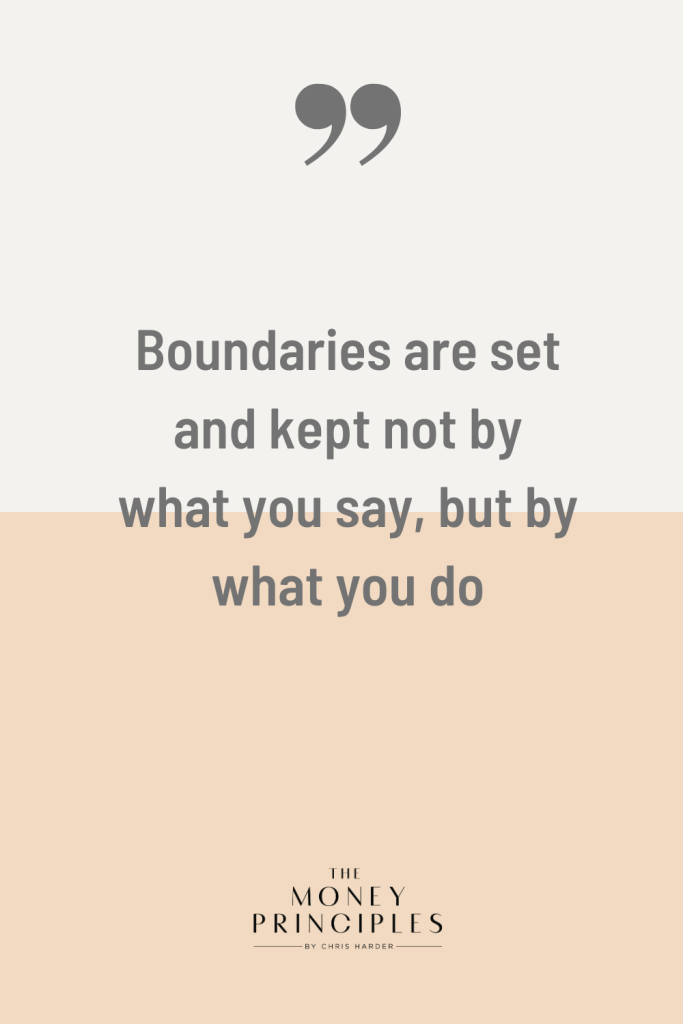
  • Boundaries are not walls to keep things out. Boundaries are bridges to let the right things in. 
  • Boundaries are meant to protect your peace and your energy. When you’re setting boundaries, ask yourself what you need in your life right now, what boundary you need to set that will lead you to what you need, and why you must stick to the boundary. What is it costing you not to stick to this boundary? Your future? Your peace? You tell people how to treat you by what you continuously accept. 
  • You spend more time trying to protect the battery on your smartphone than you do protecting your own or recharging your own battery. 
  • LET THEM is a boundary. 

https://www.gabethebassplayer.com/blog/how-can-i-read-your-mind-better

How Can I Read Your Mind Better?

January 8, 2025

i.e. What are your unspoken expectations?

This is at the heart of so much heartbreak and frustration in this business.

Our personal expectations are ‘just the way it is’…and it’s easy to think they’re shared by others…or at least they should have read my mind by now.

It’s worth asking the people around you what they’re really hoping for. You’re sure to learn something new. Something they’ve been thinking all along but secretly expecting you to just read their mind.

You’re good but you’re not that good. You’re going to have to ask.

I am enrolled in UCC Contracts/Business Law and Probate Law this semester for my paralegal certificate program. I am not an attorney, and this is not legal advice. These are some fascinating facts I have learned so far.

For most contracts, the general rule is that while it’s not illegal to enter into a contract with a minor, the contract is voidable at the discretion of the minor. Once reaching the age of majority, they can also disaffirm contracts. The cases I read that stood out to me involved minors voiding arbitration clauses in contracts and voiding waivers of liability by voiding contracts. I believe this can be a risk of liability for employers who hire minors. For example:

Pak Foods Houston, LLC v. Garcia, 433 S.W.3d 171 (Tex. App.—Houston [14th Dist.] 2014) involved a personal injury claim. A minor filed a personal injury claim against a fast-food restaurant. The restaurant filed a motion to compel arbitration based on an arbitration agreement that the minor signed as part of an employment agreement. The court found that the contract was voidable, and the minor disaffirmed the agreement by terminating her employment and filing suit.

I’ve been intrigued by the many rules of Probate Law this semester and how different state statutes vary. For those with wills, a spouse cannot be disinherited in the will, but disinheriting children is allowed. Each state has a plan for the assets of those who die without wills. As an example, for those who die without wills in Minnesota:

524.2-102 SHARE OF THE SPOUSE.

The intestate share of a decedent’s surviving spouse is:

(1) the entire intestate estate if:

(i) no descendant of the decedent survives the decedent; or

(ii) all of the decedent’s surviving descendants are also descendants of the surviving spouse and there is no other descendant of the surviving spouse who survives the decedent;

(2) the first $225,000, plus one-half of any balance of the intestate estate, if all of the decedent’s surviving descendants are also descendants of the surviving spouse and the surviving spouse has one or more surviving descendants who are not descendants of the decedent, or if one or more of the decedent’s surviving descendants are not descendants of the surviving spouse.

In other words, if you are married without kids and die without a will, your surviving spouse gets 100% of your assets. If you are married with kids and neither you nor your spouse have kids with other people, your surviving spouse gets 100% of your assets. Yet, if you are married with kids and you or your spouse have living kids that are not biologically shared, your living spouse gets the first $225,000 plus 1/2 of any balance of the estate, and the rest gets split up between all of the kids (descendants).

My husband and I are doing the Bible in a Year series with Fr. Mike Schmitz, which has been so informative and interesting so far. One thing that has resonated with me so far is that many of us are pharaohs to ourselves. We make ourselves so busy that we don’t have time to think about God. We make ourselves so busy that we have made ourselves into slaves by saying “I have to do this, I have to do that” and all of the other things that we’ve set up. We’ve set up a pace of life for ourselves that is unmanageable, and we don’t have time for worship. God’s people were never meant to be slaves – not a slave to Pharaoh and not a slave to the pharaoh that lives inside of us. We are meant to be free so that we can truly belong to Him.

And if you aren’t religious, this can still also apply to several other areas of your life. What are the things that you are making yourself a slave to? Are you spending too much time working, scrolling on your phone, etc.? What are the things you say you don’t have time for? What are you doing with your time instead? Are you making time for the things you say matter the most to you?

What are the symptoms of R-CPD?

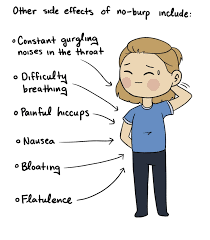
Additional symptoms, outside of the lifelong inability to burp or belch, can include:

  • Abdominal and/or chest bloating and pain
  • Excessive flatulence
  • Nausea
  • Gurgling noises from the neck and chest
  • Difficulty vomiting or fear of vomiting (emetophobia)

As shown, the chief complaints are GI-related. Yet, GI doctors (and many other doctors) are not aware of this condition, leading many to run numerous tests instead of asking the right questions. In an ideal world, when patients complain of bloating, gas, nausea, and gurgling, GI providers and other providers would ask “Can you burp?” If not, they should be treated for R-CPD. There are not many providers who are aware of and treat this syndrome.

Here is more information about it, such as the symptoms, treatment, etc. There is even a Reddit community for this condition: https://www.reddit.com/r/noburp

Book review posts, Uncategorized

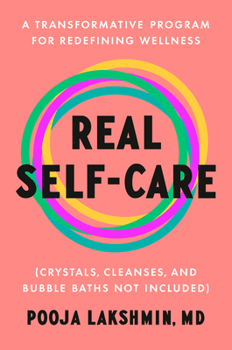
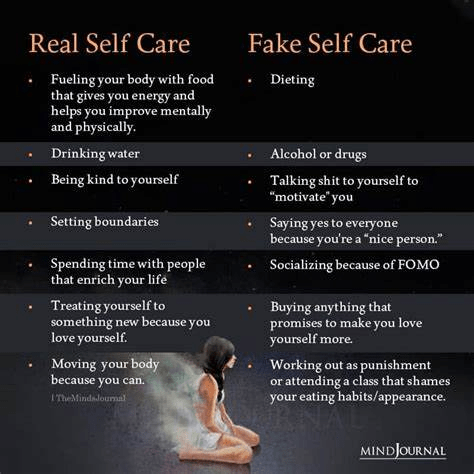
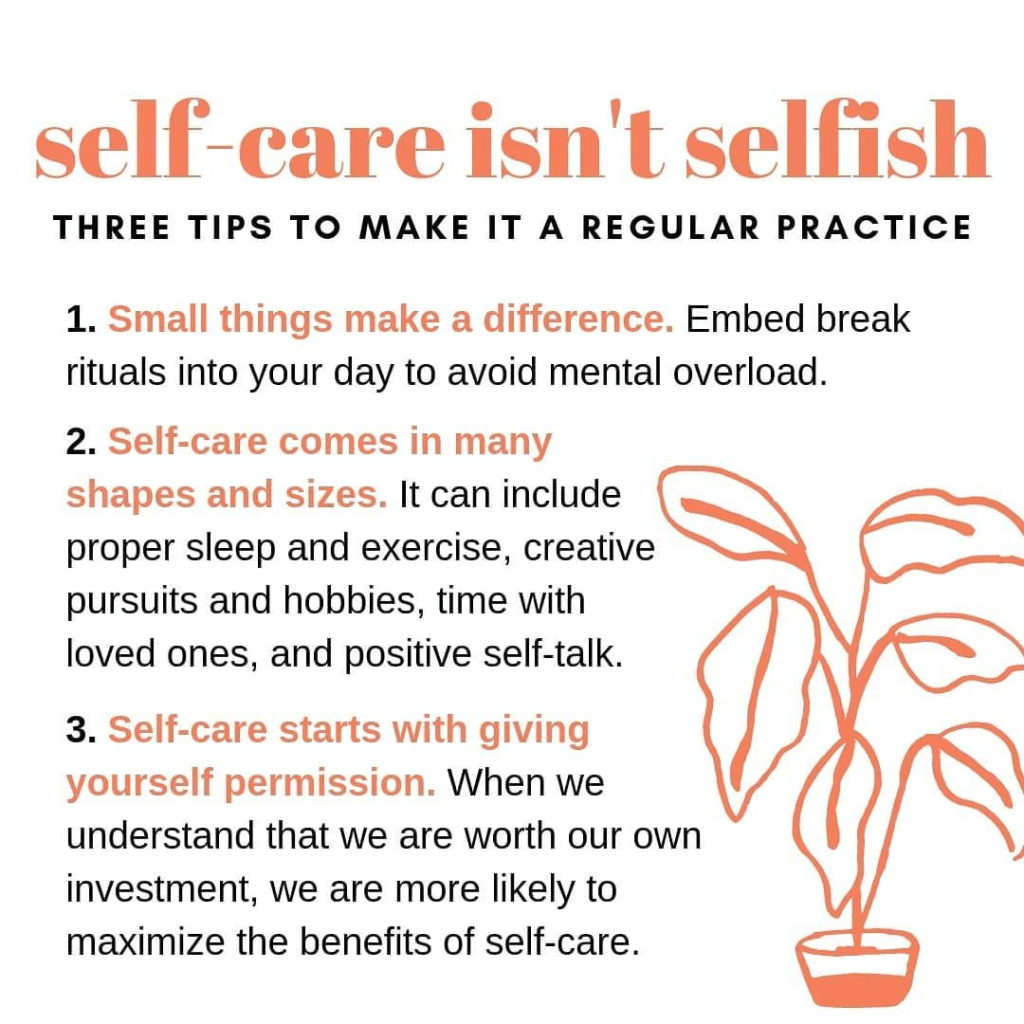
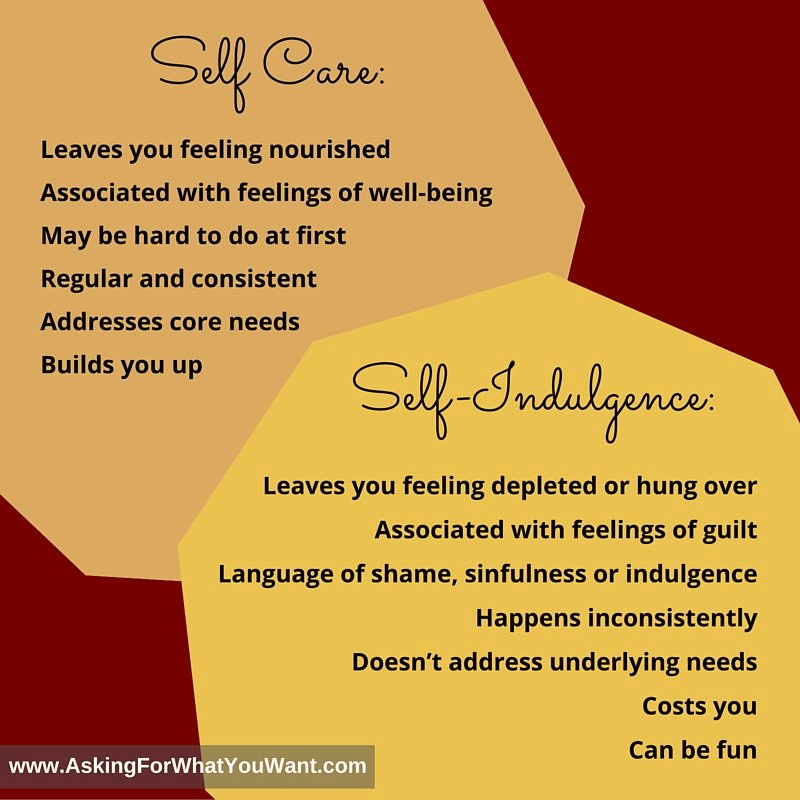
Real Self-Care

Book review posts, Uncategorized

November 2024 Reads

Mental self-care: When you find yourself engaging in distracting behavior, reflect. What do I need right now? Is this giving me what I need, or do I need something else? Ex: may need a shower, hydration, exercise, rest, a hug, a good cry, journal reflection, or a talk with a friend.

Social self-care: Schedule activities with people you’d like to get together with on a regular basis. Rotate hosting.

Professional self-care: Establish a morning routine to set the tone for the rest of the day.