I read 3 books in May. Here is a blurb of each of the books I read in May.
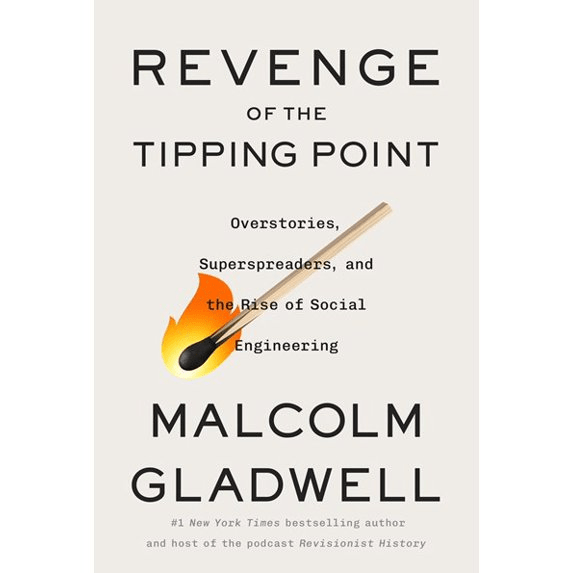
“Revenge of the Tipping Point: Overstories, Superspreaders, and the Rise of Social Engineering” by Malcolm Gladwell, the bestselling author of seven New York Times hits, is filled with insights and the kind of social-science storytelling Gladwell is known for. Some sections fascinated me, while other parts seemed to drift into tangents.
Here are the concepts that stood out most:
Contagious beliefs — When we look at a contagious event, we assume that there is something fundamentally wild and unruly about the path it takes. However, contagious beliefs often unite people and often stop neatly at community boundaries. His example: vaccine skepticism among Waldorf school parents.
Monocultures — Epidemics thrive in sameness, and so do we. Malcolm explores how our tendency to build social monocultures can unintentionally put our own communities at risk.
The “Magic Third” — When a group reaches roughly one‑third minority representation, its culture and performance can shift dramatically. Malcolm uses this to explain why some institutions change and others resist change.
Superspreaders — During COVID‑19, superspreaders were individuals who emitted far more aerosol particles than average. Malcolm expanded the idea of superspreaders to social life: charismatic criminals, influential ideologues, and powerful institutions that accelerate the spread of ideas.
Institutional engineering — One of the most fascinating examples was Harvard’s use of varsity sports to maintain certain demographic proportions, such as the women’s rugby team that consists of mostly white upper middle-class students. He contrasts this with Caltech, which does not engineer its student body, resulting in rising Asian enrollment. He also notes the tension between the Supreme Court’s ban on race‑based affirmative action and the continued acceptance of athletic admissions that disproportionately benefit privileged students.
Media is a contagion engine. Media shapes language, beliefs, and the speed of social contagion. Will & Grace was a cultural tipping point for public support of gay marriage. This book explored how narratives — not facts — often drive behavior. We see this in fear-driven media cycles, corporate culture, political polarization, school environments, online communities, viral content, and misinformation.
Overall, the book is an examination of how ideas spread, who accelerates them, and how institutions and media shape the social ecosystems we live in.
4 out of 5 stars
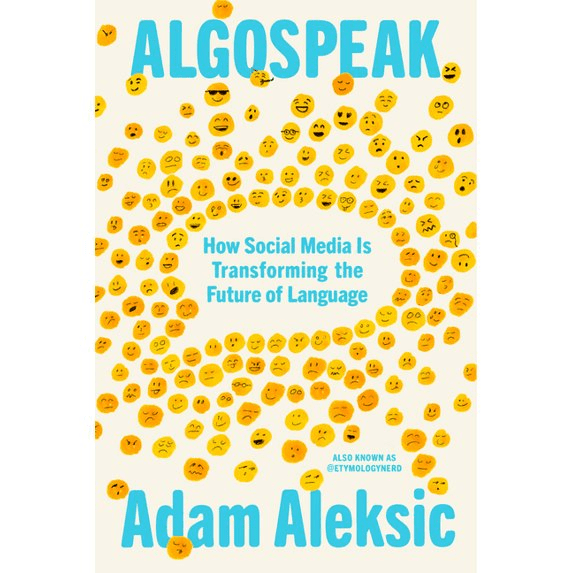
“Algospeak: How Social Media is Transforming the Future of Language“, by linguist and creator Adam Aleksic, who is known to millions online as the Etymology Nerd, is a fascinating deep dive into how algorithms are reshaping the way we communicate. Adam has lectured on language and social media at Stanford, Yale, Georgetown, and other universities. This book was fascinating and insightful. Here are the ideas that stood out most:
Algorithm‑shaped language — Anytime language spreads online, people unconsciously mold their speech around what algorithms reward. Algorithms influence who sees which words, how they spread, and which ones become mainstream.
Censorship‑driven vocabulary — To avoid moderation, users invent euphemisms like unalive (for suicide) or seggs (for sex). Emojis such as 🍆🍑🌶🍒🌽 often stand in for sexual content.
Creators must mold themselves to the algorithm to have the best chance at capturing our attention, so they adapt their speech patterns:
superlatives, second‑person pronouns, and catchy phrasing
uptalk, which adds a rising intonation
influencer accents, where extra words are stressed for emphasis. Adam even explained different influencer accents across entertainment, lifestyle, and educational niches.
Group belongingness has become automated around your receptivity to consuming certain content. Your engagement tells the algorithm whether to let you further into a group or gatekeep access. Since we build identities around group belonging, this means that the algorithm plays an important role in shaping our perceptions of who we are, mimicking the positive feedback loop you experience in real-life in-groups.
Linguistic appropriation online — The internet accelerates the repurposing of language from one group to another, especially African American English (bae, fleek, fam, cap, bussin) and LGBTQ slang (slay, serve, tea, throw shade, icons, yass). Online spaces expose users to many in‑groups while removing the social cues that normally regulate when appropriation becomes disrespectful.
Identity as a commodity — Social platforms create new micro‑identities because niche aesthetics are profitable. The explosion of “‑core” categories and hyper‑specific goth subtypes reflects the intersection of algorithmic incentives and our instinct to form in‑groups.
Aleksic’s central argument is striking: your aesthetic, your language, and even your sense of self are shaped by the positive‑feedback loops of social media algorithms. It’s a provocative, eye‑opening read, and I highly recommend this book!
5 out of 5 stars
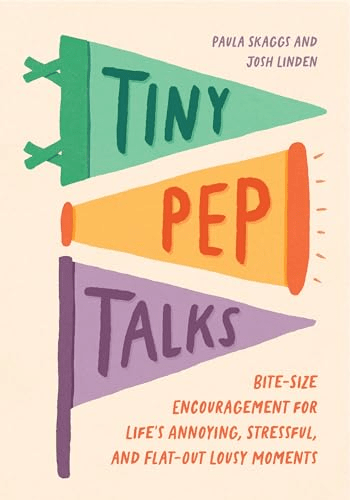
“Tiny Pep Talks: Bite-Size Encouragement for Life’s Annoying, Stressful, and Flat-Out Lousy Moments” was written by Paula Skaggs and Josh Linden, who are Chicago-based writers, comedians, co-hosts of a podcast, and co-creators of the game No Wrong Answers: Cards for Better Conversations. This was an easy read. Here are some pieces of advice that stuck with me:
For when your clothes don’t fit – They’re just clothes. There are so many articles of clothing that will fit you comfortably, are going to make you feel good, and won’t bum you out when you try to wear them. And you deserve to find those. Donate your old clothes so they’re not serving as a daily reminder of the size you arbitrarily think you should be.
For when you have to make that appointment you’ve been putting off for months – We’re all walking around with a nagging feeling about that appointment we really should have made months ago. The five minutes that the call is going to take might suck, but it’s the feeling after the call that’s going to make it all worthwhile. No matter what else you do today, you’ll have crossed something big off your to-do list.
For when you’re going to a party and you only know one person – whoever invited you to this party must really like you, and they think everyone else is going to like you, too. People get invited because they’re smart, funny, and interesting.
For when you forgot their birthday – It happens! You can’t be expected to keep track of every significant date for every person you care about. Text them, call them, write them a card, whatever you want to do – but do it now. No matter if you’re a few days or weeks late, they will be delighted to hear from you. Plus, this way, you’re extending their birthday celebrations.
For when the news is too much – No matter how passionate you are about the issues, this isn’t on you alone to solve. Constantly refreshing your phone to stay updated on news alerts will just send you into an endless spiral. You brain isn’t meant to constantly consumer information on every global tragedy all at once. In order to do good in the world, you have to do good for yourself, too. Stop doomscrolling and find something that will make your day better. Remember that even as breaking news unfolds in real time all around us, the world is still full of good people and everyday acts of kindness.
Grief is like a toddler. At any given moment, it might be messy, it might kick and punch you in the gut, and it might refuse to go to bed when all you want is to go to sleep. But sometimes, it might be filled with laughter, it might be inquisitive, and it might do something that stops you in your tracks with awe.
This was an easy read, and I recommend it for a quick pick-me-up.
4 out of 5 stars
I look forward to reading, learning, and sharing more with you soon!
It’s been a while since I’ve posted on this blog since I have had other priorities. I read 4 books in July. Here is a blurb of each of the books I read in July.
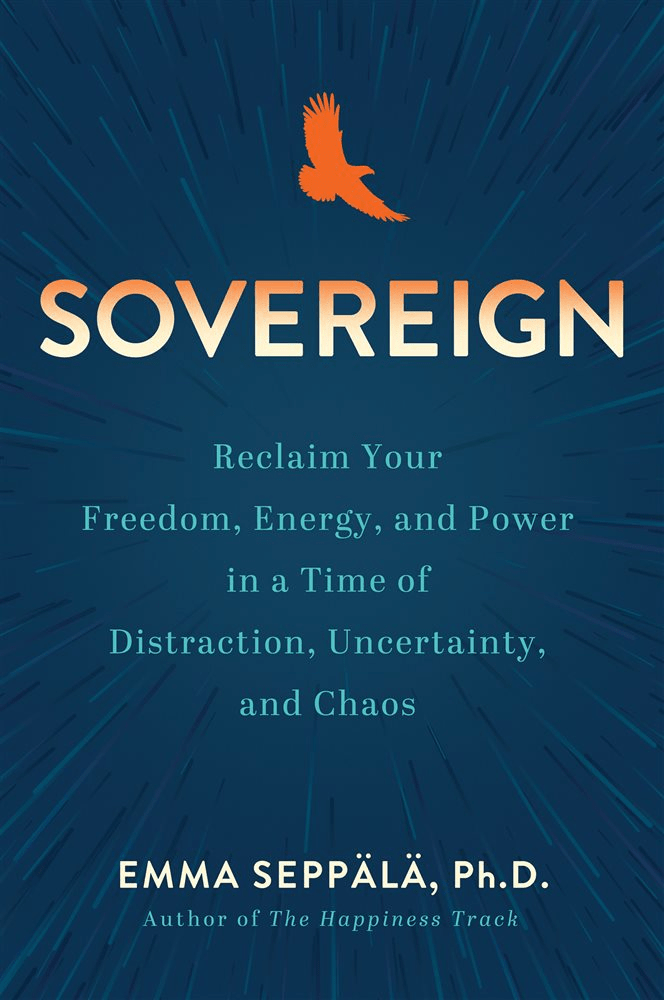
“Sovereign: Reclaim Your Freedom, Energy, and Power in a Time of Distraction, Uncertainty, and Chaos” was written by Emma Seppala, a Yale lecturer and international keynote speaker. This book was insightful! It was packed with tips to recharge your life and change the way you think and act – from your emotions, mind, relationships, intuition and body. Here are some of my many takeaways:
Sovereignty is reclaiming your right to exist as you. It involves courage, awareness, and self-honoring. Consider what would happen if you loved and cared for yourself as much as you do for others.
What would it look like if you took care of yourself as you would an infant, attentive to its every need? Be mindful and aware of your emotions and ask yourself “What do I need right now? A hug? A walk? A break? A nap? A cry? A meal? A friend? Something else?”
Some of the many tips covered:
Sovereign self
Listen to the state of your mind and body. Ask yourself what you need.
Prioritize what fills your cup – what brings you rest, rejuvenation, energy, vitality, upliftment, inspiration, and joy.
Sovereign emotions
Remember: when you run from your feelings, you run from your healing. Feel instead of suppressing.
Remember that emotions are energy in motion. Take care of your basic needs: sleep, diet, exercise, and yourself.
Sovereign mind
Create boundaries around your media. Don’t go on social media to look at what other people are doing or selling.
Observe and discern: What are the intentions of the messaging. Is it giving you freedom or binding you in fear? Do you wish to engage with it?
Sovereign relationships
6 keys of positive relational energy
caring for, being interested in, and seeing the best in others
providing support for one another, including offering kindness and compassion
avoiding blame and forgiving mistakes
inspiring one another and focusing on what’s going right
emphasizing meaningfulness
treating others with basic human values like respect, gratitude, trust, honesty, humility, kindness, an integrity
Sovereign intuition
Consult your gut feelings.
Unplug from technology. Create opportunities for contemplation. Schedule idle time.
Sovereign body
Relate to your body as your best friend because that’s what it is. Learn to love it, care for it, listen to it, and live in harmony with its needs.
Reflect on these questions: Do you honor and care for your body the way you would a child? If not, what would it look like if you did?
This is one of the best books I have read this year, and I highly recommend it to everyone!
5 out of 5 stars
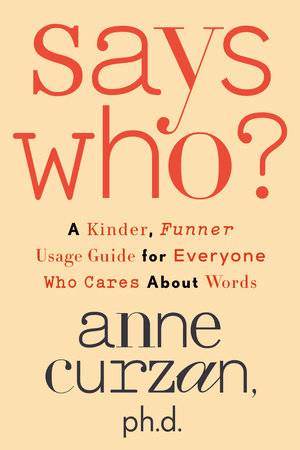
“Says Who? A Kinder, Funner Usage Guide for Everyone Who Cares About Words” was written by Anne Curzan, professor of English Language and Literature, Linguistics, and Education at the University of Michigan. This book was intriguing, although some readers may find it overwhelming or too academic. Here are some things that resonated with me:
One key point for everyone who uses dictionaries is that dictionary editors are trying to walk a fine line between capturing words as they are used and providing guidance about the contexts in which some words are generally accepted or not accepted. While the editors of today’s dictionaries are usually trying to describe actual usage, we as dictionary users often erroneously assume that they are prescribing correct usage. Attitudes at the language change over time!
English has lots of synonyms in many areas of the lexicon, and they demonstrate the remarkable creativity we as humans bring to language, the many languages that have contributed to the English lexicon, the diversity of our linguistic identities, and the nuanced choices we get to make as speakers and writers.
Dictionary editors determine which pronunciations get recorded as standard and which get labeled as nonstandard – and which don’t get included at all.
What’s correct depends on where, when, and to whom you’re speaking. Formal writing has different expectations than casual conversation.
Many grammar rules are based on tradition, not logic. Usage evolves, and what was once “wrong” can become accepted over time. Examples:
“Peruse” has long meant “to read thoroughly” – but now people use it to mean “to glance over, skim” – which is becoming more acceptable.
“Literally” is used to mean “in the literal sense” AND “figuratively.”
4 out of 5 stars
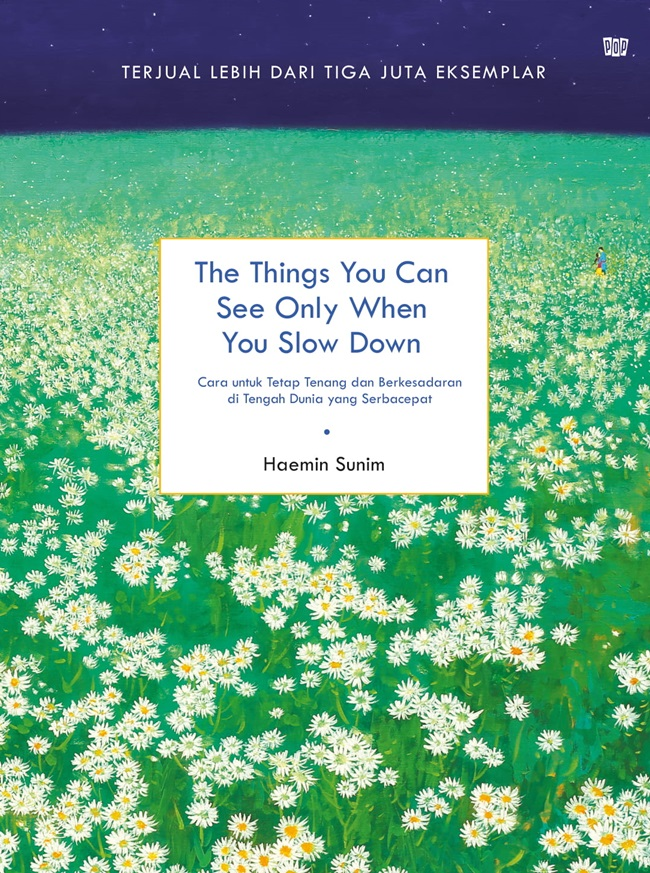
“The Things You Can Only See When You Slow Down” was written by Haemin Sunim and contained so many life lessons and a guide to mindfulness. I got a lot out of this book. Here are some takeaways:
Do not try to control those around you. When you cannot control even your own mind, what makes you think you can control others?
According to some psychologists, happiness can be assessed with two simple questions: First, do you find meaning in your work? Second, do you have good relationships with those around you?
We like to get involved in other people’s business, thinking we are doing so for them. We offer unsolicited help and interfere with their lives. We take away their power and make them feel incapable. This stems from our desire for control and recognition. It has little to do with love.
A bad driver brakes often. A bad conversationalist also brakes often – interrupting the flow with his own stories.
Being a good boss requires much more than just having a lot of technical knowledge. It is important to have integrity and a positive relationship with the staff, to give timely feedback and professional mentoring, and to advocate for what the team needs.
As my prayer deepens, I hear more of His voice than my words. As my humility grows, I feel more of His love overflowing in my heart. As my mind quiets down, I sense more of His presence in every moment.
I really enjoyed the lessons from this book and highly recommend it.
5 out of 5 stars
“I Could Live Here Forever: a novel” was written by Hanna Halperin. This is a fiction book and is not what I typically read. This book was described as “a gripping portrait of a tumultuous, consuming relationship between a young woman and a recovering addict.” I agree with that description. Since this was a fiction book, I didn’t take many notes, but these quotes resonated with me:
“The nice thing about writing was it took pain and warped it into something useful. I could shape it into a beginning and a middle and an end. It was manageable that way . . . by the time I was done with it, it was just a story.”
I never actually knew what he was doing. I was outside his world, even though he was inside of mine. Really, he was my entire world.”
Overall, I wanted more character development.
3 out of 5 stars
I look forward to reading, learning, and sharing more with you soon!
I read four books in March 2024. I have been reading less for my personal pleasure due to being busy with a post-graduate paralegal certificate program and spending most of my time reading textbooks. Here is a brief synopsis of the four books I read in March 2024, some of which I will post about in greater detail in the future.
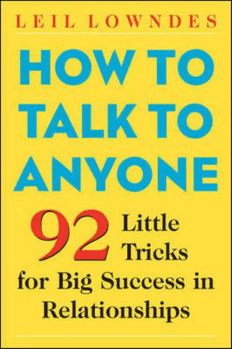
“How to Talk to Anyone: 92 Little Tricks for Big Success in Relationships” was written by Leil Lowndes, an internationally acclaimed communications expert who coaches top executives of Fortune 500 companies and frontline employees to become more effective communicators. Leil conducts communications seminars for the U.S. Peace Corps, foreign governments, and major corporations. While I did learn some great communication tricks and the book was very useful, I did not like the phone and smug tone of writing. Here are a handful of my take-aways:
When someone asks where you are from, never give just the city. Learn some engaging facts about your hometown that conversational partners can communicate on.
Never give a naked thank you. Never let the phrase “thank you” stand alone.
If you leave a voicemail, view it as your ten-second audition to prove you are worthy of a quick callback.
Use the big baby pivot when you meet someone new. Give the warm smile, the total-body turn, and the undivided attention you would give a baby who crawled up to your feet and smiled at you.
Imagine a giant swiveling spotlight between you and your conversation partner. The longer you keep it shining away from you, the more interesting he or she finds you.
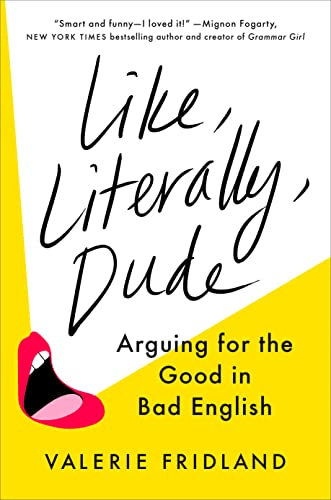
“Like, Literally, Dude: Arguing for the Good in Bad English” was written by Valerie Fridland, a professor of linguistics at the University of Nevada and author of the popular language blog called “Language in the Wild.” This book contained a linguistic exploration of the speech habits we love to hate – linguistic quirks that are fundamental to our social, professional, and romantic success. This book was fascinating, and here are just a few facts that resonated with me:
Language evolution doesn’t happen in a vacuum. Language evolves because social forces act as triggers in taking underlying linguistic tendencies and giving them social meaning. Ex: migration, school, class, cultural shifts, geography, age, etc.
‘Ums‘ and ‘uhs‘ don’t just fill pauses- these words unconsciously signify the introduction of a new topic or a complex idea and signal to a listener that there will be an upcoming speech delay and convey how long of a delay the listener should expect. ‘Um‘ precedes longer delays than ‘uh.’ They also result in a boost in memory to the listener (of what was stated after the pause) and filled pauses buy ourselves processing time and convey to the listener that “it’s still my turn.”
Our unease with the use of the word ‘like‘ is probably more about its association with casual, younger speech than its functionality. ‘Like‘ is an incredibly amorphous word:
verb – to discuss fondness for objects or people
noun – to describe likes and dislikes
adjective – to mean similar to “in the manner of”
preposition – simile construction
conjunction – to embed another clause
approximating marker – looseness of meaning before a numerical estimate/quantification
common quotative verb
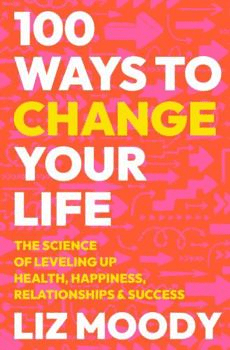
“100 Ways to Change Your Life: The Science of Leveling Up Health, Happiness, Relationships, & Success” was written by Liz Moody, the host of the top-rated Liz Moody podcast, author of best-selling books, and popular online content creator. This book was my favorite book I read in March and contained so much valuable information! I will post about this book in more detail another time, but in the meantime, here are five ways you can change your life.
Take the risk. You are far more resilient than you think. Doing is a form of figuring out. Just start. The right time is always right now. A fundamental reason many people don’t find success is that they never begin.
Think about your death. What can it highlight about living a life that you’re proud of today? What can it teach you about shifts you need to make?
Establish and stick to better boundaries. You reclaim your energy, time, capacity, money, and physical space. We begin to resent people for not catering to our needs, even when we’ve never communicated what those needs actually are. Take a pause before replying to anyone’s invitation or request. Practice checking in with yourself first before you tend to someone else’s needs.
Identify your financial dreams. Why do you want to accumulate wealth in the first place? What is your Rich Life? What do you value? What are some things other people might value that truly don’t matter to you? Spend your money on what you value.
Create a mental health checklist. Social connection, good nutrition, routine, sleep, and movement are the five pillars of mental health. Use them as a first line of answers if you aren’t feeling your best.
“Excuse Me As I Kiss The Sky” was written by Rudy Francisco, one of the most recognizable names in spoken word poetry, and one of my favorite poets. This book covered different poetry styles, some of which I am not familiar with: ode, obit, golden shovel, contrapuntal, question-and-answer, free verse, page to stage, and love poems.
Rudy is one of the most recognizable names in spoken word poetry, but his talent also shows on the page. Rudy mentioned the difference between page poems and performance poems. Page poems are written for visual aesthetics and consist of rearranging text and line breaks. Performance poems are focused on how the poem will sound out loud, how it feels to say the words, the syllable count, rhythm, and taking just one chance to explain the story.
Here are some of my favorite lines in the book, which I have not formatted into the page poems:
Fragile – “I know the heart can be a fragile and dangerous thing. When it breaks, the ends are often jagged and will cut the hands of people who are just trying to help you clean up the mess. But I also know that pain is nomadic. It doesn’t like to stay in one play for too long. Healing is a slow crawl, but it will find you right where you are.”
“Fear is when we turn up the volume on everything that might go wrong and then allow it to speak louder than courage.”
“The past is one of the few things more stubborn than we are. It will not change and doesn’t care if you have a better idea of how the story should’ve ended.
Healing begins when we stop trying to run backwards on the escalator and embrace whatever will keep us moving forward.”
“I hope you stumble into the kind of love that bends all the question marks into exclamation points.”
I look forward to reading, learning, and sharing more with you soon!