Book review posts, Uncategorized

August 2026 Reads

I read 2 books in August – the least I had read in a while. Here is a blurb about each of the books I read in August.

“Somebody Told Me: The Newspaper Stories of Rick Bragg” was a delight. Bragg’s writing is everything I love in narrative journalism: rich sensory detail, storytelling shaped by character, respect for ordinary people, and deep empathy without sentimentality. Bragg won the 1996 Pulitzer Prize in Feature Writing for his “elegantly written stories about contemporary America” and is the recipient of the American Society of Newspaper Editors Distinguished Writing Award.

Here are some of the stories that stood out to me:

  • Mr. Cain – the Angola prison warden
    • “There comes a time when a man goes through what we call criminal menopause and he is unable to do the crime that he is here for. My prison is becoming an old folks’ home.”
  • 1996 – a Baptist church demanding the exhumation of a mixed-race baby
    • The deacons wanted to keep their graveyard “exclusively white.” They later apologized after drawing nationwide attention. It’s mind boggling that this occurred in 1996!
  • Stories of the bombings of Timothy McVeigh & Terry Nichols
    • “The embarrassing thing, for this tough man who answers questions in short, machine-gun bursts, is the damage to his eyes. The blast injured his tear ducts, so that there is nowhere for the tears to go except down his face. One of the few people marked by the bombing who does not feel compelled to cry looks like he cries all the time.”
  • Oseola McCarty
    • 87-year-old African American washerwoman who spent her entire life scrubbing other people’s clothes for pennies, saved over $150,000, and donated it to the University of Southern Mississippi to fund scholarships for Black students who couldn’t otherwise afford college.
  • The Oklahoma City Bombing and the trial of Susan Smith (the South Carolina mother who drowned her children.
    • These stories focused on local grief, broken towns, and police officers haunted by what they witnessed.
  • Florida State Troopers on the Skyway Bridge
    • A harrowing look at the officers who spend hours talking desperate people down from the edge
  • Brandon C. Blenden
    • As part of his sentence, he must mail a $1 check every Friday for ten years to the parents of the girl he killed. The memo line reads: “For the death of your daughter, Whitney.”

Key lessons from this book:

  • Everybody has a story worth telling.
  • Sometimes courage is quiet.
  • Every person matters. Bragg deliberately wrote about people most newspapers ignored: janitors, coal miners, elderly, widows, children, veterans, prisoners, and small-town families.
  • His reporting suggests that good journalism begins with genuine curiosity. He rarely inserts himself into stories and instead listens carefully, observes details, lets people speak, and earns trust.
  • Great journalism creates empathy.

4 out of 5 stars

Jade Chang’s “What A Time To Be Alive” is a satire of the spiritual-wellness world and a heartfelt novel about grief, internet fame, identity, and the human hunger for meaning. It’s a book that reminds readers that rarely do we get to choose the things that will change us; they arrive uninvited and rearrange the landscape of our lives.

One of the most affecting threads is Lola’s estranged relationship with her mother. As she reflects, “I always pictured her out there waiting for me to reemerge, to be clever enough to see past her leaving and understand that what she really wanted was to be reunited with me. I always thought I was good at understanding other people’s feelings were just as real as mine, but it turned out there were still mother-sized holes in my field of perception.”

The novel’s satirical mantra – “Be your own beacon” – began as a joke about influencer-speak but deepened into something more sincere as Lola confronted what it means to be seen, to be believed, and to believe in herself. Likewise, the refrain “What a time to be alive” lands with both irony and tenderness and acknowledges that life is absurd, frightening, and beautiful all at once.

  • People crave meaning as much as truth.
  • The death of someone close creates a sharp split between the “before” and “after,” forcing you to rebuild.
  • Authenticity is difficult once it becomes a product. Can sincerity survive an audience? Can wisdom be monetized without becoming marketing? When does helping people become selling yourself?

You can have all the craft in the world, but if you’re not willing to look deeply at yourself, you’re not an artist. It’s being willing to look at yourself and face the embarrassment of putting what you see out there. Fame is a reward for that bravery.

This book was entertaining at times, bizarre at others, and ultimately unlike what I typically read, but its blend of satire and sincerity lingered.

3 out of 5 stars

Book review posts, Uncategorized

July 2026 Reads

I read 3 books in July. Here is a blurb about each of the 3 books I read in July.

“Lessons from My Teachers” was written by Sarah Ruhl, a playwright, poet, teacher, and professor at the Yale School of Drama. This book expands the definition of “teacher” beyond traditional academics to include parents, children, mentors, etc. Here are some lessons that stood out to me.

Is all of school a way of saying goodbye to your parents to make room for other teachers in life? Is the beginning of school a way of saying your parents can’t teach you everything, and you need independence of mind to go on your way through the world?

  • You never know where rejection might lead. Sometimes a rejection leads you to your next collaborator or friend.
  • Piano/band teacher – taught us we were worth teaching, how to practice, how to sit up straight, how to show up every week, how much dull repetition it takes to make something beautiful, and how to make a mistake in the music and keeping playing and keep moving forward.
  • You are the expert of your own story.
  • The very young and very old remind us to be in the moment. They walk slowly and look around as they walk.
  • Students sometimes make the best teachers.
  • So many events, rituals, and practices that seemed essential pre-pandemic turn out now to be optional.
  • We need to keep finding teachers over the course of our lifetime. Finding a teacher is also a process of letting oneself be taught – which is a kind of bravery.

One’s attitude toward almost any situation can make it an occasion for a teaching or a learning. What am I teaching right now? What am I learning right now?

Always be deeply interested in other people and the world.

The blue whale swims and swims, and when she wants to eat, she simply opens her enormous mouth and water and garbage and krill flow in. That big blue whale has an automatic sieve system to sort out what’s food and what’s waste. Be like a blue whale. Listen to all criticism, but filter out what doesn’t serve you.

One of the simplest paths to deep change is for the less powerful to speak as much as they listen, and for the more powerful to listen as much as they speak.

4 out of 5 stars

“Never Enough: When Achievement Culture Becomes Toxic – And What We Can Do About It” was written by Jennifer Breheny Wallace, an award-winning journalist and a frequent contributor to The Wall Street Journal and The Washington Post. Jennifer spent three years traveling across the U.S. interviewing parents and students. What she found is sobering: our culture’s obsession with optimizing performance has contributed to rising rates of anxiety, depression, and self-harm among young people. Here are some main takeaways.

At the heart of toxic achievement culture is a painful message kids are absorbing – that their worth depends on what they produce: their GPA, the number of social media followers they have, college admissions, and resume-building activities. They have become proxies for their identity, and many students feel they only matter when they succeed.

Parents, often with the best intentions, unintentionally reinforce this mindset. Wallace describes how families “weave individualized safety nets,” making constant day-to-day decisions aimed at maximizing achievement and preventing anything that might derail future success. In a hypercompetitive world, it’s easy to believe that a “good” college is the gateway to a good life.

Wallace argues that the antidote to toxic achievement culture is mattering – the belief that you are valued for who you are at your core, not for your output.

  • Ways parents can show kids they matter
    • respond in a warm and sensitive way
    • explicitly tell kids how much they matter to you
    • express unconditional acceptance – even after a failure
    • show warmth through affection
    • engage in mutual activities
    • teach kids how to ask for help when they need it and model these skills yourself
    • make chores mandatory without an allowance – giving kids real responsibilities builds resilience by showing that their existence and actions genuinely impact others
    • make volunteering mandatory and widen their circle of concern and caring
    • Avoid engaging in harsh criticism, invalidating emotions, and comparing kids negatively to others.

As parents, we sometimes think our role is to help fuel and support our kids’ ambition. In a hypercompetitive culture, kids sometimes need the opposite. They need adults to prevent them from sacrificing their minds and bodies on the altar of achievement and to teach them how to build a life they won’t need substances to escape from.

Wallace also highlights what truly predicts long-term well-being for college graduates, and it’s not prestige. Students who reported the highest life satisfaction had deeply engaging college experiences, such as:

  • taking a course with a professor who made learning exciting
  • having a professor who cared about the student personally
  • having a mentor who encouraged the student to pursue personal goals
  • working on a meaningful project across semesteres
  • participating in an internship
  • being active in extracurricular activities

What stayed with me most from this book is Wallace’s reminder that beneath all the pressure, fear, and competition, parents ultimately want the same thing: for their children to live meaningful lives filled with connection, purpose, and joy. We want them to feel valued, and to help others feel valued too. We want them to live lives that truly matter.

This book was fascinating, eye-opening, and deeply relevant.

4 out of 5 stars

“The Truth in True Crime: What Investigating Death Teaches Us About the Meaning of Life” was written by J. Warner Wallace, a cold-case homicide detective. In this book, Wallace recounts true crime stories from his real-life experience and provides readers with applicable life-changing truths. This book can be considered a practical wisdom book and a Christian evidence book. Honestly, I didn’t really like the style of writing. It came across as didactic and pastoral, and every chapter aggressively pivoted into a sermon. This was a formulaic hybrid of true-crime and heavy-handed pastoral sermonizing. With that said, here are some lessons:

  • Embrace friends who hold an objective view of virtue. Identify friends who care about all of you: spiritual well-being, physical well-being, emotional well-being, and ethical well-being.
  • Your marriage preaches. Preach the right message. Your marriage is an image of Christ’s love for the church. Commit to communication.
  • Constructing an identity based on shifting cultural trends rather than objective moral truth leaves individuals fragile and lost.
  • Healthy guilt acts as an internal alarm signaling a need for grace and correction, whereas destructive shame isolates or distorts identity.

Your worship decides your destiny. Where do you spend your money? How do you spend your time? On what do you spend your talents and abilities? What captivates your thoughts and attention? What do you trust/on what do you rely? What do you publicly proclaim? How do you behave?

Trauma occurs when our perceptions of the world and our role in it (our “global” beliefs and goals) are disrupted, especially if we assumed nothing bad would ever happen to us. Traumatized people find themselves “reappraising the traumatic event to perceive it as more consistent with their pre-trauma global beliefs and goals . . . or revising their global beliefs and goals to accommodate their experience.”

  • Resilient people aren’t permanently paralyzed by the stress of their trauma. Some rebound and continue moving forward. Some flourish, rebounding to levels far above where they were prior to the traumatic event.
  • People who make sense of and find meaning in their suffering express better psychological and physical well-being and are less likely to be depressed, mentally ill, or experience PTSD. They are also less inclined to overdrink or become addicted to medication and less apt to commit suicide.

3 out of 5 stars

Book review posts, Uncategorized

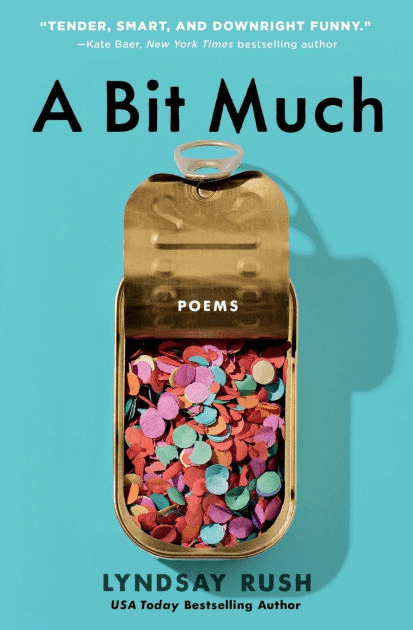
5-star book: A Bit Much: Poems

This year, I’d like to post more detailed blogs about some of the books I have read and rated 5 out of 5 stars. Here is the first one.

Book: “A Bit Much: Poems” by Lyndsay Rush

About the author: comedy writer and the poet behind the popular Instagram account @maryoliversdrunkcousin

When I read this book: January 2025

Quotes that stood out to me:

From “Make Like a Tree and Love“: “Scientists have a hunch that trees can become dear friends linking roots to swap resources, bending branches back to share sunlight, shielding each other from the wind. Most of what I know about love boils down to this simple distinction: who stays, and who leaves.”

From “I Am Not Afraid to Be Seen Trying“: “Or changing my mind. Or getting it wrong. Or freestyling instead of learning the routine. I’m not afraid of self-promotion or making a big deal out of it . . . I’m not afraid of low like counts or pissing off the algorithm of content that flops. And I’m not afraid to be cringe, or extra, or A Bit Much. Sure, there are things I’m scared of – like sharks and blond beards and talking to strangers on the phone – but of all the monsters under my bed, the only thing I truly fear is letting fear get in between me and anything I really want.”

From “Top Down, Cruising in My Own Lane“: “I slip the Do Not Disturb sign onto the doorknob of my life. I’ve got important work to do: minding my own business accommodating my whims. Guarding my joy: nose buried in the story only I can tell.”

There are many other essays I really enjoyed that I did not quote here. I highly recommend this book to anyone!

5 out of 5 stars

Book review posts, Uncategorized

September 2025 Reads

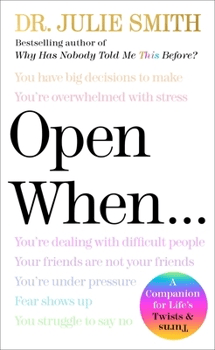
“Open When: A Companion for Life’s Twists and Turns” was written by Dr. Julie Smith, who has over 10 years of experience as a clinic psychologist and is one of TikTok’s top 100 creators. You can find Dr. Julie on Instagram/TikTok/Youtube at drjulie. This book covered advice for navigating anger, setting boundaries, comparison, confidence, friendships, parenting, arguing, seeking help, overwhelm, priorities, grief, apologies, and much more. Here are some of the many insights that resonated with me.

Whether it’s the good news or the bad, if you have to keep parts of your life under wraps to fit in, that’s not a friendship that is going to nourish and bring out the best in you. Search for acceptance and belonging in the right places. Consider: Is this a place I truly want to belong? Would being recognized as part of this group be a positive in my life? How much of myself, my beliefs, or my values would I be expected to change in order to be accepted? Is that okay with me?

Comparison can lead to constructive forward motion and be a good thing. If it leads to envy, resentment, bitterness, and a loss of self-worth, then we are getting it all wrong, and both our efforts and our attention have been misplaced. Questions to ask yourself: What do I feel envious of specifically? What specific skills do they have that I would like to have also? Would learning those skills help me with achieving my own goals? How did they get there? Can I imitate any of that process to help me get closer to my personal goals?

Confidence is the bus that never arrives while you sit waiting. It usually makes an appearance after you have decided to walk and you’re almost at your destination. So get to work on making some progress, and the bus will likely arrive once you’re a little way down the road.

I highly recommend this book!

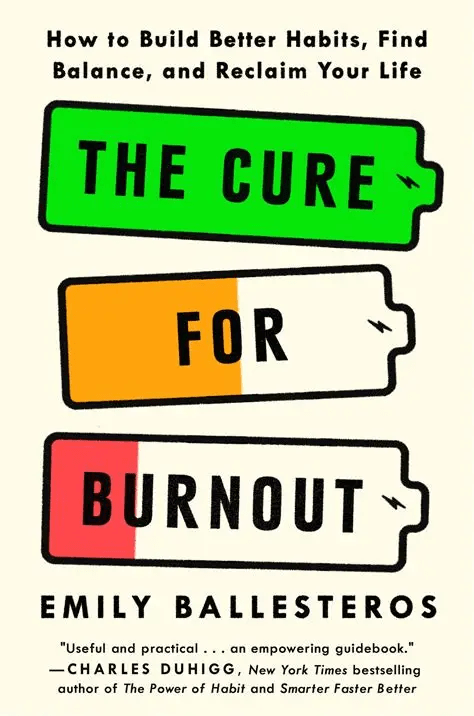
“The Cure for Burnout” was written by Emily Ballesteros, who has a burnout management coaching business. This book outlines five areas in which you can build healthy habits to combat burnout: mindset, personal care, time management, boundaries, and stress management. I learned so much from this book. Here is just a snippet.

  • Burnout is a state of exhaustion, stress, or misalignment with the direction your life is heading in for an extended period of time. Tangibly, burnout will consume your calendar, sabotage your relationships, and harm your physical health. Intangibly, it will steal the best years of your life while you have your head down in survival mode. It will destroy your mental health and cause exhaustion and possibly depression.
  • There are three kinds of burnout, and people can suffer from more than one type:
    • burnout by volume – burnout as a result of a high volume of responsibilities, a compact schedule, and very little downtime
    • social burnout – burnout as a result of interpersonal demands that exceed your available social resources – these people become the person everyone confides in, vents to, or asks for favors because they are pleasant and reliable
    • burnout by boredom – burnout as a result of chronic disengagement and disinterest in the items in your life

Think of personal care as the equivalent of getting gas on a road trip: there is never a convenient time to stop. The personal care pillar mandates that we go out of our way, stop to refuel, and sacrifice the time we could spend “productively” on something else.

  • Think of your minimum non-negotiables – getting a minimum amount of sleep, eating food at certain intervals, getting movement, having alone time, etc.
  • To manage stress, pause/postpone projects that you’ve loved but are currently bringing more stress than joy, simplify projects, delegate/outsource tasks, and quit doing unnecessary tasks.
  • Set boundaries. What boundaries might help reinforce the changes you want to make?

This book was packed with information, and I highly recommend it!

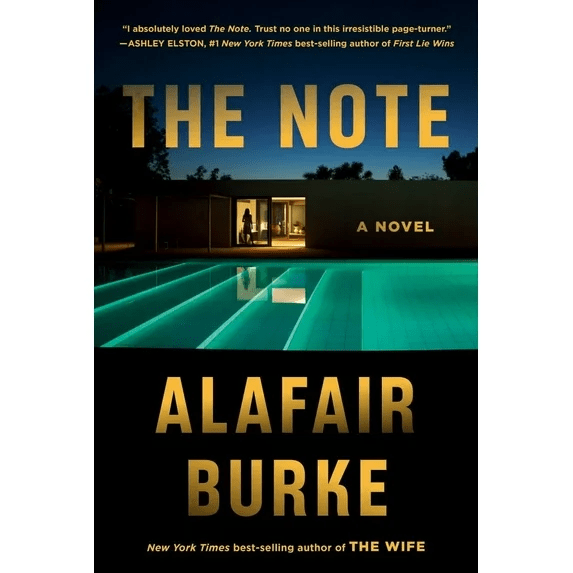
“The Note” was written by Alafair Burke, an Edgar-nominated New York Times bestselling author of fifteen novels of suspense and professor of Criminal Law. The main storyline of this book is that a vacation in the Hamptons went terribly wrong for three friends with a complicated history. A prank involving a mysterious note led to a missing tourist and a police investigation, unraveling layers of secrets and betrayals. I don’t typically read fiction books, and I won’t spoil this one. Overall, it was an interesting changeup from the books I typically read. This book kept me interested, but it contained overloaded themes of cancel culture, racism, anti-Asian hate, true crime obsession, and more. It seemed that the author wanted to mention many different issues in the book.

“Build the Life You Want” was written by Arthur C. Brooks and Oprah Winfrey. Arthur C. Brooks is a professor at Harvard Business School and teaches courses on happiness and is also an acclaimed author and speaker. Oprah Winfrey is a global media leader and public figure. This book covered the four big happiness pillars: family, friendships, work, and faith. Here are some of my many takeaways:

  • Ask yourself the good questions: What does living well mean – for me, not according to someone else’s model – and how do I do it? What is genuinely worth striving for? What can I offer, and how can I serve? What lessons can I glean from my experiences, especially the toughest ones? How do I make the best use of my limited time on this earth?
  • Stop caring what others think. “We all love ourselves more than other people, but care more about their opinions than our own.” “Care about people’s approval and you will be their prisoner.”
  • The key to finding meaningful work is to feel a sense of accomplishment and to believe that your job is making the world a better place. Look for a fundamental match between an employer’s values and your own. At the same time, put some space between your job and your life, and make friends and spend time with people who have no connection to your work.

Our impulses, amplified by the consumer economy, entertainment, and social media push us to spend our time idolizing money, power, pleasure, and prestige. These idols all stand in the way of enjoyment, satisfaction, and purpose. They substitute pleasure for enjoyment, make satisfaction harder to attain and keep, and focus us on things that are trivial and not meaningful. The four idols are distractions to numb us to emotional circumstances we dislike and feel we can’t control.

I highly recommend this book for those interested in learning more about finding happiness in family, friendships, work, and faith.