I read 3 books in July. Here is a blurb about each of the 3 books I read in July.
“Lessons from My Teachers” was written by Sarah Ruhl, a playwright, poet, teacher, and professor at the Yale School of Drama. This book expands the definition of “teacher” beyond traditional academics to include parents, children, mentors, etc. Here are some lessons that stood out to me.
Is all of school a way of saying goodbye to your parents to make room for other teachers in life? Is the beginning of school a way of saying your parents can’t teach you everything, and you need independence of mind to go on your way through the world?
You never know where rejection might lead. Sometimes a rejection leads you to your next collaborator or friend.
Piano/band teacher – taught us we were worth teaching, how to practice, how to sit up straight, how to show up every week, how much dull repetition it takes to make something beautiful, and how to make a mistake in the music and keeping playing and keep moving forward.
You are the expert of your own story.
The very young and very old remind us to be in the moment. They walk slowly and look around as they walk.
Students sometimes make the best teachers.
So many events, rituals, and practices that seemed essential pre-pandemic turn out now to be optional.
We need to keep finding teachers over the course of our lifetime. Finding a teacher is also a process of letting oneself be taught – which is a kind of bravery.
One’s attitude toward almost any situation can make it an occasion for a teaching or a learning. What am I teaching right now? What am I learning right now?
Always be deeply interested in other people and the world.
The blue whale swims and swims, and when she wants to eat, she simply opens her enormous mouth and water and garbage and krill flow in. That big blue whale has an automatic sieve system to sort out what’s food and what’s waste. Be like a blue whale. Listen to all criticism, but filter out what doesn’t serve you.
One of the simplest paths to deep change is for the less powerful to speak as much as they listen, and for the more powerful to listen as much as they speak.
4 out of 5 stars
“Never Enough: When Achievement Culture Becomes Toxic – And What We Can Do About It” was written by Jennifer Breheny Wallace, an award-winning journalist and a frequent contributor to The Wall Street Journal and The Washington Post. Jennifer spent three years traveling across the U.S. interviewing parents and students. What she found is sobering: our culture’s obsession with optimizing performance has contributed to rising rates of anxiety, depression, and self-harm among young people. Here are some main takeaways.
At the heart of toxic achievement culture is a painful message kids are absorbing – that their worth depends on what they produce: their GPA, the number of social media followers they have, college admissions, and resume-building activities. They have become proxies for their identity, and many students feel they only matter when they succeed.
Parents, often with the best intentions, unintentionally reinforce this mindset. Wallace describes how families “weave individualized safety nets,” making constant day-to-day decisions aimed at maximizing achievement and preventing anything that might derail future success. In a hypercompetitive world, it’s easy to believe that a “good” college is the gateway to a good life.
Wallace argues that the antidote to toxic achievement culture is mattering – the belief that you are valued for who you are at your core, not for your output.
Ways parents can show kids they matter
respond in a warm and sensitive way
explicitly tell kids how much they matter to you
express unconditional acceptance – even after a failure
show warmth through affection
engage in mutual activities
teach kids how to ask for help when they need it and model these skills yourself
make chores mandatory without an allowance – giving kids real responsibilities builds resilience by showing that their existence and actions genuinely impact others
make volunteering mandatory and widen their circle of concern and caring
Avoid engaging in harsh criticism, invalidating emotions, and comparing kids negatively to others.
As parents, we sometimes think our role is to help fuel and support our kids’ ambition. In a hypercompetitive culture, kids sometimes need the opposite. They need adults to prevent them from sacrificing their minds and bodies on the altar of achievement and to teach them how to build a life they won’t need substances to escape from.
Wallace also highlights what truly predicts long-term well-being for college graduates, and it’s not prestige. Students who reported the highest life satisfaction had deeply engaging college experiences, such as:
taking a course with a professor who made learning exciting
having a professor who cared about the student personally
having a mentor who encouraged the student to pursue personal goals
working on a meaningful project across semesteres
participating in an internship
being active in extracurricular activities
What stayed with me most from this book is Wallace’s reminder that beneath all the pressure, fear, and competition, parents ultimately want the same thing: for their children to live meaningful lives filled with connection, purpose, and joy. We want them to feel valued, and to help others feel valued too. We want them to live lives that truly matter.
This book was fascinating, eye-opening, and deeply relevant.
4 out of 5 stars
“The Truth in True Crime: What Investigating Death Teaches Us About the Meaning of Life” was written by J. Warner Wallace, a cold-case homicide detective. In this book, Wallace recounts true crime stories from his real-life experience and provides readers with applicable life-changing truths. This book can be considered a practical wisdom book and a Christian evidence book. Honestly, I didn’t really like the style of writing. It came across as didactic and pastoral, and every chapter aggressively pivoted into a sermon. This was a formulaic hybrid of true-crime and heavy-handed pastoral sermonizing. With that said, here are some lessons:
Embrace friends who hold an objective view of virtue. Identify friends who care about all of you: spiritual well-being, physical well-being, emotional well-being, and ethical well-being.
Your marriage preaches. Preach the right message. Your marriage is an image of Christ’s love for the church. Commit to communication.
Constructing an identity based on shifting cultural trends rather than objective moral truth leaves individuals fragile and lost.
Healthy guilt acts as an internal alarm signaling a need for grace and correction, whereas destructive shame isolates or distorts identity.
Your worship decides your destiny.Where do you spend your money? How do you spend your time? On what do you spend your talents and abilities? What captivates your thoughts and attention? What do you trust/on what do you rely? What do you publicly proclaim? How do you behave?
Trauma occurs when our perceptions of the world and our role in it (our “global” beliefs and goals) are disrupted, especially if we assumed nothing bad would ever happen to us. Traumatized people find themselves “reappraising the traumatic event to perceive it as more consistent with their pre-trauma global beliefs and goals . . . or revising their global beliefs and goals to accommodate their experience.”
Resilient people aren’t permanently paralyzed by the stress of their trauma. Some rebound and continue moving forward. Some flourish, rebounding to levels far above where they were prior to the traumatic event.
People who make sense of and find meaning in their suffering express better psychological and physical well-being and are less likely to be depressed, mentally ill, or experience PTSD. They are also less inclined to overdrink or become addicted to medication and less apt to commit suicide.
3 out of 5 stars
I look forward to reading, learning, and sharing more with you soon!
It’s been over a month since I’ve posted a Thoughtful Thursday post. I am discerning whether to continue with weekly Thoughtful Thursday posts or whether to post those less often so that I can post more book posts. With that said, here are some of the most interesting things I’ve learned this month!
The Mel Robbins Podcast – The Top Expert Advice of the Year
People will consistently give you what you allow them to give you. You are in control of two things in this world: what you give and what you accept.
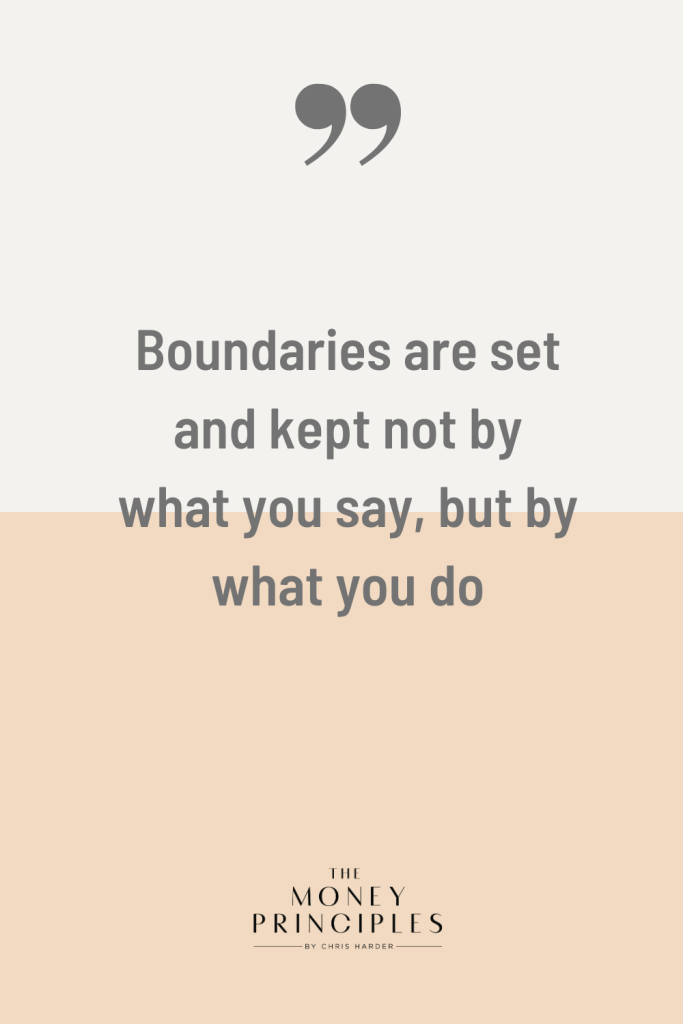
Boundaries are not walls to keep things out. Boundaries are bridges to let the right things in.
Boundaries are meant to protect your peace and your energy. When you’re setting boundaries, ask yourself what you need in your life right now, what boundary you need to set that will lead you to what you need, and why you must stick to the boundary. What is it costing you not to stick to this boundary? Your future? Your peace? You tell people how to treat you by what you continuously accept.
You spend more time trying to protect the battery on your smartphone than you do protecting your own or recharging your own battery.
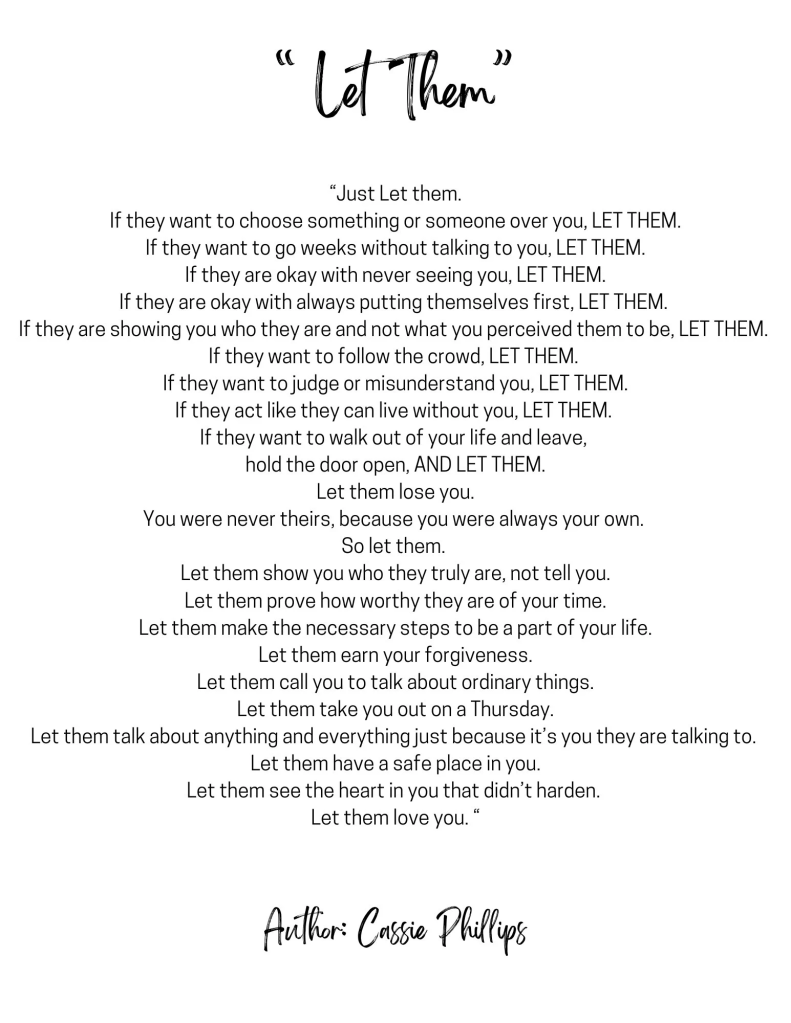
LET THEM is a boundary.
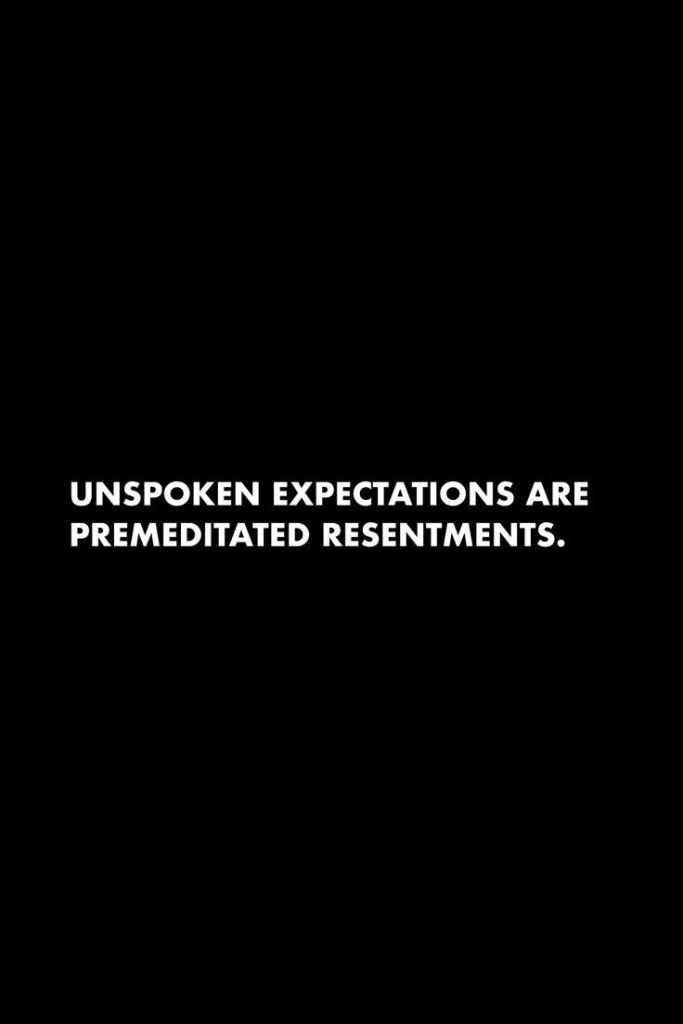
I really enjoyed this post from Gabe the Bass Player:
This is at the heart of so much heartbreak and frustration in this business.
Our personal expectations are ‘just the way it is’…and it’s easy to think they’re shared by others…or at least they should have read my mind by now.
It’s worth asking the people around you what they’re really hoping for. You’re sure to learn something new. Something they’ve been thinking all along but secretly expecting you to just read their mind.
You’re good but you’re not that good. You’re going to have to ask.
I am enrolled in UCC Contracts/Business Law and Probate Law this semester for my paralegal certificate program. I am not an attorney, and this is not legal advice. These are some fascinating facts I have learned so far.
For most contracts, the general rule is that while it’s not illegal to enter into a contract with a minor, the contract is voidable at the discretion of the minor. Once reaching the age of majority, they can also disaffirm contracts. The cases I read that stood out to me involved minors voiding arbitration clauses in contracts and voiding waivers of liability by voiding contracts. I believe this can be a risk of liability for employers who hire minors. For example:
Pak Foods Houston, LLC v. Garcia, 433 S.W.3d 171 (Tex. App.—Houston [14th Dist.] 2014) involved a personal injury claim. A minor filed a personal injury claim against a fast-food restaurant. The restaurant filed a motion to compel arbitration based on an arbitration agreement that the minor signed as part of an employment agreement. The court found that the contract was voidable, and the minor disaffirmed the agreement by terminating her employment and filing suit.
I’ve been intrigued by the many rules of Probate Law this semester and how different state statutes vary. For those with wills, a spouse cannot be disinherited in the will, but disinheriting children is allowed. Each state has a plan for the assets of those who die without wills. As an example, for those who die without wills in Minnesota:
524.2-102 SHARE OF THE SPOUSE.
The intestate share of a decedent’s surviving spouse is:
(1) the entire intestate estate if:
(i) no descendant of the decedent survives the decedent; or
(ii) all of the decedent’s surviving descendants are also descendants of the surviving spouse and there is no other descendant of the surviving spouse who survives the decedent;
(2) the first $225,000, plus one-half of any balance of the intestate estate, if all of the decedent’s surviving descendants are also descendants of the surviving spouse and the surviving spouse has one or more surviving descendants who are not descendants of the decedent, or if one or more of the decedent’s surviving descendants are not descendants of the surviving spouse.
In other words, if you are married without kids and die without a will, your surviving spouse gets 100% of your assets. If you are married with kids and neither you nor your spouse have kids with other people, your surviving spouse gets 100% of your assets. Yet, if you are married with kids and you or your spouse have living kids that are not biologically shared, your living spouse gets the first $225,000 plus 1/2 of any balance of the estate, and the rest gets split up between all of the kids (descendants).
My husband and I are doing the Bible in a Year series with Fr. Mike Schmitz, which has been so informative and interesting so far. One thing that has resonated with me so far is that many of us are pharaohs to ourselves. We make ourselves so busy that we don’t have time to think about God. We make ourselves so busy that we have made ourselves into slaves by saying “I have to do this, I have to do that” and all of the other things that we’ve set up. We’ve set up a pace of life for ourselves that is unmanageable, and we don’t have time for worship. God’s people were never meant to be slaves – not a slave to Pharaoh and not a slave to the pharaoh that lives inside of us. We are meant to be free so that we can truly belong to Him.
And if you aren’t religious, this can still also apply to several other areas of your life. What are the things that you are making yourself a slave to? Are you spending too much time working, scrolling on your phone, etc.? What are the things you say you don’t have time for? What are you doing with your time instead? Are you making time for the things you say matter the most to you?
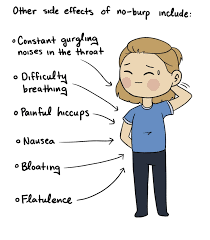
Perhaps the most fascinating thing I learned this month was about the existence of the syndrome known as R-CPD (inability to burp).
What are the symptoms of R-CPD?
Additional symptoms, outside of the lifelong inability to burp or belch, can include:
Abdominal and/or chest bloating and pain
Excessive flatulence
Nausea
Gurgling noises from the neck and chest
Difficulty vomiting or fear of vomiting (emetophobia)
As shown, the chief complaints are GI-related. Yet, GI doctors (and many other doctors) are not aware of this condition, leading many to run numerous tests instead of asking the right questions. In an ideal world, when patients complain of bloating, gas, nausea, and gurgling, GI providers and other providers would ask “Can you burp?”If not, they should be treated for R-CPD. There are not many providers who are aware of and treat this syndrome.
Here is more information about it, such as the symptoms, treatment, etc. There is even a Reddit community for this condition: https://www.reddit.com/r/noburp
I look forward to reading, learning, and sharing more with you soon!