Book review posts, Uncategorized

June 2026 Reads

I read 3 books in June. I realized that I inadvertently didn’t include a book I read in May 2026 (“Who is Government? The Untold Story of Public Service” edited by Michael Lewis) in my last blurb, so I am including it in this blog post. Then, I will blurb about each of the 3 books I read in June.

Who is Government? The Untold Story of Public Service” was edited by Michael Lewis and revealed that the human beings behind government institutions – dedicated professionals whose work often goes unrecognized despite its critical importance. Here are some parts that stood out to me:

  • Democratic government isn’t really designed to highlight the individual achievement of unelected officials. This book reframed government as people who work is largely invisible but essential – civil servants whose decisions impact public safety, economic stability, and national well-being.
  • The National Cemetery Administration has received the highest rating of any entity, public or private, in the American Consumer Satisfaction Index for 7 consecutive years. The National Cemetery Association has standardized cemetery operations, developed innovative memorial programs, and has created opportunities for unhoused veterans while ensuring that all veterans receive identical honors regardless of rank. There are 155 national cemeteries across the U.S.
  • The National Archives and Records Administration (NARA) makes government records accessible to all U.S. citizens regardless of geography through the Citizen Archivist Program and History Hub. Anyone can submit a query on History Hub and a roster of NARA archivists, other federal staffers, and citizen volunteers will chime in with answers or advice on where to look to find out more.
  • I also enjoyed reading about a mining engineer, the U.S. Food and Drug Administration, and the Consumer Price Index.

4 out of 5 stars

No More Tears: The Dark Secrets of Johnson & Johnson” was written by Gardiner Harris, who was the public health and pharmaceutical reporter for The New York Times and is now a freelance investigative journalist. This book was fascinating and frustrating; it took me 16 days to read it, mostly because I became frustrated reading about Johnson & Johnson’s repeated negligence, manipulation, and coverups.

Johnson & Johnson has been beloved for generations, and many Americans use its products daily: Johnson’s baby shampoo, Johnson’s baby oil, and dozens of other baby lotions, conditioners, and sprays: Aveeno, Neutrogena, Tylenol, Motrin, Zyrtec, Benadryl, Pepcid, Sudafed, Imodium, Listerine, and Nicorette. Many of the company’s products are lifesavers, including medications to treat HIV, cancer, and rheumatoid arthritis. 7 in 10 patients globally who undergo surgery are stitched up with Johnson & Johnson sutures. Johnson & Johnson is the largest healthcare conglomerate in the world. Still, this book’s main theme is that Johnson and Johnson has knowingly contributed to the deaths and grievous injuries of millions.

Here are some of my many takeaways:

  • The Talcum Powder Cover-Up: Johnson’s baby powder contained talcum powder and asbestos, which led to mesothelioma, lung cancer, and ovarian cancer. J & J knew this but repeatedly lied about it.
  • The Tylenol Danger: Johnson & Johnson heavily advertised Extra Strength Tylenol as the “most potent pain reliever you can buy without a prescription.” At least 150 Americans die every year and 30,000 are hospitalized from taking too much acetaminophen, and acetaminophen has been the nation’s leading cause of acute liver failure for decades, yet J & J has refused to put a product warning about not exceeding recommended dosage due to the risk of severe liver damage.
  • Procrit & Risperdal Exploitation: EPO Procrit stimulates red blood cell production and J & J promoted it aggressively to cancer patients emphasizing increased energy, reduced fatigue, and improved quality of life, yet many of these benefits weren’t demonstrated in rigorous clinical trials. Instead, multiple studies showed increased risk of heart attacks and strokes, blood clots, higher mortality, and simulation of tumor growths. Risperdal was originally approved to treat schizophrenia, but was promoted for treatment of symptoms such as anxiety, hostility, impulsiveness, and agitation, and serious side effects were minimized: rapid weight gain, strokes, death, metabolic problems, diabetes risk, elevated prolactin levels, and breast development in boys.
  • Defective Implants & Devices: Pinnacle metal-on-metal hip implants caused metal surfaces to wear against each other, damaging surrounding muscles and bones, triggering inflammatory responses, elevating cobalt and chromium levels, and requiring complex revision surgery.
  • Risks to Women’s Health: The Ortho Evra birth control patch resulted in inconsistent hormone delivery, blood clots, strokes, and other serious cardiovascular events. The Prolift vaginal mesh caused a sharp increase in painful sex and mesh protrusions in vaginal canals that required surgery.

All in all, Johnson & Johnson concealed clinical trials that yielded unfavorable results, manipulated literature and hired ghostwriters to publish biased, favorable studies, and used aggressive legal maneuvering and heavy-handed PR strategies designed to silence whistleblowers and intimidate media outlets with financial ruin.

Some of my reflections:

  • “Every drug has risks” became an excuse to tolerate any risk whatsoever for the sake of not risking the chance of making as much money as possible.
  • Consumers cannot afford to give blind trust to healthcare conglomerates or rely entirely on federal watchdogs to protect them.
  • The sad truth is that the FDA is chronically underfunded and consistently outmatched by the legal and lobbying power of multi-billion-dollar conglomerates, and the FDA ignored, enabled, and encouraged every Johnson & Johnson disaster in this book.
  • This book is an urgent, real-world warning to be vigilant and question the safety, research, and marketing behind every day medical products.

I highly recommend this book!

The Great Sex Rescue: The Lies You’ve Been Taught and How to Recover What God Intended” was written by Sheila Wray Gregoire, Rebecca Gregoire Lindenbach, and Joanna Sawatsky. The authors conducted extensive research through a survey of 20,000 women, focus groups, and interviews, alongside a deep-dive review of bestselling Christian sex & marriage books. Through this data, they identify how common marriage narratives have damaged women’s sexual well-being, pleasure, and marital satisfaction. This book was incredibly eye-opening and offers a vital correction to some of the harmful perspectives many Christian women have been taught to beleive.

What is most stark throughout the authors’ findings is the sheer contrast between how much is expected of women versus how little is expected of men in mainstream Christian marriage literature.

  • The Double Standard: Of the 13 Christian bestsellers the authors analyzed, only 3 books asked all of the following of husbands: stay faithful (without offering caveats), make sex pleasurable for her, do not insist or expect sex of any kind whenever your wife is physically or emotionally unwell, and seek consent from your wife. Meanwhile, these same books asked, on average, over 5 of the following of women (and 5 books asked all of them): have intercourse as frequently as the husband would like to have intercourse even if he is watching porn or has a lust problem; understand that without intercourse, her husband is more likely to have an affair, and it will at least partly be her fault; help him reach climax in some way even when she is on her period, recovering postpartum and not sleeping, or during any other problem she may face, since her problems are not reasons to refuse sex; prevent weight gain to stay attractive; let her husband feel that he is a good lover; and initiate intercourse and be enthusiastic.
  • The Harm of “Duty Sex”: Church culture and Christian books frequently emphasize, “Do not deprive your husband” rather than recognizing that a woman’s sexual pleasure matters. When the message focuses strictly on a husband’s fulfillment while ignoring the wife’s, it breeds resentment, anxiety, and a higher rate of physical pain for women.
  • The Cycle of Pain: Believing the obligation-sex message makes women more vulnerable to sexual dysfunction. Forcing oneself to “muscle through” painful sex strengthens the biological association between intimacy and pain, making physical recovery and treatment much more difficult. True intimacy must be freely chosen and mutually desired.
  • Redefining Satisfaction: Evangelical culture has used frequency as the primary measure of marital success, but research proves it is a poor predictor of actual relationship health. Interpersonal dynamics, mutual respect, and emotional safety are far superior measures.

Some of my reflections:

  • A healthy view of intimacy should be personal, pleasurable, pure, prioritized, pressure-free, passionate, and focused on putting the other person first. Women’s experiences, emotions, and bodies matter just as much as men’s.
  • If your body isn’t working as it should, please seek out medical help. To ignore physical pain or dysfunction hurts both partners.
  • While a spouse is receiving treatment for sexual dysfunction, it should be viewed as an opportunity to extend deep, Christlike patience and love toward them.

Many more topics, myths, and cultural paradigm shifts were discussed in this book, and I highly recommend it to Christian women.

10 Simple Things to Remember: An Inspiring Guide to Understanding Life” was an easy read written and illustrated by Marci. Here are some main lessons.

Love is forgiving. Only God can love you unconditionally. The rest of us are human. Do not ask for perfection from others because they will make mistakes.

  • The happiest moments in life take place in the context of relationships.
  • If you always do your best, you will not have regrets.
  • In spite of your best efforts, some things are just out of your control.
  • Often we find it is only when we look back that we can see that what we thought was a “wrong turn” has brought us to exactly the right place and every step was a right one after all.
  • Some of the most important ways we define ourselves come from the obstacles we face, the challenges we overcome, and the losses we sustain, as it is most often the difficult times in our lives that call us to understand what we are made of.
  • True friends share your joy, see the best in you, and support you through your challenges.
  • Friendship is a gift of commitment, trust, listening, and encouragement.

Whatever is happening in your life, keep these things in mind:

  • Big problems can be solved in small steps.
  • When you are still, the gentle voice from within will guide you. Listen carefully.
  • Remember to pray and let God take the burden of worry from your heart.
  • Accept that we each learn life’s lessons in our own way.
  • A lot of people love you more than words can say.
Book review posts

July 2025 Reads

It’s been a while since I’ve posted on this blog since I have had other priorities. I read 4 books in July. Here is a blurb of each of the books I read in July.

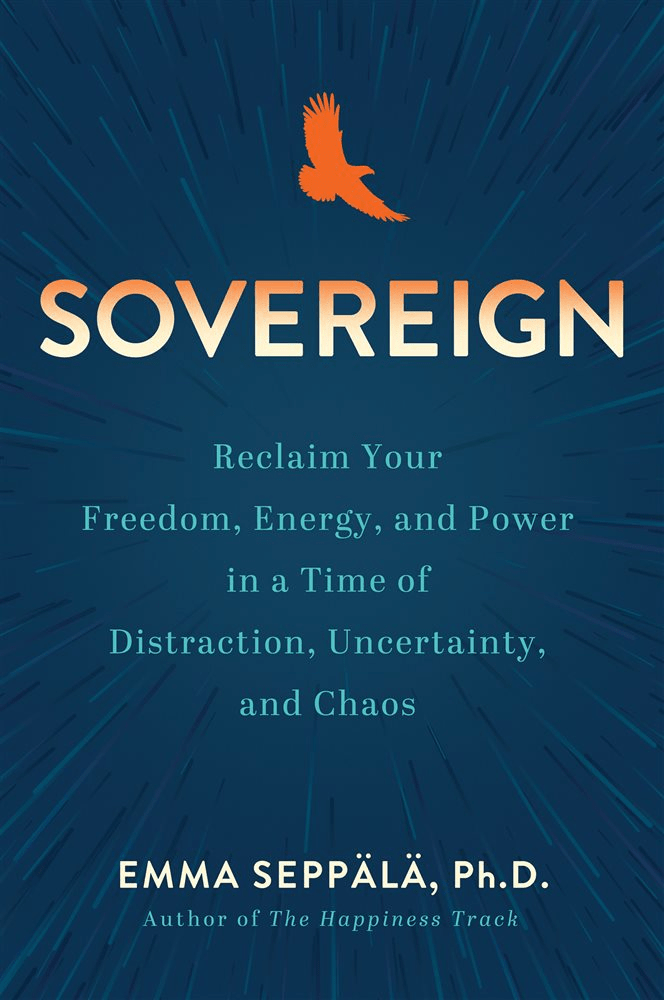
Sovereign: Reclaim Your Freedom, Energy, and Power in a Time of Distraction, Uncertainty, and Chaos” was written by Emma Seppala, a Yale lecturer and international keynote speaker. This book was insightful! It was packed with tips to recharge your life and change the way you think and act – from your emotions, mind, relationships, intuition and body. Here are some of my many takeaways:

  • Sovereignty is reclaiming your right to exist as you. It involves courage, awareness, and self-honoring. Consider what would happen if you loved and cared for yourself as much as you do for others.

Some of the many tips covered:

  • Sovereign self
    • Listen to the state of your mind and body. Ask yourself what you need.
    • Prioritize what fills your cup – what brings you rest, rejuvenation, energy, vitality, upliftment, inspiration, and joy.
  • Sovereign emotions
    • Remember: when you run from your feelings, you run from your healing. Feel instead of suppressing.
    • Remember that emotions are energy in motion. Take care of your basic needs: sleep, diet, exercise, and yourself.
  • Sovereign mind
    • Create boundaries around your media. Don’t go on social media to look at what other people are doing or selling.
    • Observe and discern: What are the intentions of the messaging. Is it giving you freedom or binding you in fear? Do you wish to engage with it?
  • Sovereign relationships
    • 6 keys of positive relational energy
      • caring for, being interested in, and seeing the best in others
      • providing support for one another, including offering kindness and compassion
      • avoiding blame and forgiving mistakes
      • inspiring one another and focusing on what’s going right
      • emphasizing meaningfulness
      • treating others with basic human values like respect, gratitude, trust, honesty, humility, kindness, an integrity
  • Sovereign intuition
    • Consult your gut feelings.
    • Unplug from technology. Create opportunities for contemplation. Schedule idle time.
  • Sovereign body
    • Relate to your body as your best friend because that’s what it is. Learn to love it, care for it, listen to it, and live in harmony with its needs.
    • Reflect on these questions: Do you honor and care for your body the way you would a child? If not, what would it look like if you did?

This is one of the best books I have read this year, and I highly recommend it to everyone!

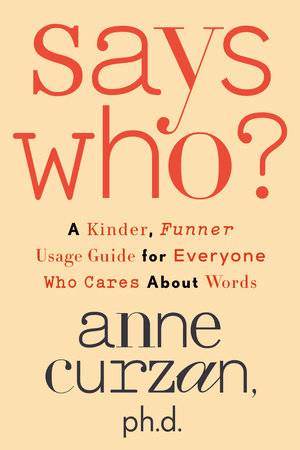
Says Who? A Kinder, Funner Usage Guide for Everyone Who Cares About Words” was written by Anne Curzan, professor of English Language and Literature, Linguistics, and Education at the University of Michigan. This book was intriguing, although some readers may find it overwhelming or too academic. Here are some things that resonated with me:

One key point for everyone who uses dictionaries is that dictionary editors are trying to walk a fine line between capturing words as they are used and providing guidance about the contexts in which some words are generally accepted or not accepted. While the editors of today’s dictionaries are usually trying to describe actual usage, we as dictionary users often erroneously assume that they are prescribing correct usage. Attitudes at the language change over time!

  • English has lots of synonyms in many areas of the lexicon, and they demonstrate the remarkable creativity we as humans bring to language, the many languages that have contributed to the English lexicon, the diversity of our linguistic identities, and the nuanced choices we get to make as speakers and writers.
  • Dictionary editors determine which pronunciations get recorded as standard and which get labeled as nonstandard – and which don’t get included at all.
  • What’s correct depends on where, when, and to whom you’re speaking. Formal writing has different expectations than casual conversation.
  • Many grammar rules are based on tradition, not logic. Usage evolves, and what was once “wrong” can become accepted over time. Examples:
    • Peruse” has long meant “to read thoroughly” – but now people use it to mean “to glance over, skim” – which is becoming more acceptable.
    • Literally” is used to mean “in the literal sense” AND “figuratively.”

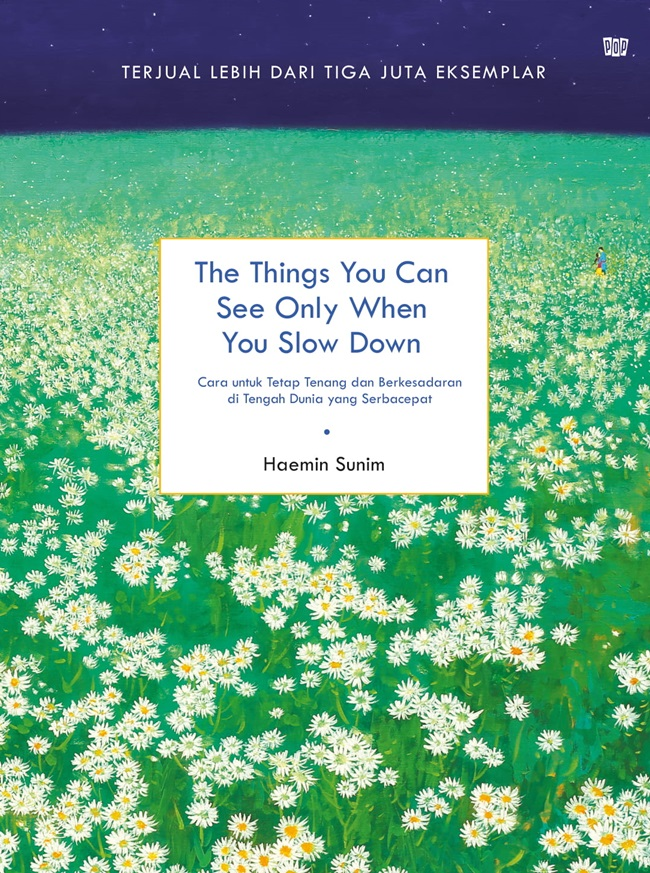
The Things You Can Only See When You Slow Down” was written by Haemin Sunim and contained so many life lessons and a guide to mindfulness. I got a lot out of this book. Here are some takeaways:

  • According to some psychologists, happiness can be assessed with two simple questions: First, do you find meaning in your work? Second, do you have good relationships with those around you?
  • We like to get involved in other people’s business, thinking we are doing so for them. We offer unsolicited help and interfere with their lives. We take away their power and make them feel incapable. This stems from our desire for control and recognition. It has little to do with love.
  • A bad driver brakes often. A bad conversationalist also brakes often – interrupting the flow with his own stories.
  • Being a good boss requires much more than just having a lot of technical knowledge. It is important to have integrity and a positive relationship with the staff, to give timely feedback and professional mentoring, and to advocate for what the team needs.

I really enjoyed the lessons from this book and highly recommend it.

I Could Live Here Forever: a novel” was written by Hanna Halperin. This is a fiction book and is not what I typically read. This book was described as “a gripping portrait of a tumultuous, consuming relationship between a young woman and a recovering addict.” I agree with that description. Since this was a fiction book, I didn’t take many notes, but these quotes resonated with me:

“The nice thing about writing was it took pain and warped it into something useful. I could shape it into a beginning and a middle and an end. It was manageable that way . . . by the time I was done with it, it was just a story.”

Overall, I wanted more character development.

Book review posts, Uncategorized

May 2025 Reads

It’s been a while since I’ve posted on this blog since I have had other priorities. I read 5 books in May. Here is a blurb of each of the books I read in May.

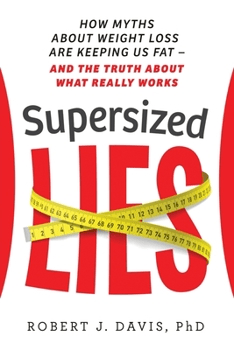
Supersized Lies: How Myths About Weight Loss Are Keeping Us Fat – And the Truth About What Really Works” was written by Robert J. Davis, PhD, host of the Healthy Skeptic video series and an award-winning health journalist whose work has appeared on CNN, PBS, WebMD, and the Wall Street Journal. Here are some main points:

Instead of focusing on individual villains, we need to pay attention to the general quality of our diets – emphasizing whole foods and minimizing highly processed foods – vegetables, fruits, beans, nuts, seeds, seafood, lean poultry, and whole grains, such as oats and rice. Whole foods tend to have fewer calories per ounce, more fiber, and be more filling, and we often eat them more slowly, giving our brains time to get the message that we’ve had enough.

  • When calories are cut or increased by a specific amount, the change in weight will vary from person to person, and these differences are due at least in part to genetics.
  • Calories shouldn’t be the only consideration. That can detract from the pleasure of eating, contribute to an unhealthy relationship with food, and result in too little of the things your body needs. Instead, when choosing what to eat, also pay attention to the sugar, fiber, and protein, and consider how healthful and filling the foods are and how you feel after you eat them.

If dietary supplements had to meet the same standards of proof for safety and effectiveness as medications, few, if any, would be allowed on the market. Supplement makers aren’t required to test for safety. The law assumes that supplements are innocent until proven guilty – just the opposite of how medications are regulated.

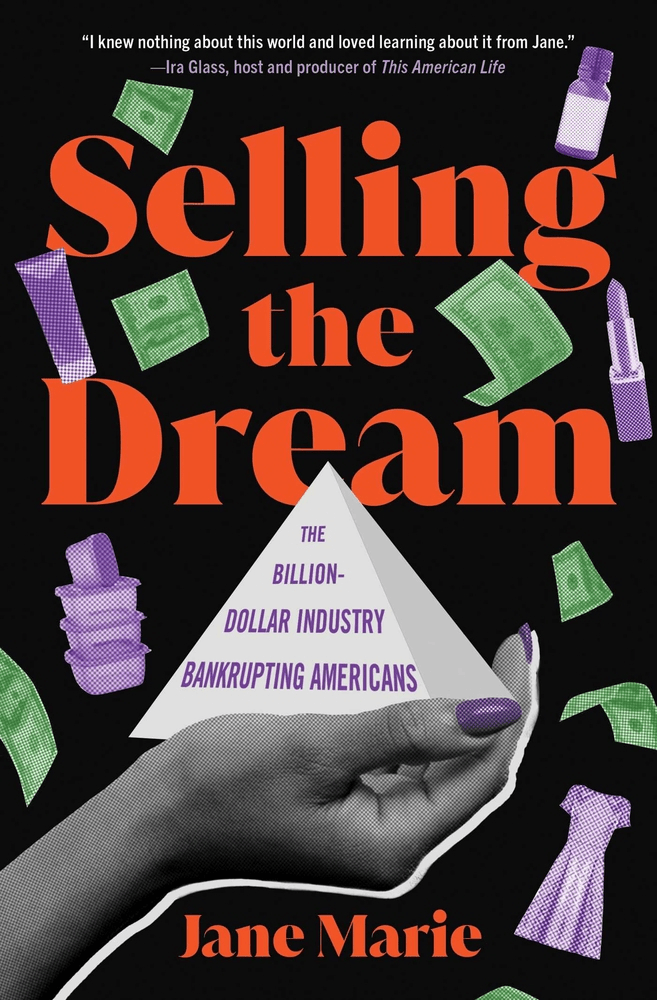
Selling the Dream: The Billion-Dollar Industry Bankrupting Americans” was written by Jane Marie, a Peabody and Emmy Award-winning journalist. In this book, Jane expands on her popular podcast The Dream to expose the source of multilevel marketing schemes. Although I have never been involved in multilevel marketing (thankfully), I got a lot out of this book! Here are some main takeaways:

  • 99% of those who join MLMs make no $ or even lose $. Women make up 74% of the MLM workforce.
  • In an MLM, the product being sold doesn’t matter since most of the $ is being made via recruitment fees and distributors stocking their own shelves with inventory.
  • Despite what those in MLMs may believe, they are not business owners. They don’t control anything except their own sales efforts. They don’t own the product they’re selling or any IP, they don’t set their own prices or salaries, and they are often bound by strict rules in how they can market and sell the products. They also lack a guaranteed salary, benefits, and workers’ rights.

The MLM world is a bizarre land where incentives can range from the opportunity to buy your own ticket to a conference to earning a new rank solely based on products you’ve purchased that now sit in your garage. The disincentives are just as plain: once you’ve roped in your friends and family, quitting seems off the table and an admission that you sold them a bill of goods.

“Nutrition” clubs are seemingly popping up everywhere. One of the most fascinating things I read in this book is that Herbalife nutrition clubs prohibit signs that state or suggest that Herbalife products are available for retail purchase on the premises. Club owners are not permitted to post signs indicating whether the club is open or closed, and the interior of the club must not be visible to persons outside.

I recommend reading this book if you want to learn more about the MLM industry.

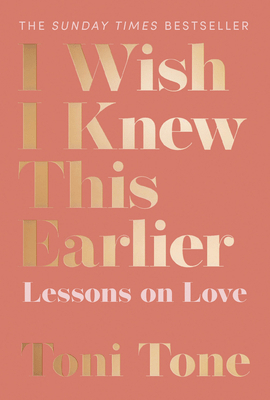
I Wish I Knew This Earlier: Lessons on Love” is an essay-type book divided into themes and written by Toni Tone, an award-winning speaker, writer, and social content creator. Here are some points that resonated with me:

  • Intimacy tells you more about a relationship than intensity. Can you be vulnerable? Do you feel safe? Is there trust? Do you have similar interests? Can you easily hold a conversation with them? Do you have similar values?
  • Have a life outside of your love life is essential. A healthy relationship should complement your life, not become it. A partner who is good for you wants you to flourish and wants you to be the best version of yourself. The best version of yourself is well-rounded, has friendships outside of your romantic relationship, hobbies, and aspirations outside of your romantic relationship.

We should choose to love people for who they really are because the painful truth is that potential doesn’t always manifest. You may think a person is capable of moving mountains for you, but should these mountains never be moved, how will you feel? Falling for potential is not just a disservice to you but it’s also a disservice to the person you are choosing to love. We don’t possess the power to change people. People change because they want to.

I highly recommend this book to anyone!

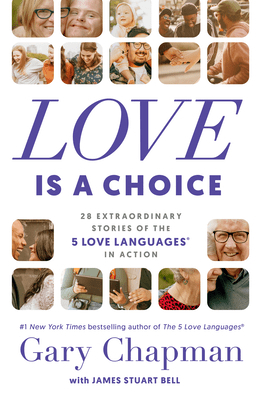
Love is a Choice: 28 Extraordinary Stories of the 5 Love Languages in Action” was written by Gary Chapman, author, speaker, and counselor and #1 bestselling author of The 5 Love Languages series. Here are some great points:

  • Perhaps one of the keys to finding an enduring affection is to be willing to accept the interruptions and intrusions.
  • How do you measure love? Each of us speaks a different love language. How can we learn someone’s love language? By asking them what makes them feel really loved or by watching how the person expresses love to others.
  • Love doesn’t require that we always have all the answers. Instead, many times love just asks that we listen to the problem, that we try to understand, and that we express our condolences, sympathy, or love. Sometimes love means just being there for the person we care about.

Love requires effort and action. Love is not passive. It requires constant effort, communication, and care. Actions like making time for each other, showing affection, or helping with everyday tasks can strengthen a relationship in profound ways.

Open, honest, and empathetic communication is necessary to foster understanding and connection. Instead of assuming your partner knows what you need, communicate your feelings, desires, and needs clearly. Practice active listening and empathy.

Compassion in the Court: Life-Changing Stories From America’s Nicest Judge” was written by Judge Frank Caprio, who became an unexpected television and internet superstar while in his eighties. Judge Caprio’s three-time Emmy-nominated television show, Caught in Providence, has amassed over 20 million followers across social media and his videos have accrued billions of views. Here are some key lessons:

  • True justice should be tempered with compassion. Treat people as human beings, not just as cases or statistics.
  • Compassionate decisions build trust in the judicial system. When people feel that they are treated fairly and with understanding, they are more likely to follow the rules and make positive changes.
  • What may seem unimportant to you could be incredibly important and life-changing to the person before you. One small act of kindness, one act of being thoughtful, can really change the course of a person’s life.
  • Put yourself in the shoes of the person you are facing and then ask yourself: What would help? How would you behave if it were your parents, grandparents, brother, sister, or relative in that situation? How would you want them treated?

My courtroom was a microcosm of the city of Providence, a progressive city that’s been welcoming immigrants for hundreds of years. Many of the defendants who have appeared before me may not have felt life had treated them fairly, but it was my sincere hope that in my courtroom they felt that they had the opportunity to speak, to be heard, and to be treated fairly in the way our system of justice demands.

Thoughtful Thursday posts, Uncategorized

Thoughtful Thursday – April 11, 2024

Optimal Finance Daily – 10 Money Questions Every Couple Must Answer
The Liz Moody Podcast – 10 Learnings From My Week At The Life-Changing Hoffman Process Personal Growth Retreat

Analyzing the last move

What Will You Give Up

April 9, 2024