Book review posts, Uncategorized

August 2026 Reads

I read 2 books in August – the least I had read in a while. Here is a blurb about each of the books I read in August.

“Somebody Told Me: The Newspaper Stories of Rick Bragg” was a delight. Bragg’s writing is everything I love in narrative journalism: rich sensory detail, storytelling shaped by character, respect for ordinary people, and deep empathy without sentimentality. Bragg won the 1996 Pulitzer Prize in Feature Writing for his “elegantly written stories about contemporary America” and is the recipient of the American Society of Newspaper Editors Distinguished Writing Award.

Here are some of the stories that stood out to me:

  • Mr. Cain – the Angola prison warden
    • “There comes a time when a man goes through what we call criminal menopause and he is unable to do the crime that he is here for. My prison is becoming an old folks’ home.”
  • 1996 – a Baptist church demanding the exhumation of a mixed-race baby
    • The deacons wanted to keep their graveyard “exclusively white.” They later apologized after drawing nationwide attention. It’s mind boggling that this occurred in 1996!
  • Stories of the bombings of Timothy McVeigh & Terry Nichols
    • “The embarrassing thing, for this tough man who answers questions in short, machine-gun bursts, is the damage to his eyes. The blast injured his tear ducts, so that there is nowhere for the tears to go except down his face. One of the few people marked by the bombing who does not feel compelled to cry looks like he cries all the time.”
  • Oseola McCarty
    • 87-year-old African American washerwoman who spent her entire life scrubbing other people’s clothes for pennies, saved over $150,000, and donated it to the University of Southern Mississippi to fund scholarships for Black students who couldn’t otherwise afford college.
  • The Oklahoma City Bombing and the trial of Susan Smith (the South Carolina mother who drowned her children.
    • These stories focused on local grief, broken towns, and police officers haunted by what they witnessed.
  • Florida State Troopers on the Skyway Bridge
    • A harrowing look at the officers who spend hours talking desperate people down from the edge
  • Brandon C. Blenden
    • As part of his sentence, he must mail a $1 check every Friday for ten years to the parents of the girl he killed. The memo line reads: “For the death of your daughter, Whitney.”

Key lessons from this book:

  • Everybody has a story worth telling.
  • Sometimes courage is quiet.
  • Every person matters. Bragg deliberately wrote about people most newspapers ignored: janitors, coal miners, elderly, widows, children, veterans, prisoners, and small-town families.
  • His reporting suggests that good journalism begins with genuine curiosity. He rarely inserts himself into stories and instead listens carefully, observes details, lets people speak, and earns trust.
  • Great journalism creates empathy.

4 out of 5 stars

Jade Chang’s “What A Time To Be Alive” is a satire of the spiritual-wellness world and a heartfelt novel about grief, internet fame, identity, and the human hunger for meaning. It’s a book that reminds readers that rarely do we get to choose the things that will change us; they arrive uninvited and rearrange the landscape of our lives.

One of the most affecting threads is Lola’s estranged relationship with her mother. As she reflects, “I always pictured her out there waiting for me to reemerge, to be clever enough to see past her leaving and understand that what she really wanted was to be reunited with me. I always thought I was good at understanding other people’s feelings were just as real as mine, but it turned out there were still mother-sized holes in my field of perception.”

The novel’s satirical mantra – “Be your own beacon” – began as a joke about influencer-speak but deepened into something more sincere as Lola confronted what it means to be seen, to be believed, and to believe in herself. Likewise, the refrain “What a time to be alive” lands with both irony and tenderness and acknowledges that life is absurd, frightening, and beautiful all at once.

  • People crave meaning as much as truth.
  • The death of someone close creates a sharp split between the “before” and “after,” forcing you to rebuild.
  • Authenticity is difficult once it becomes a product. Can sincerity survive an audience? Can wisdom be monetized without becoming marketing? When does helping people become selling yourself?

You can have all the craft in the world, but if you’re not willing to look deeply at yourself, you’re not an artist. It’s being willing to look at yourself and face the embarrassment of putting what you see out there. Fame is a reward for that bravery.

This book was entertaining at times, bizarre at others, and ultimately unlike what I typically read, but its blend of satire and sincerity lingered.

3 out of 5 stars

Book review posts, Uncategorized

July 2026 Reads

I read 3 books in July. Here is a blurb about each of the 3 books I read in July.

“Lessons from My Teachers” was written by Sarah Ruhl, a playwright, poet, teacher, and professor at the Yale School of Drama. This book expands the definition of “teacher” beyond traditional academics to include parents, children, mentors, etc. Here are some lessons that stood out to me.

Is all of school a way of saying goodbye to your parents to make room for other teachers in life? Is the beginning of school a way of saying your parents can’t teach you everything, and you need independence of mind to go on your way through the world?

  • You never know where rejection might lead. Sometimes a rejection leads you to your next collaborator or friend.
  • Piano/band teacher – taught us we were worth teaching, how to practice, how to sit up straight, how to show up every week, how much dull repetition it takes to make something beautiful, and how to make a mistake in the music and keeping playing and keep moving forward.
  • You are the expert of your own story.
  • The very young and very old remind us to be in the moment. They walk slowly and look around as they walk.
  • Students sometimes make the best teachers.
  • So many events, rituals, and practices that seemed essential pre-pandemic turn out now to be optional.
  • We need to keep finding teachers over the course of our lifetime. Finding a teacher is also a process of letting oneself be taught – which is a kind of bravery.

One’s attitude toward almost any situation can make it an occasion for a teaching or a learning. What am I teaching right now? What am I learning right now?

Always be deeply interested in other people and the world.

The blue whale swims and swims, and when she wants to eat, she simply opens her enormous mouth and water and garbage and krill flow in. That big blue whale has an automatic sieve system to sort out what’s food and what’s waste. Be like a blue whale. Listen to all criticism, but filter out what doesn’t serve you.

One of the simplest paths to deep change is for the less powerful to speak as much as they listen, and for the more powerful to listen as much as they speak.

4 out of 5 stars

“Never Enough: When Achievement Culture Becomes Toxic – And What We Can Do About It” was written by Jennifer Breheny Wallace, an award-winning journalist and a frequent contributor to The Wall Street Journal and The Washington Post. Jennifer spent three years traveling across the U.S. interviewing parents and students. What she found is sobering: our culture’s obsession with optimizing performance has contributed to rising rates of anxiety, depression, and self-harm among young people. Here are some main takeaways.

At the heart of toxic achievement culture is a painful message kids are absorbing – that their worth depends on what they produce: their GPA, the number of social media followers they have, college admissions, and resume-building activities. They have become proxies for their identity, and many students feel they only matter when they succeed.

Parents, often with the best intentions, unintentionally reinforce this mindset. Wallace describes how families “weave individualized safety nets,” making constant day-to-day decisions aimed at maximizing achievement and preventing anything that might derail future success. In a hypercompetitive world, it’s easy to believe that a “good” college is the gateway to a good life.

Wallace argues that the antidote to toxic achievement culture is mattering – the belief that you are valued for who you are at your core, not for your output.

  • Ways parents can show kids they matter
    • respond in a warm and sensitive way
    • explicitly tell kids how much they matter to you
    • express unconditional acceptance – even after a failure
    • show warmth through affection
    • engage in mutual activities
    • teach kids how to ask for help when they need it and model these skills yourself
    • make chores mandatory without an allowance – giving kids real responsibilities builds resilience by showing that their existence and actions genuinely impact others
    • make volunteering mandatory and widen their circle of concern and caring
    • Avoid engaging in harsh criticism, invalidating emotions, and comparing kids negatively to others.

As parents, we sometimes think our role is to help fuel and support our kids’ ambition. In a hypercompetitive culture, kids sometimes need the opposite. They need adults to prevent them from sacrificing their minds and bodies on the altar of achievement and to teach them how to build a life they won’t need substances to escape from.

Wallace also highlights what truly predicts long-term well-being for college graduates, and it’s not prestige. Students who reported the highest life satisfaction had deeply engaging college experiences, such as:

  • taking a course with a professor who made learning exciting
  • having a professor who cared about the student personally
  • having a mentor who encouraged the student to pursue personal goals
  • working on a meaningful project across semesteres
  • participating in an internship
  • being active in extracurricular activities

What stayed with me most from this book is Wallace’s reminder that beneath all the pressure, fear, and competition, parents ultimately want the same thing: for their children to live meaningful lives filled with connection, purpose, and joy. We want them to feel valued, and to help others feel valued too. We want them to live lives that truly matter.

This book was fascinating, eye-opening, and deeply relevant.

4 out of 5 stars

“The Truth in True Crime: What Investigating Death Teaches Us About the Meaning of Life” was written by J. Warner Wallace, a cold-case homicide detective. In this book, Wallace recounts true crime stories from his real-life experience and provides readers with applicable life-changing truths. This book can be considered a practical wisdom book and a Christian evidence book. Honestly, I didn’t really like the style of writing. It came across as didactic and pastoral, and every chapter aggressively pivoted into a sermon. This was a formulaic hybrid of true-crime and heavy-handed pastoral sermonizing. With that said, here are some lessons:

  • Embrace friends who hold an objective view of virtue. Identify friends who care about all of you: spiritual well-being, physical well-being, emotional well-being, and ethical well-being.
  • Your marriage preaches. Preach the right message. Your marriage is an image of Christ’s love for the church. Commit to communication.
  • Constructing an identity based on shifting cultural trends rather than objective moral truth leaves individuals fragile and lost.
  • Healthy guilt acts as an internal alarm signaling a need for grace and correction, whereas destructive shame isolates or distorts identity.

Your worship decides your destiny. Where do you spend your money? How do you spend your time? On what do you spend your talents and abilities? What captivates your thoughts and attention? What do you trust/on what do you rely? What do you publicly proclaim? How do you behave?

Trauma occurs when our perceptions of the world and our role in it (our “global” beliefs and goals) are disrupted, especially if we assumed nothing bad would ever happen to us. Traumatized people find themselves “reappraising the traumatic event to perceive it as more consistent with their pre-trauma global beliefs and goals . . . or revising their global beliefs and goals to accommodate their experience.”

  • Resilient people aren’t permanently paralyzed by the stress of their trauma. Some rebound and continue moving forward. Some flourish, rebounding to levels far above where they were prior to the traumatic event.
  • People who make sense of and find meaning in their suffering express better psychological and physical well-being and are less likely to be depressed, mentally ill, or experience PTSD. They are also less inclined to overdrink or become addicted to medication and less apt to commit suicide.

3 out of 5 stars

Book review posts, Uncategorized

June 2026 Reads

I read 3 books in June. I realized that I inadvertently didn’t include a book I read in May 2026 (“Who is Government? The Untold Story of Public Service” edited by Michael Lewis) in my last blurb, so I am including it in this blog post. Then, I will blurb about each of the 3 books I read in June.

“Who is Government? The Untold Story of Public Service” was edited by Michael Lewis and revealed that the human beings behind government institutions – dedicated professionals whose work often goes unrecognized despite its critical importance. Here are some parts that stood out to me:

  • Democratic government isn’t really designed to highlight the individual achievement of unelected officials. This book reframed government as people who work is largely invisible but essential – civil servants whose decisions impact public safety, economic stability, and national well-being.
  • The National Cemetery Administration has received the highest rating of any entity, public or private, in the American Consumer Satisfaction Index for 7 consecutive years. The National Cemetery Association has standardized cemetery operations, developed innovative memorial programs, and has created opportunities for unhoused veterans while ensuring that all veterans receive identical honors regardless of rank. There are 155 national cemeteries across the U.S.
  • The National Archives and Records Administration (NARA) makes government records accessible to all U.S. citizens regardless of geography through the Citizen Archivist Program and History Hub. Anyone can submit a query on History Hub and a roster of NARA archivists, other federal staffers, and citizen volunteers will chime in with answers or advice on where to look to find out more.
  • I also enjoyed reading about a mining engineer, the U.S. Food and Drug Administration, and the Consumer Price Index.

4 out of 5 stars

“No More Tears: The Dark Secrets of Johnson & Johnson” was written by Gardiner Harris, who was the public health and pharmaceutical reporter for The New York Times and is now a freelance investigative journalist. This book was fascinating and frustrating; it took me 16 days to read it, mostly because I became frustrated reading about Johnson & Johnson’s repeated negligence, manipulation, and coverups.

Johnson & Johnson has been beloved for generations, and many Americans use its products daily: Johnson’s baby shampoo, Johnson’s baby oil, and dozens of other baby lotions, conditioners, and sprays: Aveeno, Neutrogena, Tylenol, Motrin, Zyrtec, Benadryl, Pepcid, Sudafed, Imodium, Listerine, and Nicorette. Many of the company’s products are lifesavers, including medications to treat HIV, cancer, and rheumatoid arthritis. 7 in 10 patients globally who undergo surgery are stitched up with Johnson & Johnson sutures. Johnson & Johnson is the largest healthcare conglomerate in the world. Still, this book’s main theme is that Johnson and Johnson has knowingly contributed to the deaths and grievous injuries of millions.

Here are some of my many takeaways:

  • The Talcum Powder Cover-Up: Johnson’s baby powder contained talcum powder and asbestos, which led to mesothelioma, lung cancer, and ovarian cancer. J & J knew this but repeatedly lied about it.
  • The Tylenol Danger: Johnson & Johnson heavily advertised Extra Strength Tylenol as the “most potent pain reliever you can buy without a prescription.” At least 150 Americans die every year and 30,000 are hospitalized from taking too much acetaminophen, and acetaminophen has been the nation’s leading cause of acute liver failure for decades, yet J & J has refused to put a product warning about not exceeding recommended dosage due to the risk of severe liver damage.
  • Procrit & Risperdal Exploitation: EPO Procrit stimulates red blood cell production and J & J promoted it aggressively to cancer patients emphasizing increased energy, reduced fatigue, and improved quality of life, yet many of these benefits weren’t demonstrated in rigorous clinical trials. Instead, multiple studies showed increased risk of heart attacks and strokes, blood clots, higher mortality, and simulation of tumor growths. Risperdal was originally approved to treat schizophrenia, but was promoted for treatment of symptoms such as anxiety, hostility, impulsiveness, and agitation, and serious side effects were minimized: rapid weight gain, strokes, death, metabolic problems, diabetes risk, elevated prolactin levels, and breast development in boys.
  • Defective Implants & Devices: Pinnacle metal-on-metal hip implants caused metal surfaces to wear against each other, damaging surrounding muscles and bones, triggering inflammatory responses, elevating cobalt and chromium levels, and requiring complex revision surgery.
  • Risks to Women’s Health: The Ortho Evra birth control patch resulted in inconsistent hormone delivery, blood clots, strokes, and other serious cardiovascular events. The Prolift vaginal mesh caused a sharp increase in painful sex and mesh protrusions in vaginal canals that required surgery.

All in all, Johnson & Johnson concealed clinical trials that yielded unfavorable results, manipulated literature and hired ghostwriters to publish biased, favorable studies, and used aggressive legal maneuvering and heavy-handed PR strategies designed to silence whistleblowers and intimidate media outlets with financial ruin.

Some of my reflections:

  • “Every drug has risks” became an excuse to tolerate any risk whatsoever for the sake of not risking the chance of making as much money as possible.
  • Consumers cannot afford to give blind trust to healthcare conglomerates or rely entirely on federal watchdogs to protect them.
  • The sad truth is that the FDA is chronically underfunded and consistently outmatched by the legal and lobbying power of multi-billion-dollar conglomerates, and the FDA ignored, enabled, and encouraged every Johnson & Johnson disaster in this book.
  • This book is an urgent, real-world warning to be vigilant and question the safety, research, and marketing behind every day medical products.

I highly recommend this book!

“The Great Sex Rescue: The Lies You’ve Been Taught and How to Recover What God Intended” was written by Sheila Wray Gregoire, Rebecca Gregoire Lindenbach, and Joanna Sawatsky. The authors conducted extensive research through a survey of 20,000 women, focus groups, and interviews, alongside a deep-dive review of bestselling Christian sex & marriage books. Through this data, they identify how common marriage narratives have damaged women’s sexual well-being, pleasure, and marital satisfaction. This book was incredibly eye-opening and offers a vital correction to some of the harmful perspectives many Christian women have been taught to beleive.

What is most stark throughout the authors’ findings is the sheer contrast between how much is expected of women versus how little is expected of men in mainstream Christian marriage literature.

  • The Double Standard: Of the 13 Christian bestsellers the authors analyzed, only 3 books asked all of the following of husbands: stay faithful (without offering caveats), make sex pleasurable for her, do not insist or expect sex of any kind whenever your wife is physically or emotionally unwell, and seek consent from your wife. Meanwhile, these same books asked, on average, over 5 of the following of women (and 5 books asked all of them): have intercourse as frequently as the husband would like to have intercourse even if he is watching porn or has a lust problem; understand that without intercourse, her husband is more likely to have an affair, and it will at least partly be her fault; help him reach climax in some way even when she is on her period, recovering postpartum and not sleeping, or during any other problem she may face, since her problems are not reasons to refuse sex; prevent weight gain to stay attractive; let her husband feel that he is a good lover; and initiate intercourse and be enthusiastic.
  • The Harm of “Duty Sex”: Church culture and Christian books frequently emphasize, “Do not deprive your husband” rather than recognizing that a woman’s sexual pleasure matters. When the message focuses strictly on a husband’s fulfillment while ignoring the wife’s, it breeds resentment, anxiety, and a higher rate of physical pain for women.
  • The Cycle of Pain: Believing the obligation-sex message makes women more vulnerable to sexual dysfunction. Forcing oneself to “muscle through” painful sex strengthens the biological association between intimacy and pain, making physical recovery and treatment much more difficult. True intimacy must be freely chosen and mutually desired.
  • Redefining Satisfaction: Evangelical culture has used frequency as the primary measure of marital success, but research proves it is a poor predictor of actual relationship health. Interpersonal dynamics, mutual respect, and emotional safety are far superior measures.

Some of my reflections:

  • A healthy view of intimacy should be personal, pleasurable, pure, prioritized, pressure-free, passionate, and focused on putting the other person first. Women’s experiences, emotions, and bodies matter just as much as men’s.
  • If your body isn’t working as it should, please seek out medical help. To ignore physical pain or dysfunction hurts both partners.
  • While a spouse is receiving treatment for sexual dysfunction, it should be viewed as an opportunity to extend deep, Christlike patience and love toward them.

Many more topics, myths, and cultural paradigm shifts were discussed in this book, and I highly recommend it to Christian women.

“10 Simple Things to Remember: An Inspiring Guide to Understanding Life” was an easy read written and illustrated by Marci. Here are some main lessons.

Love is forgiving. Only God can love you unconditionally. The rest of us are human. Do not ask for perfection from others because they will make mistakes.

  • The happiest moments in life take place in the context of relationships.
  • If you always do your best, you will not have regrets.
  • In spite of your best efforts, some things are just out of your control.
  • Often we find it is only when we look back that we can see that what we thought was a “wrong turn” has brought us to exactly the right place and every step was a right one after all.
  • Some of the most important ways we define ourselves come from the obstacles we face, the challenges we overcome, and the losses we sustain, as it is most often the difficult times in our lives that call us to understand what we are made of.
  • True friends share your joy, see the best in you, and support you through your challenges.
  • Friendship is a gift of commitment, trust, listening, and encouragement.

Whatever is happening in your life, keep these things in mind:

  • Big problems can be solved in small steps.
  • When you are still, the gentle voice from within will guide you. Listen carefully.
  • Remember to pray and let God take the burden of worry from your heart.
  • Accept that we each learn life’s lessons in our own way.
  • A lot of people love you more than words can say.
Book review posts

Books I Read in 2025

Here is a complete list of the 50 books I read in 2025, listed in the order that I read them. This was the least number of books I have read in recent years. Although I maintained a habit of reading every day, I was very busy with work, school, and other commitments in 2025 and did not post many detailed book reviews. When I created this blog, my intention was to read, learn, and share about the books I read. In 2026, I plan to get back to posting more detailed book reviews about books I rated 5 out of 5 stars.

1. Built to Move: The 10 Essential Habits to Help You Move Freely and Live Fully by Kelly Starrett & Juliet Starrett

2. While You Were Out: An Intimate Family Portrait of Mental Illness in an Era of Silence by Meg Kissinger

3. Riding the Lightning: A Year in the Life of a New York City Paramedic by Anthony Almojera

4. A Bit Much: Poems by Lyndsay Rush

5. Rolling Warrior by Judith Heumann with Kristen Joiner

6. What I Told My Daughter: Lessons from Leaders on Raising the Next Generation of Empowered Women edited by Nina Tassler with Cynthia Littleton

7. Your Journey to Financial Freedom by Jamila Souffrant

8. Keep the Memories, Lose the Stuff: Declutter, Downsize, and Move Forward with Your Life by Matt Paxton with Jordan Michael Smith

9. We Should Get Together: The Secret to Cultivating Better Friendships by Kat Vellos

10. The Secret Lives of Booksellers and Librarians: True Stories of the Magic of Reading by James Patterson with Matt Eversmann

11. The Unplugged Hours: Cultivating a Life of Presence in a Digitally Connected World by Hannah Brencher

12. What if YOU Are the Answer? And 26 Other Questions That Just Might CHANGE YOUR LIFE by Rachel Hollis

13. Burps by Grace Hansen

14. Funny, You Don’t Look Autistic: A Comedian’s Guide to Life on the Spectrum by Michael McCreary

15. The Unclaimed: Abandonment and Hope in the City of Angels by Pamela Prickett & Stefan Timmermans

16. The New Rulebook: Notes from a psychologist to help redefine the way you live by Chris Cheers

17. Bibliotherapy: Books to Guide You Through Every Chapter of Life by Molly Masters

18. The Fountain of Youth – Confession: The Only Key to Living Forever by David Durand

19. Supersized Lies: How Myths About Weight Loss Are Keeping Us Fat – And the Truth About What Really Works by Robert J. Davis, PhD

20. Selling the Dream: The Billion-Dollar Industry Bankrupting Americans by Jane Marie

21. I Wish I Knew This Earlier: Lessons on Love by Toni Tone

22. Love is a Choice: 28 Extraordinary Stories of the 5 Love Languages in Action by Gary Chapman

23. Compassion in the Court: Life-Changing Stories from America’s Nicest Judge by Judge Frank Caprio

24. Motherhood by Sheila Heti

25. Change Your Mind and Your Life Will Follow: 12 Simple Principles by Karen Casey

26. The Mindful Catholic: Finding God One Moment at a Time by Dr. Gregory Bottaro

27. Sovereign: Reclaim Your Freedom, Energy, and Power in a Time of Distraction, Uncertainty, and Chaos by Emma Seppala

28. Says Who? A Kinder, Funner Usage Guide for Everyone Who Cares About Words by Anne Curzan

29. The Things You Can See Only When You Slow Down by Haemin Sunim

30. I Could Live Here Forever: a novel by Hanna Halperin

31. The Ritual Effect: Unlocking the Extraordinary Power of the Ordinary by Michael Norton

32. Crush Your Money Goals by Bernadette Joy

33. Open When: A Companion for Life’s Twists and Turns by Dr. Julie Smith

34. The Cure for Burnout by Emily Ballesteros

35. The Note by Alafair Burke

36. Build the Life You Want by Arthur C. Brooks & Oprah Winfrey

37. Connect: Building Exceptional Relationships with Family, Friends, and Colleagues by David Bradford & Carole Robin

38. We’ve Decided to Go in a Different Direction: Essays by Tess Sanchez

39. Reconnected by Carlos Whittaker

40. The Not-Quite States of America by Doug Mack

41. Secrets of Adulthood: Simple Truths for Our Complex Lives by Gretchen Rubin

42. Cue the Sun!: The Invention of Reality TV by Emily Nussbaum

43. You Gotta Eat by Margaret Eby

44. Justice: What’s the Right Thing to Do? by Michael J. Sandel

45. Anatomy of a Con Artist: the 14 Red Flags to Spot Scammers, Grifters, and Thieves by Johnathan Walton

46. It’s Not Hysteria: Everything You Need to Know About Your Reproductive Health But Were Never Told by Karen Tang, MD, MPH

47. The Visual MBA by Jason Barron

48. Love Worth Making by Stephen Snyder, M.D.

49. Beyond Anxiety: Curiosity, Creativity, and Finding Your Life’s Purpose by Martha Beck

50. There is No Place for Us: Working and Homeless in America by Brian Goldstone

Book review posts

June 2025 Reads

It’s been a while since I’ve posted on this blog since I have had other priorities. I read 3 books in June. Here is a blurb of each of the books I read in June.

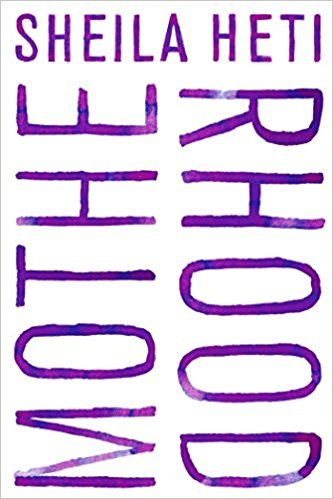
The novel “Motherhood” by Sheila Heti follows a woman in her late 30s as she grapples with whether or not to have children. This book was not plot-driven; it was more like a long internal monologue in which the woman constantly questions what it means to be a mother and whether motherhood would enhance or diminish her life. I didn’t like the writing style, but it was thought-provoking at times. Here are some key lessons from this book:

  • the pressure of societal expectations for women to have children
  • motherhood as a choice, not an obligation
  • motherhood is often tied to a woman’s identity
  • the cost of motherhood – sacrifice of time, freedom, and sometimes the dreams or ambitions women may have for themselves
  • Women are often expected to become mothers, while men are not held to the same societal standards.

Do I want children because I want to be admired as the admirable sort of woman who has children? Because I want to be seen as a normal sort of woman, or because I want to be the best kind of woman, a woman with not only work, but the desire and ability to nurture, a body that can make babies, and someone who another person wants to make babies with?

We are miserly with ourselves when it comes to space and time. But doesn’t having children lead to the most miserly allotment of space and time? Having a child solves the impulse to give oneself nothing. It makes that impulse into a virtue.

Whether I want kids is a secret I keep from myself. On the one hand, the joy of children. On the other hand, the misery of them. On the one hand, the freedom of not having children. On the other hand, the loss of never having had them.”

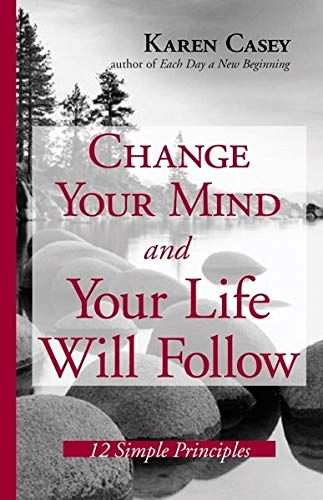
“Change Your Mind and Your Life Will Follow: 12 Simple Principles” was written by Karen Casey, a speaker and author of 16 books. Here are some lessons that resonated with me:

  • Tend your own garden. Focusing outside ourselves and attempting to control other people is a clever avoidance technique that helps us escape having to look at our own sometimes troubling behavior.
  • We are not in charge of others! Not their behavior, their thoughts, their dreams, their problems, their successes, or their failures.
  • Let go of outcomes. No matter what we do or how perfect our input, we are never in control of the outcome of any situation. You are responsible for making the effort – nothing more.
  • Don’t let the mood swings of others determine how you feel.

Any thought can be released. We are fully responsible for our thoughts and can take charge of them whenever we need or want to. No one can take charge of your thoughts, and thus your life, without your compliance.

Be vigilant about your choices. If what you are seeking is peace, you must be vigilant about the choices you make. The ego will often beckon you to choose gossip, criticism, comparisons, judgements, jealousy, fear, and anger – none of these choices will lead you to peace.

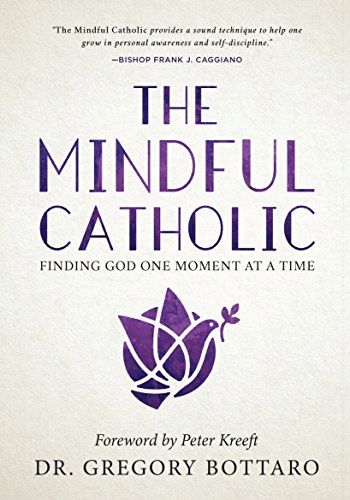
“The Mindful Catholic” is based on an eight-week program called Mindfulness-Based Stress Reduction and was written by Gregory Bottaro, the director of the Catholic Psych Institute and the developer of the Catholic Mindfulness Online Course. Here are some takeaways:

Mindfulness = paying attention to the present moment without judgment or criticism. Curiosity is the disposition of mind that we are seeking to cultivate when we practice mindfulness. Mindfulness does not mean turning off the thoughts in your mind but using them as a door to greater awareness of yourself.

Tendencies vs. Mindfulness:

This book also covered mindfulness exercises. As someone who isn’t experienced with mindfulness, here is my favorite:

  • Sacramental pause – Start with prayer (“Ever-present God, here with me now, help me to be here with you“). Open your awareness to any thoughts, emotions, or physical sensations, then narrow your focus to the physical sensation of your breath alone, and finally expand the focus to the physical sensations of your whole body.
Book review posts, Uncategorized

Books I Read in 2024

Here is a complete list of the books I read in 2024, listed in the order that I read them. I was very busy with work, school, and other commitments in 2024 and did not post many detailed book reviews. When I created this blog, my intention was to read, learn, and share about the books I read, so I hope to post more book reviews in 2025.

1. 101 Things I Learned in Advertising School by Tracy Arrington with Matthew Frederick

2. The Book You Want Everyone You Love* To Read by Philippa Perry

3. Internal Medicine: A Doctor’s Stories by Terry Holt

4. Killers of the Flower Moon by David Grann

5. Good Talk by Mira Jacobs

You can read mini book burbs about books 1-5 here: https://wordpress.com/post/readlearnshare.blog/4548

6. Her Honor: My Life on the Bench . . . What Works, What’s Broken, and How to Change It by LaDoris H. Cordell

7. Flawless: Lessons in Looks and Culture from the K-Beauty Capital by Elise Hu

8. I’ll Fly Away by Rudy Francisco

9. How to Break Up With Your Phone by Catherine Price

You can read mini book blurbs about books 6-9 here: https://wordpress.com/post/readlearnshare.blog/4766

10. How to Talk to Anyone: 92 Little Tricks for Big Success in Relationships by Leil Lowndes

11. Like, Literally, Dude: Arguing for the Good in Bad English by Valerie Fridland

12. 100 Ways to Change Your Life by Liz Moody

13. Excuse Me As I Kiss the Sky by Rudy Francisco

You can read mini book blurbs about books 10-13 here: https://wordpress.com/post/readlearnshare.blog/5064

14. The Sun Does Shine by Anthony Ray Hinton

15. Warren Buffett Invests Like A Girl And Why You Should, Too by LouAnn Lofton

16. Unreasonable Hospitality: the Remarkable Power of Giving People More Than They Expect by Will Guidara

17. The Book of (More) Delights by Ross Gay

You can read mini book blurbs about books 14-17 here: https://wordpress.com/post/readlearnshare.blog/5220

18. Becoming A Crime Scene Investigator by Jacqueline Detwiler-George

19. Know Your Endo by Jessica Murnane

20. The Body Keeps The Score: Brain, Mind, and Body in the Healing of Trauma by Bessel van Der Kolk, M.D.

21. Extreme Measures: Finding a Better Path to the End of Life by Jessica Nutik Zitter, MD

You can read mini book blurbs about books 18-21 here: https://wordpress.com/post/readlearnshare.blog/5376

22. Vagina Problems: Endometriosis, Painful Sex, and Other Taboo Topics by Lara Parker

23. Stop Overthinking by Nick Trenton

24. Excellent Advice for Living: Wisdom I Wish I’d Known Earlier by Kevin Kelly

25. One Decision Away: Key Principles to Create What You Want in Life and Work by Paula Melo Doroff

26. In the Form of A Question: The Joys and Rewards of a Curious Life by Amy Schneider

You can read mini book blurbs about books 22-26 here: https://wordpress.com/post/readlearnshare.blog/5584

27. A Thousand Naked Strangers by Kevin Hazzard

28. What’s Eating Us: Women, Food, and the Epidemic of Body Anxiety by Cole Kazdin

29. The Courage of Compassion: A Journey From Judgment to Connection by Robin Steinberg

You can read mini book blurbs about books 27-29 here: https://wordpress.com/post/readlearnshare.blog/5734

30. The Perfectionist’s Guide to Losing Control by Katherine Schafler

31. If My Body Could Speak: Poems by Blythe Baird

32. Lessons Learned and Cherished: The Teacher Who Changed My Life by Deborah Roberts

33. Picturing Joy: Stories of Connection by George Lange (Photographer)

34. To Hell With the Hustle by Jefferson Bethke

35. The Good Life: Lessons from the World’s Longest Scientific Study on Happiness by Robert Waldinger, MD

36. Calling A Wolf A Wolf: Poems by Kaveh Akbar

You can read mini book blurbs about books 30-36 here: https://wordpress.com/post/readlearnshare.blog/5858

37. Crossing Fifty-One: Not Quite A Memoir by Debbie Russell

38. We Came, We Saw, We Left: A Family Gap Year by Charles Wheelan

39. Ultra-Processed People: The Science Behind Food that Isn’t Food by Chris van Tulleken

You can read mini book blurbs about books 37-39 here: https://wordpress.com/post/readlearnshare.blog/5985

40. Find Your People: Building Deep Community in a Lonely World by Jonnie Allen

41. A Good Time for the Truth: Race in Minnesota edited by Sun Yung Shin

42. If My Flowers Bloom: Poems by Deshara Suggs-Joe

43. Ex traction: Poems by Lara Coley

44. Never Not Working: Why the Always-On Culture is Bad for Business – and How to Fix It by Malissa Clark

45. All the Gold Stars: Reimagining Ambition and the Ways We Strive by Rainesford Stauffer

You can read mini book blurbs about books 40-45 here: https://wordpress.com/post/readlearnshare.blog/6097

46. Where I Dry The Flowers: Poems by Ollie Schminkey

47. Self-Care Activities for Women by Cicely Horsham Brathwaite, PhD

48. How to Be Perfect: An Illustrated Guide Words by Ron Padgett Pictures by Jason Novak

49. Growing Up in Public: Coming of Age in a Digital World by Devorah Heitner

50. Exactly What to Say: The Magic Words for Influence and Impact by Phil M. Jones

51. The Complications: On Going Insane in America by Emmett Rensin

You can read mini book blurbs about books 46-51 here: https://wordpress.com/post/readlearnshare.blog/6226

52. The Fire This Time: A New Generation Speaks About Race edited by Jesmyn Ward

53. Employment Law: A Very Short Introduction by David Cabrelli

54. Learning to Disagree: The Surprising Path to Navigating Differences with Empathy and Respect by John D. Inazu

55. About Time: Poems by Neil Hilborn

56. The Little Book of Sleep: The Art of Natural Sleep by Nerina Ramiakhan

57. The One Minute Manager by Ken Blanchard and Spencer Johnson

You can read mini book blurbs about books 52-57 here: https://wordpress.com/post/readlearnshare.blog/6308