I read 4 books in March. Here is a blurb of each of the books I read in March.
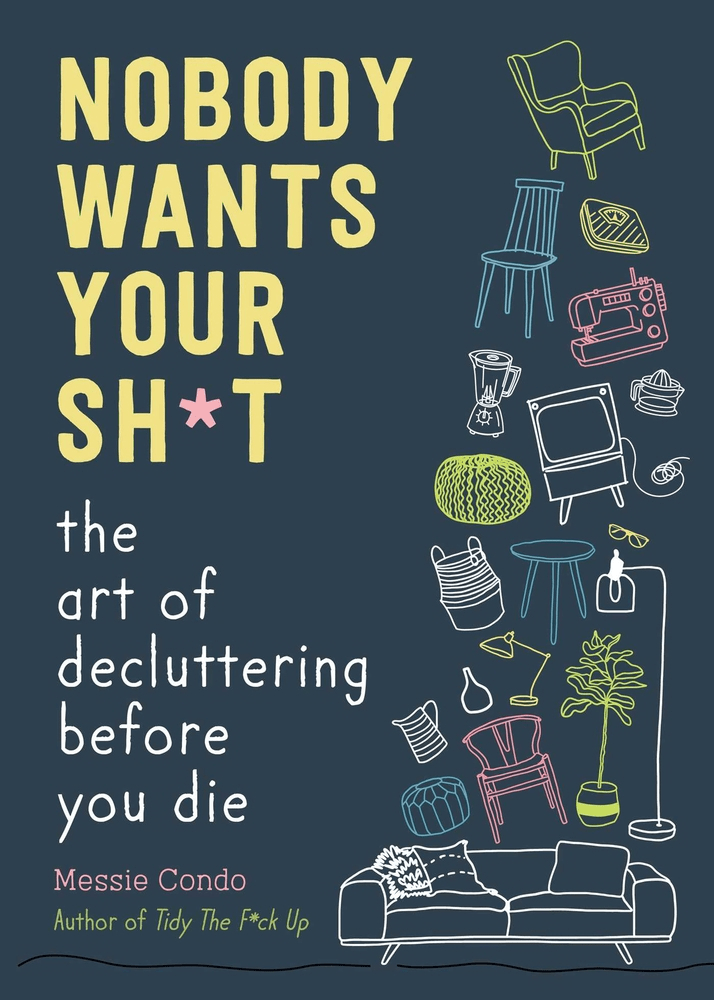
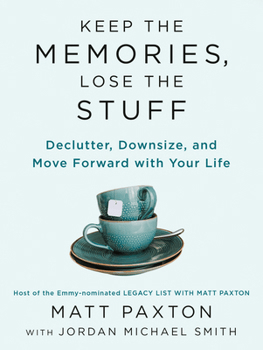
“Nobody Wants Your Sh*t: the art of decluttering before you die” was written by Messie Condo. This book was inspired by The Gentle Art of Swedish Death Cleaning and contains funny, unpretentious advice you need to hear most. Here are some main points.
Clutter is nothing but delayed decisions. Delay long enough, and someone else will have to make those decisions. It’s not going to get any easier while you keep accumulating crap. You’re never going to “get around to it.” If you want a clutter-free house, you have to make it a priority, or someone else will be forced to when you’re gone.
A thing is not a memory. It’s just a thing. You can share your memories long after a thing is gone. Ex: people, pets, vehicles, toys. Your need to hold onto things was always about the feelings those things inspired. The things themselves are just conduits.
It’s time to let go of who you used to be and embrace who you are now. Get rid of clothes that haven’t fit you in ages, sports equipment you no longer use, and anything else from your past life. Let go of old dreams and hobbies and make room for new ones.
Stuff that stirs up good memories is only worth the space it’s taking up if you’re able to actively enjoy it. Attics, basements, garages, and storage units are prime locations for lazy clutter – the kind you allow to take up space because it’s not in your direct eyesight nagging you. Just because you have the space to store something doesn’t mean you should. You won’t miss what you haven’t laid eyes on in years. By decluttering from a place of appreciation, you free yourself from the hold your stuff has over you.
Getting rid of stuff you don’t want, need, or use isn’t wasteful. Letting it take up space in your home or keeping it when someone else could be using it is. You paid good $ for it? You paid good $ for your home.
Benefits of declutttering:
- better sleep and overall mental health
- more energy and creativity
- a deeper appreciation for what you have
- more control over your life
- fewer arguments with loved ones
- more self-confidence
- more time, room, and $ for what you want
- easier decisions
- clearer priorities
- less laundry
- fewer things to dust = fewer allergens
- the ability to quickly find what you need
- a sense of accomplishment
- a clutter-free space you can be proud of
I highly recommend this book, especially to maximalists.
4 out of 5 stars

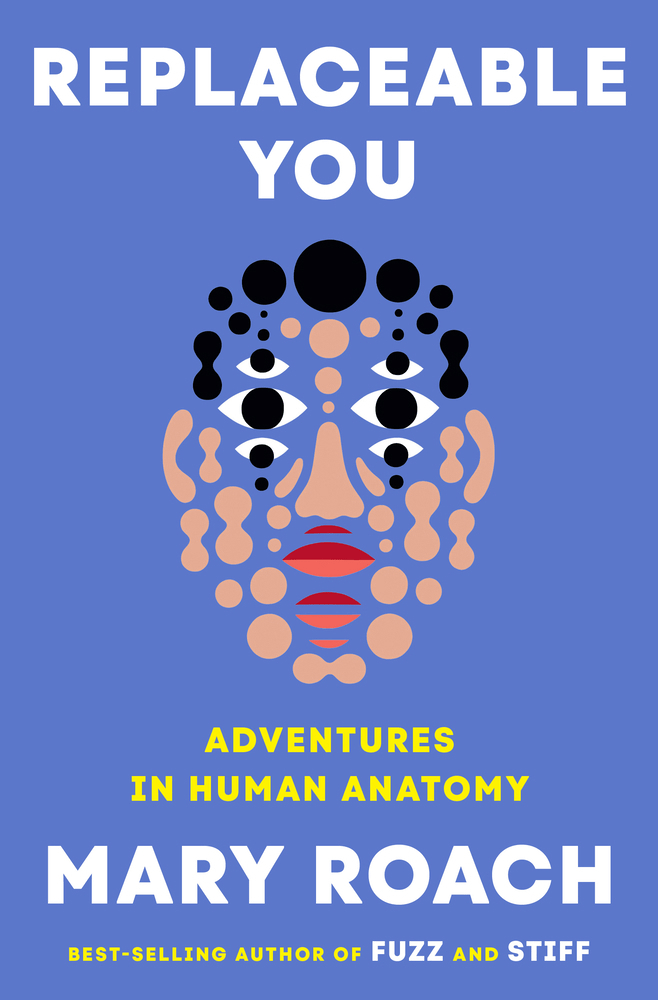
“Replaceable You: Adventures in Human Anatomy” was written by Mary Roach, author of seven best-selling works of nonfiction. This book was fascinating, although, admittedly, some parts were a bit over my head. Here are some interesting takeaways:
- With major burns, surgeons quickly run out of graftable (unburned) skin. Sometimes they have to use the soles of the feet, the scalp, or even the scrotum. Areas that have been harvested can be reharvested after they’re healed, but that can take 2-3 weeks. In the meantime, an allograft (skin from another human, typically a deceased tissue donor) or a xenograft (skin from another species) protects the wound. Eventually, an allograft for a bad burn will be replaced with a permanent graft of the patient’s own skin.
- China has a lack of organ donors. Also, in China, death is still defined by cessation of the heartbeat rather than by brain death. Thus, the only potential organ donors are terminally ill patients on life support whose families agree to have that support shut off inside an operating room set up for organ recovery. Also, Confucian tenets include reincarnation, so people want to go to heaven with an intact body for the next life.
- The cornea is one of the few body parts that can be transplanted without strict immune matching because it has no blood vessels.
- Cataract surgery is one of the most successful medical procedures worldwide, yet access varies dramatically by region.
Skin is the largest organ and one of the hardest to replace because it must stretch, sense, protect, and regulate temperature. Synthetic skin exists but lacks the full functionality of natural skin, especially sweat glands and hair follicles.
Feet are sold separately. A prosthetic foot and ankle attach to a prosthetic leg, and over the foot goes a “foot shell” to fill out a shoe. Shells come in a palette of skin tones, and if you like, you can buy a pair with a space between two toes for wearing sandals. Prosthetists make, fit, and adjust the sockets. The socket is the cup or bucket into which one slides one’s residual limb. A socket will need to be adjusted as the muscles of the residual limb atrophy and if the wearer gains or loses weight. This prevents rubbing, blisters, and ingrown hairs.
Demand for donated human tissue is high. Donors aren’t scarce, but eligible donors are. 96% of people who consent to donating tissue are ruled out because some element of their medical history or social behavior has created an unacceptable risk for the people who would receive their tissue. Regardless of a person’s wishes or the dot on their driver’s license, tissue cannot be recovered until the next of kin has answered the eligibility questions.
I recommend this intriguing book for anyone who wants to learn more about the science of replacing body parts.
4 out of 5 stars
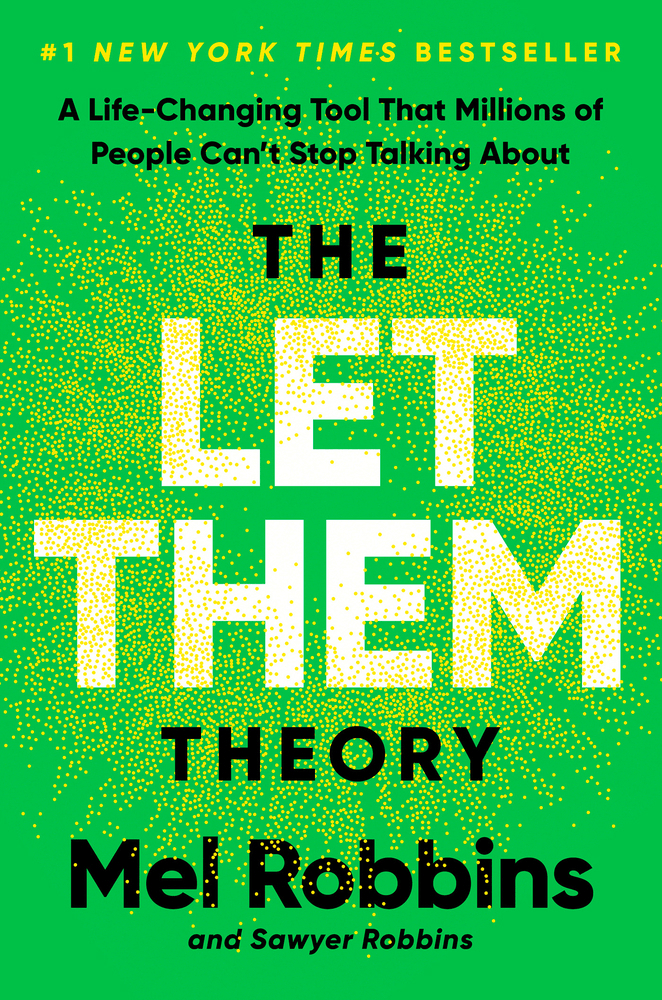
“The Let Them Theory” was written by Mel Robbins and Sawyer Robbins. Mel is a New York Times bestselling author and host/producer of The Mel Robbins podcast, which airs in 194 countries and is one of the top-ranked podcasts in the entire world. I got a lot out of this book and wish I had read it earlier. It would have saved me so much time and energy when I was trying to control things I couldn’t. Here are some key points.
There has been online discussion suggesting that Mel Robbins’ Let Them Theory resembles ideas previously shared by other creators. These claims are circulating on social media and in commentary spaces, but they have not been substantiated by verified evidence.
The Let Them Theory is about freedom. It will free you from the burden of trying to manage other people. When you stop obsessing over what people think, say, or do, you finally have the energy to focus on your own life.
If someone is not showing up how you need them to show up, do not try to force them to change. Let Them be themselves because they are revealing who they are to you. You get to choose what to do next.
- Humans have a hardwired need for control. No matter how hard you try, you will never be able to control or change another person. The only person you are in control of is you – your thoughts, actions, and feelings.
- The urge to control things comes from a very primal place: fear. Fear of being excluded, of not being liked, of things falling apart if we’re not in control. Control gives us the illusion of safety. We can’t control people. They will do what they want to do. The more you try to control something you can’t, the more anxious and stressed out you become.
- It is not your responsibility to manage another adult’s emotional reactions. Most adults have the emotional capacity of an eight-year-old and you can’t change that. Most people have never done the work to understand themselves, heal their past, or manage their own emotions. If they haven’t done that for themselves, they are incapable of doing that for you and showing up in a way that you deserve.
When you say Let Them, you make a conscious decision not to allow other people’s behavior to bother you. You acknowledge that you can’t control the situation.
When you say Let Me, you take responsibility for what you do next. It’s all about self-awareness, compassion, empowerment, and personal responsibility.
Someone is always going to be disappointed by the decisions you make. Don’t let it be you. Don’t let guilt drive your decisions.
- There are 3 pillars to adult friendship: proximity, timing, and energy.
- When you say Let Them, you release the need to cling to friendships that no longer serve you, making space for connections that truly matter.
- When you say Let Me, you take charge of your social life, reaching out, initiating, and cultivating the kind of friendships that reflect your values and bring you happiness.
- The connection you have with another person rarely breaks. It’s just the proximity and timing that make you lose touch with them.
- The more you try to rescue someone from their problems, the more likely they will continue to drown in them. When you enable others with your money, words, and actions, you hinder their healing and prolong their suffering, their debt, their breakdown, and in turn, your own. Stop rescuing people and start acting as if you believe in their ability to face them. Teach them that they are capable of doing hard things themselves.
- People only heal when they are ready to do the work. You will be ready for them to heal before they are. Constantly stepping in to solve their issues creates dependency and frustration and hinders their ability to take responsibility for themselves. Don’t shield them from the consequences of what they choose. $ without condition is enabling.
Let Them be who they are. Let yourself prioritize your own happiness, pursue your dreams with passion, set boundaries that protect your peace, choose relationships that uplift and inspire you, and love yourself enough to walk away when it no longer works.
I highly recommend this book! 4.5 stars

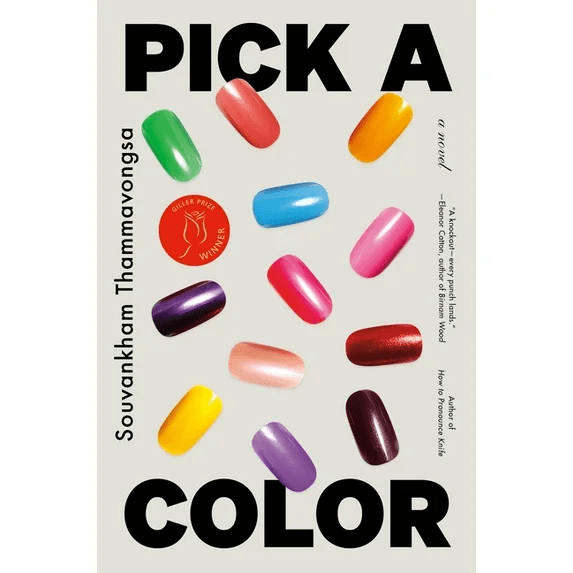
“Pick a Color: a novel” was written by Souvankham Thammavongsa and contained a sharp look at immigrant labor and power but left more to be desired. Here are some things that stood out to me.
- “In our line of work, you better get used to hearing about babies, affairs, love, married people, weddings. And you better look interested when it comes up.”
- “A lot of people are mothers, and you don’t get paid for any of it. Seems like a lifetime internship. You never know if you’re doing things right, and someone is always telling you the ways you’re doing it wrong.”
“I live in a world of Susans. I got name tags for everyone who works at this nail salon, and on every one is printed the name Susan. So many girls come and go. I don’t want to bother getting new name tags each time. Besides, you know, it’s never difficult to pronounce a name like Susan. None of our clients notice. They come in and we are ready and set to work. That’s all that matters to them.”
My biggest gripe — which is also, ironically, part of the author’s point — is the deliberate lack of character development and the recurring image of the missing finger. One character, a retired boxer, is repeatedly described as missing a finger, yet the book never explains why. After digging deeper, I learned that the absence is symbolic: a reminder of everything the world doesn’t bother to know about her, and a reflection of how her identity is invisible to others.
This is the novel’s central point: immigrant women are flattened into roles rather than recognized as full people. The interchangeable “Susans,” the sparse backstories, the unexplained injuries . . . all of it underscores how society reduces them to function rather than individuality. Even a character who insists she’s “in charge” does so while kneeling at a client’s feet.
3 out of 5 stars

I look forward to reading, learning, and sharing more with you soon!