Book review posts, Uncategorized

April 2026 Reads

I read 3 books in April. Here is a blurb of each of the books I read in April.
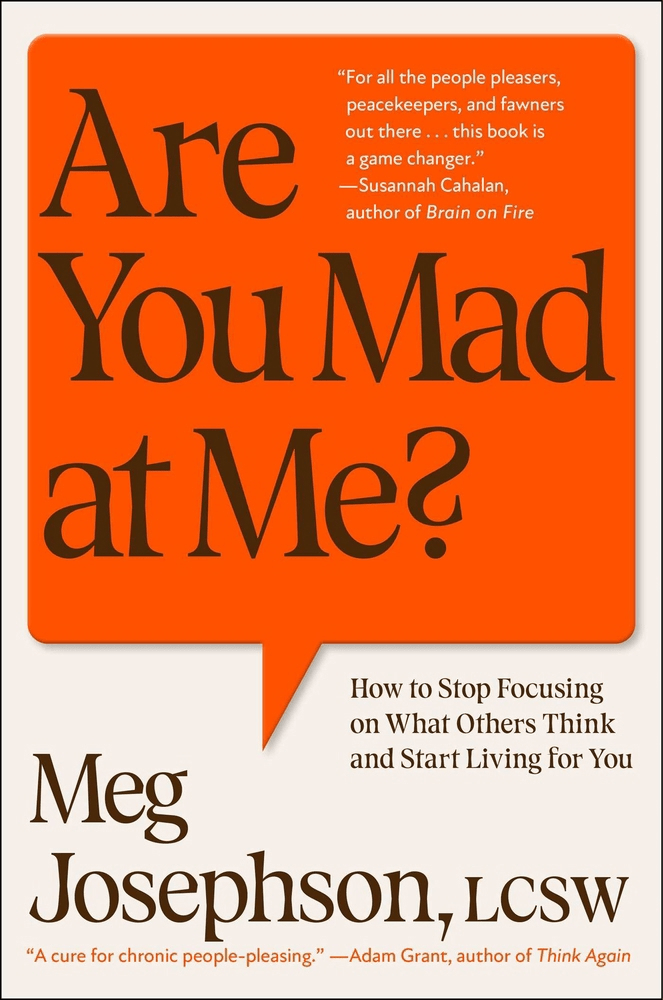
Are You Mad at Me?: How to Stop Focusing on What Others Think and Start Living for You” was written by Meg Josephson, LCSW, a licensed psychotherapist. This book is about releasing the belief that we need to neglect ourselves for the comfort of other people and included reflection questions after each chapter. I got so much out of this book. Here are some top takeaways:

  • People-pleasing is a trauma response, not a personality trait. It is a survival strategy learned in unsafe environments – often in childhood. Growing up in emotionally volatile environments leads to overthinking, satisfying the threat, fear of disappointing others, and chronic self-blame. Hypervigilance shapes adult anxiety.
  • Fawning is unconsciously moving toward, instead of away from, threatening relationships and situations. The fawn response is about becoming more appealing to the threat, being liked by the threat, satisfying the threat, and being helpful and agreeable to the threat so that you can feel safe. Particularly for women, we’re taught that our main role in life is to please, appease, and sacrifice our needs for the comfort of others.
  • The irony is that, in an unconscious attempt to avoid abandonment, we end up abandoning ourselves. We disconnect from our own emotions, sensations, and needs. When you notice yourself fawning in a situation in which you don’t need to be, ask yourself: What emotion am I trying to protect myself from?
  • Are you feeling resentment? That’s a good sign you’re fawning. Ask yourself: Do I have a need that isn’t getting met? Is there something I need to communicate?
  • What uncomfortable emotions am I avoiding?
  • Who am I when I’m not being perceived?
  • Am I saying yes because I want to or because I’m scared this person will be upset if I say no?
  • What do I feel? What do I want? What do I need?
  • Am I avoiding discomfort? Will avoidance prolong suffering?
  • What is my intention in bringing this up: to be heard, a response, or change? What do I want to say and what do I need from this person or myself? If they don’t give me the validation I’m craving, can I give it to myself?

I highly recommend this book to chronic people-pleasers.

Pagan Kennedy’s “The Secret History of the Rape Kit” looks at the origins of a tool that feels like it should have always been part of forensic work. I went into it thinking I already understood the basics as part of my forensic science courses, but the story behind it is more surprising than I expected. At the center is Martha (Marty) Goddard, the woman who imagined and built the first real system for collecting evidence after sexual assault. Her name is not the one most people know, and this book explains why.

Goddard spent time in the Chicago crime lab in the 1970s and saw that sexual assault cases were not being handled with the same care as other crimes. She decided to change that, and in the mid-1970s, she met with police, talked with hospital administrators, trained nurses, raised money, and oversaw the development of what was arguably the first large-scale and comprehensive rape-kit system in the world.

  • In 1978, Marty Goddard launched a pilot program and delivered kits to twenty-five hospitals in the Chicago area. Each kit included slides, swabs, and collection devices for hair and fingernails; a card for the victim with information about where to seek counselling and further medical services; forms that were signed by doctors, nurses, and police officers; and sealing tape and a pencil for writing on the slides. Everyone who handled the kit had to sign the box, which helped protect the chain of custody.
  • Even though Goddard did the research, the design, the fundraising, and the national outreach, a male lab technician named Louis Vitullo became the person publicly credited with the invention. Goddard even agreed to put his name on the system because people trusted a male name more in that field.
  • By 1985, the Vitullo kit was standard in major cities like New York and Chicago. That same year, Marty received a $99,000 grant from the U.S. Department of Justice to travel to 14 states and help them set up rape-kit systems. Marty’s method of reform included sending forensic scientists, prosecutors, and trained nurses to instruct hospital staff on how to collect evidence that would stand up in court.
  • The kit existed long before DNA evidence was used in court. DNA did not become part of courtroom arguments until the late 1980s, which makes Goddard’s work feel even more ahead of its time.

Overall, this book gave me a better understanding of how the rape kit came to be and how easily women’s contributions can be pushed aside. It is a quick and interesting read, especially if you like learning about forensic history or true crime.

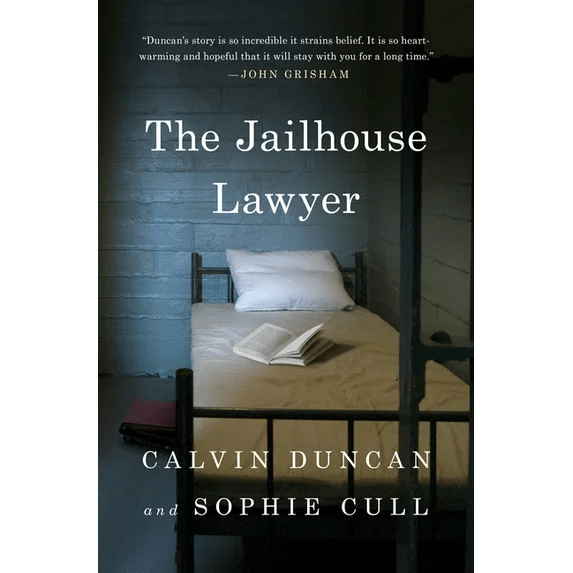
The Jailhouse Lawyer” was written by Calvin Duncan and Sophie Cull. Calvin is the founder and director of the Light of Justice Program, which works to improve access to the courts for people who are incarcerated. He is also a former jailhouse lawyer at Angola Prison, and his work has contributed to major Supreme Court decisions, including Smith v. Cain and Ramos v. Louisiana. Sophie Cull is a criminal justice reform advocate who has written about the death penalty, life sentences, and prosecutorial misconduct. She is the cofounder of The Visiting Room Project, which created the largest collection of filmed interviews with people serving life without parole.

Calvin was 19 when he was incarcerated for a 1981 New Orleans murder he did not commit. He had an ineffective public defender and a key witness whose testimony was deeply compromised. At 21, he filed his first motion from prison, titled “Motion for a Law Book,” and that moment launched his self-taught legal career. He eventually became an inmate counsel at Angola and helped hundreds of other prisoners navigate their cases.

  • Calvin had to fight for basic access to police reports and trial transcripts. Many times, he needed people on the outside to help him get even the simplest documents.
  • In December 1991, the Louisiana Supreme Court finally clarified that District Attorney files were subject to public records requests once a conviction and sentence were final. This ruling opened doors that had been closed to him for years.
  • After his exoneration in 2021, Calvin was accepted into law school and graduated at age sixty. His persistence is remarkable.
  • the key eyewitness recanted and admitted she had lied under pressure
  • police shaped witness statements to fit their theory
  • information that could have helped Calvin was never shown to the jury
  • no physical evidence connected him to the crime
  • his defense attorney failed to investigate or challenge weak evidence
  • new evidence showed Calvin could not have committed the crime
  • the prosecution’s case was fragile and built on unreliable testimony
  • legal advocates later brought forward the recantation, new evidence, and constitutional arguments that had been ignored for decades
  • the court finally accepted that the combination of false testimony, ineffective counsel, and lack of evidence made the conviction unsound

This book was both intriguing and frustrating. It offers a close look at how wrongful convictions happen and how much work it takes to undo them. If you are interested in criminal justice reform or wrongful convictions, this book is worth reading.

Book review posts, Uncategorized

February 2026 Reads

I read 3 books in February. Here is a blurb of each of the books I read in February.

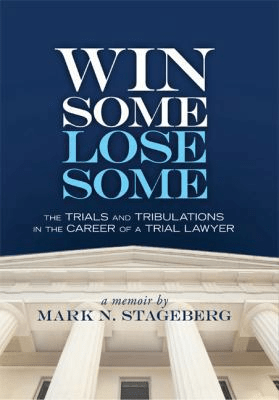
Win Some, Lose Some: The Trials and Tribulations in the Career of a Trial Lawyer – a memoir” was written by Mark N. Stageberg, who is a Minnesota attorney specializing in personal injury and wrongful death cases. He originally did defense work before transitioning to plaintiff work. Mark has spent his career as a trial lawyer, completed over 175 jury trials, and has had 7 cases with million-dollar jury awards. This book was a candid look at both victories and failures and contained interesting stories of unusual clients, unexpected courtroom twists, and behind-the-scenes legal drama. Here are some of my many takeaways:

The vast majority of the litigation clients who walk into your office do not have cases with all 3 necessary elements for a good lawsuit: good liability, extensive damage, and enough insurance coverage. Cases with good liability and big damages can often be easily resolved with a policy-limit settlement without litigation. The limits of the defendant’s liability insurance coverage govern the outcome of many good liability and damage cases.

What is interesting about pro bono legal work is that many of a lawyer’s promising cases can turn into unintended pro bono work. Payment for plaintiff’s personal injury work is dependent on contingent fees, and if a case isn’t won, it can be a waste of a lot of legal time and money.

An interesting and quite lucrative area of personal injury legal work involves airplane crashes. 4 primary causes for airplane crashes:

  • some mechanical failure (in the plane itself – leading to a product liability claim)
  • some inaccurate or incomplete information from air traffic controllers
  • a maintenance or service error by a mechanic
  • pilot error

The government, through the National Transportation Safety Board, does a thorough investigation of every accident and publishes a report from its experts identifying the probable cause of the crash. Much of the investigation is done by the government, but the case must be put together with privately retained experts.

This book contained a couple “hot takes.” These are not my personal opinion or the opinion of my employer.

“A common misperception among the general public is that our judges have some level of superior legal knowledge that justified their appointment as the final arbitrators of our unresolved disputes. Most judges are selected because of political connections unrelated to their experience, expertise, or intellect. The cream of every law school class garners the top law firm positions and after a few years, they’re making more money than the judges in the state or federal courts.”

“Most of the criminal lawyers serving as county attorneys or taking public defender positions were not the top scholars in their law school classes and took those jobs because nothing better had been offered. Prosecuting attorneys have the police, or the FBI and U.S. attorneys in the federal system, to do all of the workup on the cases. The prosecuting attorney only has to present the evidence to the jury and argue that they have met the burden of proof. Similarly, the defense seldom has to prove much of anything and instead sits back and picks away at the prosecution’s witnesses, arguing strenuously that they have not met their burden to prove the defendant guilty beyond a reasonable doubt.”

I think this statement is overly simplified. I respectfully disagree with this perspective.

I highly recommend this book to anyone interested in learning more about the career of a civil attorney.

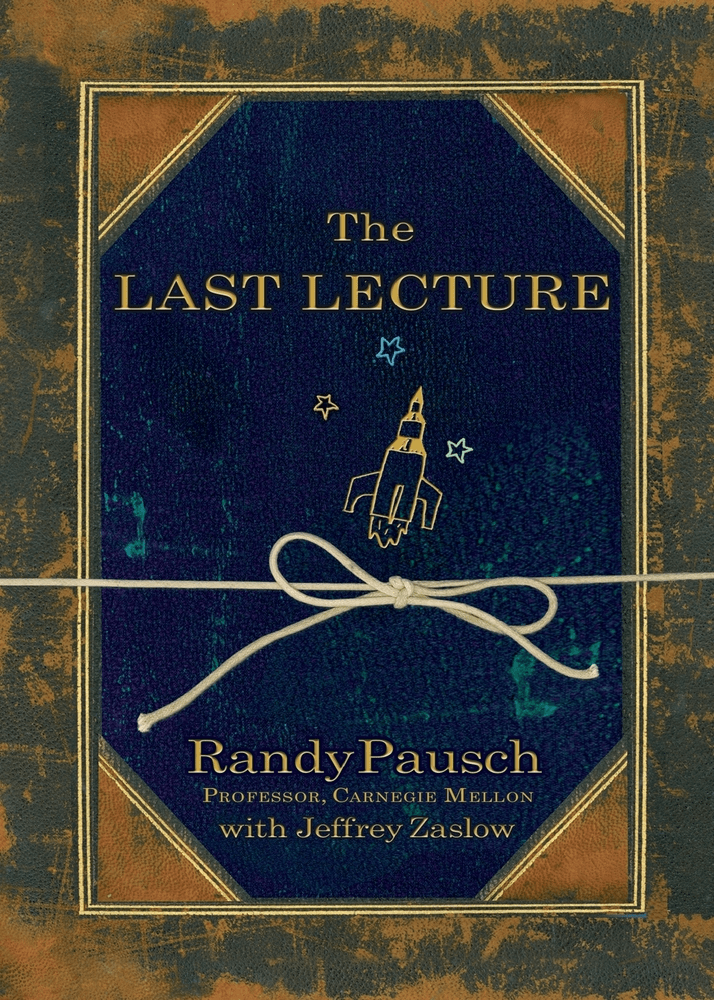
The Last Lecture” was written by Randy Pausch with Jeffrey Zaslow. Randy was a professor at Carnegie Mellon and an award-winning teacher and researcher who had worked with Adobe, Google, Electronic Arts (EA), and Walt Disney Imagineering and pioneered the Alice Project. At the time of this writing, he had ten tumors on his liver and had pancreatic cancer, and he wrote this book with Jeffrey Zaslow to teach his 3 young children what he would have taught them over the next 20 years. Many college professors are asked to consider their demise and to ruminate on what matters most to them. For years, Carnegie Mellon had a “Last Lecture Series” – which was renamed to “Journeys” – reflections on personal and professional journeys. Here are some lessons:

  • When you see yourself doing something badly and nobody’s bothering to tell you anymore, that’s a bad place to be. You may not want to hear it, but your critics are often the ones telling you they still love you and care about you and want to make you better.
  • Self-esteem – there’s really only one way to teach kids how to develop it: You give them something they can’t do, they work hard until they find they can do it, and you just keep repeating the process.
  • When we send our kids to play organized sports, for most of us, it’s not because we’re desperate for them to learn the intricacies of the sport. What we really want them to learn is far more important: teamwork, perseverance, sportsmanship, the value of hard work, and an ability to deal with adversity.
  • Brick walls are there for a reason. They give us a chance to show how badly we want something.

Look for the best in everybody. If you wait long enough, people will surprise and impress you. In the end, people will show you their good side. Just keep waiting. It will come out.

This book isn’t quite what I expected. It was more about Randy’s life and career rather than a “Last Lecture Series.” Given that the Last Lecture Series was renamed to “Journeys” – reflections on personal and professional journeys – this book seems to fit that description. Still, this book has some great lessons.

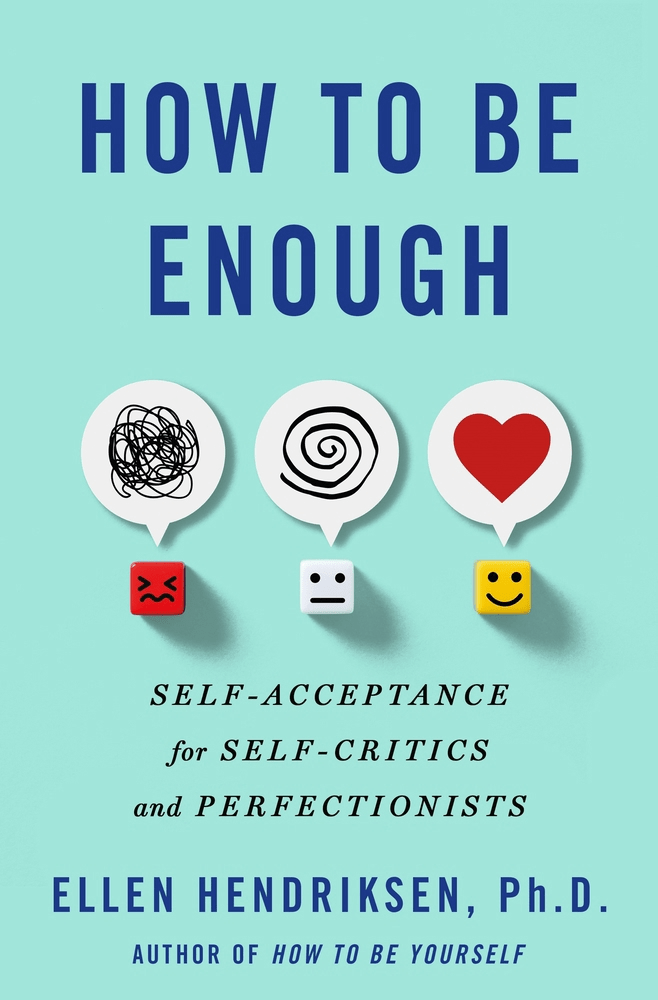
How to Be Enough: Self-Acceptance for Self-Critics and Perfectionists” was written by Ellen Hendriksen, Ph.D., a clinical psychologist at Boston University. The overall theme of this book is that you become “enough” not by perfecting yourself, but by letting go of harsh self‑judgment and recognizing your inherent worth as you already are. Here are some key points.

People-pleasing aims to control other people’s reactions and emotions toward us. What they want is what we want, because we want to avoid devaluation, disapproval, disappointment, and dislike. Of all the people you work so hard to please, be sure to include yourself.

  • We don’t have to be good at something to enjoy it. What’s the value in not being great? Connection. It’s hard to relate to experts. They’re aspirational, not relatable.
  • The opposite of control is trust – trust that we can handle whatever happens, both internally and externally.
  • When self-worth depends on flawless performance, even small mistakes create a cycle of self-doubt and emotional exhaustion. Achievement doesn’t soothe self-doubt. It often raises the bar higher. Self-criticism becomes a default setting. Self-criticism makes us feel inadequate, grinds motivation to a halt, leaves us sensitive to others’ criticism, is stressful, takes the fun out of the process, and hinders connection.

Some tools mentioned in the book:

  • Revise the rigid rules. Consider what the rule buys you and what it costs you. Consult your values and what’s meaningful and important to you. Focus on what works given the contest. Consider feasibility and workability. What would work for my goals and values, given this context?
  • Foster positive emotions towards yourself. Failure and positive self-regard are allowed to co-exist. We can’t go through life expecting to make zero mistakes, have zero lapses in judgement, or encounter zero insurmountable challenges.
  • Take stock to understand your procrastination: unrealistic standards? fear of failure? self-criticism? Break tasks down into ridiculously small steps and picture your future self.
  • Move away from all-or-nothing thinking. Try “I’m a (valued trait/quality) person who sometimes (exception).” Examples:
    • I’m a capable person who sometimes screws up.
    • I’m a disciplined person who sometimes lets myself go.
    • I’m a hard worker who procrastinates.
  • Reflect on what people-pleasing is costing you. Identify an opportunity to state an opinion, communicate a need, or set a limit that is meaningful to you. Try it out and consider the results. Rinse and repeat.

I highly recommend this book to anyone who is a self-critic or perfectionist!