It’s been a while since I’ve posted on this blog since I have had other priorities. I read 2 books in August and gave myself permission to quit 2 other books – a true act of self-care. Previously, I didn’t allow myself to not finish books. Here is a blurb of each of the books I read in August.
“The Ritual Effect: Unlocking the Extraordinary Power of the Ordinary” was written by Michael Norton, professor of Business Administration at Harvard Business School. Here are some main takeaways:
The essence of habit is the what – something we do – brush our teeth, go to the gym, pay bills, etc. The essence of ritual is the how. It matters to us not simply that we complete the action but the specific way that we complete it. When rituals are disrupted, people report feeling “off” all day.
Some rituals become so intricate that the ritual interferes instead of prepares. Ex: performance rituals – baseball players engage in an average of 83 movements when batting.
Rituals and repetition can be powerful tools for honing our self-control, but ritualistic behavior can, over time, start to control us instead. Among the most common treatments for compulsive behaviors is “habit reversal” training – identifying the root behavior that’s causing problems and replacing it with something else.
The 4 Lessons of Relationship Rituals
Rituals wake up our experience of commitment – doing things together.
Relationship rituals are exclusive.
Rituals – not routines – bring the magic.
Consensus is a critical factor. Do you and your partner agree that it’s a ritual and not just a routine?
Food and drink are often central to rituals, but how we share them is what shapes family identity.
Rituals can be the practices that call us home and bring family together.
Family rituals immerse us in the moment, strengthen identity, and create lasting meaning.
Rituals give us a sense of ownership, an affirmation of identity or belonging, or an increased feeling of meaning.
Personal rituals are more adaptable and meaningful than inherited rituals since we can shape them to fit our values and goals.
Rituals strengthen social bonds through shared meals, celebrations, or communal ceremonies.
Rituals don’t have to be complex. Simple, intentional actions can transform daily life.
4 out of 5 stars
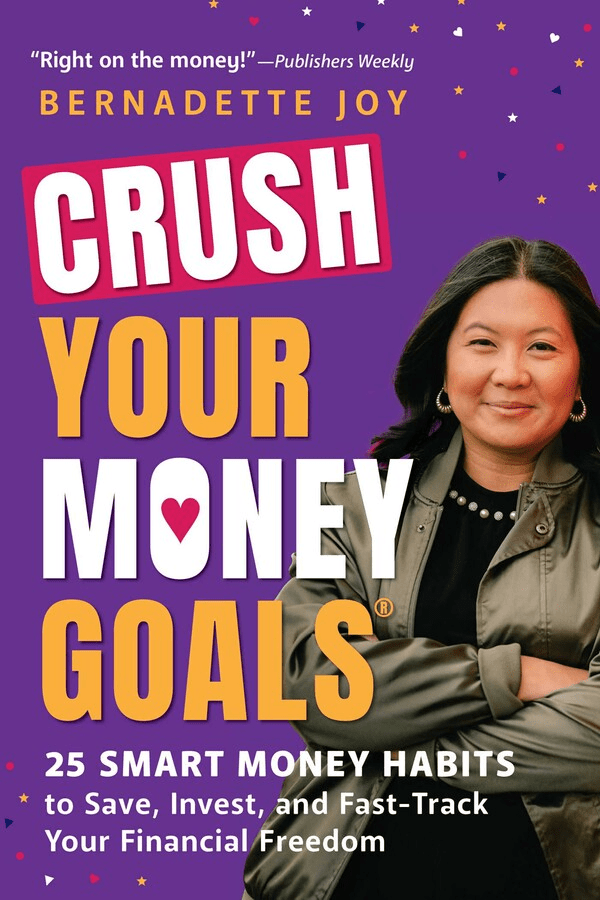
“Crush Your Money Goals” was written by Bernadette Joy, an expert money coach and founder of CRUSH Your Money Goals. Here are some main points.
CRUSH:
Curate your accounts. Coordinate accounts and track spending.
Reverse into independence. Set clear financial independence goals. Use the $1 rule to question non-essential purchases.
Understand your net worth and track it.
Spend intentionally. Align spending with values.
Heal your money wounds. Address emotional triggers that lead to overspending.
Net worth trackers organize your accounts into cash & cash equivalents, investments, property, credit cards, and loans. Trackers mentioned in this book include Empower (free) and Monarch Money (paid subscription).
Budget:
Survive – basic necessities, including housing, utilities, food, transportation, and health
Revive – current expenses that aren’t necessary but make life worth living for you, such as vacations, clothing, entertainment, and hobbies
Strive – anything that helps you grow your net worth
The CRUSH method consists of 50% strive, 25% survive, and 25% strive. In other words, saving/investing half of your income – which does not seem attainable for most people, especially people who don’t earn six figures.The author mentioned that if this is not attainable, people should work to increase their income.
Other tips:
Remember that the interest you pay on any debt is making someone else rich by being their passive income stream. Ex: your mortgage, auto loans, and credit cards.
Unsubscribe from email marketing and digitally detox from constant comparisons. Reduce impulse spending.
Implement a $1 cost per use rule – technology, furniture, clothing, accessories, home goods.
Invest in a Roth IRA, where you won’t pay taxes on growth. All income earned is tax-free.
Compare insurance plan rates each year. Ask for discounts from service providers.
4 out of 5 stars
I look forward to reading, learning, and sharing more with you soon!
It’s been a while since I’ve posted on this blog since I have had other priorities. I read 4 books in July. Here is a blurb of each of the books I read in July.
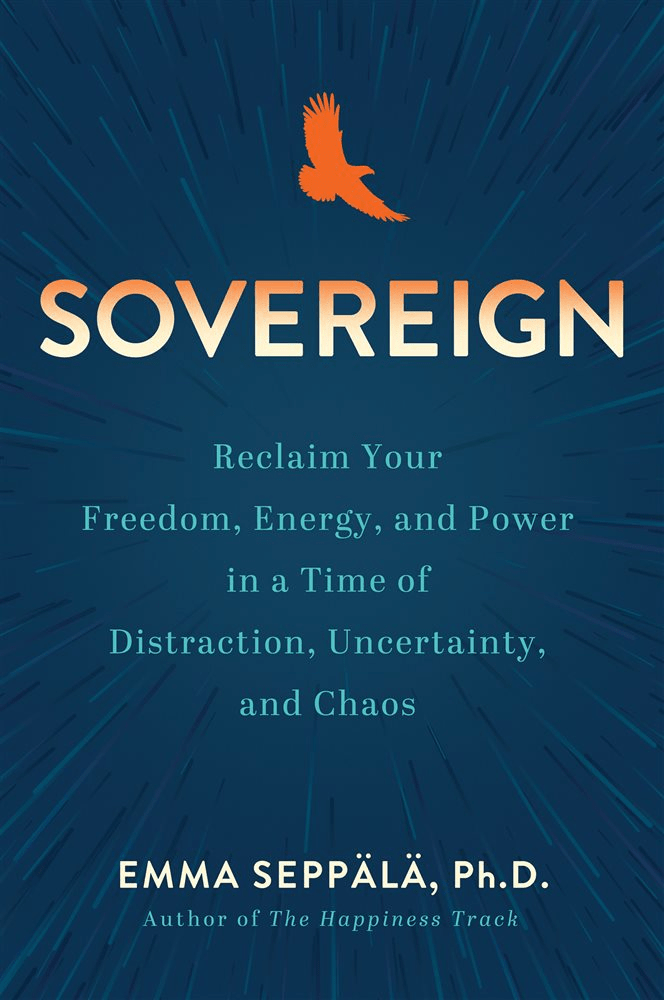
“Sovereign: Reclaim Your Freedom, Energy, and Power in a Time of Distraction, Uncertainty, and Chaos” was written by Emma Seppala, a Yale lecturer and international keynote speaker. This book was insightful! It was packed with tips to recharge your life and change the way you think and act – from your emotions, mind, relationships, intuition and body. Here are some of my many takeaways:
Sovereignty is reclaiming your right to exist as you. It involves courage, awareness, and self-honoring. Consider what would happen if you loved and cared for yourself as much as you do for others.
What would it look like if you took care of yourself as you would an infant, attentive to its every need? Be mindful and aware of your emotions and ask yourself “What do I need right now? A hug? A walk? A break? A nap? A cry? A meal? A friend? Something else?”
Some of the many tips covered:
Sovereign self
Listen to the state of your mind and body. Ask yourself what you need.
Prioritize what fills your cup – what brings you rest, rejuvenation, energy, vitality, upliftment, inspiration, and joy.
Sovereign emotions
Remember: when you run from your feelings, you run from your healing. Feel instead of suppressing.
Remember that emotions are energy in motion. Take care of your basic needs: sleep, diet, exercise, and yourself.
Sovereign mind
Create boundaries around your media. Don’t go on social media to look at what other people are doing or selling.
Observe and discern: What are the intentions of the messaging. Is it giving you freedom or binding you in fear? Do you wish to engage with it?
Sovereign relationships
6 keys of positive relational energy
caring for, being interested in, and seeing the best in others
providing support for one another, including offering kindness and compassion
avoiding blame and forgiving mistakes
inspiring one another and focusing on what’s going right
emphasizing meaningfulness
treating others with basic human values like respect, gratitude, trust, honesty, humility, kindness, an integrity
Sovereign intuition
Consult your gut feelings.
Unplug from technology. Create opportunities for contemplation. Schedule idle time.
Sovereign body
Relate to your body as your best friend because that’s what it is. Learn to love it, care for it, listen to it, and live in harmony with its needs.
Reflect on these questions: Do you honor and care for your body the way you would a child? If not, what would it look like if you did?
This is one of the best books I have read this year, and I highly recommend it to everyone!
5 out of 5 stars
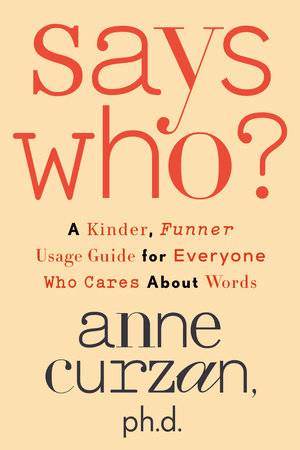
“Says Who? A Kinder, Funner Usage Guide for Everyone Who Cares About Words” was written by Anne Curzan, professor of English Language and Literature, Linguistics, and Education at the University of Michigan. This book was intriguing, although some readers may find it overwhelming or too academic. Here are some things that resonated with me:
One key point for everyone who uses dictionaries is that dictionary editors are trying to walk a fine line between capturing words as they are used and providing guidance about the contexts in which some words are generally accepted or not accepted. While the editors of today’s dictionaries are usually trying to describe actual usage, we as dictionary users often erroneously assume that they are prescribing correct usage. Attitudes at the language change over time!
English has lots of synonyms in many areas of the lexicon, and they demonstrate the remarkable creativity we as humans bring to language, the many languages that have contributed to the English lexicon, the diversity of our linguistic identities, and the nuanced choices we get to make as speakers and writers.
Dictionary editors determine which pronunciations get recorded as standard and which get labeled as nonstandard – and which don’t get included at all.
What’s correct depends on where, when, and to whom you’re speaking. Formal writing has different expectations than casual conversation.
Many grammar rules are based on tradition, not logic. Usage evolves, and what was once “wrong” can become accepted over time. Examples:
“Peruse” has long meant “to read thoroughly” – but now people use it to mean “to glance over, skim” – which is becoming more acceptable.
“Literally” is used to mean “in the literal sense” AND “figuratively.”
4 out of 5 stars
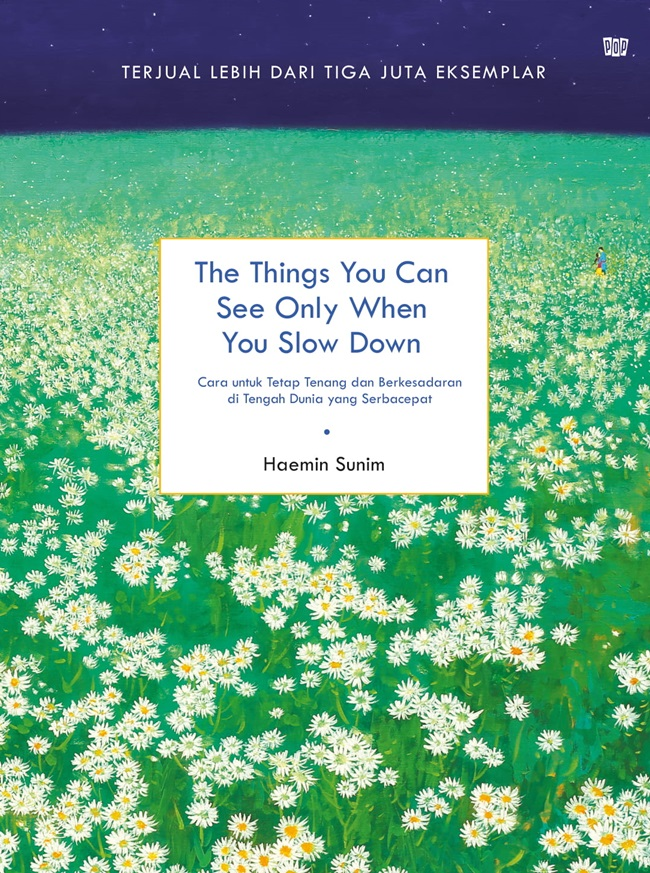
“The Things You Can Only See When You Slow Down” was written by Haemin Sunim and contained so many life lessons and a guide to mindfulness. I got a lot out of this book. Here are some takeaways:
Do not try to control those around you. When you cannot control even your own mind, what makes you think you can control others?
According to some psychologists, happiness can be assessed with two simple questions: First, do you find meaning in your work? Second, do you have good relationships with those around you?
We like to get involved in other people’s business, thinking we are doing so for them. We offer unsolicited help and interfere with their lives. We take away their power and make them feel incapable. This stems from our desire for control and recognition. It has little to do with love.
A bad driver brakes often. A bad conversationalist also brakes often – interrupting the flow with his own stories.
Being a good boss requires much more than just having a lot of technical knowledge. It is important to have integrity and a positive relationship with the staff, to give timely feedback and professional mentoring, and to advocate for what the team needs.
As my prayer deepens, I hear more of His voice than my words. As my humility grows, I feel more of His love overflowing in my heart. As my mind quiets down, I sense more of His presence in every moment.
I really enjoyed the lessons from this book and highly recommend it.
5 out of 5 stars
“I Could Live Here Forever: a novel” was written by Hanna Halperin. This is a fiction book and is not what I typically read. This book was described as “a gripping portrait of a tumultuous, consuming relationship between a young woman and a recovering addict.” I agree with that description. Since this was a fiction book, I didn’t take many notes, but these quotes resonated with me:
“The nice thing about writing was it took pain and warped it into something useful. I could shape it into a beginning and a middle and an end. It was manageable that way . . . by the time I was done with it, it was just a story.”
I never actually knew what he was doing. I was outside his world, even though he was inside of mine. Really, he was my entire world.”
Overall, I wanted more character development.
3 out of 5 stars
I look forward to reading, learning, and sharing more with you soon!
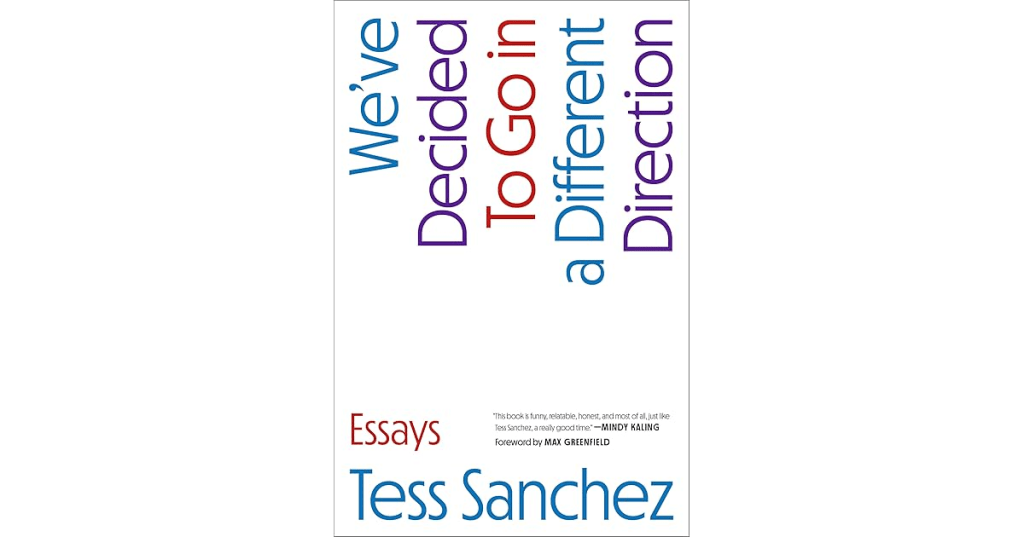
It’s been a while since I’ve posted on this blog since I have had other priorities. I read 3 books in June. Here is a blurb of each of the books I read in June.
The novel “Motherhood” by Sheila Heti follows a woman in her late 30s as she grapples with whether or not to have children. This book was not plot-driven; it was more like a long internal monologue in which the woman constantly questions what it means to be a mother and whether motherhood would enhance or diminish her life. I didn’t like the writing style, but it was thought-provoking at times. Here are some key lessons from this book:
the pressure of societal expectations for women to have children
motherhood as a choice, not an obligation
motherhood is often tied to a woman’s identity
the cost of motherhood – sacrifice of time, freedom, and sometimes the dreams or ambitions women may have for themselves
Women are often expected to become mothers, while men are not held to the same societal standards.
Quotes that stood out to me:
Do I want children because I want to be admired as the admirable sort of woman who has children? Because I want to be seen as a normal sort of woman, or because I want to be the best kind of woman, a woman with not only work, but the desire and ability to nurture, a body that can make babies, and someone who another person wants to make babies with?
We are miserly with ourselves when it comes to space and time. But doesn’t having children lead to the most miserly allotment of space and time? Having a child solves the impulse to give oneself nothing. It makes that impulse into a virtue.
Whether I want kids is a secret I keep from myself. On the one hand, the joy of children. On the other hand, the misery of them. On the one hand, the freedom of not having children. On the other hand, the loss of never having had them.”
To clear things up, these quotes stood out to me, but these are not my personal thoughts.
3 out of 5 stars
“Change Your Mind and Your Life Will Follow: 12 Simple Principles” was written by Karen Casey, a speaker and author of 16 books. Here are some lessons that resonated with me:
Tend your own garden. Focusing outside ourselves and attempting to control other people is a clever avoidance technique that helps us escape having to look at our own sometimes troubling behavior.
We are not in charge of others! Not their behavior, their thoughts, their dreams, their problems, their successes, or their failures.
Let go of outcomes. No matter what we do or how perfect our input, we are never in control of the outcome of any situation. You are responsible for making the effort – nothing more.
Don’t let the mood swings of others determine how you feel.
Any thought can be released. We are fully responsible for our thoughts and can take charge of them whenever we need or want to. No one can take charge of your thoughts, and thus your life, without your compliance.
Be vigilant about your choices. If what you are seeking is peace, you must be vigilant about the choices you make. The ego will often beckon you to choose gossip, criticism, comparisons, judgements, jealousy, fear, and anger – none of these choices will lead you to peace.
4 out of 5 stars
“The Mindful Catholic” is based on an eight-week program called Mindfulness-Based Stress Reduction and was written by Gregory Bottaro, the director of the Catholic Psych Institute and the developer of the Catholic Mindfulness Online Course. Here are some takeaways:
Mindfulness = paying attention to the present moment without judgment or criticism. Curiosity is the disposition of mind that we are seeking to cultivate when we practice mindfulness. Mindfulness does not mean turning off the thoughts in your mind but using them as a door to greater awareness of yourself.
Tendencies vs. Mindfulness:
analyzing vs. sensing
striving vs. accepting
thoughts are real vs. mental events
avoidance vs. approaching with curiosity
mental time travel vs. present moment
depleting vs. nourishing activities
This book also covered mindfulness exercises. As someone who isn’t experienced with mindfulness, here is my favorite:
Sacramental pause – Start with prayer (“Ever-present God, here with me now, help me to be here with you“). Open your awareness to any thoughts, emotions, or physical sensations, then narrow your focus to the physical sensation of your breath alone, and finally expand the focus to the physical sensations of your whole body.
4 out of 5 stars
I look forward to reading, learning, and sharing more with you soon!
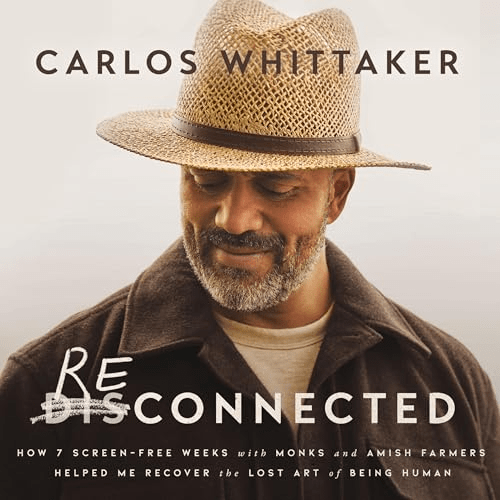
It’s been a while since I’ve posted on this blog since I have had other priorities. I read 5 books in May. Here is a blurb of each of the books I read in May.
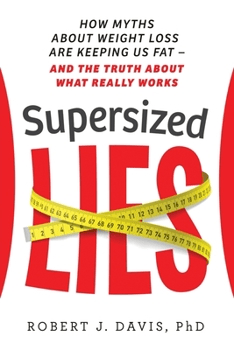
“Supersized Lies: How Myths About Weight Loss Are Keeping Us Fat – And the Truth About What Really Works” was written by Robert J. Davis, PhD, host of the Healthy Skeptic video series and an award-winning health journalist whose work has appeared on CNN, PBS, WebMD, and the Wall Street Journal. Here are some main points:
Instead of focusing on individual villains, we need to pay attention to the general quality of our diets – emphasizing whole foods and minimizing highly processed foods – vegetables, fruits, beans, nuts, seeds, seafood, lean poultry, and whole grains, such as oats and rice. Whole foods tend to have fewer calories per ounce, more fiber, and be more filling, and we often eat them more slowly, giving our brains time to get the message that we’ve had enough.
When calories are cut or increased by a specific amount, the change in weight will vary from person to person, and these differences are due at least in part to genetics.
Calories shouldn’t be the only consideration. That can detract from the pleasure of eating, contribute to an unhealthy relationship with food, and result in too little of the things your body needs. Instead, when choosing what to eat, also pay attention to the sugar, fiber, and protein, and consider how healthful and filling the foods are and how you feel after you eat them.
It takes A LOT of work to burn off the calories in a relatively small amount of food. Changing your diet to lose weight is easier than exercising to lose weight.
If dietary supplements had to meet the same standards of proof for safety and effectiveness as medications, few, if any, would be allowed on the market. Supplement makers aren’t required to test for safety. The law assumes that supplements are innocent until proven guilty – just the opposite of how medications are regulated.
Exercise, sleep, and stress management reinforce each other to benefit not only our physical and emotional health, but also our weight.
4 out of 5 stars
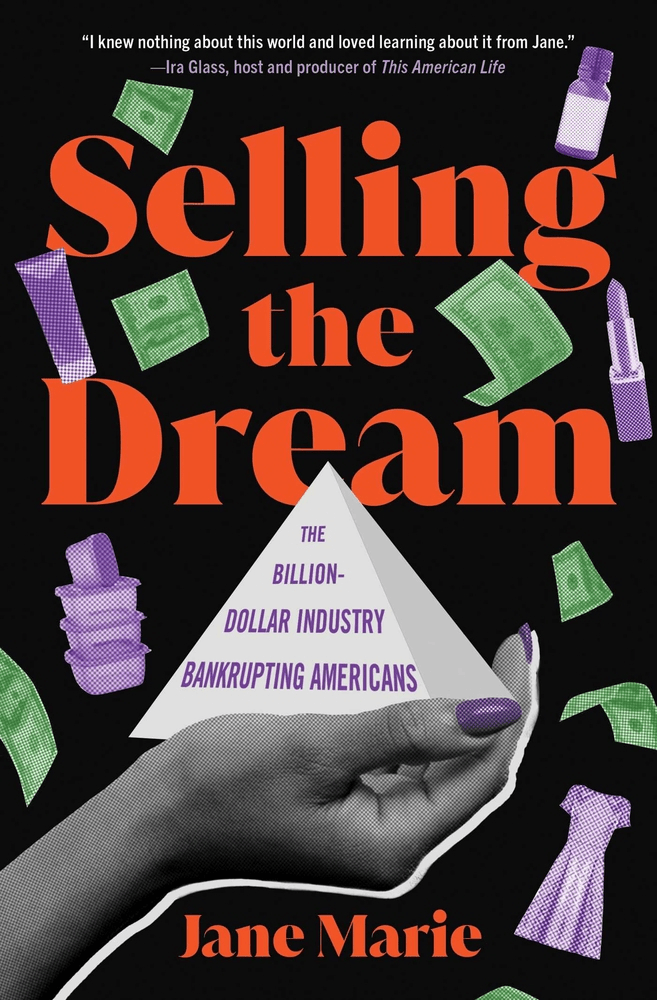
“Selling the Dream: The Billion-Dollar Industry Bankrupting Americans” was written by Jane Marie, a Peabody and Emmy Award-winning journalist. In this book, Jane expands on her popular podcast The Dream to expose the source of multilevel marketing schemes. Although I have never been involved in multilevel marketing (thankfully), I got a lot out of this book! Here are some main takeaways:
99% of those who join MLMs make no $ or even lose $. Women make up 74% of the MLM workforce.
In an MLM, the product being sold doesn’t matter since most of the $ is being made via recruitment fees and distributors stocking their own shelves with inventory.
Despite what those in MLMs may believe, they are not business owners. They don’t control anything except their own sales efforts. They don’t own the product they’re selling or any IP, they don’t set their own prices or salaries, and they are often bound by strict rules in how they can market and sell the products. They also lack a guaranteed salary, benefits, and workers’ rights.
The MLM world is a bizarre land where incentives can range from the opportunity to buy your own ticket to a conference to earning a new rank solely based on products you’ve purchased that now sit in your garage. The disincentives are just as plain: once you’ve roped in your friends and family, quitting seems off the table and an admission that you sold them a bill of goods.
“Nutrition” clubs are seemingly popping up everywhere. One of the most fascinating things I read in this book is that Herbalife nutrition clubs prohibit signs that state or suggest that Herbalife products are available for retail purchase on the premises. Club owners are not permitted to post signs indicating whether the club is open or closed, and the interior of the club must not be visible to persons outside.
I recommend reading this book if you want to learn more about the MLM industry.
4 out of 5 stars
“I Wish I Knew This Earlier: Lessons on Love” is an essay-type book divided into themes and written by Toni Tone, an award-winning speaker, writer, and social content creator. Here are some points that resonated with me:
Intimacy tells you more about a relationship than intensity. Can you be vulnerable? Do you feel safe? Is there trust? Do you have similar interests? Can you easily hold a conversation with them? Do you have similar values?
Have a life outside of your love life is essential. A healthy relationship should complement your life, not become it. A partner who is good for you wants you to flourish and wants you to be the best version of yourself. The best version of yourself is well-rounded, has friendships outside of your romantic relationship, hobbies, and aspirations outside of your romantic relationship.
We should choose to love people for who they really are because the painful truth is that potential doesn’t always manifest.You may think a person is capable of moving mountains for you, but should these mountains never be moved, how will you feel? Falling for potential is not just a disservice to you but it’s also a disservice to the person you are choosing to love. We don’t possess the power to change people. People change because they want to.
Don’t forget to celebrate your partner. Share compliments, provide words of affirmation, and give praise where it’s deserved. Don’t speak up only when you are annoyed. Speak up when you are happy too.
I highly recommend this book to anyone!
5 out of 5 stars
“Love is a Choice: 28 Extraordinary Stories of the 5 Love Languages in Action” was written by Gary Chapman, author, speaker, and counselor and #1 bestselling author of The 5 Love Languages series. Here are some great points:
Realize that you have as many faults as your partner. “Fix your thoughts on what is true, and honorable, and right, and pure, and lovely, and admirable. Think about things that are excellent and worthy of praise.” Philippians 4:8
Perhaps one of the keys to finding an enduring affection is to be willing to accept the interruptions and intrusions.
How do you measure love? Each of us speaks a different love language. How can we learn someone’s love language? By asking them what makes them feel really loved or by watching how the person expresses love to others.
Love doesn’t require that we always have all the answers. Instead, many times love just asks that we listen to the problem, that we try to understand, and that we express our condolences, sympathy, or love. Sometimes love means just being there for the person we care about.
Love requires effort and action. Love is not passive. It requires constant effort, communication, and care. Actions like making time for each other, showing affection, or helping with everyday tasks can strengthen a relationship in profound ways.
Open, honest, and empathetic communication is necessary to foster understanding and connection. Instead of assuming your partner knows what you need, communicate your feelings, desires, and needs clearly. Practice active listening and empathy.
4 out of 5 stars
“Compassion in the Court: Life-Changing Stories From America’s Nicest Judge” was written by Judge Frank Caprio, who became an unexpected television and internet superstar while in his eighties. Judge Caprio’s three-time Emmy-nominated television show, Caught in Providence, has amassed over 20 million followers across social media and his videos have accrued billions of views. Here are some key lessons:
True justice should be tempered with compassion. Treat people as human beings, not just as cases or statistics.
Compassionate decisions build trust in the judicial system. When people feel that they are treated fairly and with understanding, they are more likely to follow the rules and make positive changes.
What may seem unimportant to you could be incredibly important and life-changing to the person before you. One small act of kindness, one act of being thoughtful, can really change the course of a person’s life.
Put yourself in the shoes of the person you are facing and then ask yourself: What would help? How would you behave if it were your parents, grandparents, brother, sister, or relative in that situation? How would you want them treated?
My courtroom was a microcosm of the city of Providence, a progressive city that’s been welcoming immigrants for hundreds of years. Many of the defendants who have appeared before me may not have felt life had treated them fairly, but it was my sincere hope that in my courtroom they felt that they had the opportunity to speak, to be heard, and to be treated fairly in the way our system of justice demands.
4 out of 5 stars
I look forward to reading, learning, and sharing more with you soon!
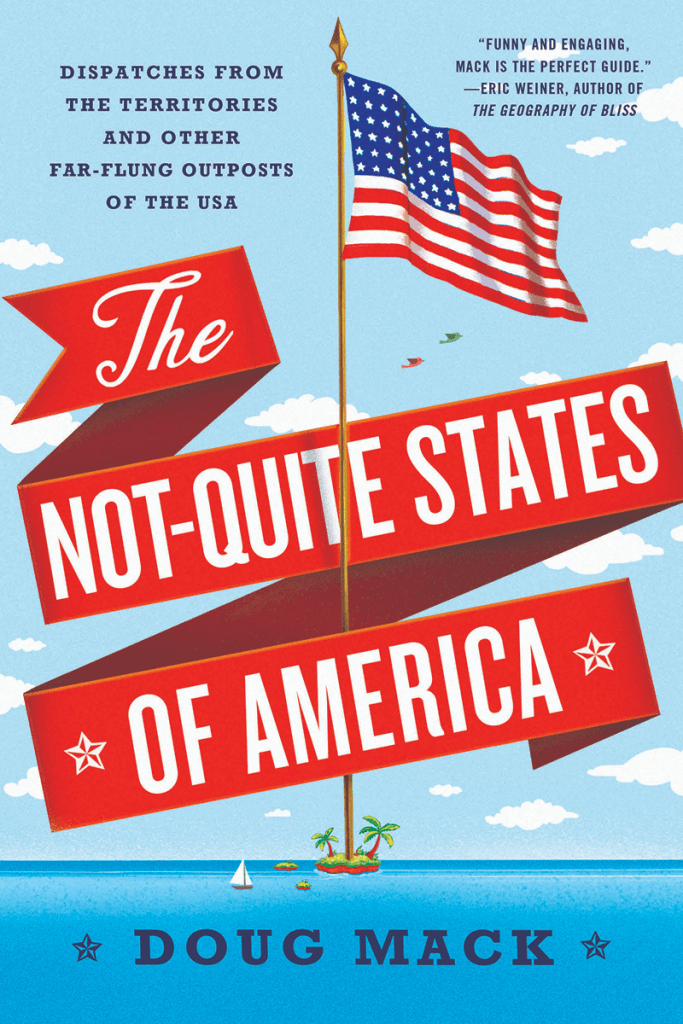
It’s been a while since I’ve posted on this blog since I have had other priorities. I read 5 books in April. Here is a blurb of each of the books I read in April.
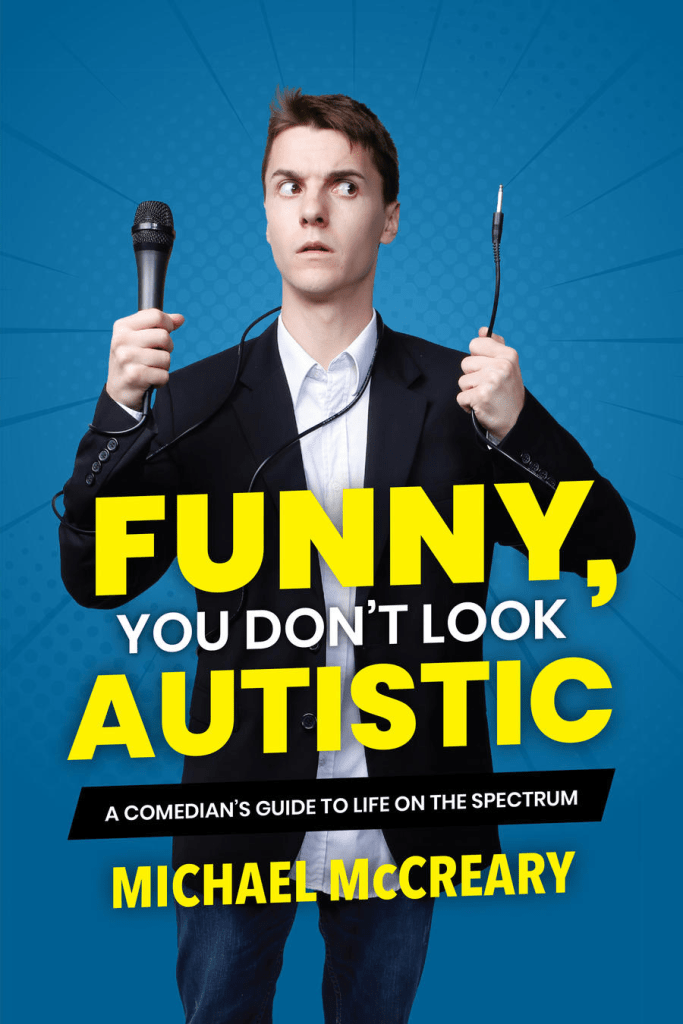
“Funny, You Don’t Look Autistic: A Comedian’s Guide to Life on the Spectrum” was written by Michael McCreary, who does stand-up comedy about being on the autism spectrum and uses comedy to help demystify autism and break down stereotypes. He has performed across North America and lives in Toronto, Canada. Although this is not a comprehensive educational book, I learned more about autism. Here are some takeaways.
Everyone with autism spectrum disorder (ASD) is different. People with ASD have many of the same thoughts and feelings as anyone else. The difference is in the intensity of those feelings and the degree to which they affect functioning.
The DSM-5 defines autism as a “triad of impairments” that presents challenges in these areas:
social interaction
communication
repetitive behaviors
Some people have heightened senses and can’t handle sudden bursts or noise or tags on clothes, while others are under-sensitive to sensory information and need to seek out stimulation. This is known as “stimming” and can include rocking, staring at lights, repetitive blinking, tapping, making sounds, spinning objects, rubbing your skin, clapping, or leg-shaking.
The author took improv classes. Improv requires you to listen to people, respond to them, and go with the flow: “Improv taught me more about social skills than any learning strategies ever could.”
When I’d seen comics lean on a mic stand, I always thought it was a power move. I soon realized that it was meant to make your shaking less obvious.
In media, the characters often seem like a checklist of symptoms rather than real people, a collection of quirks that have been mistaken for a personality. The problem with presenting autism on-screen is that it becomes the crux of the character. Having autism is a characteristic, not a character.
Although this book provided some useful information, it left more to be desired.
3 out of 5 stars
“The Unclaimed: Abandonment and Hope in the City of Angels” by Pamela Prickett and Stefan Timmermans is a powerful work of narrative nonfiction that explores what happens when people die with no one to claim them. Prickett, a sociology professor and former broadcaster, and Timmermans, a UCLA sociologist known for his work on death investigations, follow the lives of four individuals in Los Angeles who died between 2012 and 2019—some with family and means, others without—revealing how easily people can become invisible. Alongside their stories, the authors introduce us to the scene investigators, notification officers, and crematorium workers who step in when no one else will. I found the book deeply moving and full of surprising insights. Here are just a few that stayed with me.
Today, more and more relatives are abandoning their dead, leaving it to local governments to dispose of the bodies. Up to 150,000 Americans now go unclaimed each year.
The term of choice for those sent to the potter’s field is no longer indigent but unclaimed – reflective of relatives’ inability or unwillingness to take care of their dead.
There is no federal agency to track or oversee the unclaimed – just a patchwork of ad hoc local practices.
Los Angeles – “Over five hours, the men poured 1,461 boxes and envelopes into the grave – a year’s worth of ashes.”
Just because a family might be indigent does not mean a decedent is. To access a decedent’s $, the family needs a death certificate. The medical examiner’s office would not release the death certificate until the family hired a private funeral home to transfer the body from the crowded crypt. Quick access to the death certificate was one of the few carrots the office had to entice hesitant families to claim.
Meanwhile, even as they refused to claim David’s body, Mikel and Tiffany were planning how they would spend David’s money. When the estate was settled, after expenses and fees amounting to $30,000, Tiffany’s share came to $10,996.71. Feeling no shame about benefiting from the investment account of a man they hadn’t spoken to in decades, they decided to take a late honeymoon.
Patterns that increase likelihood of being unclaimed: social isolation caused by eroding family ties, never getting married, estrangement
I highly recommend this fascinating book! I learned so much about the unclaimed.
5 out of 5 stars
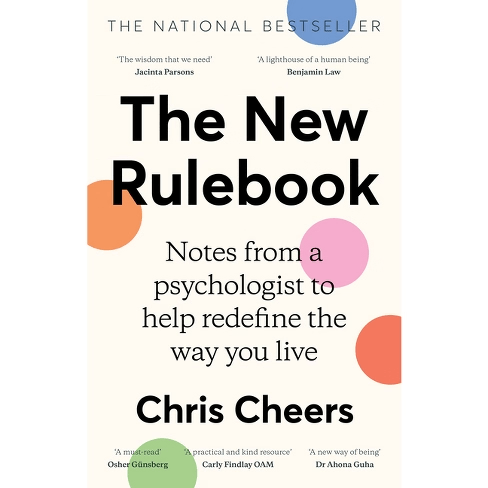
“The New Rulebook: Notes from a psychologist to help redefine the way you live” was written by Dr. Chris Cheers, an Australian psychologist and educator with a focus on elevating mental health in the arts and LGBTQIA+ communities. In this book, Dr. Cheers compassionately asks readers to examine 5 key areas of their lives: self-care, emotions, work, love, and body, and offers evidence-based solutions to redefine their lives not based on expectations of how they should live but led by what they need. Here are some reflections.
If you only focus on self, you start to view self-care as something that is a solo effort – something you buy for yourself, do alone, etc. Many of the worthwhile actions of self-care are carried out in relation to other people, such as communicating boundaries, saying no, or standing up for yourself.
We often recognize that we’re unhappy in our relationships, at work, or in daily life, but we rarely see major change as a real option. Instead, we try to feel better about the lives we already have and convince ourselves that change is too hard or simply not possible. In that process, self-care can become a soothing distraction rather than a solution. If your version of self-care is helping you cope with something that truly needs to change, it may not be care at all. It may be a quiet form of self-neglect.
Self-Care Reflection Questions
How can I care for myself today?
What are the barriers to making that happen? Can they be challenged?
What can I do to help make that care happen?
What positive impact will this care have not only for me, but for my community and the people in my life?
Values – How do you want people to describe you? What words do you want them to use to describe what you have held as most meaningful and important in your life? These are your values.
Values are useless if they just remain an ideal. Our daily actions become our life and identity. Consider how your actions have aligned with your values over the last six months and consider which behavior you could limit to make space for more meaningful actions.
We promote belonging in our relationships through intentional gathering. Safety comes from clear communication and trust. Trust is earned through actions that show accountability, integrity, and reliability. We can also promote a sense of safety in our relationships through learning how to have a difficult conversation, apologize, and come together after conflict.
I recommend this book to anyone who wants to examine the 5 key areas of their lives: self-care, emotions, work, love, and body.
4 out of 5 stars
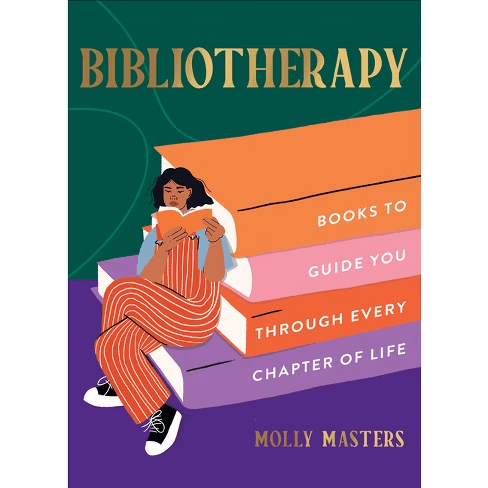
“Bibliotherapy: Books to Guide You Through Every Chapter of Life” was written by Molly Masters, a writer, podcaster, director and CEO of Aphra, and CEO of Bookshop Limited. Bibliotherapy is the application of literature towards a therapeutic goal. This book was a bibliotherapy concierge for confidence and courage, adulting, empowerment, first loves and great loves, heartbreak, self-love and self-discovery, LGBTQIA+ identity, new beginnings, new parents, creativity and inspiration, escapism, your mind, grief and loss, and feeling directionless.
This book was split into sections and provided one-sentence blurbs about most books recommended. I wrote several titles down to research more or read, and I highly recommend this book if you want book recommendations for the categories listed above! I will not be sharing titles recommended at this time because I don’t want to endorse books I have not read yet.
4 out of 5 stars
.
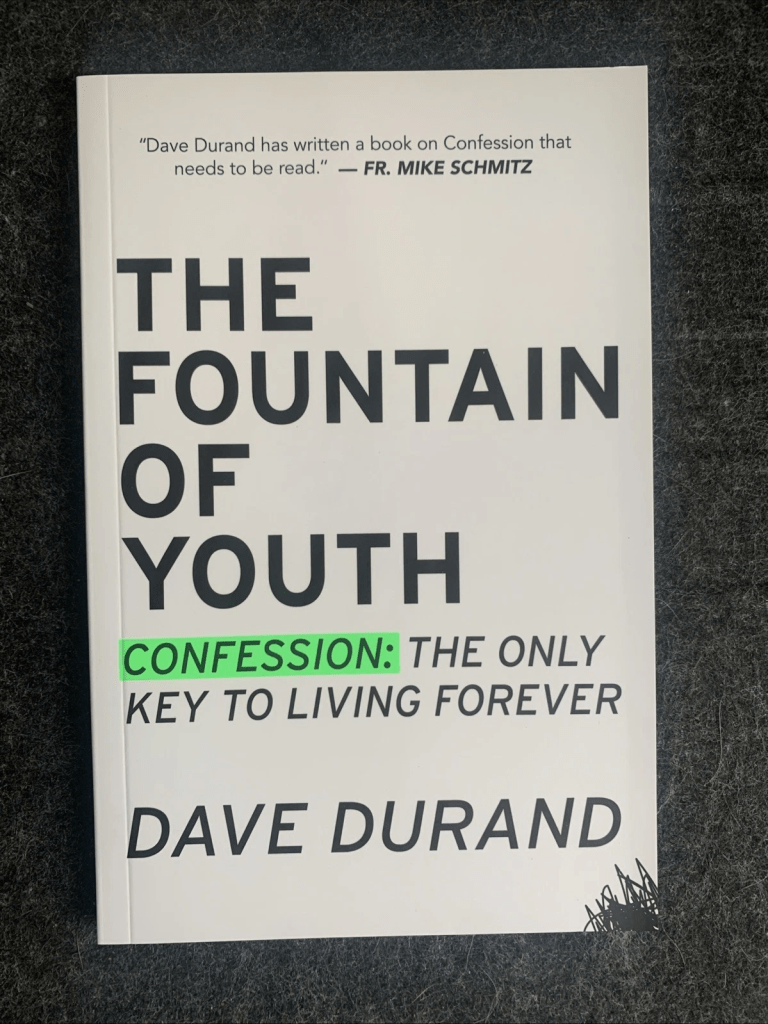
“The Fountain of Youth – Confession: The Only Key to Living Forever” was written by Dave Durand. This book was handed out by my Catholic church and explores a topic that many Catholics (and Christians in general) struggle with: the Sacrament of Confession. Dave Durand takes a direct approach, addressing common excuses people make for avoiding confession, and offering responses rooted in Scripture and Church teaching. Here’s a brief look at a few of those points:
“It is not necessary to go to a priest. I can just tell my sins to God directly.” Durand reminds us that Jesus gave His apostles the authority to forgive sins—a gift passed down through the Church.
“At least I’m not as bad as others.” The book challenges the idea that God “grades on a curve” and instead invites us to humbly acknowledge our need for grace, just as many saints once did.
Self-Justification Rather than justifying our actions, confession helps us confront our faults honestly before God, which can lead to deeper transformation in all areas of life.
“Who is the Church to say what’s a sin?” Durand addresses this with a reminder that moral truth doesn’t change based on opinion and that Jesus established the Church for guidance and accountability.
“I keep committing the same sin—what’s the point?” He encourages persistence in confession, noting that repeated sin doesn’t mean failure if we sincerely strive to grow in virtue with God’s help.
Emotional Blocks Past negative experiences can make confession difficult, but Durand gently urges readers not to let one painful moment keep them from God’s healing grace.
Overall, The Fountain of Youth offers a clear and convicting view of confession within the Catholic faith grounded in both Scripture and the Catechism. Whether you’re a lifelong Catholic or simply curious about the sacrament, it presents a perspective worth reflecting on.
4 out of 5 stars
I look forward to reading, learning, and sharing more with you soon!
It’s been a while since I’ve posted on this blog since I had other priorities in March. I read 5 books in March. Here is a blurb of each of the books I read in March.
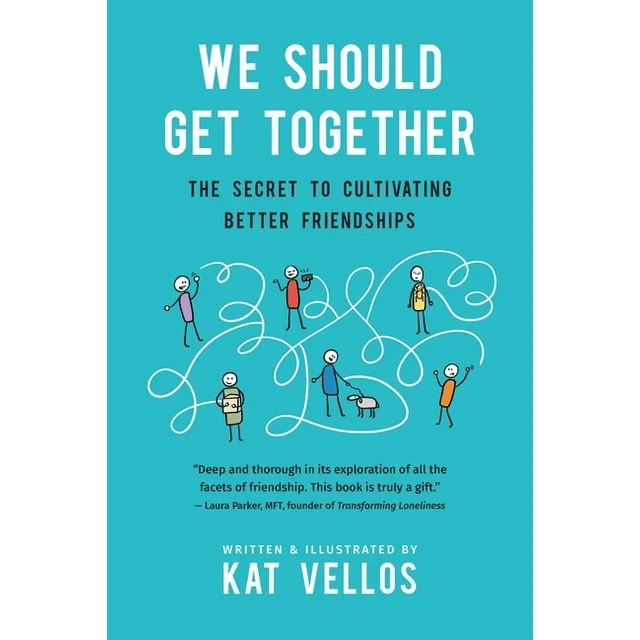
“We Should Get Together: The Secret to Cultivating Better Friendships” was written by Kat Vellos. Kat’s writing is read in over 100 countries and she has been featured in several news outlets. Find out more at katvellos.com. This book helps adults create fulfilling friendships that last a lifetime and tackles challenges of adult friendships and how to make and maintain friendships through more meaningful conversations, identifying quality connections, and prioritizing them. Since starting school, many of my friendships have changed. I got a lot out of this book, but here is just a handful of tips:
Friendship factors: compatibility, proximity, frequency, and commitment. We show our commitment through 5 core behaviors: openness, caring, trust, dedication, and reciprocity.
One of the biggest complaints that comes up when people talk about friendship during adulthood is that everyone’s so busy all the time – work, school, kids, marriage, etc. Maybe the reason we’re “so busy” is because we’re binging shows and endlessly scrolling through social media. Take control of your time. Do you lack the time or the dedication?
Ask open-ended questions and follow-up questions to pull you deeper into conversation. Some fun ideas:
What’s the weirdest job you’ve ever had?
What’s a book that you think everyone should read?
If you had to spend one hour a day studying a topic or practicing a skill, what would you pick up and why?
If you had to be a teacher for the rest of your life, what would you teach?
What were three songs that you loved as a teenager?
What was a low point during this year for you? How did you handle it?
What excites you?
I highly recommend this book and will post more about it in a future blog.
5 out of 5 stars
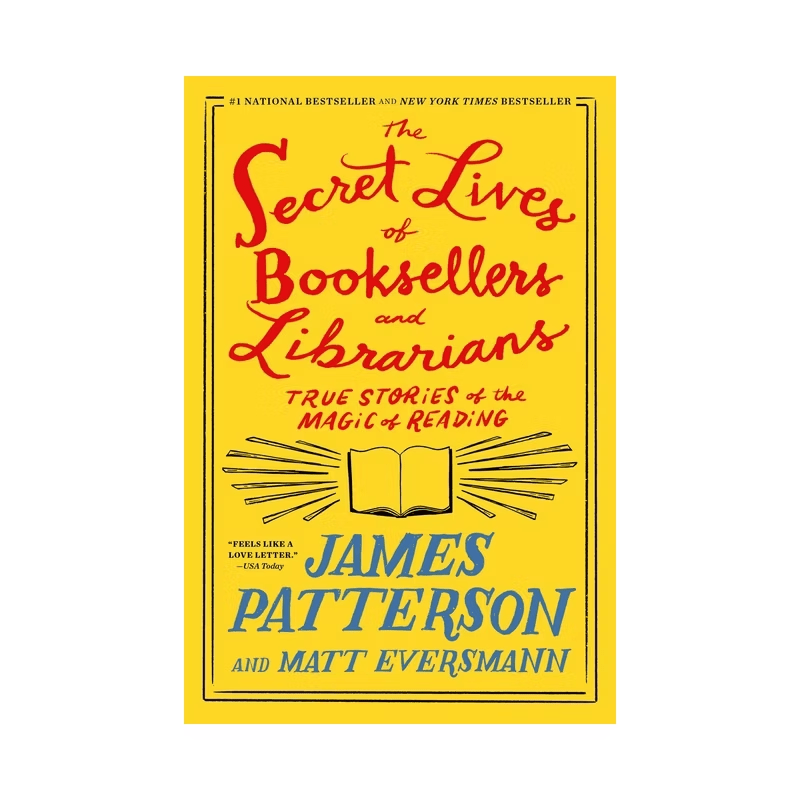
“The Secret Lives of Booksellers and Libraries: True Stories of the Magic of Reading” was arranged by James Patterson and Matt Eversmann. James is the most popular storyteller of our time and has received several awards. This book consisted of short essays from booksellers and librarians. Here are some of my many takeaways:
Having a good library is not political. A good library will have books on vegetarianism and hunting. A good library will have books on every religion. A good library will have books about all eras of history, from ancient Rome to the Civil War to the Holocaust. A good library will have books about different countries, different cultures, and different life experiences.
“I don’t see the library going away at all. We’ll just have to keep up with whatever comes next and evolve with what the citizens want. We hope they continue to want what we provide: lifelong learning and joy.”
Public libraries are open to everyone. And free. There aren’t that many public spaces left where you can go without the expectation of spending money.
I highly recommend this book to get perspectives from booksellers and librarians.
5 out of 5 stars
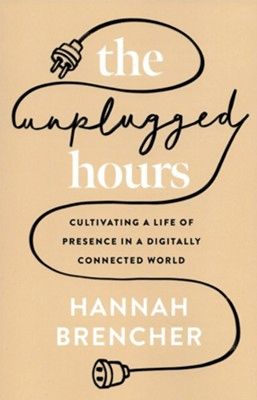
“The Unplugged Hours: Cultivating a Life of Presence in a Digitally Connected World” was written by Hannah Brencher, a writer, TED speaker, and entrepreneur. Hannah challenged herself to 1,000 unplugged hours in one year – taking back a life that had slowly become less present, less awake, and less vibrant over time. This book was a weaving of a memoir, cultural commentary, and spiritual insights. Here are some takeaways:
What would happen if we checked into the lives we’re building as much as we checked into other people’s lives online?
Think about something you’ve been wanting to do for a long time – something you keep pushing off because of e-mail, mindless scrolling, or yet another binge-worthy show. Whatever it is, power down your phone and do that thing you’ve been wanting to do. After one hour, turn your phone back on. You’ll have missed out on nothing, but gained something back instead: a piece of your time, a tiny sliver of your life.
Before taking the challenge, define what “unplugged” means to you. For the author, it means not using your phone, internet, social media, tv, or consuming any form of digital media. Build your boundaries intentionally.
Don’t believe the lie that you don’t have enough time. Instead, acknowledge that exercising, reading, etc. just isn’t a priority for you right now. Scrolling on your phone takes up a lot of time. The time is there; it’s just waiting to be reclaimed.
The double-edged truth about the devices we hold is that there will always be something to check. Something to read. Some way to improve. Something to watch. Another thing to reply to. Something to share. Another comment to make.
Scrolling in bed in morning: “I was allowing other people’s fingerprints – their agendas, opinions, praise, and problems – to get all over my day before my feet even touched the ground.”
There’s often a disconnect between the life people are living and the life they’re curating for others to see. In the unplugged hours, ask yourself: Does this moment still matter to you if no one else knows you went, saw, lived, ate, loved, fought, and tried? Does this moment still matter to you if you never pull out your phone to tell people that it happened?
I highly recommend this book for anyone feeling like they are on their phones too much and that they don’t have time to do things they’ve been putting off, including maintaining friendships.
4 out of 5 stars
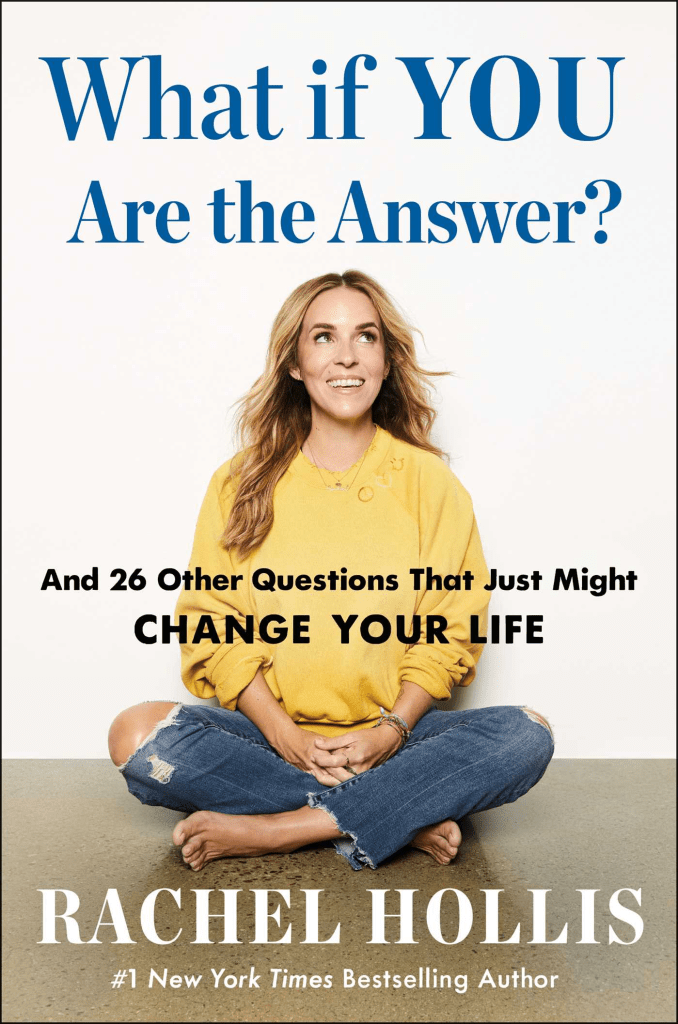
“What If YOU Are the Answer? And 26 Other Questions That Just Might CHANGE YOUR LIFE” was written by Rachel Hollis, a speaker, podcast host, entrepreneur, and #1 New York Times bestselling author whose work has impacted millions of readers worldwide. This book was thought-provoking. Here are some things that resonated with me.
What Who are you waiting for? Live your life. Try new stuff and see if you like it. Learn to look at other humans as individual plays in their own stories without feeling the need to write yours the same way. Listen to your heart, your gut, and your inner knowing. Give yourself permission to change lanes, directions, occupations, beliefs, and other things you need to on the journey of trying your best to do your best.
Realize that no one else can solve our problems, heal our wounds, or make the most of the opportunity we’ve been given. You are the hero you’ve been waiting for.
What must you let go of to be the person you want to be?
What’s bigger, your dreams or your excuses?
Knowing what you know today, would you sign up for this again? Job, friends, relationships, projects, etc. If not, what are you going to do about it?
Who would you be without your fear?
There are two kinds of fear: 1) clear and present danger of a very real threat 2) imaginary fear we create by dreaming up what might happen – anything you’ve never done, places you’ve never gone, conversations you’ve never had, and people you don’t know
Anything you’re curious about or interested in but don’t pursue because of what might happen is you allowing your fear to control you.
I highly recommend this book for anyone wanting to reflect on their lives and personal growth and make changes.
4 out of 5 stars
“Burps” is a children’s book written by Grace Hansen. I wanted to learn more about burping since this is new to me. Here are some tidbits:
When we eat and drink, we swallow food and water, but we also swallow air. Air contains gases like nitrogen and oxygen.
Too much gas in the esophagus and stomach can be uncomfortable. Burping releases this excess gas.
Carbonated drinks contain carbon dioxide and can cause us to burp.
Bacteria in our digestive tract helps break down food. Hydrogen peroxide can be made int he process. This gas smells like rotten eggs.
Burping is our body’s way of releasing excess gas.
Although this book said that everyone burps, that is not true! Some people have a condition called RCPD (inability to burp).
4 out of 5 stars
I look forward to reading, learning, and sharing more with you soon!
I read four books in February. Here is a blurb of each of the books I read in February.
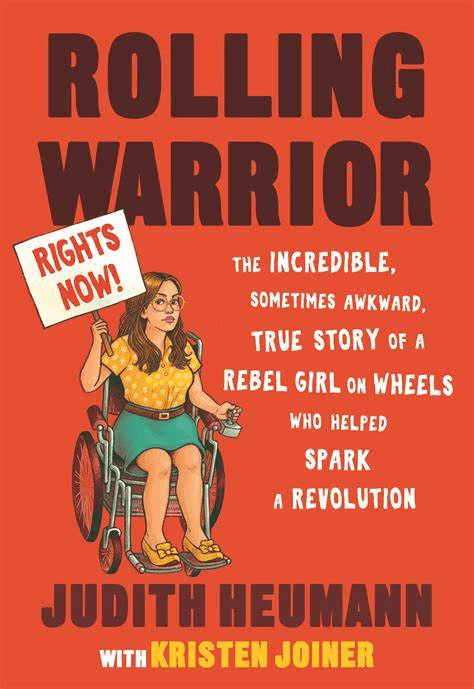
“Rolling Warrior” was written by Judith Heumann with Kristen Joiner. Judith is an internationally recognized leader in the disability rights movement. She has advocated for disability rights at home and abroad, serving in the Clinton and Obama administrations and as the World Bank’s first advisor on disability and development. Kristen is a writer and activist who tries to tell stories that change how people see the world. This book was the young reader’s edition of Judith’s acclaimed memoir “Being Heumann.”
Judith became sick with polio when she was 18 months old. Most people who get it are fine after a week or two, but some end up paralyzed and not able to move. Judith was paralyzed and can move her arms and hands, but can’t walk, dress herself, or go to the bathroom by herself. Judith detailed the challenges of living with polio:
Having a manual wheelchair when streets had curbs with no ramps
not going to a typical school until she was 14 years old – 1 1/2 hours away because her neighborhood school wasn’t accessible
having to ask other students for assistance when needing to go to the bathroom
having to ask other students for assistance to get into her dorm, which had a step
engaging in a sit-in protest with 150 disabled people to prompt the signing of Section 504.
Section 504 of Title V of the 1973 Rehabilitation Act prohibits discrimination against people with disabilities in institutions and programs receiving federal funding. Judith’s lifelong work also contributed to the passage of the Americans with Disabilities Act (ADA).
My story is similar to so many other people’s – those with and without disabilities. Telling our stories helps strengthen our ability to continue to fight against injustice. Sharing the stories about how we want our world to be – and then turning these dreams and visions into reality – is what we must all commit to doing.
4 out of 5 stars
“What I Told My Daughter: Lessons from Leaders on Raising the Next Generation of Empowered Women” was edited by Nina Tassler with Cynthia Littleton. Nina Tassler spent more than a decade as head of entertainment programming for CBS. This book consisted of short essays. Here are some of the many quotes from the essays that stood out to me.
We tell our girls that they can do anything, be anything, that the world is theirs for the taking. We encourage them – expect them – to be ultra-high achievers with lofty goals for college and beyond. I fear we may sometimes put too much pressure on our girls, imbue them with impossible standards. I worry that our dreams for them may sometimes, unintentionally, lead them to believe they can never make mistakes, and that perfection is more important than resilience. I want her to know that not only can she success, but that she can fail without being a failure, be hurt without being diminished, and be embarrassed without being ashamed.
“They always have the right to change their minds, especially when it comes to their personal happiness, whether it involves friendships, potential partners, and even career choices.”
“There are so many lessons we teach our daughters every single day – by what we say and do and how we treat others and how we let them treat us. We lead by example.”
“Choose friends who care about your feelings. Choosing the right people in whom to entrust our emotions and vulnerabilities may be the hardest but most important skill we learn in life.”
4 out of 5 stars
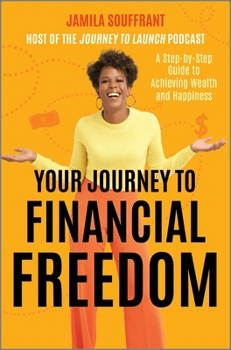
“Your Journey to Financial Freedom” was written by Jamila Souffrant, founder of Journey to Launch and the host of the podcast of the same name. She has been featured by several news outlets and is a certified financial education instructor. This book covered financial independence, creating your enjoyable financial independence plan, executing it, increasing income, paying down liabilities/debt, increasing assets, and staying the course and enjoying the journey. I got a lot out of this book. Here are some key points:
This book covered 5 journeyer stages, each of which has different financial priorities. This book also covered 5 different guacamole levels, which correspond with different lifestyle levels.
There are 6 components you’ll need to work on to help you reach financial independence: income, expenses, liabilities, assets, mindset, and habits.
This book encourages readers to evaluate their expenses based on their journeyer stage and guac level. Consider whether you are comfortable with sacrificing everyday indulgences now to achieve a bigger guac level later, whether you plan to maintain the same level in the future when you reach financial independence, and what guac level you can realistically live at now while working toward financial independence and the guac level you want to maintain once you reach it. Many people assume they need the same income in retirement but have goals of traveling more and living a more luxurious life. Evaluate your lifestyle and expenses now compared to your desired lifestyle and expenses later.
This book covered ways to increase income, set savings goals, optimize expenses, create a debt payoff plan, and increase assets.
It isn’t all about the future and living your best life in retirement. What are the things that you want and wish to do when you reach financial independence and how can you start doing them now? ex: hobbies and vacations
Don’t put your joy and freedom on layaway. The thing about living too much in the future or waiting for the next is that by the time you accomplish or have those things, your life has passed you by. Figuring out how to enjoy the now no matter where you are is critical to a peaceful and sustainable journey. Find joy right where you are.
This book was very comprehensive and educational, and I highly recommend it!
5 out of 5 stars
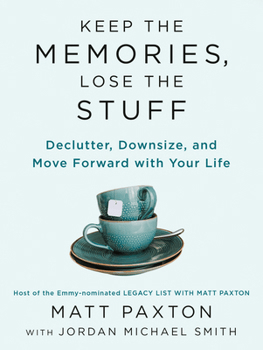
“Keep the Memories, Lose the Stuff: Declutter, Downsize, and Move Forward with Your Life” was written by Matt Paxton with Jordan Michael Smith. Matt is one of America’s top downsizing and hoarding experts, has been the featured cleaner on Hoarders, is the host of Legacy List with Matt Paxton, has been featured in several news outlets, and has helped thousands of people from all walks of life leave behind belongings that no longer serve them so that they can finally take the next step. Jordan Michael Smith is an award-winning journalist, author, ghostwriter, and speechwriter. This book is also in collaboration with AARP, the nation’s largest nonprofit, nonpartisan organization dedicated to empowering people aged 50+ to choose how they live as they age. Here are some of many tips that resonated with me:
Clean or declutter for 10 minutes every night 5x/week. Stick to it.
Set a deadline to keep yourself accountable and force you to do the hard work even when you don’t feel like it.
Understand your why.What are your reasons for decluttering? Less stress? More space for stuff? Moving?
The best predictor of whether you’ll need an item is whether you are currently using it or have recently used it, not whether you think that, one day, somehow, somewhere, you’ll use it. In all likelihood, that day will never come. Love who you actually are and force yourself to say goodbye to your “fantasy self” items, the stuff you think you’ll use when you’re a different version of yourself. Ex: exercise equipment, clothes that are way too small
Give yourself permission to give. Don’t confuse the emotional worth with the economic worth. Something is only worth financially what an independent third party will give you.
Free yourself from guilt. We think we’re expected to carry on not just traditions passed down to us, but actual belongings. The reality is that you aren’t obligated to any thing or lifestyle other than the one you want. Let go of expectations about your obligations to inanimate objects.
Ask yourself, “What are the items that will help me live happily and keep my story living on forever?” Discover your legacy and feel free to keep 5-6 items that are intensely personal, both to the giver and the receiver.
We confuse the sentimental value of our objects with the financial value they’ll have to others. It’s only human to believe our stuff is worth more than it actually is because we attach emotions and memories to those items. Selling our belongings means separating the powerful emotional value from the brutal financial reality of what those possessions are worth in the marketplace.
I highly recommend this comprehensive book! It contains tips for decluttering, moving, creating a Legacy List of items, giving items away, selling items, and contains many resources.
5 out of 5 stars
I look forward to reading, learning, and sharing more with you soon!
“101 Things I Learned in Culinary School” was written by Louis Eguaras with Matthew Frederick. Louis is a department chair at the Culinary Arts Institute at Los Angeles Mission College, Chef Instructor at the Institute of Culinary Education, and a former White House Chef. I read this book back in 2023. This book is not a recipe book! Instead, it contains practical how-tos and interesting facts. Here are some of the many facts that stood out to me.
Guests seek more from a dining experience than to satisfy their appetites: comfort, prestige, value, relaxation, artistry, social fun, or perhaps just a good place to watch the game. Be clear why customers choose your restaurant. Prioritize what they most need.
Keep guests informed. Be open about errors and oversights – understaffed, dish running late, etc. Acknowledge mistakes!
Repurpose rather than reuse. Have multiple uses for every food item. Repurpose preparation scraps and use in stocks, soups, purees, etc.
Liabilities for restaurants: food-related illnesses, chemical hazards, physical hazards, property hazards, drinking hazards/serving too many drinks
School teaches you how to cook. Experience teaches you how to be a chef. A cook follows a recipe; a chef can intuitively modify a recipe. A cook knows how; a chef knows why.
Kitchen lingo:
“all day” = the total # of items to be prepared. Ex: 2 burgers rare + 1 burger medium = “3 burgers all day“
“dragging” = not ready with the rest of the order. Ex: “The fries are dragging.”
“drop” = Start cooking. Ex: “Drop the fries.“
“fire” = Start cooking, but with more urgency. Ex: “Fire the burgers.“
“on the fly” = with extreme urgency. Ex: “Get me two soups on the fly.“
Mise in place is a practice and a philosophy. Determine everything you need before starting a dish or shift – recipes, ingredients, utensils, pots, pans, stocks, sauces, oils, dishware, and anything else. This permits the most efficient use of a cook’s space and time and informs the disposition and posture of a chef.
Shake hands with a knife. To hold a chef’s knife properly, rest your thumb on one side at the juncture of the blade and handle, and let your middle, ring, and pinkie fingers grip the handle naturally on the other side. The index finger rests on the side of the blade, near the handle.
4 ways to tenderize:
mechanical (pound with a mallet before cooking)
marinade in an acidic bath for 30 minutes to 2 hours
salting/brining – coat with coarse salt and refrigerate for 1-4 hours, then rinse off and pat dry before cooking
slow cooking in liquid in a slow cooker
Food keeps cooking after you stop cooking. Allow for carryover cooking in meats by removing them from the heat source when the internal temperature is about 5 degrees Fahrenheit below the safe-to-eat temp. Let sit for 5-10 minutes and monitor the temperature.
Ways to thicken a stock, soup, or sauce:
reduction (remove the pan lid and simmer until desired thickness is achieved)
roux (heat butter in a saucepan, and slowly add an equal amount of flour, stirring constantly to produce a paste)
slurry (cornstarch for dairy-based, arrowroot powder for acidic sauces)
gelatin
A pepper’s name often changes when dried.
Fresh pimiento ➡️paprika
poblano ➡️ mulato (not ripened) or ancho (ripened first)
jalapeno ➡️chipotle (smoked)
Menu types:
static (common chain/fast-food restaurants)
cycle (changes daily/repeats weekly)
market (based on what is available for purchase by the restaurant daily)
farm to table, a la carte, prix fixe, etc.
Serve a just-enough portion. The protein should be about the size of the palm of your hand, and the vegetables should span about 2 or 3 fingers. A just-enough portion conveys that care and quality were elevated over quantity and that guests should eat more slowly to savor and enjoy. It also leaves room for appetizers and desserts.
Ways to make a plate look better:
vary plate shapes
use complementary colors
paint the sauce
design the negatie space
bed it – put it on a bed of lettuce, rice, etc.
I highly recommend this book to anyone who wants to learn more about culinary facts!
I look forward to reading, learning, and sharing more with you soon!
I read four books in January. Here is a blurb of each of the books I read in January.
“Built to Move: The 10 Essential Habits to Help You Move Freely and Live Fully” was written by Kelly Starrett and Juliet Starrett, the cofounders of San Francisco CrossFit and coauthors of the Wall Street Journal Bestseller Deskbound. Kelly is also the cofounder of The Ready State. This book included different movements and tips to incorporate them into daily life. Here are some takeaways:
The range of motion and body positioning relates to health, ease of movement, and the presence and absence of pain.
This book included measurable and repeatable diagnostics that will help you assess your current condition, where you need to go, and how you’re going to get there. This book also included mobilization techniques for reducing stiffness and resolving pain.
Think about how you want to live your life, take into consideration that the body naturally gets stiffer and weaker with age, and undertake strategies to counter those potential erosions before they set in. To be able to keep moving when you’re older, you need to get or keep moving now.
Some tips:
Sit-and-rise test – getting up and down off the floor without using your hands, knees, or losing balance – determines when you have good range of motion in your hips and gauges leg and core strength and balance and coordination
Incorporate various ground-sitting positions into your day: cross-legged sitting, sitting with your legs out in front of you, one-leg-up sitting, etc.
Find your balance. Do the one-leg stand test with your eyes closed for twenty seconds. How steady you are on your feet depend on your feet, your inner ear, sensory receptors in the muscles, tendons, fascia, joints, and eyesight.
Aim to limit sitting to six hours per day. Set up a standing workstation and move around every thirty minutes.
4 out of 5 stars
“While You Were Out: An Intimate Family Portrait of Mental Illness in an Era of Silence” was written by Meg Kissinger, who teaches investigative reporting at Columbia Journalism School. Meg spent more than two decades traveling across the country to report on America’s mental health system for the Milwaukee Journal Sentinel and has won dozens of accolades. This book was frank and revelatory and was a personal and painful narrative. I highly recommend this book! Here are some of the many things that resonated with me:
Meg details the family dynamics of alcoholism, mental illnesses, and two of her siblings committing suicide and how the shame and practice of “not talking about it” impacted her and her family.
5.6% of adults suffer from serious and persistent mental illness, and more than 1/3 of them don’t get treatment. A person with serious mental illness is 10x more likely to be incarcerated than hospitalized.
Jails and prisons have become the nation’s de facto mental health hospital system. By 2010, almost 90% of the hospital beds across the country that were once available for the sickest psychiatric patients had been eliminated.
“Suicide prevention experts I’d interviewed over the years told me repeatedly that we can do a lot more to stop people from killing themselves. Knowing the warning signs for suicide and how to talk to those who are considering it will save lives. So why weren’t we able to stop our siblings? Because we had been discouraged from talking about it. I could not help but wonder what life would have been like if we had grown up in a more transparent era.”
“Only love and understanding can conquer this disease.”
5 out of 5 stars
“Riding the Lightning: A Year in the Life of a New York City Paramedic” was written by Anthony Almojera, an EMS lieutenant with the Fire Department of New York City who has also been featured in various media outlets. This book was devastating, candid, and vital, and guides readers, one month at a time, through the first year of COVID-19 from the perspective of a paramedic in New York City. I recommend this book to readers who want a glimpse of how COVID-19 changed EMS each month in 2020. Here are some takeaways:
In the beginning of COVID-19, every EMT and paramedic who transported a patient with suspected coronavirus was instructed to wear gloves, a gown, goggles or a face shield, and an individually fitted N95 mask, then throw everything away after each patient contact. Originally, the health department recommended that ambulances be aired out for two hours after every fever/cough call. (!)
Protocols were shifting constantly – what protective equipment to wear, how to deal with a cardiac arrest, whether to consult telemetry about where to take a patient, whether to notify the hospital that you were transporting a suspected case of COVID, how often to change your N95 mask, etc.
Surgical masks are made of polypropylene, a nonwoven paper substance that allows air to pass through it but not droplets of moisture. They don’t stop airborne particles from passing into your nose and mouth. For that, you need an N95.
In March 2020, the New York City COVID-19 deaths averaged over 400 per day. On March 30, 2020, New York City EMS received 7,253 calls – one call every 12 seconds!
The telemetry office couldn’t keep up. There was 1 physician fielding all questions from EMS crews in a city of over 8 million people!
Hospitals didn’t have enough ventilators or CPAP machines. For all the people who were dying in the hospital, many more were dying before they even got there – at home, in ambulances, or in lines to the emergency departments.
At one point, the author had 14 calls in 16 hours, and every patient died!
Patients’ families want to believe that something can be done, that the outcome will change if the patient goes to the hospital. But the medical system was so swamped during the pandemic that our protocols had changed. As of March 31, 2020, we were transporting patients only if we got a pulse back at the scene. Hospitals didn’t have the resources to try to resuscitate them, and we didn’t have the resources to transport them, so we had to pronounce these patients dead then and there.” By April 2020, if there was no pulse or electrical activity in the heart after 20 minutes, paramedics/EMS were instructed to stop CPR and pronounce the patient dead.
4 out of 5 stars
“A Bit Much: Poems” was written by Lyndsay Rush, a comedy writer and the poet behind the popular Instagram account @maryoliversdrunkcousin. This book was great, and I highly recommend it!
Here are some of my favorites:
When your surroundings begin to feel cold and uninhabitable and your environment no longer offers the support or sustenance you need, I hope you migrate. I hope, as you make your way down south, that you find another silly goose to fly with, too – in such a tight-knit formation that Wikipedia would refer to your crew as plump. And I hope that no matter how long the journey takes you, the wind is always at your back; nudging you closer to home.
“Starting something new is like a one-man show for a one-man audience; the only applause worth seeking is your own. Don’t rob yourself of that while you wait for approval from somewhere else. Sometimes winning yourself over is the greatest show on earth.“
“A great philosopher once said I saw the sign and it opened up my eyes (I saw the sign). But when you see the world through rose-colored glasses, it can be hard to recognize a red flag. So what I have learned is this: If they’re mean to the waiter, they’ll be mean to you. If they never follow through, they will never show up. If it hurts your stomach, it will hurt your heart. You can’t temper a storm, but you can sure as hell evacuate the beach.“
“If cauliflower can be pasta, you can be whatever you want.“
5 out of 5 stars
I look forward to reading, learning, and sharing more with you soon!
“Real Self-Care” was a much needed, straightforward book written by Pooja Lakshmin, MD, a board-certified psychiatrist, New York Times contributor, and the founder and CEO of Gemma, the physician-led women’s mental health community.
For many women, self-care ends up being another burden, another thing on the to-do list to feel bad about because they aren’t doing it right. Women are pulled in two opposing directions: asked to be selfless and accommodating to the needs of others and, simultaneously, to excel professionally and personally.
Real self-care vs faux self-care:
Applying a methodology of faux self-care is reactive, whereas practicing real self-care is proactive.
Faux self-care is a noun, typically describing an activity or a product. Real self-care is a verb, describing an invisible, internal decision-making process.
3 most common reasons why we tend to turn to faux self-care:
escape – using self-care to escape our regular lives seldom results in lasting change. Our true selves are located in our daily choices.
Whatever the setting, you get to “retreat” from the real world and hermit away in a beautiful environment, but no matter how much self-care you do, you’re still you.
achievement – based on shame. Another activity to excel at/conquer. Perfectionism, workaholism, and capitalism.
“My self-worth strongly depends on my ability to be seen as a success.”
optimization – trying to maximize every possible aspect of life and trying to be the most efficient, productive, and controlled.
Optimization will just breed more optimization – equating self-worth with productivity
What is real self-care?
Real self-care requires boundaries and moving past guilt. You must be assertive in prioritizing your own needs and desires.
Real self-care means treating yourself with compassion.
Real self-care brings you closer to yourself and getting to know your core values, beliefs, and desires.
Real self-care is an assertion of power. It’s about saying what works for you and what doesn’t.
Real self-care is all about making space for you – your thoughts, feelings, and priorities in life. Setting boundaries is how we take our time, energy, and attention back. Ex: you don’t have to answer your phone. Setting boundaries is about recognizing you have a choice and communicating it. Learn to say no.
The longer you stick with a relationship, job, or situation that isn’t working for you, the higher the emotional cost to set a boundary.
Listen to what your body is telling you: dread, nausea, palpitations, etc. Learn to say no.
In all situations, you can say yes, you can say no, or you can negotiate. Your boundary is in your pause.
Tips for practicing compassion:
Replace self-judgment with self-kindness.
Practice receiving support/love/attention. Say yes to offers of help.
Connect with your body and rest when your body is tired.
Know your values. What sort of person do you want to be? What really matters to you? Does your action align with your values? Know your HOW and WHY. Recognize that in each season of your life, you will have different priorities.
Your boundaries are a reflection of how willing you are to advocate for the life you want. You must separate your own needs and preferences from the opinions of other people who have a vested interest in your life.
Every boundary you set is a reminder that you have agency over how you spend your time and your energy. Be clear, be concise, and don’t apologize.
Compassion is something you must give to yourself; you can’t expect it to always come from outside.
These common examples are NOT practicing compassion:
“I can save time by doing it myself.” Women tend to bear the heavy mental load because they believe others are less efficient or don’t do things quite right. This leads to resentment and rage that builds up all because it’s “easier and faster.”
Martyr mode – extending yourself toward others and expecting praise/support/attention and losing your cool when that expectation is not met.
I look forward to reading, learning, and sharing more with you soon!