
I am late posting this. I read 3 books in September. Here is a blurb about each of the books I read in September.
“100 Best Books for Work & Life” was written by Todd Sattersten and contained his perspective of the 100 best books about categories such as conversations, goals, habits, money, relationships, sales, marketing, teams, and more. I really enjoyed the recaps and found several books I’m interested in reading, and I was also pleased that Todd recommended several great books I have already read and enjoyed. Here are some of the books recommended that I have read or look forward to reading:
- Peak: Secrets from the New Science of Expertise by Anders Ericsson & Robert Pool
- There appears to be no limit to the ability to improve. How much you improve is up to you.
- Talent is overrated. It may be important in giving people motivation when they are first starting out, but practice wins over time – every time.
- Feedback is essential. Solely gained experience is not particularly effective at building expertise.
- Mindfulness: 25th Anniversary Edition by Ellen Langer
- “The more we realize that most of our views of ourselves, of others, and of presumed limits regarding our talents, our health, and our happiness were mindlessly accepted by us at an earlier time in our lives, the more we open up to the realization that these too can change. And all we need to do to begin the process is to be mindful.”
- The Simple Path to Wealth: Your Road Map to Financial Independence and a Rich, Free Life by J.L. Collins
- You can’t pick winning stocks. Don’t feel bad. I can’t either. Nor can the overwhelming majority of professionals in the business.
- VTSAX or VBTLX (bonds) are great choices for investment funds.
- Atomic Habits by James Clear
- You do not rise to the level of your goals. You fall to the level of your systems.
- Crossing the Chasm: Marketing and Selling Disruptive Products to Mainstream Customers – Third Edition by Geoffrey Moore
- Fill-in-the-blank elevator pitch: For (target customers) who are dissatisfied with (the current market alternative), our product is a (product category) that provides (compelling reason to buy). Unlike (the product alternative), we have assembled (key features of the product).
- The Leadership Challenge: How to Make Extraordinary Things Happen in Organizations by James Kouzes and Barry Posner
- 10 commitments of leadership: clarify values, set the example, envision the future, enlist others, search for opportunities, experiment and take risks, foster collaborations, strengthen others, recognize contributions, and celebrate the values and victories.
I really enjoyed this book and I highly recommend it to others who want to read short recaps of books and get ideas of books they may be interested in reading.
5 out of 5 stars

“Cultish: The Language of Fanaticism” was written by Amanda Montell, a writer and language scholar. This book was fascinating.
Perhaps the biggest takeaway was the reminder that humans naturally hunger for ritual, meaning, and community. One point that really stood out to me was:
Language doesn’t work to manipulate people into believing things they don’t want to believe; instead, it gives them license to believe ideas they’re already open to.
Here are some other key insights from the book.
Methods used to assert power:
Language is frequently used to:
- create community and solidarity
- to establish an “us” and a “them”
- to align collective values
- to justify questionable behavior
- to instill ideology and inspire fear
Cultish language serves 3 primary goals:
- makes people feel special and understood through love bombing, buzzwords, and calls for vulnerability
- conditioning – getting people to feel dependent on the leader to the point that life outside the group feels impossible
- coercion – convincing people to act in ways that directly conflict with their former reality, ethics, or sense of self
Red flags to watch for:
If a form of language causes you to have an instant emotional response, while also halting you from asking further questions, or makes you feel “chosen” just for showing up, or allows you to morally divorce yourself from some one-dimensionally inferior other, it’s language worth challenging.
The Cultish Spectrum and MLMs:
Montell explores a wide spectrum of groups – from fitness communities and sports fandoms to organized religions and extreme cults. Ethical cult-like groups (such as sports and music fandoms) are up-front about what they believe, what they want from you, and what they expect from your membership. Crucially, leaving comes with few, if any, consequences. The true test of where a group falls on the spectrum is what happens when you try to say no or leave.
Multi-Level Marketing companies (MLMs), on the other hand, heavily cross into destructive territory:
- They tap into members’ hopes, fears, and desires for financial independence and belonging.
- They use thought-terminating cliches to silence dissent and doubt.
- They create a chosen “tribe” elevated above ordinary society and revere their founding leaders.
- A blend of financial struggle, close community, and idealism becomes the jackpot for any upline.
- Strategic “love bombing” ultimately replaces authentic community.
Historically traditional religion provided four key pillars: meaning, purpose, community, and ritual. As fewer people find these pillars in tradition institutions, many turn to modern groups and alternative communities to fulfill those fundamental human needs.
4 out of 5 stars

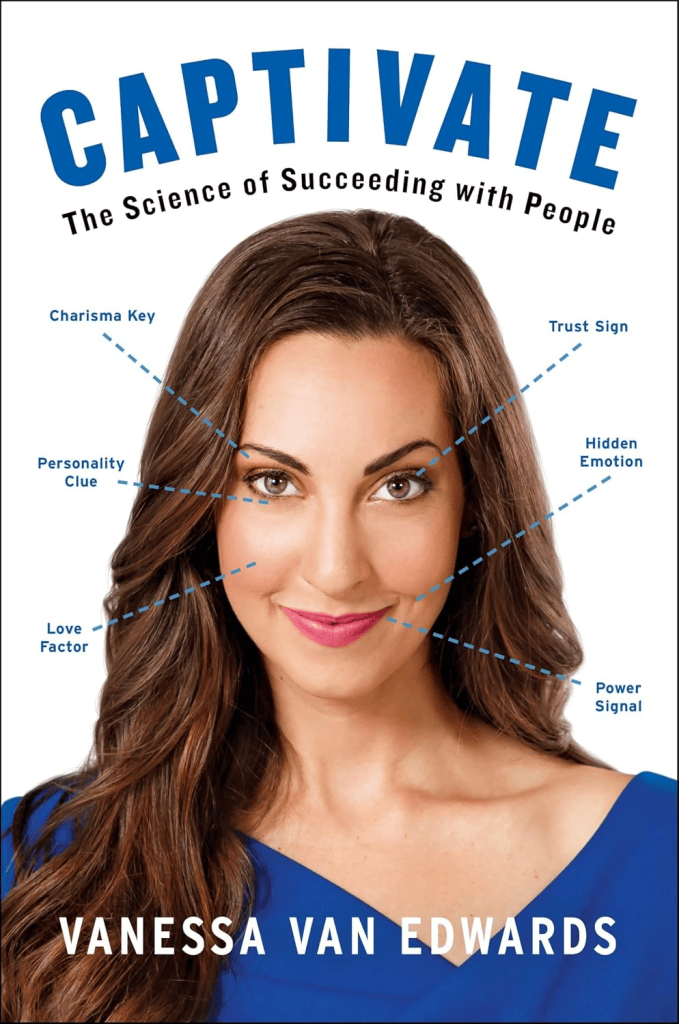
“Captivate: The Science of Succeeding with People” was written by Vanessa Van Edwards and was full of valuable lessons. Here are some key points.
- Stop forcing yourself to socialize in ways that drain you. Say no so you have the energy to say yes.
- “When you feel great, other people pick up on it and want in on it. When you drag yourself to an event because you feel like you should ‘make an appearance,’ you are the party pooper. And you smell up the event.”
- When you produce dopamine during a conversation, you not only give your partner more enjoyment; you are also assigned more significance, which increases your memorability.
- Don’t be afraid to ask for advice, share a vulnerability, or admit a weakness. They bond you to people.
- Let curiosity drive your interactions.
How to address the following emotions in conversations:
- anger → Explore where the anger is coming from and how you can oust it. Stay calm. What information can you give them to feel less threatened?
- contempt → Find the source. How can you address it and build rapport. Where can you agree?
- happiness → Celebrate and smile with them. Ask for details and jump into joy with them. Express gratitude that they wanted to share their happiness with you.
- fear → Address the threat and source of discomfort. Can you make it safer, reassure, re-evaluate, or remove the threat?
- surprise → Clarify – do they know what you know? What needs to happen next? How can you get on the same page?
- disgust → Let them tell you how they really feel. How can you fix the dislike?
- sadness → What is causing the sadness? How can you help? How much time do they need to recover?
When dealing with difficult people, remember the NUT job:
- Name the emotion.
- Understand the feeling.
- Transform the fear.
Understand what the person is seeking. Become their ally. How can I help? What needs to happen for you to feel better?
Appeal to someone by focusing on what they value, not what you value. Listen to their complaints, brags, and worries, and look at their non-verbal cues. Most people’s choices make sense to them. When they don’t make sense to you, it’s usually because you are being driven by a different primary value.
Primary values and what makes people with each primary value feel worthy:
- Love → feel worthy when they are included, feel liked, and someone appreciates them
- Service →feel worthy when they don’t have to ask for help, someone is assisting them with tasks or chores, or someone does a favor for them
- Status → feel worthy when they are praised, given power or credit, or their accomplishments are recognized
- Money → feel worthy when they have a “full” bank account, they can afford what they desire, or they are earning money
- Goods → feel worthy when they have a comfortable home or office, they have lots of assets, they are surrounded by tokens or objects from their past
- Information → feel worthy when they are in the know, they are told information first, or they are asked to give an opinion
Fear is a cross-dresser. It likes to wear different outfits. Sometimes fear causes us to:
| Be people pleasers | Be gossipy | Be awkward | Be narcissistic | Seek compliments |
| Be bossy | Be avoidant | Be boring | Go into denial | Be selfish |
| Be defensive | Be mean | Be critical | Be needy | Be dramatic |
How does your fear dress up?
I highly recommend this book to everyone who wants to learn more about how to have great relationships and conversations.
5 out of 5 stars
I look forward to reading, learning, and sharing more with you soon!