I read 3 books in May. Here is a blurb of each of the books I read in May.
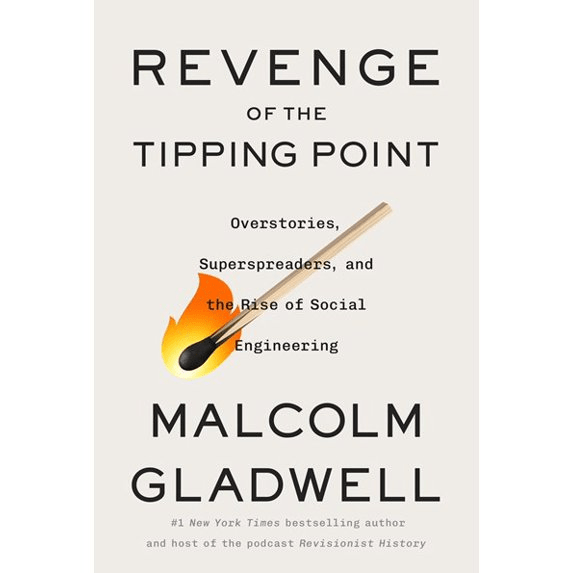
“Revenge of the Tipping Point: Overstories, Superspreaders, and the Rise of Social Engineering” by Malcolm Gladwell, the bestselling author of seven New York Times hits, is filled with insights and the kind of social-science storytelling Gladwell is known for. Some sections fascinated me, while other parts seemed to drift into tangents.
Here are the concepts that stood out most:
Contagious beliefs — When we look at a contagious event, we assume that there is something fundamentally wild and unruly about the path it takes. However, contagious beliefs often unite people and often stop neatly at community boundaries. His example: vaccine skepticism among Waldorf school parents.
Monocultures — Epidemics thrive in sameness, and so do we. Malcolm explores how our tendency to build social monocultures can unintentionally put our own communities at risk.
The “Magic Third” — When a group reaches roughly one‑third minority representation, its culture and performance can shift dramatically. Malcolm uses this to explain why some institutions change and others resist change.
Superspreaders — During COVID‑19, superspreaders were individuals who emitted far more aerosol particles than average. Malcolm expanded the idea of superspreaders to social life: charismatic criminals, influential ideologues, and powerful institutions that accelerate the spread of ideas.
Institutional engineering — One of the most fascinating examples was Harvard’s use of varsity sports to maintain certain demographic proportions, such as the women’s rugby team that consists of mostly white upper middle-class students. He contrasts this with Caltech, which does not engineer its student body, resulting in rising Asian enrollment. He also notes the tension between the Supreme Court’s ban on race‑based affirmative action and the continued acceptance of athletic admissions that disproportionately benefit privileged students.
Media is a contagion engine. Media shapes language, beliefs, and the speed of social contagion. Will & Grace was a cultural tipping point for public support of gay marriage. This book explored how narratives — not facts — often drive behavior. We see this in fear-driven media cycles, corporate culture, political polarization, school environments, online communities, viral content, and misinformation.
Overall, the book is an examination of how ideas spread, who accelerates them, and how institutions and media shape the social ecosystems we live in.
4 out of 5 stars
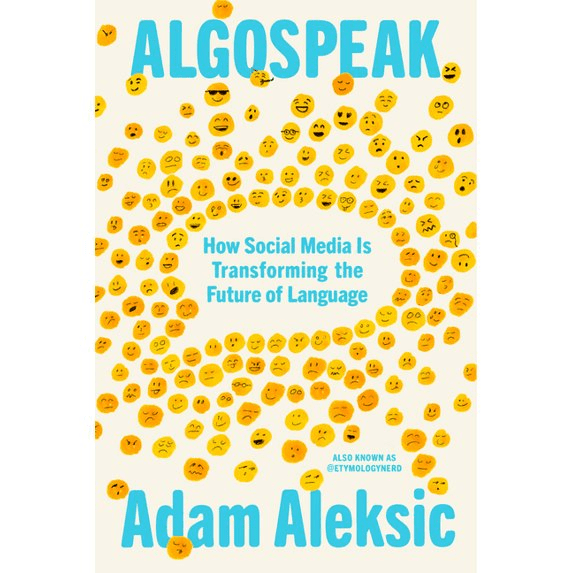
“Algospeak: How Social Media is Transforming the Future of Language“, by linguist and creator Adam Aleksic, who is known to millions online as the Etymology Nerd, is a fascinating deep dive into how algorithms are reshaping the way we communicate. Adam has lectured on language and social media at Stanford, Yale, Georgetown, and other universities. This book was fascinating and insightful. Here are the ideas that stood out most:
Algorithm‑shaped language — Anytime language spreads online, people unconsciously mold their speech around what algorithms reward. Algorithms influence who sees which words, how they spread, and which ones become mainstream.
Censorship‑driven vocabulary — To avoid moderation, users invent euphemisms like unalive (for suicide) or seggs (for sex). Emojis such as 🍆🍑🌶🍒🌽 often stand in for sexual content.
Creators must mold themselves to the algorithm to have the best chance at capturing our attention, so they adapt their speech patterns:
superlatives, second‑person pronouns, and catchy phrasing
uptalk, which adds a rising intonation
influencer accents, where extra words are stressed for emphasis. Adam even explained different influencer accents across entertainment, lifestyle, and educational niches.
Group belongingness has become automated around your receptivity to consuming certain content. Your engagement tells the algorithm whether to let you further into a group or gatekeep access. Since we build identities around group belonging, this means that the algorithm plays an important role in shaping our perceptions of who we are, mimicking the positive feedback loop you experience in real-life in-groups.
Linguistic appropriation online — The internet accelerates the repurposing of language from one group to another, especially African American English (bae, fleek, fam, cap, bussin) and LGBTQ slang (slay, serve, tea, throw shade, icons, yass). Online spaces expose users to many in‑groups while removing the social cues that normally regulate when appropriation becomes disrespectful.
Identity as a commodity — Social platforms create new micro‑identities because niche aesthetics are profitable. The explosion of “‑core” categories and hyper‑specific goth subtypes reflects the intersection of algorithmic incentives and our instinct to form in‑groups.
Aleksic’s central argument is striking: your aesthetic, your language, and even your sense of self are shaped by the positive‑feedback loops of social media algorithms. It’s a provocative, eye‑opening read, and I highly recommend this book!
5 out of 5 stars
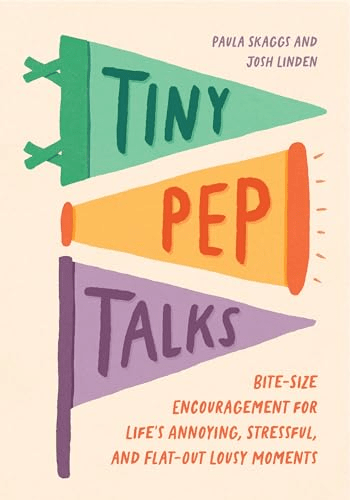
“Tiny Pep Talks: Bite-Size Encouragement for Life’s Annoying, Stressful, and Flat-Out Lousy Moments” was written by Paula Skaggs and Josh Linden, who are Chicago-based writers, comedians, co-hosts of a podcast, and co-creators of the game No Wrong Answers: Cards for Better Conversations. This was an easy read. Here are some pieces of advice that stuck with me:
For when your clothes don’t fit – They’re just clothes. There are so many articles of clothing that will fit you comfortably, are going to make you feel good, and won’t bum you out when you try to wear them. And you deserve to find those. Donate your old clothes so they’re not serving as a daily reminder of the size you arbitrarily think you should be.
For when you have to make that appointment you’ve been putting off for months – We’re all walking around with a nagging feeling about that appointment we really should have made months ago. The five minutes that the call is going to take might suck, but it’s the feeling after the call that’s going to make it all worthwhile. No matter what else you do today, you’ll have crossed something big off your to-do list.
For when you’re going to a party and you only know one person – whoever invited you to this party must really like you, and they think everyone else is going to like you, too. People get invited because they’re smart, funny, and interesting.
For when you forgot their birthday – It happens! You can’t be expected to keep track of every significant date for every person you care about. Text them, call them, write them a card, whatever you want to do – but do it now. No matter if you’re a few days or weeks late, they will be delighted to hear from you. Plus, this way, you’re extending their birthday celebrations.
For when the news is too much – No matter how passionate you are about the issues, this isn’t on you alone to solve. Constantly refreshing your phone to stay updated on news alerts will just send you into an endless spiral. You brain isn’t meant to constantly consumer information on every global tragedy all at once. In order to do good in the world, you have to do good for yourself, too. Stop doomscrolling and find something that will make your day better. Remember that even as breaking news unfolds in real time all around us, the world is still full of good people and everyday acts of kindness.
Grief is like a toddler. At any given moment, it might be messy, it might kick and punch you in the gut, and it might refuse to go to bed when all you want is to go to sleep. But sometimes, it might be filled with laughter, it might be inquisitive, and it might do something that stops you in your tracks with awe.
This was an easy read, and I recommend it for a quick pick-me-up.
4 out of 5 stars
I look forward to reading, learning, and sharing more with you soon!
I'm Amy and I love reading, learning, and sharing! I read 76 books in 2022 and shared my reviews on Facebook. To reach a wider audience, I have created Read, Learn, Share, where I am excited to share book reviews and many other things I have learned.
View all posts by amybenoit



 Read Learn Share