Book review posts

July 2025 Reads

It’s been a while since I’ve posted on this blog since I have had other priorities. I read 4 books in July. Here is a blurb of each of the books I read in July.
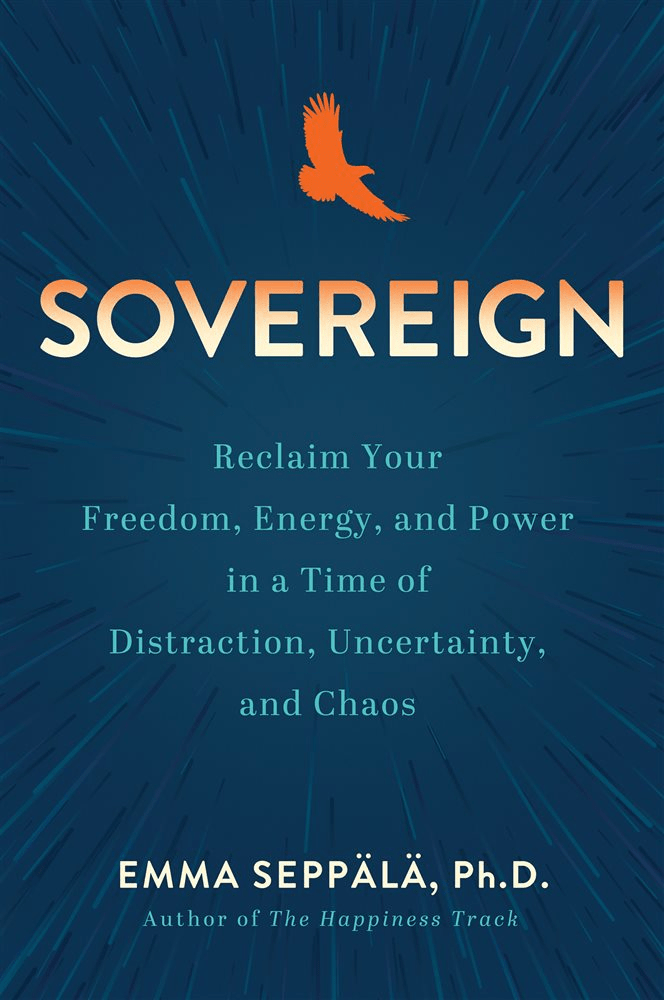
Sovereign: Reclaim Your Freedom, Energy, and Power in a Time of Distraction, Uncertainty, and Chaos” was written by Emma Seppala, a Yale lecturer and international keynote speaker. This book was insightful! It was packed with tips to recharge your life and change the way you think and act – from your emotions, mind, relationships, intuition and body. Here are some of my many takeaways:

  • Sovereignty is reclaiming your right to exist as you. It involves courage, awareness, and self-honoring. Consider what would happen if you loved and cared for yourself as much as you do for others.

Some of the many tips covered:

  • Sovereign self
    • Listen to the state of your mind and body. Ask yourself what you need.
    • Prioritize what fills your cup – what brings you rest, rejuvenation, energy, vitality, upliftment, inspiration, and joy.
  • Sovereign emotions
    • Remember: when you run from your feelings, you run from your healing. Feel instead of suppressing.
    • Remember that emotions are energy in motion. Take care of your basic needs: sleep, diet, exercise, and yourself.
  • Sovereign mind
    • Create boundaries around your media. Don’t go on social media to look at what other people are doing or selling.
    • Observe and discern: What are the intentions of the messaging. Is it giving you freedom or binding you in fear? Do you wish to engage with it?
  • Sovereign relationships
    • 6 keys of positive relational energy
      • caring for, being interested in, and seeing the best in others
      • providing support for one another, including offering kindness and compassion
      • avoiding blame and forgiving mistakes
      • inspiring one another and focusing on what’s going right
      • emphasizing meaningfulness
      • treating others with basic human values like respect, gratitude, trust, honesty, humility, kindness, an integrity
  • Sovereign intuition
    • Consult your gut feelings.
    • Unplug from technology. Create opportunities for contemplation. Schedule idle time.
  • Sovereign body
    • Relate to your body as your best friend because that’s what it is. Learn to love it, care for it, listen to it, and live in harmony with its needs.
    • Reflect on these questions: Do you honor and care for your body the way you would a child? If not, what would it look like if you did?

This is one of the best books I have read this year, and I highly recommend it to everyone!

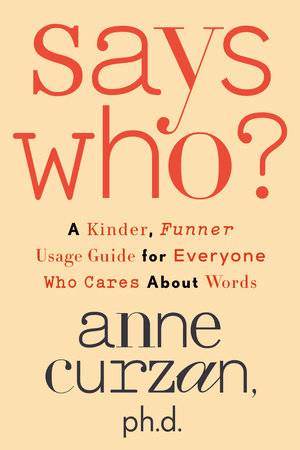
Says Who? A Kinder, Funner Usage Guide for Everyone Who Cares About Words” was written by Anne Curzan, professor of English Language and Literature, Linguistics, and Education at the University of Michigan. This book was intriguing, although some readers may find it overwhelming or too academic. Here are some things that resonated with me:

One key point for everyone who uses dictionaries is that dictionary editors are trying to walk a fine line between capturing words as they are used and providing guidance about the contexts in which some words are generally accepted or not accepted. While the editors of today’s dictionaries are usually trying to describe actual usage, we as dictionary users often erroneously assume that they are prescribing correct usage. Attitudes at the language change over time!

  • English has lots of synonyms in many areas of the lexicon, and they demonstrate the remarkable creativity we as humans bring to language, the many languages that have contributed to the English lexicon, the diversity of our linguistic identities, and the nuanced choices we get to make as speakers and writers.
  • Dictionary editors determine which pronunciations get recorded as standard and which get labeled as nonstandard – and which don’t get included at all.
  • What’s correct depends on where, when, and to whom you’re speaking. Formal writing has different expectations than casual conversation.
  • Many grammar rules are based on tradition, not logic. Usage evolves, and what was once “wrong” can become accepted over time. Examples:
    • Peruse” has long meant “to read thoroughly” – but now people use it to mean “to glance over, skim” – which is becoming more acceptable.
    • Literally” is used to mean “in the literal sense” AND “figuratively.”

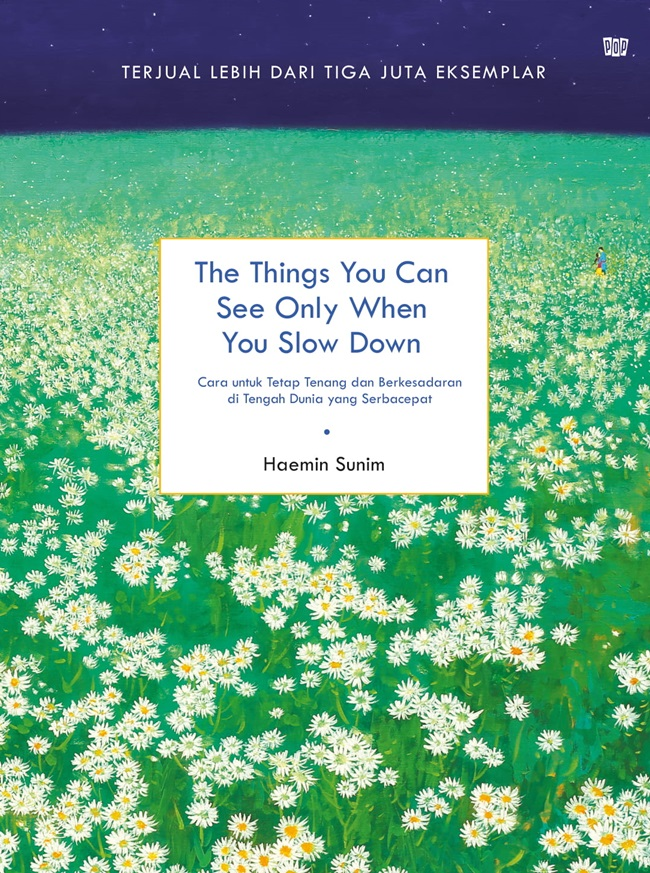
The Things You Can Only See When You Slow Down” was written by Haemin Sunim and contained so many life lessons and a guide to mindfulness. I got a lot out of this book. Here are some takeaways:

  • According to some psychologists, happiness can be assessed with two simple questions: First, do you find meaning in your work? Second, do you have good relationships with those around you?
  • We like to get involved in other people’s business, thinking we are doing so for them. We offer unsolicited help and interfere with their lives. We take away their power and make them feel incapable. This stems from our desire for control and recognition. It has little to do with love.
  • A bad driver brakes often. A bad conversationalist also brakes often – interrupting the flow with his own stories.
  • Being a good boss requires much more than just having a lot of technical knowledge. It is important to have integrity and a positive relationship with the staff, to give timely feedback and professional mentoring, and to advocate for what the team needs.

I really enjoyed the lessons from this book and highly recommend it.

I Could Live Here Forever: a novel” was written by Hanna Halperin. This is a fiction book and is not what I typically read. This book was described as “a gripping portrait of a tumultuous, consuming relationship between a young woman and a recovering addict.” I agree with that description. Since this was a fiction book, I didn’t take many notes, but these quotes resonated with me:

“The nice thing about writing was it took pain and warped it into something useful. I could shape it into a beginning and a middle and an end. It was manageable that way . . . by the time I was done with it, it was just a story.”

Overall, I wanted more character development.

Book review posts

June 2025 Reads

It’s been a while since I’ve posted on this blog since I have had other priorities. I read 3 books in June. Here is a blurb of each of the books I read in June.

The novel “Motherhood” by Sheila Heti follows a woman in her late 30s as she grapples with whether or not to have children. This book was not plot-driven; it was more like a long internal monologue in which the woman constantly questions what it means to be a mother and whether motherhood would enhance or diminish her life. I didn’t like the writing style, but it was thought-provoking at times. Here are some key lessons from this book:

  • the pressure of societal expectations for women to have children
  • motherhood as a choice, not an obligation
  • motherhood is often tied to a woman’s identity
  • the cost of motherhood – sacrifice of time, freedom, and sometimes the dreams or ambitions women may have for themselves
  • Women are often expected to become mothers, while men are not held to the same societal standards.

Do I want children because I want to be admired as the admirable sort of woman who has children? Because I want to be seen as a normal sort of woman, or because I want to be the best kind of woman, a woman with not only work, but the desire and ability to nurture, a body that can make babies, and someone who another person wants to make babies with?

We are miserly with ourselves when it comes to space and time. But doesn’t having children lead to the most miserly allotment of space and time? Having a child solves the impulse to give oneself nothing. It makes that impulse into a virtue.

Whether I want kids is a secret I keep from myself. On the one hand, the joy of children. On the other hand, the misery of them. On the one hand, the freedom of not having children. On the other hand, the loss of never having had them.”

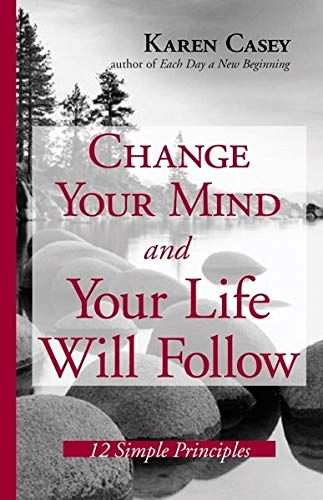
Change Your Mind and Your Life Will Follow: 12 Simple Principles” was written by Karen Casey, a speaker and author of 16 books. Here are some lessons that resonated with me:

  • Tend your own garden. Focusing outside ourselves and attempting to control other people is a clever avoidance technique that helps us escape having to look at our own sometimes troubling behavior.
  • We are not in charge of others! Not their behavior, their thoughts, their dreams, their problems, their successes, or their failures.
  • Let go of outcomes. No matter what we do or how perfect our input, we are never in control of the outcome of any situation. You are responsible for making the effort – nothing more.
  • Don’t let the mood swings of others determine how you feel.

Any thought can be released. We are fully responsible for our thoughts and can take charge of them whenever we need or want to. No one can take charge of your thoughts, and thus your life, without your compliance.

Be vigilant about your choices. If what you are seeking is peace, you must be vigilant about the choices you make. The ego will often beckon you to choose gossip, criticism, comparisons, judgements, jealousy, fear, and anger – none of these choices will lead you to peace.

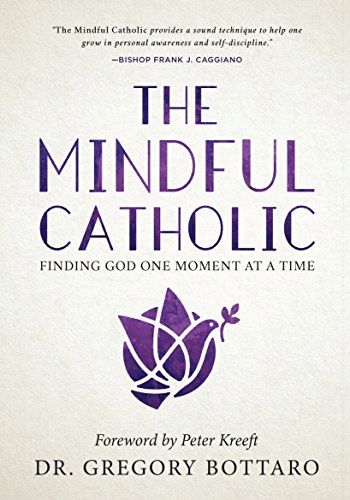
The Mindful Catholic” is based on an eight-week program called Mindfulness-Based Stress Reduction and was written by Gregory Bottaro, the director of the Catholic Psych Institute and the developer of the Catholic Mindfulness Online Course. Here are some takeaways:

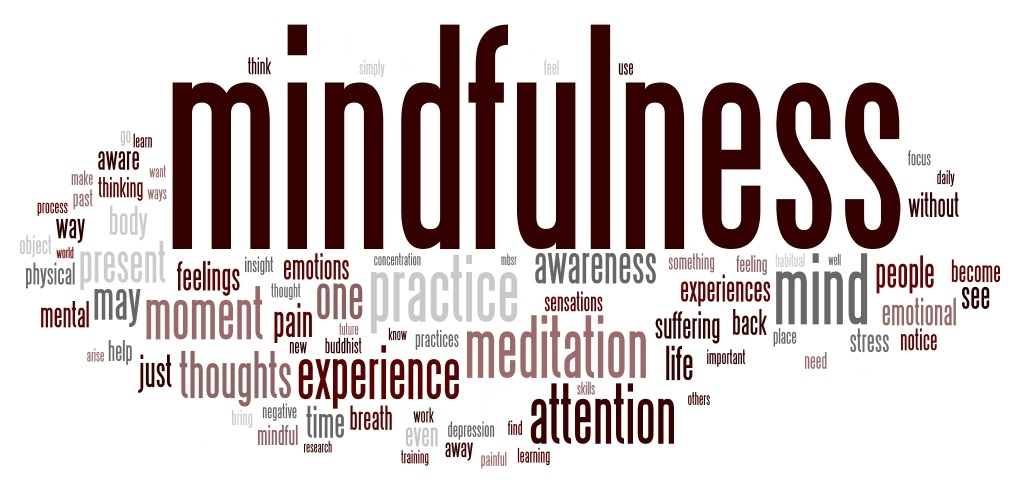
Mindfulness = paying attention to the present moment without judgment or criticism. Curiosity is the disposition of mind that we are seeking to cultivate when we practice mindfulness. Mindfulness does not mean turning off the thoughts in your mind but using them as a door to greater awareness of yourself.

Tendencies vs. Mindfulness:

This book also covered mindfulness exercises. As someone who isn’t experienced with mindfulness, here is my favorite:

  • Sacramental pause – Start with prayer (“Ever-present God, here with me now, help me to be here with you“). Open your awareness to any thoughts, emotions, or physical sensations, then narrow your focus to the physical sensation of your breath alone, and finally expand the focus to the physical sensations of your whole body.
Thoughtful Thursday posts, Uncategorized

Thoughtful Thursday – June 15, 2023

My intention is to post a Thoughtful Thursday column each week and share some of the insights I have learned in the past week. Here are some of the things I’ve learned this week:

Self Improvement Daily- Breaking Down Productivity

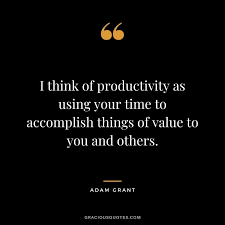
The word productivity is a combination of two words: productive activity. It’s to be active in productive ways. ‘Productive’ is simply having the high ability to produce. To produce what? Society and culture have taught us that we must always be thinking about producing results, revenue, and efficiencies. Can’t we also choose to produce joy, presence, mindfulness, and connection?

You get to decide for yourself what you want to produce. It’s your life, your time, and your attention. Productivity is actually just “doing the things you want to be doing.”

Productivity = Productive activity = Doing things that produce the results you want = Doing the things you want to be doing.

The next time you feel down on yourself for not checking things off of your never-ending to-do list over the weekend, reframe your mind and consider that productivity is doing the things you want to be doing. Resting and hanging out with friends could still be productive; you are taking care of yourself and growing strong relationships with people you care about. If that is what you want to be doing, you were productive!

Small Change – 10 Signs You Might Be Financially Immature
  1. You act aggressively when someone asks you about your money.
  2. You are dismissive of others’ success.
  3. You spend when you are depressed.
  4. You tend to look at the individual spending of your partner rather than simply being concerned with how much is being spent. If the “what” is more important than the amount, you may be financially immature.
  5. You are unable to get excited by saving for a big goal. “We can’t do that. That’s crazy.”
  6. You have avoided looking at a bank statement for months.
  7. You fear tax time.
  8. You gloat at parties about your investments that you haven’t actually made or lie about the investments you have.
  9. You are too conscious about the brands you are wearing.
  10. You use spending as a cure for boredom.
Savvy Psychologist- 6 skills of mindfulness you may be missing
  • Observe. Pay attention to your environment and your internal experiences without judgment. This entails wordless watching and being fully present in the moment, observing your thoughts and feelings as they come and go, and noticing the world around you without trying to change it. Use your five senses.
  • Describe. Put your observations into words. Describe your experiences objectively without adding your own interpretations or judgments. Describe your observations from your five senses.
  • Participate. Be fully present and engaged in the present moment. Let go of distractions and focus on the task at hand, whether that be work, hobbies, or relationships.
  • Non-judgmental stance. Accept yourself and others without judgment. Let go of the inner monologue and distorted interpretations. Instead, practice self-compassion and understanding. Cultivate an attitude of acceptance and openness. Let go of the evaluative judgments we often make.
  • One-mindfully. Focus on one moment, task, or thought at a time. Let go of distractions and multi-tasking and focus your attention on the present moment.
  • Effectiveness. Focus on what works in a given situation rather than what is “right or wrong.” Let go of rigid thinking and embrace a more flexible and adaptive mindset. Focus on the outcomes you want to achieve and explore different ways of achieving them. Do what works, not necessarily what you prefer.
FIRE the Family Podcast – 22 Actionable Ways to Invest in Yourself
  1. Go to college. Don’t go into extreme debt to go to college. Be wise and research what your expected income will be before taking out several loans.
  2. Join the military.
  3. Go to a trade school.
  4. Get a job. There’s no better way than to find out what you like and don’t like doing.
  5. Learn how to cook. It increases your independence and reduces your expenses of eating out.
  6. Learn how to exercise properly. You will feel better about yourself and your health, live longer, and improve your mental health.
  7. Open a brokerage account. VTSAX is a great investment.
  8. Join a local young-professional networking group.
  9. Implement an every-dollar budget.
  10. Ask your parents and grandparents for advice. Pick their brains and learn everything you can.
  11. Find the person you want to spend your life with.
  12. Get out there and fail. You learn from failing.
  13. Run a half marathon. It requires a lot of discipline, preparation, and time.
  14. Identify your mentors.
  15. Develop an inner circle.
  16. Cut out negativity. Set proper boundaries for yourself and your family.
  17. Develop SMART goals (specific, measurable, attainable, relevant, time-bound).
  18. Explore materialism and minimalism.
  19. Continue to find ways to compete.
  20. Practice not judging others. Then you will learn to stop judging yourself.
  21. Start reading. Reading teaches your brain to exercise.
  22. Start an online business.
Life Kit- Planning a trip? Here’s how to pack like a pro
  • You never need as much stuff as you think. Eliminate extra baggage before you leave.
  • Pack and then remove 1/3 of the things you pack.
  • Reduce the weight with lightweight versions of what you need and with items that serve multiple purposes.
  • Use packing cubes (lightweight, expandable, zip-up pouches that save space).
  • Lighten your load of liquid toiletries. There are solid versions of items that don’t weigh as much. Use powders, not pastes. Use dry shampoo instead of the real stuff. Leave liquids at home if you can. Most of the time, you can pick up the things you need while on the road, except the things you can’t find everywhere: sunscreen, bug spray, bug bite relief, hair conditioner, and tampons.
  • Do a simple scope out of your destination with reliable sources, not sponsored content.
  • Match your activity plans to the weather forecast. Check a destination’s average monthly weather patterns in advance.
  • Always have a rain jacket, umbrella, or something to cover your backpack.
  • When traveling for leisure, one main event each day is enough. Don’t overbook activities. Build complementary activities around it or leave room for discovery and the unexpected.
Self Care IRL- Listen to this if you are an overthinker
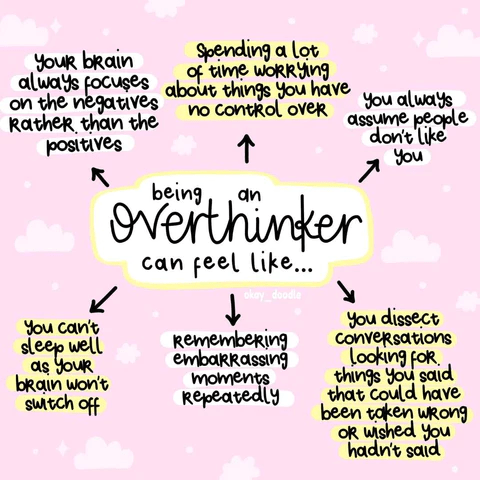
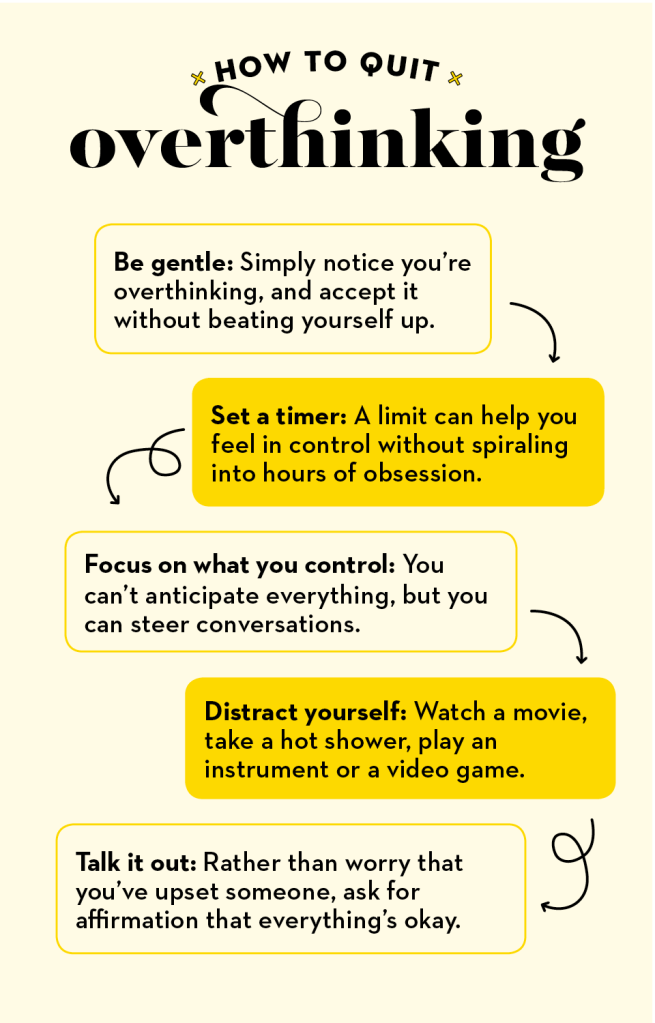
  • Recognize when you are actually overthinking. Identify the thoughts or situations that are triggering it. Shift your mind back to the present.
  • Journal. Writing down things can help you identify patterns in your thinking. Sometimes you can look back and see that you were overly concerned about something that didn’t end up mattering or turning out the way you worried it would.
  • Give yourself time to calm down and relax before addressing any situation. Try to immediately do things that help you to relax or bring you joy.
  • Talk to someone about the situation. Getting another perspective can help you see things more clearly. Talking about your overthinking can help reduce its frequency and intensity.
  • Learn to focus on the present moment instead of dwelling on the past or the future. This can help you be more aware of your thoughts and feelings.
  • Practice forgiveness for your past self. When we find ourselves trapped in a cycle of overthinking the past, we are stuck there and that prevents us from moving forward in a healthy way. Remember that you are a human first and you will make mistakes. Perfection does not exist. You deserve forgiveness.
  • Think positively for your future self. Think about all of the ways that things could go right. Expand on the beautiful possibilities and let those things lift you up. Reframe your mind when you are worried about what could go wrong, and think about what could go right.
  • Remember that overthinking has never helped us. It hasn’t been serving us the way we think it has.

I am currently reading “Keep Sharp” by Sanjay Gupta, a book about the brain and slowing cognitive decline. Here are some tidbits I have learned so far:

You probably know the five senses: sight (ophthalmoception), smell (olfacoception), taste (gustaoception), touch (tactioception), and hearing (audioception). There are six other senses processed in the brain that give us more data about the outside world:

  • proprioception: a sense of where your body parts are and what they’re doing
  • equilibrioception: a sense of balance/your internal GPS. This tells you if you’re sitting, standing, or lying down. It’s located in the inner ear.
  • nociception: a sense of pain.
  • themo(re)ception: a sense of temperature
  • chronoception: a sense of the passage of time
  • interoception: a sense of your internal needs, like hunger, thirst, and needing to use the bathroom

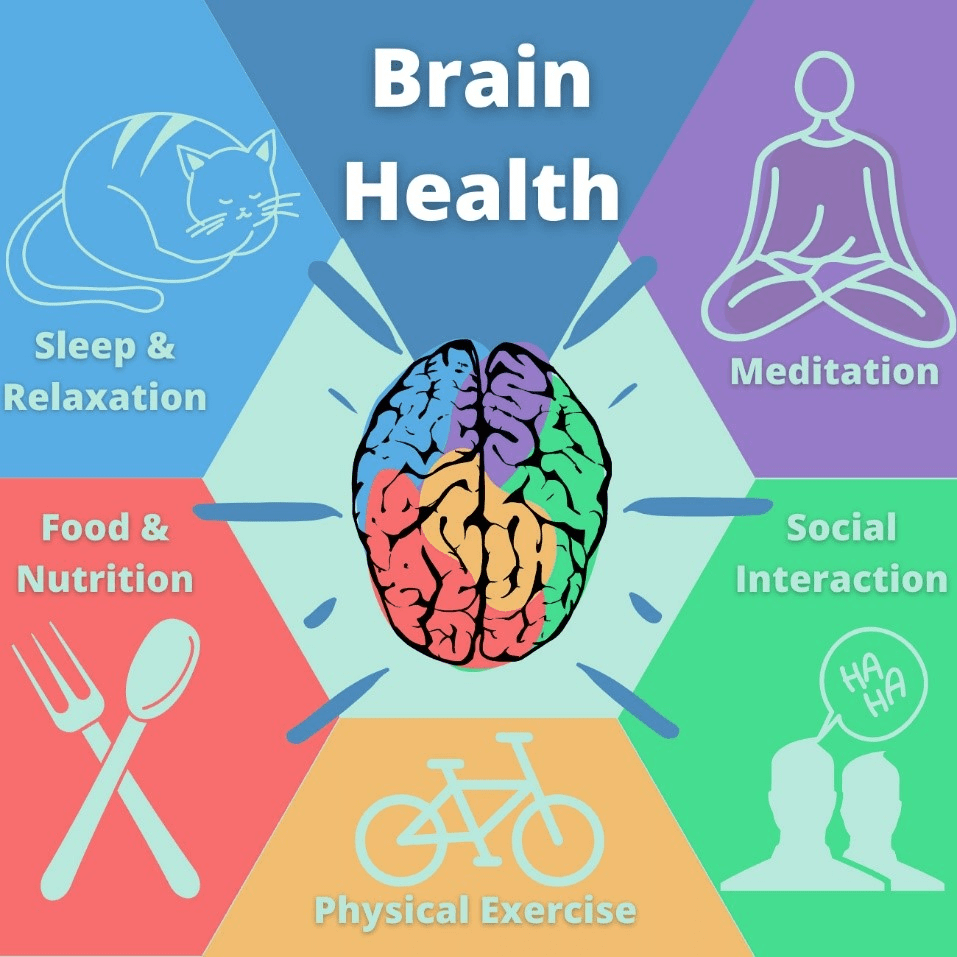
The 5 pillars of brain health:

  • Move – exercise; aerobic and nonaerobic
  • Discover – pick up a new hobby, do something new, or learn something new
  • Relax – unwind, engage in stress-reducing activities
  • Nourish – consuming certain foods like cold-water fish, whole grains, extra virgin olive oil, nuts and seeds, fibrous whole fruits and vegetables, while limiting foods high in sugar, saturated fat, and trans-fatty acids can help avoid memory and brain decline, protect the brain against disease, and maximize its performance
  • Connect – having a diverse social network can improve our brain’s plasticity and help preserve our cognitive abilities

I look forward to reading, learning, and sharing more with you soon!