It’s been a while since I’ve posted on this blog since I had other priorities in March. I read 5 books in March. Here is a blurb of each of the books I read in March.

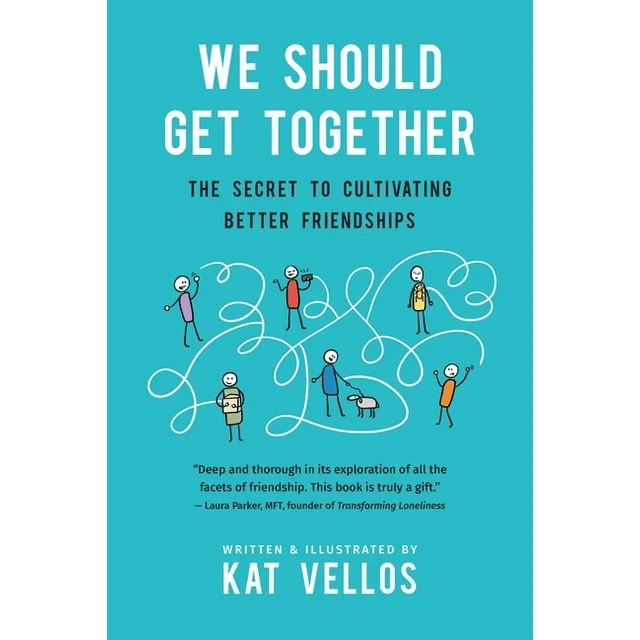
“We Should Get Together: The Secret to Cultivating Better Friendships” was written by Kat Vellos. Kat’s writing is read in over 100 countries and she has been featured in several news outlets. Find out more at katvellos.com. This book helps adults create fulfilling friendships that last a lifetime and tackles challenges of adult friendships and how to make and maintain friendships through more meaningful conversations, identifying quality connections, and prioritizing them. Since starting school, many of my friendships have changed. I got a lot out of this book, but here is just a handful of tips:
- Friendship factors: compatibility, proximity, frequency, and commitment. We show our commitment through 5 core behaviors: openness, caring, trust, dedication, and reciprocity.
- One of the biggest complaints that comes up when people talk about friendship during adulthood is that everyone’s so busy all the time – work, school, kids, marriage, etc. Maybe the reason we’re “so busy” is because we’re binging shows and endlessly scrolling through social media. Take control of your time. Do you lack the time or the dedication?
- Ask open-ended questions and follow-up questions to pull you deeper into conversation. Some fun ideas:
- What’s the weirdest job you’ve ever had?
- What’s a book that you think everyone should read?
- If you had to spend one hour a day studying a topic or practicing a skill, what would you pick up and why?
- If you had to be a teacher for the rest of your life, what would you teach?
- What were three songs that you loved as a teenager?
- What was a low point during this year for you? How did you handle it?
- What excites you?
I highly recommend this book and will post more about it in a future blog.
5 out of 5 stars


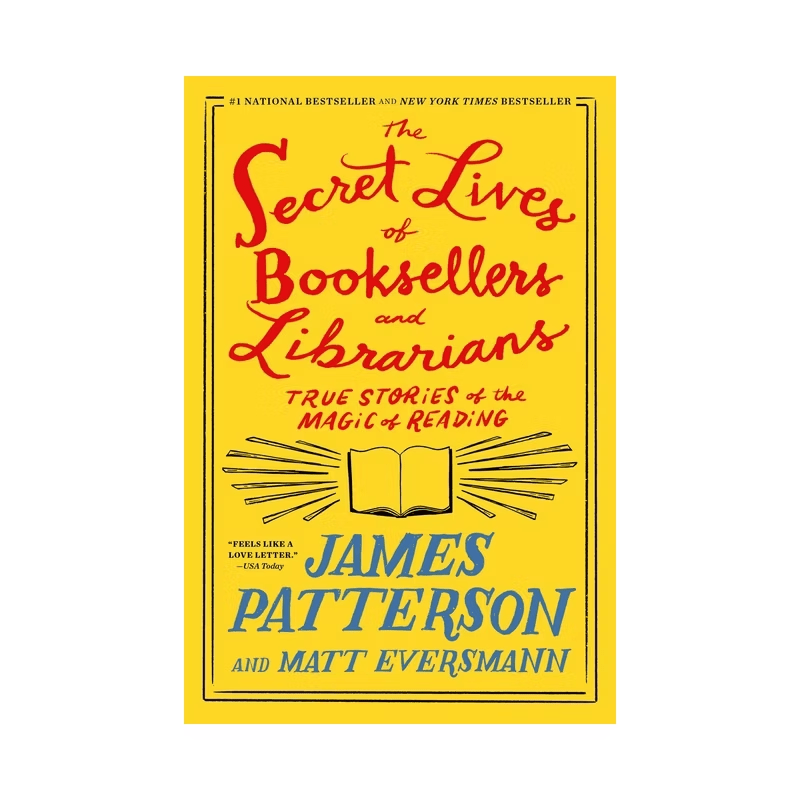
“The Secret Lives of Booksellers and Libraries: True Stories of the Magic of Reading” was arranged by James Patterson and Matt Eversmann. James is the most popular storyteller of our time and has received several awards. This book consisted of short essays from booksellers and librarians. Here are some of my many takeaways:
Having a good library is not political. A good library will have books on vegetarianism and hunting. A good library will have books on every religion. A good library will have books about all eras of history, from ancient Rome to the Civil War to the Holocaust. A good library will have books about different countries, different cultures, and different life experiences.
“I don’t see the library going away at all. We’ll just have to keep up with whatever comes next and evolve with what the citizens want. We hope they continue to want what we provide: lifelong learning and joy.”
Public libraries are open to everyone. And free. There aren’t that many public spaces left where you can go without the expectation of spending money.
I highly recommend this book to get perspectives from booksellers and librarians.
5 out of 5 stars

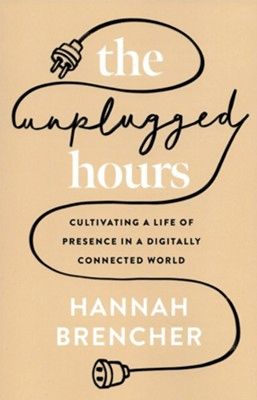
“The Unplugged Hours: Cultivating a Life of Presence in a Digitally Connected World” was written by Hannah Brencher, a writer, TED speaker, and entrepreneur. Hannah challenged herself to 1,000 unplugged hours in one year – taking back a life that had slowly become less present, less awake, and less vibrant over time. This book was a weaving of a memoir, cultural commentary, and spiritual insights. Here are some takeaways:
- What would happen if we checked into the lives we’re building as much as we checked into other people’s lives online?
- Think about something you’ve been wanting to do for a long time – something you keep pushing off because of e-mail, mindless scrolling, or yet another binge-worthy show. Whatever it is, power down your phone and do that thing you’ve been wanting to do. After one hour, turn your phone back on. You’ll have missed out on nothing, but gained something back instead: a piece of your time, a tiny sliver of your life.
- Before taking the challenge, define what “unplugged” means to you. For the author, it means not using your phone, internet, social media, tv, or consuming any form of digital media. Build your boundaries intentionally.
- Don’t believe the lie that you don’t have enough time. Instead, acknowledge that exercising, reading, etc. just isn’t a priority for you right now. Scrolling on your phone takes up a lot of time. The time is there; it’s just waiting to be reclaimed.
The double-edged truth about the devices we hold is that there will always be something to check. Something to read. Some way to improve. Something to watch. Another thing to reply to. Something to share. Another comment to make.
Scrolling in bed in morning: “I was allowing other people’s fingerprints – their agendas, opinions, praise, and problems – to get all over my day before my feet even touched the ground.”
There’s often a disconnect between the life people are living and the life they’re curating for others to see. In the unplugged hours, ask yourself: Does this moment still matter to you if no one else knows you went, saw, lived, ate, loved, fought, and tried? Does this moment still matter to you if you never pull out your phone to tell people that it happened?
I highly recommend this book for anyone feeling like they are on their phones too much and that they don’t have time to do things they’ve been putting off, including maintaining friendships.
4 out of 5 stars


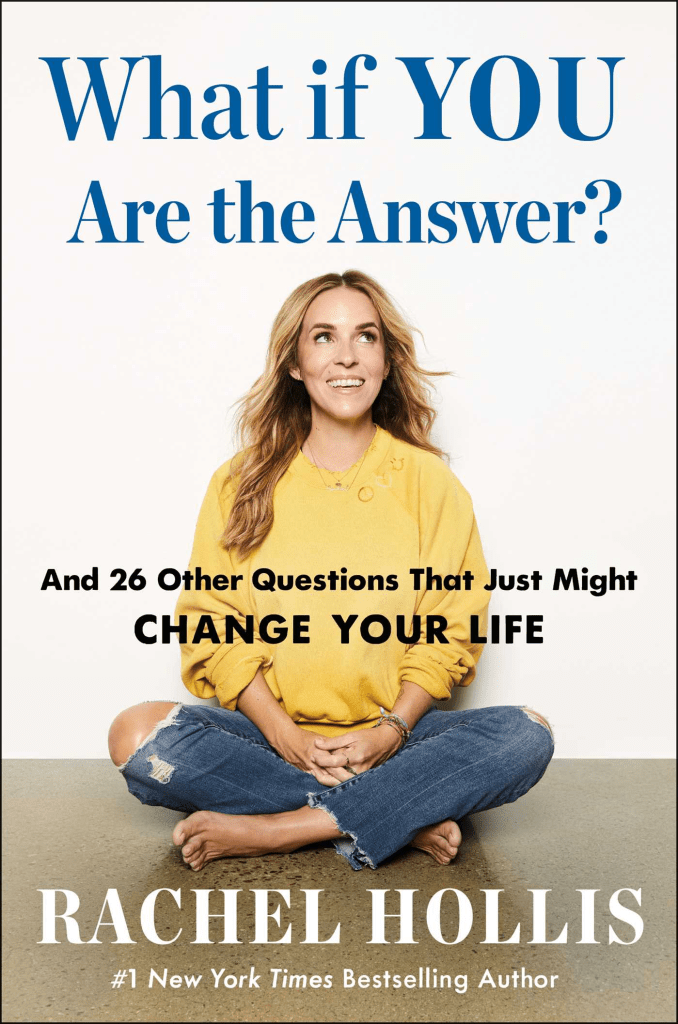
“What If YOU Are the Answer? And 26 Other Questions That Just Might CHANGE YOUR LIFE” was written by Rachel Hollis, a speaker, podcast host, entrepreneur, and #1 New York Times bestselling author whose work has impacted millions of readers worldwide. This book was thought-provoking. Here are some things that resonated with me.
WhatWho are you waiting for? Live your life. Try new stuff and see if you like it. Learn to look at other humans as individual plays in their own stories without feeling the need to write yours the same way. Listen to your heart, your gut, and your inner knowing. Give yourself permission to change lanes, directions, occupations, beliefs, and other things you need to on the journey of trying your best to do your best.- Realize that no one else can solve our problems, heal our wounds, or make the most of the opportunity we’ve been given. You are the hero you’ve been waiting for.
- What must you let go of to be the person you want to be?
- What’s bigger, your dreams or your excuses?
- Knowing what you know today, would you sign up for this again? Job, friends, relationships, projects, etc. If not, what are you going to do about it?
- Who would you be without your fear?
- There are two kinds of fear: 1) clear and present danger of a very real threat 2) imaginary fear we create by dreaming up what might happen – anything you’ve never done, places you’ve never gone, conversations you’ve never had, and people you don’t know
- Anything you’re curious about or interested in but don’t pursue because of what might happen is you allowing your fear to control you.
I highly recommend this book for anyone wanting to reflect on their lives and personal growth and make changes.
4 out of 5 stars


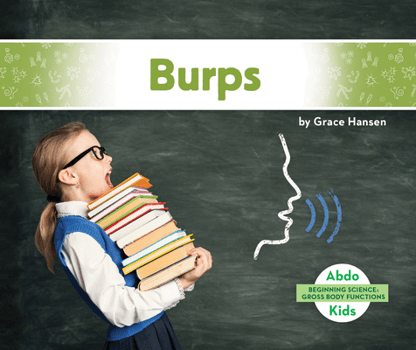
“Burps” is a children’s book written by Grace Hansen. I wanted to learn more about burping since this is new to me. Here are some tidbits:
- When we eat and drink, we swallow food and water, but we also swallow air. Air contains gases like nitrogen and oxygen.
- Too much gas in the esophagus and stomach can be uncomfortable. Burping releases this excess gas.
- Carbonated drinks contain carbon dioxide and can cause us to burp.
- Bacteria in our digestive tract helps break down food. Hydrogen peroxide can be made int he process. This gas smells like rotten eggs.
- Burping is our body’s way of releasing excess gas.
Although this book said that everyone burps, that is not true! Some people have a condition called RCPD (inability to burp).
4 out of 5 stars

I look forward to reading, learning, and sharing more with you soon!