I read four books in January. Here is a blurb of each of the books I read in January.
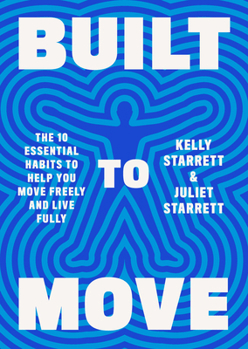
“Built to Move: The 10 Essential Habits to Help You Move Freely and Live Fully” was written by Kelly Starrett and Juliet Starrett, the cofounders of San Francisco CrossFit and coauthors of the Wall Street Journal Bestseller Deskbound. Kelly is also the cofounder of The Ready State. This book included different movements and tips to incorporate them into daily life. Here are some takeaways:
The range of motion and body positioning relates to health, ease of movement, and the presence and absence of pain.
This book included measurable and repeatable diagnostics that will help you assess your current condition, where you need to go, and how you’re going to get there. This book also included mobilization techniques for reducing stiffness and resolving pain.
Think about how you want to live your life, take into consideration that the body naturally gets stiffer and weaker with age, and undertake strategies to counter those potential erosions before they set in. To be able to keep moving when you’re older, you need to get or keep moving now.
Some tips:
Sit-and-rise test – getting up and down off the floor without using your hands, knees, or losing balance – determines when you have good range of motion in your hips and gauges leg and core strength and balance and coordination
Incorporate various ground-sitting positions into your day: cross-legged sitting, sitting with your legs out in front of you, one-leg-up sitting, etc.
Find your balance. Do the one-leg stand test with your eyes closed for twenty seconds. How steady you are on your feet depend on your feet, your inner ear, sensory receptors in the muscles, tendons, fascia, joints, and eyesight.
Aim to limit sitting to six hours per day. Set up a standing workstation and move around every thirty minutes.
4 out of 5 stars
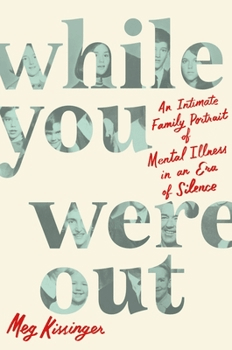
“While You Were Out: An Intimate Family Portrait of Mental Illness in an Era of Silence” was written by Meg Kissinger, who teaches investigative reporting at Columbia Journalism School. Meg spent more than two decades traveling across the country to report on America’s mental health system for the Milwaukee Journal Sentinel and has won dozens of accolades. This book was frank and revelatory and was a personal and painful narrative. I highly recommend this book! Here are some of the many things that resonated with me:
Meg details the family dynamics of alcoholism, mental illnesses, and two of her siblings committing suicide and how the shame and practice of “not talking about it” impacted her and her family.
5.6% of adults suffer from serious and persistent mental illness, and more than 1/3 of them don’t get treatment. A person with serious mental illness is 10x more likely to be incarcerated than hospitalized.
Jails and prisons have become the nation’s de facto mental health hospital system. By 2010, almost 90% of the hospital beds across the country that were once available for the sickest psychiatric patients had been eliminated.
“Suicide prevention experts I’d interviewed over the years told me repeatedly that we can do a lot more to stop people from killing themselves. Knowing the warning signs for suicide and how to talk to those who are considering it will save lives. So why weren’t we able to stop our siblings? Because we had been discouraged from talking about it. I could not help but wonder what life would have been like if we had grown up in a more transparent era.”
“Only love and understanding can conquer this disease.”
5 out of 5 stars
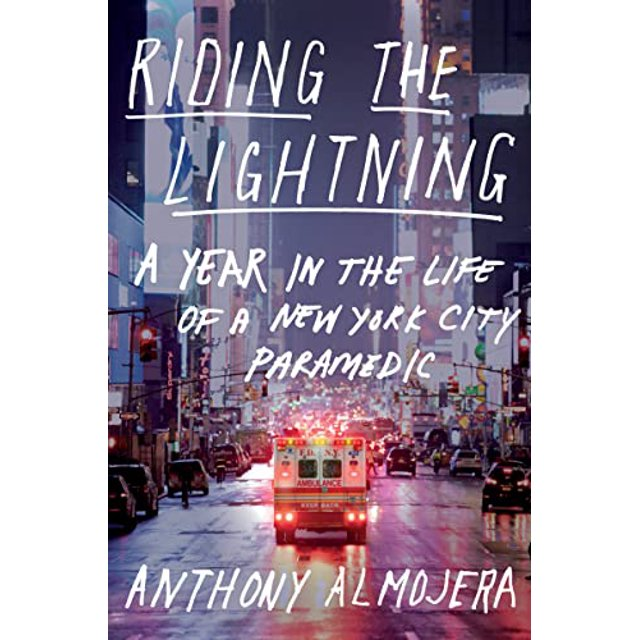
“Riding the Lightning: A Year in the Life of a New York City Paramedic” was written by Anthony Almojera, an EMS lieutenant with the Fire Department of New York City who has also been featured in various media outlets. This book was devastating, candid, and vital, and guides readers, one month at a time, through the first year of COVID-19 from the perspective of a paramedic in New York City. I recommend this book to readers who want a glimpse of how COVID-19 changed EMS each month in 2020. Here are some takeaways:
In the beginning of COVID-19, every EMT and paramedic who transported a patient with suspected coronavirus was instructed to wear gloves, a gown, goggles or a face shield, and an individually fitted N95 mask, then throw everything away after each patient contact. Originally, the health department recommended that ambulances be aired out for two hours after every fever/cough call. (!)
Protocols were shifting constantly – what protective equipment to wear, how to deal with a cardiac arrest, whether to consult telemetry about where to take a patient, whether to notify the hospital that you were transporting a suspected case of COVID, how often to change your N95 mask, etc.
Surgical masks are made of polypropylene, a nonwoven paper substance that allows air to pass through it but not droplets of moisture. They don’t stop airborne particles from passing into your nose and mouth. For that, you need an N95.
In March 2020, the New York City COVID-19 deaths averaged over 400 per day. On March 30, 2020, New York City EMS received 7,253 calls – one call every 12 seconds!
The telemetry office couldn’t keep up. There was 1 physician fielding all questions from EMS crews in a city of over 8 million people!
Hospitals didn’t have enough ventilators or CPAP machines. For all the people who were dying in the hospital, many more were dying before they even got there – at home, in ambulances, or in lines to the emergency departments.
At one point, the author had 14 calls in 16 hours, and every patient died!
Patients’ families want to believe that something can be done, that the outcome will change if the patient goes to the hospital. But the medical system was so swamped during the pandemic that our protocols had changed. As of March 31, 2020, we were transporting patients only if we got a pulse back at the scene. Hospitals didn’t have the resources to try to resuscitate them, and we didn’t have the resources to transport them, so we had to pronounce these patients dead then and there.” By April 2020, if there was no pulse or electrical activity in the heart after 20 minutes, paramedics/EMS were instructed to stop CPR and pronounce the patient dead.
4 out of 5 stars
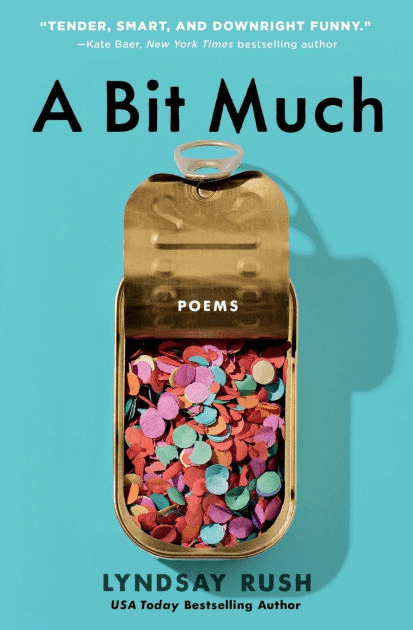
“A Bit Much: Poems” was written by Lyndsay Rush, a comedy writer and the poet behind the popular Instagram account @maryoliversdrunkcousin. This book was great, and I highly recommend it!
Here are some of my favorites:
When your surroundings begin to feel cold and uninhabitable and your environment no longer offers the support or sustenance you need, I hope you migrate. I hope, as you make your way down south, that you find another silly goose to fly with, too – in such a tight-knit formation that Wikipedia would refer to your crew as plump. And I hope that no matter how long the journey takes you, the wind is always at your back; nudging you closer to home.
“Starting something new is like a one-man show for a one-man audience; the only applause worth seeking is your own. Don’t rob yourself of that while you wait for approval from somewhere else. Sometimes winning yourself over is the greatest show on earth.“
“A great philosopher once said I saw the sign and it opened up my eyes (I saw the sign). But when you see the world through rose-colored glasses, it can be hard to recognize a red flag. So what I have learned is this: If they’re mean to the waiter, they’ll be mean to you. If they never follow through, they will never show up. If it hurts your stomach, it will hurt your heart. You can’t temper a storm, but you can sure as hell evacuate the beach.“
“If cauliflower can be pasta, you can be whatever you want.“
5 out of 5 stars
I look forward to reading, learning, and sharing more with you soon!
I read six books in October, two of which were short poetry books. Here is a blurb of each of the books I read in October.
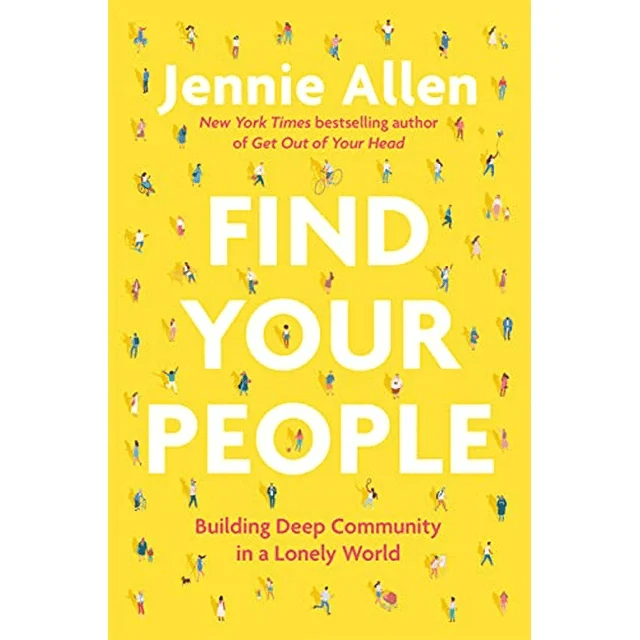
“Find Your People: Building Deep Community in a Lonely World” is a Christian book written by Jennie Allen and is filled with stories, science-based insights, and practical ideas for building deep community. I had several takeaways from this book, but here are just a few.
5 out of 5 stars
“We’re all just kind of waiting for connection to find us. We’re waiting for someone else to initiate and be there for us. We’ve replaced intrusive, real conversations with small talk, and we’ve substituted soul-bearing, deep, connected living with texts and a night together every once in a while. Quit waiting for people to reach out to you. Start initiating and asking people the questions you wish they’d ask you.”
Factors to look for in friendships include availability, humility, proximity, transparency, consistency, accountability to others, and a shared purpose.
Some ideas for building friendships:
invite friends to bonfires
plan get togethers
intentional, active listening
affirm your friends
ask your friends about the highs and lows of their week
join a club
ask deep questions
listen
share the real stuff
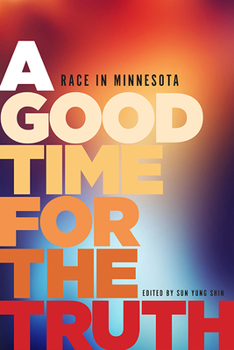
“A Good Time for the Truth: Race in Minnesota” is a collection of stories of what it’s like to live as a person of color in Minnesota, was published by the Minnesota Historical Society Press, and was edited by Sun Yung Shin.
4 out of 5 stars
Here are some quotes that stood out to me:
“[People] unconsciously believe you are unfit to mother your own child simply because you are a Black woman.”
“Sometimes I catch myself staring at my son, wondering what he is going to do when someone gives him a piece of paper with boxes on it and asks him to check the box saying who he is – if he is going to pause before marking “Black.” As I do. Because Black is not a race.”
“To be a Korean adoptee in Minnesota is to be both hypervisible and invisible at the same time. It means that people can tell you they don’t see you as Korean as if that is a compliment.”
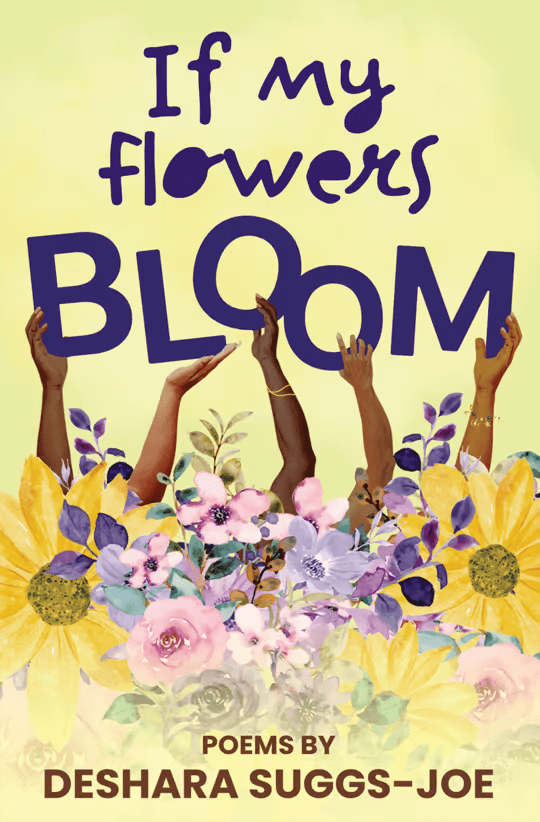
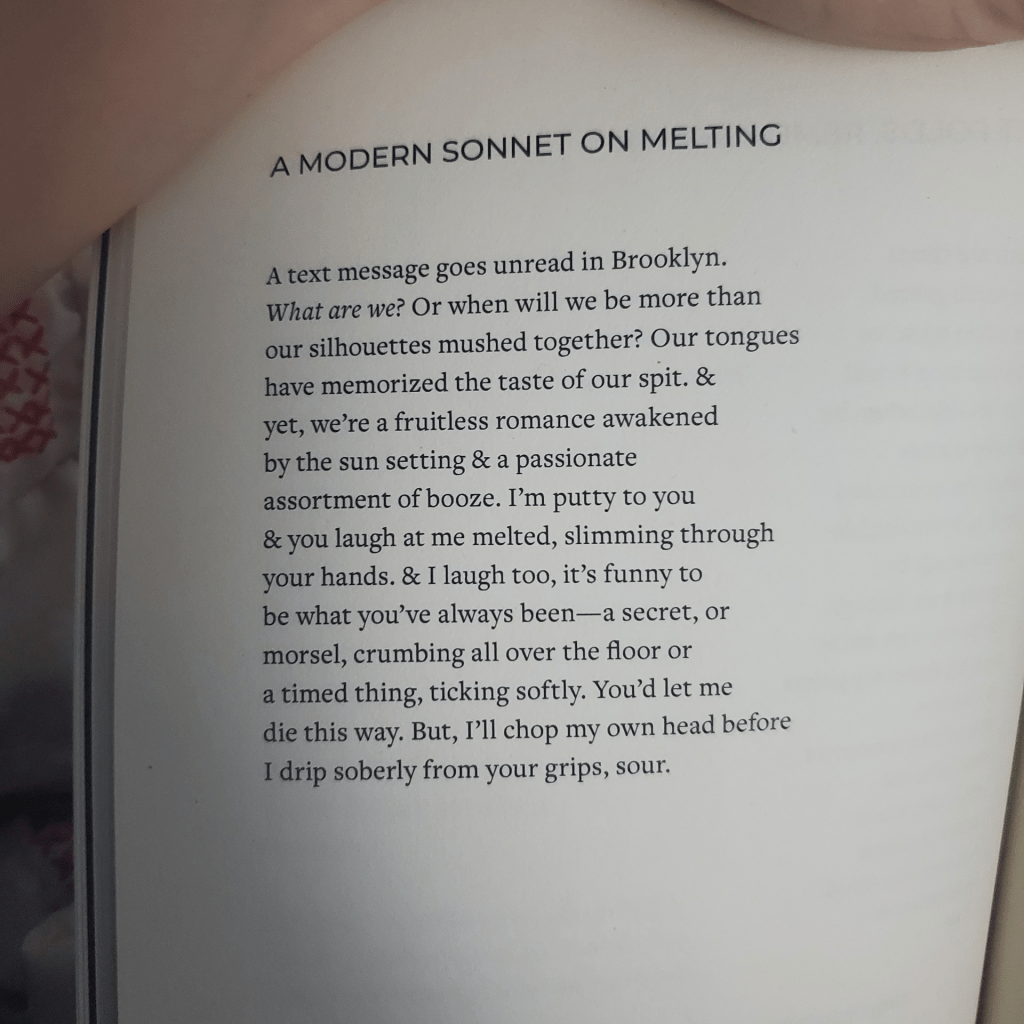
“If My Flowers Bloom” is a Button Poetry book of poems by Deshara Suggs-Joe, a queer, Black poet and visual artist. These poems were about desire, and many were sexual in nature. Honestly, this book was not one I enjoyed. I have included a snippet of my favorite poem from the book.
2 out of 5 stars
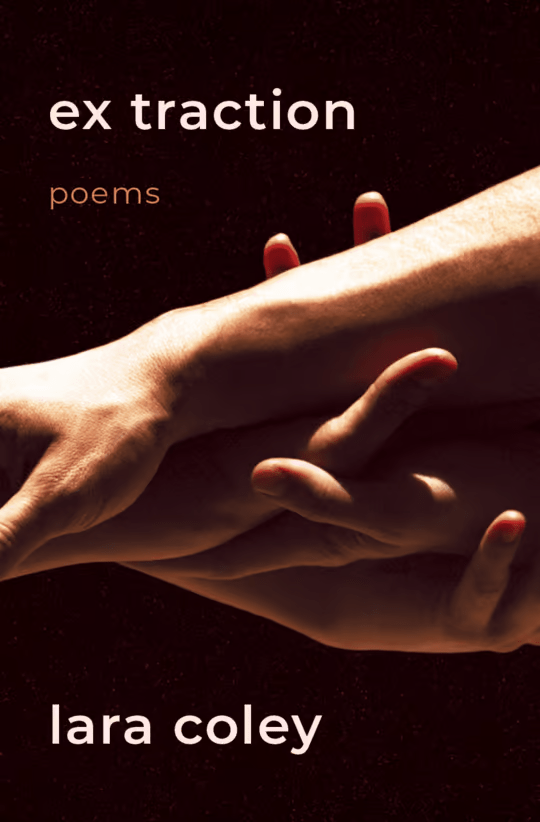
“ex traction” is a Button Poetry book of poems by Lara Coley, a San Francisco poet and educator who has taught creative writing and ESL in juvenile detention centers, schools, universities, and mental health treatment centers. Lara’s poems sharply dissect love relationships, and many are abuse and loving emotionally unavailable men.
4 out of 5 stars
Here are some snippets:
“How do you love so softly, so gently, so quietly, with your hand so tightly cradled around my throat?”
“We were lying on my bed and I asked him why, in our two years together, he’d never told me he loved me. He said he didn’t need to, that everyone knew. Een Jessica knows, he said. Well, good for her, I said. Good for Jessica.”
“She is wearing your affection like a coat, tailored to fit her. I remember stretching your love around my shoulders like a misshapen shovel that would never cover any parts of me that needed warmth.”
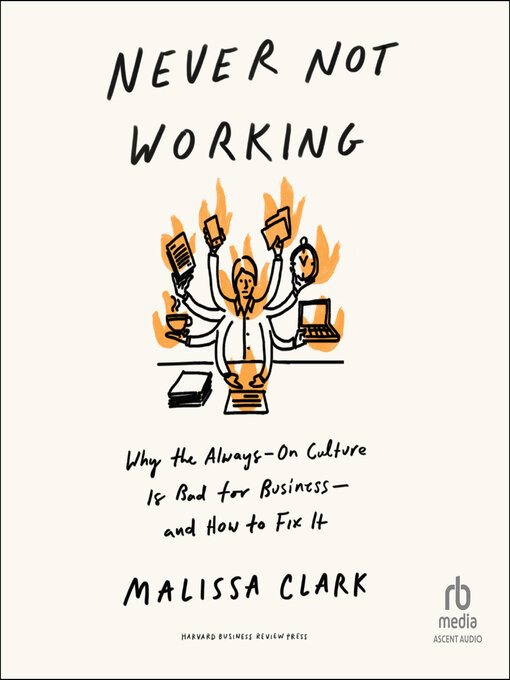
“Never Not Working: Why the Always-On Culture is Bad for Business – and How to Fix It” was written by Malissa Clark, associate professor of industrial-organizational psychology at the University of Georgia. Malissa is also a recognized expert on the topics of workaholism, overwork, burnout, and employee well-being. I highly recommend this book and will post about it in more detail sometime.
5 out of 5 stars
This book was filled with helpful information. This book covered signs of workaholic behavior, how to counteract workaholic behavior, the main components of workaholism, specific signals of workaholic culture within an organization, overwork assessments, and questions to ask after you get a job offer. Here are some of my many take-aways.
The most direct way to figure out what’s valued in a culture isn’t to listen to what people say is important. It’s to pay attention to who gets rewarded and promoted to leadership roles. Groups elevate people who represent their principles and advance their goals.
Here are some signs of workaholic behavior:
rumination – always thinking about work
overcommitment – always taking on too much and not knowing limits
busyness – always doing – unstructured time feels uncomfortable
perfectionism – nothing is ever good enough
poor delegation
poor scoping – underestimating how long it will take to do something
catastrophizing
3 questions to ask after you get a job offer to learn about the culture (courtesy of Work Life with Adam Grant):
Tell me about something that happens here that wouldn’t happen elsewhere.
Tell me about a time when people didn’t walk the talk here.
Tell me a story about who gets hired, promoted, and fired around here.
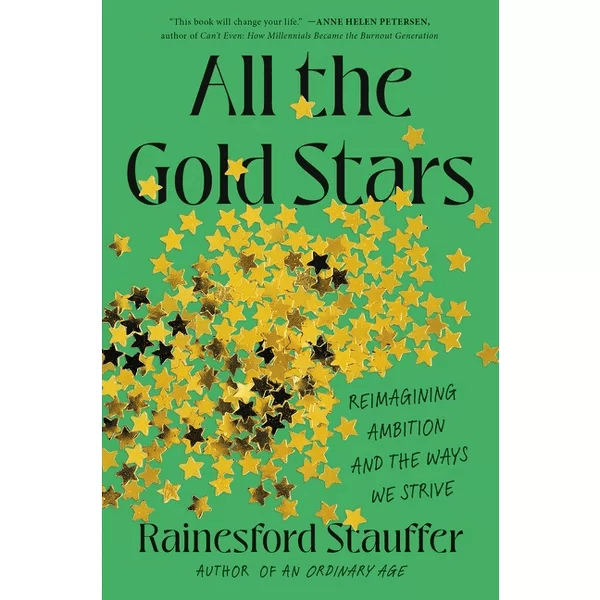
“All the Gold Stars: Reimagining Ambition and the Ways We Strive” was written by Rainesford Stauffer, an author, journalist, and speaker. This book contained a thoughtful exploration of ambition. Although this book contained several ramblings, there were some great takeaways.
4 out of 5 stars
So many modern ideas of ambition are rooted in work-related self-development, self-improvement, and career mobility, but ambition isn’t just about work. For those of us who feel that our performance at work – or our ambition – is the most valuable, worthiest, and most significant part of us, and thus, the most important part of our lives, we lose ourselves at the center of our stories.
Two primary sources of influence of our self-concept are our childhood experiences and our evaluation by others. Evaluation is ambition’s sidekick. Ambition is often registered as achievement.
Don’t let the world place limits on your ambition. Our efforts, time, imagination, and care can be oriented toward what matters to us most deeply in the face of a world that’s screaming to-do lists at us. Ambitions can be demonstrated in your hobbies, your values, how you care for yourself, your contributions to your community and causes, your friendships, etc.
Questions to ask yourself:
Think about your unrésuméd self – What are the things that actually fill you up that no one cares about, or you can’t put on your resume?
Who came up with this aspiration? Is it my idea or something random I thought I should aspire to?
What resources does it take to be ambitious about this, and is it worth it?
What does this ambition serve? It is me, a loved one, or something I care deeply about, or just an arbitrary marker of success?
How can the personal definitions we have of ambition expand?
I look forward to reading, learning, and sharing more with you soon!

I read four books in March 2024. I have been reading less for my personal pleasure due to being busy with a post-graduate paralegal certificate program and spending most of my time reading textbooks. Here is a brief synopsis of the four books I read in March 2024, some of which I will post about in greater detail in the future.
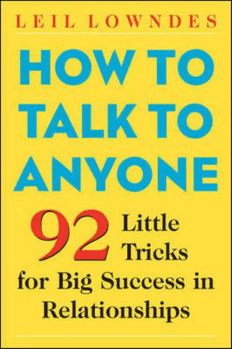
“How to Talk to Anyone: 92 Little Tricks for Big Success in Relationships” was written by Leil Lowndes, an internationally acclaimed communications expert who coaches top executives of Fortune 500 companies and frontline employees to become more effective communicators. Leil conducts communications seminars for the U.S. Peace Corps, foreign governments, and major corporations. While I did learn some great communication tricks and the book was very useful, I did not like the phone and smug tone of writing. Here are a handful of my take-aways:
When someone asks where you are from, never give just the city. Learn some engaging facts about your hometown that conversational partners can communicate on.
Never give a naked thank you. Never let the phrase “thank you” stand alone.
If you leave a voicemail, view it as your ten-second audition to prove you are worthy of a quick callback.
Use the big baby pivot when you meet someone new. Give the warm smile, the total-body turn, and the undivided attention you would give a baby who crawled up to your feet and smiled at you.
Imagine a giant swiveling spotlight between you and your conversation partner. The longer you keep it shining away from you, the more interesting he or she finds you.
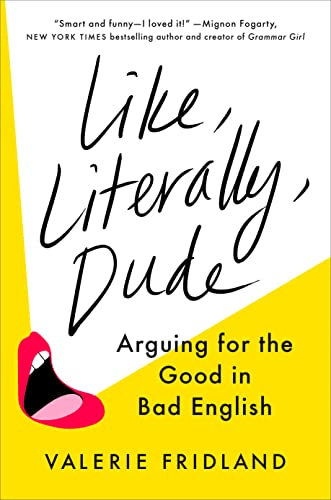
“Like, Literally, Dude: Arguing for the Good in Bad English” was written by Valerie Fridland, a professor of linguistics at the University of Nevada and author of the popular language blog called “Language in the Wild.” This book contained a linguistic exploration of the speech habits we love to hate – linguistic quirks that are fundamental to our social, professional, and romantic success. This book was fascinating, and here are just a few facts that resonated with me:
Language evolution doesn’t happen in a vacuum. Language evolves because social forces act as triggers in taking underlying linguistic tendencies and giving them social meaning. Ex: migration, school, class, cultural shifts, geography, age, etc.
‘Ums‘ and ‘uhs‘ don’t just fill pauses- these words unconsciously signify the introduction of a new topic or a complex idea and signal to a listener that there will be an upcoming speech delay and convey how long of a delay the listener should expect. ‘Um‘ precedes longer delays than ‘uh.’ They also result in a boost in memory to the listener (of what was stated after the pause) and filled pauses buy ourselves processing time and convey to the listener that “it’s still my turn.”
Our unease with the use of the word ‘like‘ is probably more about its association with casual, younger speech than its functionality. ‘Like‘ is an incredibly amorphous word:
verb – to discuss fondness for objects or people
noun – to describe likes and dislikes
adjective – to mean similar to “in the manner of”
preposition – simile construction
conjunction – to embed another clause
approximating marker – looseness of meaning before a numerical estimate/quantification
common quotative verb
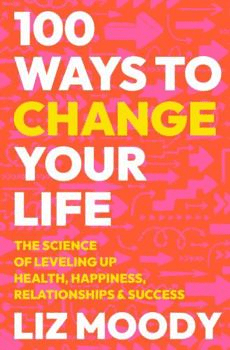
“100 Ways to Change Your Life: The Science of Leveling Up Health, Happiness, Relationships, & Success” was written by Liz Moody, the host of the top-rated Liz Moody podcast, author of best-selling books, and popular online content creator. This book was my favorite book I read in March and contained so much valuable information! I will post about this book in more detail another time, but in the meantime, here are five ways you can change your life.
Take the risk. You are far more resilient than you think. Doing is a form of figuring out. Just start. The right time is always right now. A fundamental reason many people don’t find success is that they never begin.
Think about your death. What can it highlight about living a life that you’re proud of today? What can it teach you about shifts you need to make?
Establish and stick to better boundaries. You reclaim your energy, time, capacity, money, and physical space. We begin to resent people for not catering to our needs, even when we’ve never communicated what those needs actually are. Take a pause before replying to anyone’s invitation or request. Practice checking in with yourself first before you tend to someone else’s needs.
Identify your financial dreams. Why do you want to accumulate wealth in the first place? What is your Rich Life? What do you value? What are some things other people might value that truly don’t matter to you? Spend your money on what you value.
Create a mental health checklist. Social connection, good nutrition, routine, sleep, and movement are the five pillars of mental health. Use them as a first line of answers if you aren’t feeling your best.
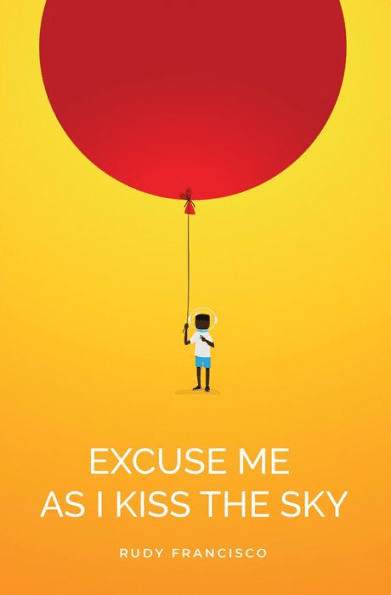
“Excuse Me As I Kiss The Sky” was written by Rudy Francisco, one of the most recognizable names in spoken word poetry, and one of my favorite poets. This book covered different poetry styles, some of which I am not familiar with: ode, obit, golden shovel, contrapuntal, question-and-answer, free verse, page to stage, and love poems.
Rudy is one of the most recognizable names in spoken word poetry, but his talent also shows on the page. Rudy mentioned the difference between page poems and performance poems. Page poems are written for visual aesthetics and consist of rearranging text and line breaks. Performance poems are focused on how the poem will sound out loud, how it feels to say the words, the syllable count, rhythm, and taking just one chance to explain the story.
Here are some of my favorite lines in the book, which I have not formatted into the page poems:
Fragile – “I know the heart can be a fragile and dangerous thing. When it breaks, the ends are often jagged and will cut the hands of people who are just trying to help you clean up the mess. But I also know that pain is nomadic. It doesn’t like to stay in one play for too long. Healing is a slow crawl, but it will find you right where you are.”
“Fear is when we turn up the volume on everything that might go wrong and then allow it to speak louder than courage.”
“The past is one of the few things more stubborn than we are. It will not change and doesn’t care if you have a better idea of how the story should’ve ended.
Healing begins when we stop trying to run backwards on the escalator and embrace whatever will keep us moving forward.”
“I hope you stumble into the kind of love that bends all the question marks into exclamation points.”
I look forward to reading, learning, and sharing more with you soon!