
It’s been over a month since I’ve posted a Thoughtful Thursday post. I am discerning whether to continue with weekly Thoughtful Thursday posts or whether to post those less often so that I can post more book posts. With that said, here are some of the most interesting things I’ve learned this month!
The Mel Robbins Podcast – The Top Expert Advice of the Year
- People will consistently give you what you allow them to give you. You are in control of two things in this world: what you give and what you accept.
- Boundaries are not walls to keep things out. Boundaries are bridges to let the right things in.

- Boundaries are meant to protect your peace and your energy. When you’re setting boundaries, ask yourself what you need in your life right now, what boundary you need to set that will lead you to what you need, and why you must stick to the boundary. What is it costing you not to stick to this boundary? Your future? Your peace? You tell people how to treat you by what you continuously accept.
- You spend more time trying to protect the battery on your smartphone than you do protecting your own or recharging your own battery.
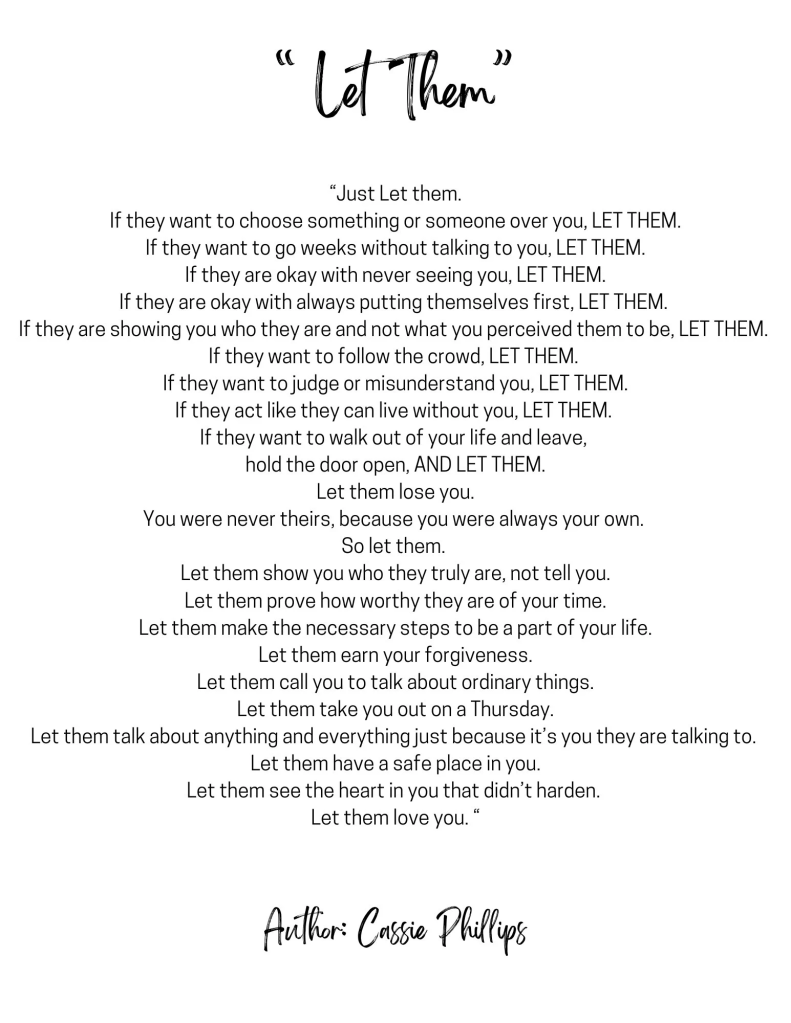
- LET THEM is a boundary.
I really enjoyed this post from Gabe the Bass Player:
https://www.gabethebassplayer.com/blog/how-can-i-read-your-mind-better
How Can I Read Your Mind Better?
January 8, 2025
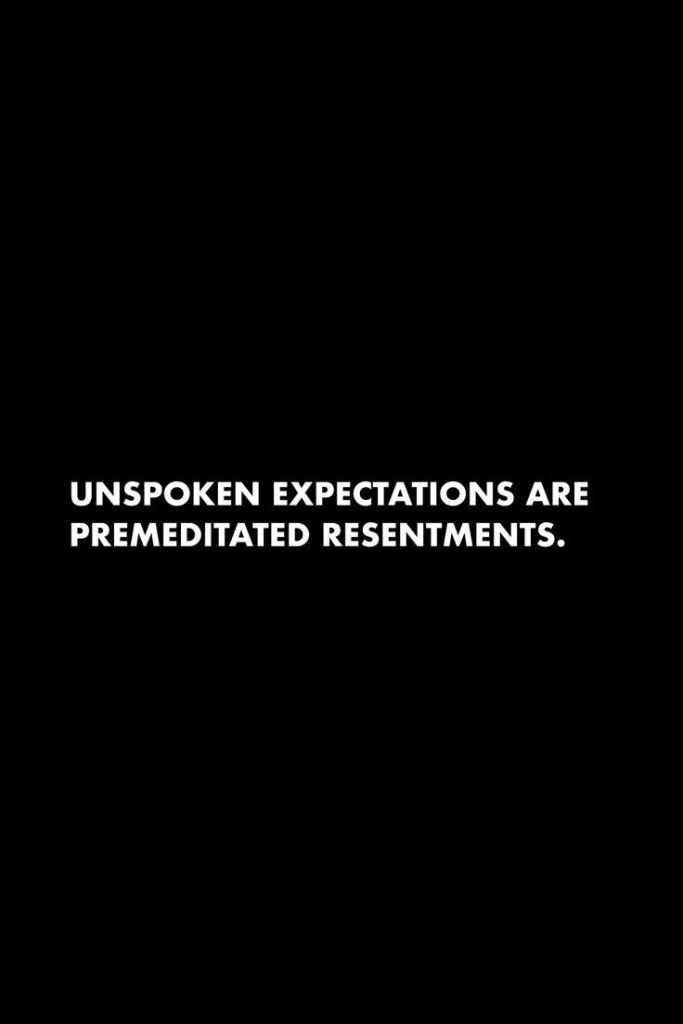
i.e. What are your unspoken expectations?
This is at the heart of so much heartbreak and frustration in this business.
Our personal expectations are ‘just the way it is’…and it’s easy to think they’re shared by others…or at least they should have read my mind by now.
It’s worth asking the people around you what they’re really hoping for. You’re sure to learn something new. Something they’ve been thinking all along but secretly expecting you to just read their mind.
You’re good but you’re not that good. You’re going to have to ask.

I am enrolled in UCC Contracts/Business Law and Probate Law this semester for my paralegal certificate program. I am not an attorney, and this is not legal advice. These are some fascinating facts I have learned so far.
For most contracts, the general rule is that while it’s not illegal to enter into a contract with a minor, the contract is voidable at the discretion of the minor. Once reaching the age of majority, they can also disaffirm contracts. The cases I read that stood out to me involved minors voiding arbitration clauses in contracts and voiding waivers of liability by voiding contracts. I believe this can be a risk of liability for employers who hire minors. For example:
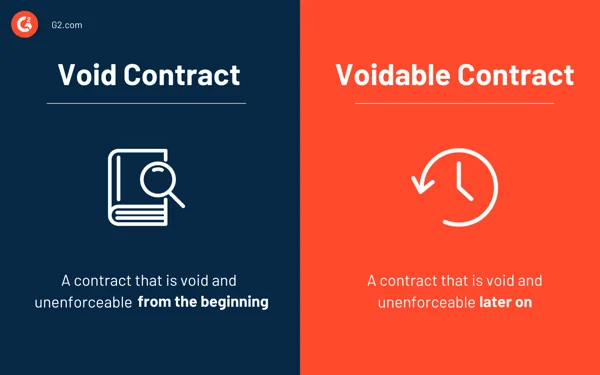
Pak Foods Houston, LLC v. Garcia, 433 S.W.3d 171 (Tex. App.—Houston [14th Dist.] 2014) involved a personal injury claim. A minor filed a personal injury claim against a fast-food restaurant. The restaurant filed a motion to compel arbitration based on an arbitration agreement that the minor signed as part of an employment agreement. The court found that the contract was voidable, and the minor disaffirmed the agreement by terminating her employment and filing suit.
I’ve been intrigued by the many rules of Probate Law this semester and how different state statutes vary. For those with wills, a spouse cannot be disinherited in the will, but disinheriting children is allowed. Each state has a plan for the assets of those who die without wills. As an example, for those who die without wills in Minnesota:
524.2-102 SHARE OF THE SPOUSE.
The intestate share of a decedent’s surviving spouse is:
(1) the entire intestate estate if:
(i) no descendant of the decedent survives the decedent; or
(ii) all of the decedent’s surviving descendants are also descendants of the surviving spouse and there is no other descendant of the surviving spouse who survives the decedent;
(2) the first $225,000, plus one-half of any balance of the intestate estate, if all of the decedent’s surviving descendants are also descendants of the surviving spouse and the surviving spouse has one or more surviving descendants who are not descendants of the decedent, or if one or more of the decedent’s surviving descendants are not descendants of the surviving spouse.
In other words, if you are married without kids and die without a will, your surviving spouse gets 100% of your assets. If you are married with kids and neither you nor your spouse have kids with other people, your surviving spouse gets 100% of your assets. Yet, if you are married with kids and you or your spouse have living kids that are not biologically shared, your living spouse gets the first $225,000 plus 1/2 of any balance of the estate, and the rest gets split up between all of the kids (descendants).

My husband and I are doing the Bible in a Year series with Fr. Mike Schmitz, which has been so informative and interesting so far. One thing that has resonated with me so far is that many of us are pharaohs to ourselves. We make ourselves so busy that we don’t have time to think about God. We make ourselves so busy that we have made ourselves into slaves by saying “I have to do this, I have to do that” and all of the other things that we’ve set up. We’ve set up a pace of life for ourselves that is unmanageable, and we don’t have time for worship. God’s people were never meant to be slaves – not a slave to Pharaoh and not a slave to the pharaoh that lives inside of us. We are meant to be free so that we can truly belong to Him.
And if you aren’t religious, this can still also apply to several other areas of your life. What are the things that you are making yourself a slave to? Are you spending too much time working, scrolling on your phone, etc.? What are the things you say you don’t have time for? What are you doing with your time instead? Are you making time for the things you say matter the most to you?

Perhaps the most fascinating thing I learned this month was about the existence of the syndrome known as R-CPD (inability to burp).
What are the symptoms of R-CPD?
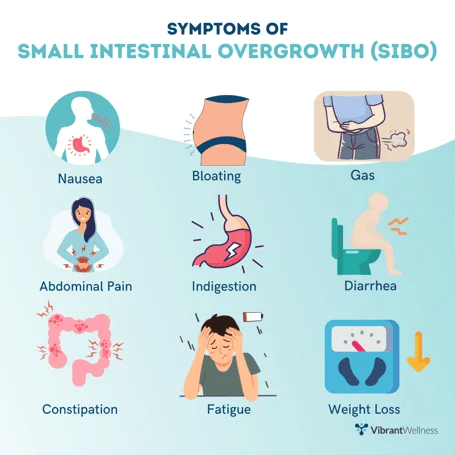
Additional symptoms, outside of the lifelong inability to burp or belch, can include:
- Abdominal and/or chest bloating and pain
- Excessive flatulence
- Nausea
- Gurgling noises from the neck and chest
- Difficulty vomiting or fear of vomiting (emetophobia)
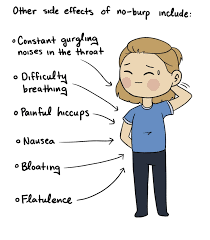
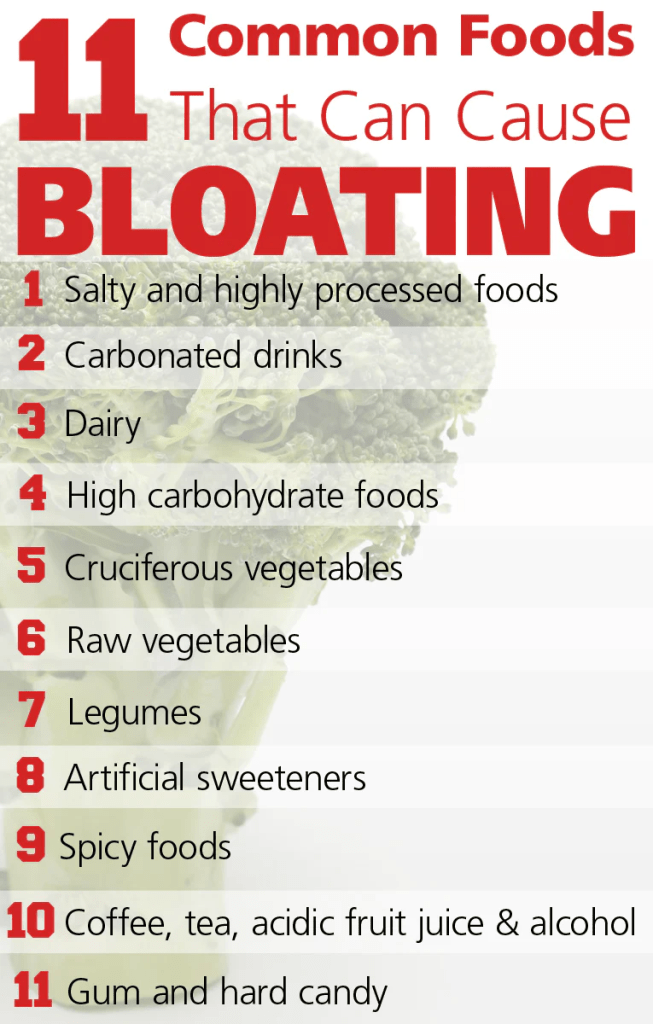
As shown, the chief complaints are GI-related. Yet, GI doctors (and many other doctors) are not aware of this condition, leading many to run numerous tests instead of asking the right questions. In an ideal world, when patients complain of bloating, gas, nausea, and gurgling, GI providers and other providers would ask “Can you burp?” If not, they should be treated for R-CPD. There are not many providers who are aware of and treat this syndrome.
Here is more information about it, such as the symptoms, treatment, etc. There is even a Reddit community for this condition: https://www.reddit.com/r/noburp
I look forward to reading, learning, and sharing more with you soon!







 Read Learn Share