I read five books in January 2024. I have been reading less for my personal pleasure due to starting a post-graduate paralegal certificate program and spending most of my time reading textbooks. Here is a brief synopsis of the five books I read in January 2024, some of which I will post about in greater detail in the future.
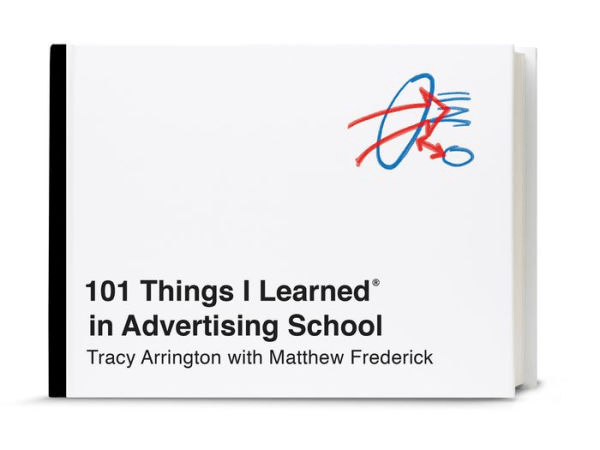
“101 Things I Learned in Advertising School” was written by Tracy Arrington with Matthew Frederick. It was an interesting, quick, and easy read, and I learned a lot! Here are a few takeaways:
It’s all advertising until it lands in the cart: public ads, location, packaging, etc.
Don’t buy media if you can earn it through exposure such as news coverage, editorials, and social media buzz.
You won’t have a healthy relationship if you do all the talking. In the digital environment, if consumers don’t like what they hear and don’t feel they are being listened to, they can and will go elsewhere – maybe even to the media outlets.
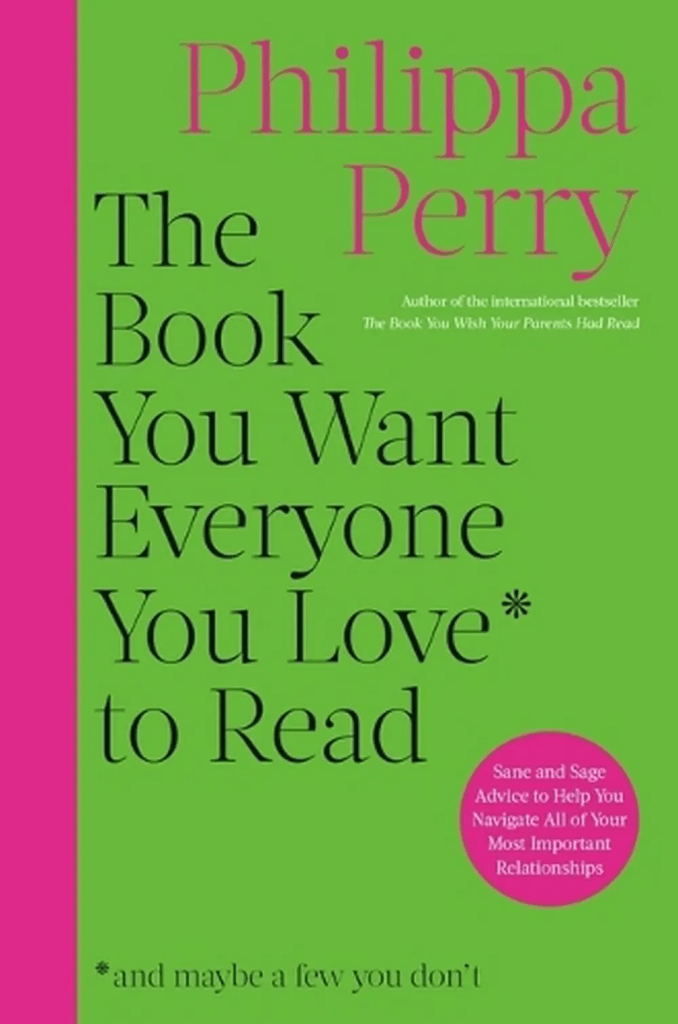
“The Book You Want Everyone You Love To Read: Sane and Sage Advice to Help You Navigate All of Your Most Important Relationships” was written by Philippa Perry, an author, psychotherapist, artist, TV and radio presenter, and advice columinist for The Guardian. This book will change your life.
It covers the importance of relationships and the difficulties that come with them, and you will get into the habit of practicing new ways of behaving and communicating. I took away so much from this book and will share more about it on my blog sometime.
It is so much easier to blame something outside ourselves for our discontent than it is to look inwardly for a cause.
Recognize when you are playing the martyr and stop. If you allow yourself to be dragged down by someone else, you will resent them for it. Resentment is like drinking poison and expecting your enemy to die.
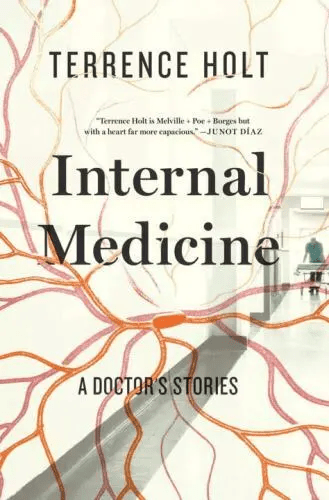
“Internal Medicine: A Doctor’s Stories” was written by Terrence Holt and detailed what it’s like to be a doctor. It was fascinating at times and I gained some medical knowledge and a better understanding of the process of my grandpa’s heart and kidney failure that led to his death.
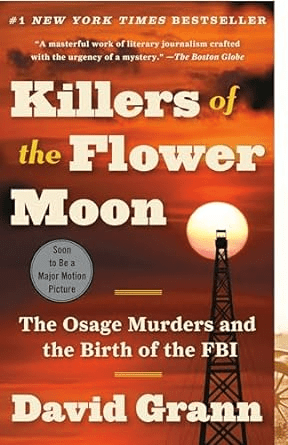
“Killers of the Flower Moon: The Osage Murders and the Birth of the FBI” was written by David Grann and detailed the atrocities the Osage Indian Nation experienced. This book detailed the allotment, the policy to break up American Indians’ communal ownership of land in Oklahoma, and the Indians kept the subsurface mineral rights to the land. Within several years, large deposits of oil were discovered directly under their lands, and the Osage were given a headright, which was a share in the mineral trust. A headright could not be bought or sold; it could only be inherited. This resulted in calculated and cruel murders, betrayals, and coverups.
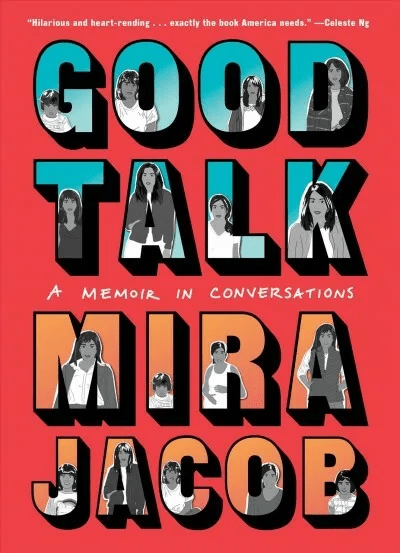
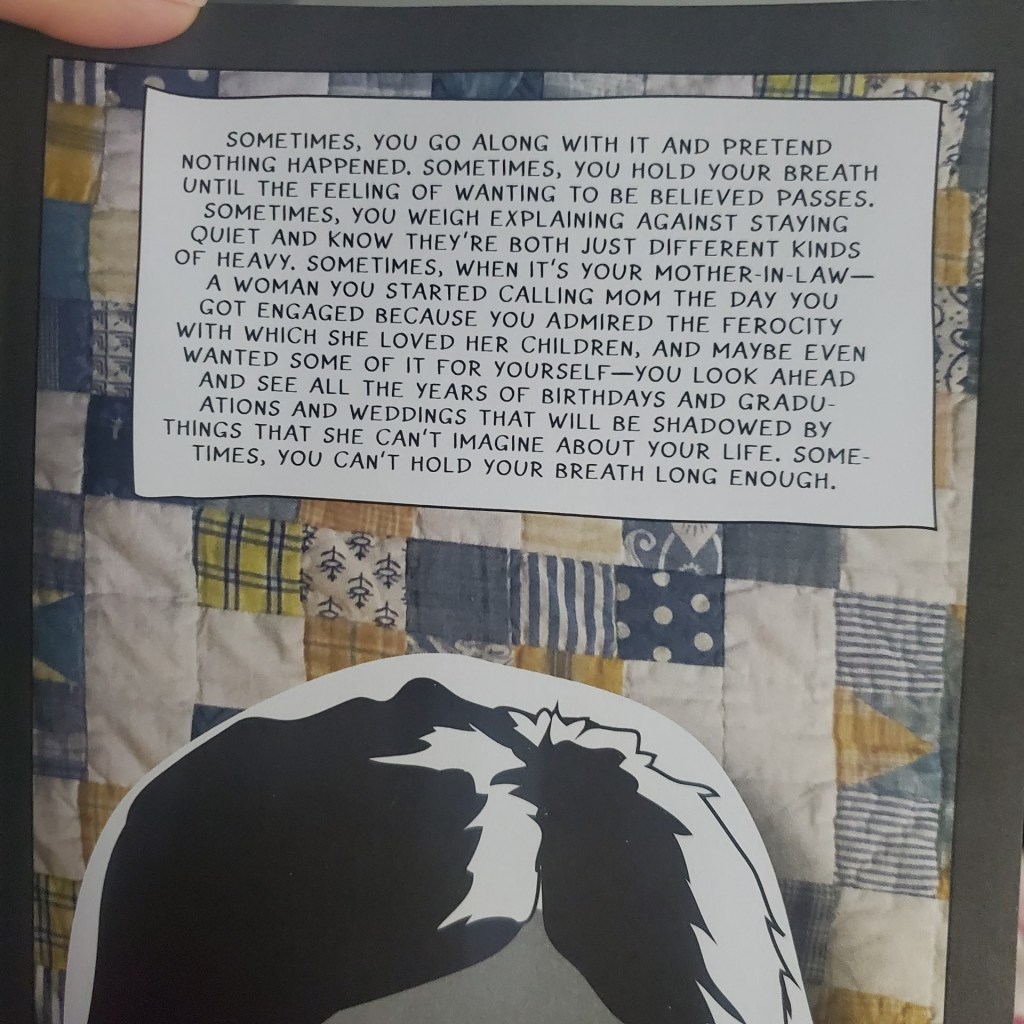
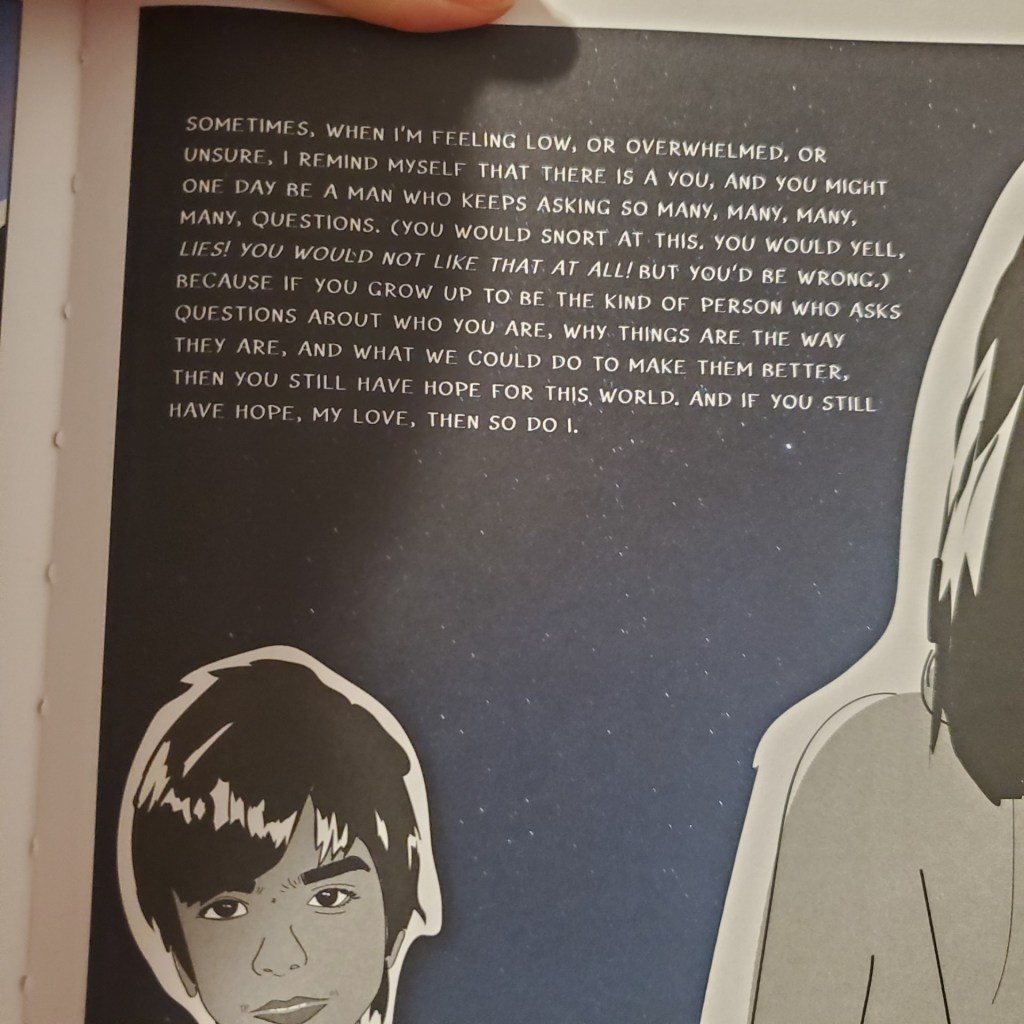
“Good Talk: A Memoir in Conversations” was a unique graphic memoir written by Mira Jacobs. This book covered Mira’s journey as a first-generation American and delved into difficult conversations that she had with her young son and husband about race, love, and family. Mira detailed several times she didn’t fit in because of the color of her skin – from receiving a bottle of Fair & Lovely as a gift from her grandmother, to navigating the job search as a colored person, to being mistaken as “the help”, to being told by a waitress that other customers didn’t feel “safe” near her. She was often torn about whether to say something or whether to stay silent about the treatment she faced. These two photos resonated with me.
I look forward to reading, learning, and sharing more with you soon!
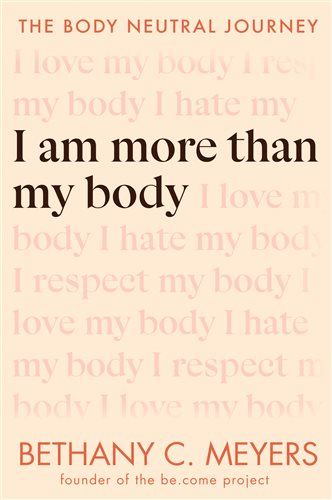
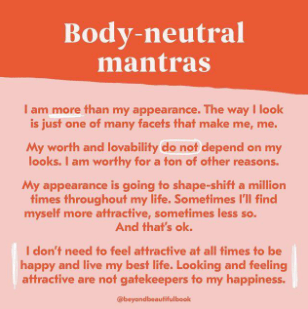
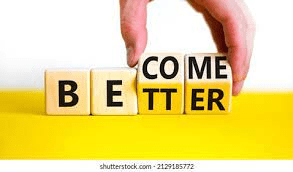
I am more than my body: the body neutral journey” was written by Bethany C. Meyers, CEO of the be.come project. Bethany has over 15 years of experience in the fitness industry as an instructor, teacher, and workout creator. I struggle with my body image, and this book was much needed and thought-provoking. I got SO much out of this book that may be helpful to others.
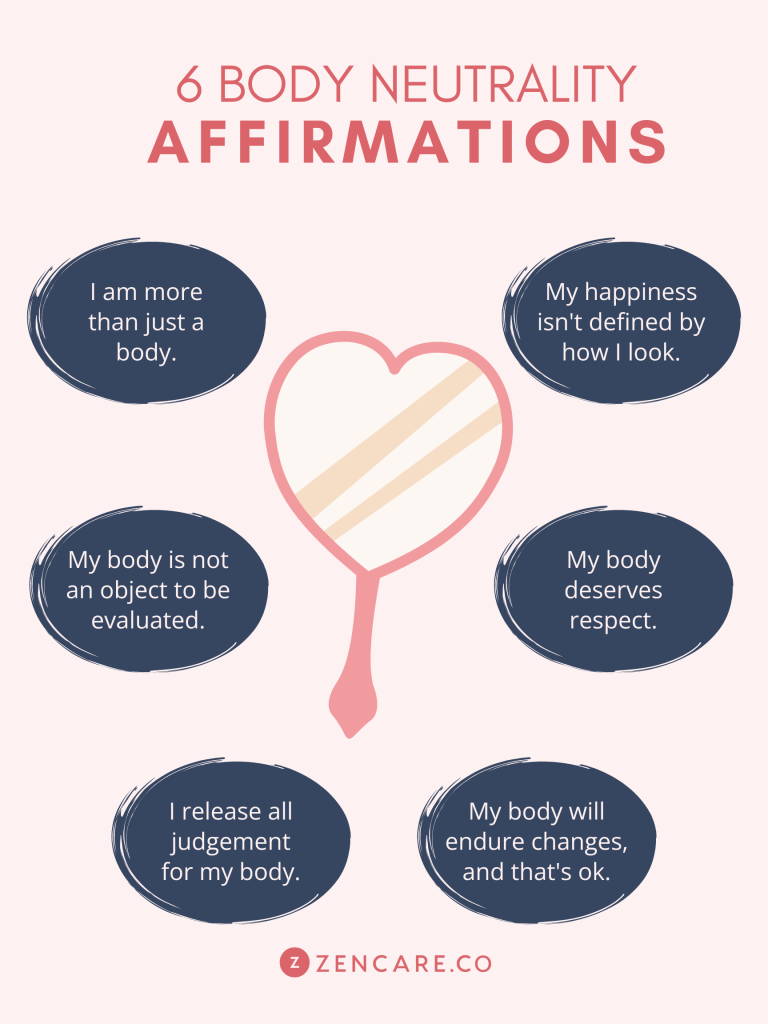
In short, body neutrality is the idea that each of us is more than our body, and our worth is not limited to our physical self. It is respecting our body even though we may feel differently about it on any given day. Body neutrality involves steering away from self-hate without the pressure of having to love our body.
Body shame is heavily supported by diet culture. The beauty goal posts keep moving.
Toxic body positivity suggests people should love their bodies as long as they are healthy and work on their health if they aren’t healthy.
The body neutral journey is to acknowledge the feelings we have, explore why those feelings came about, and reconnect with our self-worth. Acknowledge your feelings without judgment. Explore the hidden reasons – stress, lack of sleep, emotional distress, sickness, hormones, societal wiring, etc. Reconnect with yourself, and thank your body for what it does for you.
Happiness comes from honest acceptance. Happiness doesn’t come from self-harm, self-abuse, self-delusion, self-hatred, shame, restriction, or punishment.
“All bodies are created equal, but they are not treated equally.” There is discrimination in media, employment, healthcare, relationships, etc. Many people are told to lose weight instead of receiving tests or treatments for other medical concerns. Attaining “health” isn’t a possibility for some people, and many factors (location, income, and socioeconomic status) can make it difficult or even impossible to access.
Things to consider:
“While we seek compassion for ourselves, we should simultaneously hope to find compassion for others, no matter their appearance.” If you have been speaking poorly to yourself and judging yourself harshly, how much of that is seeping out into your relationships with others? How do your comments about your own body impact those around you who hear them (especially children)?
Internalizing that this is the one body you have and that even if you’re not always thrilled with how it looks, you can devote yourself to caring for it, is game-changing.
We’ll likely always be influenced by the environment we live in, the media we consume, and the trends we see around us, but we don’t need to change things about ourselves that we love or start to hate parts of ourselves if they’re not in vogue.
Many people elect to do body modifications: lip filler, liposuction, Botox, nose jobs, lash extensions, etc. It’s worthwhile to be honest with yourself about why you are getting a procedure done. If it’s for someone else or you think it will make you more popular, attractive, or acceptable, it may not be coming from a neutral place.
Kids are more than their bodies and when we obsess or comment about their size, we teach them that this is where their identity lies. We forget about their interests, their dreams, and their goals, and we hinder development by placing them in a box. We need to be mindful of the language we use around young people to describe bodies, diets, and health.
“Babies cry when they are hungry and we let them eat because we don’t want them to go hungry. It always boggled my mind how we trust infants with this but we have such a hard time trusting ourselves. Often we restrict our food intake even when we are hungry.”
Points to consider about exercising/movement:
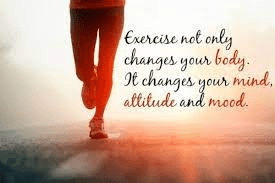
When you separate exercise from having the sole goal of changing your body, and instead allow it to be a place for repair, release, and rejuvenation, it’s likely you’ll find new freedom in your movement practice. Move your body in ways that feel good and that you actually enjoy.
Our bodies are wise and know how to adapt, evolve, and heal themselves. They know when we need rest, and they know when we need to move. As you connect with your body more intuitively, you will be able to interpret its cues in a new way.
Ask yourself: Am I appreciating the functions of my body without criticism? Am I focused on my body’s failings? Am I comparing myself to others? Am I pushing my body past its limits for the sake of hitting a certain goal or target?
Ask yourself: Why am I choosing to move today? Is it based on changing my physical form? Can I reframe my motive to focus on my mental, spiritual, or emotional health? How do I want this movement session to serve me?
What kind of language does your gym/instructor promote? Is this language in line with your values? What influences or media do you consume that frames exercise as a punishment, a requirement, or a means only to change your physical shape? I have experienced gym class instructors who made comments in classes about exercising to “earn” a shower or exercise to “work off” or “earn” pizza. I don’t surround myself with these environments anymore and have been able to reframe my mindset.
Change your intent of exercise. Consider the mental or emotional benefits of exercise. Think about how it will feel after, movement as a powerful release, and movement as self-care. Give yourself grace and allow rest.
“For people with chronic health issues, it is easy to start to lose trust and faith in your body in a lot of ways. There can be a lot of anger toward the body and a desire to control it. The impulse is often to try to make our bodies do what we want them to do.”
This book really resonated with me. I have chronic health issues that often cause bloating and other issues. Sometimes I look somewhat fit and many other times I look nine months pregnant. Sometimes I am frustrated with my body not functioning the way it should be.
Kids participate in movement because it’s fun, not because it’s necessary. They only begin to think about movement as a means to change their body when they receive messages that their body needs to change. It is learned behavior.
TIPS:
In the context of the body, the more we try to control what we eat, how we exercise, and how our outer self appears to the world, the more these issues will loom large in our life, depleting our health and happiness.
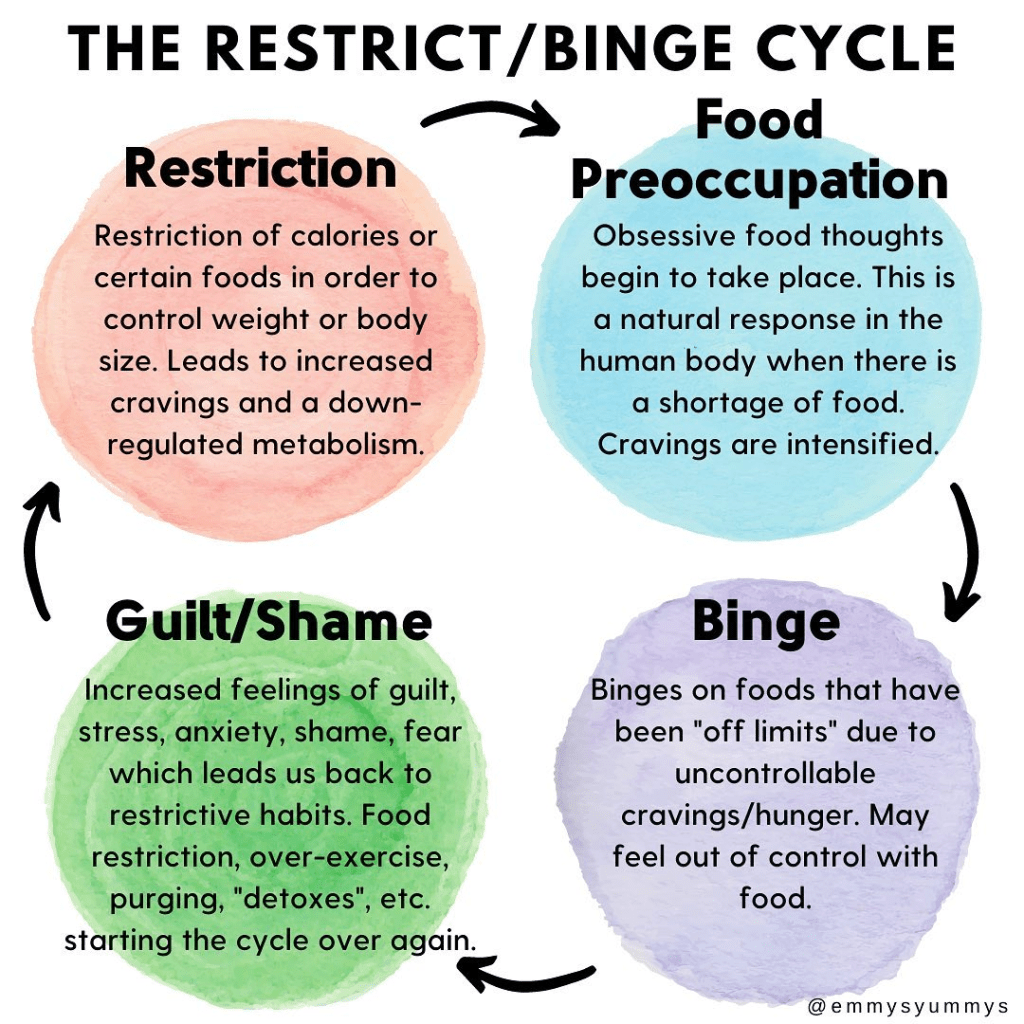
Whatever you restrict becomes the thing you crave. Deep restrictions lead to more and more cravings and bingeing. Always make sure the pantry is stocked. The more you have access to things, the less power they have over you. Removing restrictions is an important part of the recovery process.
I agree with this! I used to not allow myself to purchase candy, dairy-free ice cream, popcorn, chips, and many other foods when I lived alone in an apartment, so when I had access to them, I would eat so much that I felt sick. Since being married, we have kept all of these things on hand, and I have exhibited more self-control and less bingeing. I’ve had access to all of these things on a daily basis and have been surprised at how little I have consumed them on a regular basis!
Examine your relationship with control. Are your habits impeding upon your work schedule or time with family and friends? Do you say no to events. occasions, or activities in order to stick to your regimen? How much are you beating yourself up when you make a misstep? Wanting to control things is okay and natural, but we need to allow ourselves the space and grace to be humans. We can acknowledge what influences our thoughts and explore those factors. We can recognize that our bodies and everything about us is meant to ebb and flow.
Ignore the size tag on clothes. Different brands will fit differently, and it is not a reflection of your body.
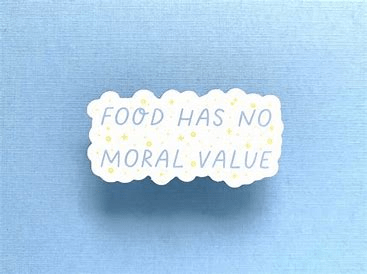
Stop labeling foods as “good” or “bad” – food is not moral.
Toss the scale if you are going to obsess over it.
Be kind to yourself.
Question your “why.” Why do you feel your body needs to be different?
Diversify your social media feed to include all body sizes.
Look in the mirror naked and list positive or neutral comments about yourself.
Let go of perfection.
Remember that a thought is just a thought. It is not truth.
Look how far you’ve come.
Keep your language neutral in front of children.
Make the time for what centers you in your body.
Find like-minded people to move with.
I hope some of this resonated with you in your body neutrality journey.
I look forward to reading, learning, and sharing more with you soon!
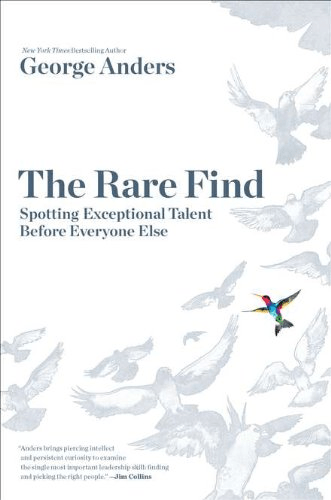
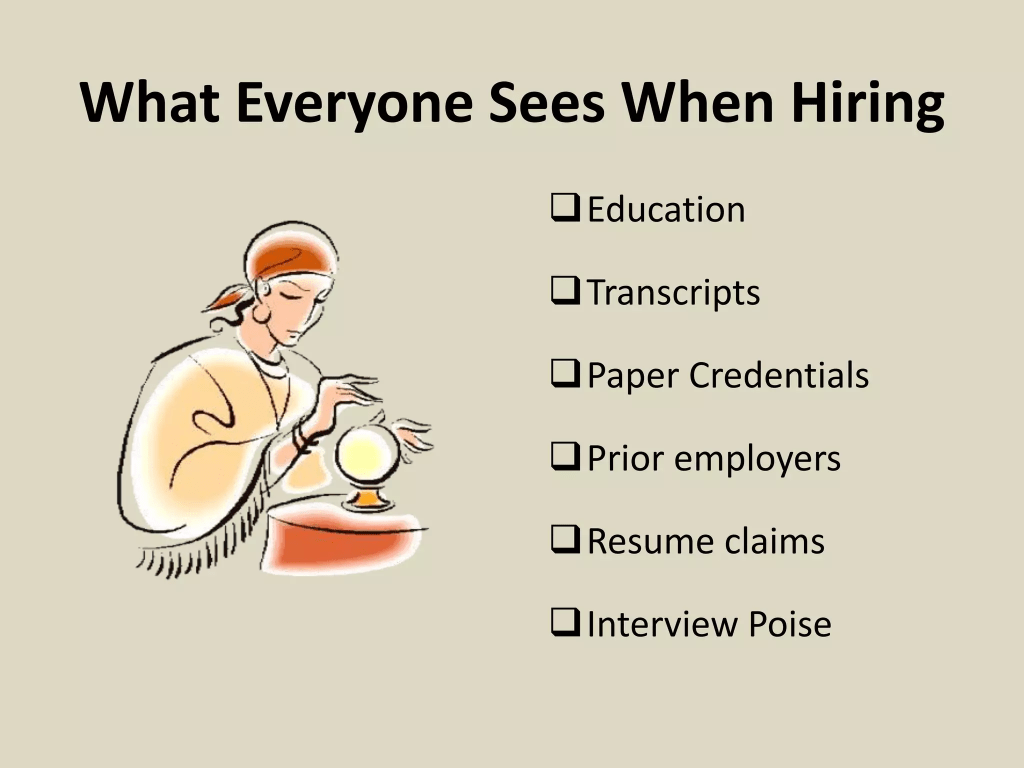
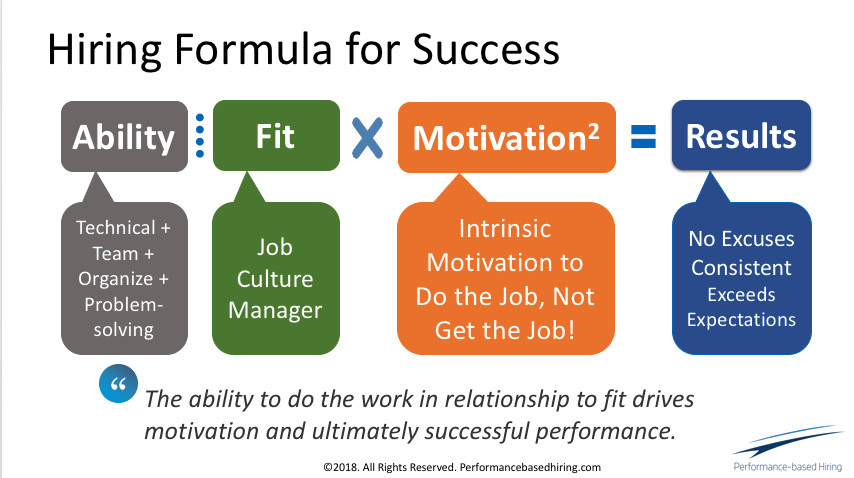
“The Rare Find: Spotting Exceptional Talent Before Everyone Else” was written by George Anders, one of the founding writers at Bloomberg View. This was a useful, educational, well-researched, fascinating book about hiring talent. This book detailed methods companies have successfully used to spot resilience, curiosity, and self-reliance, among many other highly desired traits, that are not usually visible on a resume or in an interview.
CEOs who are persistent and proactive get things done. CEOs who are not, do not get things done, even if they are good listeners, team players, etc. And if you do not get things done, the people working for you get frustrated or even leave, particularly the better ones.”
Steve Kaplan
Identify leaders with the skills and resolve to succeed, rather than getting sidetracked by the short-lived allure of glittering resumes and charming personalities.
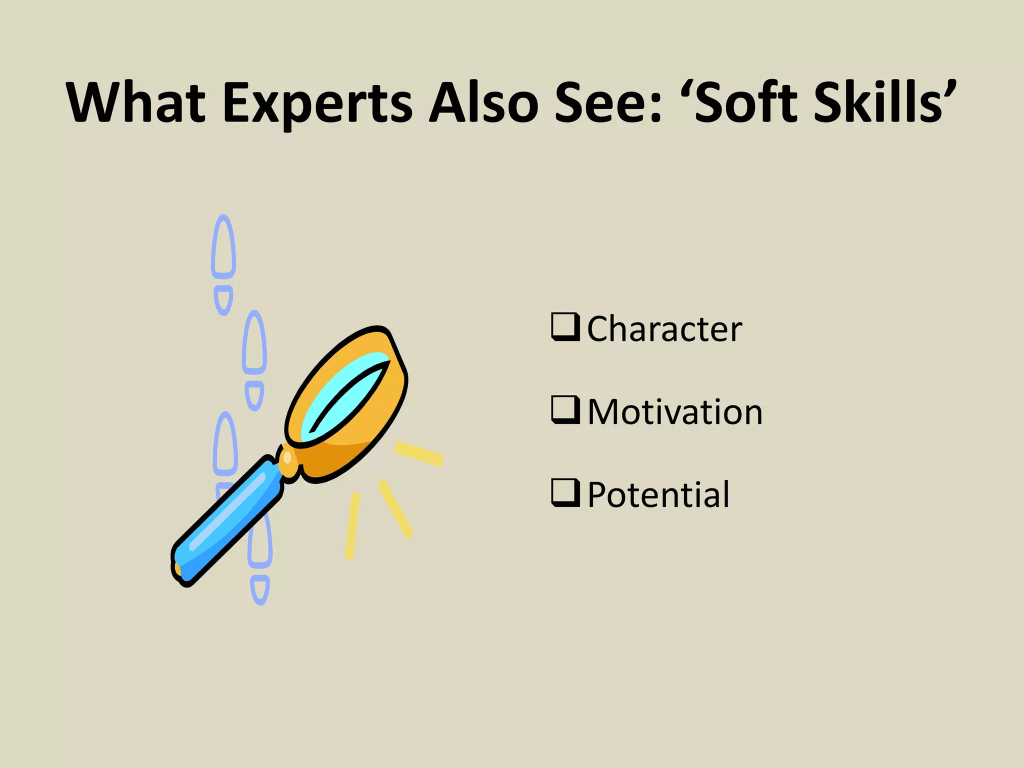
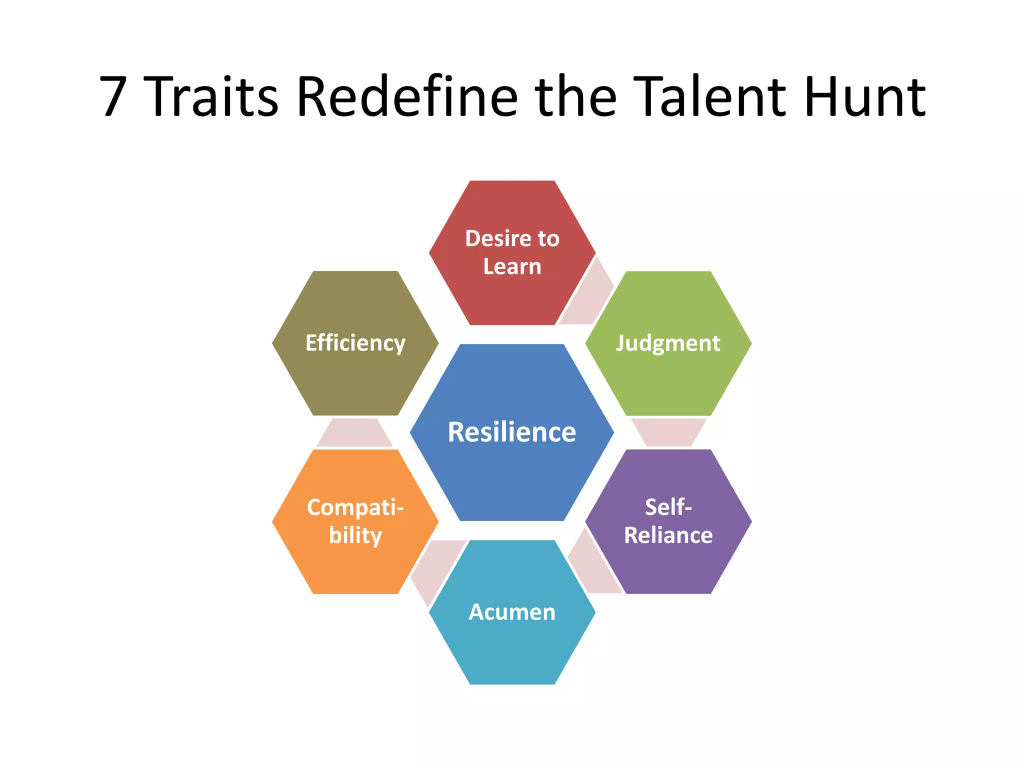
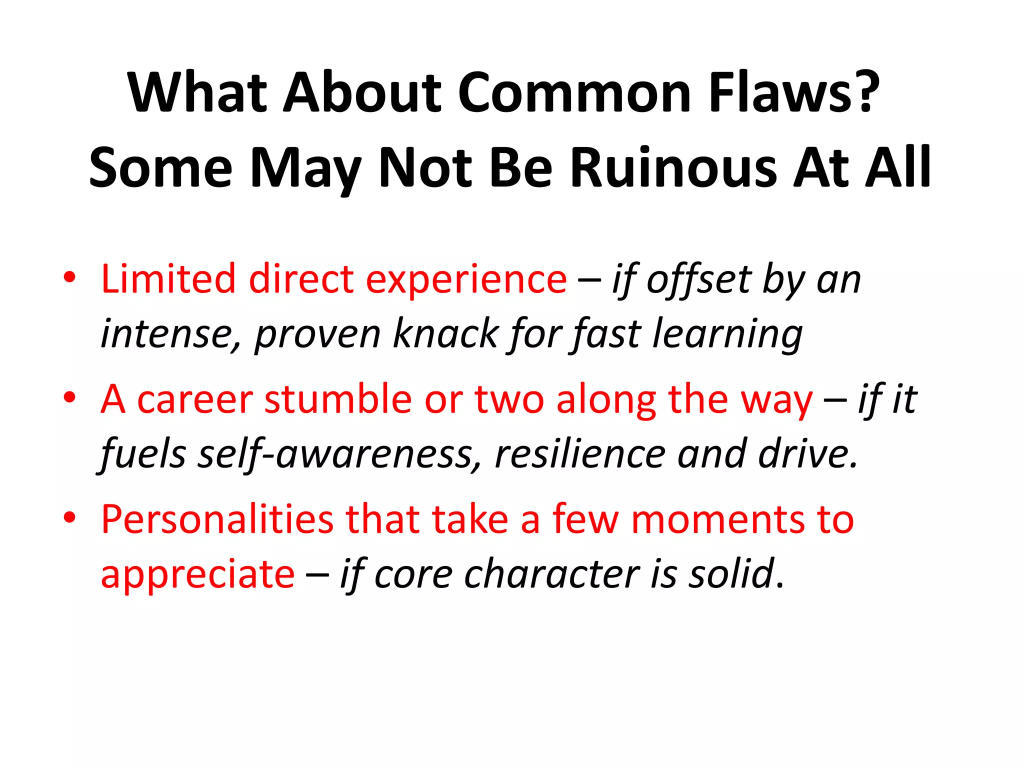
Look for the hidden virtues. One of the most overlooked strengths is resilience. It’s invisible on most resumes and can be hard to spot in a brief interview. Resilience can differentiate between those who do vastly better than expected and those who turn out to be severe disappointments. Example: Teach for America, Army Special Forces tests
Other hidden virtues include ingenuity, curiosity, and compassion.
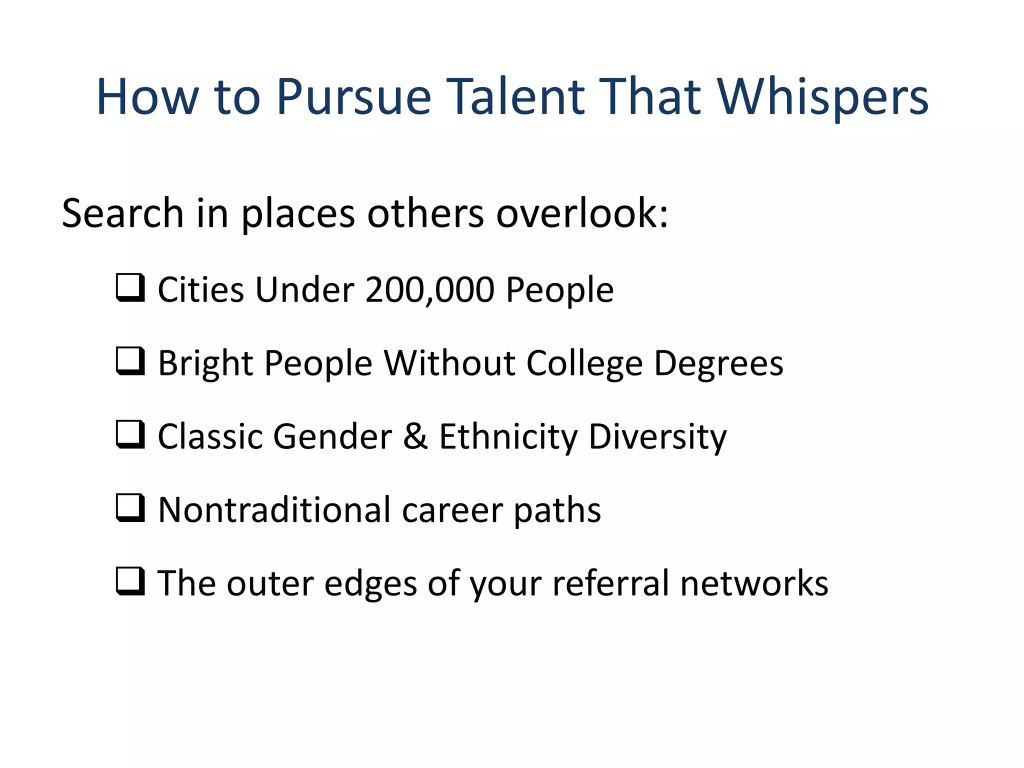
Find your unlikely stars by noticing what others don’t see – “talent that whispers.”
Push your best candidates to grow even stronger – “talent that shouts.”
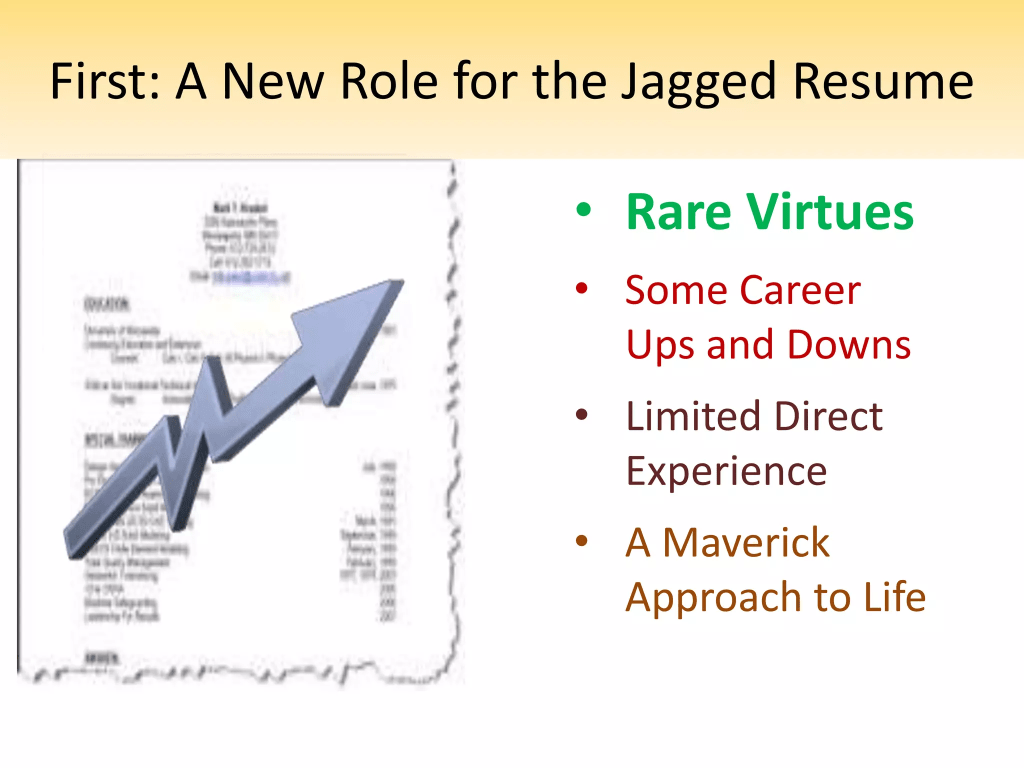
Compromise on experience; don’t compromise on character. The difference between growth and stagnation comes down to bold, fresh approaches who can create new opportunities.
When hiring, your own career is a template; use it. Use your own life experiences to help you find the traits you are seeking.
Rely on auditions to see why people achieve the results they do. Ex: teachers, pilots, musicians, leaders
Who tries hard? Who works well with others? Who recovers quickly from a setback? Conversely, who cuts corners? Who turns brittle under pressure? Who doesn’t care?
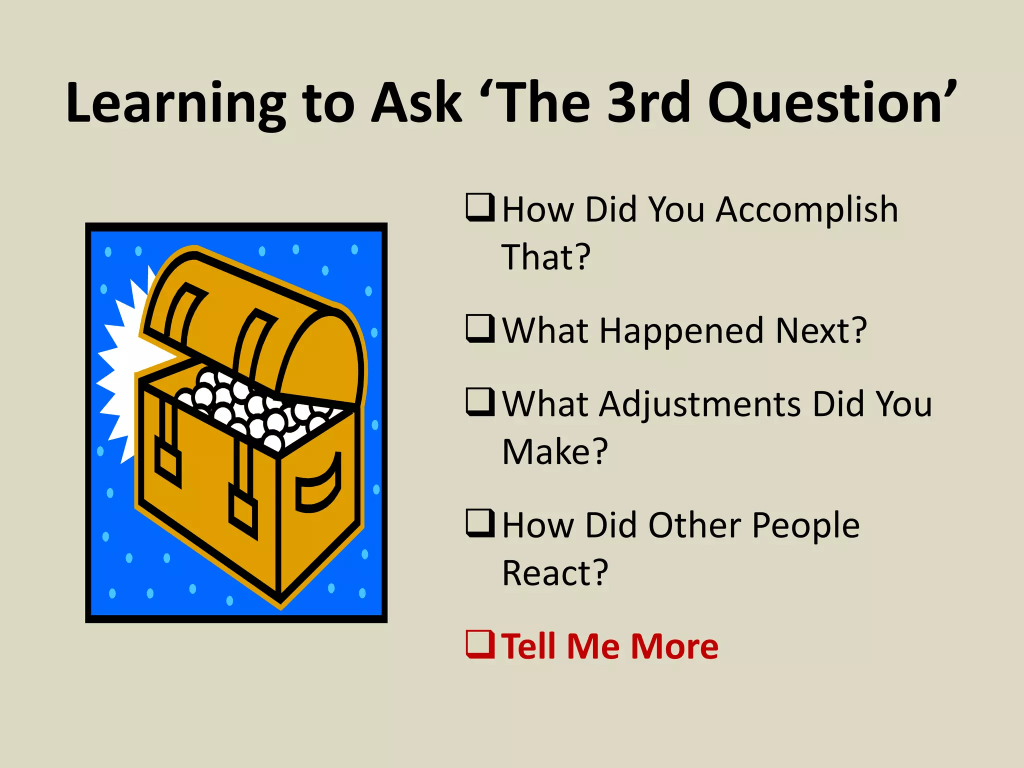
The process of getting to know candidates is defined far more by questions involving “why” and “how” – and less about “what” or “when.”
We must visit the critical junctures in our lives and look at them calmly and with clarity to gain insights. Reflection is powerful.
The FBI’s hostage rescue team and dozens of other high-talent organizations seek:
initiative, perseverance, and compatibility
discipline, trainability, and judgment
loyalty, leadership, and maturity
Examples:
hauling sandbags of various sizes various distances. Does anyone take shortcuts?
spending 10 hours on a rugged hike with no meals and then being placed in a conference room with not enough chicken for everyone
basketball scouting during time outs – “You’ll see some players run into the huddle, paying attention to the coach, eager to do everything right on the next play. Others drift on the court, ignoring their coach and team. This informs me which are likely to respond well to coaching or clash with authority.” – Tom Konchalski, long-time scout
Break down barriers that restrict where you look. Executives take small risks, make the most of their fortunate hunches, and let go of mistakes before they become ruinously costly.
Example: Book and music publishers often don’t sell enough to justify the advance paid to authors and musicians. However, the intermittent winners count for a lot. Some examples include JK Rowling and Taylor Swift.
“Talent that shouts” – everything hinges on an ability to make the most of wide-ranging ambitions and restless spirits. These people need to feel tied to the organization that hired them; otherwise, quarrels, betrayals, squandered opportunities, and job-hopping can occur in moments of anger. This talent wants to be challenged, not coddled.
Great talent is no substitute for the right talent. Ex: GE chief executive didn’t work out for Albertsons grocers.
Sometimes resumes need to be read bottom to top. Ex: GE’s leadership program requiring frequent challenges and relocations.
You can’t take motivation for granted. The most glamorous jobs can get ugly at times, with nonstop commitments, relentless travel, public setbacks, and media scrutiny of a person’s weakest moments. Motivation could crumble in the face of tougher challenges.
Top tips:
CEO desired traits: organization, aggressiveness, commitment, persistence, proactiveness, setting high standards, and holding people accountable
Less valuable: teamwork, flexibility, and being open to criticism
Draw out the “hidden truths” of each job. Think through the assignment. What are you really looking for?
Master the art of aggressive listening. Ask a lot of follow-up questions” “Why?” “What happened next?” Look for ways to decode candidates’ aspirations, frustrations, and habits.
Be alert to other invisible virtues – curiosity, efficiency, and self-reliance.
I once applied for a job I did not meet all desired qualifications for. The employer was looking for years of experience in a specialty legal field on Indeed. Indeed informed me that the employer viewed my application, but after a few weeks, I didn’t hear back. I boldly messaged the employer following up and asking “What can I do to show you I can be successful in this position?” That message resulted in an interview immediately afterwards and a subsequent job offer. I believe this message demonstrated curiosity, motivation, and resilience, and these qualities are not always visible with the standard job hiring process. I am grateful that employer took a chance on me, and I learned so much and became quite successful in the position.
This book was very useful, educational, well-researched, and fascinating. Note: Some photo credits to George Anders via Slideshare
I look forward to reading, learning, and sharing more with you soon!
My intention is to post a Thoughtful Thursday column each week and share some of the insights I have learned in the past week. Here are some of the things I’ve learned this week:
The Mel Robbins Podcast – How to Make 2024 the Best Year: 6 Questions to Ask Yourself
What are the highlights from the past year of your life? Don’t do this based off of memory alone. Look through your journals, calendar, camera roll, social media posts, etc.
What were the hardest aspects of this past year? Reflect on categories such as health & wellness, career/money/school, relationships, and purpose/spirituality/meaning.
What are all of the things you learned about yourself this year?
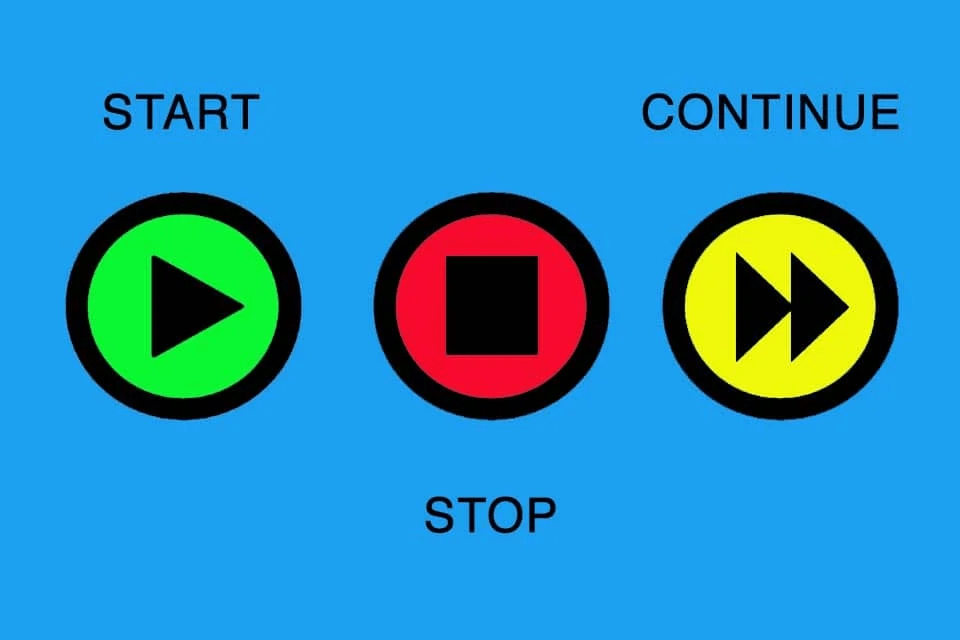
What would you like to stop doing? Ex: complaining, working so much, saying yes to everything
What would you like to start doing? Ex: strength training three days each week,a morning routine
What would you like to continue doing?
Fit, Healthy & Happy Podcast – 10 Lifestyle Changes to Make You Fitter, Healthier & Happier in 2024
Drop one vice that’s holding you back. Think about what you need to get rid of instead of what you need to add. Where are you wasting a lot of time in your life?
Evaluate your circle. 4 quarters is better than 100 pennies. Aim to have more depth and quality in your relationships. Surround yourself with people who make you the best version of yourself.
Encourage more feedback from others.
Allocate more time to be creative – podcast, workout routines, art, music, etc.
Invest in yourself. That could be with time, money, energy, or all three. Read, take courses, hire a coach, etc.
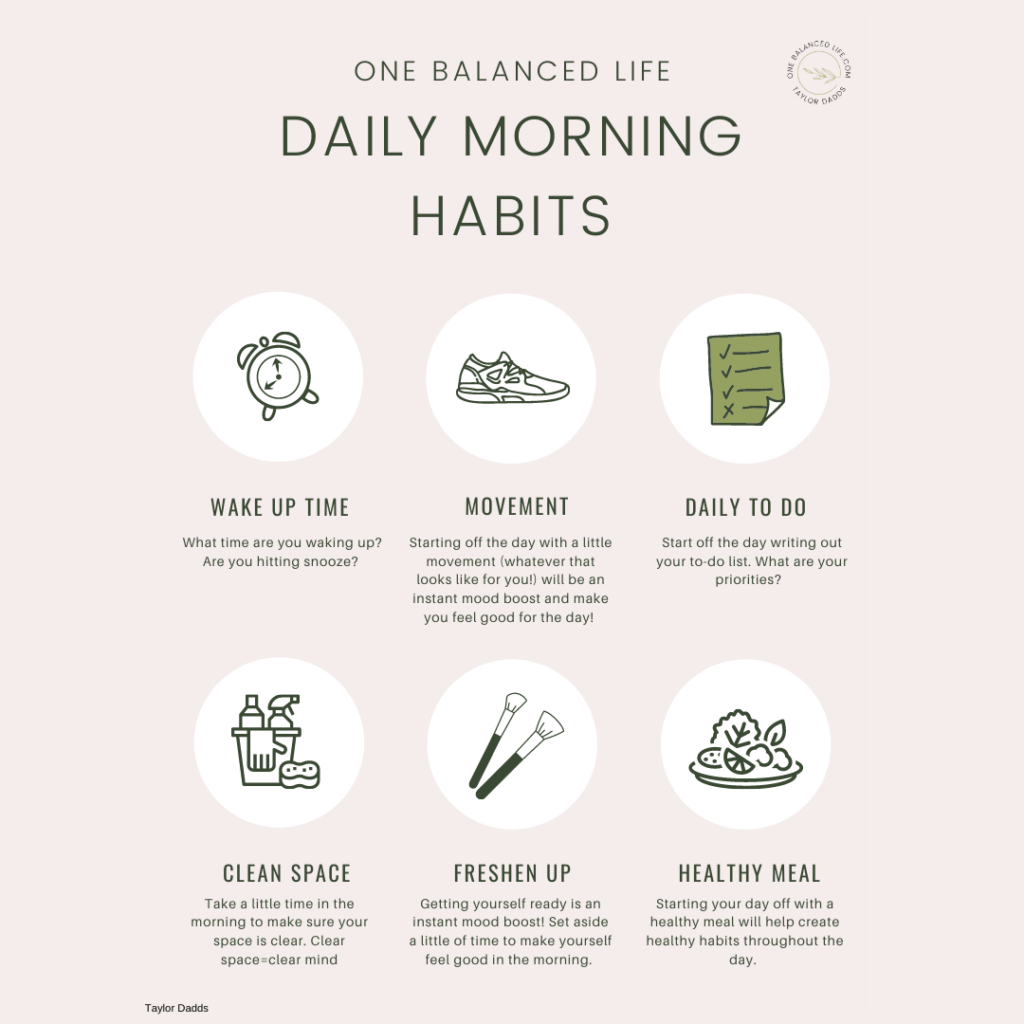
Re-evaluate and develop a morning routine you can consistently do.
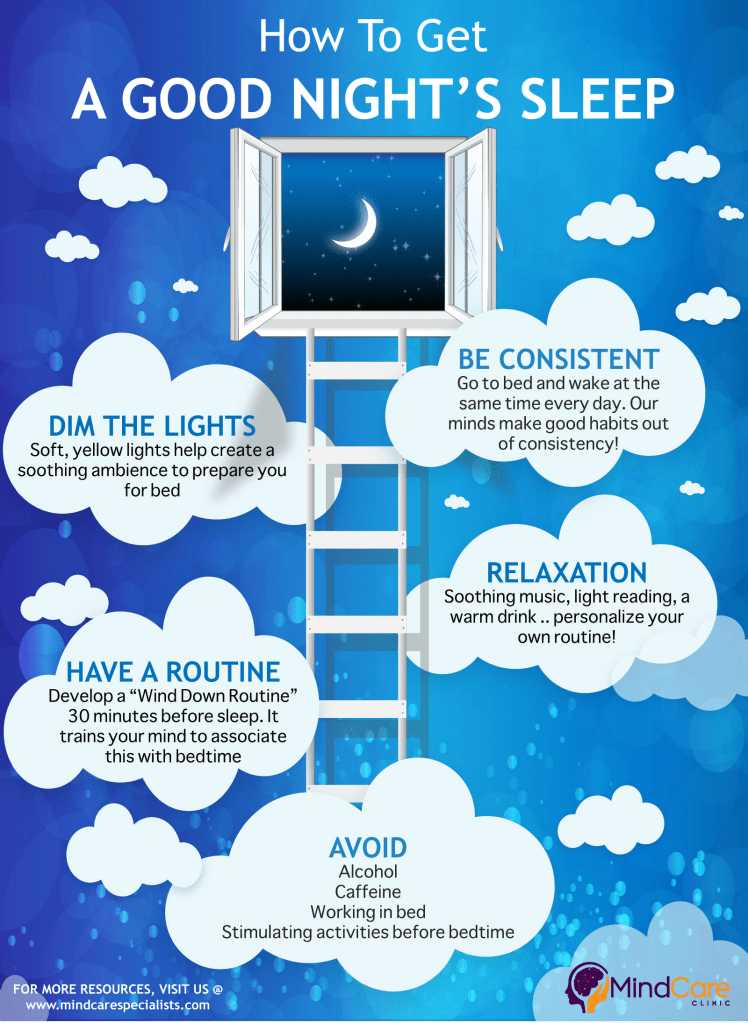
Invest in your sleep routine and sleep space.
Plan a getaway/trip you are looking forward to.
Take a daily media break, whether it be one day per week or even 30 minutes each day.
Go above and beyond. Set some aggressive goals. Aim to push yourself to go further.
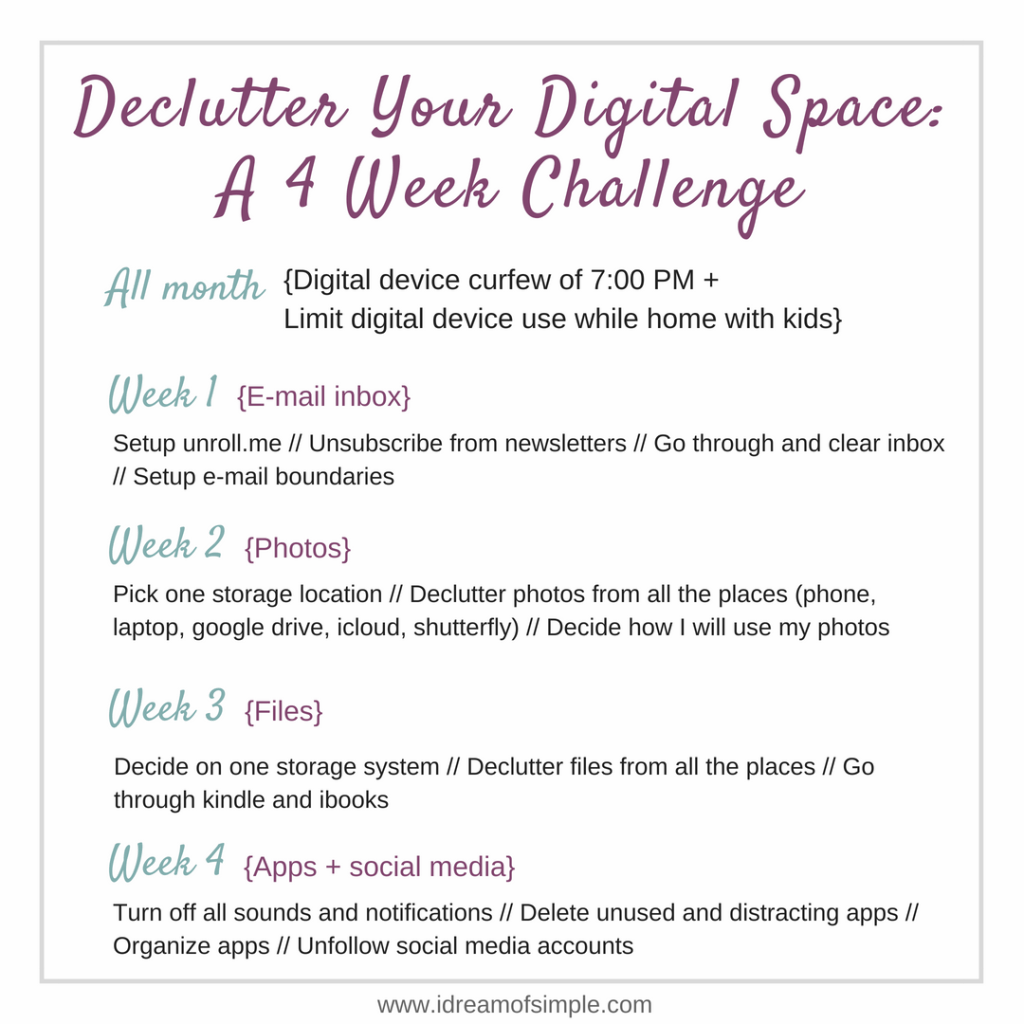
Mary’s Cup of Tea – Clean Up Your Digital Space(s) Before the New Year
Cancel the subscriptions that you are not using. Review your bank statements for recurring charges. Do you use all of the streaming services you are paying for? If you share the same address, you only need one Amazon Prime account. You can still have different payment methods.
Clean up your photos. The key to remembering your life is to delete photos you no longer need. Delete selfies if you are done with them.
Delete screenshots you don’t need anymore. Make organized albums if you need to reference them often.
Go through the Notes app on your phone. Make organized albums if you need to reference them often.
Clean up your e-mail. Unsubscribe from e-mail lists you don’t need, block senders, etc. Make a new e-mail for only important stuff! Use your old e-mail for shopping, subscriptions, etc.
Unfollow people on social media who make you feel bad about yourself or who influence you to buy things often.
Delete your downloads folder.
I am definitely going to start working on this before the new year, as I have over 39,000 unread e-mails (mostly marketing e-mails) and thousands of screenshots and photos on my phone.
Hot Girl Energy Podcast – things that have made my life better…habits to take into 2024
These notes are from the podcaster. These are not my personal habits.
Don’t drink coffee on an empty stomach.
Get ready for the day no matter what.
Retrain your hair to wash it 1-2x/week instead of every day.
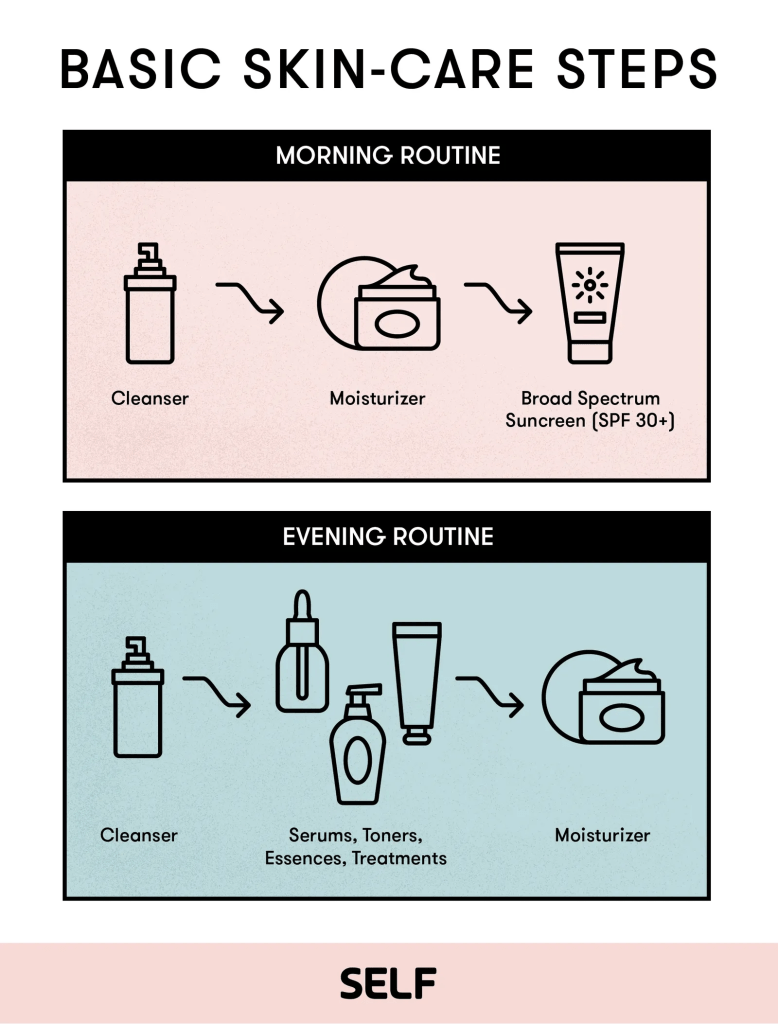
Create a skincare routine.
Body care – dry brushing, body lotion/oil, etc.
Go to bed earlier and wake up earlier to stay productive throughout the morning.
Add electrolytes into your daily routine.
Learn how to cook and make healthy, delicious meals.
Schedule workouts for the week in advance.
Drink less alcohol.
Here are some of my personal habits.
Some of my daily habits from 2023:
Read every day
Elevate and Lumosity apps (“brain games”) every day
Dishes before bed every day
One Line A Day every day
Podcast every day
One bottle of water each morning before work
Some of the best things I did for myself in 2023:
Turned off push notifications for e-mails and most apps
Started unsubscribing to some marketing e-mails
Took a leap and started a new job in an area I’m more passionate about
Started a wind-down routine before bed (reading instead of tv/electronics)
Started walking during lunch breaks when working from home
Attended monthly group hikes to meet new outdoorsy people and explore new areas
Started prioritizing a social life more, while still allowing myself to say no to some things
Finance: tracked all income and expenses each month and made necessary changes, moved funds to a high-yield savings account, rolled over retirement accounts to Vanguard (much lower expense ratio and more control over my investments), shopped around for home and auto insurance
Possible habit ideas for 2024:
Mental health:
No screen time after ___ p.m.
Spend 10 minutes outdoors each day
Sleep by ___ p.m. each night
Follow a morning and night routine each day
Write down three things you’re grateful for each day
Write affirmations each day
Schedule time for yourself each day where you won’t use electronics
Personal growth:
Read every day
Spend time learning something new each day
Listen to a podcast each day
Creativity:
Journal each day
Cook a new dish each week/month
Listen to a new song every day
Take one photo each day
Cleanliness:
Dishes before bed each day
Set a timer for 15 minutes each day and clean/organize
Put aside one thing to donate each day
Finances:
Save $___ each month
Set a budget and stick to it
Keep track of all income and expenses for the year
Physical health:
Walk ____ steps each day
Drink ___ oz of water each day
Keep a food log each day
Work out each day
Create a meal plan
As you consider habits for 2024, consider the following notes and questions from the book Life Worth Living:
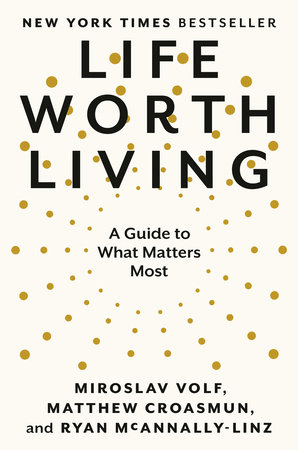
“Life Worth Living: A Guide to What Matters Most” was written by Matthew Croasman, Miroslav Volf, and Ryan McAnnally-Linz, three Christian theologians and professors at Yale who teach the popular class, Life Worth Living. This book served as a guide to defining and creating a flourishing life, contained wisdom from many minds and cultures, and cited 276 sources. This book was incredibly thought-provoking and life-changing.
**I highly recommend everyone reads this!** This book encourages readers to reflect on the following questions (and many more): What matters most? What is a good life? Does our daily routine have a justification? Is what we do getting us what we want? What do we really want? What is worth wanting? Who are you responsible to? What do you admire most about those you admire? What feelings do you think characterize a genuinely good life? What are my highest ideals and deepest values? How big is your forest? Who and what is in your forest? What is worth dying for? Are there people or ideals you hope you would be willing to die for?
Your life is worth living well. Your life is too valuable to be guided by anything less than what matters most.
I look forward to reading, learning, and sharing more with you soon! Soon I will be sharing a list of the books I read in 2023 as well as my plans for my blog in 2024!
My intention is to post a Thoughtful Thursday column each week and share some of the insights I have learned in the past week. Last week I skipped Thoughtful Thursday and decided to post a Thankful Thursday post on my social media in honor of Thanksgiving, so here are some of the things I’ve learned in the past two weeks:
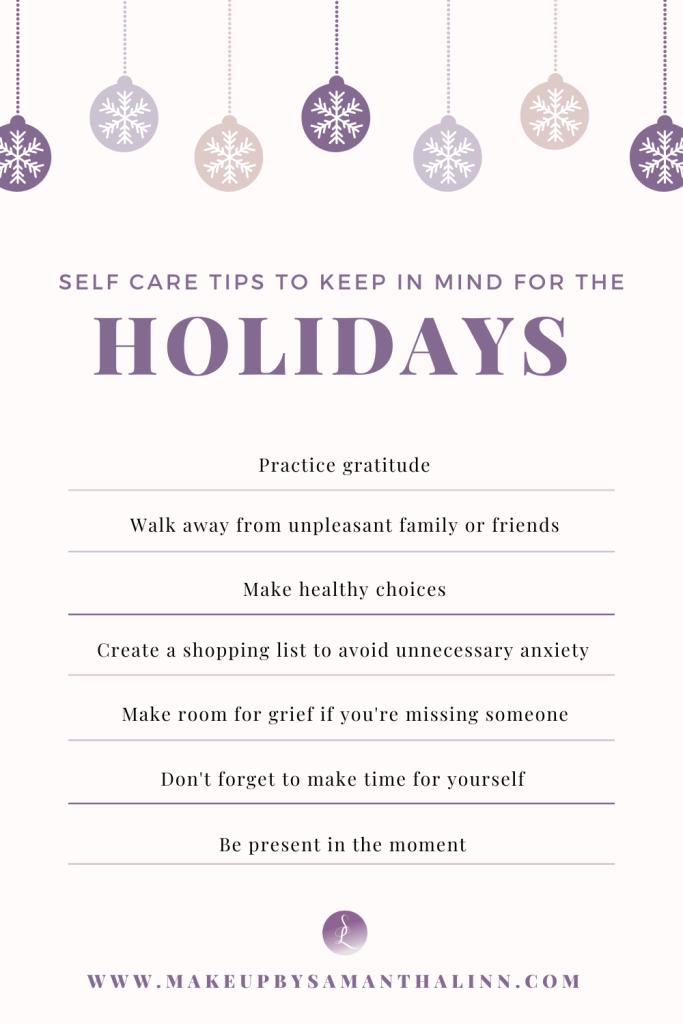
On Purpose with Jay Shetty – 10 Ways to Manage Stress & Anxiety During the Holidays
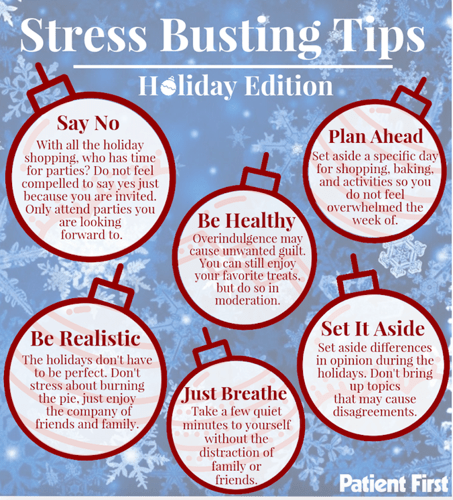
Remember you’re allowed to say “no.” You don’t need to go to every party or event. Say “no” ahead of time if you know you don’t want to go. Prioritize those that matter to you the most.
Take your paid time off. When you don’t take time off, you don’t take time to refuel.
Add some healthy meals and healthy habits between holiday events. We tend to stray from our normal eating patterns during holiday events.
Prepare yourself to know that some people and conversations will be triggering. Don’t waste your energy trying to convince them otherwise. Expect that it will happen so that you aren’t caught off guard. Expecting triggers is better than hoping they won’t happen.
Stop doing things just because someone else wants you to do them. The holidays are a time for you, and you should take time to do some of the things YOU want to do.
Make a budget for gifts!
Make sure you’re clear with people about what you want for gifts. As we get older, it becomes harder and harder for people to read our minds about what we want.
Plan ahead. Look at your calendar and make sure you aren’t going to be overwhelmed. Make sure you can be fully present at the gatherings you attend.
Make time to reflect this year. What do you want to add next year to make it better? What do you want to subtract next year to make it better?
Don’t abandon your self-care practices. The holiday season is often when we need self-care most to deal with the stress.
Mentally Stronger with Therapist Amy Morin – Stressful Holiday Season? How to Manage Your Mental Health
Design your holiday season. What kind of holiday season do you want this year? Figure out what your ideal holiday season would look like and how you are going to make this year ideal. Once you decide what you want the holidays to look like, you can decide whether to accept a holiday invitation or host a party.
Use the last year test to determine how important something is. Ask yourself, “what did I buy that person last year?” If you have no idea, it probably doesn’t matter.
Set time limits on certain activities. Ex: shopping for a gift, decorating, how much time you spend at a party.
Create a list of what not to do. Ex: don’t go over your budget, don’t keep holiday cookies in the house, don’t say yes to invitations you don’t want to accept, etc. You can make your own list.
Practice acceptance. You don’t have to force yourself to feel happy this time of the year. Keep going anyway without forcing happiness on yourself. You can also practice acceptance when it comes to dealing with others during the holidays (ex: political comments during the holidays).
Inside Out Money – End-of-year financial sh*it you need to do!
Max out your 401k or make sure you are maximizing your employer match. I know for many people, including me, contributing the maximum $22,500 is not feasible. Note that some employers allow you to contribute a dollar amount or a % of each paycheck, and some only let you contribute a dollar amount.
If you max out your 401k early, you are losing out on your employer’s match for the rest of the year.
Max out your Roth IRA contribution if you would like to ($6,500 for 2023).
Max out your HSA if you are eligible for one.
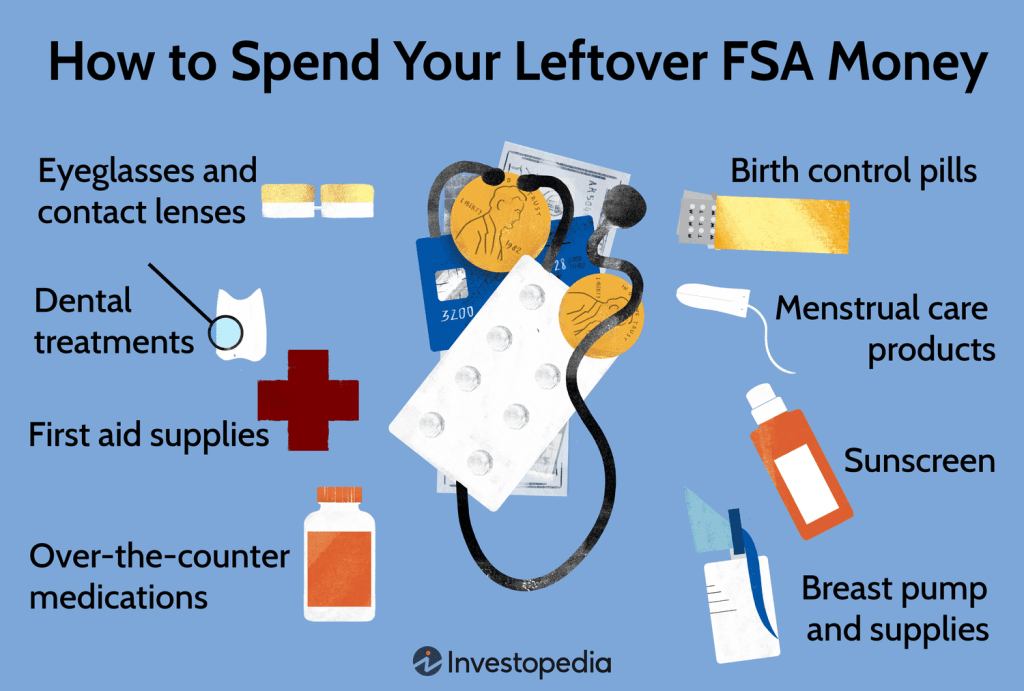
Make sure you use your FSA if you aren’t allowed to roll over any amount into the next year. Spend the money this year.
Choose your medical plan for the next year. If you’re married, decide which plan to go on (your own or your partner’s).
Schedule any doctor’s appointments that are still covered before the end of the year (physical, OBGYN appointment, dental visit, etc.)
Optimize around your deductible. If you’ve met your deductible and you need a colonoscopy or procedure, try to get it done this year.
Review your credit card rewards and ensure they don’t expire at the end of the year.
If you want to reduce your taxable income in 2023, look into charitable contributions.
Review your PTO balances and make sure you aren’t losing any that can’t be rolled over into the next year. Plan some of your days off for 2024.
It doesn’t mean you’ll become great, or get paid, or get famous, or get to quit your day job, or win the comparison challenge, or break new ground, or get the credit, or get noticed, or be respected in the field.
It might. It could. I hope it does. Hard work might turn into all of those things for you.
But if you keep working hard you will get better. The increments might be big or small and the word ‘better’ might evolve in its definition over time…but better is where you’re heading if you’re willing to work.“
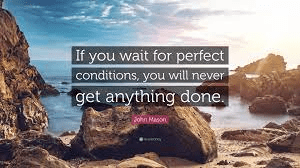
Somewhere, there is the ideal soil for growing mangoes. Or the best possible wave for surfing. Or the most romantic sunset for a proposal.
But it’s not right here and it’s not right now.
Our success has a lot to do with how we dance with conditions that aren’t quite perfect.
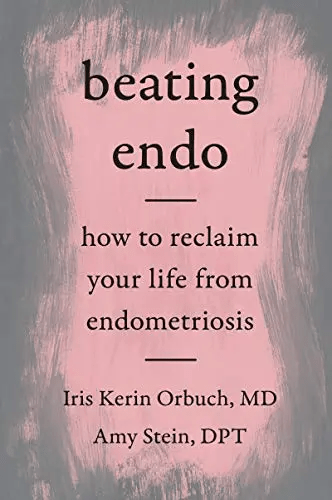
After twenty years of symptoms and pain, I recently had surgery and was diagnosed with endometriosis. I have been trying to educate myself about it since my diagnosis. This podcast and book were very educational!
The Women’s Vibrancy Code – Reclaiming Life from Endometriosis
Resources: Below the Belt documentary about endometriosis + Beating Endo book
The notes I am choosing to share are from both the podcast link and the Beating Endo book.
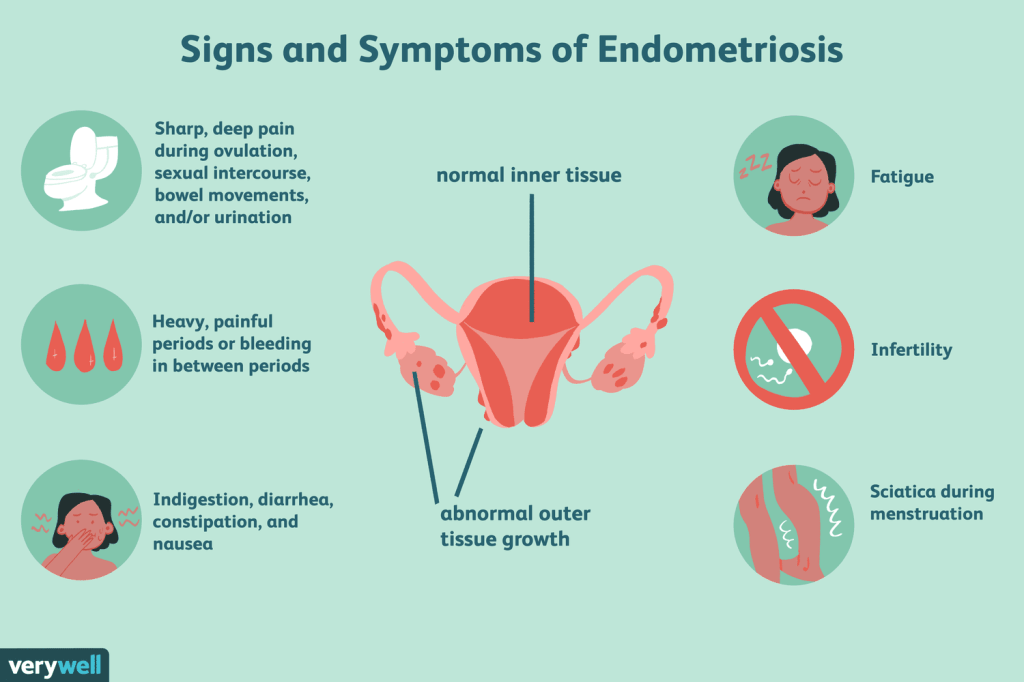
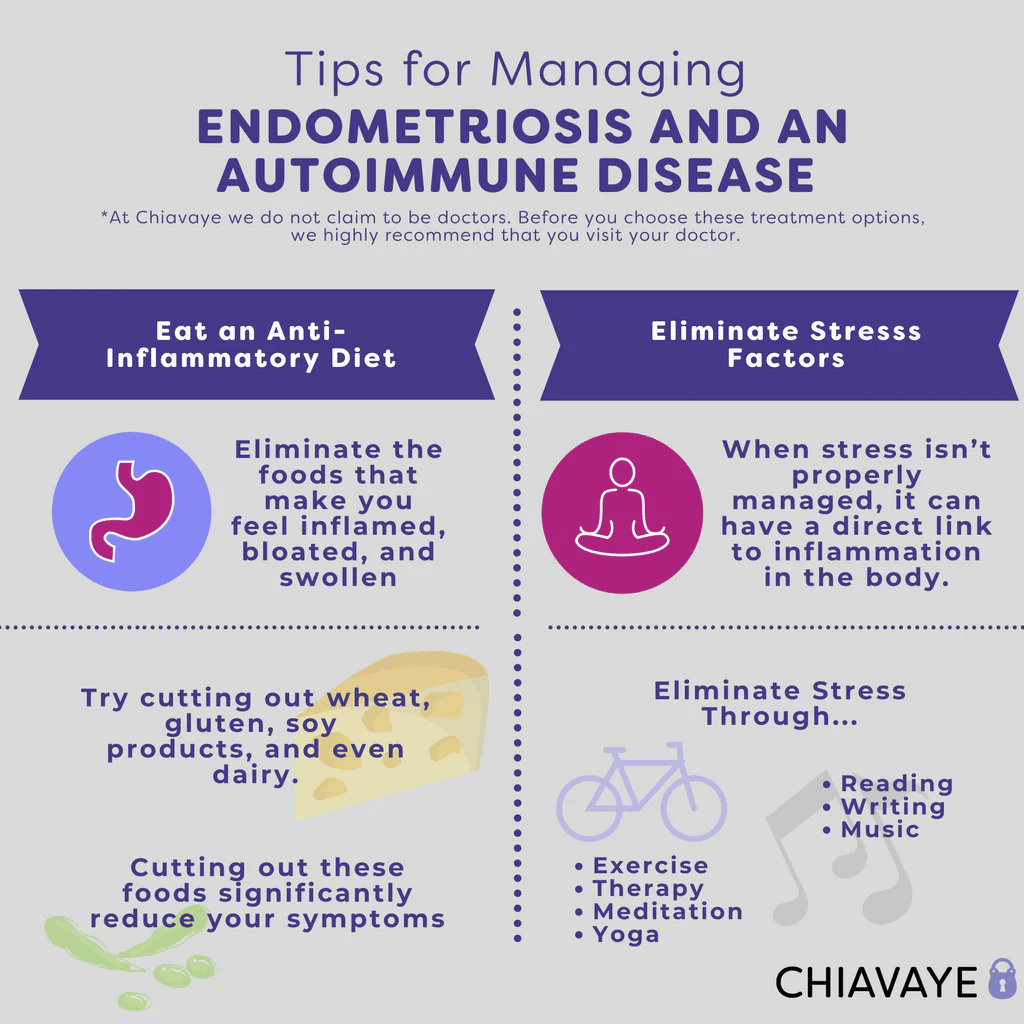
Symptoms: Endo can affect every organ system. Many are incorrectly diagnosed with IBS due to having constipation and/or diarrhea, bloating, and painful bowel movements. You can have painful periods, pelvic pain, penetration pain/painful sex, urinary frequency, UTIs, fatigue, exhaustion, and infertility. Everyone has different symptoms.
Endometriosis is an inflammatory disorder that impacts every part of the body. It causes gut issues, and those with endo have higher likelihood of autoimmune diseases.
Endometriosis is not just in the uterus. Endometriosis is external or outside of the uterus. Endo is not found in the uterus. Endometriosis is when we have endometrial-like cells outside of the uterus, and there’s no exit point for them.
Endometriosis can’t be seen on imaging unless there are cysts. True diagnosis is a surgical diagnosis. A positive diagnosis is possible only via analysis of excised tissue. Most doctors are doing the wrong surgery (ablation/burning of endometriosis). Excision (removing the endometriosis) is the recommended surgery.
9% of female fetuses have endometriosis!
If the mom, grandma, aunt, or sibling has endometriosis, that daughter/granddaughter/niece/sibling is 7-10x more likely to have endometriosis.
It’s never too late to reclaim your life. Many people are diagnosed in their 30s and 40s. You can’t cure endometriosis, but you can take steps to manage symptoms.
Any relief from symptoms does not achieve the eradication of your endometriosis. The disease may still progress even when you are treating its symptoms. The only treatment is to cut the endometriosis out of you, and it can grow back.
Treatment to manage symptoms (does not cure endometriosis): pelvic floor physical therapy, working on anxiety/stress reduction, and integrative nutrition (anti-inflammatory diet and identifying triggering foods). Endometriosis is inflammatory in nature, so we need to take steps to combat inflammation. The authors emphasized that pro-inflammatory categories of food should be eliminated: gluten, dairy, soy, sugar, and artificial sweeteners.
2 surgery options
Ablation – applying heat to endometriosis. This is surface level! It shrivels the inflammation, but it’s still there. This is the most common surgical method, but the least helpful.
Excision – physically cutting out and removing the endometriosis.
Some endometriosis specialists have done an extra fellowship in endometriosis. Make sure your diagnosis is done correctly and the specialist you’re seeing is actually trained in endometriosis. Make sure more than one biopsy is taken.
The Beating Endo book contained so much educational information and many resources!
Self Improvement Daily – “Happiness ‘when’ starts with happiness now.”
So many of us choose to postpone our happiness until another day. We tell ourselves:
I’ll be happy when… I get a promotion or earn more money.
I’ll be happen when… I get married.
I’ll be happy when… I go on vacation.
If you’re not finding ways to be happy right now with what you have, you’re not going to feel all that different when your circumstances change.
So instead of being “happy when”, what can you do to start being “happy now”? How can you set an intention, adjust your attitude, or otherwise change your mindset?
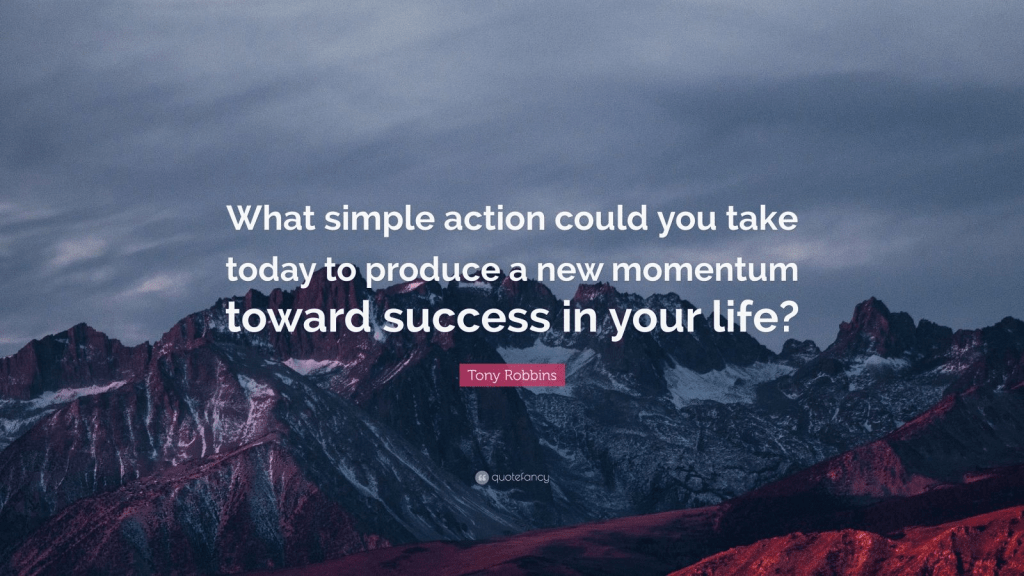
Tony Robbins says “happiness is progress”. If we have something that we’re improving at, it gives us something to be excited about, something to look forward to, and something to find purpose in.
I look forward to reading, learning, and sharing more with you soon!
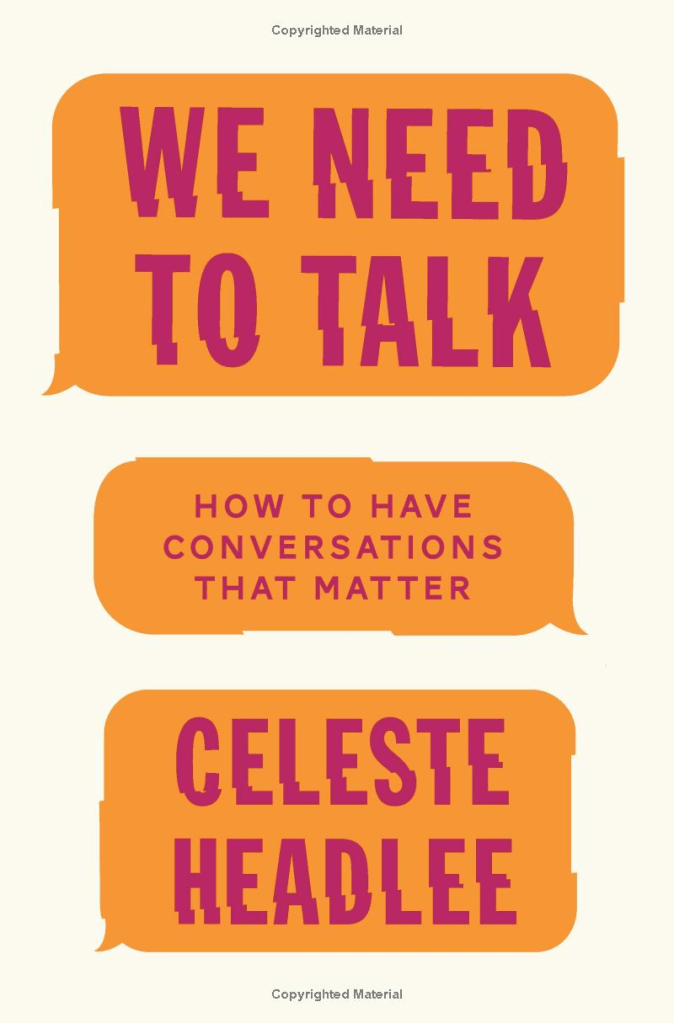
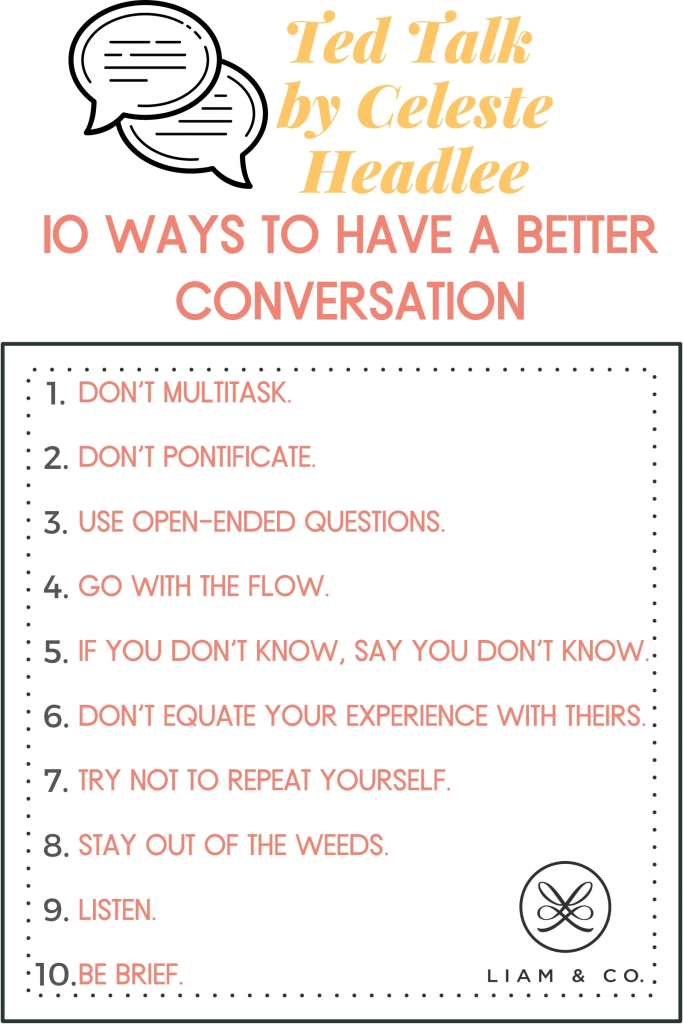
“We Need to Talk: How to Have Conversations that Matter” was written by Celeste Headlee, a public radio host, and based on the wildly popular TED Talk with more than 10 million views. This book contained strategies for effective communication. Here are some of my favorite takeaways.
Our reliance on screens for communication is detracting and distracting from our engagement in real-time talk.
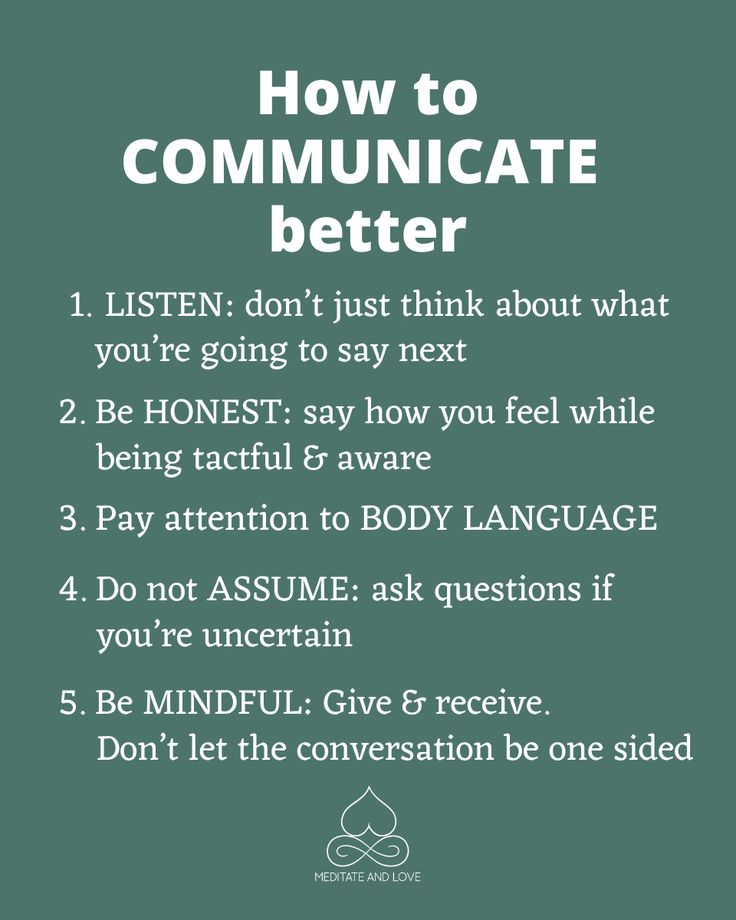
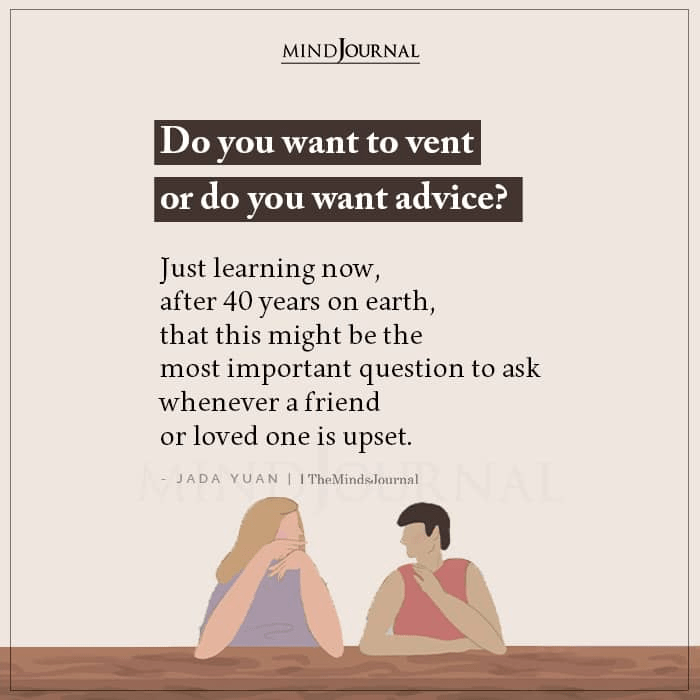
When communicating, explain what you want and what you expect and be honest. You first have to know what you want before you can express those expectations to someone else. Example: Are you looking to vent or to receive advice?
5 key strategies for a productive conversation:
Be curious. Assume that everyone has something to teach you. You already know what’s inside your own head. Open yourself to the surprise and discovery inherent in someone else’s perspective.
Check your bias. Consider how your thinking might be impacted if you’d been exposed to the same experiences.
Show respect. Listen to understand, not to endorse.
Stay the course. If a taboo topic comes up, don’t try to change the subject. Try to avoid getting frustrated and walking away. If you have nothing to say, just listen.
End well. Accept that you may not reach an agreement and that disagreement is okay.
Apologize. Apologizing acknowledges someone’s anger or sadness and validates feelings, drops their defensive posture and makes you no longer a threat, and prepares their brain to forgive.
Be there or go elsewhere. You must fully commit to a conversation or walk away. If you’re too distracted, admit that to both yourself and the other person. Be present or be gone. Don’t build your responses during your partner’s turn. Listen, be present, and put away your phone! Conversations require patience and focus.
The most effective method for learning to be present in conversation is meditation. Mindfulness meditation teaches you how to be aware of your body, your breathing, and your thoughts.
Think of conversations as a game of catch. Instead of shifting the conversation back to yourself, ask support questions that start with *who, what, where, when, why, and how.* Open-ended questions transfer control to the person responding.
Any time you enter a conversation, and especially when you are about to talk with someone who holds different beliefs than your own, ask yourself: What do you hope to get out of this exchange? What would you like to have happen at the end and how would you like to walk away from the other person? You can’t control what they take away from the conversation, but you can control what you get out of it.
Remember that everyone has something to teach you. Enter every conversation assuming you have something to learn.
Research shows that when we repeat something multiple times, it increases our chances of remembering it, but the benefit isn’t shared with the person listening. In fact, people are more likely to tune out after the first time you repeat something.
Just because someone doesn’t say “Yes, I hear and understand what you’re saying” doesn’t mean that he or she didn’t hear or understand you.
If you don’t know something, say “I don’t know.” These three words can strengthen the bond between you and another person and are a gateway to further exploration and growth.
Be aware of how you communicate. Don’t get into the weeds and give unnecessary details. Determine what information is essential and what is not. Don’t allow your random thoughts to derail the conversation.
4 ways to increase empathy: active listening, sharing in other people’s joys, looking for commonalities with others, and paying attention to faces.
The best way to understand people is to listen to them. Seek first to understand, then to respond.
This book was very informational and served as both a guide for new tips and gentle reminders for effective communication!
I look forward to reading, learning, and sharing more with you soon!
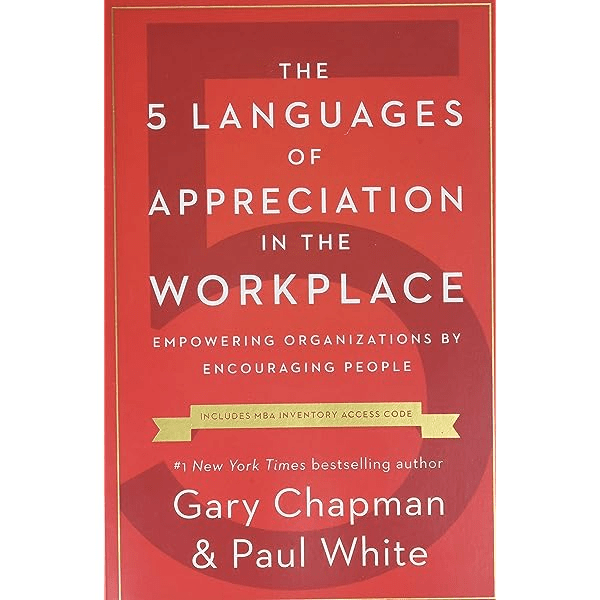
I read “The 5 Languages of Appreciation in the Workplace” written by Dr. Gary Chapman and Dr. Paul E. White as part of a book club I am in. Dr. Gary Chapman is the #1 New York Times best-selling author of “The 5 Love Languages.” Dr. Paul E. White is a psychologist, author, speaker, and consultant who helps make work relationships work. This book was very intuitive and fascinating!
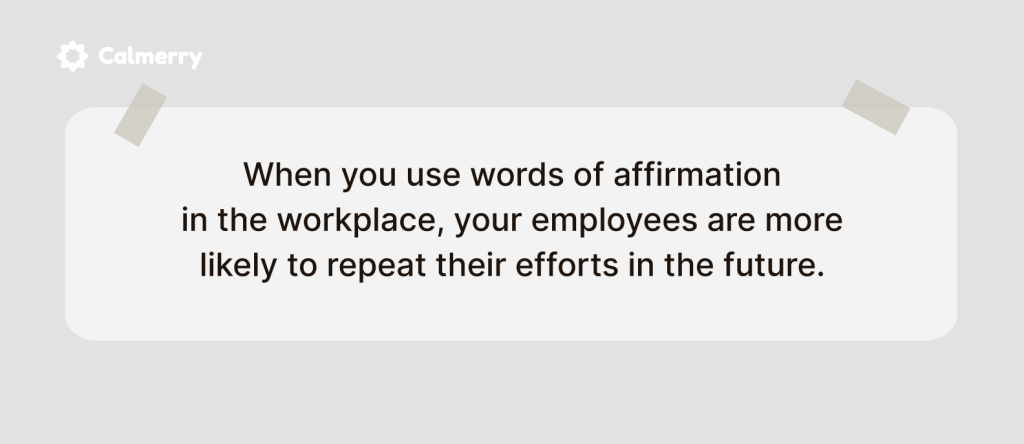
The number one factor in job satisfaction is not the amount of pay but whether or not the individual feels appreciated and valued for the work they do.
The reality is that what makes one person feel appreciated does not make another person feel appreciated. For recognition and appreciation to be effective, they must be individualized and delivered personally. Appreciation needs to be viewed as valuable to the recipient in order to have an impact. Employees are more likely to “burn out” when they do not feel appreciated or emotionally supported by their supervisors or colleagues.
The greatest need of a human being is psychological survival, to be understood, to be affirmed, to be validated, to be appreciated.
The 5 languages of appreciation in the workplace are:
Words of affirmation
Quality time
Acts of service
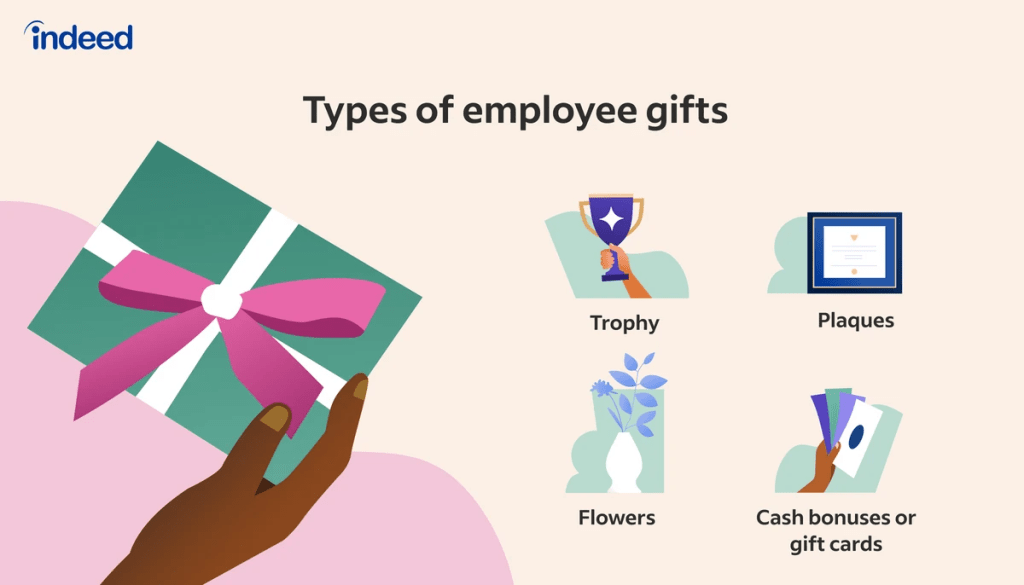
Receiving gifts
(Appropriate) physical touch
Words of affirmation (my #1 preferred language of appreciation):
Praise typically focuses on a specific task. Praise can also focus on verbally affirming positive character traits.
Common settings for words of affirmation: personal, one-on-one, praise in front of others, written affirmation, public affirmation
You can show words of affirmation by sending an e-mail with kudos, telling others about the good job someone is doing, giving a specific compliment, writing a handwritten note of appreciation, or giving encouragement.
Be aware that some people dislike public recognition!
Quality time:
Can consist of quality conversation, shared experiences, small group dialogue, or working in close proximity with coworkers
Because you have listened to them, they will also listen to you
Working closely with others can make work feel more valuable.
Ideas for quality time: go to lunch together, check in with people to see how they are doing, take a walk together, or get together for a sporting or social event.
Acts of service:
“Don’t tell me you care; show me”
Ask before you help, and if you’re going to help, do it their way. Clarify how they want it done.
Serve voluntarily, check your attitude (don’t complain), and complete what you start.
Receiving gifts:
You need to give gifts primarily to those individuals who appreciate them.
You must give a thoughtful gift that the person values. Ask questions about their interests (sports, restaurants, spa, theatre, etc.). Giving a coffee mug or pen with the company logo on it will not make the person feel valued.
Appropriate physical touch:
Appropriate physical touch may include handshakes, fist bumps, high fives, or pats on the back.
The question is not “Do you appreciate your coworkers?” The real question is “Do they feel appreciated?”
To figure out others’ language of appreciation, observe their behaviors, observe what they request of others, and listen to their complaints. The things about which an individual complains may reveal their primary appreciation language.
Another way to figure out others’ language of appreciation is to have them take the Motivating by Appreciation (MBA) Inventory.
Cues that your colleagues need to feel appreciated: discouragement, irritability and resistance, increased absenteeism and tardiness, cynicism and sarcasm, apathy and passivity, social withdrawal, and a negative work environment.
Be aware of your potential blind spot. The language of appreciation least valued by you will seldom be spoken. When a colleague’s least important language of appreciation is words of affirmation, no matter how much you praise them, it misses the mark.
One of the most common reasons we lack appreciation for coworkers is that we have unrealistic expectations of them. Don’t let differences influence you. In the work setting, the question is “Are they performing their job in a satisfactory manner?” If not, consider personal problems at home, inadequate training, or a lack of feedback/review/correction.
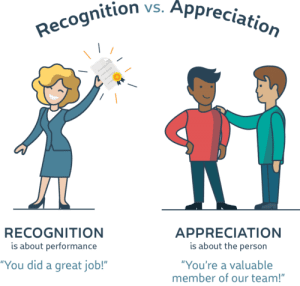
While recognition focuses primarily on performance or achievement, appreciation focuses on the value of the individual employee. Isn’t there a place for appreciation even when someone messes up?
Volunteering:
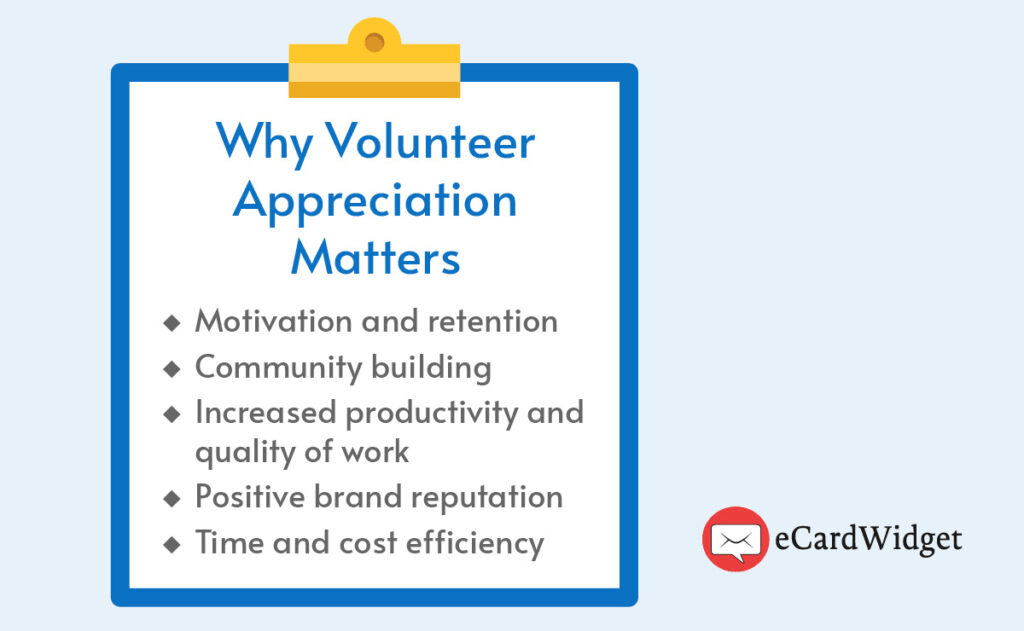
Low job satisfaction increases job turnover, turnover affects the quality of services delivered, and volunteers are more likely to quit because their efforts go unrecognized.
Many volunteers report the main reason they quit is a sense of isolation and lack of support from others.
People continue to volunteer to make a difference, socialize, and receive positive feedback.
Volunteers need input and perspective from their supervisors in order to understand the impact they’re truly having.
When a person receives an adequate supply of their primary language of appreciation, the secondary language may then become more important. It is reasonable to expect that an individual’s preferred language of appreciation may vary significantly over time in response to different life events, life stages, and the individuals with whom they are interacting.
I look forward to reading, learning, and sharing more with you soon!
My intention is to post a Thoughtful Thursday column each week and share some of the insights I have learned in the past week. Here are some of the things I’ve learned this week:
The Mel Robbins Podcast – If You Only Listen to One Podcast Today, Make It This One
Your life is a melting ice cube. We all believe that we have time, that at some point it will be the right time, that some day we will feel ready, that some day it will be perfect, but TODAY is that someday. You will waste your whole life waiting for someday to come. Your excuses are endless, but time isn’t.
Stop waiting. Stop wishing. Stop waiting for the right time, waiting for you to feel ready, waiting for this or that to happen, etc.
Make a commitment to yourself that you will get started with your goals and dreams.
How many times have you looked back on your life and thought “I wish I had started sooner, I wish I had done this thing, I wish I had done that thing.” The biggest regret you will ever have in your life is that you didn’t push through the fear and self-doubt to get started on the dreams you had and the life you wanted to create.
Time and energy are the most important. Pay attention to where you are putting your time and energy. Don’t use your energy on people who are draining your energy. How much time and energy are you putting into doing things that you don’t want to be doing instead of carving out and fighting for small amounts of time and energy to propel yourself forward? Working on your dreams and taking what you want in life seriously enough that you do the work to make it a reality is the greatest act of love that you could ever give to yourself.
Life is one long road trip. Every year of your life is a mile marker on your road of life. The road trip is a solo journey. You are driving alone. You control your life. Everybody else is driving their own car on their own solo journey. When you realize that the only person that is truly judging you right now and get out of your own way, it can spark a fire in your gut.
Acknowledge the thing that is on your list and in your heart. Take responsibility for doing whatever you can however you are capable to move toward it. Get serious about looking ahead instead of looking back.
Start directing your time and energy at the things that you want. Stop waiting to create what you want in your life.
Let today be the day that you get started. You can find 5-15 minutes per day to start chipping away and doing the work to figure out how to make some version of what you want a reality in your life.
Where you put your time and energy every single day will define the life you create.
You can change your life by waking up every day, being very clear about what you want, taking responsibility for creating it, and slowly redirecting your time and energy toward the things that you want. The more you direct your time and energy toward the things you want to create in your life and the relationships that give you energy back, you will be feeling and creating more love for yourself. Creating love from within can drive your life forward.
If you work at it, one day, you will wake up, that dream that you’ve been writing on your list year after year, will stop being a thing that you think about, and it will become what your life is centered around. You’re the one that made it happen day by day, week by week, month by month, year by year. What action are you going to take today? Make today that someday that you’ve been waiting for.
Eight Frugal Minutes – 5 Sneaky Ways to Save Money During the Week
Use cash-back apps for groceries and gas (Upside, Ibotta, Fetch, etc.)
Cook one new recipe each week so that you don’t eat out and so that you have fun trying something new.
Make your own coffee or tea.
Get movies and books from your local library instead of purchasing them.
Buy makeup from the drugstore instead of buying high-end brands.
Browse the clearance bins at your local grocer.
Walk or take public transportation instead of driving.
Focus on Marriage Podcast – Listening Before Criticizing
Ask two consecutive questions, such as “how was your day?” and then a follow-up question to make your spouse feel special and valued.
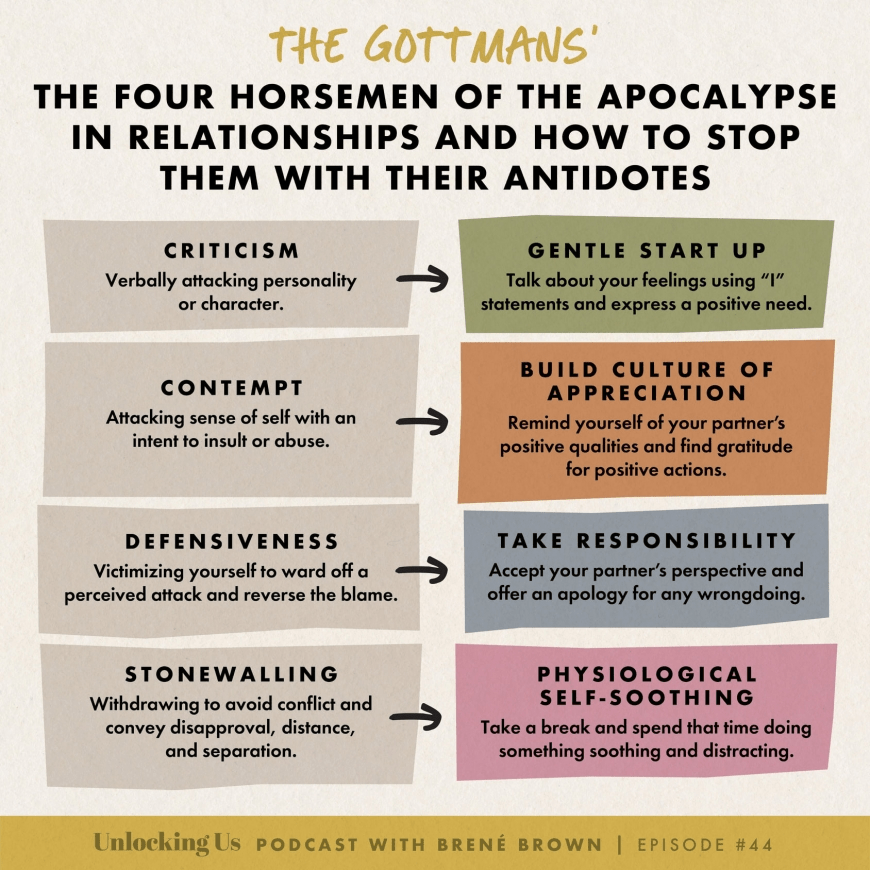
A major prediction for unhappiness, separation, and divorce is criticism, where one spouse is critical and complaining all the time. They’re never satisfied and are perfectionistic.
When criticism decreases, couples are more likely to connect and offer their hearts.
When you stop criticizing and focus instead on what your spouse is doing, how your spouse is showing up, and what you value about your spouse, you will start listening better and have a better connection.
Listen to each other without criticizing.
The Journal – The Twinkie: From Bankruptcy to Billions
Twinkies have been on store shelves since 1930! Originally the price was 2 twinkies for 5 cents.
The creator, James Dewar, passed a billboard for Twinkle Toes Shoes and shortened that into Twinkies. He thought it would be a fun name for kids.
James Dewar was already making cupcakes and other pastries under the Hostess brand. In his first version of the Twinkie, he used a banana filling because bananas were easy to find year-round. During World War 2, bananas were rationed, so he replaced them with a vanilla filling, which stuck around.
They were particularly popular with kids and often put in their school lunch boxes.
Dewar himself ate several Twinkies each day until he died at age 88.
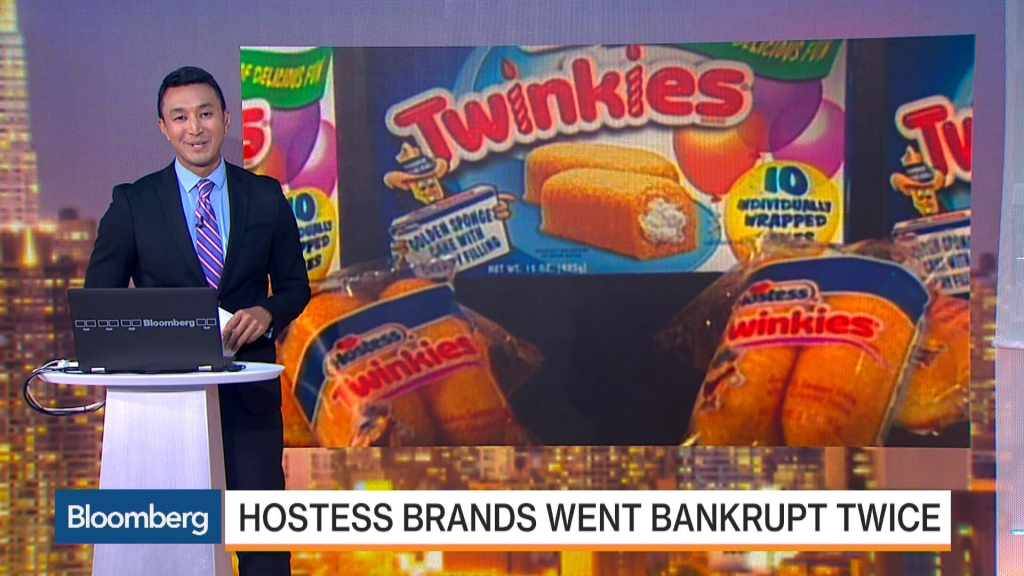
Hostess started struggling in the 1990s as consumers grew more health-conscious (low-carb and low-calorie diets). By 2004, the parent company was deeply in debt and declared bankruptcy. In 2009, a private equity firm saved the company by buying its assets for 130 million dollars. Salvation didn’t last long, and they wound up filing for bankruptcy again in 2012.
Through the first bankruptcy, people could still buy Twinkies at the store. After the second bankruptcy, Hostess stopped making Twinkies. In 2012, consumers frenzied to get what could be their last boxes of Twinkies.
Two private equity firms acquired a slew of Hostess snacks for 400 million dollars. They had fewer factories and employees. Twinkies returned to supermarkets in 2013. The shelf life was only 26 days. Hostess later used an enzyme that controlled the moisture in food and helped prevent it from molding, which extended the shelf life to 65 days.
The COVID-19 pandemic was huge for Hostess. People were staying home and snacking more.
Hostess sold itself to Smucker in a 5.6 billion dollar deal in September 2023.
I’ve read two books in the past week:
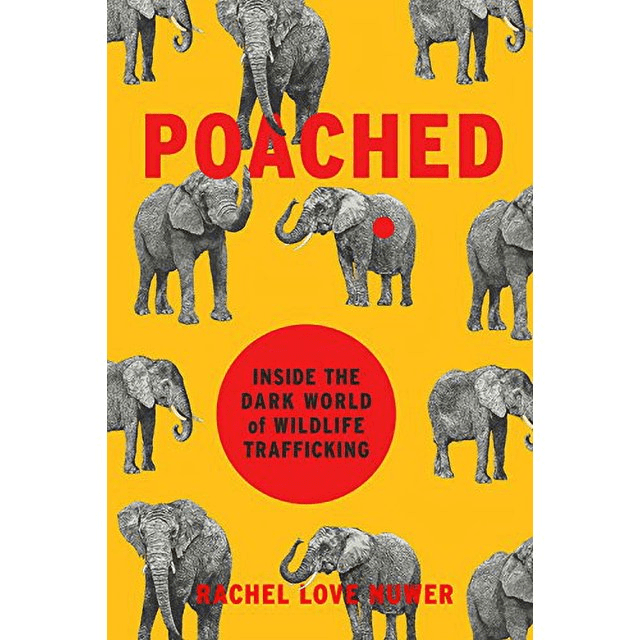
“Poached: Inside the Dark World of Wildlife Trafficking” was written by Rachel Love Nuwer, an award-winning science journalist who regularly contributes to the New York Times, National Geographic, and other publications. This book was disturbing, intriguing, and educational, and Rachel’s investigative reporting took her across a dozen countries, where she explored the forces driving demand for animals and their parts, the toll that demand is causing, and those who believe it is not too late to stop the impending extinctions. Here are a few key points:
More than 1,000 rhinos are killed for their horns each year.🦏 There are more tigers in captivity than the wild, many of which are raised for their body parts and meat like cattle. 🐅 Pangolins have become the world’s most trafficked animal, and nearly 500 prescriptions in traditional Chinese medicine call for pangolin scales, skin, meat, or blood, despite little evidence of any medicinal value! Elephant tusks are often sought for ivory, and bears are sought for their bile.
Around 1,500 animals are included in the traditional Chinese medicine pharmacopeia, and of the 112 most commonly used species, 22% are endangered!
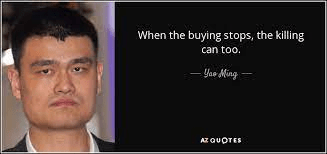
Wildlife crime is typically a pyramid-shaped hierarchy: poachers form the base, followed by local/national/international couriers/buyers/exporters, then the consumers at the very top. Many poachers argue that “when the buying stops, the killing can too.” Overall, sanctions and legislation are not enough, and they are rarely enforced for wildlife crime!
“Ikigai: The Japanese Secret to a Long and Happy Life” was written by Hector Garcia and Francesc Miralles. The authors interviewed the residents of Okinawa, Japan, the village with the highest percentage of 100-year-olds. I learned SO much, but here are their main findings of traits that promote longevity:
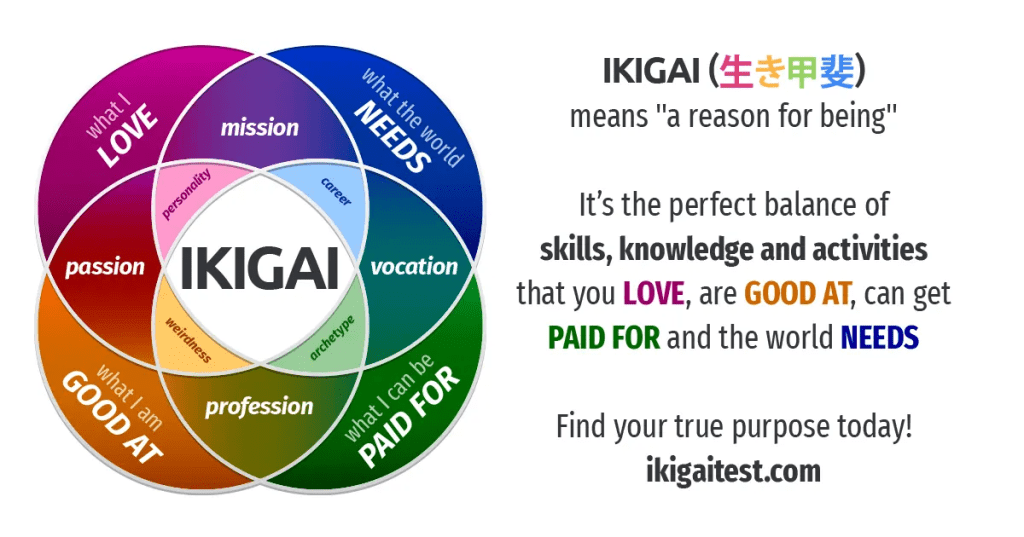
Find your ikigai – your reason for living – the place where passion, mission, vocation, and profession intersect. Having a clearly defined ikigai brings satisfaction, happiness, and meaning to our lives. Be resilient, have a positive attitude, and manage your emotions.
The keys to longevity are diet, exercise/movement, finding a purpose in life (an ikigai), and forming strong social ties. The Okinawan diet is rich in tofu, sweet potatoes, fish, vegetables, antioxidants, and rice. Stop eating when you feel 80% full/almost full but you could eat more! Those who live the longest aren’t those who do the most exercise, but those who move the most. Nurture your friendships every day. Find your flow, keep your mind busy, and try to learn something every day.
Be mindful about reducing stress, participate in social or leisurely activities, get 7-9 hours of sleep, limit junk food, don’t worry, live an unhurried life, be optimistic, and cultivate good daily habits.
I look forward to reading, learning, and sharing more with you soon!
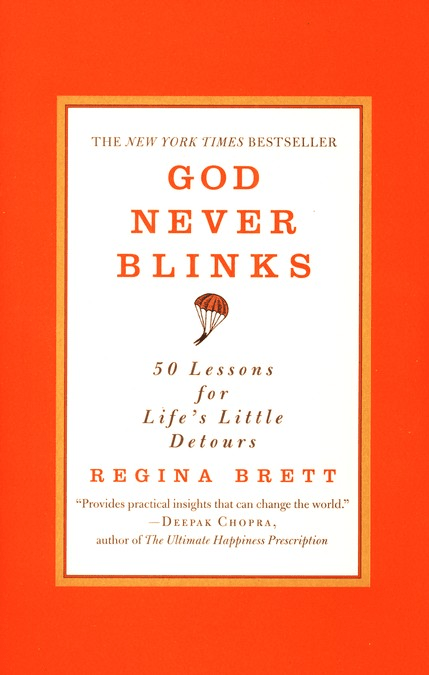
“God Never Blinks: 50 Lessons for Life’s Little Detours” was written by Regina Brett, and most of these essays originally appeared in the Plain Dealer (Cleveland) or the Beacon Journal. The author always thought that God must have blinked when she arrived because she ended up confused by nuns at age 6, became a lost soul who drank too much at 16, an unwed mother at 21, a college graduate at 30, a single mother for 18 years, a wife at 40, and got cancer at 41. Here are some of my favorite lessons from the book:
Reframe your mindset. Instead of saying you “have to,” say you “get to.” “I get to go to work today.” “I get to get groceries.”
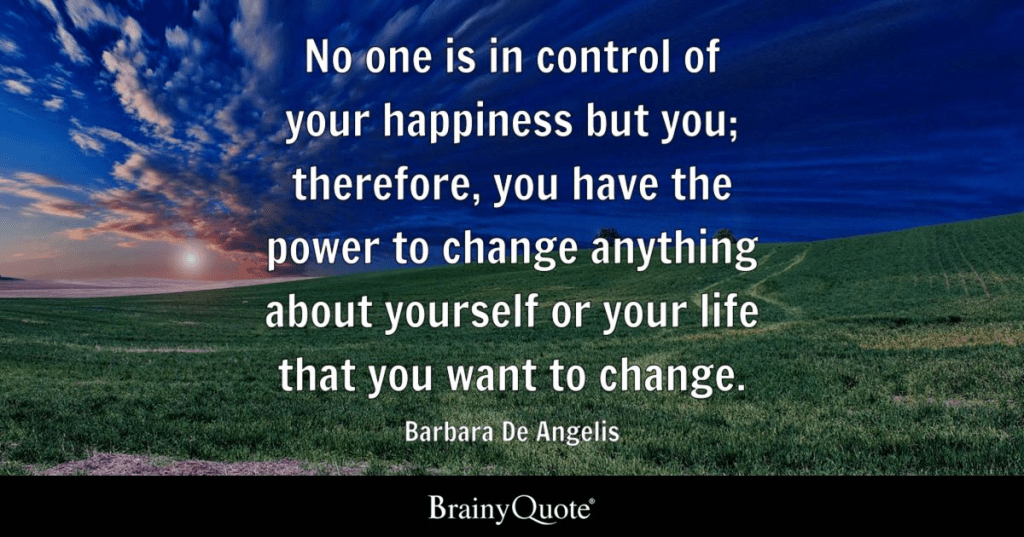
No one else is in charge of your happiness. You are the CEO of your joy. It takes work to rewire your thoughts about yourself, but when you do, everything in your life changes for the better, especially your most intimate relationships. Get up, dress up, and show up. Do the best you can do today.
Living an abundant life doesn’t mean winning the lottery, marrying rich, or getting a raise. It starts with a raise in consciousness and spreads from there. It starts with knowing that what you want isn’t always what you need and often isn’t what you truly want. It starts with making smart choices that lead to long-term gratification.
When an argument has reached an impasse, get comfortable with saying “You aren’t going to convince me and I’m not going to convince you, so let’s agree to disagree.”
“How will I ever believe that I am good enough?” – By helping others believe that they are good enough.
Get rid of anything that isn’t useful, beautiful, or joyful. Decluttering forces you to let go of the past and creates an opening for the future. When you finally let go of the person you used to be, you get to discover the person you are now and the person you want to become.
Ground rules for relationships – use the mnemonic SAFE:
Secret – can the relationship pass public scrutiny? If a relationship has to be kept a secret, you don’t belong in it.
Abusive – does it harm or degrade you or your children in any way?
Feelings – are you in the relationship to avoid painful feelings? Is it a mood-altering relationship?
Empty – is it empty of caring and commitment?
Stay away from unavailable people, keep no secrets, beware of addictions, be the real deal, tell the world what you want in a partner, ignore the wrapper (a tender heart will outlive the washboard tummy), and create a greater you.
How not to write (the condensed version): wait until you have children, wait until they go off to college, wait until you have two hours of uninterrupted time to write, wait until you retire, wait until a doctor says you have six months to live, then die with your words still inside of you.
It’s never too late to have a happy childhood. Go for it. This one is up to you.
3 simple steps can change your life:
Choose something you need to say no to – no to an unhealthy relationship, projects that don’t need to be done by you, people who ask you to donate your time and talent to one more committee or commitment.
Choose one things you need and want to say yes to. Say yes to what enhances your life and the world around you.
Share those two things – the yes and no – with your biggest cheerleader.
If you don’t ask, the answer is always no. You already gave it to yourself. You don’t ask, you don’t get.
A 40th birthday gift idea for a spouse was to gather 40 letters/cards about how he/she impacted their lives. Too often we don’t hear what we mean to others until it is too late. If you keep your friends high on the priority list, even if you lose your health, you’ll still have what matters most. Your job won’t take care of you when you’re sick, but your friends will. Stay in touch with them.
Read the Psalms. No matter what your faith, they cover every human emotion. They offer praises as well as curses, consolation, desolation, boasts of strength, and cries of weakness and also reveal the many faces of God: powerful rock, shepherd, companion, comforter, provider, host, creator, judge, advocate, and deliverer.
Have a personal mission statement. The author’s personal mission statement is the Prayer of Saint Francis of Assisi.
I look forward to reading, learning, and sharing more with you soon!
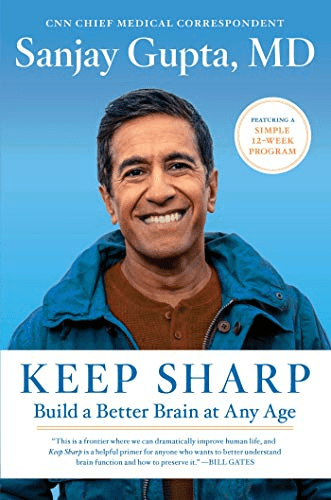
“Keep Sharp” was written by Sanjay Gupta, a neurosurgeon, chief medical correspondent for CNN, and four-time New York Times bestselling author once named as one of the ten most influential celebrities by Forbes Magazine. Sanjay is also the host of the Chasing Life Podcast and is widely regarded as one of the most trusted reporters in the media. His book was an educational, detailed, and fascinating read about the gimmicks and myths of brain health and revealed evidence-based practices along with guidance and insights for those already experiencing cognitive decline or caring for someone with dementia.
In order to best take care of your body, you have to first take care of your mind.
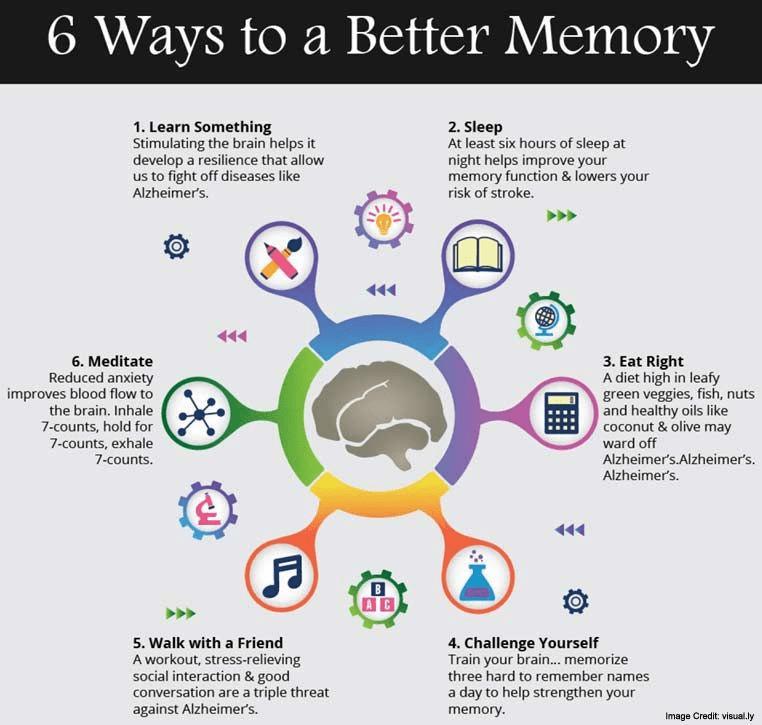
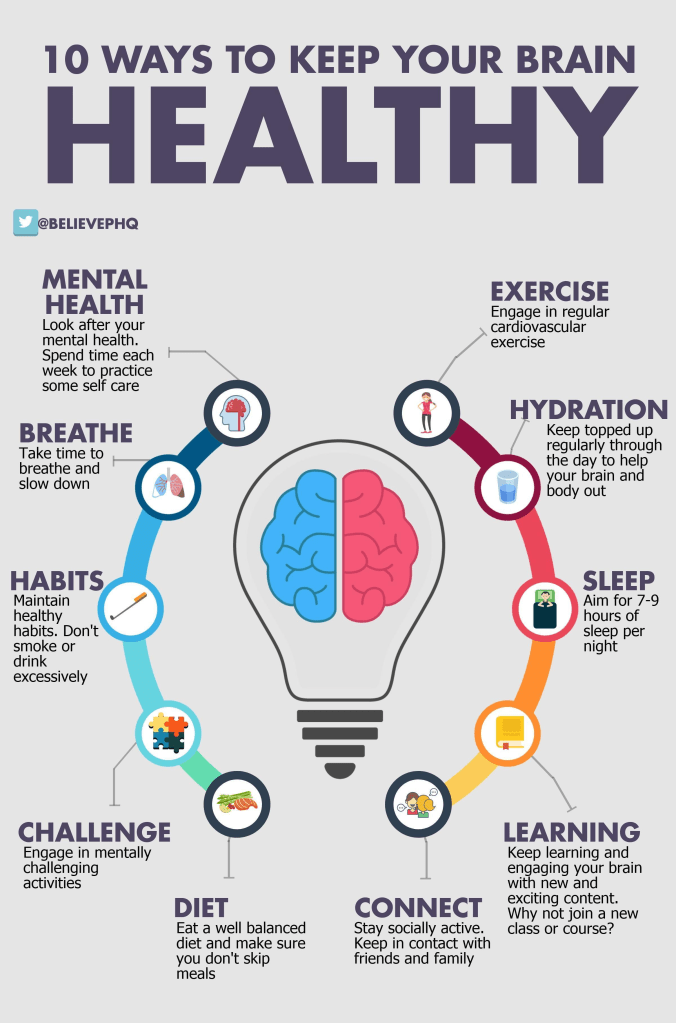
Cognitive decline is not inevitable! The five pillars of brain function include:
exercise and movement
sense of purpose, learning, and discovery
sleep and relaxation
nutrition
social connection
The single most important thing you can do to enhance your brain’s function and resiliency to disease is to exercise. Move more and keep a regular fitness routine. Exercise improves digestion, metabolism, body tone and strength, and bone density. It also supports emotional stability, staves off depression and dementia, and increases self-esteem and sense of well-being.
Steps to improve brain health:
Move more throughout your day and build an exercise routine into your life.
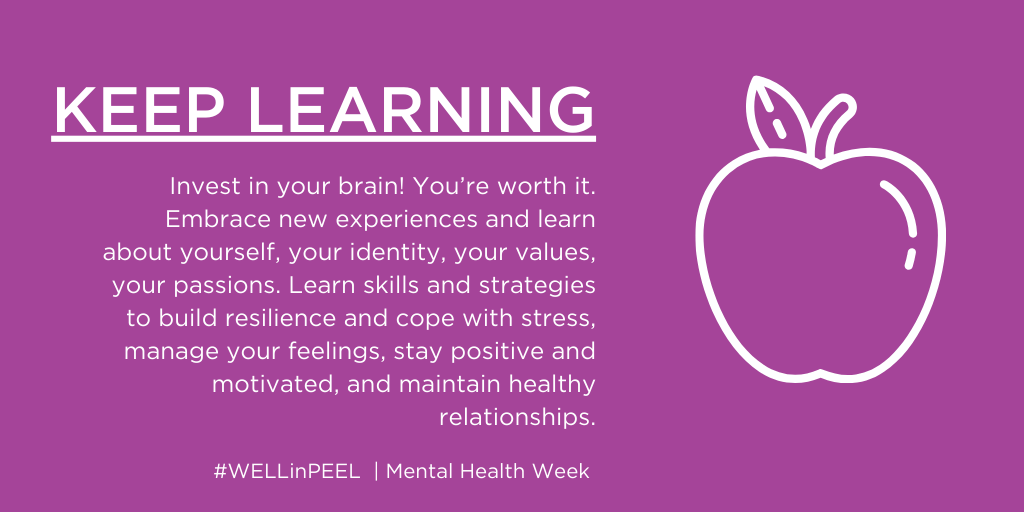
Find new ways to stimulate your brain through learning and challenging your mind.
Prioritize getting restful, routine sleep at night and incorporate daily de-stressing practices into your routine.
Introduce a new way of nourishing your body.
Connect authentically with others and maintain a vibrant social life.
Follow the S.H.A.R.P. diet:
Slash the sugar and stick to the ABCs
Hydrate smartly – “drink instead of eat” when you think you’re hungry.
Add more omega-3 fatty acids from dietary sources (seafood, nuts, and seeds). Get your omega-3 from food, not supplements.
Reduce portions.
Plan ahead. Don’t get caught starving or resorting to junk food. Eat a wide variety of different colored vegetables to get a more diverse array of nutrients.
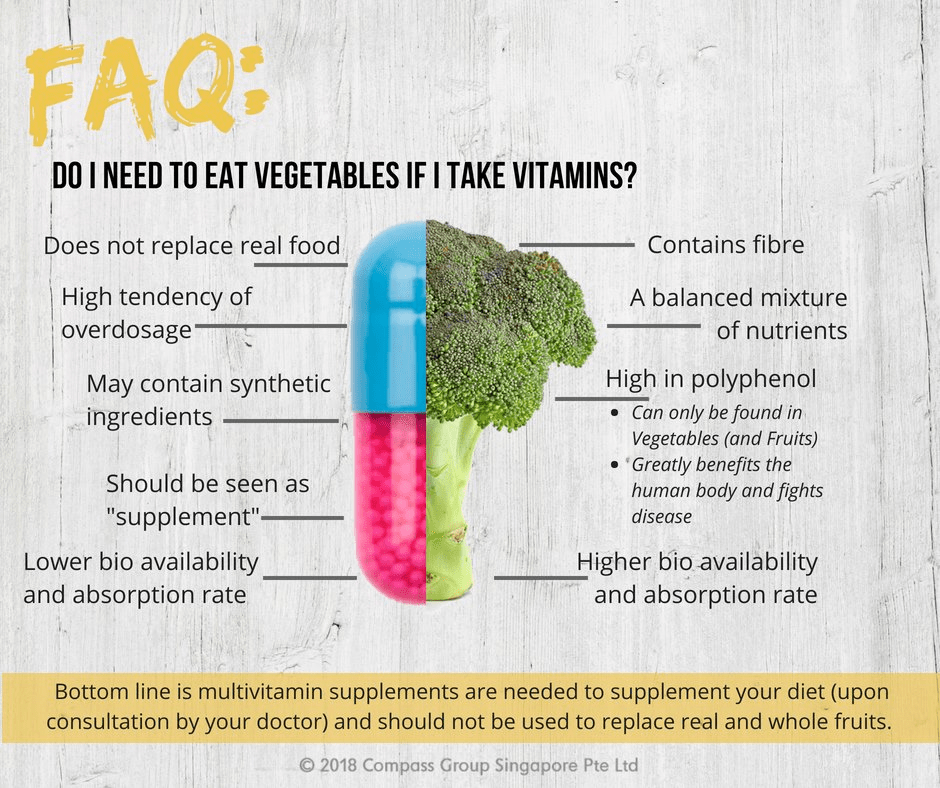
Supplements do not take the place of real food, and some can be harmful/largely unregulated. Also, no known dietary supplement improves memory or prevents cognitive decline or dementia.
Enjoying close ties to friends and family, as well as participating in meaningful social activities, may help keep your mind sharp and your memories strong. Loneliness has been shown to accelerate cognitive decline in older adults. Volunteer, join social clubs, and maintain connections.
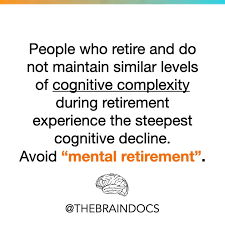
Delay retirement as long as possible. When you do retire, find activities that are joyful and stimulating and stay engaged. Maintain a sense of purpose by continuing to learn, discover, and complete complex tasks. Built and sustain your cognitive reserve by maintaining demands on your brain that keep it thinking, strategizing, learning, and solving problems.
“Brain games” are not always effective at slowing cognitive decline. Speed training games are effective at putting off dementia. I have used the free versions of the Lumosity and Elevate apps for the past year or so and have really improved my cognition and skills.
People with a sense of purpose are less likely to develop cognitive impairment. Learn something new, teach, volunteer, or do whatever you find joyful, satisfying, and meaningful.
I want to live my life like an incandescent lightbulb. Burn brightly my entire life, and then one day suddenly go out. We want the same for our brains, and anyone can built a better brain at any age.
Sanjay Gupta
It is the skin that contains pain fibers that must be dulled to perform brain surgery; the skull and the brain have no sensory receptors!
The human brain comprises about 2.0% to 2.5% of the body’s total weight but uses 20% of its total energy and oxygen intake.
Memory is fundamentally a learning process – the result of constantly interpreting and analyzing incoming information. Every time you use your memory, you change it.
The patterns of activity of neurons in sensory areas can be altered by patterns of attention. Moment by moment, we choose and sculpt how our ever-changing minds will work. We choose who we will be in the next moment in a very real sense, and these choices are left embossed in physical form in our material selves.
The brain remains plastic throughout life and can rewire itself in response to your experiences. It can also generate new brain cells under the right circumstances.
There are 6 senses processed in the brain:
proprioception (a sense of where your body parts are and what they’re doing)
equilibrioception (a sense of balance – tells you if you’re sitting, standing, or lying down)
nociception (sense of pain)
themo(re)ception (sense of temperature)
chronoception (sense of the passage of time)
interoception (sense of your internal needs, like hunger, thirst, or needing to use the bathroom)
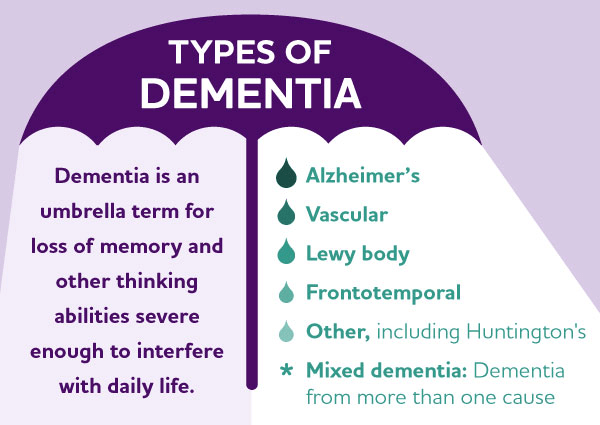
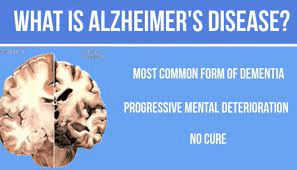
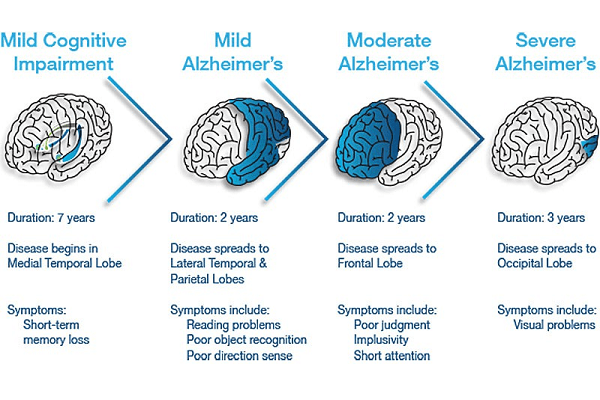
Dementia is not a single disease in itself; it encompasses several underlying diseases and brain disorders that impair memory, communication, and thinking. Alzheimer’s disease is the most common form of dementia, comprised of 60-80% of dementia cases and 1 in 9 Americans age 65 and older. There is also a correlation between diabetes and Alzheimer’s disease.
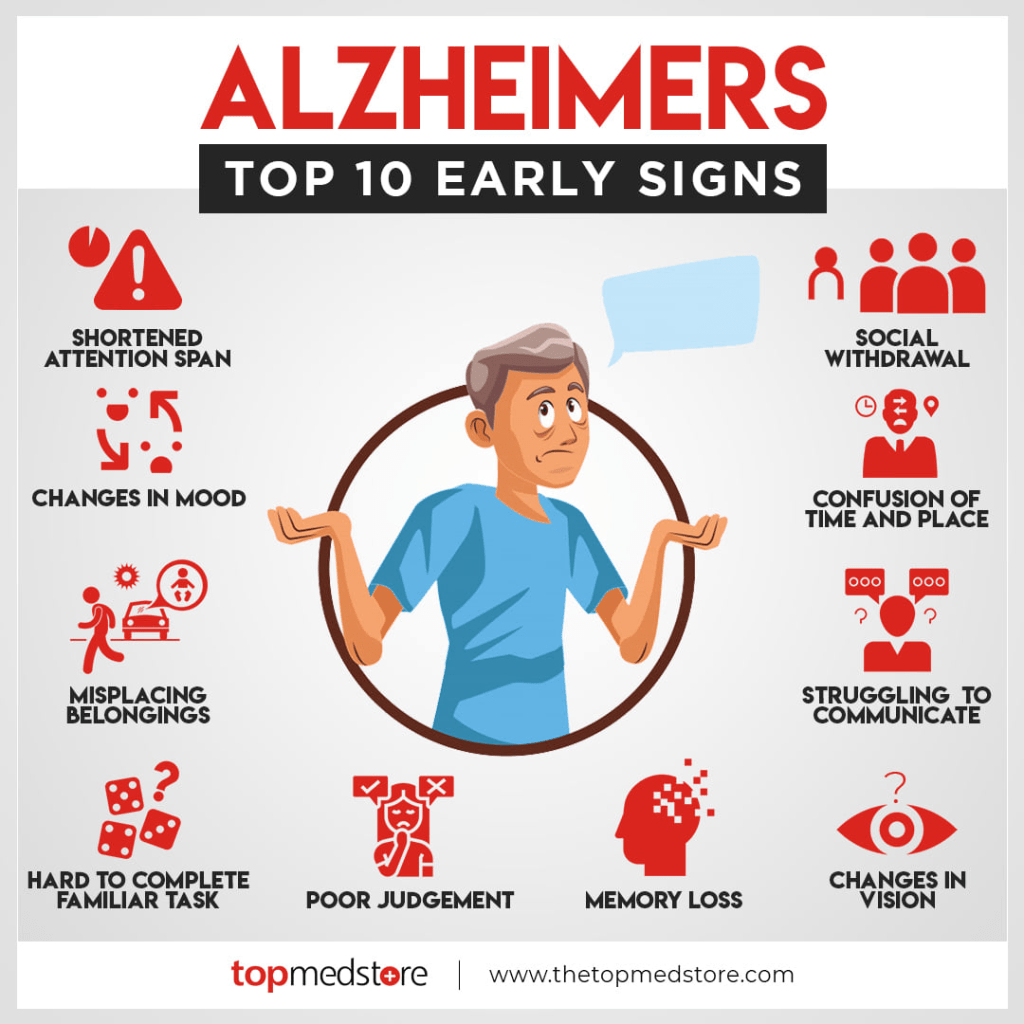
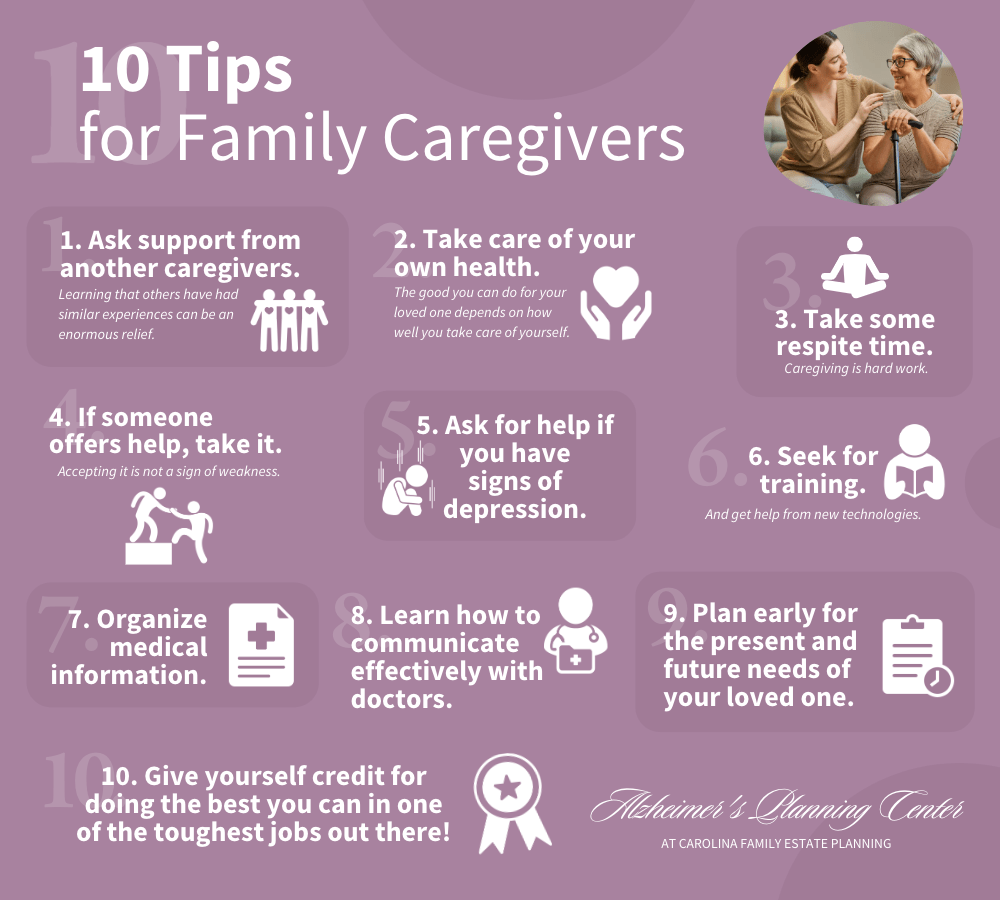
This book contained so much information about Alzheimer’s symptoms, diagnosis, treatment, and resources. Here is a very condensed version:
Alzheimer’s disease starts 20-30 years before any symptoms develop. This book covered the stages of Alzheimer’s, diagnosis tools, treatment options, and resources for patients, families, and caregivers. There is no cure for Alzheimer’s and the disease creates a devastating emotional, financial, and physical toll on the families of those who are diagnosed with it.
Stages of Alzheimer’s disease and top 10 early signs of Alzheimer’s
Drugs that may increase the risk of dementia: anticholinergic antidepressants, antiparkinson drugs and antihistamines, antipsychotic drugs, drugs for overactive bladder, and antiepileptic drugs.
Diagnosis tools: The Alzheimer’s Disease Assessment Scale – Cognitive Subscale (ADAS-Cog), the Mini-Mental State Exam, the Mini-Cog test, the Self-Administered Gerocognitive Examination (SAGE)
Resources: AARP, The Cleveland Clinic’s Lou Ruvo Center for Brain Health, the Dementia Action Alliance, the Family Caregiver Alliance, the Mayo Clinic’s Alzheimer’s Disease Research Center, the Memory Disorders Program at New York-Presbyterian/Weill Cornell Medical Center, the National Institute on Aging, UCLA’s Alzheimer’s and Dementia Care Program
After diagnosis: Find support and educational programs in your local area, find early-stage social engagement programs, find clinical trials matching your needs, keep your home safe, make a legal plan (POA/wills/trusts/advance care directive), make a financial plan (organize assets/debts/insurance policies/benefits), and build a care team.
Treatment: 2 drugs that temporarily improve symptoms of memory loss and problems with thinking and reasoning, both of which lose effectiveness as the disease progresses: cholinesterase inhibitors and NMDA receptor antagonists
When it comes to a person’s experience with dementia, the most important person is the caregiver. The majority of people with dementia in the U.S. live in their home, and for approximately 75% of these individuals, family and friends provide their care – mostly spouses or their children, many of which are unpaid. Women face difficulty because they often need to take care of their parent(s) and children. Caregivers of spouses with dementia are 6x more likely to develop dementia.
I highly recommend this book for anyone wanting to prevent cognitive decline or wanting to learn more about Alzheimer’s or dementia!⭐⭐⭐⭐⭐
I look forward to reading, learning, and sharing more with you soon!


 This book will change your life.
 I took away so much from this book and will share more about it on my blog sometime.













 Instead of shifting the conversation back to yourself, ask support questions that start with *