Thoughtful Thursday posts, Uncategorized

Thoughtful Thursday – January 25, 2024

Before Breakfast – Bill your time for a week
Focus on Marriage Podcast – Maintaining Joy When Your Plate is Full
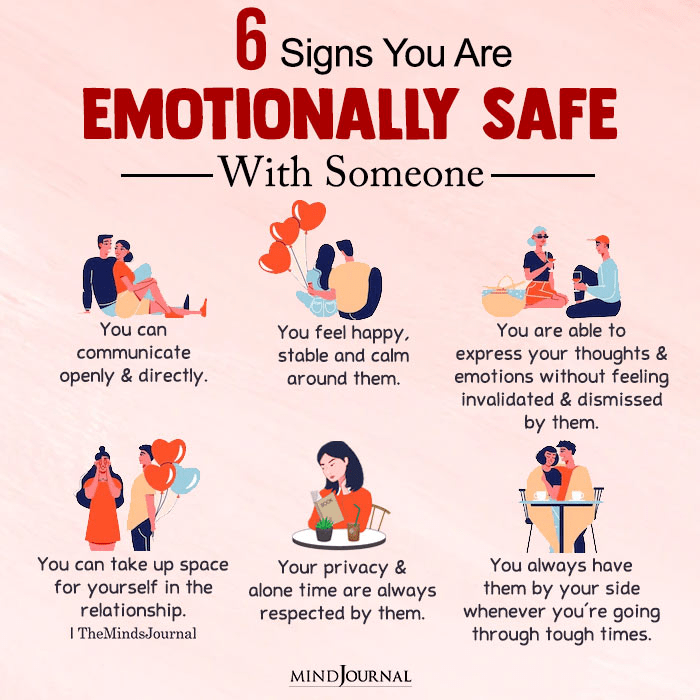
On Purpose with Jay Shetty – The 5 Relationships You Need to Invest in to Supercharge Your 2024
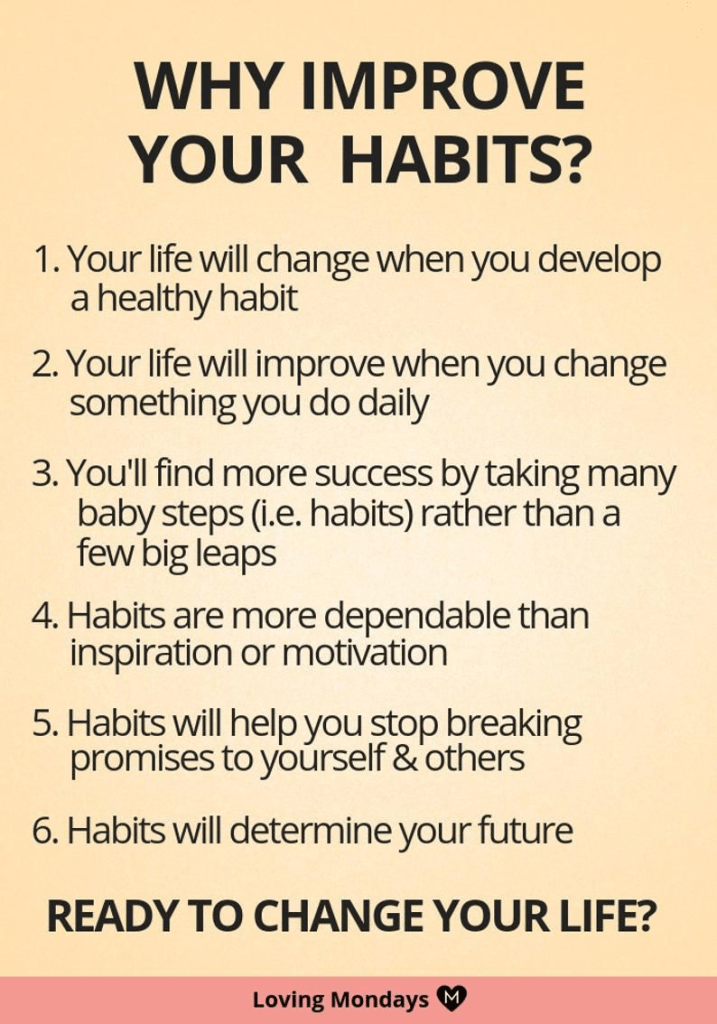
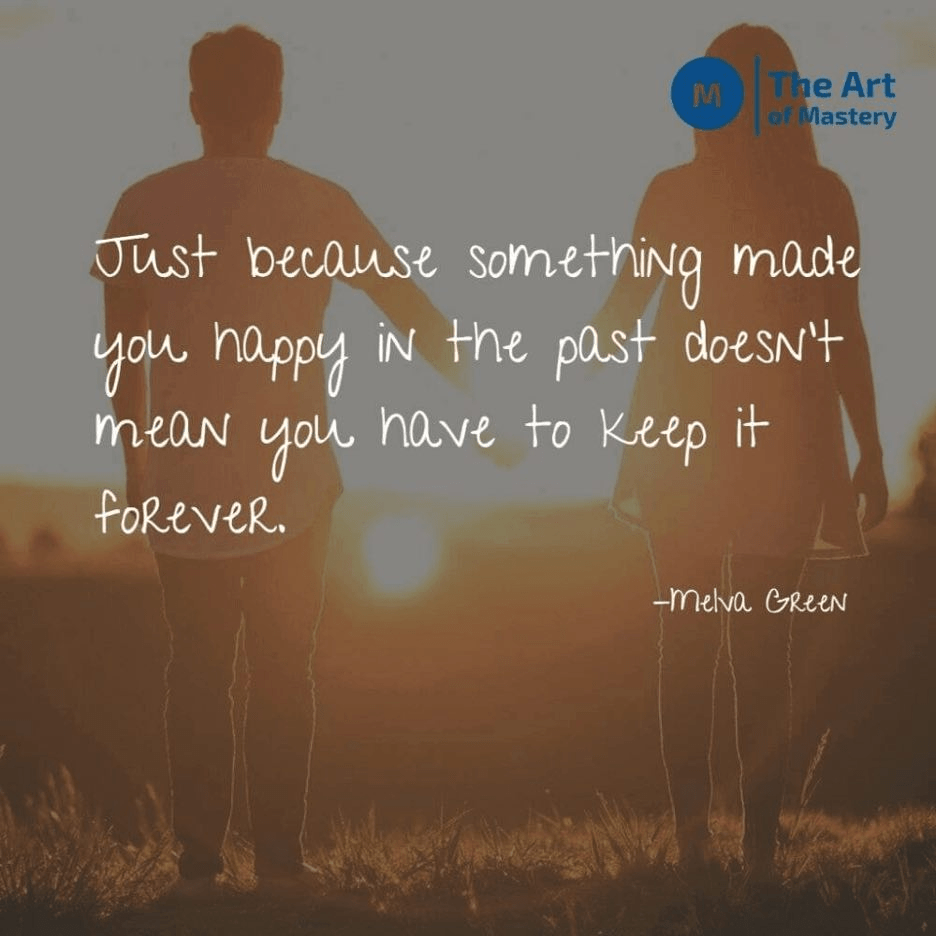
Self Improvement Daily – Slipping Back to How Things Used to Be
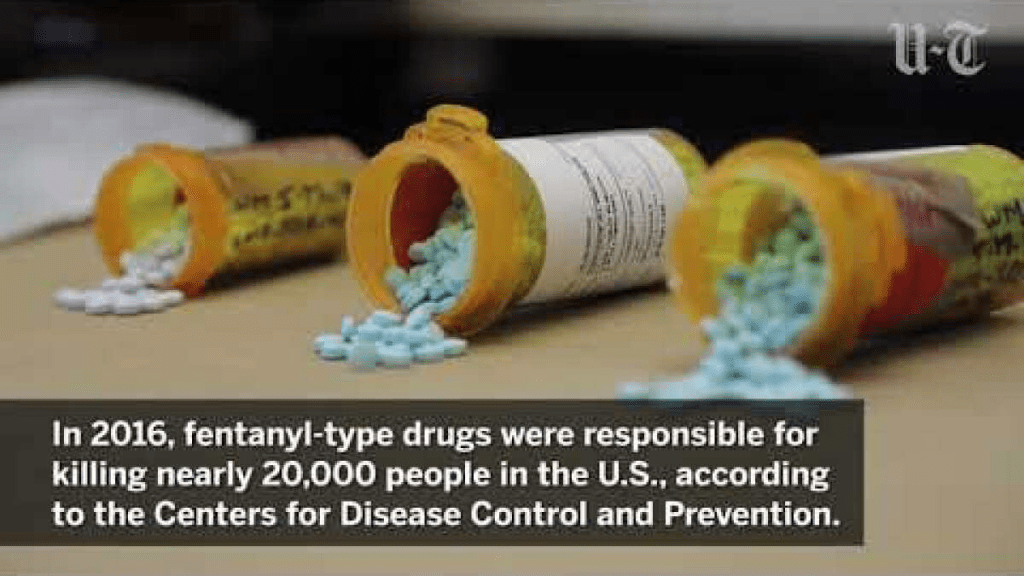
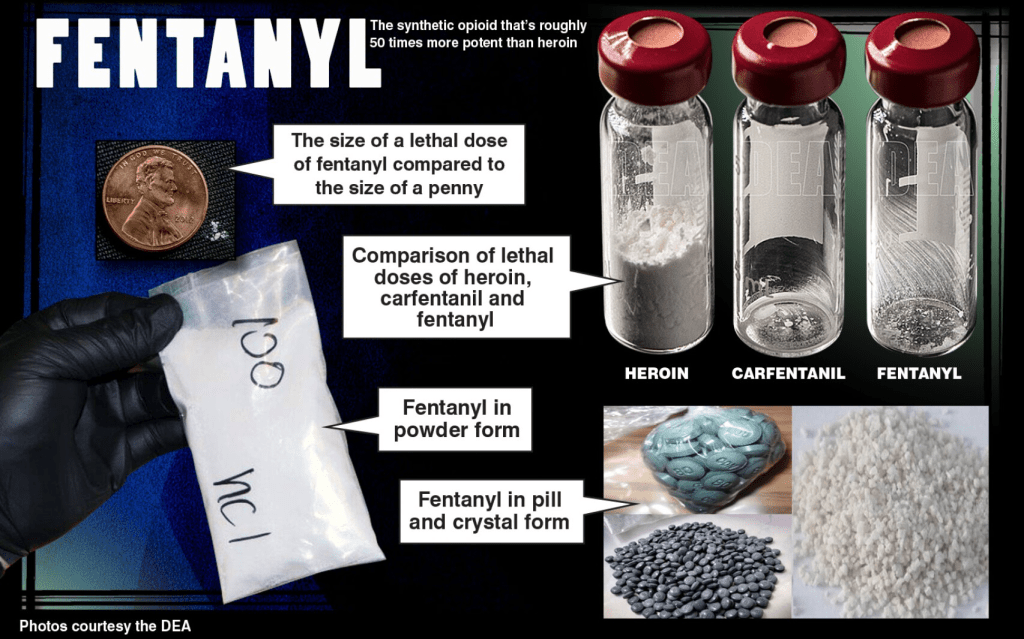
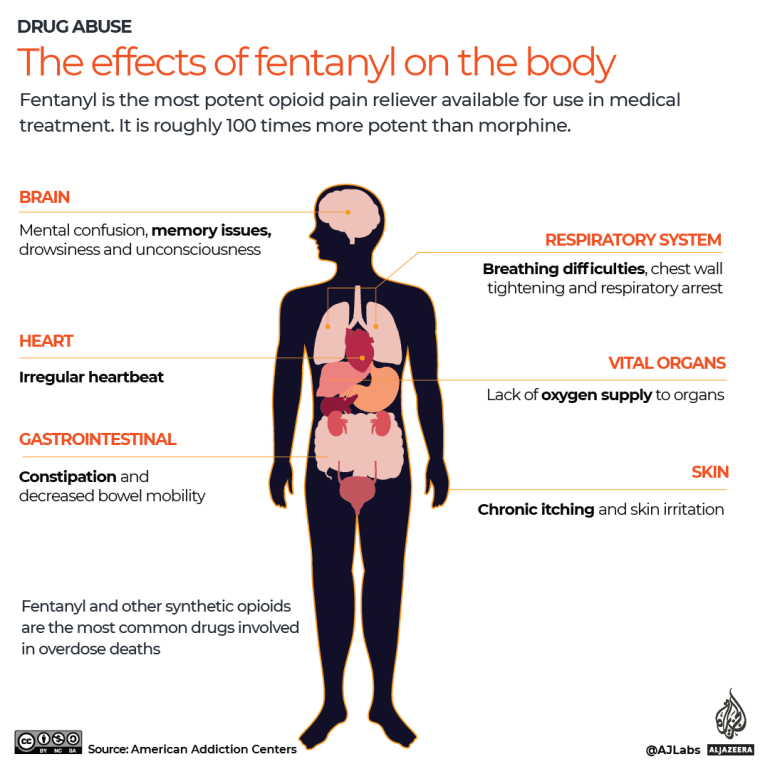
Terrible, Thanks for Asking – “Why are drug dealers putting fentanyl in everything?” from Search Engine
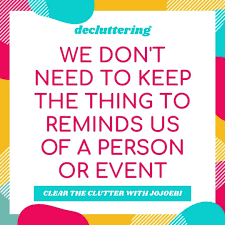
Mentally Stronger with Therapist Amy Morin – The Minimalists: Why You Should Declutter Your Life
Thoughtful Thursday posts, Uncategorized

Thoughtful Thursday- May 25, 2023

My intention is to post a Thoughtful Thursday column each week and share some of the insights I have learned in the past week. Here are some of the things I’ve learned this week:

Self Improvement Daily- When You Are Your Own Friend

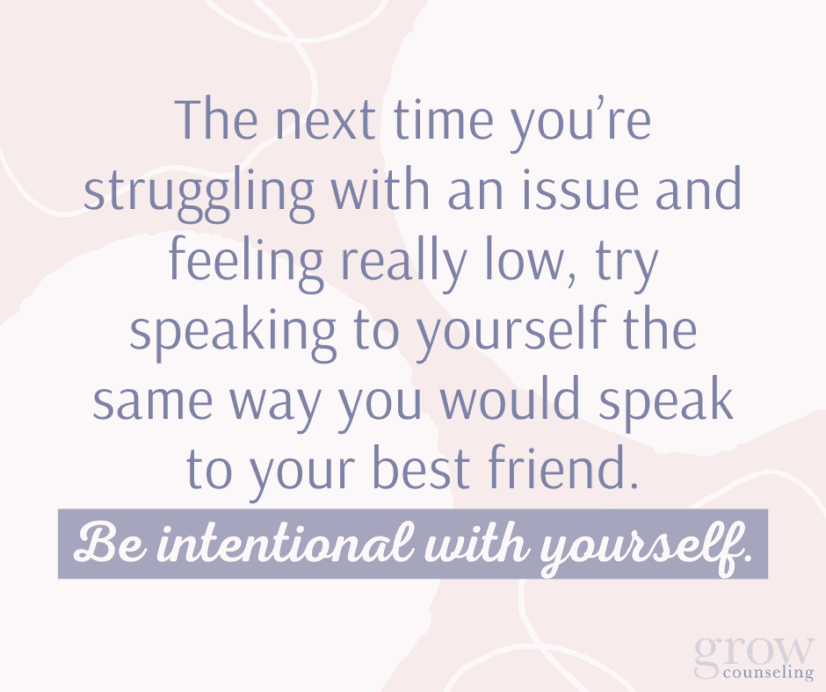
Let’s say you had a miscommunication, let someone down, and got defensive about it, or you got into a big fight with a family member. In your own head, you may get really critical and get upset that you didn’t have more emotional control. You tell yourself you’re an awful person.

Now look at the example from a different angle. Instead of you being the person involved in the fight that made a few mistakes, you’re a good friend of that person. After they tell you about the event and the circumstances around it, what would you say to them? You likely wouldn’t tell them how awful of a person they are. You would likely be supportive and encouraging. You’d highlight their best qualities and understand that this was an isolated incident.

This isn’t about a lack of taking responsibility for our actions. The point is that we are so quick to find the goodness and humanity in others and the flaws within ourselvesSo the next time you catch yourself criticizing or going through self-deprecating thoughts, ask yourself this question – “What would I tell myself if I were my own friend?”

Self Care IRL- The 8 small steps you need to start your self-improvement journey
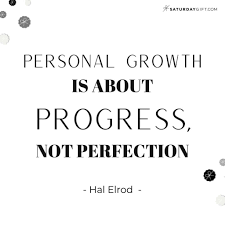
  1. Do not change everything at once. Start with 1-3 small goals you can easily achieve. Ex: one healthy meal each day, walk 20 minutes every day, etc. You can increase and expand on your habits after a while. Progress is more important than perfection. Perfection does not exist.
  2. Make a plan of action and actually stick to it. Staying focused and motivated requires discipline. Discipline requires planning. Take action every day, even if it’s just a small step.
  3. Habit stacking. Ex: journal while drinking coffee. Listen to a podcast or watch tv while on the treadmill. Read while riding public transportation to work.
  4. Celebrate your wins—both big and small. Every step forward is success. Share your wins with friends to add accountability.
  5. Don’t be too hard on yourself. Everyone makes mistakes. You are bound to have setbacks along the way. Learn from your mistakes and keep going. Be patient with yourself. Progress takes time. Forgiving yourself is the ultimate flex in life. Practicing self-compassion is vital if you want to improve yourself.
  6. Find your support system. It is crucial if you have goals in sight. Whether you need hands-on support or emotional support, knowing that someone is there to lift you up will be incredibly helpful for encouragement and accountability. The podcast host mentioned getting together with a group of people weekly or monthly on a Wednesday to discuss “Wednesday wins”–“wins” each person has had in the past week or month. Lift each other up and encourage each other.
  7. Set goals for yourself. Document how soon you want to achieve it to determine a plan and how hard you need to work. Don’t feel overly committed to that number. Plans can change. Set weekly or monthly goals to track your progress just to see how far you have come.
  8. Be patient and keep working toward your goals, even when things get tough. You will have setbacks.
TED Talks Daily- What makes a “good college” — and why it matters – Cecilia M. Orphan
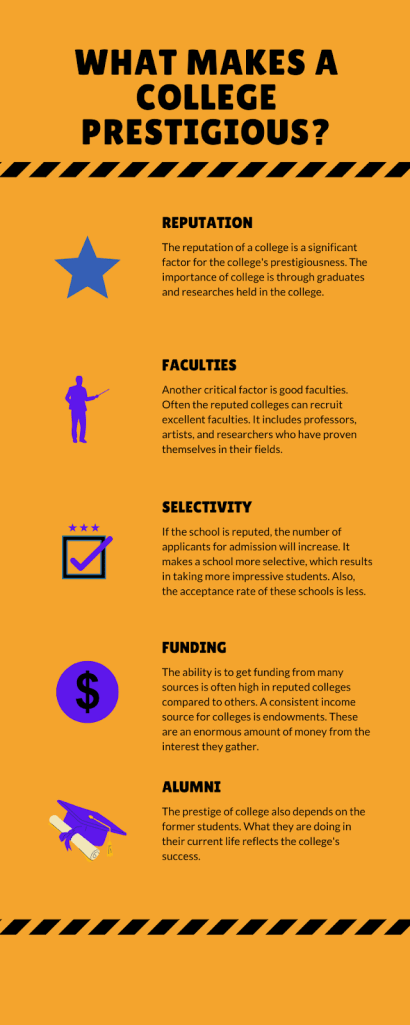
  • We say we want colleges to be more equitable and more accessible. We tend to obsess over a tiny group of colleges most of us could never get into. It’s not because we aren’t smart enough. It’s because there isn’t enough space for all of us. They intentionally cap the number of students that they accept.
  • Instead of calling them prestigious universities, some people refer to them as “highly rejective colleges” – Harvard, Stanford, Yale, Princeton, MIT, etc. These are all major research institutions.
  • Regional public universities (RPUs) are the exact opposite of highly rejective colleges.  They pride themselves in accepting almost everyone who applies — students are more likely to be first-generation college students, students of color, low-income students, veterans, and adults balancing work and family while going to school. RPU students often don’t have the test scores required to get into a highly rejective college. It’s not that they aren’t capable; it’s because they weren’t given the same advantages as other students. RPUs change more lives than prestigious universities by allowing more students access to education.
  • People sometimes criticize RPUs and refer to them as “the 13th grade,” “not real,” or “almost anyone can get in.”
  • The colleges that already have the largest endowments tend to receive the most charitable donations. Imagine if these donations were spread across the many RPUs in the country.
  • In the U.S. and throughout the world, far more public funding goes to highly rejective colleges than to regional public universities, causing RPUs to become more expensive, which hurts low-income students and causes student loan debt to skyrocket.
  • If we really want more low-income students to go to college and equity in higher education, we need to fund regional public universities. Instead of giving to your highly rejective alma mater, consider giving to universities that really need it.
  • Last year, billionaire philanthropist Mckenzie Scott gave $1.5 billion to 73 different colleges and universities that serve low-income students and students of color.
  • There is no better way to make a difference in higher education than to give to the colleges that change the lives of their students and communities. This isn’t all about money. We all have the power to change the way we think about and talk about regional public universities or stop people when they frame them in negative ways.
Life Kit- Making friends anywhere you move
  • Be active and intentional about making connections. Alert your network. Post on your socials and ask for introductions. Tell your coworkers, especially if you have a remote job. Communicate what kind of connection you’re looking for – someone to show you around, another couple with school-age kids, etc. We tend to think that it’s going to be so awkward to reach out to people who we aren’t in touch with anymore. You just have to own it.
  • Reconnect with old friends. You might end up better friends with them than before. Acknowledge the gap in time and that you haven’t been the best at keeping in touch. Propose specific plans for catching up. Follow up after meeting in person.
  • Incorporate more routine into your day. Ex: coffee shops. With routine, you are seeing the same faces and it becomes less intimidating to talk to them. You can incorporate any activity, community, or place you love. No matter where you live, you can develop that sense of home. Find a place for yourself that isn’t work and isn’t home: book club, soccer club, etc.
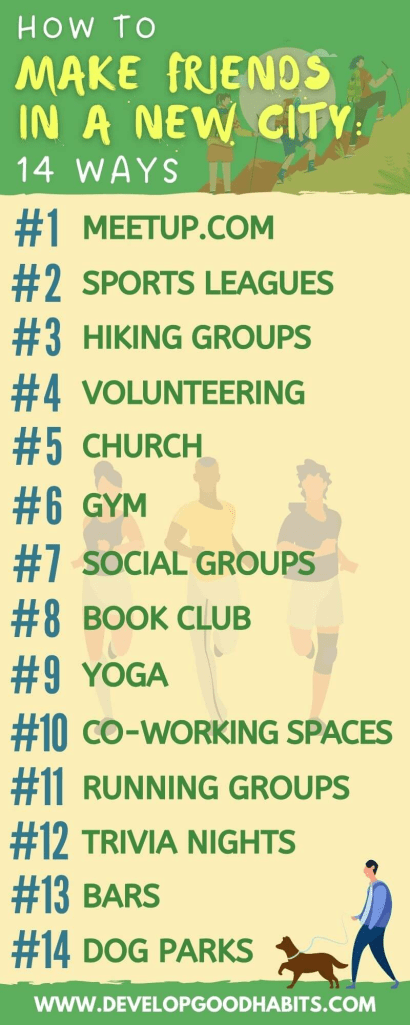
  • Find online groups, event listings, and meetups. Now is your chance to engage in an activity you’ve been thinking about. Ex: book clubs. You don’t have to know anyone there, but you can connect with others about the same book you’ve read. You meet regularly. Commit to showing up more than once. It changes the way you engage with people who are there. Stop trying to form a relationship with the collective and focus on forming relationships with the singular. It can be less intimidating to focus on individual members first.
  • When getting to know people, focus on the connection, not the relationship. Being honest about yourself is key to adult relationships. Get comfortable with the things that make you different and the interests that you have. If you are introverted, only say “yes” to the activities that you know will bring you joy. Focus your energy on one-on-one interactions. Making new friends takes effort, especially when you barely know anyone around you.
  • Take-aways: be open and intentional about making new friends. Tell your network that you’re moving or looking to meet people. Reconnect with old friends and acknowledge the passing of time. Make clear plans to meet. Build your own routines and find places you feel at ease. Go to group gatherings. For recurring groups, commit to going at least three times. Friendships start with one-on-one relationships. Remember that all of this takes time.

When I first moved to my city, I didn’t have any friends in the area aside from former coworkers. I am grateful to have met several girls in an online Facebook group for girls making friends. Through this group, I have joined a book club, hiking groups, and made many quality friends who share similar interests.

Optimal Finance Daily- Understanding the Seven Habits of Wealth by Rob Berger
  1. Hard work– achieving financial security is often the result of consistent diligence.
  2. Modest living– modest living can produce great wealth on a modest income.
  3. Patience– produces thoughtful, long-term decisions that can produce wealth while minimizing risk.  Patiently waiting for the right time to buy a stock or company
  4. Perseverance– working through challenges. Perseverance keeps us focused on our goals and enables us to confront all challenges.
  5. Balance– healthy balance of stocks, bonds, or other investments
  6. Self-awareness– brings into focus the motivations behind the daily decisions we make. Allows us to understand what motivates us to spend money, what investments are best for us given our tolerance for risk, and what will produce contentment in our lives.
  7. Learning– enables us to improve our careers, investments, and spending, as well as other areas of our lives

“What we are and what we have is a result of what we repeatedly do.” Wealth then, is not the result of an act, but the result of our habits.

How to Be a Better Human- How to set boundaries and find peace (w/ Nedra Glover Tawwab)
  • We want kids to be assertive, but we don’t teach them how to be assertive with us.
  • Pay attention to the things you complain most about. This will tell you where you need to set boundaries.
  • Many people right now are having boundary issues around being overwhelmed and overcommitting themselves. You can say no to things! People found pleasure during the pandemic by not having to attend social obligations. You don’t need to do those things if you don’t want to.  Place value on the relationships that are important.
  • Trying to do everything on your own/not asking for help- there are times when we don’t have the skillset, time, or mental capacity to do it all. We need to seek help. It can be hard to be vulnerable and ask for help.
  • Codependency- thinking “if I did this, this person would suffer this consequence because of my lack of support for their issue.” Stop thinking like this!
  • Set boundaries, find peace!

I posted an extensive blog post about this book recently. Check it out here:

Main Accounts: The Story of MySpace- Welcome to MySpace

Popularity:

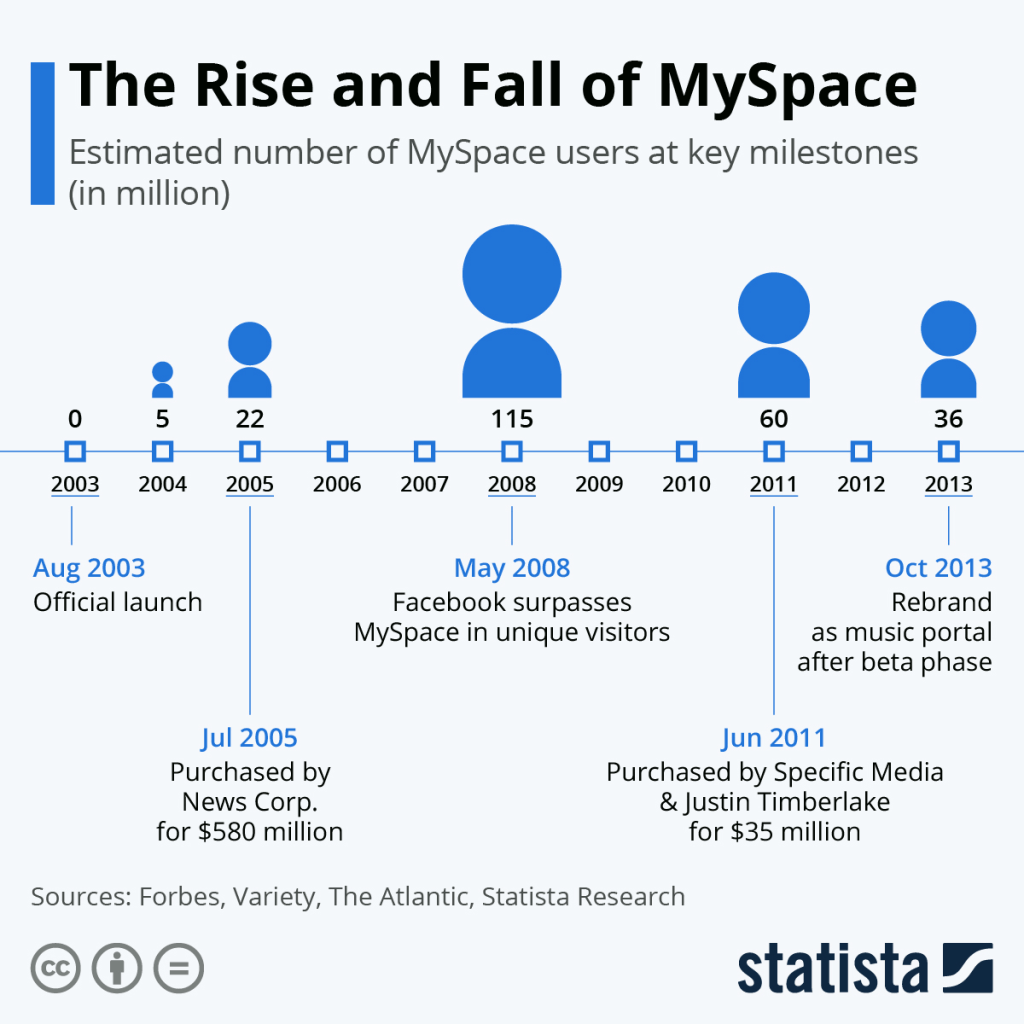
  • MySpace used to be the most popular website in America. It launched in August 2003. The creators, Tom Anderson and Chris Dewolfe, took inspiration from sites like Friendster and Asian Avenue. There were only 100,000 users in October 2003, but, the following year, after picking up dissatisfied Friendster users, the site exploded to 5 million users! MySpace peaked in 2008 with over 100 million users. At the height of its popularity, 250,000 people were signing up for new accounts every day. Most of the users were young – in their teens and twenties. It was at the center of their social lives.
  • In 2005, MySpace was seeing 16 million visitors per month and was the biggest social network in the world. It was sold to News Corporation, and Intermix negotiated the deal. This was done without the knowledge of the founders of MySpace. Chris and Tom were each paid $30 million. They left the company in 2009, and News Corporation brought in a new CEO and its own people.
  • When MySpace launched, social media was an unknown quantity. People had no idea how to make money off of social networks or even if they could make money off of it. The consequences of social media had yet to be seen.

Origins:

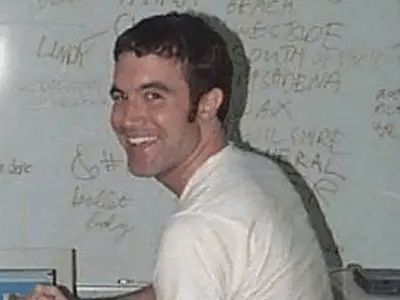
  • Tom Anderson had founded the company with Chris Dewolfe. Before MySpace, Tom had worked for Chris as a copywriter and product tester at another startup. Tom was a musician, went to film school, and dabbled in the hacker community as a teenager. MySpace does not have the typical Silicon Valley origin story.
  •  While at Euniverse, Tom and Chris had at their disposal the company’s database of over 30 million e-mail addresses. The e-mails of everyone who signed up with a new MySpace account could be added to the database. MySpace was a subsidiary of its parent company, Intermix.

What set MySpace apart:

  • MySpace offered opportunities for people to express their creativity and meet people in ways that felt thrilling and scary at the time. People used MySpace in the aftermath of Hurricane Katrina to keep in touch with friends and family after they evacuated Louisiana. Soldiers in Iraq and Afghanistan used it to connect with people back home. It was a place where millions of people could connect to one another. MySpace was one of many projects at the company EUniverse (an early ecommerce company). EUniverse was one of the few survivors of the dot com crash. EUniverse was later renamed Intermix.
  • On Friendster, users related to each other as a chain of connections. On MySpace, it didn’t really matter if your friends were strangers or actually friends. You added who you wanted and showed users who mattered to you by selecting users for your Top 8.
  • Top 8 created competition and encouraged users to curate their friends and spotlight people or bands that reflected on their personalities and personal tastes. From the glittery, sleezy design to the carefree way people communicated on it, MySpace felt like a party on the internet. People talked more casually on MySpace.
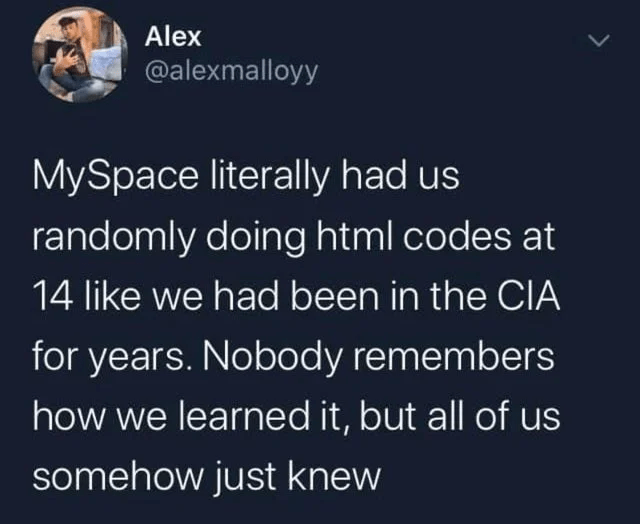
  • MySpace allowed you to tweak the HTML on your profile page so that you could change the color of the background, have a song playing while people looked at your page, etc. People put a lot of thought into it. Customizable pages (scrolling text, text that would blink, colorful texts, embedded music) allowed for self-expression.
  • MySpace was giving users free software. Previously, if you wanted to set up a website for yourself, you’d have to buy software. The way users were paying MySpace was with all of their data and information. The legacy of MySpace is the pioneering of this business model – of monetizing user data.
  • Another unique feature is that creator Tom Anderson was automatically everyone’s friend.

Why MySpace did not last:

  • MySpace was sold as “the perfect media company that generates free content through its users. It generates free traffic by its users inviting their friends, and all you have to do is sell the ads.”
  • MySpace was on track to be the biggest mass platform for advertising in the world. Facebook is the biggest single mass platform for advertising in the world. The lack of engineering expertise and talent and the lack of focus on abilities to outcompete on the actual quality of the product is what doomed MySpace to fail against Facebook. You have to have great engineering and great talent, and that is what made Facebook win. MySpace lost relevance because it couldn’t scale up to be mainstream like Facebook.
  • The social network felt chaotic and open in a free-for-all sense much like the city where it was created: Los Angeles. It sometimes felt like a cool nightclub. However massive it was, it was still youth-oriented. With various scenes and clicks, it felt very niche. MySpace was notable and big, but it wasn’t TikTok size.
  • People who were big on the platform could not scale out and achieve mass fame. The internet culture was not mass culture in the 2000s. They were sort of niche. All of this was happening before there was viral content and before algorithms filtered what users would see. There wasn’t a “for you” page. You had to find it yourself.

https://www.gabethebassplayer.com/blog/festival-walking

I loved Gabe The Bass Player’s post on May 16 (all credit to Gabe the Bass Player):

Festival Walking

May 16, 2023

“Summer. The height of the music festival season. The height of…

“Is this band any good? I’m going to decide right now as I walk past the stage for thirty seconds…”

It doesn’t matter if you’re a well established act or a new act. No one gets a pass. You get the time it takes for someone walking past the stage to be compelling enough for them to stay. You gotta be good.

The truth is…you’ve probably got thirty seconds but their question is answered within five. And that interaction is what they’ll carry with them forever and tell their friends about when your name comes up.”

I look forward to reading, learning, and sharing more with you soon!
Thoughtful Thursday posts, Uncategorized

Thoughtful Thursday- March 2, 2023

My intention is to post a Thoughtful Thursday column each week and share some of the insights I have learned in the past week. Here are some of the things I’ve learned this week:

But Why: A Podcast for Curious Kids- Don’t swallow gum! And other things parents say

This was an interesting episode covering myths parents tell their kids. The most interesting issue addressed was that people say you must wait one hour after eating to go swimming. I have heard this throughout life, and I just learned that this is a myth! There is no harm in swimming right after eating. The worst that could happen as a result is that, if you swim vigorously right after eating a large meal, you might vomit. Most swimming is not done vigorously, so there’s no need to wait to get back in the water!

For You From Eve- Wellness Hacks and Mindset Shifts that Actually Work & Changed My Life

These wellness hacks helped the host change her life:

  • Stop distracting yourself with media. Let yourself feel your feelings and reflect.
  • Journal and write affirmations.
  • Take cold showers for breathwork/calming down. It doesn’t need to be a full cold shower; you can start with 1-2 minutes of cold water before adjusting the temperature.
  • Exercise!
  • Invest in skincare/makeup/hair.
  • Meal prep and purchase healthy foods.
  • Set limits for time spent on social media. List to podcasts instead.
  • Read self-help books.
  • Get 7-9 hours of sleep.
  • Take vitamins and supplements.
  • Meditate.

I do many of these things, and they have helped me change my life! Exercising, journaling and writing affirmations, starting a skincare routine, meal prepping and clean eating, reading self-help books, listening to podcasts, prioritizing sleep, and limiting social media have benefited me greatly.

I am currently reading “1000+ Little Things Happy Successful People Do Differently” written by Marc Chernoff. One thing that has stood out to me so far is:

Everyone gets upset and loses their temper sometimes. When you catch yourself passing judgment, add “just like me sometimes” to the end of a sentence. For example: That person is grouchy, just like me sometimes. She is being rude, just like me sometimes. Choose to let things go. Let others off the hook. Take the high road today.

Marc Chernoff
Sad to Savage- Things I Wish I Knew Sooner: Advice From Your Big Sister (Shelby Sacco)

Sad to Savage is one of my favorite podcasts and is mostly focused on habits. However, this episode contained so many things I needed to hear that are mostly unrelated to daily habits:

  • Being selfish is the most important thing you can do in your twenties. Do what’s best for you and be independent.
  • You are who you surround yourself with.
  • Growth is not linear. Life is a rollercoaster.
  • Quit the job you hate. If you need the income, spend a couple days or weeks updating your resume and applying to jobs. You spend a lot of time at work, so don’t tough it out in hopes that it will get better.
  • Find the fitness you like. If you’re miserable doing it, it’s not the correct fitness for you. You should not dread working out.
  • Cheating has nothing to do with you and has everything to do with someone else’s qualities.

If someone treats you badly due to addictions, you cannot control someone who does not want to change. You cannot make someone want a different life.

  • Do not leave your hardest tasks for the end of the day when you have less willpower. Be smart with your willpower. When you have formed daily habits, they don’t take willpower.
  • Invest in yourself and your future. You can educate yourself through reading.
  • Do not rely on motivation. The days you don’t feel like it are the days that matter most.

Not everyone is going to like you, and that’s okay. What people think of you is none of your business.

  • The red flags you choose to ignore won’t go away.
  • The words you say to yourself and about yourself make up how you see yourself, and they decide your actions, which ultimately decide your life.
  • You are never too good to apologize to someone.

No one is in charge of your happiness except for you. You need to find and do things that bring you happiness.

When having a conversation with someone, ask if they want advice or just want someone to listen. Same goes for when you are the one talking.

Your entire life can be completely different in one year if you choose to do the work.

Waking up early will give you the time you need to do the things that you currently don’t have time for.

Your habits make up your life. You have the power to choose/change/create your habits. Investing in yourself and your habits will be the best choice you will ever make.

Optimal Finance Daily- 9 Painless Ways to Trick Yourself Into Spending Less by Sarah Von Bargen
  • Unsubscribe from newsletters that tempt you.
  • Block yourself from websites where you spend too much.
  • Turn off your computer’s/phone’s autocomplete credit card option so that you have to be bothered to get up and retrieve your card every time.
  • Order online and do curbside pickup to prevent impulse purchases.
  • Eat something before you go shopping. Don’t go shopping while hungry.
  • Give yourself a three-day waiting period. If you forget all about it, you don’t need it. If you still find yourself thinking about it three days later, pull the trigger.
  • Put yourself on a cash-only budget. We are much slower to spend cash than use our credit cards, and cash is not an option when online shopping.
  • Put a reminder in your wallet. You could print a wallet-sized photo of something you’re saving for.
  • Unfollow social media accounts that tempt you to spend. Unfollow accounts that make you want to spend more to keep up, and fill your feed with those who provide value to you or who are in your tax bracket.

Personal tip: If you are concerned about unsubscribing to newsletters that tempt you, when you want to purchase something, look on milled.com and search for the company to view e-mails that have been sent to customers to look for discounts. You can also look up promo codes online for discounts.

I look forward to reading, learning, and sharing more with you soon!