Book review posts, Uncategorized

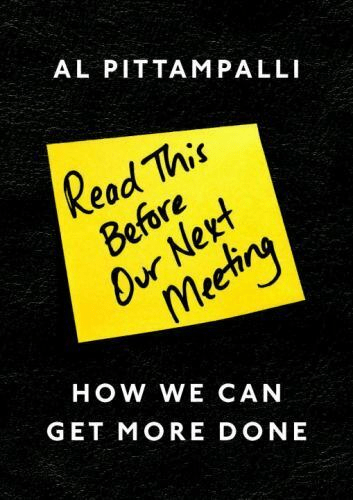
Read This Before Our Next Meeting

Thoughtful Thursday posts, Uncategorized

Thoughtful Thursday – June 6, 2024

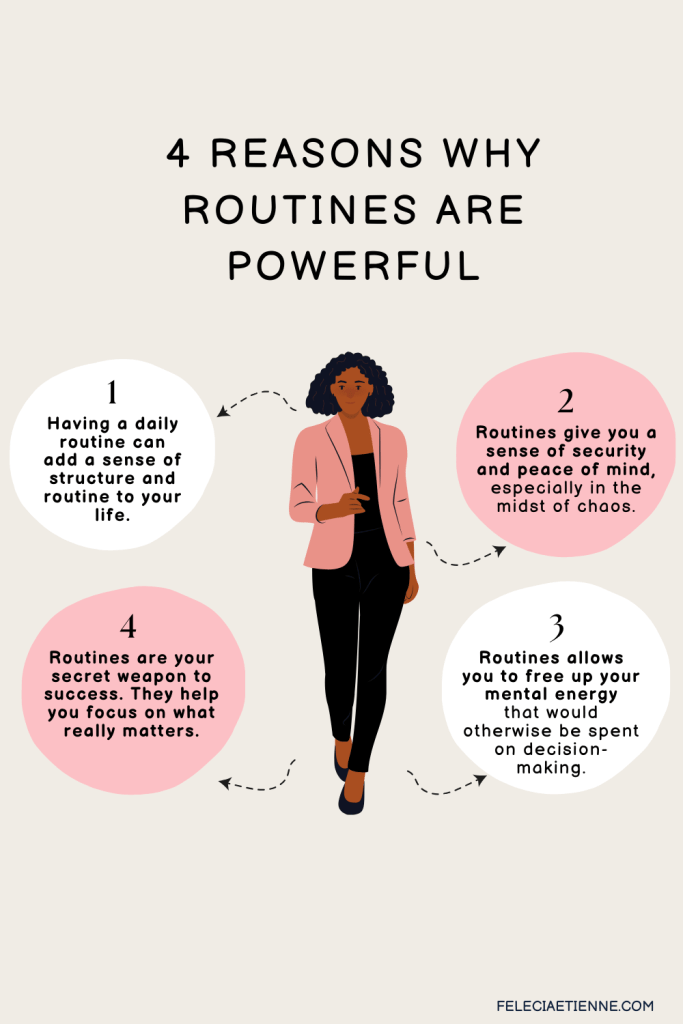
Sad to Savage – How to Create Habits and A Routine With An Inconsistent Schedule
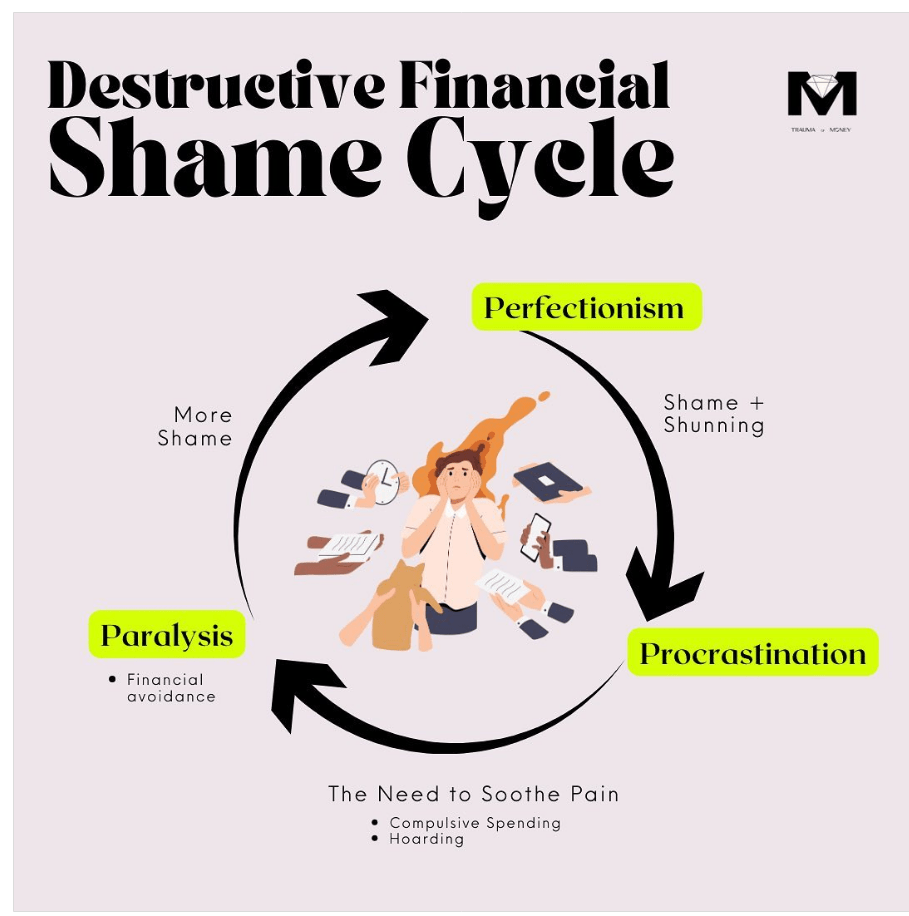
Inside Out Money – Progress over Perfection
On Purpose with Jay Shetty – 7 Habits to Be Present
Life Kit – Summer fun on a budget
Thoughtful Thursday posts, Uncategorized

Thoughtful Thursday – April 18, 2024

The 5 AM Miracle – 12 Productivity Tips You Need to Know
The Lazy Genius Podcast – 7 Routines That Work for Me
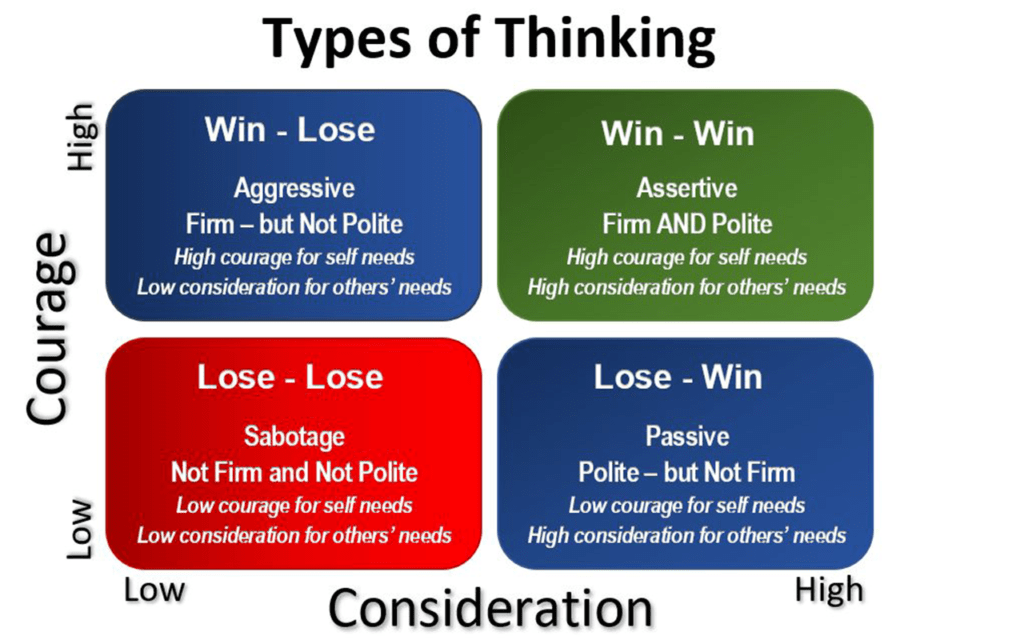
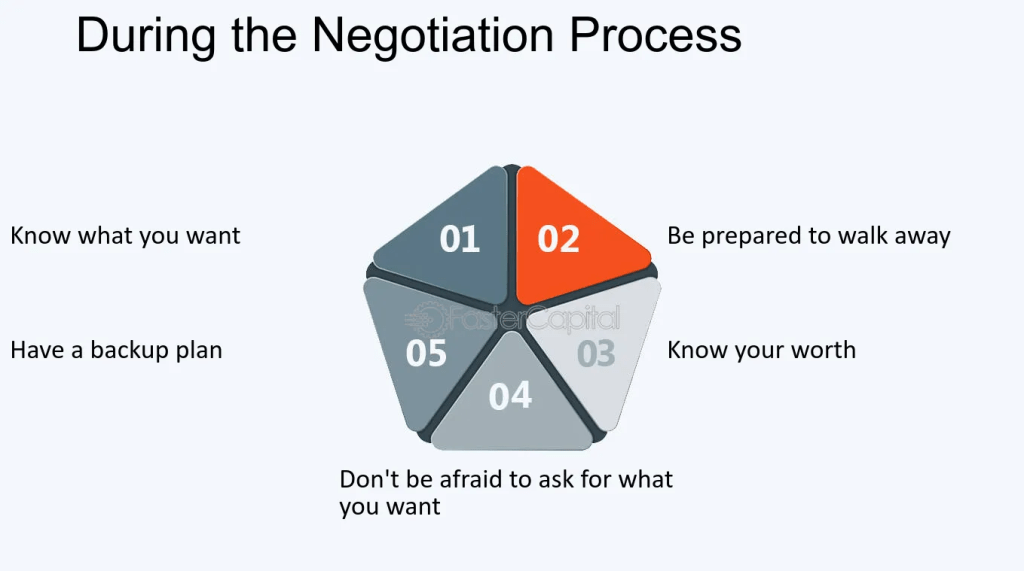
Life Kit – Negotiation tactics for everyday life
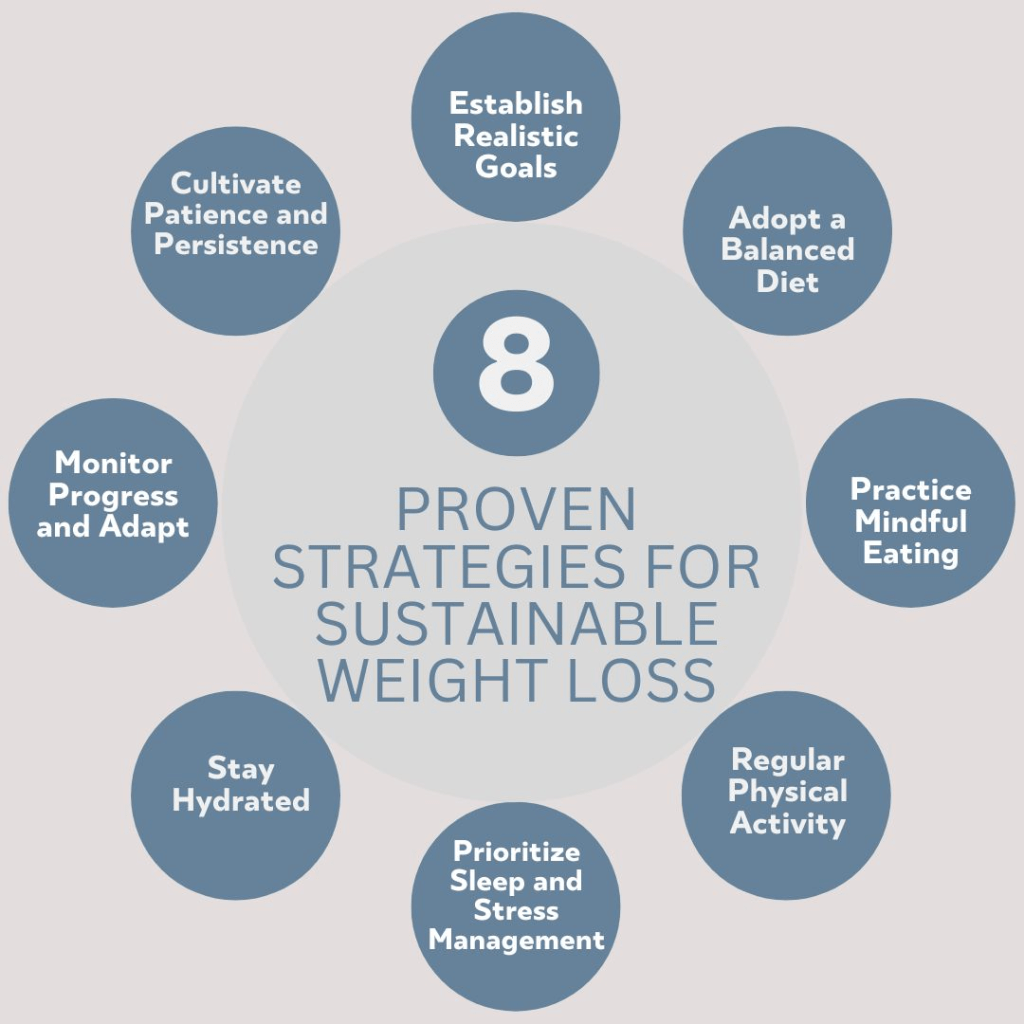
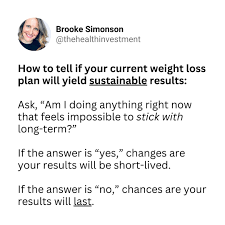
Chasing Life – Do These Quick Weight Loss Hacks Work?
Thoughtful Thursday posts, Uncategorized

Thoughtful Thursday – June 15, 2023

My intention is to post a Thoughtful Thursday column each week and share some of the insights I have learned in the past week. Here are some of the things I’ve learned this week:

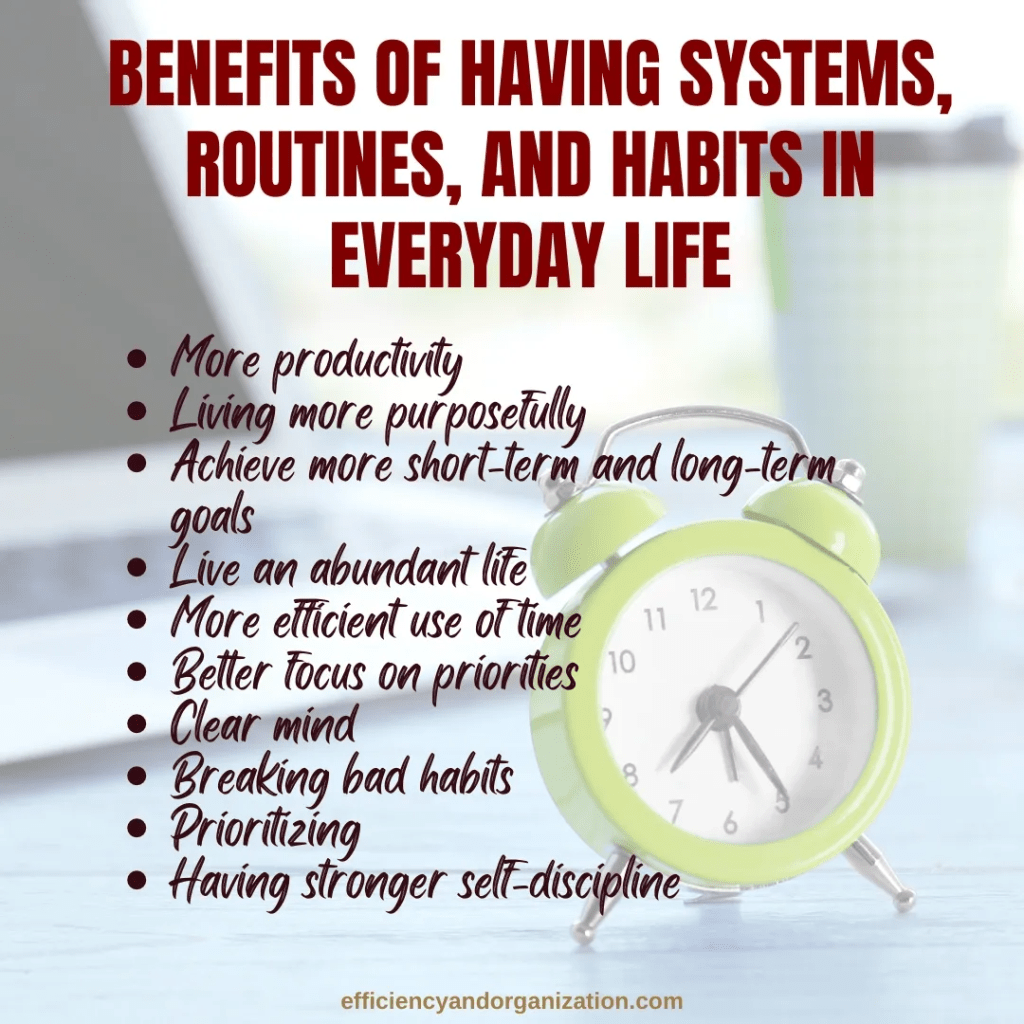
Self Improvement Daily- Breaking Down Productivity

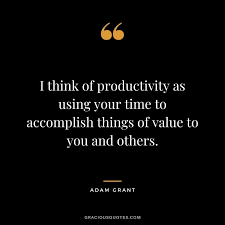
The word productivity is a combination of two words: productive activity. It’s to be active in productive ways. ‘Productive’ is simply having the high ability to produce. To produce what? Society and culture have taught us that we must always be thinking about producing results, revenue, and efficiencies. Can’t we also choose to produce joy, presence, mindfulness, and connection?

You get to decide for yourself what you want to produce. It’s your life, your time, and your attention. Productivity is actually just “doing the things you want to be doing.”

Productivity = Productive activity = Doing things that produce the results you want = Doing the things you want to be doing.

The next time you feel down on yourself for not checking things off of your never-ending to-do list over the weekend, reframe your mind and consider that productivity is doing the things you want to be doing. Resting and hanging out with friends could still be productive; you are taking care of yourself and growing strong relationships with people you care about. If that is what you want to be doing, you were productive!

Small Change – 10 Signs You Might Be Financially Immature
  1. You act aggressively when someone asks you about your money.
  2. You are dismissive of others’ success.
  3. You spend when you are depressed.
  4. You tend to look at the individual spending of your partner rather than simply being concerned with how much is being spent. If the “what” is more important than the amount, you may be financially immature.
  5. You are unable to get excited by saving for a big goal. “We can’t do that. That’s crazy.”
  6. You have avoided looking at a bank statement for months.
  7. You fear tax time.
  8. You gloat at parties about your investments that you haven’t actually made or lie about the investments you have.
  9. You are too conscious about the brands you are wearing.
  10. You use spending as a cure for boredom.
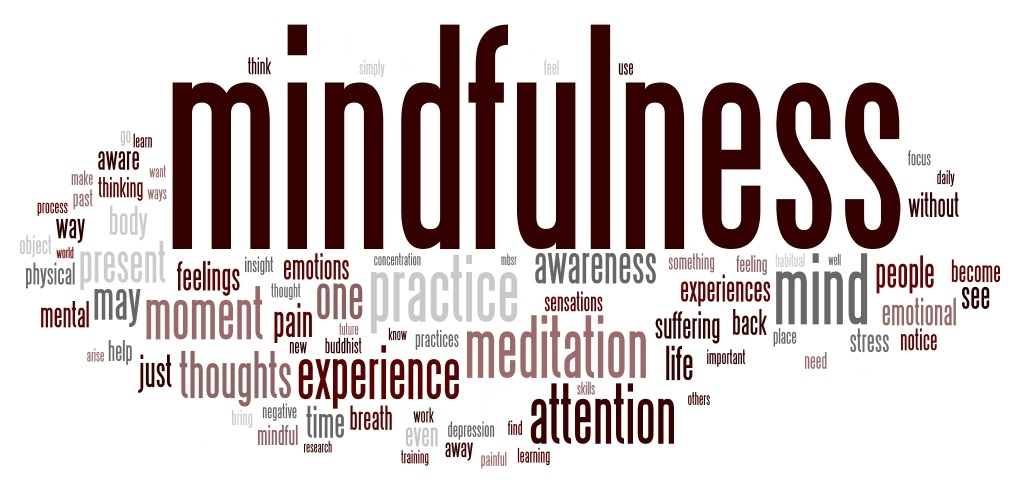
Savvy Psychologist- 6 skills of mindfulness you may be missing
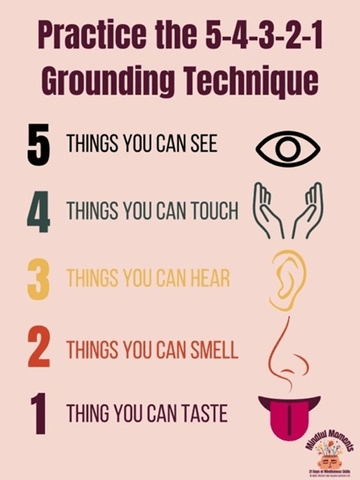
  • Observe. Pay attention to your environment and your internal experiences without judgment. This entails wordless watching and being fully present in the moment, observing your thoughts and feelings as they come and go, and noticing the world around you without trying to change it. Use your five senses.
  • Describe. Put your observations into words. Describe your experiences objectively without adding your own interpretations or judgments. Describe your observations from your five senses.
  • Participate. Be fully present and engaged in the present moment. Let go of distractions and focus on the task at hand, whether that be work, hobbies, or relationships.
  • Non-judgmental stance. Accept yourself and others without judgment. Let go of the inner monologue and distorted interpretations. Instead, practice self-compassion and understanding. Cultivate an attitude of acceptance and openness. Let go of the evaluative judgments we often make.
  • One-mindfully. Focus on one moment, task, or thought at a time. Let go of distractions and multi-tasking and focus your attention on the present moment.
  • Effectiveness. Focus on what works in a given situation rather than what is “right or wrong.” Let go of rigid thinking and embrace a more flexible and adaptive mindset. Focus on the outcomes you want to achieve and explore different ways of achieving them. Do what works, not necessarily what you prefer.
FIRE the Family Podcast – 22 Actionable Ways to Invest in Yourself
  1. Go to college. Don’t go into extreme debt to go to college. Be wise and research what your expected income will be before taking out several loans.
  2. Join the military.
  3. Go to a trade school.
  4. Get a job. There’s no better way than to find out what you like and don’t like doing.
  5. Learn how to cook. It increases your independence and reduces your expenses of eating out.
  6. Learn how to exercise properly. You will feel better about yourself and your health, live longer, and improve your mental health.
  7. Open a brokerage account. VTSAX is a great investment.
  8. Join a local young-professional networking group.
  9. Implement an every-dollar budget.
  10. Ask your parents and grandparents for advice. Pick their brains and learn everything you can.
  11. Find the person you want to spend your life with.
  12. Get out there and fail. You learn from failing.
  13. Run a half marathon. It requires a lot of discipline, preparation, and time.
  14. Identify your mentors.
  15. Develop an inner circle.
  16. Cut out negativity. Set proper boundaries for yourself and your family.
  17. Develop SMART goals (specific, measurable, attainable, relevant, time-bound).
  18. Explore materialism and minimalism.
  19. Continue to find ways to compete.
  20. Practice not judging others. Then you will learn to stop judging yourself.
  21. Start reading. Reading teaches your brain to exercise.
  22. Start an online business.
Life Kit- Planning a trip? Here’s how to pack like a pro
  • You never need as much stuff as you think. Eliminate extra baggage before you leave.
  • Pack and then remove 1/3 of the things you pack.
  • Reduce the weight with lightweight versions of what you need and with items that serve multiple purposes.
  • Use packing cubes (lightweight, expandable, zip-up pouches that save space).
  • Lighten your load of liquid toiletries. There are solid versions of items that don’t weigh as much. Use powders, not pastes. Use dry shampoo instead of the real stuff. Leave liquids at home if you can. Most of the time, you can pick up the things you need while on the road, except the things you can’t find everywhere: sunscreen, bug spray, bug bite relief, hair conditioner, and tampons.
  • Do a simple scope out of your destination with reliable sources, not sponsored content.
  • Match your activity plans to the weather forecast. Check a destination’s average monthly weather patterns in advance.
  • Always have a rain jacket, umbrella, or something to cover your backpack.
  • When traveling for leisure, one main event each day is enough. Don’t overbook activities. Build complementary activities around it or leave room for discovery and the unexpected.
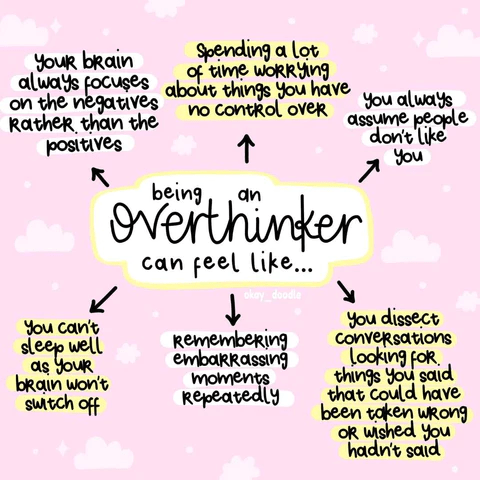
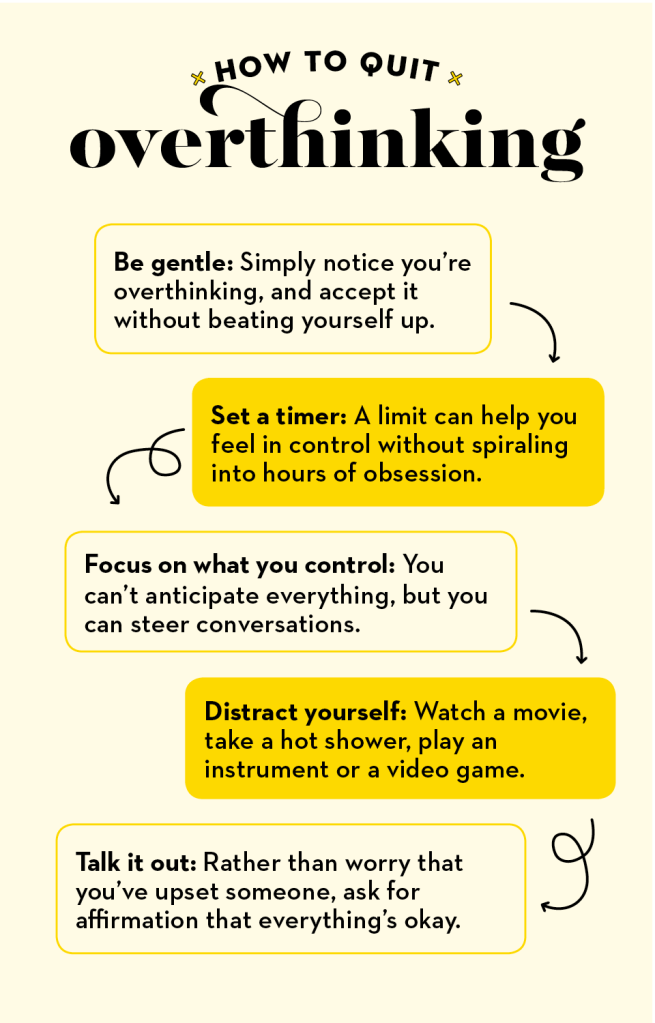
Self Care IRL- Listen to this if you are an overthinker
  • Recognize when you are actually overthinking. Identify the thoughts or situations that are triggering it. Shift your mind back to the present.
  • Journal. Writing down things can help you identify patterns in your thinking. Sometimes you can look back and see that you were overly concerned about something that didn’t end up mattering or turning out the way you worried it would.
  • Give yourself time to calm down and relax before addressing any situation. Try to immediately do things that help you to relax or bring you joy.
  • Talk to someone about the situation. Getting another perspective can help you see things more clearly. Talking about your overthinking can help reduce its frequency and intensity.
  • Learn to focus on the present moment instead of dwelling on the past or the future. This can help you be more aware of your thoughts and feelings.
  • Practice forgiveness for your past self. When we find ourselves trapped in a cycle of overthinking the past, we are stuck there and that prevents us from moving forward in a healthy way. Remember that you are a human first and you will make mistakes. Perfection does not exist. You deserve forgiveness.
  • Think positively for your future self. Think about all of the ways that things could go right. Expand on the beautiful possibilities and let those things lift you up. Reframe your mind when you are worried about what could go wrong, and think about what could go right.
  • Remember that overthinking has never helped us. It hasn’t been serving us the way we think it has.

I am currently reading “Keep Sharp” by Sanjay Gupta, a book about the brain and slowing cognitive decline. Here are some tidbits I have learned so far:

You probably know the five senses: sight (ophthalmoception), smell (olfacoception), taste (gustaoception), touch (tactioception), and hearing (audioception). There are six other senses processed in the brain that give us more data about the outside world:

  • proprioception: a sense of where your body parts are and what they’re doing
  • equilibrioception: a sense of balance/your internal GPS. This tells you if you’re sitting, standing, or lying down. It’s located in the inner ear.
  • nociception: a sense of pain.
  • themo(re)ception: a sense of temperature
  • chronoception: a sense of the passage of time
  • interoception: a sense of your internal needs, like hunger, thirst, and needing to use the bathroom

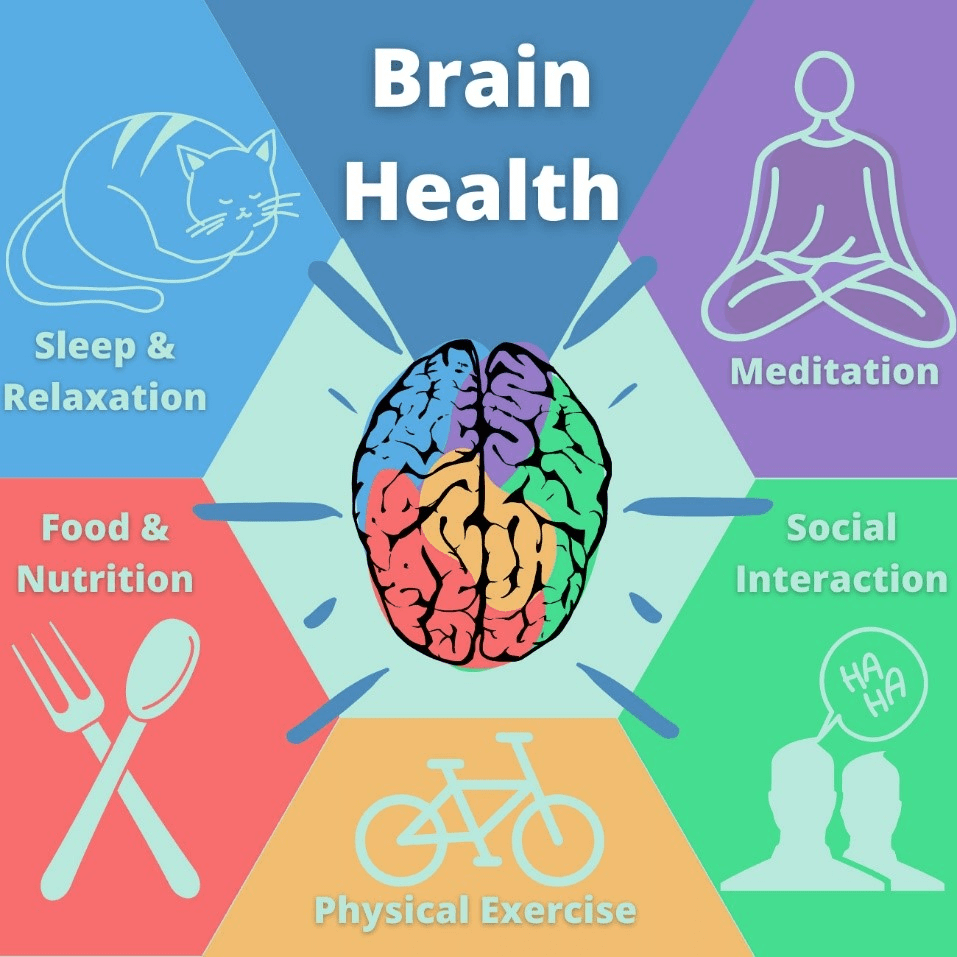
The 5 pillars of brain health:

  • Move – exercise; aerobic and nonaerobic
  • Discover – pick up a new hobby, do something new, or learn something new
  • Relax – unwind, engage in stress-reducing activities
  • Nourish – consuming certain foods like cold-water fish, whole grains, extra virgin olive oil, nuts and seeds, fibrous whole fruits and vegetables, while limiting foods high in sugar, saturated fat, and trans-fatty acids can help avoid memory and brain decline, protect the brain against disease, and maximize its performance
  • Connect – having a diverse social network can improve our brain’s plasticity and help preserve our cognitive abilities

I look forward to reading, learning, and sharing more with you soon!