
It’s been a while since I’ve posted on this blog since I have had other priorities. I read 3 books in June. Here is a blurb of each of the books I read in June.

The novel “Motherhood” by Sheila Heti follows a woman in her late 30s as she grapples with whether or not to have children. This book was not plot-driven; it was more like a long internal monologue in which the woman constantly questions what it means to be a mother and whether motherhood would enhance or diminish her life. I didn’t like the writing style, but it was thought-provoking at times. Here are some key lessons from this book:
- the pressure of societal expectations for women to have children
- motherhood as a choice, not an obligation
- motherhood is often tied to a woman’s identity
- the cost of motherhood – sacrifice of time, freedom, and sometimes the dreams or ambitions women may have for themselves
- Women are often expected to become mothers, while men are not held to the same societal standards.
Quotes that stood out to me:
Do I want children because I want to be admired as the admirable sort of woman who has children? Because I want to be seen as a normal sort of woman, or because I want to be the best kind of woman, a woman with not only work, but the desire and ability to nurture, a body that can make babies, and someone who another person wants to make babies with?
We are miserly with ourselves when it comes to space and time. But doesn’t having children lead to the most miserly allotment of space and time? Having a child solves the impulse to give oneself nothing. It makes that impulse into a virtue.
Whether I want kids is a secret I keep from myself. On the one hand, the joy of children. On the other hand, the misery of them. On the one hand, the freedom of not having children. On the other hand, the loss of never having had them.”
To clear things up, these quotes stood out to me, but these are not my personal thoughts.
3 out of 5 stars

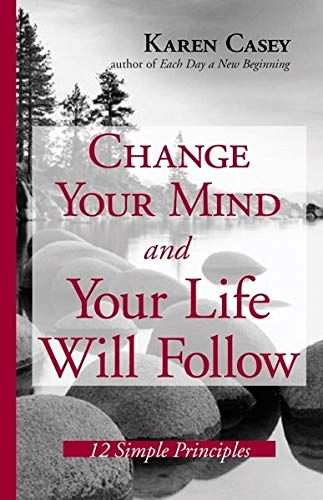
“Change Your Mind and Your Life Will Follow: 12 Simple Principles” was written by Karen Casey, a speaker and author of 16 books. Here are some lessons that resonated with me:
- Tend your own garden. Focusing outside ourselves and attempting to control other people is a clever avoidance technique that helps us escape having to look at our own sometimes troubling behavior.
- We are not in charge of others! Not their behavior, their thoughts, their dreams, their problems, their successes, or their failures.
- Let go of outcomes. No matter what we do or how perfect our input, we are never in control of the outcome of any situation. You are responsible for making the effort – nothing more.
- Don’t let the mood swings of others determine how you feel.
Any thought can be released. We are fully responsible for our thoughts and can take charge of them whenever we need or want to. No one can take charge of your thoughts, and thus your life, without your compliance.
Be vigilant about your choices. If what you are seeking is peace, you must be vigilant about the choices you make. The ego will often beckon you to choose gossip, criticism, comparisons, judgements, jealousy, fear, and anger – none of these choices will lead you to peace.
4 out of 5 stars

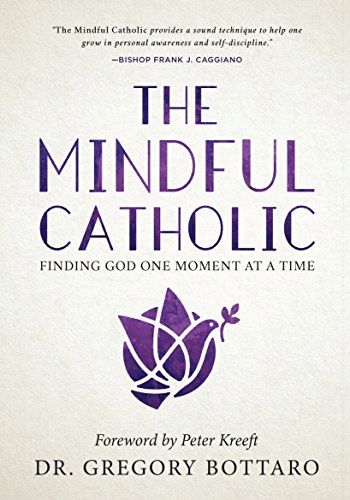
“The Mindful Catholic” is based on an eight-week program called Mindfulness-Based Stress Reduction and was written by Gregory Bottaro, the director of the Catholic Psych Institute and the developer of the Catholic Mindfulness Online Course. Here are some takeaways:
Mindfulness = paying attention to the present moment without judgment or criticism. Curiosity is the disposition of mind that we are seeking to cultivate when we practice mindfulness. Mindfulness does not mean turning off the thoughts in your mind but using them as a door to greater awareness of yourself.
Tendencies vs. Mindfulness:
- analyzing vs. sensing
- striving vs. accepting
- thoughts are real vs. mental events
- avoidance vs. approaching with curiosity
- mental time travel vs. present moment
- depleting vs. nourishing activities
This book also covered mindfulness exercises. As someone who isn’t experienced with mindfulness, here is my favorite:
- Sacramental pause – Start with prayer (“Ever-present God, here with me now, help me to be here with you“). Open your awareness to any thoughts, emotions, or physical sensations, then narrow your focus to the physical sensation of your breath alone, and finally expand the focus to the physical sensations of your whole body.
4 out of 5 stars
I look forward to reading, learning, and sharing more with you soon!
 Read Learn Share