My intention is to post a Thoughtful Thursday column each week and share some of the insights I have learned in the past week. Here are some of the things I’ve learned this week:
Self-Growth Nerds – 5 Most Powerful Questions to Ask Yourself
What do I make ___ mean about myself? Ex: rejection – “I make it mean that I will never find someone because I am deeply flawed.” I make it mean . . . creates distance between you and your thoughts. You get to be the observer of your thoughts.
What else could it mean/what else could be true? This opens your mind to other possibilities that you might not have considered because you are so focused on the one that is making you suffer.
What would ___ say? What would someone I look up to say? What would my most loving and confident friend say?
So what? Dedramatize the situation you’re in.
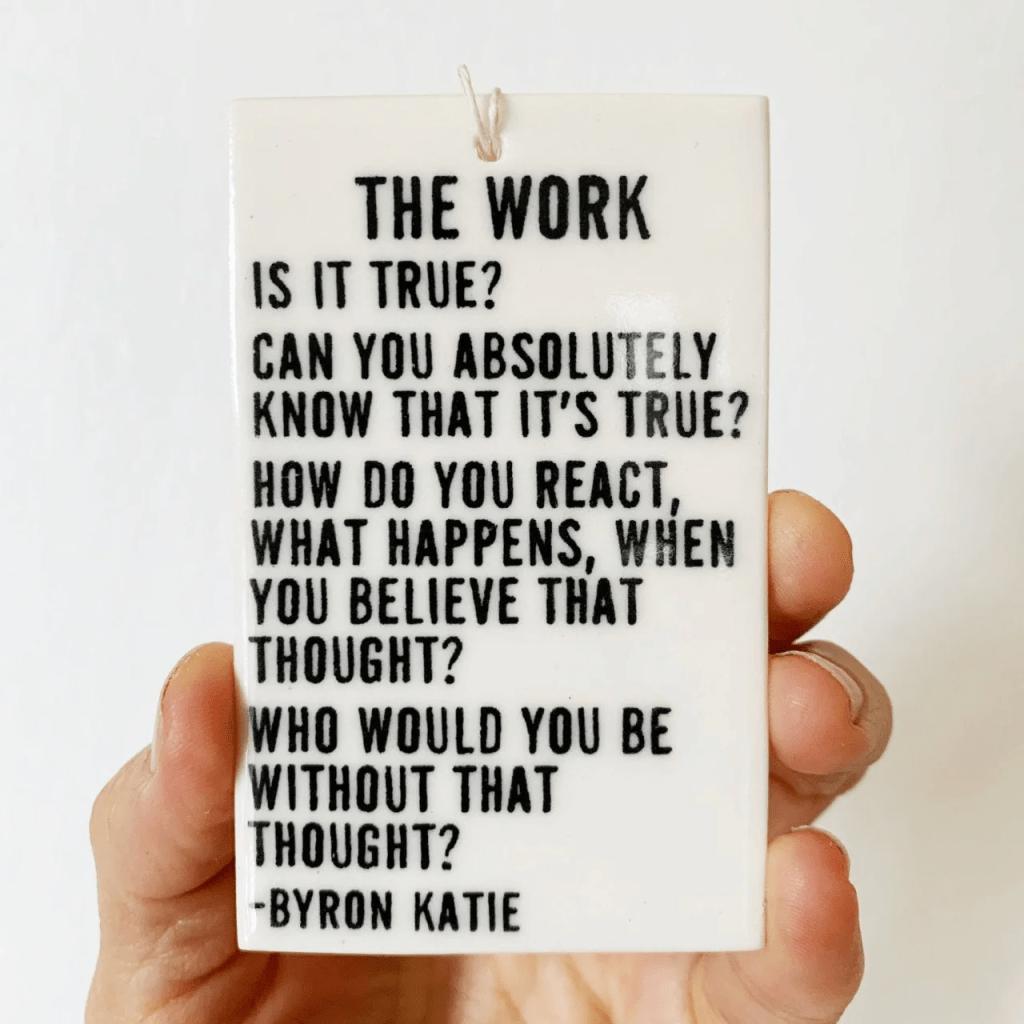
Who would you be without that thought? The thought you are so attached to is a choice. Someone else with a different background might not have that thought.
TED Health – A Healthier You: A 5-step guide to better doctor visits
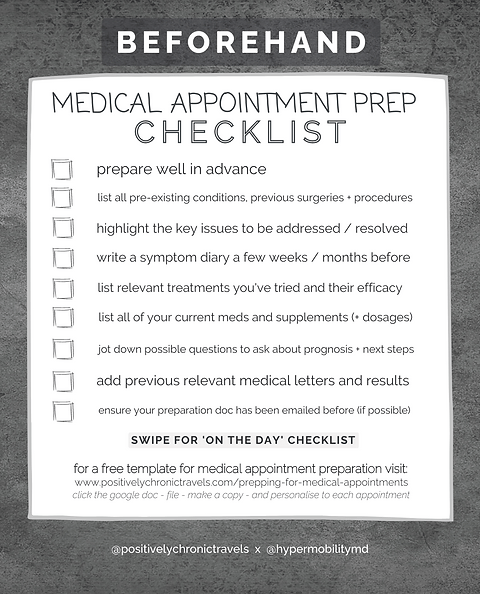
Prepare for the appointments. Write down questions or concerns to ask your doctor about.
Be real with your doctor, even if it feels awkward. Tell them the whole story. Tell them exactly how pain or illnesses or medical procedures affect your day-to-day life.
Don’t be afraid to ask questions or even get a second or third opinion. Clarifying things is necessary.
Bring a trusted person to your appointments if you can. Take detailed notes that you can review later.
Don’t be afraid to follow up. Be persistent. Push for answers or referrals to specialists. You’re never a burden for asking questions or pushing for better care. Follow up until you get the care that you deserve.
What’s one step that you can take today to be a better advocate for your own health? Maybe it’s scheduling an appointment you’ve been putting off, writing down questions for your next appointment, or following up and requesting a referral to a specialist.
NerdWallet’s Smart Money Podcast – Are You Spending Like Your Generational Peers?
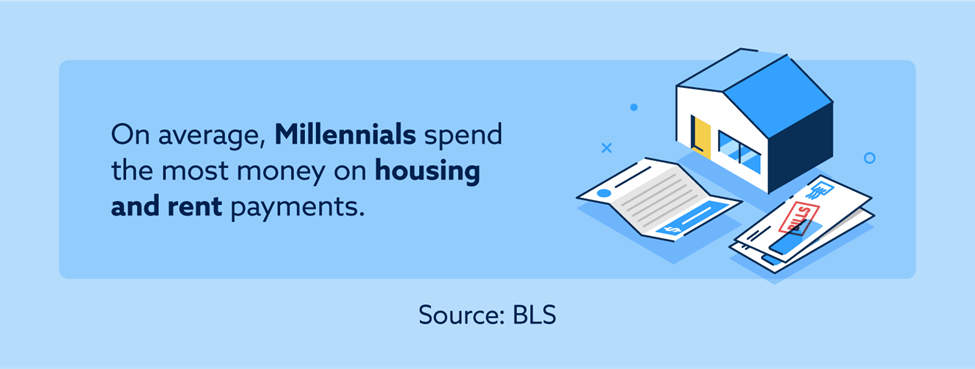
BLS data – Baby Boomers spend 95% of annual income after taxes, Gen Z spends 93% of annual income after taxes, Millennials spend 83%, and Gen X spends 84%.
Millennials and Gen X are spending close to 15% of total expenses on retirement. Gen Z are spending close to 12% on retirement. These are averages!
Food accounts for 12-13% of expenditures among all generations.
Groceries account for 7% of all spending and takeout takes up 6% of spending
Gen Z spend on average 4% on healthcare expenses.
The highest-earning generation spends the most money on transportation (car, flights, public transit). Gen X spent $17,000 on average in 2023 compared to $10,000 for Gen Z.
Are you spending and saving like your generational peers? Or are you doing better or worse?
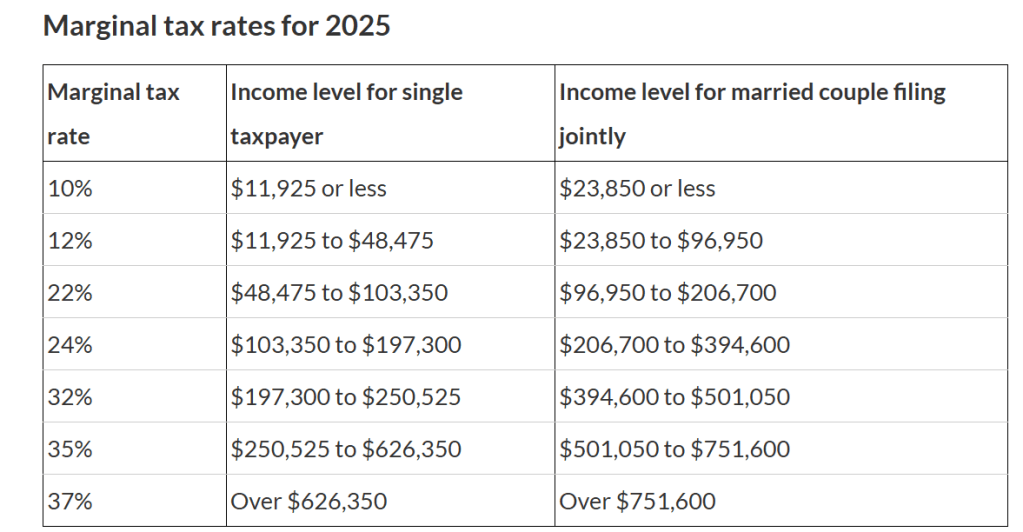
New tax brackets for 2025 + new standard deductions
Fit, Healthy, & Happy Podcast – Fitness & Health Habits to Break
Pre-workout – too much caffeine. Don’t drink more than 500 mg per day. You shouldn’t need pre-workout every day. Analyze your consumption and don’t rely on pre-workout. Are you getting enough sleep?
Over-reliance on warms ups/needing certain machines/shoes/equipment – some people are so particular and don’t deviate from warmup routines, an Apple Watch, etc.
All or nothing mentality (weekends especially) – it won’t always be a perfect day to work out and you won’t have as much time as you’d like to but move your body anyway.
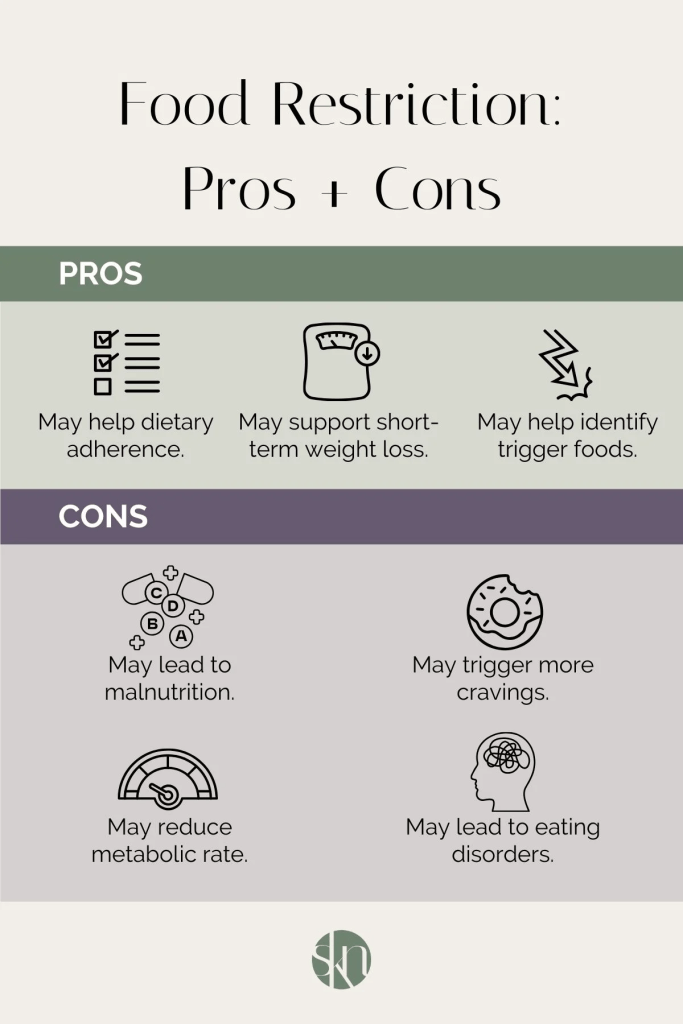
Demonizing foods – restriction causes cravings. Don’t put labels on foods. Moderation is the key to success. 80/20 clean eating
Neglecting sleep/recovery – cut off caffeine consumption by 12 p.m. Prioritize sleep and recovery.
Crutching protein and protein supplements – focus on whole food sources for protein.
Lifting with bad form – have a season where you really focus on perfecting your form.
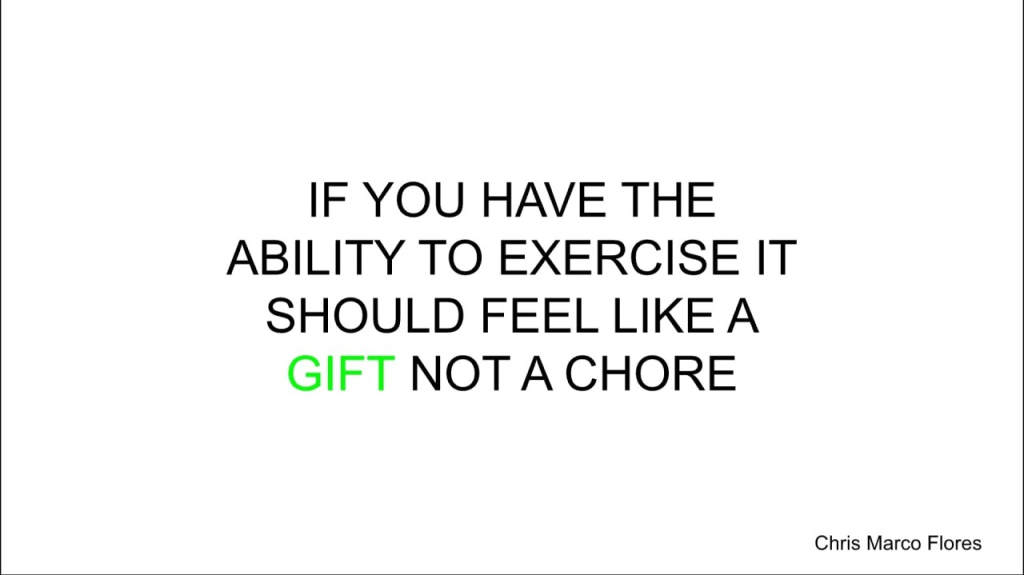
Treating it as a chore and not having much to look forward to – if you view working out as a chore, you won’t push yourself or make progress. Find something to look forward to and set goals you want to hit. When you see results or progress, working out is more exciting. Update your routine or goals or try a new challenge.
Only allowing yourself to see results or having no social life – have a balance of working out and a social life. Fitness and health need to be integrated within your life. Have some flexibility with your fitness to have a social life.
Refusing to change your mind/update your beliefs – you need to try new things, update your beliefs, and have the capacity to change your mind. Ex: you can have carbs and still be in shape.
There are lights, camera and action, but mostly there’s the unreality of making it fit.
Happily ever after, a climax at just the right moment, perfect heroes, tension, resolution and a swelling soundtrack. Every element is amplified and things happen right on schedule.
Consume enough media and we may come to believe that our life is carefully scripted, and that we’re stars of a movie someone else is directing.
This distracts us from the truth that real life is more muddled and less scripted. There is no soundtrack. We’re actually signed up for a journey and a slog. Nothing happens ever after. It’ll change, often in a way we don’t expect.
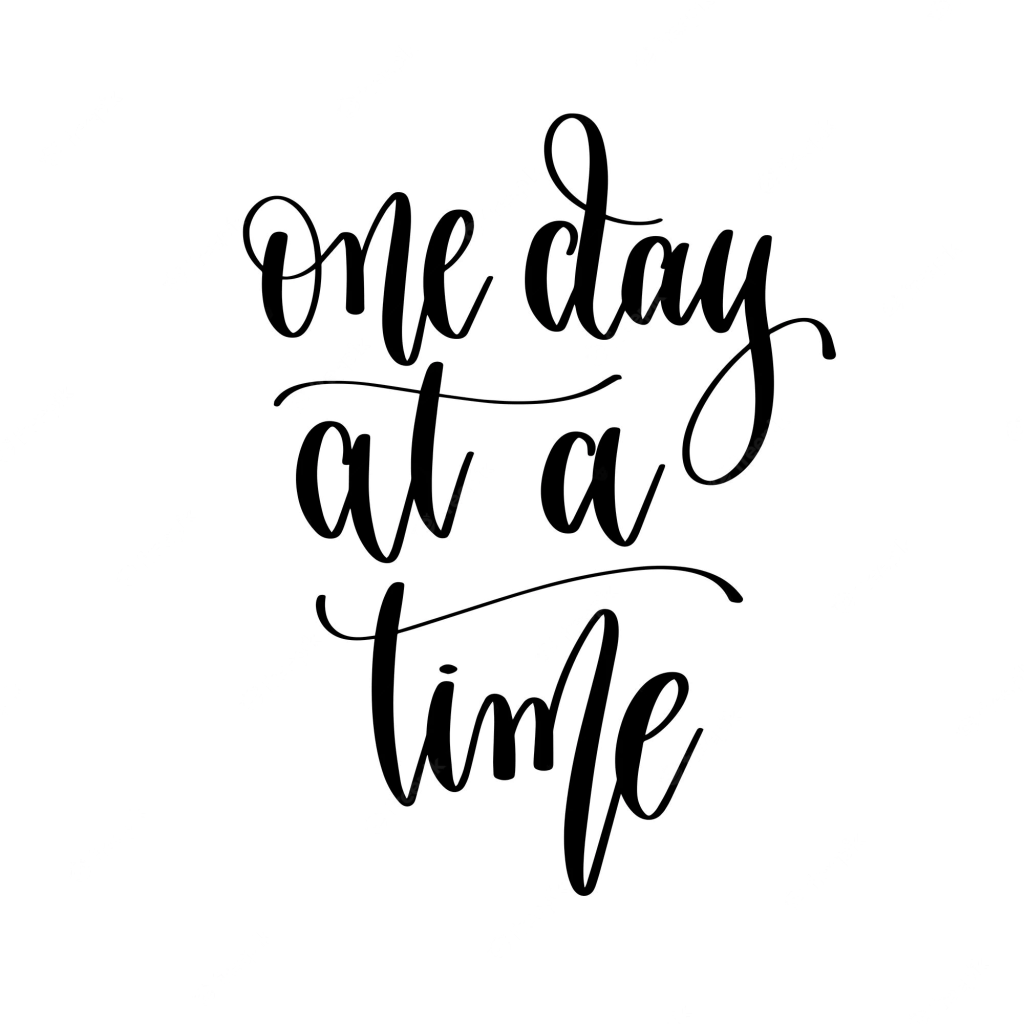
We have no choice but to condense a story when we want to film it. Our real story, on the other hand, cannot be condensed, it can only be lived. Day by day.”
I look forward to reading, learning, and sharing more with you soon!
My intention is to post a Thoughtful Thursday column each week and share some of the insights I have learned in the past week. Here are some of the things I’ve learned this week:
Life Kit – 5 simple ways to minimize stress
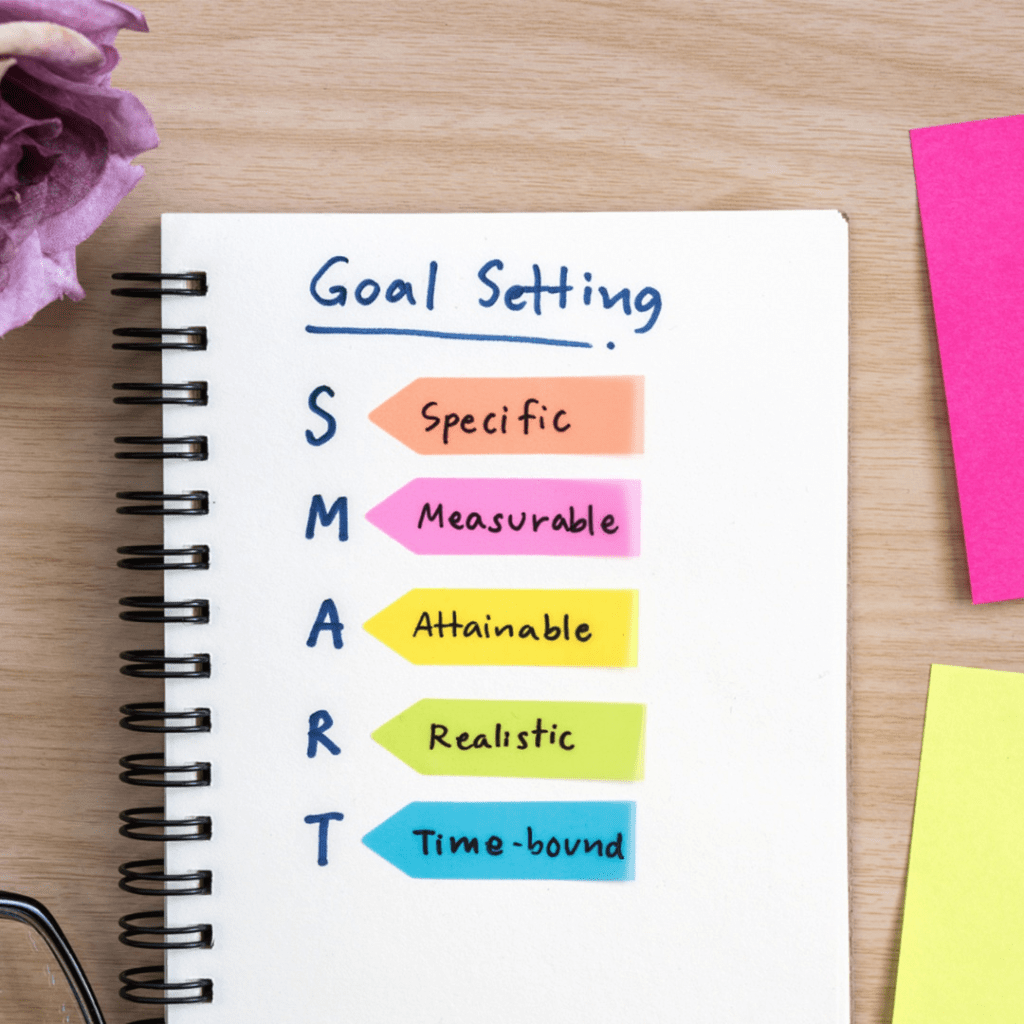
Set a MOST goal:
Motivating
Objective and measurable
Small
Timely- something you can accomplish in months.
Is there something you can look forward to when you make that change and are feeling less overwhelmed? What matters to you most?
Small changes: pack lunch the night before, take a walk during lunch, etc.
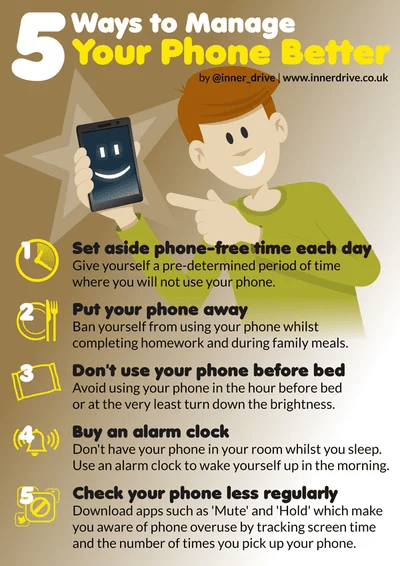
Change your relationship with technology. On average, people spend more than four hours on their phone each day! Many people scroll on their phones as soon as they wake up.
Popcorn brain – the urge to constantly bounce from task to task while we are online
The pace of life offline is much slower than the online one and needs more time and attention. Set boundaries with your phone. Limit scrolling to twenty minutes per day, disable push notifications, and resist the urge to grab your phone by keeping your phone a distance away.
Tap into your mind/body connection to lower stress. Your mind and your body are in constant communication and are linked. Do regular deep breathing exercises. Stop, breathe, and be. Daily movement can help your brain and body. Not enough movement/no movement is bad for the brain and body. Find ways to sit less and move more.
Do tasks one at a time and take regular work breaks. Time block.
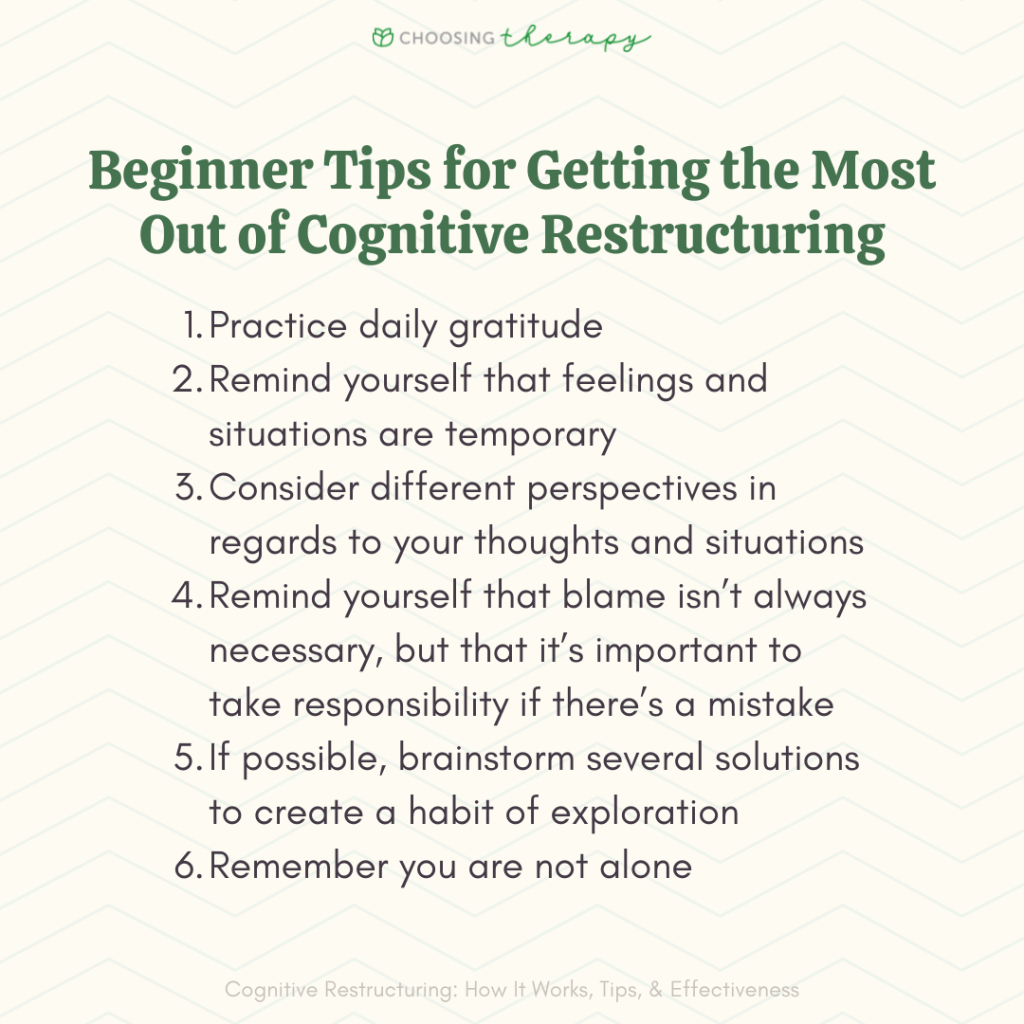
Quiet your inner critic. Your inner critic has a megaphone during periods of stress. Practice daily gratitude journaling. Work on cognitive reframing.
The Unf*ck Your Fitness Podcast – 6 Fitness Habits That Are Holding You Back
Overtraining – unless you are training for a bodybuilding/physique competition or a certain race or event, you do not need to be training more than five days each week. Working out too much can go against your body.
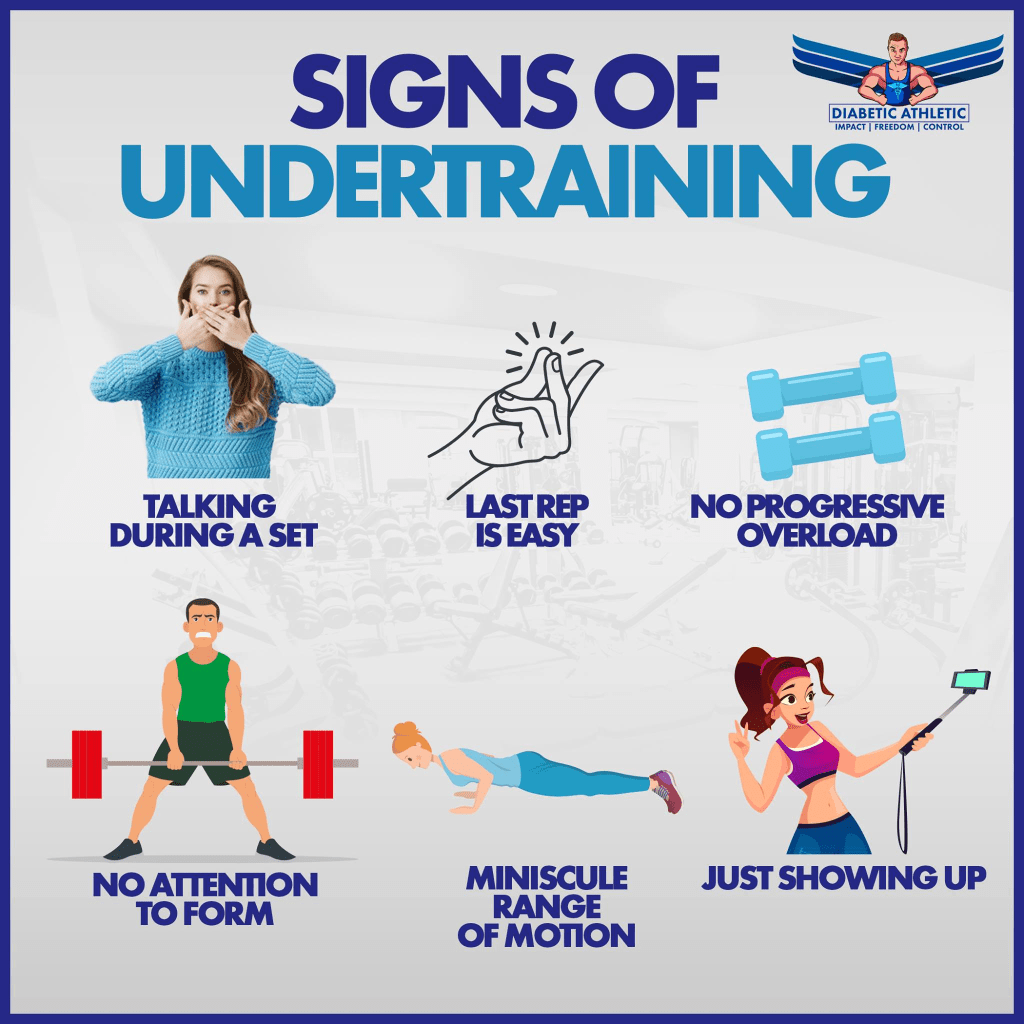
Undertraining – if you don’t have a specific plan or goal in mind, you may be undertraining. Aim to hit each muscle group 1 or 2 times per week.
Cardio – cardio is not bad. You will not tone your entire body by doing cardio. Cardio can lead to being worried about calories burned.
Worrying about calories burned – if you’re worried about the calories burned, you will do more cardio. You need to do strength training. The amount of calories you burn in a workout has nothing to do with the effectiveness of a workout.
Being afraid of lifting weights – you will not look manly or bulky. Start out slowly. Add in three days of weightlifting. The only way you can build muscle consistently and have the body you want is to apply progressive overload and make it harder for your muscles to work. Increase the difficulty of your workouts by increasing weights, increasing reps, or decreasing your rest time. Your last rep should be difficult.
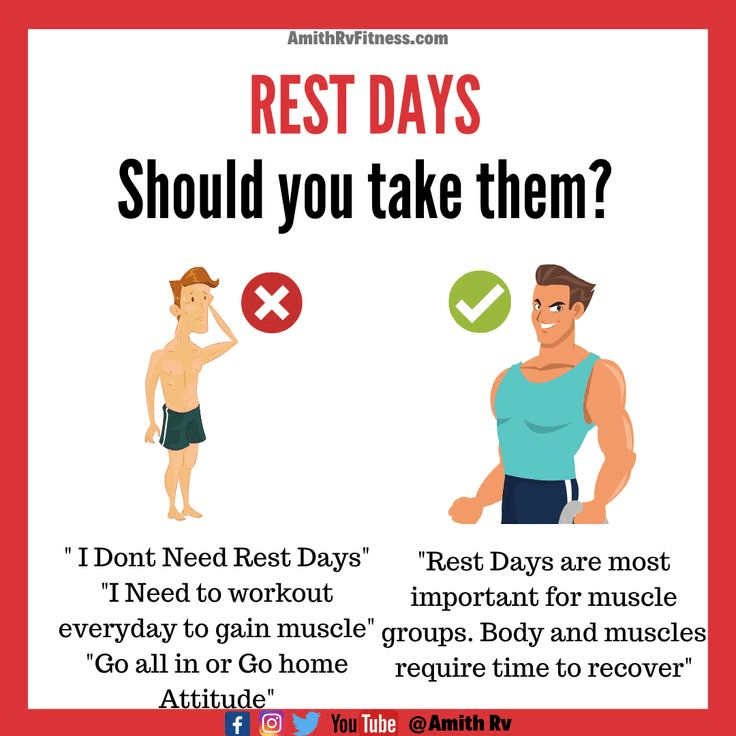
Not resting – if you are not taking rest days, you will not see results. The only time your muscles can grow is when you are at rest. Your muscles grow as they repair themselves and build when you are resting. You can do yoga, stretch, or go for a walk on rest days. Give yourself rest from lifting weights.
Self Improvement Daily – The Communication Model
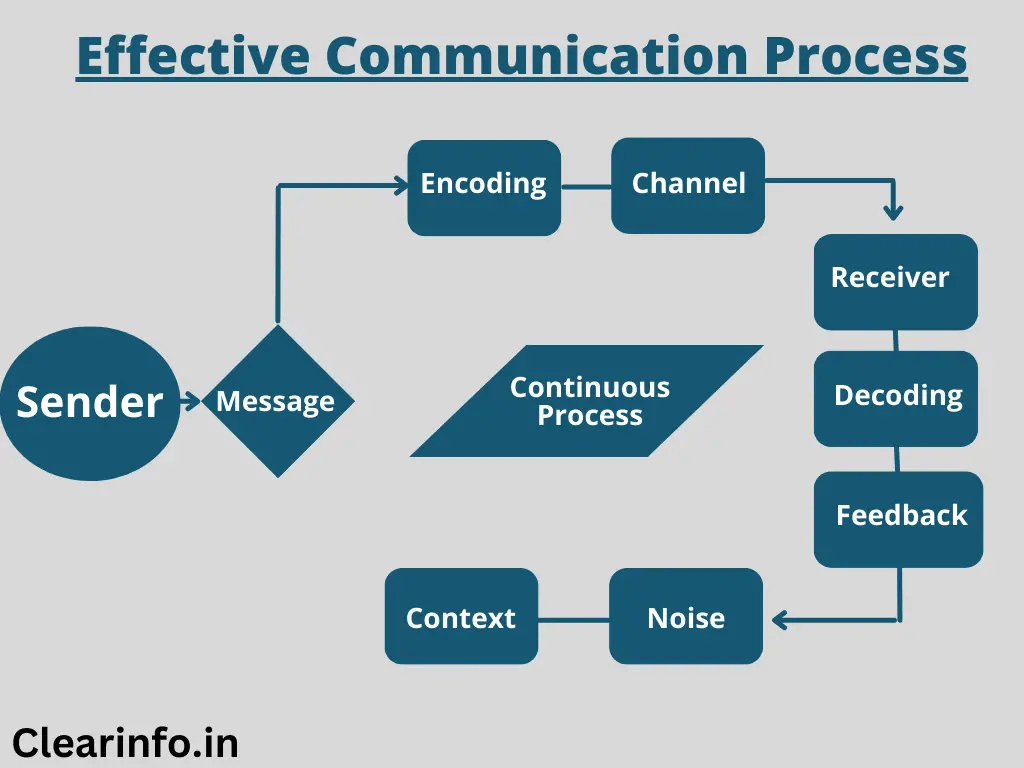
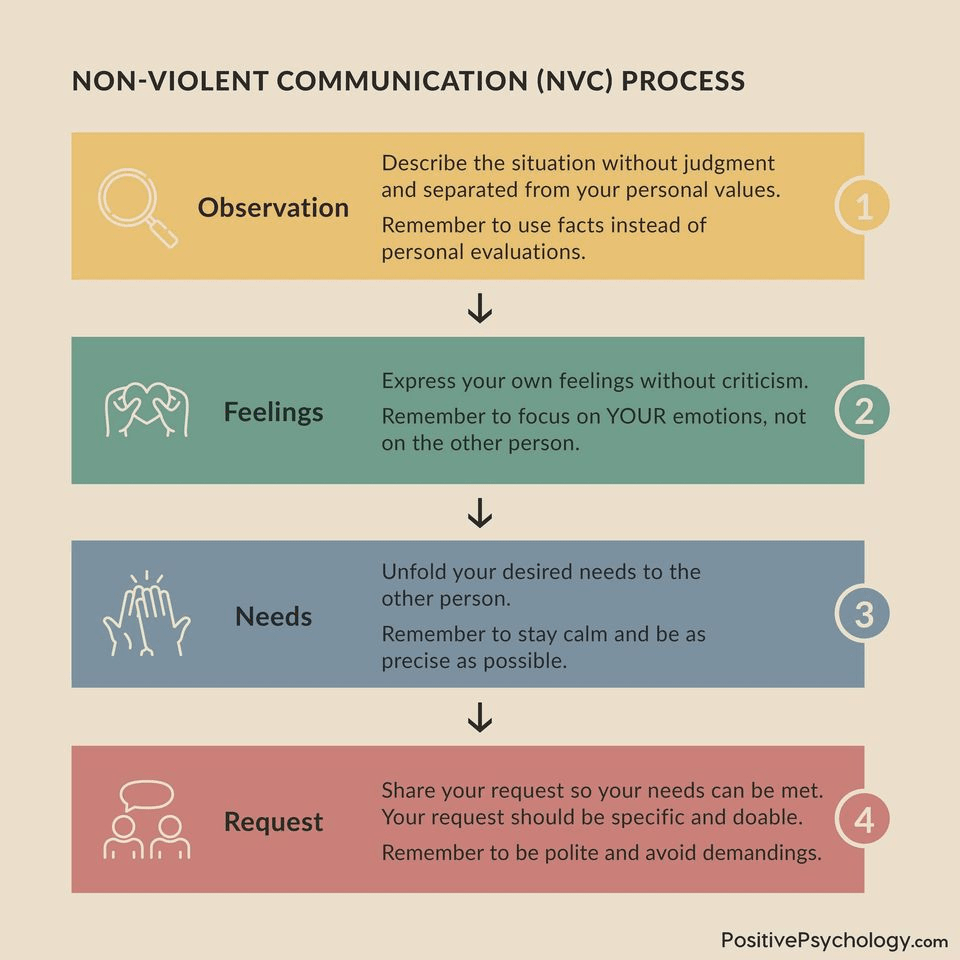
“The communication model breaks down the content of our statements into 4 categories: Facts, opinions, feelings, and wants. The idea is that when you directly address all 4 of these things in communication, it makes your message clear and fully understood.
First are the facts.This is what actually happened with no emotional connection, and no assumptions. You know something is a fact when it’s impossible to disagree with. When you start by stating the facts, it creates a neutral ground and firm foundation.
Next comes opinions. This is when you state your perspective or frame of reference. This is an elaboration on the facts and how you’re interpreting it. Note that your interpretation is not factual itself; it’s simply your biased judgment of the facts. When you express your opinions with that level of awareness, people are more likely to listen and see where you’re coming from.
Then we get to feelings. This is the specific emotion that your opinion, interpretation, or judgment caused within you. When you communicate how you’re feeling about everything, it removes any blame or fault. This reduces the threat and allows people into your world so that they know how you have been impacted.
And last, we get to ‘wants’. This is your opportunity to talk about what you’d like to happen next. When teed up correctly, your ‘wants’ don’t come off as so selfish because you’ve explained the context, and your request is more reasonable.
In a practical example, this is how a manager might speak to an employee:
Fact – The deadline was yesterday and I did not receive the completed project
Opinion – To me this means that either you have too much on your plate, or you’re not being efficient with your work
Feelings – This makes me worried because we have a lot riding on servicing this client
Wants – In the future, I want you to meet your deadlines but if you know you’re going to miss it, give me 24 hours’ notice so that I can plan accordingly.
Doesn’t that feel effective, fair, and solution oriented? The next time you find yourself miscommunicating with someone else, take a step back and make sure all 4 elements of the communications model are being addressed! It will make things clear, smooth, and understandable.”
How I Built This with Guy Raz – Liquid Death: Mike Cessario
There are over 80 brands of bottled water in the United States.
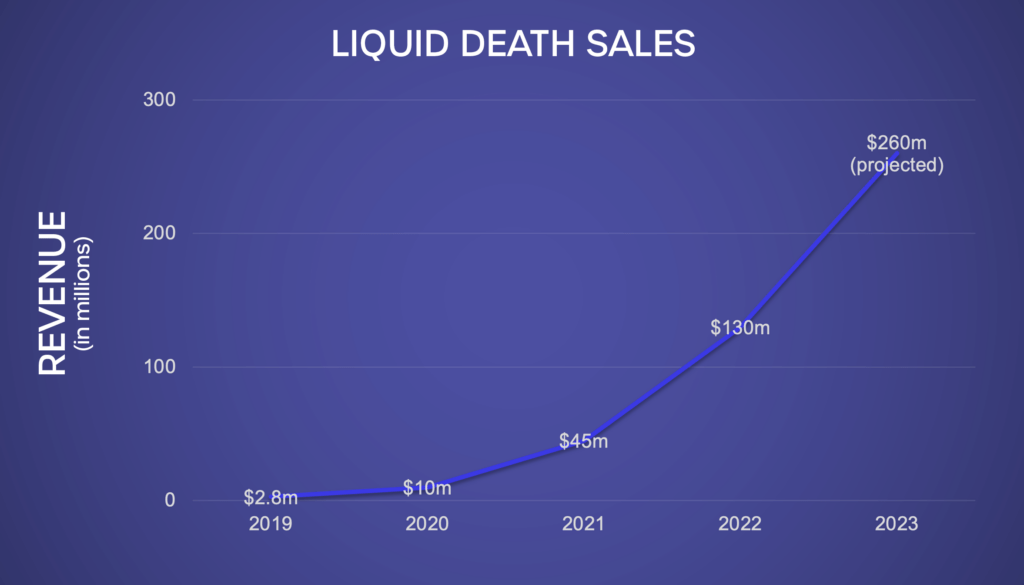
Mike Cessario had no experience in water, but he had almost two decades of experience in advertising. He knew that if he tried something totally outlandish, it might just work. Seven years later, Liquid Death sells more than $100 million of water each year.
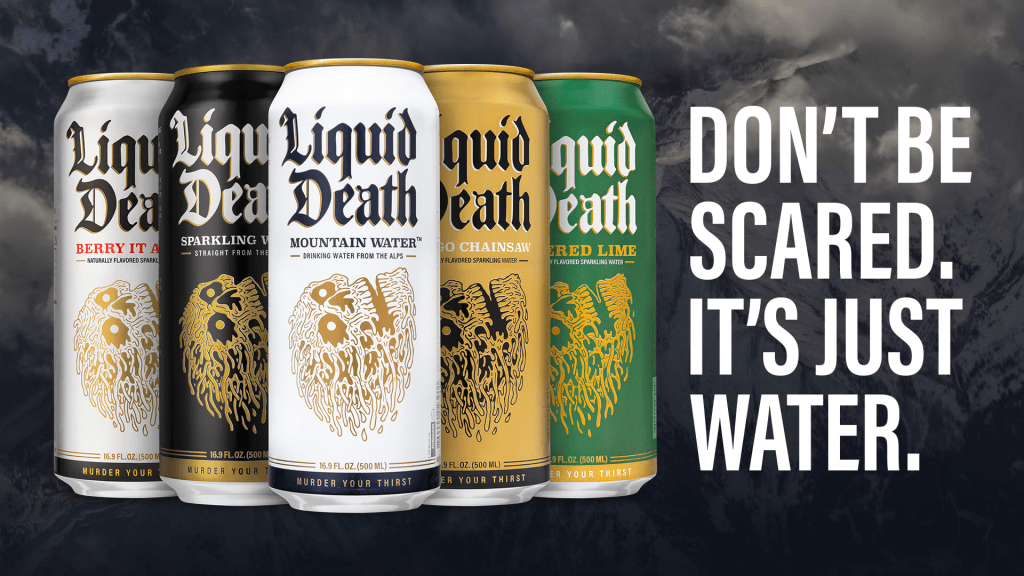
Liquid Death is water in a tall aluminum can that looks like an energy drink.
Before Liquid Death was an actual product, it was just an ad on social media that was used as a test.
Mike attended the Warped Tour and hung out with bands who were seemingly drinking cans of Monster energy drinks, but in small font, the cans were labeled “tour water.” Since Monster was their sponsor, they created water for the bands that looked just like their product they wanted to promote.
Mike’s goal was to create a water brand that looks like an energy drink and it was all about making fun of the fact that this is what people actually drink (such as at Warped Tour).
The original idea for a tallboy can was that it looks like something like a beer or energy drink that feels fun, but what’s inside is really good for you.
Mike also wanted a can because aluminum is a better alternative to plastic.
Bottled water is typically bottled at the source. It was challenging to find a manufacturer for his canned water.
No money for marketing – wanted to create something people would naturally share on social media – wanted to come up with the dumbest or craziest idea – Liquid Death was an odd name people would be drawn to and want to share.
Mike chose a German black letter font that was used on beer cans.
Mike started an Indiegogo fundraiser trying to raise $150k featuring a video of a woman pouring out Liquid Death – trying to position water as extreme and causing death – kills surfers, avalanches, etc. The Indiegogo was not successful and only raised $1,500. After that, Mike made posts on social media over the course of four months and the video had almost 3 million views and the page had about 60k followers, despite not having any product to sell!
The ad campaign was started before he had a product! In 2018, he had a Facebook page with several followers, a video with millions of views, a 7-11 franchisee from Michigan wanting it in his three stores, and the biggest non-alcoholic distributor in New York wanting to talk to a sales rep about the product.
Many people told Mike his product was impossible in the United States. Mike found a place in Austria that had canning capabilities, but he still needed the capital.
Mike says the branding is more important to him than the taste. People buy things that have the same functionality as other items, but are loyal to a brand and are willing to pay more for it. Mike said the source mattered to people, but that’s enough to make people feel that it’s a premium product.
Some people find the brand appealing and want to try it instead of trying an energy drink or a different brand of water.
Mike wanted to use Amazon to ship and fulfill the product. Amazon charges you a fee for every case that they ship and fulfill, so he had to charge $20 for a 12 pack in the beginning to make any money because the shipping costs were so expensive.
Amazon was originally selling a 12-pack for $20 due to shipping, but then Whole Foods sold it for $14.99 for a 12-pack since shipping wasn’t required.
Spring of 2021 – container ship blocked the Suez canal and started a chain reaction of ocean freight costs increasing by 5x. Mid-way through 2022, it went up again. They decided to move to co-packing in the United States in western Virginia.
By 2021, Mike raised a series-C with over a 500 million dollar valuation!
In 2021, Liquid Death did $45 million in gross revenue, which is small for a beverage company.
Smart Water (plastic bottles of municipal tap water) sells over $1 billion each year.
Coca Cola, the biggest company in the world with all of the resources and shelf space, tried to take share in the energy company by creating Coke Energy. The experiment lasted two years and was a massive failure, and it shows that giant companies are bad at creating brands.
If the brand was only about water in aluminum cans, Coca Cola could make the product much cheaper. That’s why Liquid Death has always led with the brand and what they can own first: funny, irreverent brand making people laugh, murder your thirst… forget the plastic was always the second focus, as they knew they couldn’t own aluminum cans as a brand.
2024- predicting well over $100 million in revenue this year
What makes this brand sustainable in the long run? What makes it have staying power? Internet and technology makes it so that brands don’t often last 50 years. In five years, you could be a brand doing billions of dollars in sales.
Mike says luck was involved in his success, but his previous experiences helped him make the right decisions. He says the brand is a true reflection of himself.
I haven’t tried Liquid Death yet, but it was fascinating learning about the brand!
I really enjoyed this post from Gabe the Bass Player this week:
My intention is to post a Thoughtful Thursday column each week and share some of the insights I have learned in the past week. Here are some of the things I’ve learned this week:
Self Care IRL – 8 acts of self respect to start your new year
Say no regularly. By saying no, you have more time to focus on yourself and the lifestyle you want to create.
Remove yourself from drama cycles. Don’t surround yourself with people who often complain and leave you feeling burned out and exhausted.
Stop gossiping. It provides escapism, causes you to judge yourself more, and does not create a healthy relationship with those you gossip with.
Find things that make you happy and do them. Find things you love and are passionate about.
Release the need for external validation. Needing external validation can lead to avoidance and the inability to take action. The highest level of respect we can give ourselves is to validate from within.
Find a way to give back or help other people.
Move your body. Move your body, change your mind.
Learn your own values. Most people are living within other people’s values or actions. Do your actions and priorities align with your values?
Fit, Healthy & Happy Podcast – Secrets to Getting Super Fit for 2024
Start executing on your goals now. Do not wait until a specific date or the perfect situation. If you have a big goal, get started now.
Create a circle around you of people who are also fit, healthy, and happy. Surround yourself with people who are doing better than you and who inspire you.
Have a coach to optimize and plan your nutrition, training, and accountability.
Plan ahead – meals, workouts, commitments.
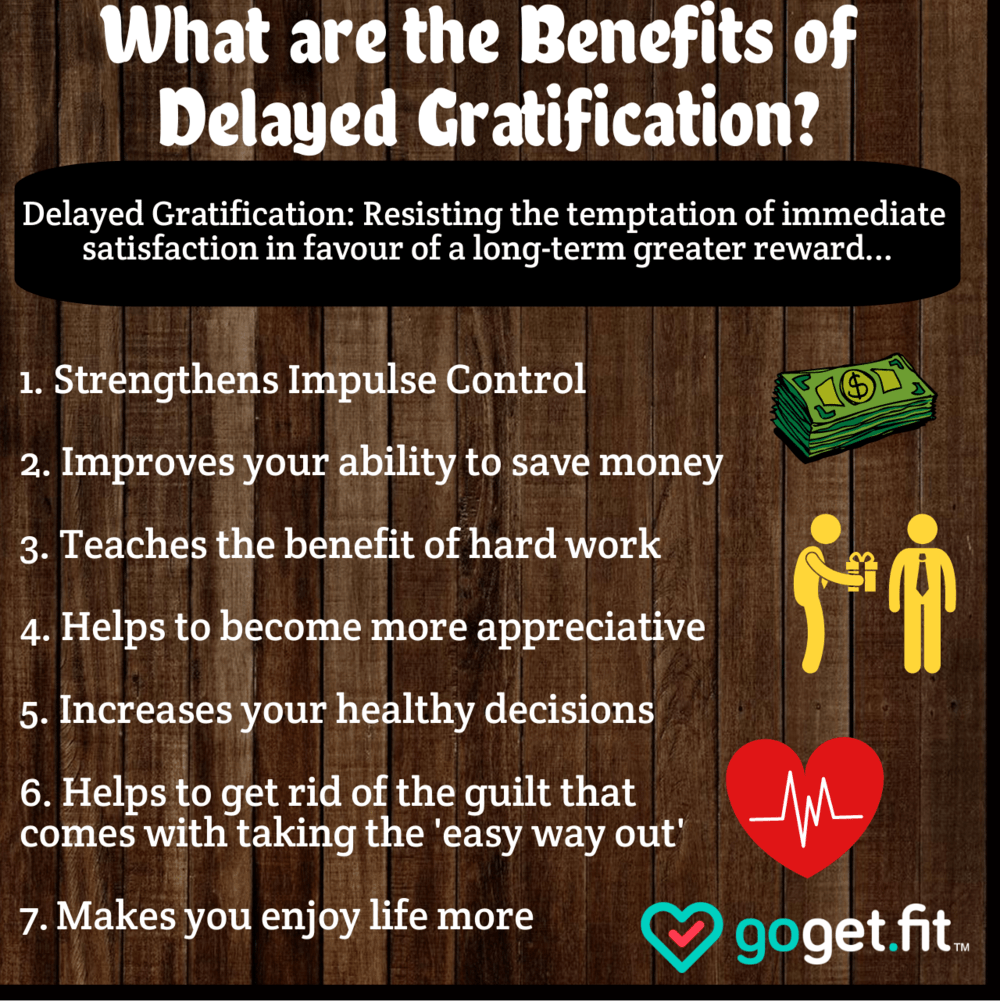
Be willing to sacrifice what you want now with what you can get later. Practice delayed gratification.
No excuses. Look for reasons to work out, not excuses.
Mary’s Cup of Tea: the Self-Love Podcast for Women – The Best Book on Communication
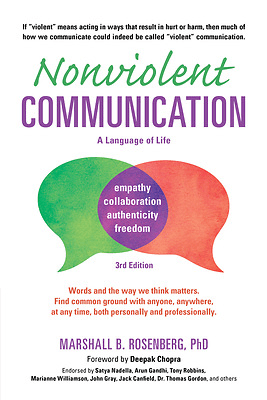
Book – Nonviolent communication
Violent communication: results in hurt or harm. Judging others, bullying, having racial bias, blaming, finger pointing, discriminating, speaking without listening, criticizing others or ourselves, name calling, reacting when we’re angry, using political rhetoric, being defensive, judging who’s right or wrong
Nonviolent communication: integration of consciousness, language, communication, and means of influence
Learn to sense the needs of other people and tune into empathy and bring it back to the feelings and the needs as opposed to being defensive, offensive, trying to be right, trying to convince someone otherwise, trying to prove your point, or trying to be more understood. Sense the needs of other people and what they are feeling beneath the words they are expressing.
I have not read this book, but after listening to this podcast, I will be adding it to my list of books I’d like to read!
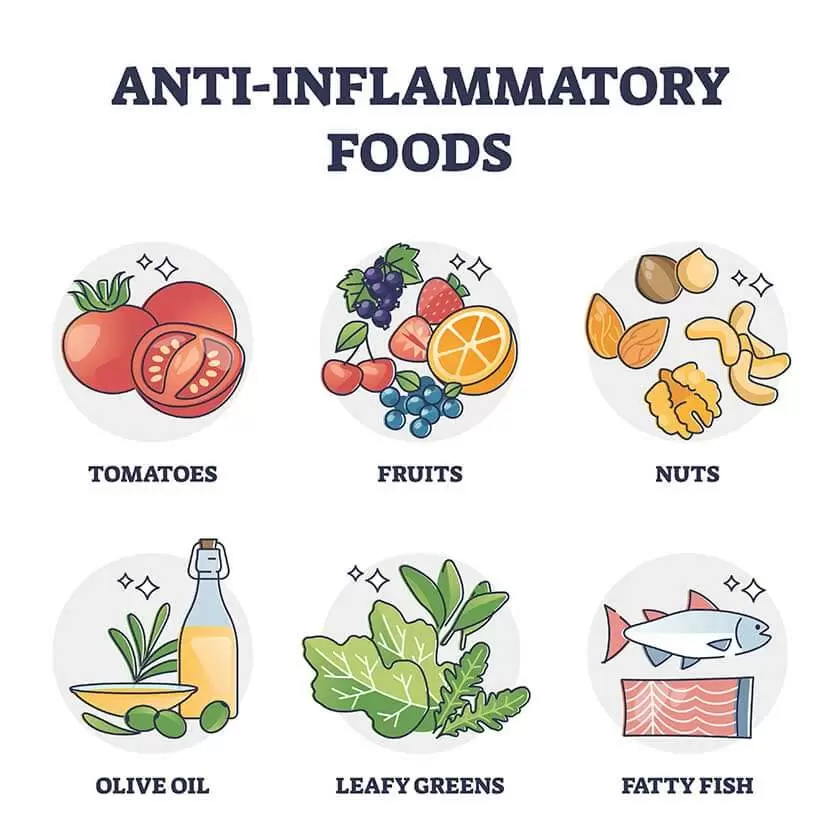
Intermittent Fasting – Top 10 Anti-Inflammatory Foods
Berries (specifically, wild blueberries and cherries)
Fatty fish – sardines, anchovies, mackerel, wild salmon
Cruciferous vegetables
Olives and cold pressed single source organic olive oil (in a dark bottle)
Avocado
Nuts (walnuts, almonds, macadamia)
Tomatoes
Peppers
Green leafy vegetables
Dark chocolate
The Mel Robbins Podcast – Reset Your Gut in 5 Days
Dr. Amy Shaw is a medical doctor trained at Harvard, Cornell, and Columbia University.
Bloating is normal and is caused by having unhappy gut bacteria.
FFF morning routine: fasting, fitness, and fermented and fibrous foods
Stress can cause bloating. Stress can cause your nervous system to interfere with your gut’s ability to properly digest food and keep your gut bacteria balanced.
5-step method to heal inflammation, reset your natural hormone balance, and heal food sensitivities
Dr. Amy Shaw recommends you fast for 12 hours (supper to breakfast)to heal your gut.
Rest your gut in 5 days
Five day reset:
Day 1: fasting (12 hours), fitness, fermented and fibrous foods. Add 30 minutes of exercise. When you start moving your body, the distention starts to move. Physically twisting your gut will release some gas and get things moving. Ex: yoga, abs
Day 2: fasting (12 hours), fitness, fermented and fibrous foods. Eliminate dairy, gluten, white sugar, or whatever you think may be triggering you.
Day 3: fasting (12 hours), fitness, fermented and fibrous foods. Start eating foods your gut loves. Spinach, asparagus, fruit, yogurt, etc. Protein: soaked black beans, fish, tofu, eggs, cottage cheese, yogurt, nuts. Your gut doesn’t want “fake” protein – fake meat substitutes, bars, shakes, etc. Processed red meat can cause inflammation.
Day 4: fasting (12 hours), fitness, fermented and fibrous foods. Enjoy. Spend time with people who are good for your mental health and gut health. Spend time with people who make you feel your best.
Day 5: fasting (12 hours), fitness, fermented and fibrous foods. Put it all together: exercise, protein-rich food, enjoy.
It can take up to three weeks to figure out what foods you’re sensitive to with an elimination diet.
You may feel better in as little as three days!
When you eat probiotic foods, the bacteria are delivered to the bacteria that are already in your gut, and our body is more likely to incorporate natural probiotics into our gut ecosystem compared to probiotic supplements.
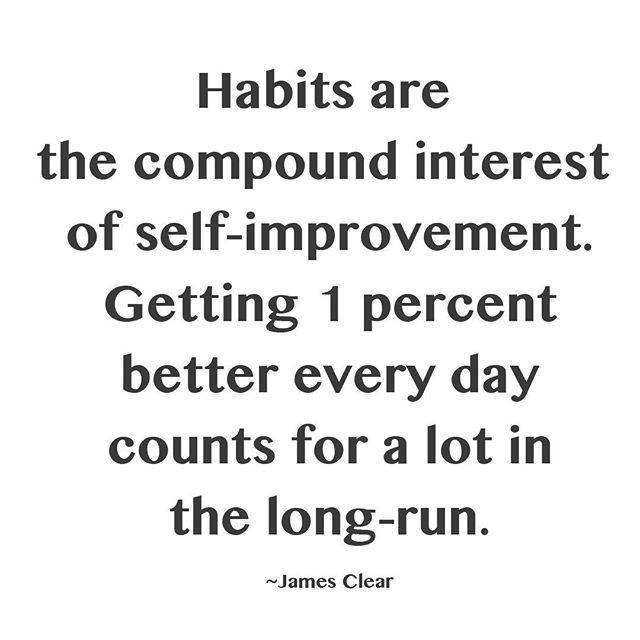
Sad to Savage – Getting 1% Better, Habit Stacking, Waking Up Early and Willpower
Ways to get 1% better: daily walk, hit 10k steps, read every day, write self-love affirmations, clean up your space, dishes before bed, clear off table every day, lay out clothing for tomorrow, listen to a podcast, call a friend, habit stack
Habit stack ideas: podcast or audiobook while working out, folding laundry, cooking, or meal prepping.
You will never walk away from a book without learning at least one thing.
Waking up early will change your life. It allows you to create time for yourself before you give your time to others (through work). You will have the most willpower in the morning.
Consistent schedule – Monday through Friday – pick a time you want to wake up and a consistent morning routine. To wake up, sit up in bed and chug warm water. Put your phone on the ground so that you must physically get up to turn off your alarm. Use an automatic light bulb to wake you up at a specific time.
Elevate your morning, elevate your life.
I am working on establishing my morning routine and slowly working on getting up earlier. It is something I have been struggling with, as I sleep through multiple alarms.
Inside Out Money – Simple joys and the art of saving money
Simple joys that can keep you from spending money: a walk out in nature, talking with a friend or family member, playing in the yard with kids, reading a good book from the library
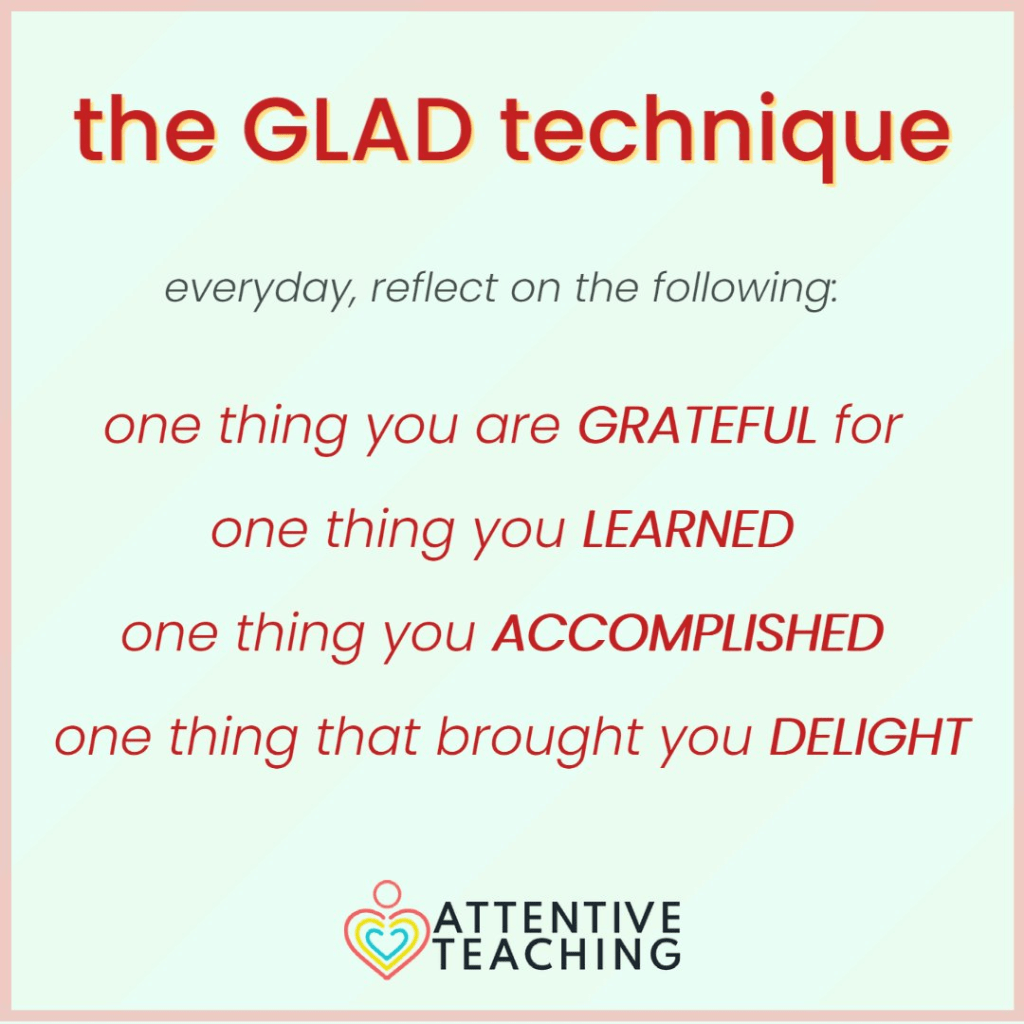
Gratitude daily – GLAD method: Something you’re grateful for, something you’ve learned, something you’ve accomplished, something you’ve delighted in.
I love this idea and am looking forward to trying it!
Find something you’re grateful for that you often take for granted.
If you have too many items, your family won’t know what’s important to you when you die.
Clean to have an organized life.
Make a list of what you’re shopping for and stick to it.
Consider a no-spend month and use what you have OR allow yourself to only spend on a certain day of the week so that you must delay instant gratification.
Limit time on social media to avoid being influenced into buying more items.
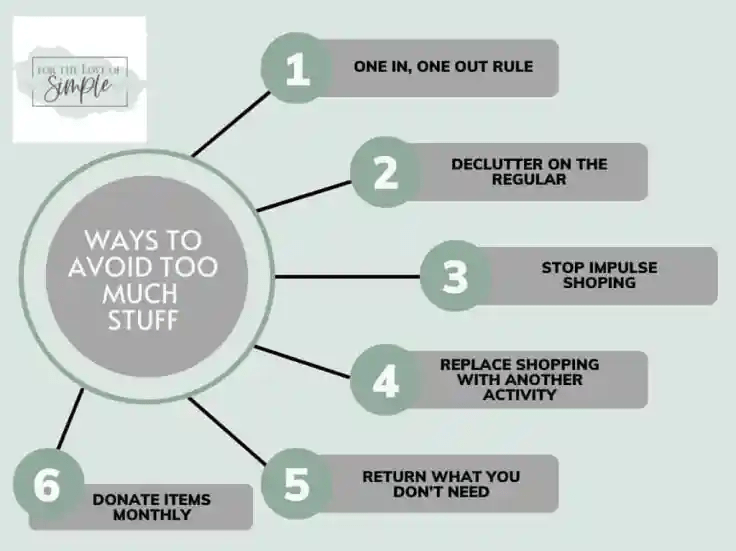
Questions to ask yourself while decluttering:
Is this my favorite?
Do I love it?
If I lost it, would I replace it?
Would I buy it again?
How much would it cost me if I had to replace it?
What’s the worst thing that could happen if I let it go?
Is this thing in solid working order?
Is this item plastic?
Would this item come with me if I were moving/downsizing?
Does this item spark joy?
Did I bring this items into my life?
If I were free from guilt, would I still keep it?
Will I have more space to do the things I want?
Do I need to save it for tax or legal reasons?
Have I used it in the last year?
Do I want my kids or others in my family to have to take on the burden of this item?
I look forward to reading, learning, and sharing more with you soon!
My intention is to post a Thoughtful Thursday column each week and share some of the insights I have learned in the past week. Here are some of the things I’ve learned this week:
Life Kit – Scarfing down your food? Here’s how to slow down and eat more mindfully
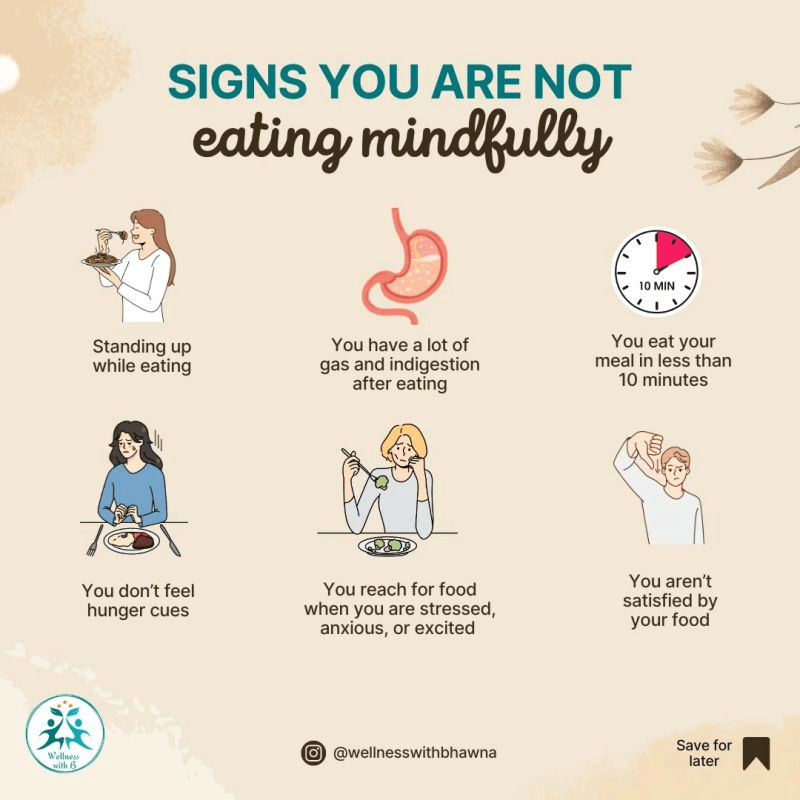
We live in a society where many people eat while on the go, while scrolling on their phones, or while watching tv. When you are eating while scrolling on your phone or watching tv, you aren’t engaging your senses and aren’t conscious of the amount you are eating.
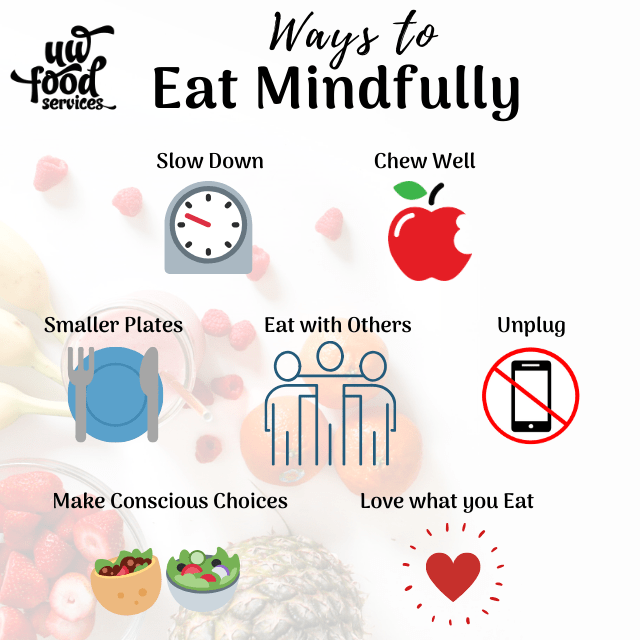
Mindful eating asks us to slow down and notice our food. Allocate time to eat and ONLY eat.
Most nutritionists urge us to take 20 minutes to eat a meal. It takes that amount of time for your brain to signal to your body that you are full. Otherwise, you get that signal too late and feel terrible.
Engage your senses as you eat. Notice the smells, colors, tastes, textures, and emotions that you’re feeling.
Honor the food. Acknowledge the work that went into that meal.
Take the time to taste the food. Try to eat one chip at a time. Put your food in a smaller dish beforehand to limit your intake. Allocate time to eat and ONLY eat.
Savor and chew your food thoroughly to engage your senses and help with digestion.
I’ve finished reading two books in the past week.
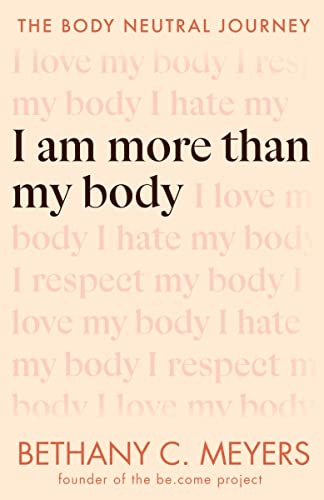
“I am more than my body: the body neutral journey” was written by Bethany C. Meyers, CEO of the be.come project. Bethany has over 15 years of experience in the fitness industry as an instructor, teacher, and workout creator. I struggle with my body image, and this book was much needed and thought-provoking. In fact, while I was reading this book, I had to refrain from exercising due to a foot injury, and my primary emotion was guilt. I felt guilty for not being able to be consistent with my habits. This book came at the right time. I will discuss this book in much more detail on my blog sometime, as I got SO much out of this book that may be helpful to others.
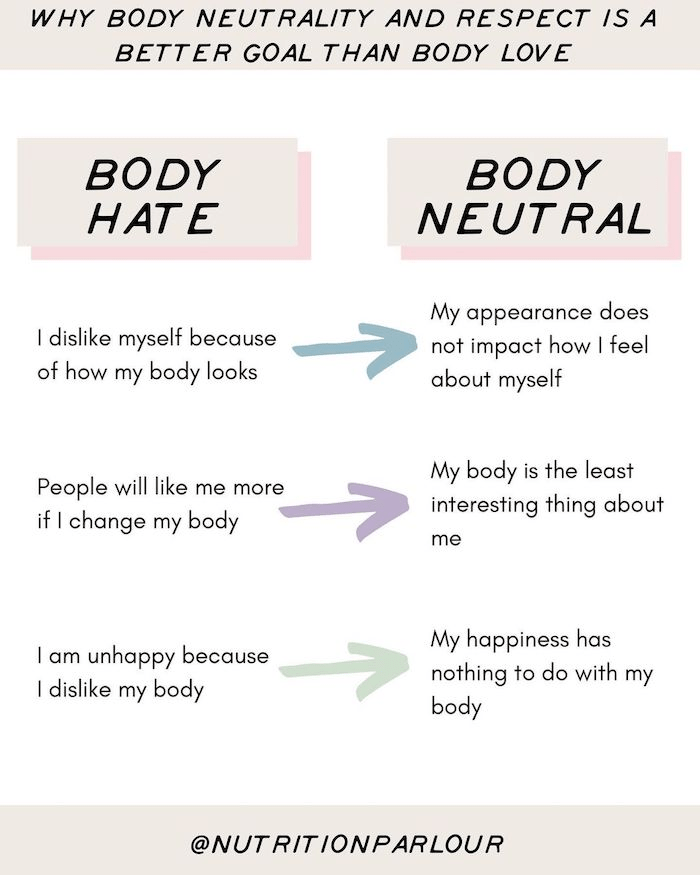
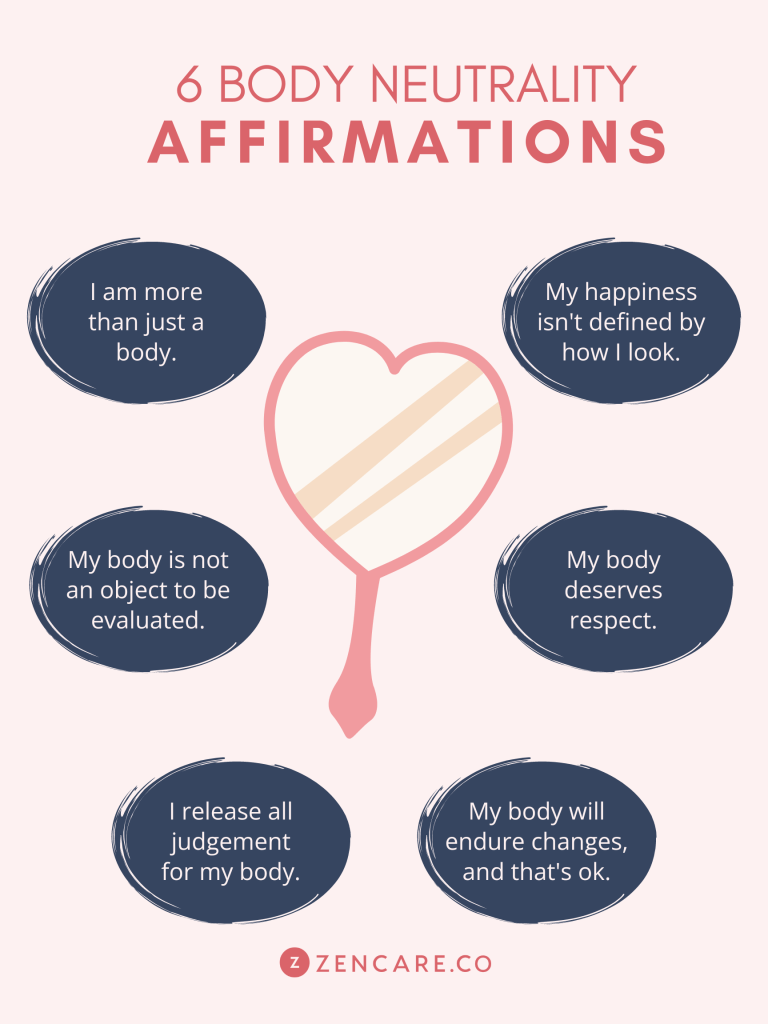
In short, body neutrality is the idea that each of us is more than our body, and our worth is not limited to our physical self. It is respecting our body even though we may feel differently about it on any given day.
The body neutral journey is to acknowledge the feelings we have, explore why those feelings came about, and reconnect with our self-worth.
Some of the many points to consider: If you have been speaking poorly to yourself and judging yourself harshly, how much of that is seeping out into your relationships with others? How do your own comments about your body impact the people around you who hear them (especially children)? Are you appreciating the functions of your body without criticism? Are you focused on your body’s failings? Are you comparing yourself to others? When choosing to exercise, are you solely focused on changing your physical form? What influences or media do you consume that frames exercise as a punishment, a requirement, or a means only to change your physical shape?
Fit, Healthy & Happy Podcast – 8 Essential Habits to Become Ultra Fit
Look at your entire journey. What are your goals? What are you looking to achieve? Where do you want to be by the end of the year? Have you progressed? Have you regressed? Address that and understand why, and implement the changes necessary to make sure you are progressing. It is easy to make excuses, but you need to be honest with yourself about how you can improve and implement the necessary changes. Set a goal and be intentional in making progress to achieve it.
Establish a workout routine and keep track of it. Keeping track allows you to be more aware of what are doing and also allows you to more easily measure your progress.
Follow a nutrition protocol. Make sure you’re eating enough protein to maintain and build muscle. Eat mostly clean foods.
Prepare by planning your workouts and food and developing new goals and challenges.
Have accountability. Methods include using a habit tracker or checking in with friends or a fitness coach.
Continual learning. Listen to podcasts and do research. You don’t need sketchy supplements.
Develop habits that make it easier for you to achieve your goals.
Don’t be all or nothing. There will be ups and downs in your journey. Keep showing up.
Mentally Stronger with Therapist Amy Morin – The Truth About Alcohol and Addiction Recovery with Former School Principal/Author Daniel Patterson
I don’t drink, but I wanted to learn more about alcohol and addiction recovery. This podcast was very insightful!
1 out of 5 deaths for people between the ages of 20-49 is attributed to alcohol.
Many people go to great lengths to hide their drinking problems.
Daniel said that, in any situation, alcohol was the top priority: strategizing, sneaking around, mental equity spent wondering will I have enough, do I have enough, where can I get enough, should I drink beforehand, and not being present at outings.
Daniel got really defensive when his wife would call him out on his problem and would say things like “I can stop, I can take a break” and make empty promises like “I’m only going to drink on the weekends” and would last for a weekend. Pretty soon he was drinking every day again. Eventually he would use his trauma as his defense.
“You can quit for other people, but you can only stay sober for yourself.”
“My wife went to therapy to deal with how to understand me without enabling me. I would lie to my doctor about my alcohol use.”
“I was using my previous trauma as a hall pass to drink.”
“To quit, you have to be willing but you don’t need to be ready.” Many alcoholics will set a quit date and then make excuses like “we’re going to the lake and I like to drink at the lake, it’s the 4th of July and I’ll want to drink,” etc. There is always going to be a reason to drink, but there is always going to be a reason to not drink too.
After quitting, Daniel reports that his mental health became more manageable, he was sleeping better, and through therapy, his trauma became processed, so he had eliminated a lot of my talking points he would use to defend his drinking.
Many alcoholics will say “I don’t need medication. I don’t take medication” when referring to their mental health needs, which is interesting because they are using alcohol as self-medication.
To begin quitting, Daniel removed all alcohol from his house and would mark days off the calendar with an X, take two walks each day “sober walks”, watched tv, read books, listened to podcasts, etc. He tried to be sober for one month, and he felt better, so he stopped drinking altogether. He reports his energy and sleep were better, and he was so proud of himself.
“It’s never been easy, but it’s gotten easier.”
Access to resources is a huge barrier for many people. It requires good insurance and time freedom and financial freedom to go to treatment and take time off work.
“People say life is boring without alcohol, but life without alcohol is peaceful. I think they’re mistaking peace for boredom. It is a transition at first; you have been giving your brain an instant hit for years, so your brain is trained for instant gratification, and you take it away and have to sit with it. It can be lonely without drinking because the changes that have to be made for sustained recovery often require not doing the things you used to do with the people you used to do them with. You have to rest in your emotions and you can’t drink every time you’re anxious, nervous, sad, or celebrating. Alcohol has Velcroed itself to every situation, rite of passage, and emotion in our society that it is odd if you don’t drink and not odd if you do drink.”
“People are treatment-averse and label-averse. They are afraid of being labeled an alcoholic. I encourage people to ask the question: Does drinking benefit my mental health, my physical health, my finances, and my relationships?”
People who want to change their behavior but are unsure where to start or what to do can start listening to podcasts of others’ stories and experiences.
Advice for loved ones of alcoholics: treat alcoholism as a medical condition and not a moral failure. Encourage medical treatment for the addiction. This can help take the morality and shame out of it. Substance use disorders have a significant biological component to them. It’s not a moral failure, a sign of weakness, or a shortcoming. Getting health professionals involved is key for so many people who want to get into recovery. Al-anon is a good resource.
Advice for those struggling with addiction: Try cutting back or quitting as an experiment. Some people find it easier to think about it as “one day at a time.”
The Jordan Harbinger Show – Dr. Sohom Das – Rehabilitating the Criminally Insane
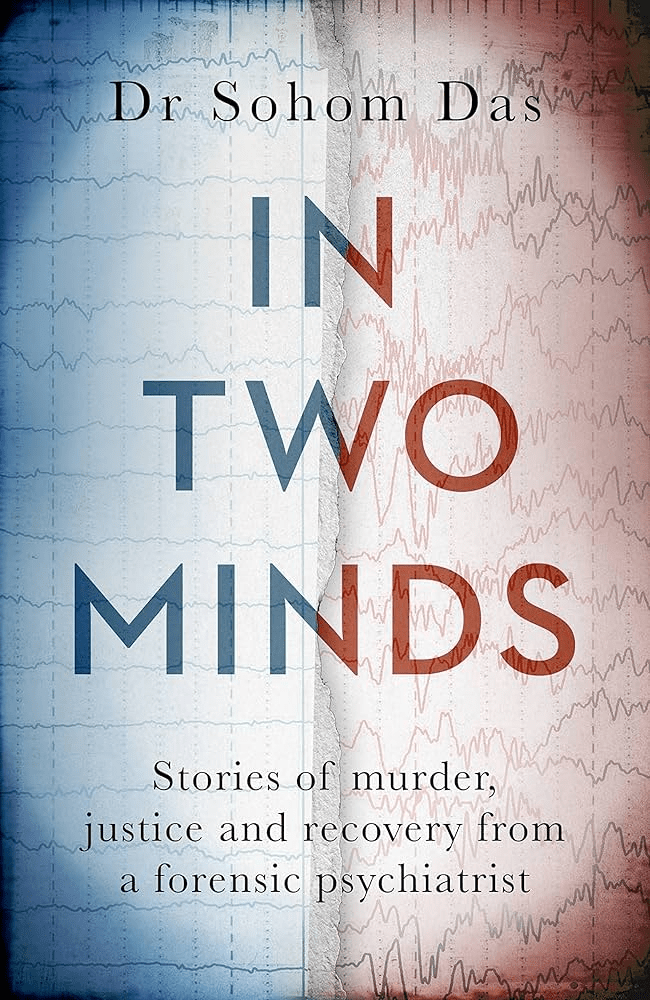
This week I listened to this podcast AND read the book “In Two Minds: Stories of Murder, Justice, and Recovery from a Forensic Psychiatrist” written by Dr. Sohom Das.
When a violent crime is committed, the justice system needs to determine if the perpetrator of that crime is a permanent danger to society who should be locked away for life, or if they’re mentally ill to a degree that proper treatment would allow them to re-enter that society. In other words, are they bad, or are they mad?
Dr. Sohom Das is a consultant forensic psychiatrist who works in prisons and criminal courts to assess and rehabilitate mentally ill offenders. He is also the author of “In Two Minds: Stories of Murder, Justice, and Recovery From a Forensic Psychiatrist.”
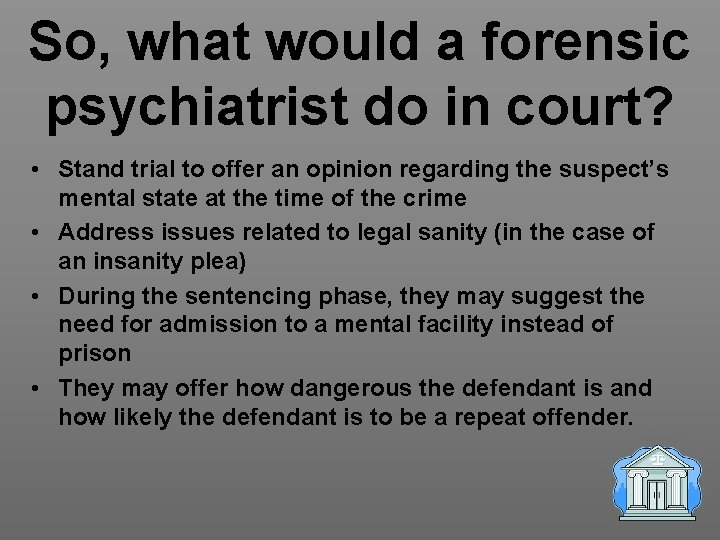
Forensic psychiatrists work in a few different environments. Dr. Sohom Das does most of his work in courts as an expert witness. His job is to decipher whether a defendant has a mental illness and whether they had symptoms at the time of the violent offense. If they did, he needs to determine whether their symptoms affect their criminal culpability. If they do, he makes a recommendation as to whether they should go to prison or to a psychiatric hospital.
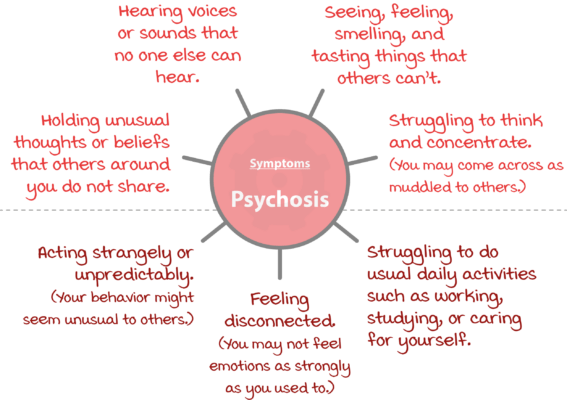
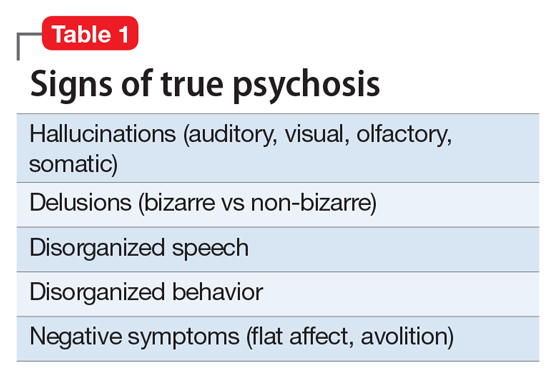
Determining mad vs. bad (a spectrum): mad (a psychotic illness – people hearing voices, telling them to hurt people, or people that have paranoid delusions). They might attack somebody because they have a delusional belief that that person’s a pedophile or that person wants to attack, hurt them, or kill them. So that’s one end of the spectrum.
The other end of the spectrum, which would be bad, would be a personality disorder. Psychopathy would be a really well-known one. Antisocial personality disorder causes people to be impulsive and aggressive. They don’t care about the rights and wrongs of other people. They are career criminals that just have a complete lack of empathy and remorse.
Dr. Sohom Das reports that 99 percent of the defendants that he has assessed have had some kind of trauma or abuse in their childhood: physical abuse, sexual abuse, neglectful parents, drug abuse, homelessness, witnessing violence, gang violence. These factors often cause criminality, but they also cause mental illness. So that’s why they’re so common. Dr. Sohom Das emphasized that he rarely sees someone who purely has a psychotic illness and has had no problems in their background or upbringing.
If you have a severe mental illness and you’re lucky enough to have a good family support structure that cares about you and will take you to a doctor and will make sure you take your prescribed medications, then your outcome generally is going to be a bit more positive.
A lot of his patients come from broken homes. They are adopted or brought up in the care system or have families that don’t look out for them. They drift into homelessness, and the mental illness itself can massively damage their physical health.
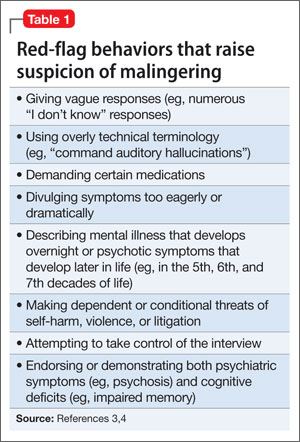
Regarding faking it: “If somebody tells me that they’re hearing voices, but they’ve been going to work every single day, they’re going down to the pub with their friends, they’re managing a normal home and family life, and they’re socializing, then I’m going to be suspicious. I’m looking at all of the evidence. I also see what their mental state is like from objective evidence from other people. If they’re remanded in prison, I will speak to the prison officers. If that person says they’re paranoid or is acting paranoid in front of me, but the prison officers say that they’re laughing and joking with others on the wings, then I’m suspicious.”
“The other telltale sign is that if somebody’s really, really unwell, they don’t have an agenda. They’re not trying to convince. They’re not trying to say that they need to be in the hospital because in their minds, those delusions are real. So they don’t think they need to be in the hospital or need antipsychotic medication. Whereas those who are trying to exaggerate or fabricate have an agenda. They tell me straight away that they’re hearing voices or that they’re paranoid.”
“So when somebody says, Voices inside my head,’ I’m already suspicious because an actual auditory hallucination feels as real as you hearing my voice now. It’s actually external outside to somebody’s head, even though people say ‘voices in my head’. The voices in psychosis tend to be quite blunt. If someone says they have a really detailed intellectual conversation with a voice, that’s really unlikely. It’s usually just one message and it’s negative, like ‘You’re a piece of sh*t‘ or ‘people think you’re a pedophile‘ or ‘these people want to rape you.’ They’re short, simple phrases that repeat over and over again.”
People can’t just fake it on the day of their psychiatric interview. If they claim to hear voices, it has to be bleed into their functioning and should affect their work, family members, and social functions. Witnesses would corroborate that a mentally ill person was acting bizarre and responding to themselves on the street, and police officers would also observe these behaviors. The police interview transcripts would indicate mental illness.
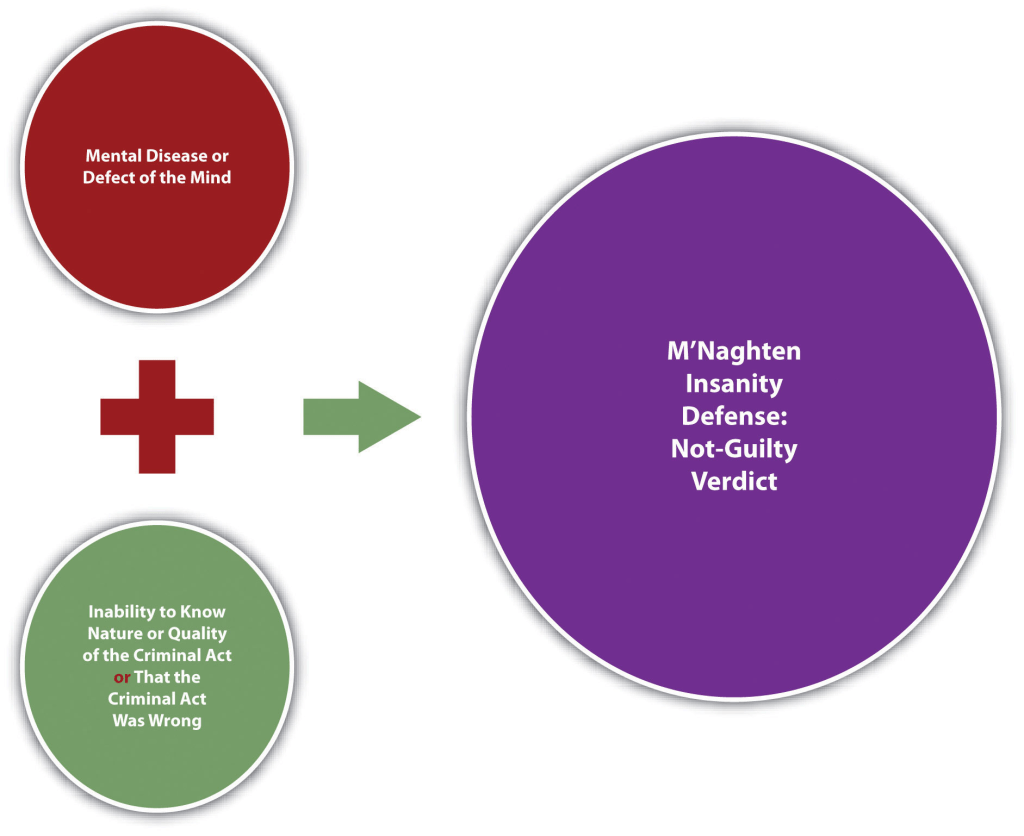
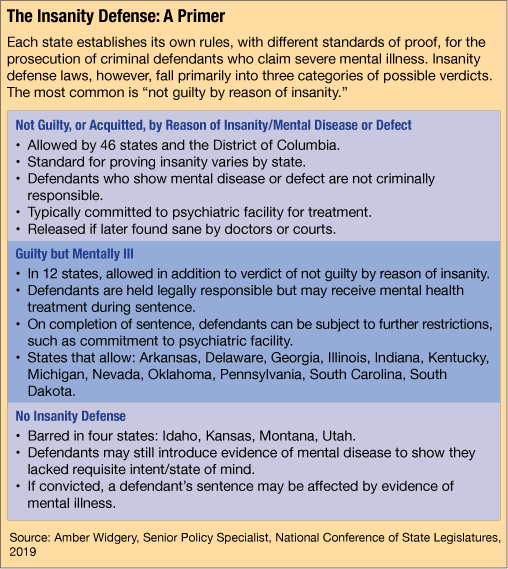
There’s a misconception that if you are found not guilty by reason of insanity, the case is dropped and you are released back onto the streets. That’s very rarely the case, especially if you’ve committed serious violence. The person would go to a secure psychiatric hospital for treatment, possibly for years.
By far the most common diagnosis is antisocial personality disorder. It’s somebody that’s impulsive, aggressive, doesn’t care about the rights and wrongs of other people, and doesn’t learn from their mistakes. They’ll have repeated prison sentences and won’t change their lifestyles. They are career criminals who intend to offend.
Psychopaths tend to have the symptoms of antisocial personality disorder, but also tend to be really charming, manipulative, and deceitful. It’s not obvious that they’re antisocial. They tend to be very charming and pleasant, but they will stab anyone in the back to get what they want.
Sociopaths tend to not be quite as skilled as psychopaths in fitting into society. They tend to be outlaws and career criminals. They don’t have the emotional stability to plot for months or weeks about how to hurt someone. Instead, they tend to explode in anger.
Borderline personality disorder came from being borderline between a personality disorder and a psychosis. People with borderline personality disorder don’t intend to offend and aren’t antisocial. They do have empathy and care about other people, but they have unstable relationships and tend to explode with anger because they can’t contain their emotions. They often lash out and regret it immediately, whereas psychopaths, sociopaths, and those with antisocial personality disorder don’t regret it.
Dr. Sohom Das has done over 1,000 evaluations for criminal court alone! His main priority is determining bad (personality disorder) vs. mad (psychosis). Because of their backgrounds with trauma, physical sexual abuse, homelessness, abusive parents, drug abuse, etc., they tend to have elements of personality disorder and elements of criminality. Although there are people on different points of the spectrum, the law is very black and white. So you either have a psychiatric defense like not guilty by reason of insanity or diminished responsibility for murder, or you don’t. There are no gray areas. It’s a yes or no. His role is never to decide whether someone’s guilty or not guilty or to decide the length of punishment.
If they end up going to prison, he can say that they should go to prison by saying that they shouldn’t go to hospital by process of elimination, but he can never say how long the prison sentence should be. He trusts and has to have trust in the court system.
Traits of school shooters Dr. Sohom Das has pointed out: They are usually quite isolated, withdrawn, and marginalized. They’re romantically and sexually unsuccessful (involuntarily celibate). They tend to find their own little communities on the internet and kind of weaponize and encourage misogyny. Entitlement is another trait. They feel entitled to sex. They feel that society is geared against them because they aren’t attractive.
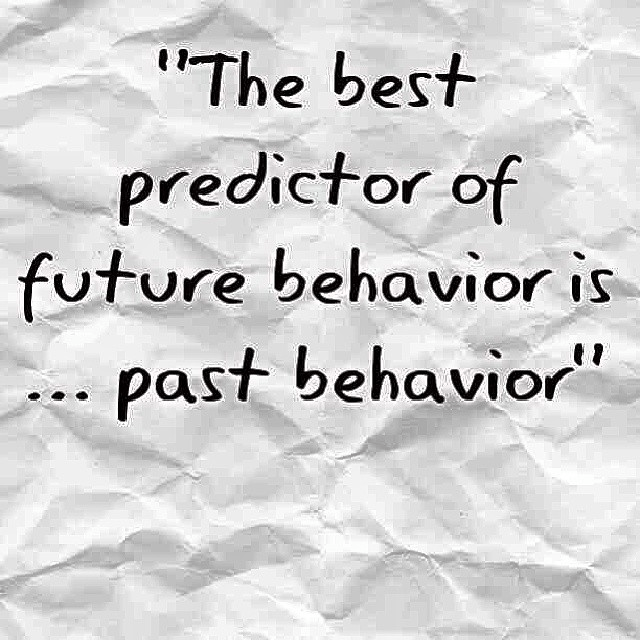
The easiest, simplest, and quickest predictor of future violence is previous violence, and it usually escalates. The majority of the time it’s young men who carry on offending, and their level of aggression and violence increases. They often don’t learn from their mistakes, so they serve prison sentences and carry on committing violence.
One of the cons of working as a forensic psychiatrist is the lack of customer satisfaction and success stories. They don’t hear about what happens to the clients after their assessment or treatment.
I look forward to reading, learning, and sharing more with you soon!













 Read Learn Share