I read six books in December, some of which were short and easy reads. Here is a blurb of each of the books I read in December.
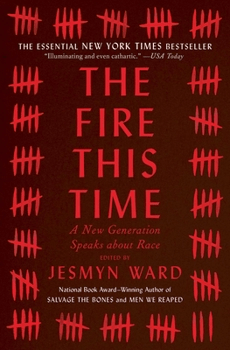
“The Fire This Time: A New Generation Speaks About Race” was edited by Jasmyn Ward, an author and associate professor of Creative Writing at Tulane University who has won several writing awards. This book demonstrated the power in words – the power in asserting our existence, experience, and lives through words. This book was selected as a book club read for my employer. Here are some quotes that stood out to me:
[During an internship at a magazine that was more than 150 years old] “Sometime during the end of my first week, a chatty senior editor approached me in the corridor. During the course of our conversation, I was informed that I was almost certainly the first black person to ever intern at the magazine and there had never been any black editors. On good days, being the first black intern meant having my work done quickly and sounding extra witty around the water cooler; it meant I was chipping away at the glass ceiling that seemed to top most of the literary world. But on bad days I gagged on my resentment and furiously wondered why I was selected. I became paranoid that I was merely a product of affirmative action, even though I knew I wasn’t.”
“I accepted the reality that the historic colonial houses – now the business residences of attorneys, hairstylists, insurance agents, and doctors – were considered by more people to be more valuable than the bodies below them.”
“Empathy requires us to dig way down into the murk, deeper than our own feelings go, to a place where the boundaries between our experience and everyone else’s no longer exist.“
Rules of walking – “no running, especially at night; no sudden movements; no hoodies; no objects – especially shiny ones – in hand; no waiting for friends on street corners or standing near a corner on the cellphone lest I be mistaken for a drug dealer“
This book provided thought-provoking perspectives of race and minorities.
4 out of 5 stars
“Employment Law: A Very Short Introduction” was written by David Cabrelli, the professor of Labour Law at the University of Edinburgh and the author of 5 books. This book contained a decent overview of employment law, and I learned about other countries; however, I learned much more in my Employment Law class this semester. Here are some main points:
Employment contract = employment relationship and rights. No employment contract = no employment relationship and rights. The various roles governing the constitution, classification, variation, contact, performance, suspension, and termination of the employment relationship are all derived from contract law.
There is a rise of atypical workers in the labor markets of advanced Western economies, such as the U.S. These independent contractors work very flexibly and as and when they want and often suffer from low pay, little or no job protection or security of earnings, and are subject to the control of those hiring their labor.
British legislation enacted in 1971 protects employees from unfair dismissals. The USA remains an exception to most countries. The USA has an employment-at-will doctrine, which safeguards the liberty of the employee to resign and find another job without liability and allows the employer to discharge the employee without sanction.
One thing that stood out to me, that I hadn’t considered previously, is the quote that “Employers operating at below a living wage are free riding on the back of the public purse.”
This book was a very general overview of employment law, but other books cover much more information.
3 out of 5 stars
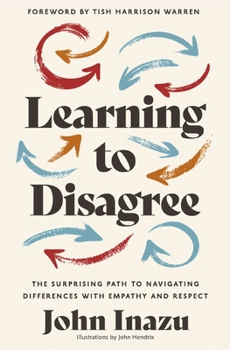
“Learning to Disagree: The Surprising Path to Navigating Differences with Empathy and Respect” was an insightful book written by John D. Inazu, a Distinguished Professor of Law and Religion at Washington University in St. Louis. Multiple studies have shown that Americans have a growing disdain for those who differ from them politically and ideologically. We deride our political, religious, and ideological opponents as dangerous or evil and retreat to digital foxholes. This book is a necessary read for many people and a reminder to treat people as humans. Here are some main takeaways:
Good lawyering requires empathy for adversaries. You don’t have to like the other side, but you do have to understand them. How are you going to persuade a judge that you have the better story? The better you understand the other side of an argument, the better you can critique it and the more strongly you can defend your own position.
Assume the best of someone to open the door to deeper understanding and an opportunity to learn from those who see the world differently. Distinguish people from the ideas they hold. Other people are humans with whom you share many things in common. That doesn’t mean you will always share – or even respect – their ideas.
Recognize the limits to your knowledge and understanding. Embrace the likelihood that you won’t be able to convince everyone who thinks differently that you are right and they are wrong.
Well-intentioned people can have differing beliefs without being evil. In a country as large and diverse as the United States, every one of us holds beliefs and opinions that other people think are beyond the pale.
Practice repentance, grace, and forgiveness.
I highly recommend this book and will post a more detailed book blog about it sometime.
5 out of 5 stars
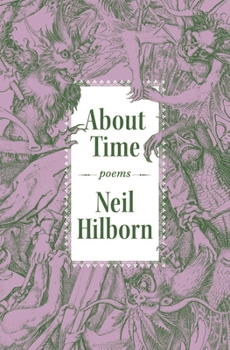
“About Time” is a book of poems by Neil Hilborn, a best-selling author and the most-watched poet ever (with over 150 million views). Neil has performed in 41 states and 8 countries. Neil is one of my favorite poets and is incredibly talented; with that said, I did not enjoy this book as much as his prior books. Here are some quotes that stood out to me:
“Ask the thoughts what they want: Why am I going to kill myself and if I do, go all the way to the logical end: Who will it hurt, what gets left behind, what good remains undone; dissect the bells, separate the ringing into a flat expanse and not the towering blaze telling you it is . . . “
“The Prozac makes me less tired but I’m still pretty tired but maybe that’s cause depression makes you tired.”
“I know why, but why is it that the pills will keep me alive but they give me enough to kill myself?“
To quote my favorite TV personality slash parasocial therapist slash mommy? Doctor Robin Zasio of Hoarders fame: You’ve got to feel it to heal it. As it relates to hoarding, I think she means that if you never throw out things you accumulate then you don’t have to deal with the emotional context around those things.
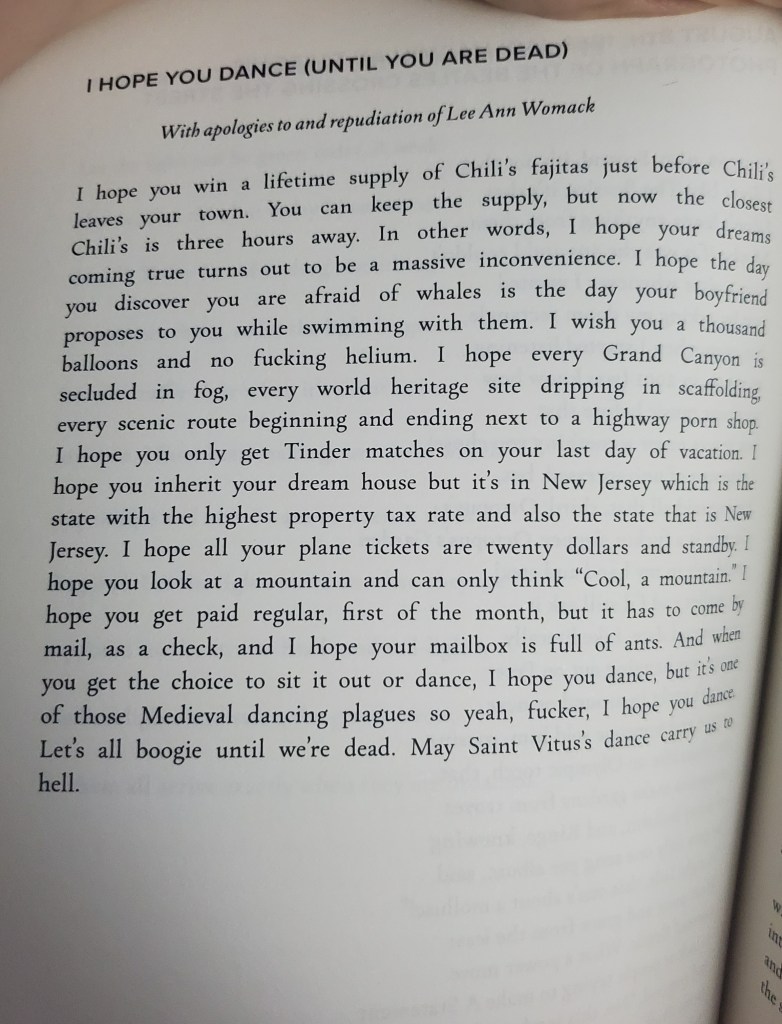
Many of the poems were somewhat depressing, but this poem provided humor.
4 out of 5 stars
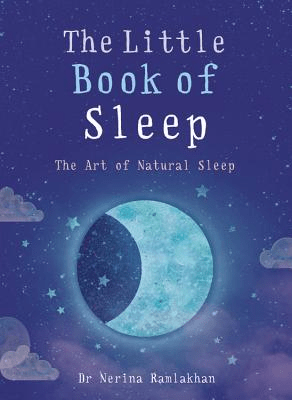
“The Little Book of Sleep: The Art of Natural Sleep” was written by Nerina Ramlakhan, a professional physiologist and sleep therapist for 25 years who runs sleep and wellness programs at Nightingale Hospital in London. This book was a quick, easy read. One description reads: “Drawing on Western science and Eastern practices, this beautifully illustrated guide to sleep teaches that, by making better choices in our waking hours, we can positively influence our sleep.” Here are some tips from the book.
Sattvic describes the type of sleep we should be getting – pure, deep, natural, and healing. This is the kind of sleep where you wake up feeling refreshed, filled with vitality, and looking forward to the day ahead.
The journey back to deep sleep is about working on yourself to create an inner core of safety and making lifestyle choices that will help your nervous system to recalibrate and shift back into safety mode if you’ve been running on survival mode.
Tips:
Eat within 30 minutes of waking.
Reduce your caffeine intake to less than 300 mg per day. The half-life of caffeine is 5 hours. Avoid any caffeine until you’ve eaten.
Drink plenty of water.
Take breaks from technology. Withdraw from technology an hour before you get into bed. Don’t keep your phone in your bedroom or watch TV in bed.
Create a sanctuary in your bedroom. Think soft, relaxing colors, essential oils, and cool and well-ventilated.
Try breath awareness exercises.
Increase your oxytocin levels by expressing your feelings, getting a massage, hugging someone, stroking your pet, and engaging in activities that make you feel at your best, happy, and carefree.
4 out of 5 stars
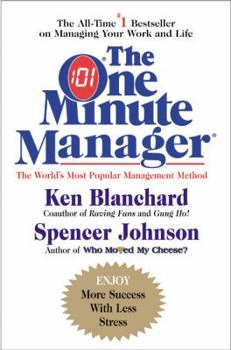
“The One Minute Manager” was cowritten by Ken Blanchard and Spencer Johnson. Ken Blanchard is a prominent, gregarious, sought-after author, speaker, and business consultant. Spencer Johnson, M.D. is the author or coauthor of numerous New York Times bestselling books. This book was an insightful and easy read, although it could have been more concise. Here are the main habits of a one minute manager:
One Minute Goal Setting – set goals with their people to make sure they know what they are being held accountable for and what good performance looks like
One Minute Praising – try to catch their people doing something right so that they can give them a One Minute Praising
One Minute Reprimand – reprimand people immediately and tell people specifically what they did wrong then remind them how much you value them and reaffirm that that you think well of them but not of their performance in this situation.
I look forward to reading, learning, and sharing more with you soon!
I read six books in November, some of which were short and easy reads. Here is a blurb of each of the books I read in November.
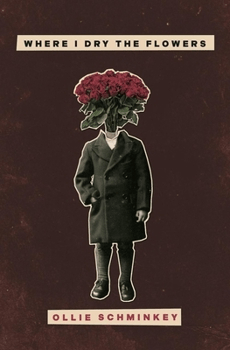
“Where I Dry the Flowers” is a Button Poetry book of poems written by Ollie Schminkey, a non-binary transgender poet and artist who has spent the past decade coaching, mentoring, teaching classes, and running workshops for poets. Many poems in this book are about grieving the loss of a complex person. I highly recommend this book to anyone who loves poetry and/or is trying to process grief. Here are some lines I enjoyed from this book.
Controversial opinion: In Defense of Speaking Ill of the Dead – “he is both: the man who would make us smoothies out of orange Kool-Aid and vanilla ice cream and the man who yelled when he drank and drank so often I’d run to the basement and lock the door.”
“I think grief is always at least two things: one, the constant realization that your expectations for the future were wrong, and two, death has happened and it will again.“
Forgiveness poem – “i never said it out loud. Maybe my father wanted forgiveness as much as I wanted an apology, but we stayed silent, the grudge, smooth as a pearl underneath our tongues. but it doesn’t mean i didn’t forgive him. and it doesn’t mean he wasn’t sorry . . . . when he offered me his death as an apology, i took it. of course, i took it.“
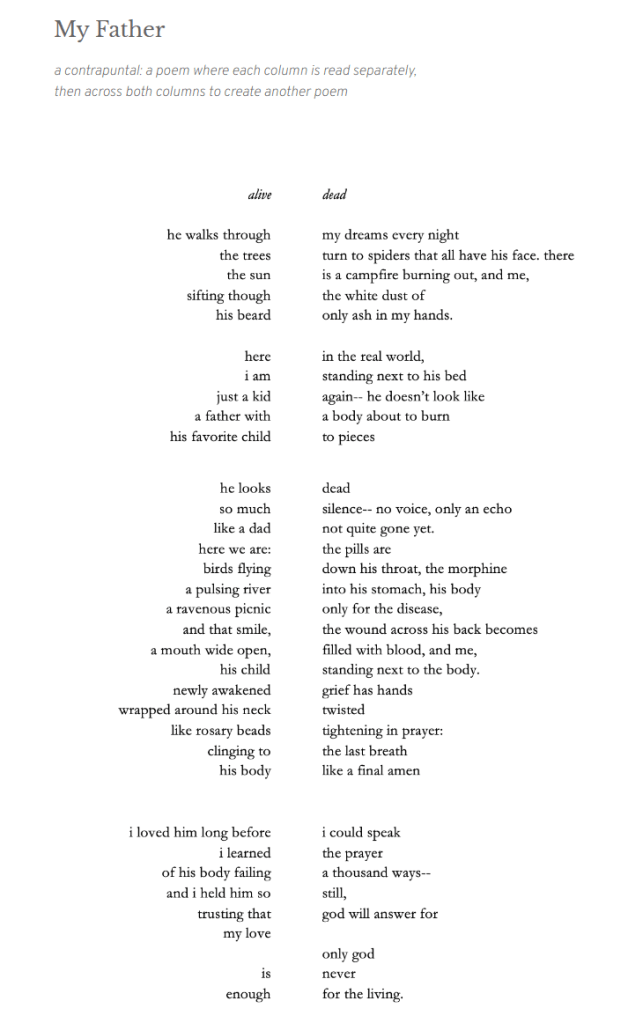
One of my favorite poems from the book is this one. I love the idea of contrapuntals.
4 out of 5 stars
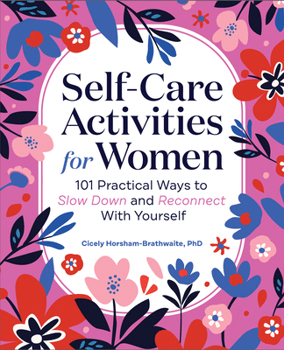
“Self-Care Activities for Women: 101 Practical Ways to Slow Down and Reconnect With Yourself” was a quick, easy read with excellent ideas from Cicely Horsham-Brathwaite, PhD, a licensed counseling psychologist and coach with over two decades of experience. This book provided different ideas for self-care in different categories: emotional, physical, mental, social, and professional. I highly recommend this book for anyone looking for self-care ideas. Here are some of my favorite ideas from each category.
Emotional self-care: Create your joy playlist. Create a list of songs that bring about positive memories and feelings, and schedule time in your calendar to listen to the entire playlist without multitasking whenever you need a mood shift.
Physical self-care: Plan a hike and picnic outdoors with friends.
Mental self-care: When you find yourself engaging in distracting behavior, reflect. What do I need right now? Is this giving me what I need, or do I need something else? Ex: may need a shower, hydration, exercise, rest, a hug, a good cry, journal reflection, or a talk with a friend.
Social self-care: Schedule activities with people you’d like to get together with on a regular basis. Rotate hosting.
Professional self-care: Establish a morning routine to set the tone for the rest of the day.
Self-care = “the actions one takes on their behalf in service of their well-being. Self-care means giving the world the best of you instead of what is left of you.”
5 out of 5 stars
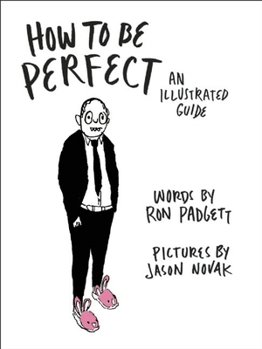
“How to Be Perfect: An Illustrated Guide” was a quick, fun, simple book written by Rod Padgett and illustrated by Jason Novak that took me under fifteen minutes to read. Here are a handful of my favorite lines.
Hope for everything. Expect nothing.
Be skeptical about all opinions, but try to see some value in each of them.
Learn something new every day.
Be honest with yourself and diplomatic with others.
Be on time, but if you are late do not give a detailed and lengthy excuse.
4 out of 5 stars
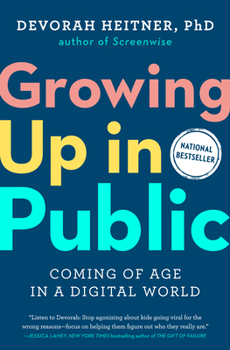
“Growing Up in Public: Coming of Age in a Digital World” was written by Devorah Heitner, PhD, who has spoken and written widely about parenting and growing up in the digital age. This book was interesting and thought-provoking, and I highly recommend it for all parents or anyone who hopes to be a parent someday. This review sums it up:
“A must-read for every parent. Emphasizing the importance of our children feeling seen instead of watched, mentored instead of monitored, this book is all at once a road map for preventing digital problems, a resource for what to do when things go wrong, and a crash course in how to empower our kids to become responsible, independent, and thoughtful digital citizens.” – Tina Payne Bryston, LCSW, PhD, NYT bestselling author of “The Whole Brain Child”
I got a lot out of this book, and here are just some of the tips:
Mentoring is better than monitoring if we want to set our kids up for success. We want our kids to make good decisions, even when we are not right there.
We need to do a better job of mentoring kids on how to be intentional about how much they share both online and offline.
Common mistakes from teens and kids: carelessly taking a video of themselves making a crude hang gesture or using profanity, sharing videos of themselves making an unkind joke about a peer or teacher, taking selfies of vaping/drinking/drugs, taking a video mocking someone’s disability, wearing a racist Halloween costume, making fun of someone’s accent or body type, and liking or reposting problematic things.
5 out of 5 stars
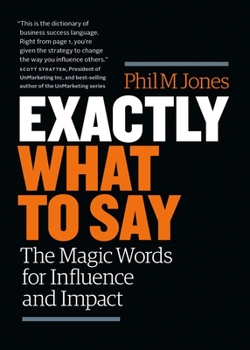
“Exactly What To Say: The Magic Words for Influence and Impact” was written by Phil M. Jones. This book can be considered a masterclass in the art of influence, persuasion, and generating top-producing results. This book often came across as salesy – teaching the world to sell. I highly recommend this book to anyone in sales or anyone who wants to influence or persuade others.
Here are some of the tips:
One of the biggest reasons your ideas fail to get heard is that others tell you that they just don’t have the time to consider them. By using the preface, “When would be a good time to . . .?” you prompt the other person to subconsciously assume that there will be a good time and that no is not an option.
The words, “As I see it, you have three options” help the other person through the decision-making process and allow you to appear impartial in doing so. Present your option last and as the easiest. Then ask “What’s going to be easier for you?“
“What happens next is . . . ” brings people through to the completion that needs to follow. It is your responsibility to lead the conversation, and following the sharing of the required information, your role is to move it toward a close.
Success in negotiating is all about maintaining control in a conversation, and the person in control is always the person who is asking the questions. Challenge objections with “What makes you say that?” This shift of control now leaves the other person obligated to give an answer and fill in the gaps in their previous statement.
5 out of 5 stars
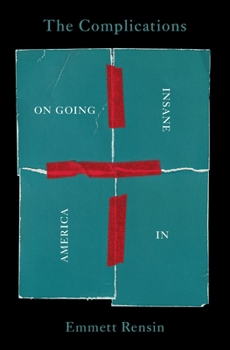
“The Complications: On Going Insane In America” was written by Emmett Rensin, who reflects on his life with schizoaffective disorder of the bipolar type: the hospitals and medication, the lost jobs and friends, the periods of mania and psychosis, the medication-induced tremor in his hands, etc. This book elevates the conversation around mental illness and challenges us to reexamine what we think we know about a world where one in a hundred people go mad. I learned a lot from this book and highly recommend it to anyone who wants to learn more about mental disorders. Here are some of my takeaways:
Some psychotic disorders become milder with age. Others are deteriorating, progressive conditions. Outcomes are difficult to predict.
The causes of severe psychiatric dysfunction are not thoroughly understood, but it is widely perceived that genes are not enough. Some additional event typically precipitates the full break. Trauma, substance abuse, and brain injury are common suspects.
It takes 7-8 years, on average, after initial onset of symptoms to get a diagnosis.
While brain abnormalities exist in some psychiatric patients, there are no consistent organic “signs” of madness, not any biological test for any psychiatric pathology.
“In between the positive exclamations of a psychotic disorder – bouts of delusion, mania, hallucinatory experience – are the dull murmurs of what we call negative symptoms, which generally include a blunt affect, social isolation, difficulty feeling pleasure, a lack of willpower, and poverty of speech.
“One of the greatest predictors of patient prognosis in the case of psychotic disorders is the degree of patient insight, which is to say, the degree to which the patient is aware of their disorder. If you cannot believe that you are ill, then you are unlikely to take your medication. If you do not take your medication, your condition will worsen. If your condition worsens, you are no more likely to take your medication or engage in the tedium of self-care.”
This reflection from the author stood out to me:
I am afraid of reaching a point where I do not want help, do not believe that I need help, where I run away from anyone who tries to help me, or worse, where I become so terrified or angry or violent that I hurt those people until they are not willing to help me anymore. I am afraid that one day I will become so sick that I reach the end of other people’s charity.
4 out of 5 stars – at times, this book was difficult to read and seemingly consisted of tangents and ramblings – however, this was likely due to periods of mania.
4 out of 5 stars
I look forward to reading, learning, and sharing more with you soon!
I read six books in October, two of which were short poetry books. Here is a blurb of each of the books I read in October.
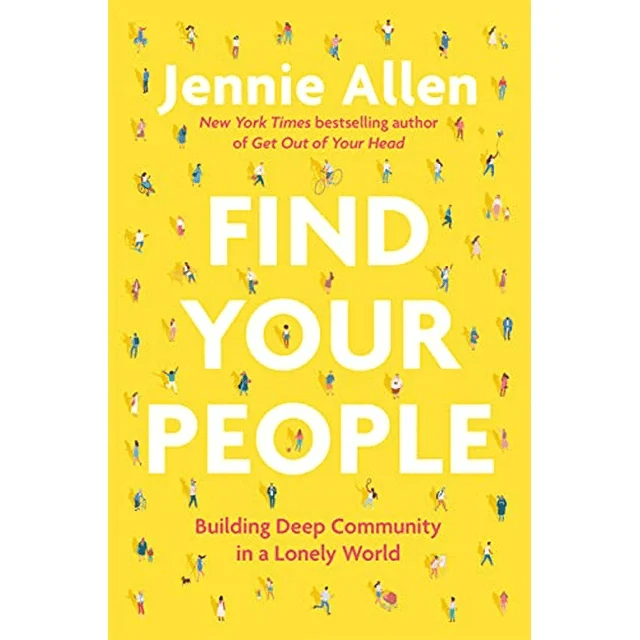
“Find Your People: Building Deep Community in a Lonely World” is a Christian book written by Jennie Allen and is filled with stories, science-based insights, and practical ideas for building deep community. I had several takeaways from this book, but here are just a few.
5 out of 5 stars
“We’re all just kind of waiting for connection to find us. We’re waiting for someone else to initiate and be there for us. We’ve replaced intrusive, real conversations with small talk, and we’ve substituted soul-bearing, deep, connected living with texts and a night together every once in a while. Quit waiting for people to reach out to you. Start initiating and asking people the questions you wish they’d ask you.”
Factors to look for in friendships include availability, humility, proximity, transparency, consistency, accountability to others, and a shared purpose.
Some ideas for building friendships:
invite friends to bonfires
plan get togethers
intentional, active listening
affirm your friends
ask your friends about the highs and lows of their week
join a club
ask deep questions
listen
share the real stuff
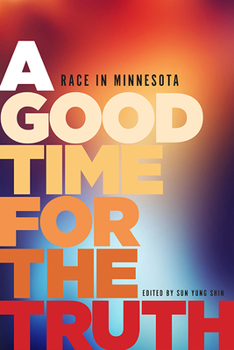
“A Good Time for the Truth: Race in Minnesota” is a collection of stories of what it’s like to live as a person of color in Minnesota, was published by the Minnesota Historical Society Press, and was edited by Sun Yung Shin.
4 out of 5 stars
Here are some quotes that stood out to me:
“[People] unconsciously believe you are unfit to mother your own child simply because you are a Black woman.”
“Sometimes I catch myself staring at my son, wondering what he is going to do when someone gives him a piece of paper with boxes on it and asks him to check the box saying who he is – if he is going to pause before marking “Black.” As I do. Because Black is not a race.”
“To be a Korean adoptee in Minnesota is to be both hypervisible and invisible at the same time. It means that people can tell you they don’t see you as Korean as if that is a compliment.”
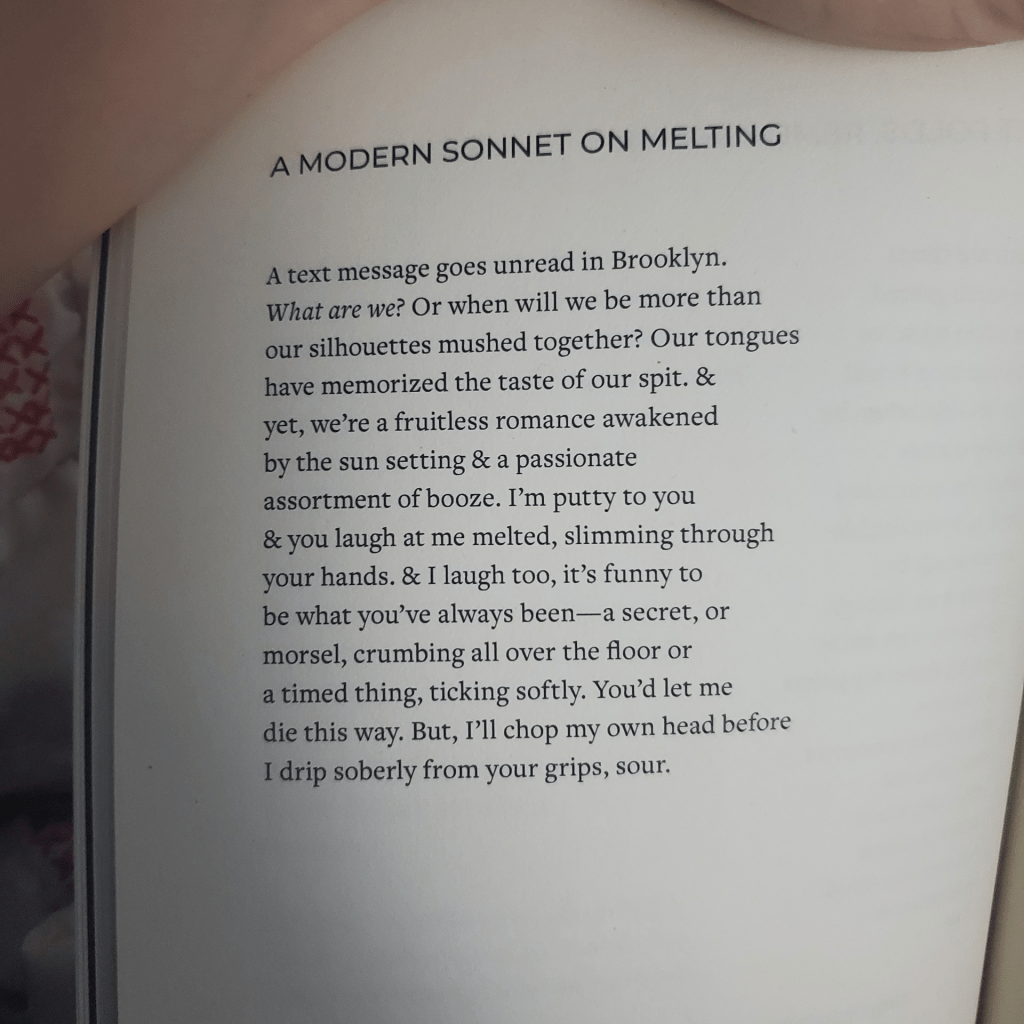
“If My Flowers Bloom” is a Button Poetry book of poems by Deshara Suggs-Joe, a queer, Black poet and visual artist. These poems were about desire, and many were sexual in nature. Honestly, this book was not one I enjoyed. I have included a snippet of my favorite poem from the book.
2 out of 5 stars
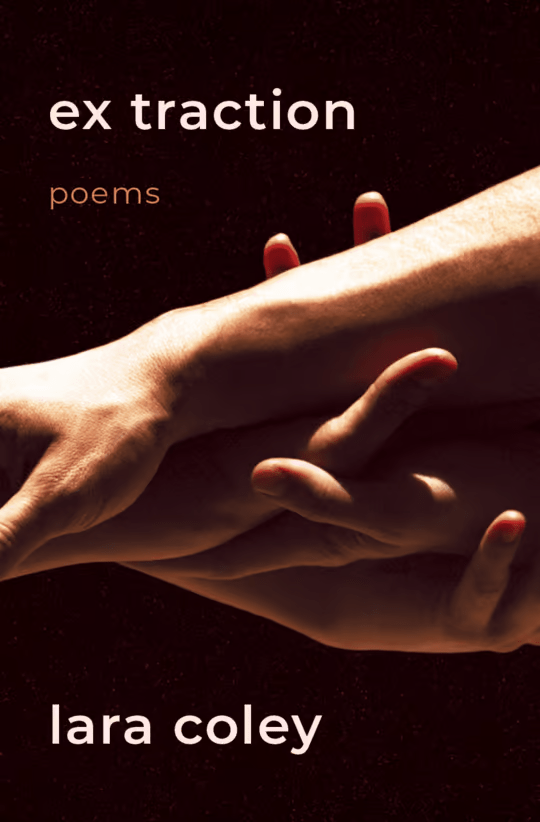
“ex traction” is a Button Poetry book of poems by Lara Coley, a San Francisco poet and educator who has taught creative writing and ESL in juvenile detention centers, schools, universities, and mental health treatment centers. Lara’s poems sharply dissect love relationships, and many are abuse and loving emotionally unavailable men.
4 out of 5 stars
Here are some snippets:
“How do you love so softly, so gently, so quietly, with your hand so tightly cradled around my throat?”
“We were lying on my bed and I asked him why, in our two years together, he’d never told me he loved me. He said he didn’t need to, that everyone knew. Een Jessica knows, he said. Well, good for her, I said. Good for Jessica.”
“She is wearing your affection like a coat, tailored to fit her. I remember stretching your love around my shoulders like a misshapen shovel that would never cover any parts of me that needed warmth.”
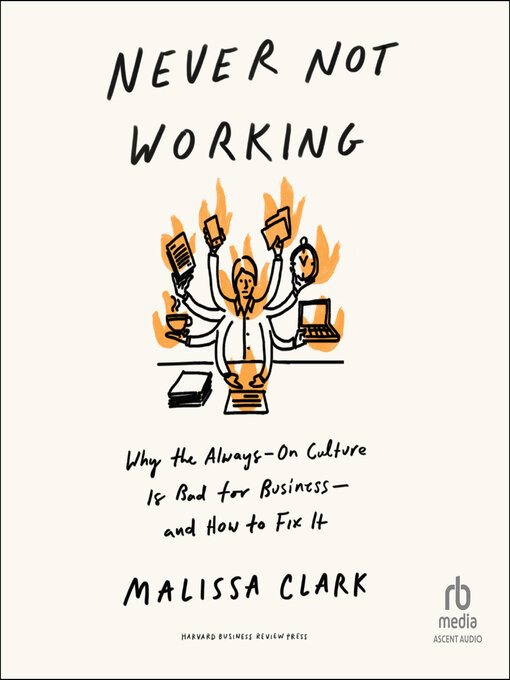
“Never Not Working: Why the Always-On Culture is Bad for Business – and How to Fix It” was written by Malissa Clark, associate professor of industrial-organizational psychology at the University of Georgia. Malissa is also a recognized expert on the topics of workaholism, overwork, burnout, and employee well-being. I highly recommend this book and will post about it in more detail sometime.
5 out of 5 stars
This book was filled with helpful information. This book covered signs of workaholic behavior, how to counteract workaholic behavior, the main components of workaholism, specific signals of workaholic culture within an organization, overwork assessments, and questions to ask after you get a job offer. Here are some of my many take-aways.
The most direct way to figure out what’s valued in a culture isn’t to listen to what people say is important. It’s to pay attention to who gets rewarded and promoted to leadership roles. Groups elevate people who represent their principles and advance their goals.
Here are some signs of workaholic behavior:
rumination – always thinking about work
overcommitment – always taking on too much and not knowing limits
busyness – always doing – unstructured time feels uncomfortable
perfectionism – nothing is ever good enough
poor delegation
poor scoping – underestimating how long it will take to do something
catastrophizing
3 questions to ask after you get a job offer to learn about the culture (courtesy of Work Life with Adam Grant):
Tell me about something that happens here that wouldn’t happen elsewhere.
Tell me about a time when people didn’t walk the talk here.
Tell me a story about who gets hired, promoted, and fired around here.
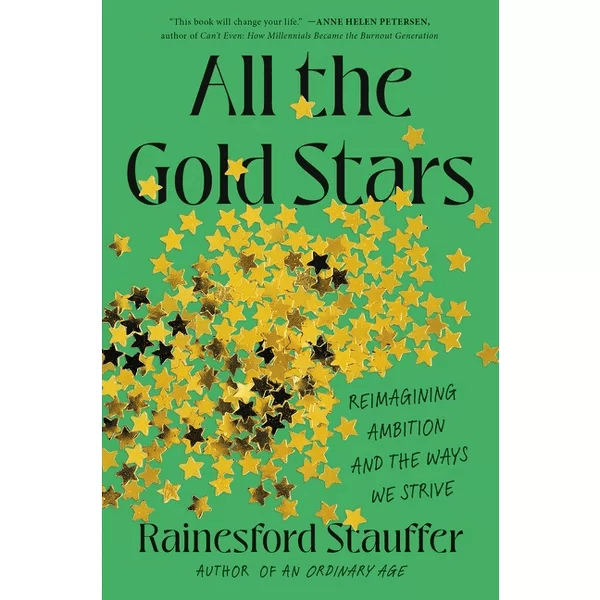
“All the Gold Stars: Reimagining Ambition and the Ways We Strive” was written by Rainesford Stauffer, an author, journalist, and speaker. This book contained a thoughtful exploration of ambition. Although this book contained several ramblings, there were some great takeaways.
4 out of 5 stars
So many modern ideas of ambition are rooted in work-related self-development, self-improvement, and career mobility, but ambition isn’t just about work. For those of us who feel that our performance at work – or our ambition – is the most valuable, worthiest, and most significant part of us, and thus, the most important part of our lives, we lose ourselves at the center of our stories.
Two primary sources of influence of our self-concept are our childhood experiences and our evaluation by others. Evaluation is ambition’s sidekick. Ambition is often registered as achievement.
Don’t let the world place limits on your ambition. Our efforts, time, imagination, and care can be oriented toward what matters to us most deeply in the face of a world that’s screaming to-do lists at us. Ambitions can be demonstrated in your hobbies, your values, how you care for yourself, your contributions to your community and causes, your friendships, etc.
Questions to ask yourself:
Think about your unrésuméd self – What are the things that actually fill you up that no one cares about, or you can’t put on your resume?
Who came up with this aspiration? Is it my idea or something random I thought I should aspire to?
What resources does it take to be ambitious about this, and is it worth it?
What does this ambition serve? It is me, a loved one, or something I care deeply about, or just an arbitrary marker of success?
How can the personal definitions we have of ambition expand?
I look forward to reading, learning, and sharing more with you soon!









 Read Learn Share