I read six books in November, some of which were short and easy reads. Here is a blurb of each of the books I read in November.
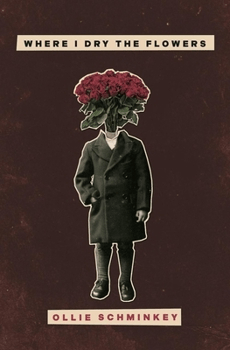
“Where I Dry the Flowers” is a Button Poetry book of poems written by Ollie Schminkey, a non-binary transgender poet and artist who has spent the past decade coaching, mentoring, teaching classes, and running workshops for poets. Many poems in this book are about grieving the loss of a complex person. I highly recommend this book to anyone who loves poetry and/or is trying to process grief. Here are some lines I enjoyed from this book.
Controversial opinion: In Defense of Speaking Ill of the Dead – “he is both: the man who would make us smoothies out of orange Kool-Aid and vanilla ice cream and the man who yelled when he drank and drank so often I’d run to the basement and lock the door.”
“I think grief is always at least two things: one, the constant realization that your expectations for the future were wrong, and two, death has happened and it will again.“
Forgiveness poem – “i never said it out loud. Maybe my father wanted forgiveness as much as I wanted an apology, but we stayed silent, the grudge, smooth as a pearl underneath our tongues. but it doesn’t mean i didn’t forgive him. and it doesn’t mean he wasn’t sorry . . . . when he offered me his death as an apology, i took it. of course, i took it.“
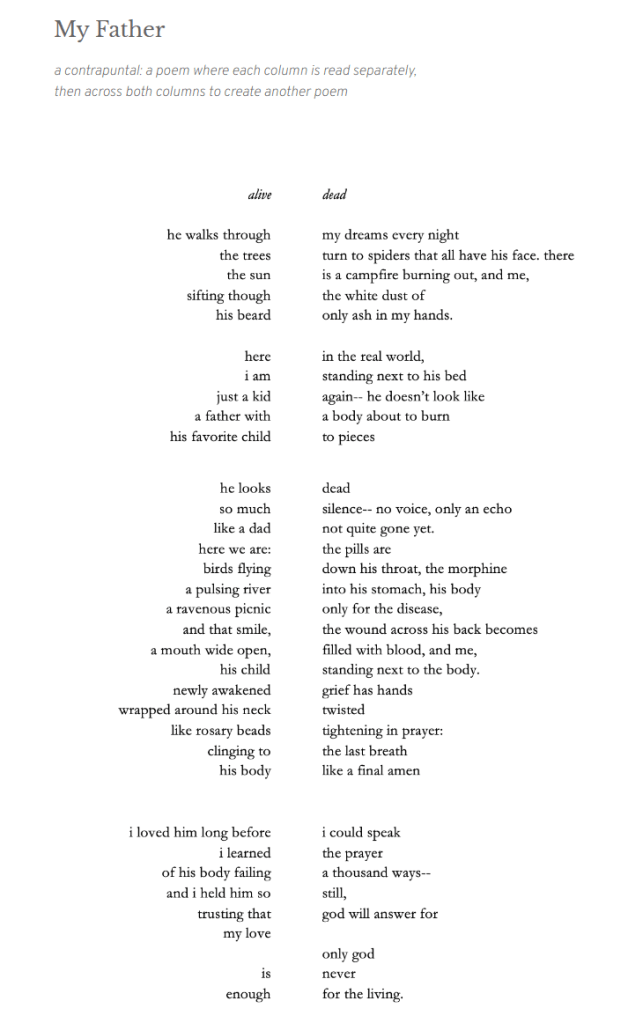
One of my favorite poems from the book is this one. I love the idea of contrapuntals.
4 out of 5 stars
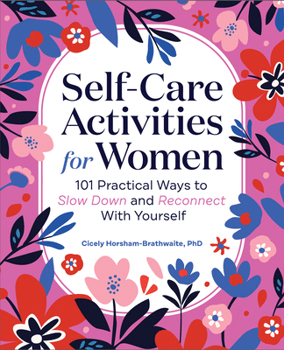
“Self-Care Activities for Women: 101 Practical Ways to Slow Down and Reconnect With Yourself” was a quick, easy read with excellent ideas from Cicely Horsham-Brathwaite, PhD, a licensed counseling psychologist and coach with over two decades of experience. This book provided different ideas for self-care in different categories: emotional, physical, mental, social, and professional. I highly recommend this book for anyone looking for self-care ideas. Here are some of my favorite ideas from each category.
Emotional self-care: Create your joy playlist. Create a list of songs that bring about positive memories and feelings, and schedule time in your calendar to listen to the entire playlist without multitasking whenever you need a mood shift.
Physical self-care: Plan a hike and picnic outdoors with friends.
Mental self-care: When you find yourself engaging in distracting behavior, reflect. What do I need right now? Is this giving me what I need, or do I need something else? Ex: may need a shower, hydration, exercise, rest, a hug, a good cry, journal reflection, or a talk with a friend.
Social self-care: Schedule activities with people you’d like to get together with on a regular basis. Rotate hosting.
Professional self-care: Establish a morning routine to set the tone for the rest of the day.
Self-care = “the actions one takes on their behalf in service of their well-being. Self-care means giving the world the best of you instead of what is left of you.”
5 out of 5 stars
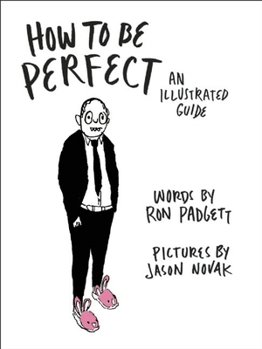
“How to Be Perfect: An Illustrated Guide” was a quick, fun, simple book written by Rod Padgett and illustrated by Jason Novak that took me under fifteen minutes to read. Here are a handful of my favorite lines.
Hope for everything. Expect nothing.
Be skeptical about all opinions, but try to see some value in each of them.
Learn something new every day.
Be honest with yourself and diplomatic with others.
Be on time, but if you are late do not give a detailed and lengthy excuse.
4 out of 5 stars
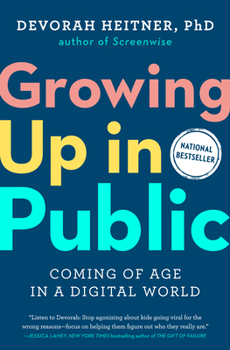
“Growing Up in Public: Coming of Age in a Digital World” was written by Devorah Heitner, PhD, who has spoken and written widely about parenting and growing up in the digital age. This book was interesting and thought-provoking, and I highly recommend it for all parents or anyone who hopes to be a parent someday. This review sums it up:
“A must-read for every parent. Emphasizing the importance of our children feeling seen instead of watched, mentored instead of monitored, this book is all at once a road map for preventing digital problems, a resource for what to do when things go wrong, and a crash course in how to empower our kids to become responsible, independent, and thoughtful digital citizens.” – Tina Payne Bryston, LCSW, PhD, NYT bestselling author of “The Whole Brain Child”
I got a lot out of this book, and here are just some of the tips:
Mentoring is better than monitoring if we want to set our kids up for success. We want our kids to make good decisions, even when we are not right there.
We need to do a better job of mentoring kids on how to be intentional about how much they share both online and offline.
Common mistakes from teens and kids: carelessly taking a video of themselves making a crude hang gesture or using profanity, sharing videos of themselves making an unkind joke about a peer or teacher, taking selfies of vaping/drinking/drugs, taking a video mocking someone’s disability, wearing a racist Halloween costume, making fun of someone’s accent or body type, and liking or reposting problematic things.
5 out of 5 stars
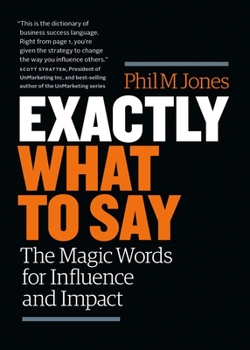
“Exactly What To Say: The Magic Words for Influence and Impact” was written by Phil M. Jones. This book can be considered a masterclass in the art of influence, persuasion, and generating top-producing results. This book often came across as salesy – teaching the world to sell. I highly recommend this book to anyone in sales or anyone who wants to influence or persuade others.
Here are some of the tips:
One of the biggest reasons your ideas fail to get heard is that others tell you that they just don’t have the time to consider them. By using the preface, “When would be a good time to . . .?” you prompt the other person to subconsciously assume that there will be a good time and that no is not an option.
The words, “As I see it, you have three options” help the other person through the decision-making process and allow you to appear impartial in doing so. Present your option last and as the easiest. Then ask “What’s going to be easier for you?“
“What happens next is . . . ” brings people through to the completion that needs to follow. It is your responsibility to lead the conversation, and following the sharing of the required information, your role is to move it toward a close.
Success in negotiating is all about maintaining control in a conversation, and the person in control is always the person who is asking the questions. Challenge objections with “What makes you say that?” This shift of control now leaves the other person obligated to give an answer and fill in the gaps in their previous statement.
5 out of 5 stars
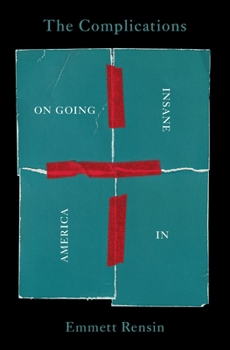
“The Complications: On Going Insane In America” was written by Emmett Rensin, who reflects on his life with schizoaffective disorder of the bipolar type: the hospitals and medication, the lost jobs and friends, the periods of mania and psychosis, the medication-induced tremor in his hands, etc. This book elevates the conversation around mental illness and challenges us to reexamine what we think we know about a world where one in a hundred people go mad. I learned a lot from this book and highly recommend it to anyone who wants to learn more about mental disorders. Here are some of my takeaways:
Some psychotic disorders become milder with age. Others are deteriorating, progressive conditions. Outcomes are difficult to predict.
The causes of severe psychiatric dysfunction are not thoroughly understood, but it is widely perceived that genes are not enough. Some additional event typically precipitates the full break. Trauma, substance abuse, and brain injury are common suspects.
It takes 7-8 years, on average, after initial onset of symptoms to get a diagnosis.
While brain abnormalities exist in some psychiatric patients, there are no consistent organic “signs” of madness, not any biological test for any psychiatric pathology.
“In between the positive exclamations of a psychotic disorder – bouts of delusion, mania, hallucinatory experience – are the dull murmurs of what we call negative symptoms, which generally include a blunt affect, social isolation, difficulty feeling pleasure, a lack of willpower, and poverty of speech.
“One of the greatest predictors of patient prognosis in the case of psychotic disorders is the degree of patient insight, which is to say, the degree to which the patient is aware of their disorder. If you cannot believe that you are ill, then you are unlikely to take your medication. If you do not take your medication, your condition will worsen. If your condition worsens, you are no more likely to take your medication or engage in the tedium of self-care.”
This reflection from the author stood out to me:
I am afraid of reaching a point where I do not want help, do not believe that I need help, where I run away from anyone who tries to help me, or worse, where I become so terrified or angry or violent that I hurt those people until they are not willing to help me anymore. I am afraid that one day I will become so sick that I reach the end of other people’s charity.
4 out of 5 stars – at times, this book was difficult to read and seemingly consisted of tangents and ramblings – however, this was likely due to periods of mania.
4 out of 5 stars
I look forward to reading, learning, and sharing more with you soon!
I'm Amy and I love reading, learning, and sharing! I read 76 books in 2022 and shared my reviews on Facebook. To reach a wider audience, I have created Read, Learn, Share, where I am excited to share book reviews and many other things I have learned.
View all posts by amybenoit




 Read Learn Share