Book review posts, Uncategorized

The Simple Path to Wealth

“The Simple Path to Wealth” was a very interesting, educational, easy read written by JL Collins, author of the blog jlcollinsnh.com. This was an excellent book I read as part of a book club I’m in. This book contained so much useful information and emphasized Vanguard as a stellar option for investments due to low fees and the self-cleansing Vanguard Total Stock Market Index Fund (VTSAX).
Main take-aways:

Seek the least house to meet your needs rather than the most house you can technically afford.

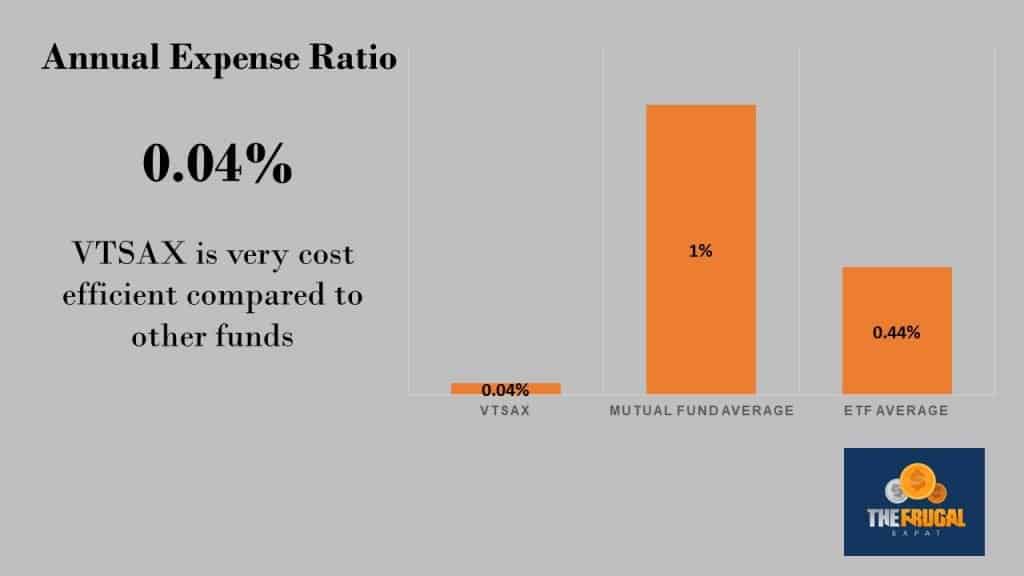
The Vanguard Total Stock Market Index Fund (VTSAX) holds about 3,500 companies and is self-cleansing. The expense ratio is only 0.04% and it is low-maintenance.
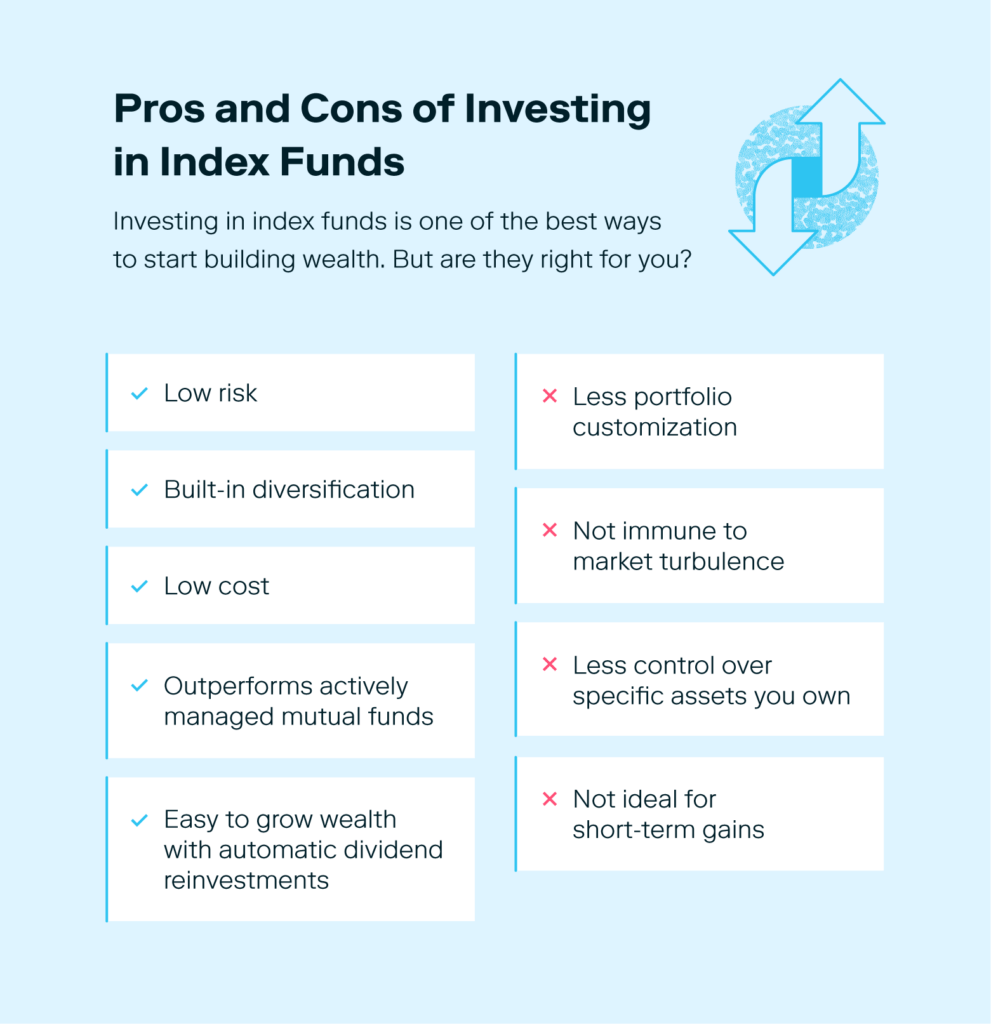
International funds are an added risk with added expense and are already covered with VTSAX (U.S. and international businesses). If you still want international funds with Vanguard, you can include VFWAX, VTIAX, or VTWSX.

Target retirement funds (portfolios based on the year you plan to retire) are also an option, although expense ratios are higher (0.14%-0.16%).

3 tools: stocks (VTSAX), bonds (VBTLX), and cash. You can do 100% stocks now (VTSAX) and then later include bonds.

If there is no VTSAX option for your retirement account, look for a low-cost index fund or target retirement fund.

With Vanguard, you own your mutual funds – and through them – Vanguard itself. It operates at cost, resulting in lower expense ratios. There are no shareholders to pay, and no one at Vanguard has access to your money.

Why most people lose $ in the market:

  • We think we can time the market.
  • We believe we can pick individual stocks.
  • We believe we can pick winning mutual fund managers. 82% failed to outperform the unmanaged index in 2013. Only about 1% of active traders outperform the market.

Downsides of having an advisor:

  • Cost
  • Drawn not to the best investments, but to those that pay the highest commissions and management fees
  • Assets under management (AUM) fees cost you a lot in terms of compounding.

You are considered financially independent and ready to retire if you have saved 25x your annual expenses. Let’s say you pay a 1% management fee in retirement (most advisors actually charge more than 1%). If you are living on 4% of your retirement funds each year (the recommended amount), your advisor is costing you at least a full 25% of your income!
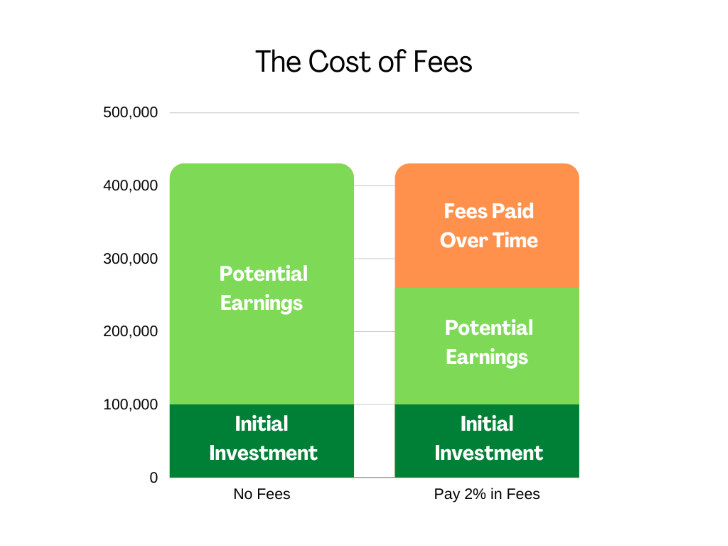
Using the 4% model, you may want to have a balance of 50% stocks and 50% bonds. 96% of the time, you will be able to live off of 4% each year for 30 years without fees. If you are paying a 1% fee, this drops to an 84% success rate. If you are paying a 2% fee, this drops to a 65% success rate. The solution is to have more cash saved, withdraw 3% of less, and be open to working part-time or relocate to save money. Do not set up an automatic 4% withdrawal plan! Instead, withdraw as needed.

A 401(k) or IRA is generally better than a Roth IRA. If you put $5,000 into a Roth IRA at a 25% tax bracket, you’d need $6,250. If you fund a 401(k) or IRA instead of a Roth IRA, you would still have the $1,250 to invest and would have huge returns over the years. Fully fund a Roth IRA only if your income is low enough that you’re paying little or no income tax.

When you leave a job, roll over your 401(k) or 403b into a personal IRA.

You are required to take minimum distributions at age 70 1/2 for your IRA/401(k)/403b. Shift your IRA to a Roth IRA to decrease the minimum distributions. Also, fully fund your HSA if you have one because it grows tax-free.

When I was reading this book, I had Roth IRA funds with an advisor that was charging over 1.25% in assets under management (AUM) fees + portfolio fees, and I didn’t even get to pick my investments! My money was not performing well with the portfolios he selected. I also had old 401(k)s with former employers.

Months after reading this book and researching on my own, I decided to combine my old 401(k)s into an IRA at Vanguard and I also transferred my Roth IRA to Vanguard. Through the conversion process, I learned the investments the advisor previously selected were awful, had high expenses, and probably resulted in high commissions, I had to pay various conversion fees to get out of those portfolios, and I transferred everything I previously had over to VTSAX with Vanguard. I also have a retirement savings plan with my current employer that is NOT at Vanguard.

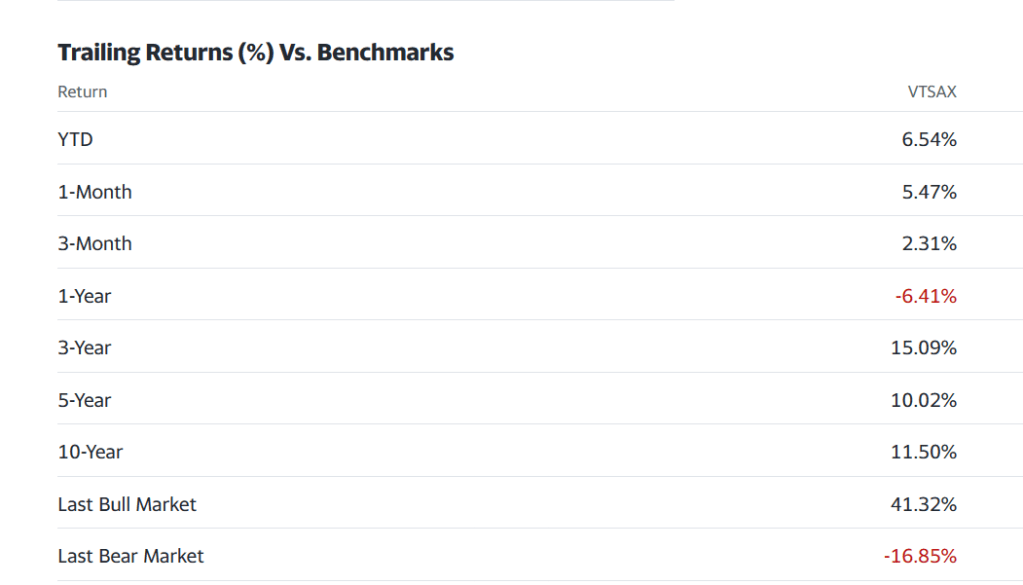
My funds have been performing really well and I am on my way to achieving a big financial goal in the next year or two: have the equivalent of my annual salary saved for retirement (a goal many experts say you should achieve by age 30). I am behind according to experts, but I am grateful for the progress I have made and especially grateful for the low-maintenance portfolio with minimal expenses that Vanguard offers.
This educational video covers VTSAX.

I look forward to reading, learning, and sharing more with you soon!
Thoughtful Thursday posts, Uncategorized

Thoughtful Thursday- April 13, 2023

My intention is to post a Thoughtful Thursday column each week and share some of the insights I have learned in the past week. Here are some of the things I’ve learned this week:

Science Vs. – Weight Loss Meds: Is Ozempic a Miracle Drug?
Food, We Need to Talk- Ozempic- The “Magical” Weight Loss Drug

**I have not used Ozempic and am not authorized to make medical recommendations. I am simply reporting what I have learned.** Ozempic has been a popular topic in the news and social media lately, and I wanted to learn more about it. I have the following notes from the two podcasts:

  • Ozempic is a diabetes drug that also causes weight loss. Many people are using it strictly as a weight loss drug, resulting in a shortage due to an “unexpected increase in consumer demand.”
  • Ozempic has the lowest side effect profile and actually works. Side effects include nausea (after 5 months, 25% of people reported nausea) and GI issues. People have generally concluded that the side effects are worth it.
  • Wegovy was a popular weight loss drug, but during the pandemic, Wegovy faced supply chain issues for nearly one year, making Ozempic a popular alternative. Ozempic continues to be the most popular.
  • Many insurers won’t cover Ozempic unless diabetes has been diagnosed, but many people are willing to front the $1,200/month cost of Ozempic, especially celebrities.

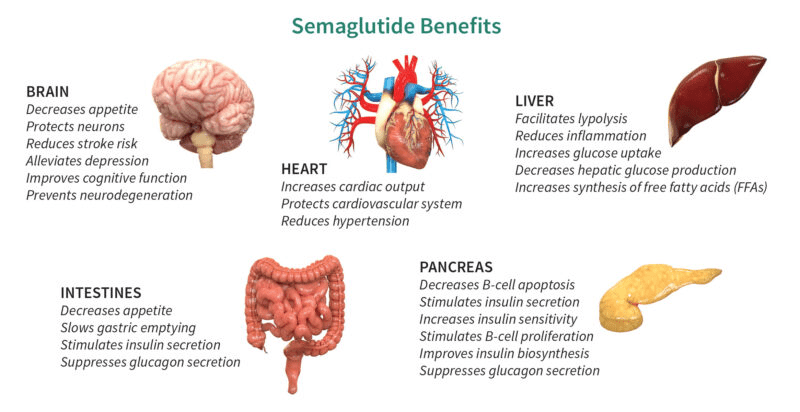
The active ingredient in Ozempic is semaglutide, which works by inducing satietyOzempic reduces a consumer’s level of hunger and eliminates food cravings, resulting in people eating 1/4 to 1/3 less when taking Ozempic.

People who take this med will likely need to take this long-term. They gain most of their weight back when they stop taking the medication. Also, long-term effects have not been studied yet.

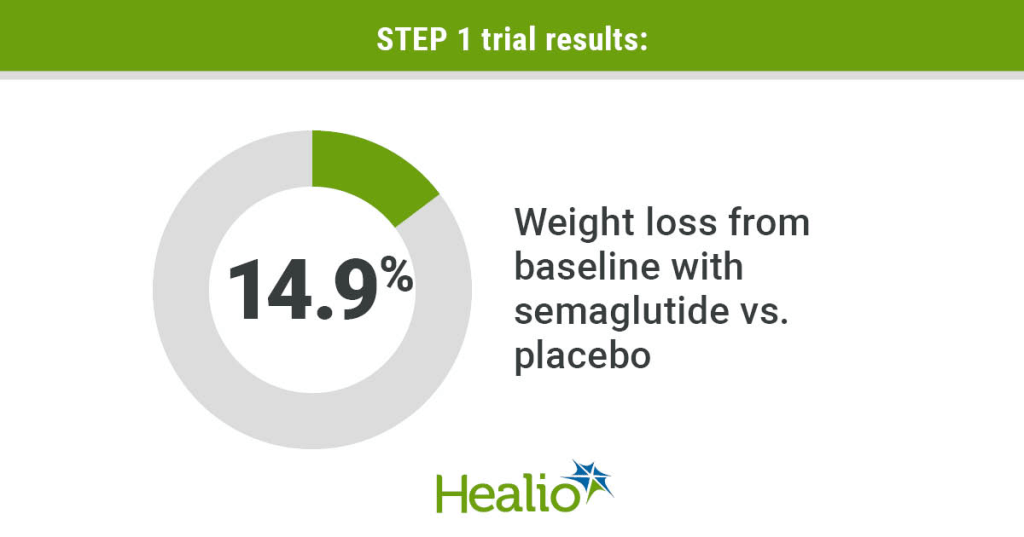
People are using Ozempic as a weight loss drug with great results. Some have lost 15-21% of their body weight!

It is important to continue exercising and having healthy habits even while taking a weight loss drug, and it is also emphasized that once people stop using Ozempic, they generally gain the weight back because their hunger levels and food cravings return to their normal levels pre-Ozempic.

The Daily Stoic- Don’t Make Assumptions

You don’t get a joke, so you say it’s not funny. You love your job, so you have no patience for people who complain about theirs. You’ve been successful, so you can’t understand why others struggle. Things that are different from your preferences are “weird.”

Our personal experiences make up a tiny percentage of the world, but a huge percentage of how we perceive the world.

A stoic tries not to jump to hasty judgments and puts their impressions up to the test. A stoic makes space for there to be other means of being, even the ways we don’t understand.

The Clever Girls Know Podcast- 9 Money Leaks Affecting Your Finances and How to Fix Them
  • Paying delivery fees. Before paying for shipping or delivery, Google search for free shipping or delivery codes!
  • Disposable products (water bottles, cutlery, paper towels). Use a reusable water bottle, pack your own utensils for your work lunches, and use rags or towels instead of paper towels.
  • Food waste. Buy only what you’re going to eat and cook. Meal prep. Freeze leftovers. Do an assessment of your food before shopping.
  • Bank fees (overdraft fees, ATM fees, account fees). Look for banks with overdraft protection, no account fees, and a wide network of free ATMs.
  • Subscriptions for products and services. Make sure you aren’t bulking up if not needed. Make sure you are using streaming services and other subscriptions. Cancel them if you aren’t.
  • Name brand products instead of generic. Often the generic products contain the same ingredients and taste the same.
  • Coffee and snack shops. Learn to make your own coffee or tea and buy the coffee beans or loose leaf tea your favorite shop uses. Keep snacks on hand.
  • Gym memberships- Are you getting your money’s worth? Cancel if you rarely go.
  • Unused insurance policies (vehicles). Do you still drive, or do you take public transportation? If you rarely drive, let your insurance know to see if you can get discounts on your premiums. If you never drive or rarely drive, you could consider selling your vehicle and taking public transportation or Uber/Lyft rides if that would be cheaper than paying for insurance and vehicle maintenance.
Self Care IRL- The best habits you should still hold onto post-pandemic
  • Learning and chasing new hobbies. Many people picked up a quarantine hobby.
  • Focus on supporting others (small businesses, healthcare workers, acts of kindness)
  • Embrace simplicity. You don’t always have to be doing something.
  • Make your home feel like home. You deserve to feel cozy and happy.
  • Taking care of yourself. Carve out space for you to be alone with your thoughts and feelings. You should be your #1 priority. Therapy, journaling, meditation, etc.
  • Spending more time in nature. Don’t make it so that you miss the calmness you were chasing during the pandemic. Go outside! Listen to the birds chirp. Go on a walk.
  • Not feeling guilty for spending a night in. Don’t feel pressured to go out. You can’t miss out on the time you spend with yourself.
  • Checking in on your loved ones. Random phone calls and video chats during the pandemic were at an all-time high. Remember when people called you just because?
  • Not going out or going to work if you feel sick. Listen to your body.

I have been reading “The Simple Path to Wealth” as part of a book club. This book emphasizes investing in VTSAX, Vanguard’s Total Stock Market Index Fund. I also read a blog post highlighting VTSAX for people who want to retire early:

https://www.ourrichjourney.com/post/5-reasons-why-vanguards-vtsax-index-fund-is-our-top-fire-investment

Some of the things I’ve learned:

  • The expense ratio is 0.04%, which is over 70% lower than the industry average!
  • VTSAX also beats around 80% of actively managed mutual funds, and you save money by not having to pay for an active manager.
  • VTSAX invests in the total stock market. Owning VTSAX allows an investor to own almost all of the companies trading in the U.S. stock market.
  • VTSAX constantly self-cleanses. There are inevitably companies that fail and companies that succeed. As soon as a company fails, it will drop off the stock market and won’t be tracked by VTSAX, so VTSAX will *never* go to zero.
  • VTSAX is easy, straightforward, and requires very little effort to understand.

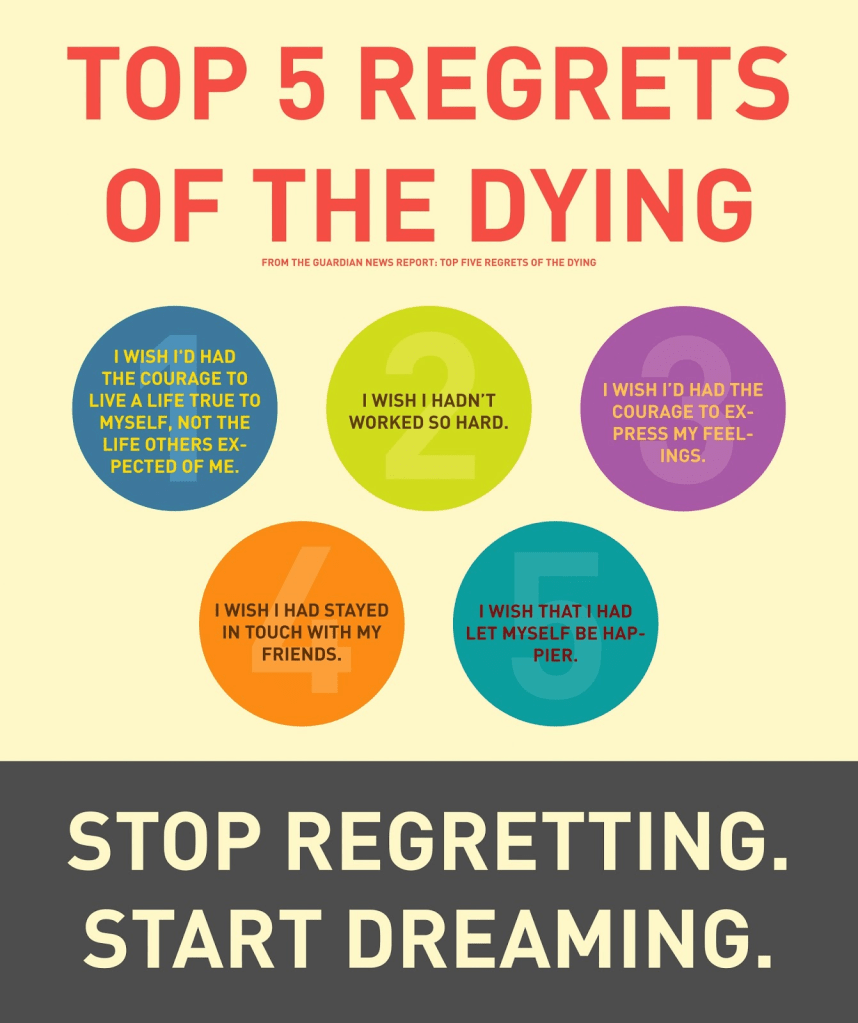
I finished reading “Top 5 Regrets of the Dying” written by Bronnie Ware. I was surprised to learn the top 5 regrets of the dying, and I was inspired to not have these same regrets:

  • 1. I wish I’d had the courage to live a life true to myself, not the life others expected of me.
  • 2. I wish I hadn’t worked so hard.
  • 3. I wish I’d had the courage to express my feelings.
  • 4. I wish I had stayed in touch with my friends.
  • 5. I wish that I had let myself be happier.

I look forward to reading, learning, and sharing more with you soon!