
My intention is to post a Thoughtful Thursday column each week and share some of the insights I have learned in the past week. Here are some of the things I’ve learned this week:
Setting goals is an effective way to structure your efforts and get a desired result. However, many people set goals too big without a plan. Ex: go from not working out at all to working out 6 days per week. Others set goals without much of a plan. Ex: drink more water. Eat healthier.

You don’t need to wait to have a perfectly defined and thought through goal before getting started. As you begin pursuing your goals, you collect more reference points and information to aid in defining your goal and the structure of achieving your goal. As you get closer to your goals, they get clearer. You should always be intentional about pursuing more clarity.
A goal I had for quite some time was to drink more water. There were times I drank up to a gallon per day (too much for me), but other times, I got so consumed in my work that I didn’t finish my first 16 ounces until after lunch! “Drink more water” was not a clearly structured goal for me. When I noticed that I regularly wasn’t finishing my first 16 ounces until well into the afternoon, I revised my goal to include “drink 1 bottle of water before the workday starts.” That goal is structured, measurable, and helps me to drink more water throughout the day. I also use True Lemon packets (available in a variety of flavors) to increase my water intake.
Another goal could start off as “eat healthier.” This could be structured by committing to planning staple breakfast foods and meal prepping healthy lunches for the week so that you don’t have the urge to order takeout during the work week.
- You look terrible.
- You’re a freak.
- You’re so immature.
- I’m going to send you to boarding school.
- Once you’re 18, I’m going to kick you out.
- This is your fault.
- Show me some respect (when it isn’t due/when it’s toxic).
- Do what I say or else.
- You are terrible at ___.
- You’re the worst student.
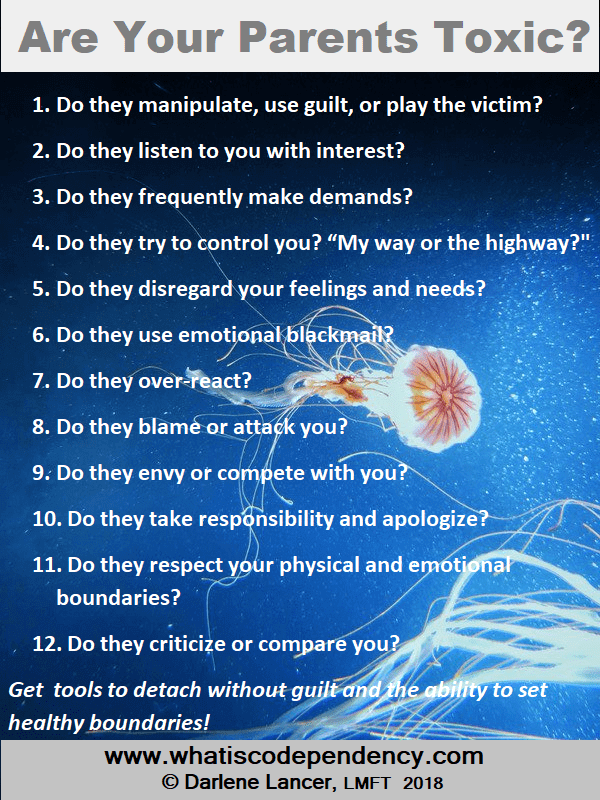
I am grateful that I didn’t hear any of these phrases directed at me growing up, but I know of people who have. It is important to show love to your children and allow them to make mistakes, express their own individuality, and overcome obstacles that can turn into learning experiences.
When we put money into a traditional savings account when inflation is high, its value is eroding.
Savings account interest rates may be as low as 0.01%, and the average interest rate is currently 0.24%. Some banks have increased interest rates due to inflation, and smaller banks are offering better rates than bigger banks.
Online banks offer better rates due to not having to maintain brick and mortar locations. Be sure to research minimum deposits and hidden fees and read the fine print! I recently created an account for CIT bank online, which offers interest rates between 4.50%-4.75%!
Aside from savings accounts, CDs are another option. The longer the term, the better the rate is. Be sure you can commit to the term, as you can’t withdraw $ during that term without paying a penalty.
Ibonds are inflation bonds where you are lending the government $ and the government agrees to pay you back at a later date with interest. Ibonds increased in popularity in 2022, as the interest rate was over 9%! The government sets Ibond rates every 6 months, and the term is for 5 years, although you can access your money before the 5-year term is up by forfeiting the last 3 months’ interest. The interest rate was just adjusted down to 4.30% in May 2023.
Taxes: the interest earned from savings accounts and CDs is taxable. Ibonds are exempt from state and local taxes, but you will have to pay federal income tax when you cash in on the bonds.
Consider switching savings accounts to one with a better interest rate. You may also want to consider government bonds for medium-term or long-term savings or CDs for short-term savings.

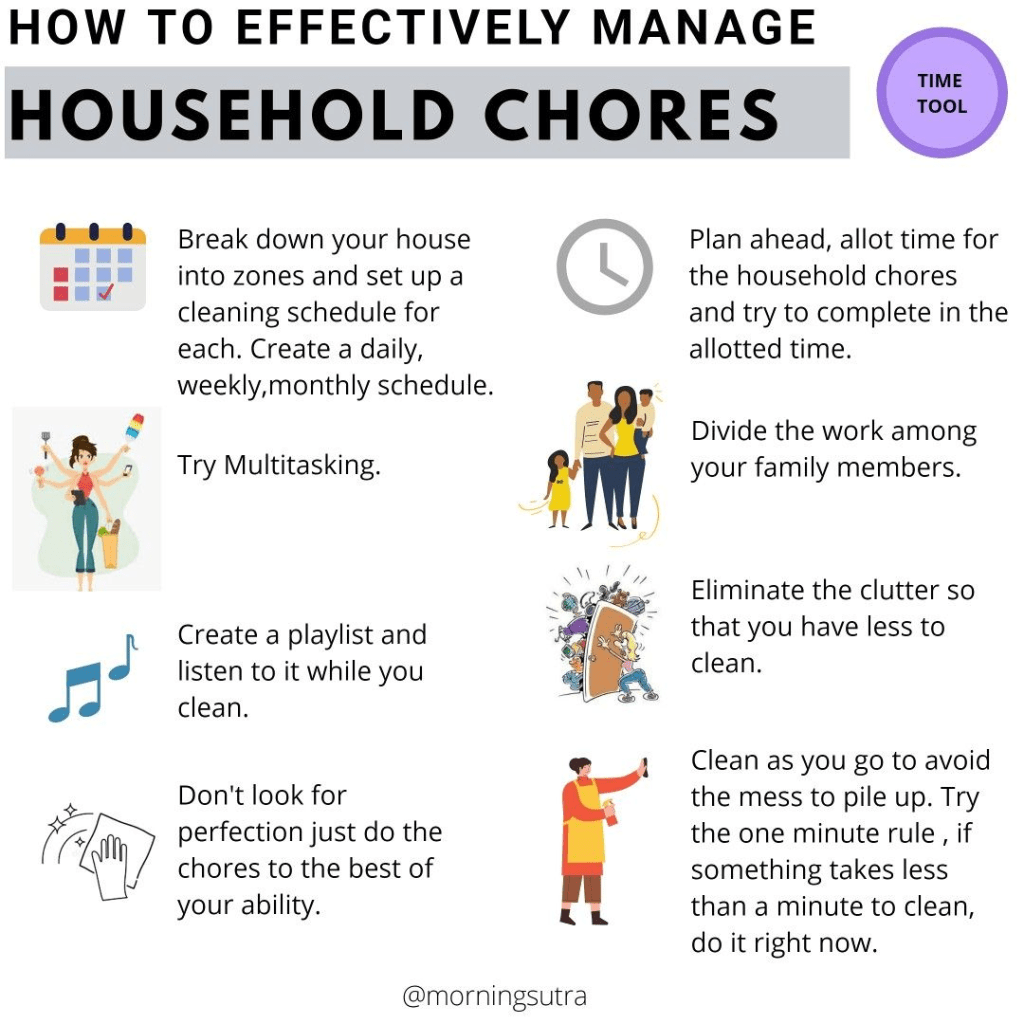
- Make your friendships a priority.
- Start by staying in touch.
- Try to think about what your friend needs right now. How can you be helpful or of value?
- Stop judging. You are never going to be 100% approving of anyone or the decisions of anyone, including yourself!
- Give an occasional compliment.
- Spend time together.
- Find common interests that you share, and do those things together!
- Take on a new challenge together. Humans become closer with those they suffer with and overcome obstacles with.
- Take a road trip.
- Try new things together, such as restaurants, events, or activities.
- Play fair. Don’t one up your friends.
- Express your gratitude. Let them know you value them.
- Admit and apologize.
- Be authentic and be honest.
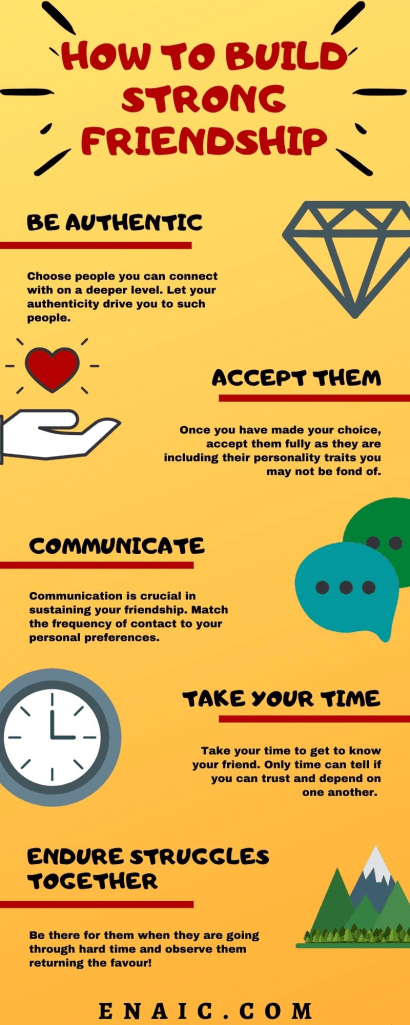
Reframe chores. Chores feel like an obligation. Some chores should be considered care tasks because they are tasks that you do to care for yourself, such as dishes, laundry, cleaning, exercising, cooking, organizing, and changing your sheets.
Ask yourself: What can I do right now in order to ensure that I’m being kind to my tomorrow self?
With other household stuff, acknowledge that good enough is perfect, and everything worth doing is worth doing partially. I struggle with this. I want to put my 100% into everything, so when I can’t dedicate the time and energy, sometimes I just don’t do it at all.
With chores, ask yourself these questions: What is the part you hate? What about it do you hate? Is there a way to skip that step or delegate? How can I add pleasure or joy to it? Ex: use a timer and dedicate a specific amount of time to a task, then stop when the timer goes off. Play your favorite playlist while doing a task you don’t enjoy doing.
Many newly married couples have unrealistic expectations of marriage, such as “We are always going to agree on spending money. We will draw closer to our family and in-laws once we are married. We will divide up household responsibilities equally. We will have amazing sex often. I will never feel lonely in my marriage.” These unmet expectations are common sources of frustration in marriage.
Despite these common struggles, remember to ask yourself: What do you like about your partner? Why did you marry your partner? Why do you believe you’re married today?
One interesting point made in this podcast is that husbands are often looking for validation, and women feel resentment because they feel they are doing more than their husbands and it goes unnoticed.
Also, husbands often hear more about what they don’t do than about what they do do, leading them to feel unloved and unappreciated. They are seeking affirmations. Provide affirmations, appreciation, and validation, and also put effort into equalizing responsibilities.

When you take care of yourself, you have more energy, patience, and compassion for others AND yourself.
Common obstacles to self-care and what you can do about them:
“I don’t have enough time” ⇛ This is a sign that you’re prioritizing others above yourself. This is a matter of how we choose to use our time. Remember that taking care of yourself will ultimately make you more productive and efficient in the long run.
“I can’t afford it” ⇛ Self-care doesn’t have to be expensive. There are several free or low-cost options, such as going for a walk, doing yoga at home, journaling, reading a book, coloring, or listening to music or a podcast.
“I don’t know how to do it” ⇛ It doesn’t have to be complicated. Find something you enjoy doing, and go do it. Find what works for you and make it a regular part of your routine. For me, self-care includes reading, exercising, listening to podcasts, and journaling + the very occasional massage.
“I’m too tired” ⇛ This is an even better indication to take time for yourself! Self-care can help boost energy levels, relieve stress and burnout, and improve sleep.
“I don’t have anyone to do it with” ⇛ You can still take care of yourself while flying solo.
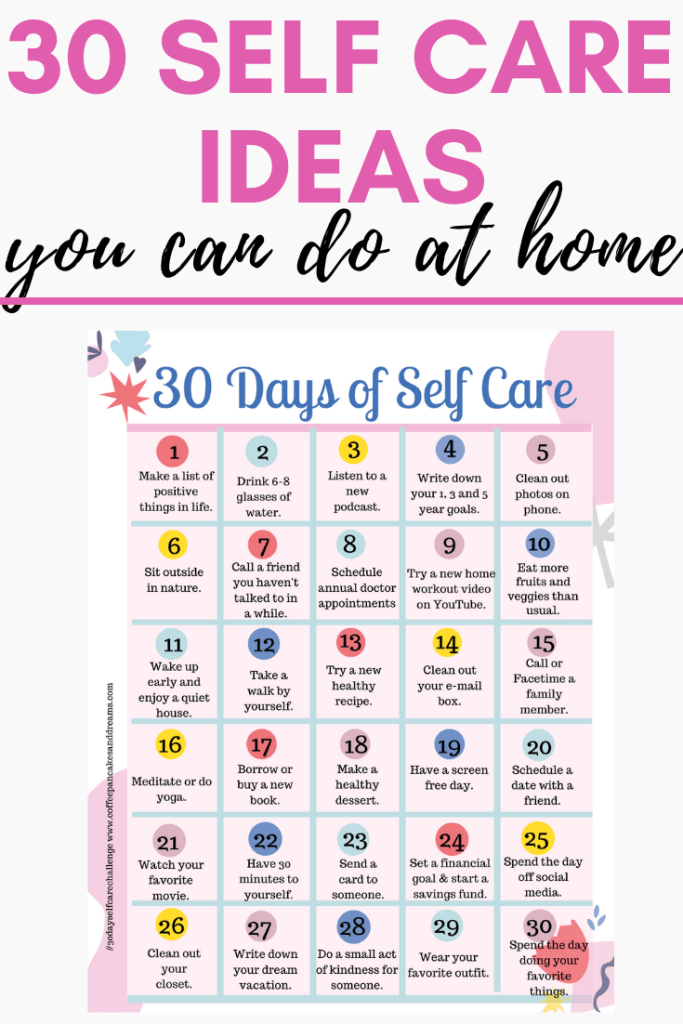
Tips:
- Shift the way you think about self-care. Instead of feeling guilty, shift your thoughts to that of well-deserved time to focus on and care for yourself. If you take care of yourself, you will be a more fun person for others to be around.
- Prioritize self-care. Schedule self-care and include it in your regular routine.
- Set boundaries. Practice saying no to things that don’t align with your priorities or that are draining you. Every time you say no to another obligation, you are saying yes to yourself.
- Use small chunks of time. If you can’t find a long burst of time for self-care, use the short bursts of time you have. Maybe spend 10 minutes a couple times a day for yourself, and as you get better at finding dedicated time to yourself, you can increase it to a daily routine.
- Ask for help and be willing to accept help. Delegate tasks if you are able to so that you can have some time for yourself.

The Office of the Surgeon General created a framework for workplace mental health and well-being. All reflection questions are taken from: https://www.hhs.gov/sites/default/files/reflection-questions-workplace-mental-health-well-being.pdf
- Protection from harm: safety and security.
- Prioritize workplace physical and psychological health.
- Enable adequate rest.
- Normalize and support mental health by validating challenges, communicating mental health and well-being as priorities, and offering both support and prevention services.
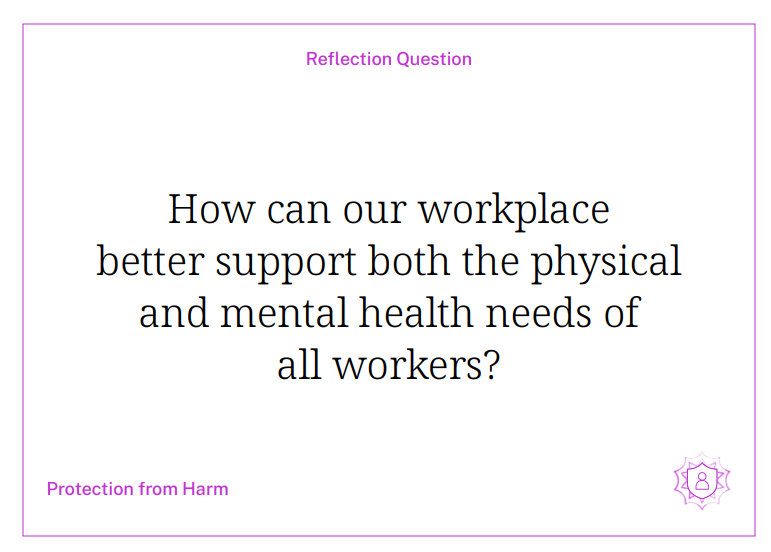
- Connection and community: social support and belonging.
- Create cultures of inclusion and belonging.
- Cultivate trusted relationships.
- Foster collaboration and teamwork.
- Work-life harmony: autonomy and flexibility.
- Provide more autonomy over how work is done.
- Make schedules as flexible and predictable as possible.
- Increase access to paid leave.
- Respect boundaries between work and non-work time.
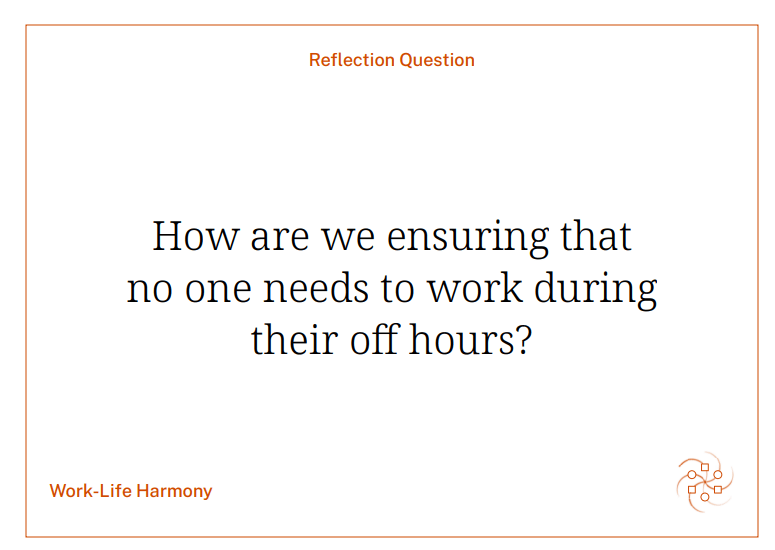
- Mattering at work: dignity and meaning.
- Provide a living wage.
- Engage workers in workplace decisions.
- Build a culture of gratitude and recognition.
- Connect individual work with organizational mission (shared purpose).
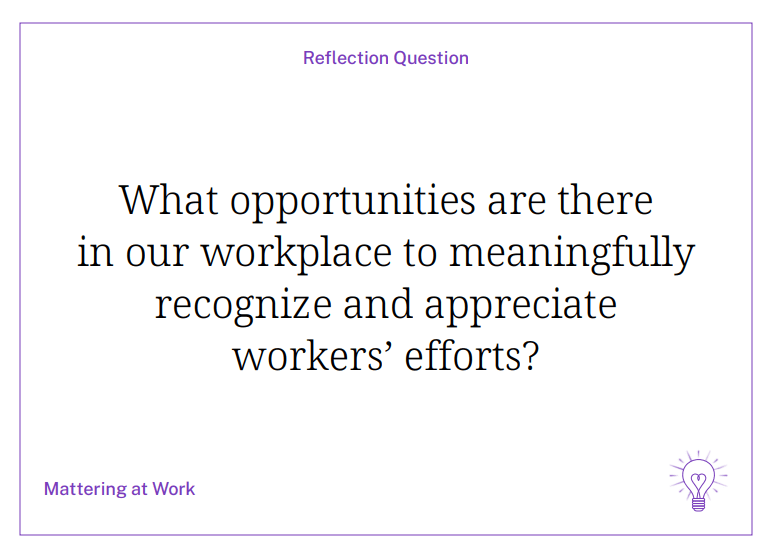
- Opportunity for growth: learning and accomplishment.
- Offer quality training, education, and mentoring.
- Foster clear and equitable pathways for career advancement.
- Ensure relevant and reciprocal feedback.
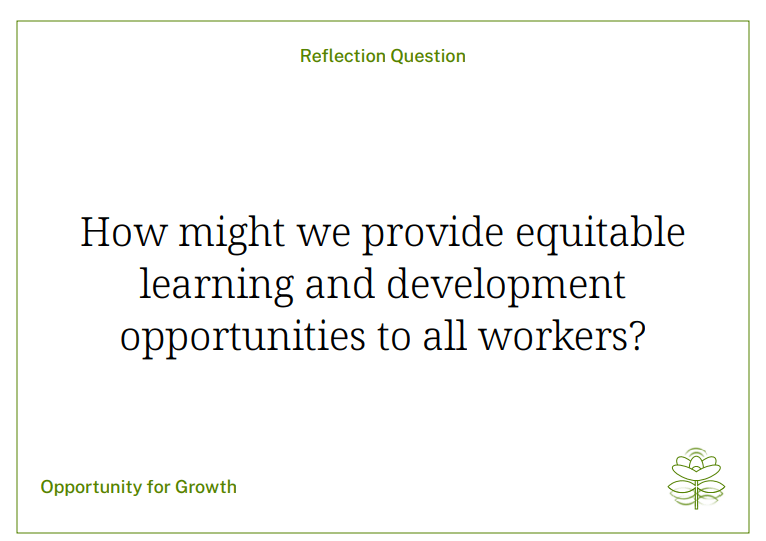
How is your employer doing with all of these?
I look forward to reading, learning, and sharing more with you soon!
 Read Learn Share