
I read 6 books in October! Here is a blurb of each of the books I read in October.

“Connect: Building Exceptional Relationships with Family, Friends, and Colleagues” was written by David Bradford and Carole Robin, who have taught interpersonal skills to MBA candidates in their legendary Stanford Graduate School of Business Course, Interpersonal Dynamics, and have coached and consulted hundreds of executives for decades. This book was a transformative guide to building more fulfilling relationships and focused on cultivating authenticity vulnerability, and honesty while being willing to ask for and offer help, share a commitment to growth, and deal productively with conduct. I learned so much from this book. Here are just a few takeaways:
Exceptional relationships involve mutual commitment, a steady and ongoing process of increasing self-disclosure, stretching beyond your comfort zone, and seeing setbacks as something to explore and learn from rather than as a reason to retreat.
Feedback is the breakfast of champions. Feedback starts a conversation. It doesn’t end it. Building relationships where each person feels free to give and ask for feedback is key both to preventing pinches from becoming crunches and to helping each person develop in new and more effective ways.
- Intent = needs, motives, emotions, and intentions
- Behavior = words, tone, gestures, facial expressions
- Impact
Each person can initially only know 2 of the 3 realities. You have to stay on your side of the net. You may know their behavior and impact, but you don’t know their intent. Sooner or later, the other person will tell you (or continuously show you).
This is just a glimpse of the many lessons in this book. This book caused me to reflect on some of my past friendships and what exceptional friendships should consist of. I highly recommend this book to anyone who wants to learn more about building exceptional relationships and being a better friend, coworker, and partner.
5 out of 5 stars

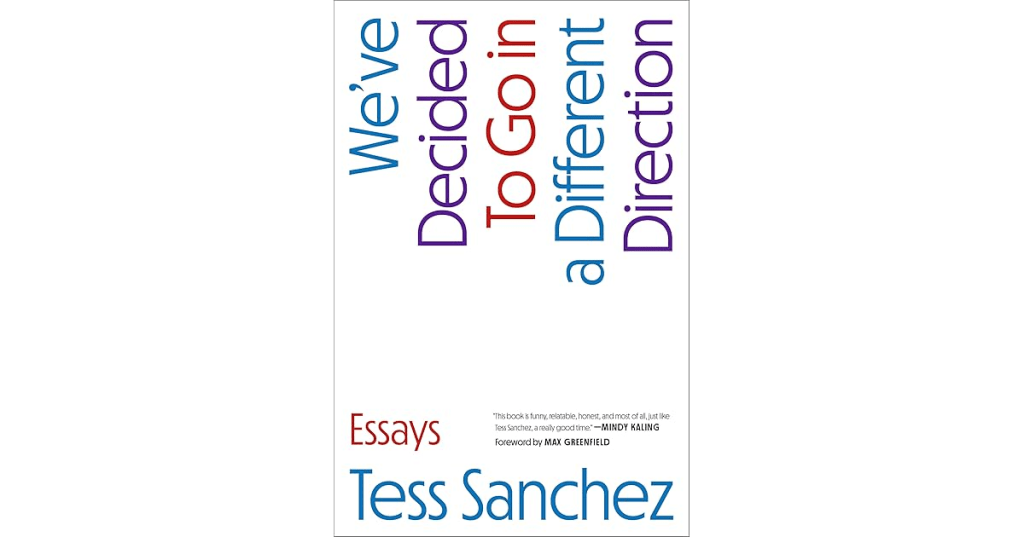
“We’ve Decided to Go in a Different Direction: Essays” was written by Tess Sanchez, who spent more than 20 years in the entertainment industry as a casting director. This book was funny, insightful, and contained amusing essays that examine the aftermath of a major life shift that took the author from fully in control and plunged her into unfamiliar chaos. This book examines how we claim our identity and how we choose to define ourselves. This was an easier read. Here are some lessons:
- Water the flowers, not the weeds. Nurture and grow the good in your life, and dehydrate the weeds.
- The key to success, fulfillment, and happiness is flexibility – embracing the now – however that may look.
- Career loss isn’t the end. It’s a pivot point. It can be painful, but also freeing.
- Identity is bigger than your job title. Rediscover who you are outside of your professional role.
- Resilience is messy, not linear. Change comes with backslides, confusion, and emotional turbulence.
One of my favorite lessons from this book is the concept of a “painful favor.” The author used the phrase “painful favors” to describe pivotal moments in her life that felt harsh and disruptive at the moment but ultimately led to personal growth and new opportunities. I love this concept, and there have been several “painful favors” in my life that I am grateful for.
4 out of 5 stars

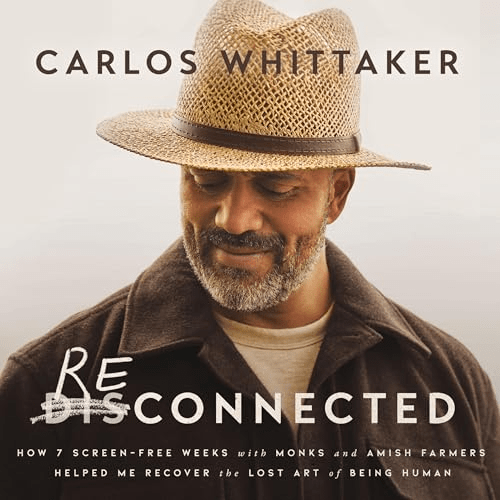
“Reconnected” was written by Carlos Whittaker, a bestselling author and storyteller who averaged 7 hours 23 minutes a day on his phone before this experiment. Carlos went screen-free for 7 weeks to see what screen time was doing to his head, hands, and heart; he spent 2 weeks with Benedictine monks, 2 weeks with Amish in Ohio, and 3 weeks at home with family. I enjoyed reading about his experiment. Here are some of the many lessons:
- We don’t wonder any more. How many times are you in a conversation when somebody wonders something only to stop wondering because they can look it up on their phone? We’ve lost the ability to not know, and we now feel like we must know everything. We can’t, but we feel like we need to. If we can’t admit that we don’t know something, suddenly we are creating experts who aren’t actually experts. Ex: TikTok
- Recovering our ability to have regular solitude is so important for our mental health and overall well-being. Let your mind wander, do a digital detox, and experiment with tech-free hobbies.
- How many times do we pull out our phones when we get uncomfortable with our present circumstances? Jesus made a habit of being fully present with people that hardly anyone wanted to be present with. Our presence has the ability to change not only our lives but the lives of others. You could change another’s life – someone that you might not even notice if you weren’t looking up.
- The table is one of the most intimate settings we have for sharing our lives. The table is one of the best tools we have to get to know someone well and to discover the heart of somebody. Try going phone-free and allotting more time for meals.
Not every argument is worth having and not every comment deserves a rebuttal. Choose where to invest your energy. Respond with reason, not with rage.
One of the most interesting lessons was that the Amish allow some pieces of technology that aren’t going to grow them apart. They weigh the potential value of every piece of new technology before allowing it. Community is more important than anything else. They don’t think cars are evil, but they know that if they started using cars, their community would no longer be a community.
This book was intriguing and filled with lessons about the impact of technology.
5 out of 5 stars
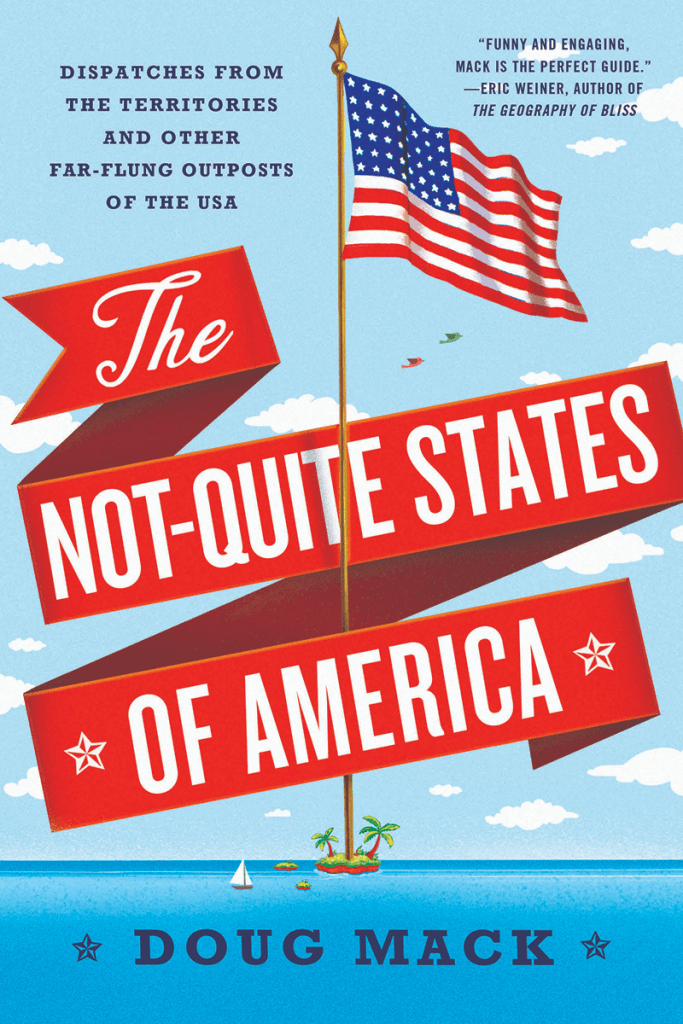
“The Not-Quite States of America” was written by Minnesota author Doug Mack. This book was boring at times and reads like a history textbook. This book covered some interesting tidbits about the territories of the Virgin Islands of the United States, American Samoa, Guam, the Northern Mariana Islands, and Puerto Rico. Here are some facts:
- Residents of the territories cannot vote for president. They can run for president.
- The Virgin Islands of the United States (USVI) are heavily reliant on tourism and imported goods. Agriculture is only 1% of USVI’s overall budget. With the blessing of the U.S. Treasury and Congress, the islands offer a 90% reduction in U.S. corporate and personal income taxes. The appeal of the USVI for the United States was its utility as a coaling station.
- People born in American Samoa are U.S. nationals, not U.S. citizens, making them the only group on U.S. soil without automatic citizenship. To gain citizenship rights, they must become naturalized like any immigrant. Tuna canning is the largest private-sector employer. American Samoans who oppose birthright citizenship value 3 traditions that might be deemed unconstitutional:
- The Native Land Ordinance – only individuals with at least 50% Samoan blood may own native land
- Matai-only Senate – traditional chiefs, not elected by popular vote
- Sa – the roads are closed when prayer time is observed in some villages
- Military bases occupy nearly 1/3 of Guam’s land, but much of this land is not actively used by the military; the military simply controls the land.
- The Northern Mariana Islands (CNMI) rely heavily on tourism and foreign labor. The Northern Mariana Islands are a U.S. commonwealth, meaning the residents are U.S. citizens, but CNMI has local self-government, including its own constitution, legislature, and governor. The U.S. Congress selectively applies some federal laws.
- Puerto Ricans are U.S. citizens but can’t vote for president. Puerto Rico has 10x more people than all the other territories combined. The Spanish and American cultures intertwine, creating a unique identity.
3 out of 5 stars

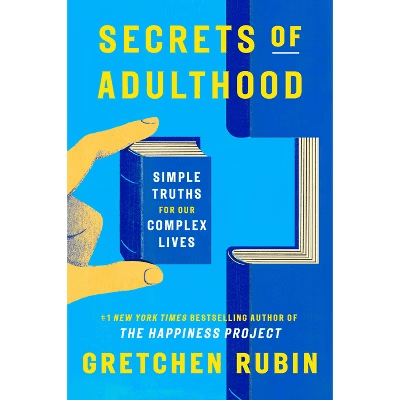
“Secrets of Adulthood: Simple Truths For Our Complex Lives” was written by Gretchen Rubin, who has authored many books and hosts the top-ranking, award-winning podcast Happier with Gretchen Rubin. This book was not quite what I anticipated. It contained valuable information, but it was more like a listicle or what you may find in a fortune cookie. Here are some “secrets” of adulthood:
- If you find it hard to take good care of yourself, care for yourself like a toddler: Don’t let yourself get too hungry, too tired, too uncomfortable, too bored, too lonely, or too overwhelmed.
- The traffic changes, the weather changes, yet the same people are always late, and the same people are always on time.
- More trial, more error – and more accomplishment.
- Nothing is more exhausting than the task that’s never started.
- By giving something up, we may gain. Briefly depriving ourselves of a pleasure often has one of two good results: either it reawakens our enjoyment or reveals that we’re happier when we don’t indulge.
- If we take the credit, we must accept the blame.
- Don’t buy things until you need them. Store things at the store.
- If you can’t think of a topic of conversation, ask, “What’s keeping you busy these days?”
3 out of 5 stars
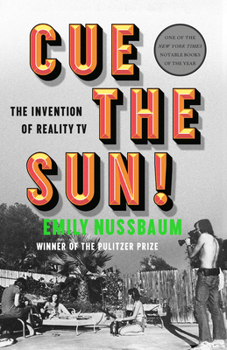
“Cue the Sun!: The Invention of Reality TV” was written by Pulitzer prize-winning New Yorker author Emily Nussbaum. The book covered the history of reality tv, starting from its contentious roots in radio, and Emily conducted in-depth interviews with more than 300 sources to gather information for this book. Here are some key points:
- Reality TV didn’t just appear. It evolved from radio call-ins, prank shows, and experimental documentaries.
- Reality TV thrives on presenting “real life” while heavily manipulating footage. This results in ethical dilemmas. Producers edit raw footage to craft narratives and often distort reality. This raises questions about consent, exploitation, and how much “truth” audiences really want.
- The launch of Survivor in 2000 marked reality TV’s explosion into mainstream dominance. It taught networks that unscripted formats could be cheap to produce yet massively profitable.
- Reality TV influences politics and celebrity culture. As an example, Donald Trump leverages reality TV fame from The Apprentice into political power.
Some interesting tidbits:
- By the 1960s, Candid Camera had become a major hit on radio, but on TV, the show’s subjects weren’t anonymous anymore. Some laughed, others got angry, and many experienced a messy blend of feelings.
- The Dating Game required no background checks. One of the show’s winners, Rodney Alcala, turned out to be a serial killer, was also a convicted sex offender, and paroled twice. At the time he filmed his segment, he was in the midst of a murder spree.
- The People’s Court was the first television show to feature binding arbitration.
- America’s Funniest Home Videos was unusually easy to produce since it relied on videotapes sent in by viewers and filmed on camcorders. It cost ABC almost nothing – no actors, directors, or stunt professionals. Together with America’s Funniest Home Videos, Cops jump-started the reality genre, which had been static for nearly a decade.
Survivor was the first series to take the reality genre mainstream in the United States. It stood out because it united 3 key traditions: prank show, game show, and real-life soap opera.
- By 2002, casting a reality show had become a science, down to the thick contracts contestants signed, granting editors total control. There was also a natural next step after the finale aired: move to Los Angeles.
- In 2006, with the rise of The Real Housewives, cast members of reality shows began to identify as influencers, viewing themselves as performers and collaborators, brand representatives of the shows they appeared in.
4 out of 5 stars
I look forward to reading, learning, and sharing more with you soon!
 Read Learn Share