
“Still Doing Life: 22 Lifers, 25 Years Later” was an eye-opening book written by Howard Zehr and Barb Toews, who first interviewed people in this book in the early 1990s and followed up with them in 2017. Their first interviews resulted in the book “Doing Life: Reflections of Men and Women Serving Life Sentences.” Of note, those who have not managed to mature and change for the better are underrepresented in this book. This book was also published by New Press, a nonprofit public interest publisher.
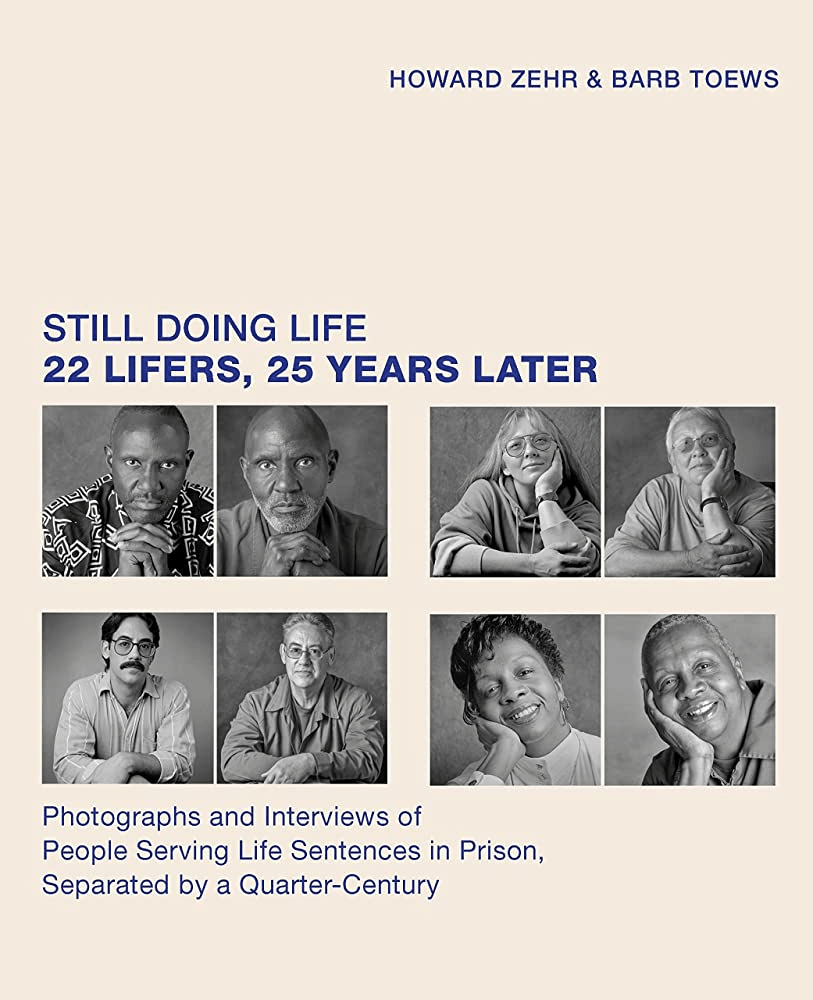
MANY statements stood out to me. I didn’t agree with all of them but enjoyed reading new perspectives. The quotes I took from this book emphasized the weight of uncertainty of life sentences/release dates, prison sentences harming families and loved ones, rehabilitation, justice, trauma healing, and restorative justice.
Disclaimer: These are quotes that resonated with me. I do not agree with all of them. I am sharing them as simply quotes to provoke thinking, and these are not necessarily my views or opinions or those of my employer.
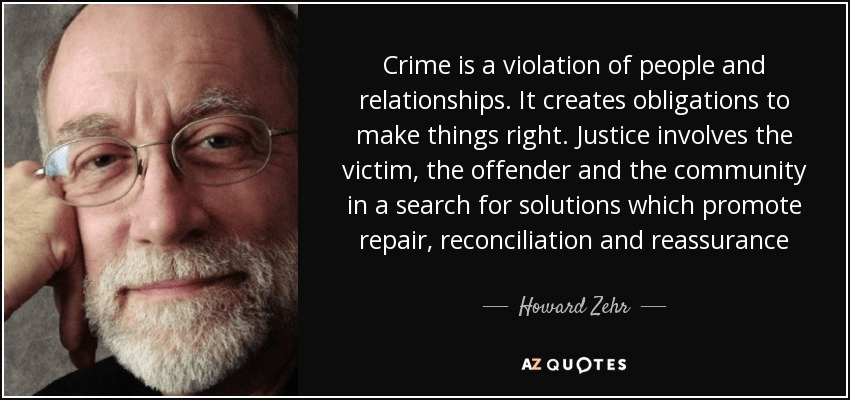
“The meeting with the victim’s family, telling her what actually happened, was the best thing in my whole incarceration. She told me what the loss meant to her and was understanding of what it’s done to me, and how I’ve changed and grown. It’s rewarding to know that, even after 35 years, they aren’t hating you, being vindictive, or wishing you were dead. They’re on my visitor’s list, send letters and cards, and have written letters for my commutation.”
“People think that rehabilitation means the system has succeeded in their program to be rehabilitate you…you have to rehabilitate yourself. There are women who have been here almost as long as I have who are no further ahead than the day they stepped in. There are others who are a true success story. These women chose to grow and to rehabilitate themselves, to make their lives not only suitable for the outside, but very suitable for living in prison.”
“I don’t favor life without parole because I think anyone can change. To say a person made a mistake and then lock them up for the rest of their life is inhumane. Actually, I would describe a life sentence as a death sentence. There’s a good possibility you will never get out.”
“They got a whole lot of lifers that they need to let out. Lifers could be an asset on the street because lifers know what it’s like to be out there. They are wasting the taxpayers’ money. They’re wasting a lot of good minds. I could talk to children and tell them what it’s like to drop out of school and get involved with drugs because I’ve been there before. If you can give a child any kind of experience, it’ll help more than telling them they shouldn’t do something.”
“Now I understand NOT the excuses for why it happened, but why it happened. It makes me able to accept my blame and not use someone else as a scapegoat. I know what I allowed with my codependent actions, my need for someone else, my fear of abandonment, the fear that I couldn’t make it on my own. Now I don’t think there’s much I can’t do on my own. Today I’m a healed individual. I’m more understanding and compassionate, but not to the point of letting someone else use me again. I’m a supportive individual, but there’s a limit to my being able to give beyond my boundaries. Before, I didn’t know I had boundaries.”
“I believe I’ve been forgiven by my God and myself, but it’s the forgiveness of the family of the victim and my family that’s the problem. I’m deprived of the opportunity to face them. If locking me up for the rest of my life would bring my victim back, I would understand. But that’s not the case. Justice without mercy isn’t justice. I need to be punished, but I need mercy to be fully restored.”
“It’s been rough on my family to see me here. It hurts them more than it hurts me. I know what’s going on with the family and children, but I try not to interfere with their lives. I’m the one who’s being punished, but they’re being punished too. It hurts more than it’s supposed to.”
“I would describe a life sentence as doing something you don’t want to do, being with people you don’t want to be with, being somewhere you don’t want to be. Not having your fate within your control. Life without parole is a death sentence without an execution date. You should be able to live in anticipation of something. The anticipation involved in being without you freedom should be the anticipation of being free.”
“I lived in a prison in my own home with an abusive husband. When I first came to jail, it was a refuge. I didn’t have to worry if he was going to kill me. But it didn’t take too long for the reality to set in. I’ve gone through stages. There was a period when it wasn’t hard, because the life I had before was rough. When I came to jail, I was safe for the first time. Now it’s getting really difficult. I’ve done everything I can do here. I’ve taken every opportunity the prison offers.”
“Many of us have grown up since we’ve been here. Our thought processes have certainly changed, so we want to feel and live this humanity, and live a normal life. I don’t know how we can sugar coat that it’s a totalitarian system here. It’s like: feed the dogs two times a day, let them go out to the bathroom, let them run around a little bit, then put them back in.”
“I was put in prison because I was a danger to society. I realize that. They did the right thing. But now, having lived in prison for the last 30 years as a responsible, model prisoner? I’ve worked in the recovery program. I’ve started programs at different prisons I’ve been at. I’ve made a responsible life in here. I’m no longer a threat. Why do I have to continue to be held in prison, when I can go out there and replicate exactly what I’m doing here? Especially after the prison has done what it’s supposed to do as far as transforming and changing individuals.”
“I’m not requesting commutation. They would notify the victim’s family, and they would have to go through this all over again. I couldn’t do it. I’ve been able to work through the crime myself, but to put them through it? No. I accept being here. I’m okay with that.”
“If I had one wish, I would ask to get out of jail and have the opportunity to reestablish my family life and myself as a productive citizen in society. Do the things the way that I should have done the first time I was out, like being more active in the community and with children so I could influence those who may be heading in this direction. Incarceration is an experience that sticks with you, but you can share it with people – not to intimidate them, but to try to convince them that this isn’t a worthy lifestyle.”
“Just because you’re in prison doesn’t mean you have to be hard and cold. Sometimes the smallest thing like a smile or a word of concern can lift someone so high. I refuse to let this place make me afraid to be human. I refuse to walk around here with my head hung down, and I refuse to let authority strip me of my pride and my dignity and my sense of who I am. I may be an inmate, a prisoner, whatever label you choose, but I am a person first.”
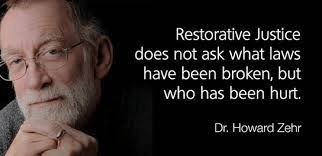
“That was restorative justice for me: Did I have things in my life that needed to be restored? Could I truly see other people’s positions besides how things affected me? How were other people affected by things that I might have done or said?”
“Trauma not transformed is often trauma transferred. Hurt people hurt people.”
Trauma healing requires safety, acknowledging painful experiences, and reconnection. People must “find themselves” in ways that restore self-worth, such as uncovering new skills, interests, and gifts. They must create community by participating in educational, therapeutic, and service programs and organizations. They must also value and nurture relationships outside prison walls by addressing people impacted by their actions, especially those most directly victimized by them.
“Meaningful accountability in the case of total violence is difficult to conceptualize because a deceased person cannot be brought back to life. Loved ones left behind know this better than anyone. Yet accountability is possible to some degree through the acknowledgement of responsibility for the violence, an understanding of the harm caused, taking steps to ensure the violence will not happen again, and paying it forward by helping others.”
This book was particularly interesting given my current career. To emphasize, these quotes are all taken from the book and do not necessarily represent my personal views or the views of my employer.
I look forward to reading, learning, and sharing more with you soon!
 Read Learn Share