
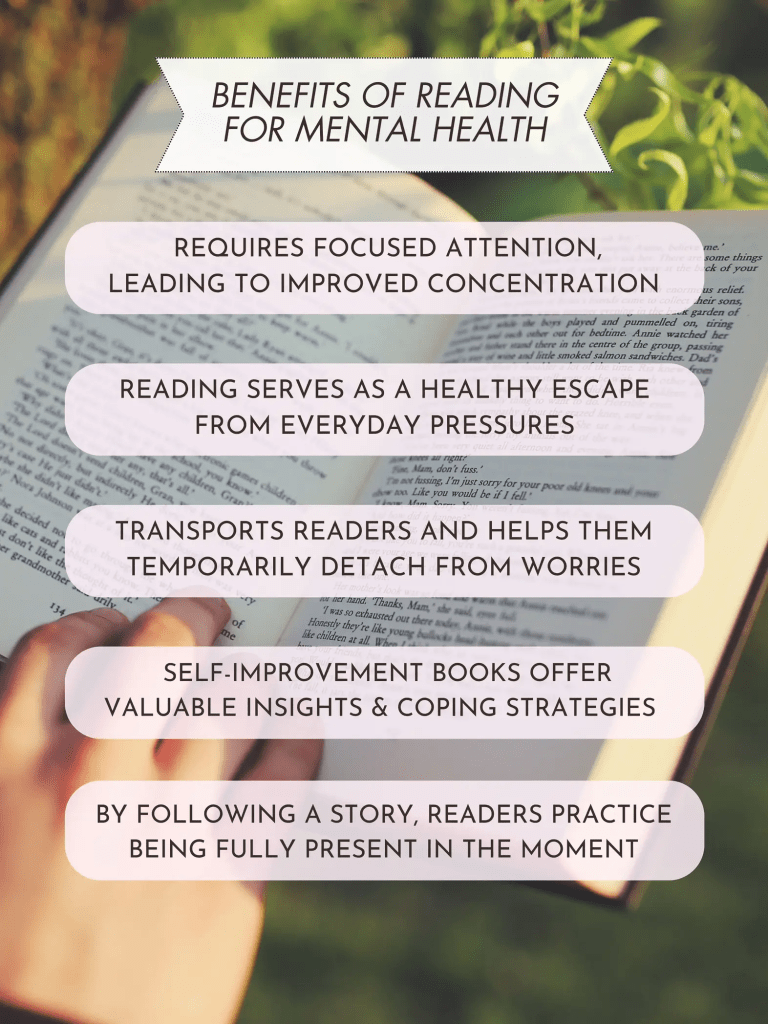
I read seven books in August 2024 – the most I have read in one month since starting school this year. Here is a brief synopsis of the books I read in August, some of which I will post about in greater detail in the future.
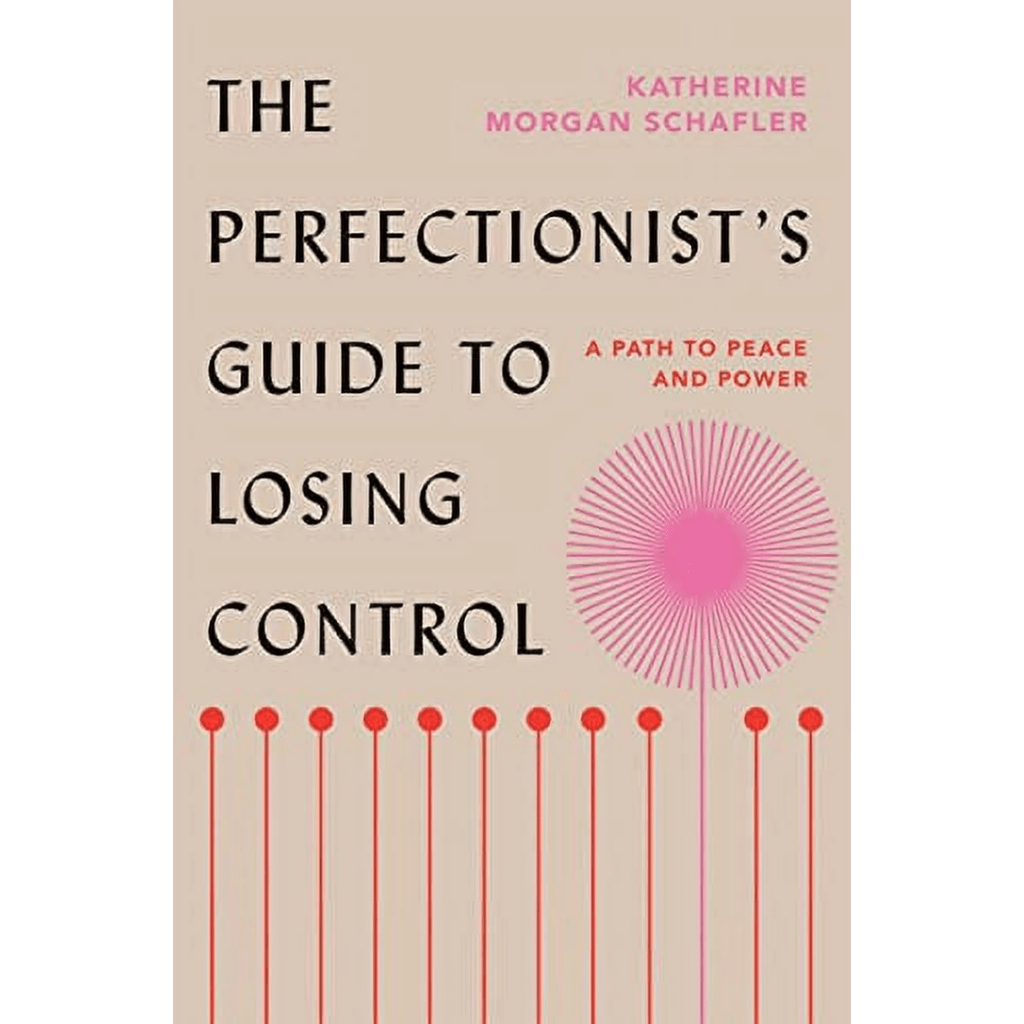
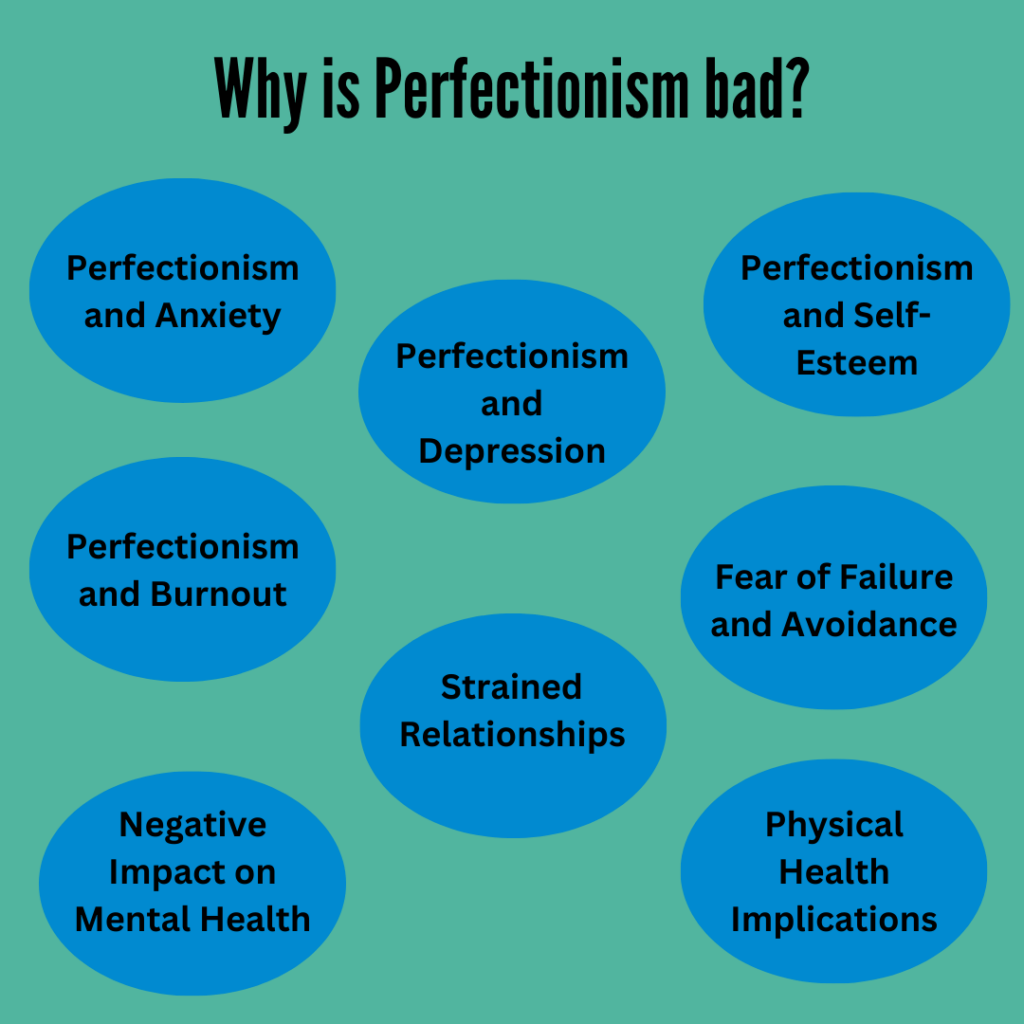
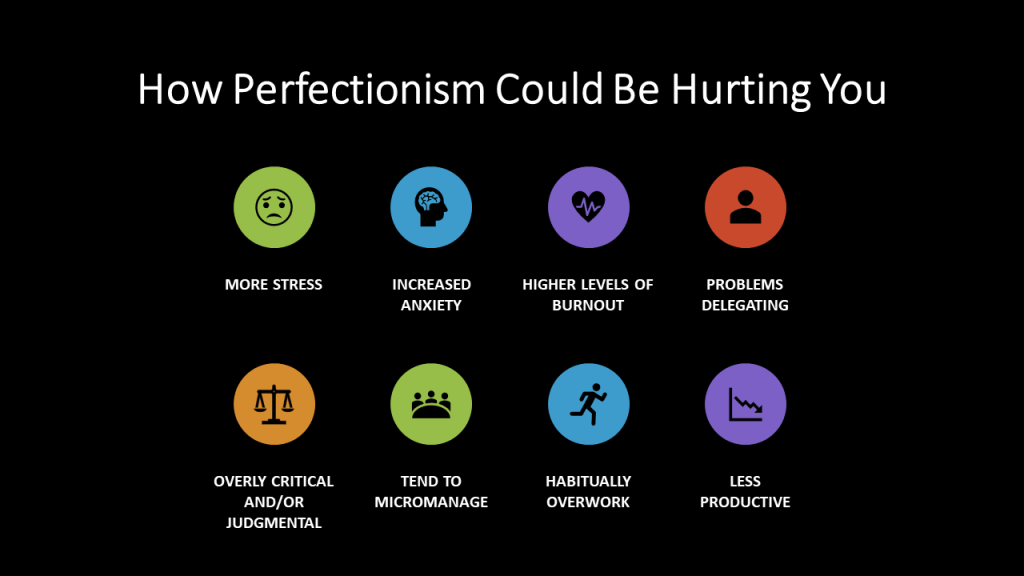
“The Perfectionist’s Guide to Losing Control” was written by Katherine Morgan Schafler, a psychotherapist, write, and speaker and former therapist at Google. I got SO much out of this book and my notes covered the review pages for 2 books instead of 1! This book explored types of perfectionists, lessons learned, and strategies of coping with perfectionism. I will most more about this book in the future, but for now, here are a few lessons:
- I am mostly a classic perfectionist (and partially a Parisian perfectionist). I value structure, consistency, predictability, an understanding of all the options so as to make an informed decision, high standards, objectivity, and clarity through organization. I don’t like disorder, I have difficulty adjusting to schedule changes, and I tend to experience spontaneity as stressful. Itinerary-centered existence can rob classic perfectionists of the opportunity to grow in a way that wasn’t planned or goal-oriented.
- Right now, with all the things you have yet to achieve, you are as worthy of all the love, joy, dignity, freedom, and connection as you would be had you already achieved them. You are worthy of all these things because you exist.
- There are many raw manifestations of perfectionism:
- emotional (want to experience a perfect emotional state)
- cognitive (want to understand perfectly)
- behavioral (want to behave perfectly in my roles and perform perfectly in my tasks)
- object (want external thing, such as desk, hair, etc. to exist in a perfect state)
- process (want process to begin, continue, and end perfectly)
5 out of 5 stars

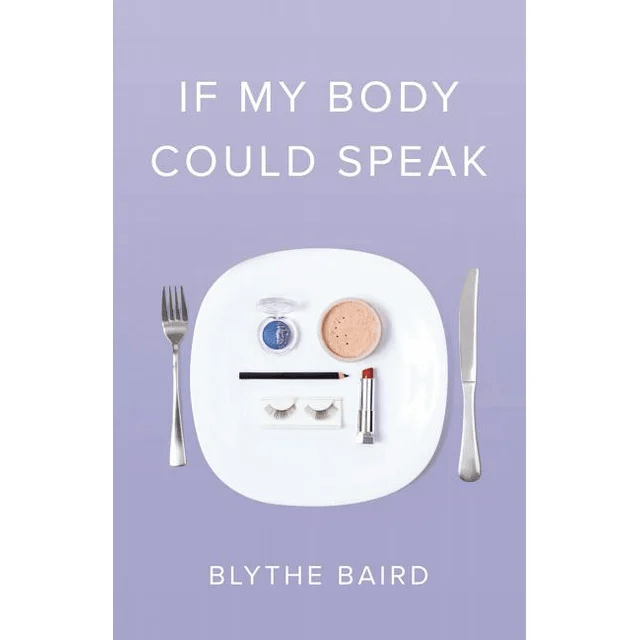
“If my body could speak: poems” by Blythe Baird included poems mostly about rape and eating disorders. Here are some lines that stood out to me:
- “If you develop an eating disorder when you are already thin to begin with, you go to the hospital. If you develop an eating disorder when you are not thin to begin with, you are a success story.”
- “If your body could speak, would she forgive you?”
- “One day after years of starving and gaining and fighting, I stepped on a scale and suddenly that number didn’t say anything about me…and that night nothing on my plate said anything about me either. Later, I got ice cream from a truck and I didn’t have to make myself earn it.”
- “I found a way to heal through the poetry. The stage is the only place I could tell my story where it wasn’t a liability I was putting onto anyone. This stage is where i learned to stop hoarding my suffering.”
- “Do not say you didn’t try. Remember: you did the best you could in the situation you were in with the materials you had.”
4 out of 5 stars

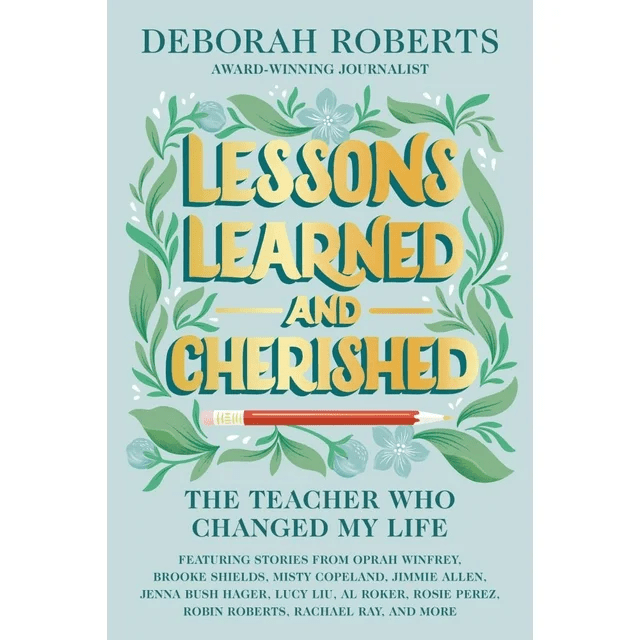
“Lessons Learned and Cherished: The Teacher Who Changed My Life” was compiled by Deborah Roberts, an award-winning ABC News journalist. This book was touching, although the stories seemed to have a specific format/agenda – nearly every essay mentioned that teachers are underpaid/underappreciated at the end of each essay.
Here are four of the lessons learned and cherished:
- Every teacher has the potential to make a student feel connected, valued, and worthy. The greatest gift you can give is your full presence.
- A difficult teacher can inspire you to persevere and believe in yourself. – Deborah Roberts
- Teachers mean the world for a child’s development. Kids are not guaranteed a wonderful home base. Kids can be struggling with emotional distress or even violence, and their teachers can be the safe haven.
- When a teacher believes in a student before they believe in themselves, they blossom. – Keri Shahidi
4 out of 5 stars

“Picturing Joy: Moments of Connection” was compiled by photographer George Lange. George’s work has appeared in many popular publications, and he has shot many of the iconic images from TV shows and ads for TV shows. This book was not quite what I expected. George shared stories of how he captured those moments. There were some great photos and interesting stories. Here are some takeaways from this book:
- Photos are the artifacts of the experience a photographer creates. Photos reflect what he feels more than what he sees.
- The role of a photographer is only to be hip enough to get in the room but not have to be the center of it. His approach is to create a space for people to reveal a part of themselves to him, and his intention is to find a way to put love out in the world.
- “My time with subjects is often incredibly brief. A small window into a life I would never get to share without my camera.”
4 out of 5 stars
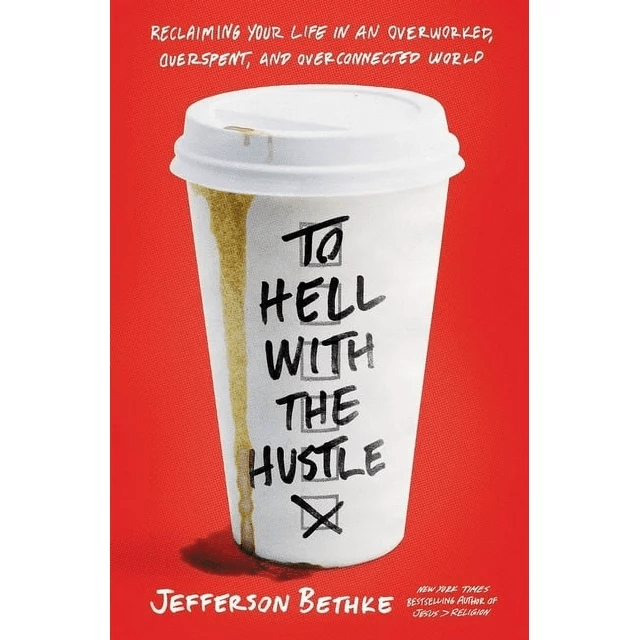
“To Hell With the Hustle” was written by Jefferson Bethke, the New York Times bestselling author of Jesus>Religion and It’s Not What You Think and host of The Real Life podcast. This book was not what I expected and seemed very scatterbrained, but there were some good takeaways. Here are some that resonated with me most.
- When our work becomes who we are and we derive our ultimate value and meaning from it, it runs the risk of becoming our god – the thing we worship, bow down to, and become slaves of.
- It’s time to stop and consider the cost of all this hustle, speed, and disillusionment. To hell with it – meaning we’re done and it comes from Hell. Jesus was never in a hurry. He was actively resisting cultural pressures on many levels. Hustle isn’t him.
- Scripture doesn’t talk much about goals. It is focused on our identity and who we are becoming. Are we becoming more like Jesus by the practices and formations we are doing?
- Have you ever noticed how a lot of Jesus’ miracles were not a part of his plan? They happened on his way somewhere else. You have to go at a pace that can be interrupted. That can be responsive to the moment in front of you.
- The goal is “Well done, my good and faithful servant,” NOT “Well accomplished, my busy and hustled servant.” Well done. Faithful. If we want to get there, we have to actively resist the myriad voices and influences that subtly hypnotize us into a busier, noisier, more hustled lifestyle. Say no, that’s not the way of Jesus. That’s not the speed of Jesus. That’s not the cadence of Jesus. To hell with the hustle. I’ll take him instead.
4 out of 5 stars
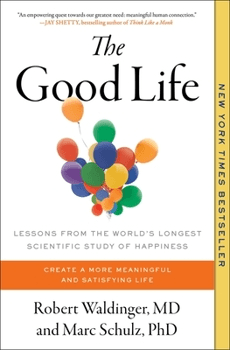
“The Good Life: Lessons from the World’s Longest Scientific Study of Happiness” was written by Robert Waldinger, MD and Marc Schulz, PhD. Robert Waldinger, MD is a professor of Psychiatry at Harvard Medical School and director of the Harvard Study of Adult Development. Marc Schulz, PhD is the associate director of the Harvard Study of Adult Development and a practicing therapist.
The Harvard Study of Adult Devlopment has followed the lives of two generations of individuals from the same families for more than 80 years – asking thousands of questions and taking hundreds of measurements to find out what really keeps people healthy and happy. I will post more about this book in the future, but for now, here are some lessons:
- The good life is not a destination. It is the path itself and the people who are walking it with you.
- Good relationships keep us happier, healthier, and help us live longer.
- An investment in our social fitness isn’t only an investment in our lives as they are now. It is an investment that will affect everything about how we live in the future. Like a tree needs water, relationships are living things and need attention and maintenance.
- Curiosity goes a long way in relationships. It opens up avenues of conversation and knowledge and helps others feel understood and appreciated.
5 out of 5 stars

“Calling A Wolf A Wolf” consisted of poems by Kaveh Akbar. To be honest, I didn’t really like this collection. The format of the poems bothered me, and the phrases were scattered with no punctuation. Here is an example:
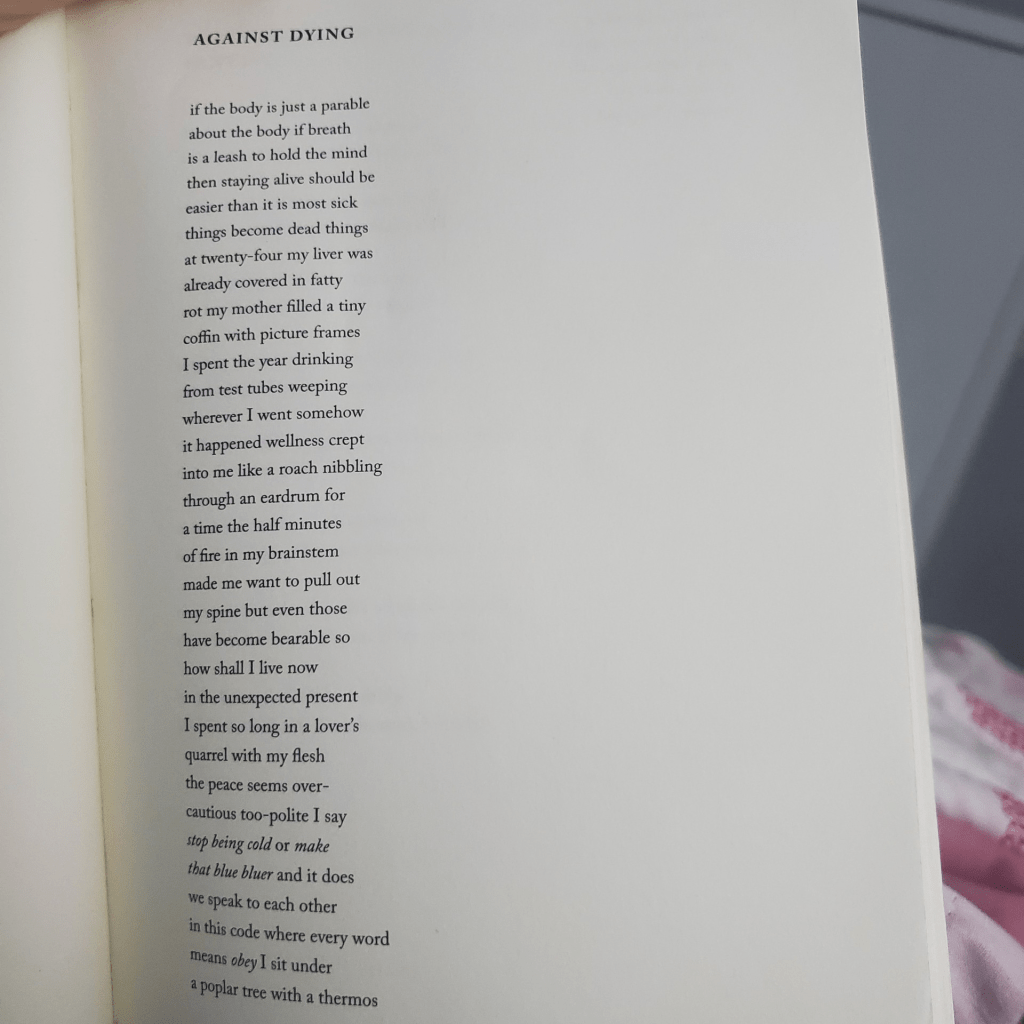
There were many poems about alcoholism, but the language didn’t make sense to me. Here are a few lines I liked:
What Seems Like Joy – “My father believed in gardens – delighting at burying each thing in its potential for growth. Some years the soil was so hard the water seeped down slower than the green seeped up. Still he’d say if you’re not happy in your own yard you won’t be happy anywhere.”
Portrait of the alcoholic floating in space with severed umbilicus – “I always hoped that when I died I would know why. My brother will be so sad he will tell his daughter I was better than I was. He will leave out my cruel drunk nights the wet mattresses my driving alone into cornfields unsure whether I’d drive out.”
“Now I listen for the sighs of people who love me, each agitation I create a reminder that I am less than constant in my grace.”
2 out of 5 stars

I look forward to reading, learning, and sharing more with you soon!






 Read Learn Share