
My intention is to post a Thoughtful Thursday column each week and share some of the insights I have learned in the past week. This week I wanted to share some fun facts about the Olympics. Here are some of the things I’ve learned this week:
- Summer Olympics and Winter Olympics – each one happens every four years, but they are staggered, so we see one every two years. We are in the summer Olympics right now in 2024.
- There are 32 summer Olympic sports and 8 winter Olympic sports.
- Silver medals are made out of silver, bronze metals are made out of bronze, and gold medals are made out of silver covered with a thin layer of real gold. They weigh about one pound. Gold medals are worth only $750-$850, but athletes will tell you that it’s not the $ amount that makes them valuable. It’s all of the hard work and achievement that the medals represent.

- Most countries reward athletes who win Olympic medals. The U.S. Olympic Committee awards $37,500 for Gold medalists, $22,500 for silver, and $15,000 for bronze. Some athletes can make enough money to support themselves just doing their sport by winning big competitions, getting sponsors, or being in advertisements. Most Olympic athletes have other jobs in addition to training for their sport.
- Paralympics – for those with disabilities. They happen just after the Olympic games and have been going since 1960. Wheelchairs are used for the running portion. Paratriathlon is shorter (in distance) than Olympic triathlon
- Fastest runner in history: Usain Bolt. 9 Gold medals at Olympics and 11 World Championships
- Katie took 16 years to heal from being an Olympian because she felt that if she didn’t win gold, it wasn’t an achievement. She just realized this year that being an Olympian is “cool” no matter whether you place or not.
- She spent 16 years disappointed that she came “so close” to winning but didn’t.
A study published in the 1990s confirmed this phenomenon:
https://psycnet.apa.org/doiLanding?doi=10.1037%2F0022-3514.69.4.603
Research on counterfactual thinking has shown that people’s emotional responses to events are influenced by their thoughts about “what might have been.” An analysis of the emotional reactions of bronze and silver medalists at the 1992 Summer Olympics – both at the conclusion of their events and on the medal stand – indicated that bronze medalists tend to be happier than silver medalists.
This is attributed to counterfactual thinking. Bronze medalists think about the possibility that they could have finished without a medal, while silver medalists think about how they missed winning the gold.

Here are some fun facts from an article from weareteachers.org titled 40 Fascinating and Inspiring Olympics Facts:




The six colors – blue, yellow, black, green, red, and the white background – were chosen because every nation’s flag contains at least one of them.


The American swimmer won 28 total medals across 4 Olympics, including 23 gold medals.

Greece, Australia, France, Great Britain, and Switzerland have sent athletes to every single Summer Games.
At 11 years old, Chinese skateboarder Zheng Haohao is the youngest athlete at the Paris 2024 Olympics as well as China’s youngest Olympian ever.

This year’s oldest Olympian is 65-year-old Spanish equestrian Jimenez Cobo.
The first year every country sent a female athlete was 2012.
Though the first year that an Olympics had women compete in every single sport was 2000 at the Sydney Olympics, it wasn’t until London’s 2012 Games when every participating country also sent a female athlete to compete.
At London 2012, Ian Millar set a record by becoming the first athlete in any sport, from any nation, to compete in 10 Olympic Games.

A runner bagged the Olympic gold with bare feet.
Ethiopian marathon runner Abebe Bikila competed in the 1960 Rome Olympics. He famously won the gold for men’s marathon with his bare feet. The athlete originally bought running shoes in Rome for the race. However, the shoes became uncomfortable when they gave him blisters while training. He ultimately decided to run barefoot which led to his record-breaking win in the Games. In the 1964 Tokyo Olympics, Bikila outdid his personal best and won the gold once again while wearing shoes.

The three women that stepped onto the podium for Women’s Gymnastics All-Around each have their own version of overcoming adversity to make their dreams come true.
The bronze medal went to American Suni Lee. She’s the defending champion of this event, but she was diagnosed with two rare forms of kidney disease since the last Olympics that nearly caused her to quit the sport entirely. With treatment, support, and commitment, she competed again at this year’s Olympics.

The silver medal went to the Brazilian Rebecca Andrade. Rebecca grew up in a favela two hours from her gym. Following the 2016 Olympics, she tore her ACL 3 times but still came back in time for the Olympics in 2021. She’s been healthy ever since and has been consistent with her training to become one of the best gymnasts in the world.

The gold medal went to Simone Biles. She’s known as the greatest gymnast of all time and brings a level of skill and power that the sport has never seen. During the last Olympics, she chose to remove herself from the competition for her own mental health. She faced a lot of criticism for her decision, but she invested in improving her mental health, kept training, and came back to the Olympics again with big expectations and won again.

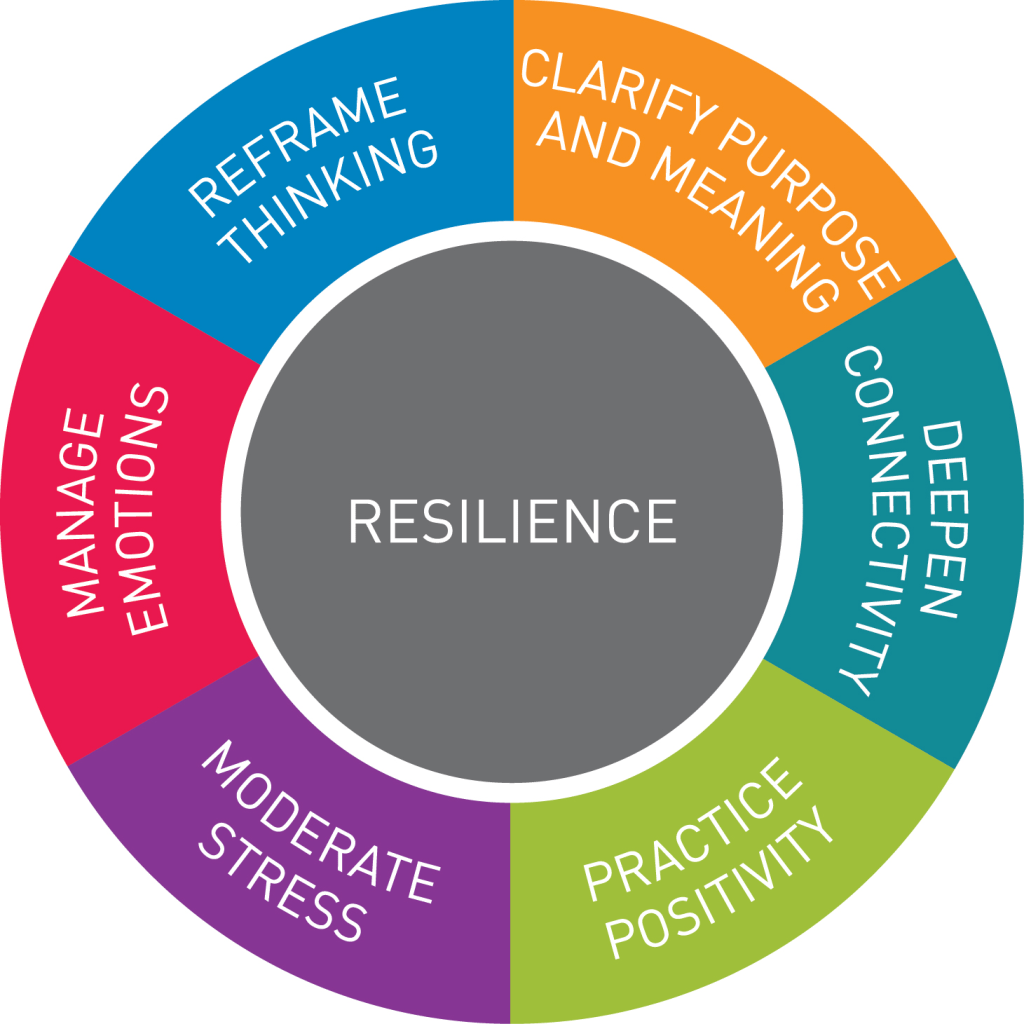
The common thread in the story of these 3 stars is how they’ve all overcome their own adversity. They have chosen to persevere through the circumstances and displayed a resilience that is inspiring the world. You have it within you, too! The challenges you’re facing and the obstacles in your way can be overcome with resilience!
I look forward to reading, learning, and sharing more with you soon!
 Read Learn Share