Thoughtful Thursday posts, Uncategorized

Thoughtful Thursday – February 6, 2025

As I discern the frequency of Thoughtful Thursday posts going forward, I wanted to share some of the insights I have learned in the past week. Here are some of the things I’ve learned this week:

Life Kit – The science behind the FDA ban on food dye Red No. 3

  • Desserts, candy, and medications that are bright cherry red often contain synthetic Red dye No. 3. It has been known to cause cancer in rats.
  • The FDA is now banning it in food and ingested drugs (revoking authorization)
  • Red dye No. 3 is a petroleum-based dye that gives products a bright cherry red color.

  • 2002 – petition was filed with the FDA to ban the dye, and the FDA has been reviewing the petition and research ever since.
    • Red dye No. 3 in high doses causes cancer in rats. The FDA previously concluded it was safe for humans in the amounts used in food and said that Americans aren’t going to eat Red dye No. 3 in amounts large enough to cause cancer
  • 2023 – California became the first U.S. state to ban Red dye No. 3, although the ban doesn’t take effect until 2027.
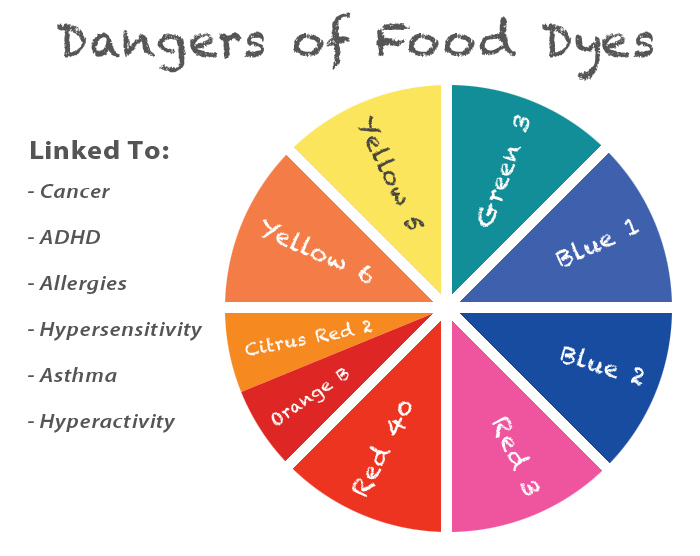
The Environment Working Group has compiled a list of over 3,000 packaged foods and drinks that contain Red dye No. 3!

  • There are also concerns about other synthetic food dyes linked to behavioral issues  and ADHD-like symptoms in children.
  • These dyes are more common in cheaper, ultra-processed foods.
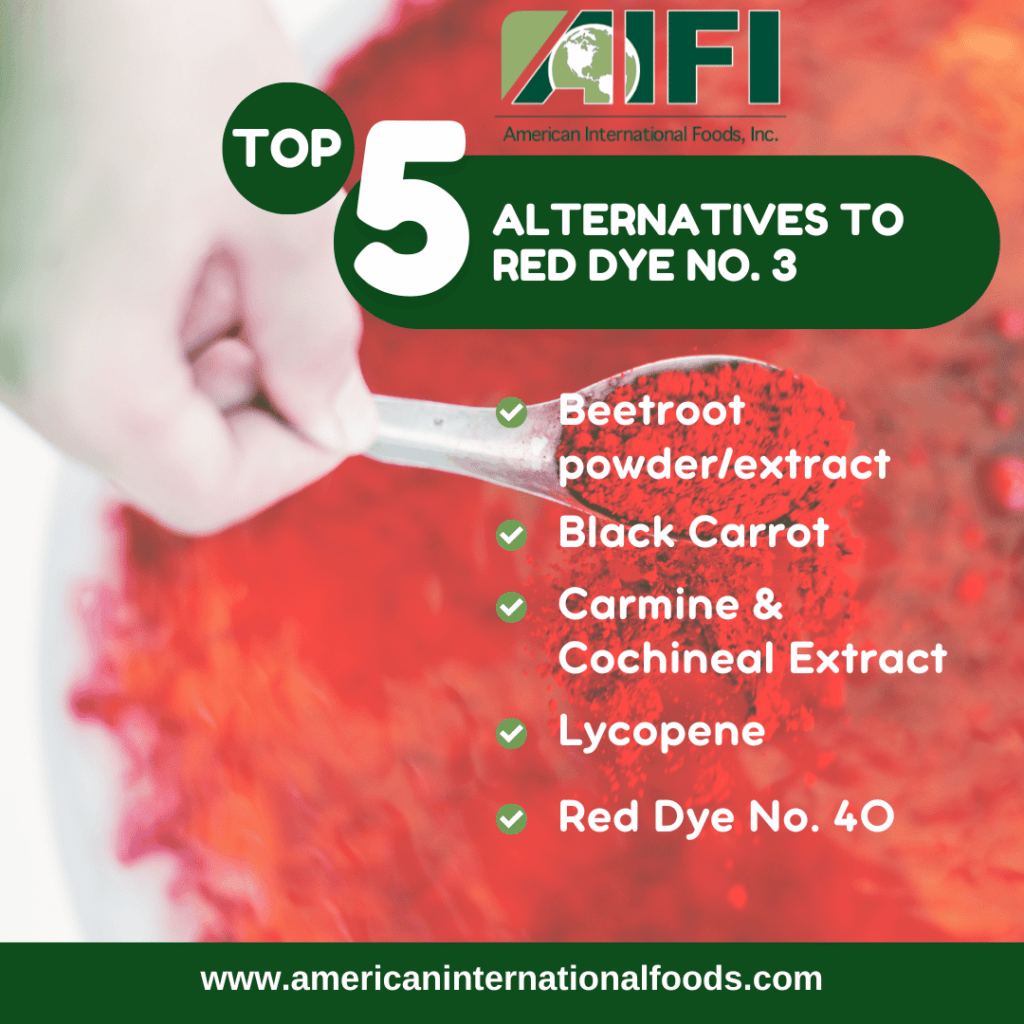
  • Food manufacturers have until January 2027 to remove red dye no. 3 from their products.
    • Replacing with Red 40 (also linked to behavioral issues in kids) or natural food compounds found from fruits and vegetables (ex: beets)
  • Check food labels and try to avoid food dyes.

Chasing Life – Want a Healthier Mocktail? Here’s How

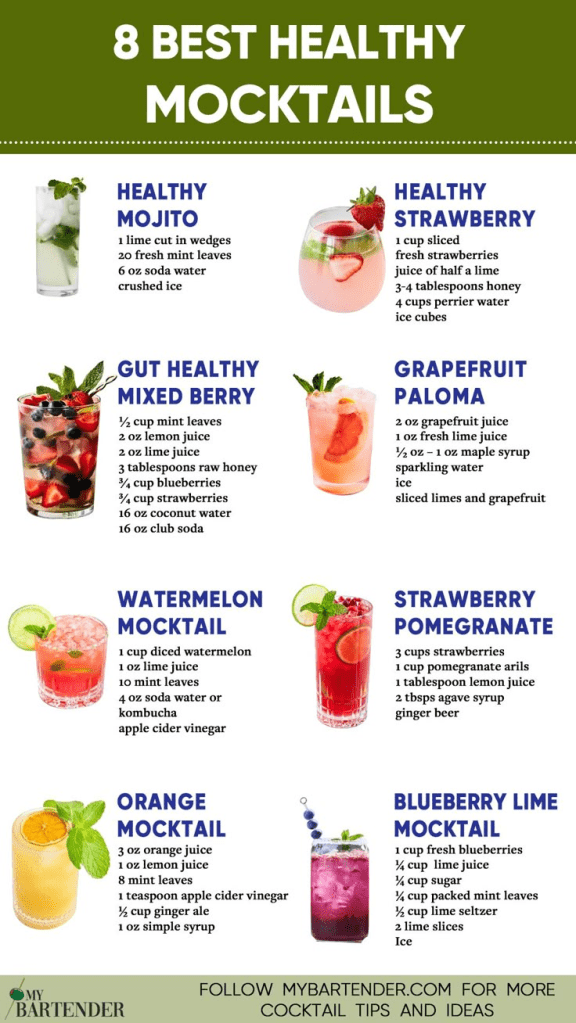
Disclaimer: My body doesn’t tolerate carbonation, alcohol, or mocktails, so I haven’t tried these recommendations!

  • Add water to get the volume right. Ex: instead of 2 oz of gin, add 2 oz of water.
  • Mocktails, like cocktails, are actually meant to be small and savory. You don’t need to use a lot of added sugar or syrups. Not meant to be a 12 oz beverage
  • If limiting alcohol instead of going alcohol-free, use sherry or fortified wines. These provide more of a flavor profile than NA drinks.
  • When you go alcohol-free, there is a chance you won’t miss it!
  • Many zero-proof options rely heavily on sodas, fruit juices, and syrups to try to compensate for the lack of alcohol. You can add water to tone down the sweetness.
  • 1 month without alcohol will improve your sleep, boost your energy, and lower your blood pressure. That’s pretty good incentive.

Self Improvement Daily – Plant Yourself In Fertile Soil

One of the most important impacts of your life and your success is your environment. Your environment is always pushing you to take make certain choices and take certain actions. 

It’s the difference between hanging around friends who always want to meet up for drinks instead of hanging out while hiking, working out, or socializing without alcohol. It’s the difference between having access to healthy food in your pantry rather than always grabbing and stocking up on junk food. It’s the difference between having a good book by your bed versus only having your phone within arm’s reach.
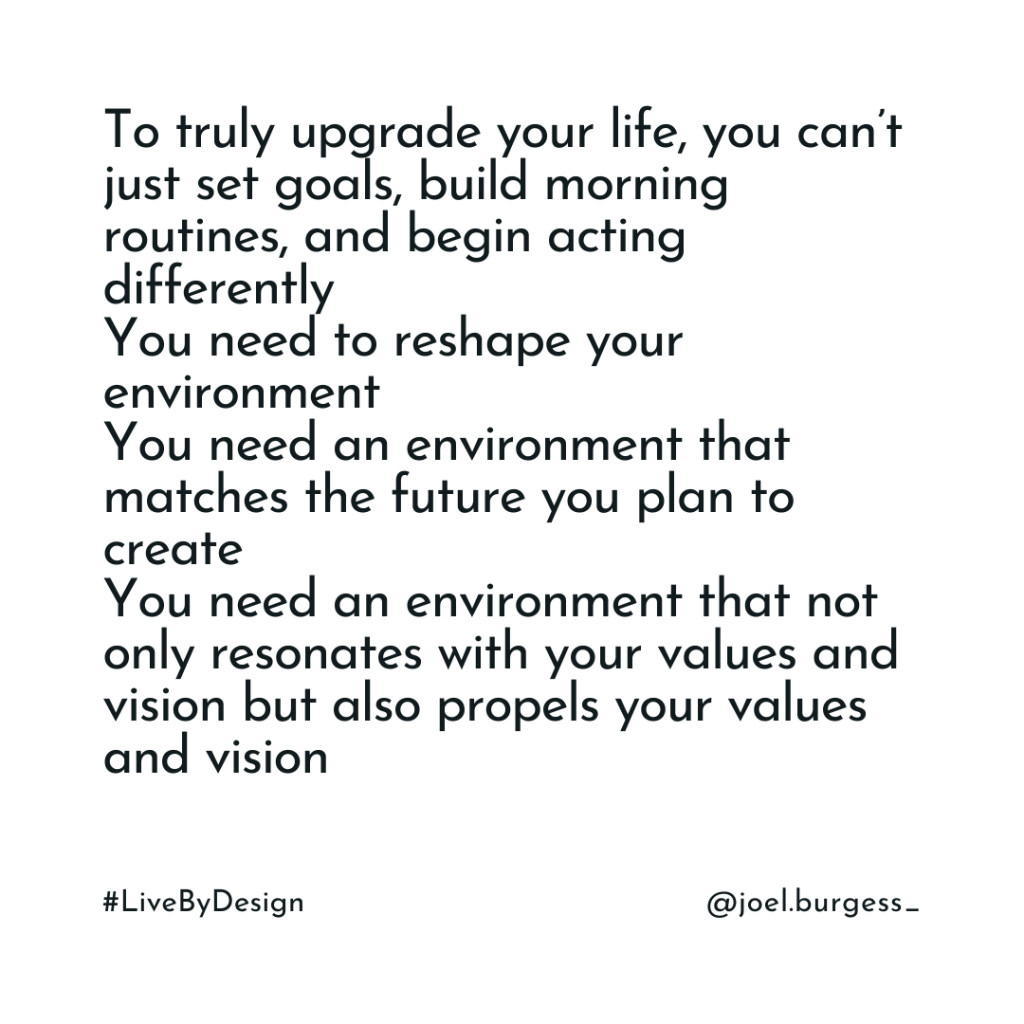
Environment influences what happens without our awareness. The majority of the time, we’re acting unconsciously and automatically.
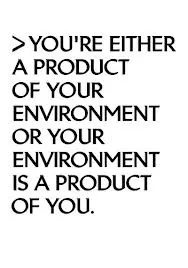
“Here’s a metaphor I like to use that demonstrates the power of environment. Think of the potential of a seed.

A seed has everything it needs to grow into a tall mighty tree. A seed is fully capable, yet most of the time, it doesn’t even sprout. Why? Because it’s dependent on the soil. The seed requires a certain environment to thrive.

The same seed planted in two different places can lead to two very different outcomes. When it’s in fertile soil, it grows tall and strong. When it’s planted in sand, it doesn’t even have a chance. And that’s not because there’s anything wrong with the seed. It’s just in the wrong environment.

As humans, we experience the same thing. There are environmental conditions that bring out our best. The right people, opportunities, circumstances, and spaces set us up for success. But there are also environments that bring out our ‘not so best’, causing us to make choices that don’t serve us and limit our potential.

Unlike a seed, however, we can control our environment. We can choose our surroundings and therefore, shape the influence it has on us. We can plant ourselves in fertile soil and when we do, that’s when we are maximizing our growth and potential! 
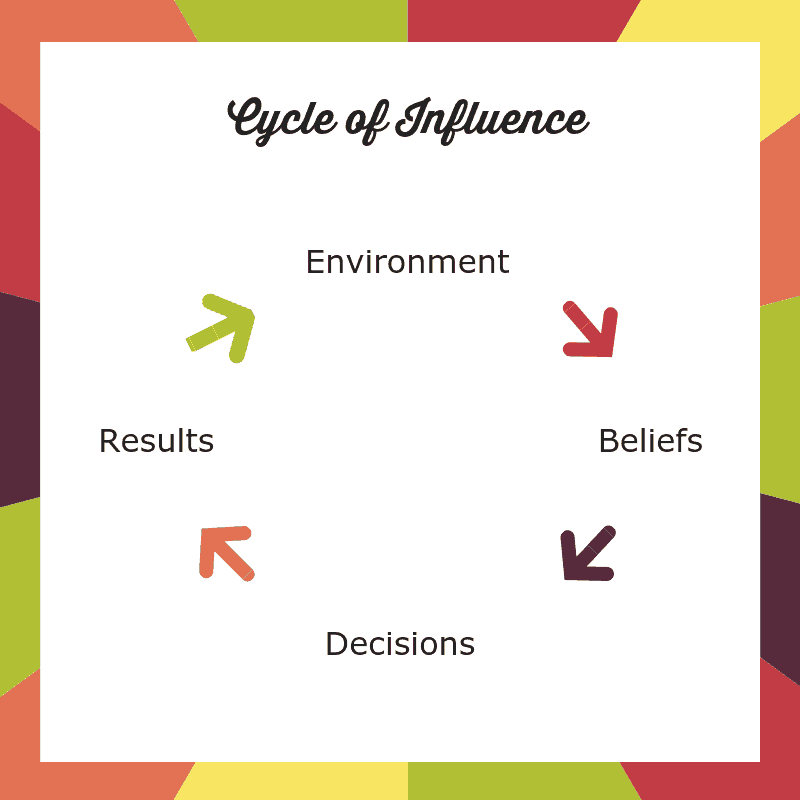
If you’re falling short of the level of consistency, productivity, good health habits, and impact that you know you’re capable of, it’s probably because you’re in the wrong soil. Choose to put yourself in a place where you can thrive and watch the results pour in!”

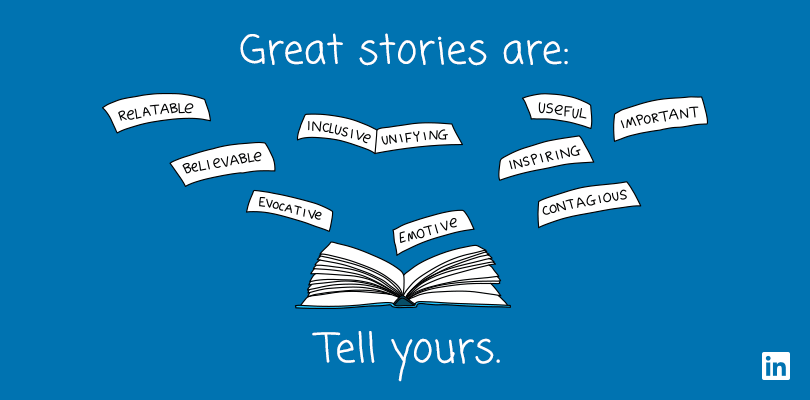
TED Talks Daily – The secret to telling a great story – in less than 60 seconds

  • Many great stories start with a question because it will make people stick until the end to find out the answer.
  • You want to get your audience’s attention immediately, so you want to start by asking something shocking.
  • After you’ve hooked your audience, you want to take them on a journey building up to your answer where you want them to feel constant progression so that as we’re moving closer and closer to our answer, they feel like they can’t stop listening.
  • If everything is smooth sailing, nobody cares. We want to add conflict before getting to our answer. Without conflict, the audience isn’t as invested.
  • After enough buildup, we finally need our answers. Build tension by making the answer feel uncertain to make a satisfying ending.
  • If it takes longer to tell your story than it does to make a fast food burger, you’re probably overcooking both.
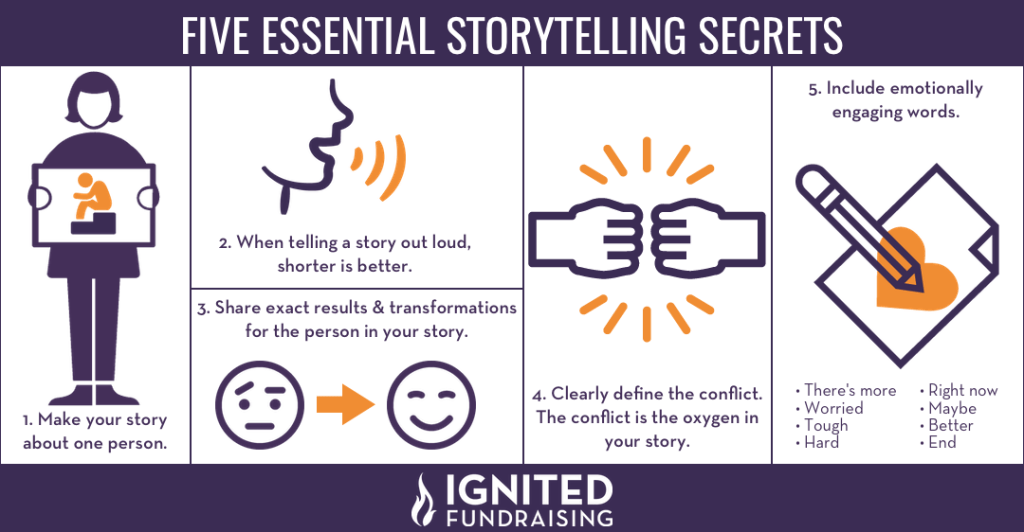
I’ve noticed this trend often on TikTok. People tell short stories with conflict to capture interest and build up progression before detailing the end of the story.
Mary’s Cup of Tea – How to Make Adult Friendships Easier with Kat Vellos

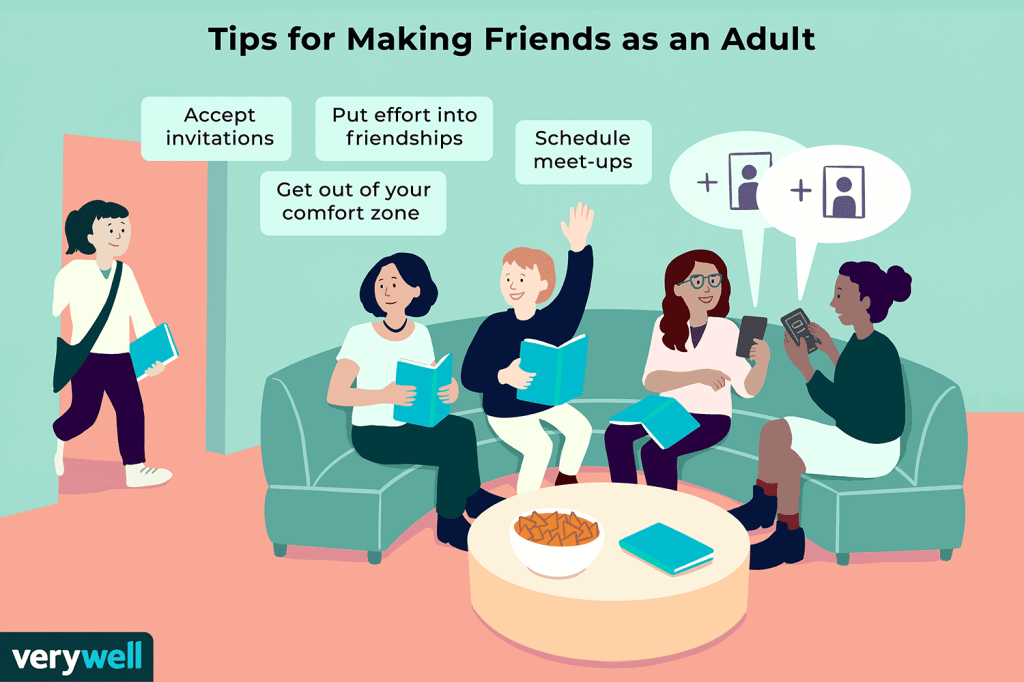
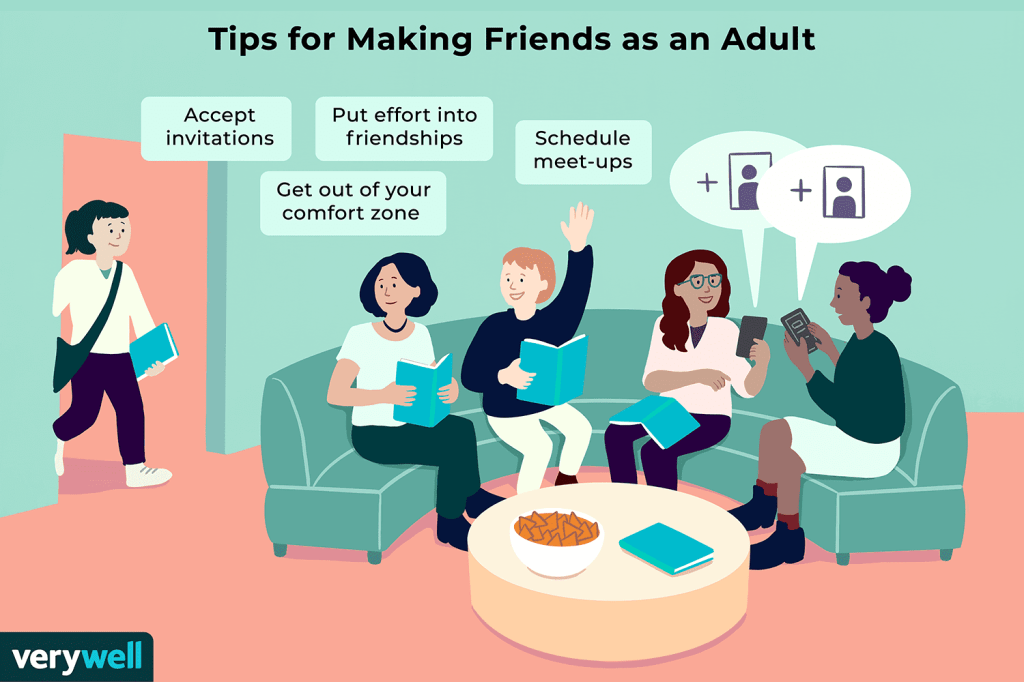
  • Connecting with existing friends more easily: If you are a busy or forgetful person, set reminders in your phone to follow up with the person. Don’t leave your hangout without setting your next hangout (just like a salon appointment). Connect your friends to each other to share time together.
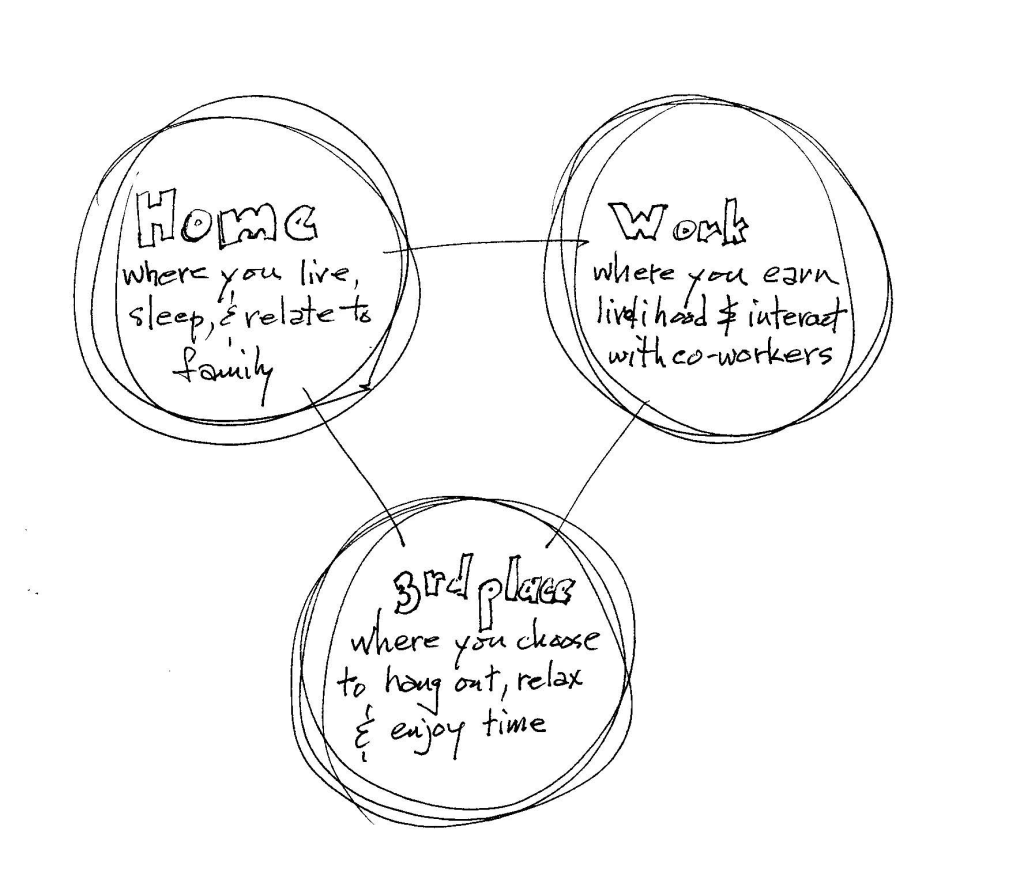
  • Making more friends nearby: Be aware of your limits and take it step by step. Start by making acquaintances with the people who already live near you and are easier to fit into the life you’re living – people on your block, people in your apartment building, people in your town. Become a regular at a third place – neither home nor work – somewhere you go to for enjoyment – gym, coffee shop, brewery, bar, etc. Host friends with frequency – ex: Sunday dinners at home.
  • When we say that friendship is hard, we often say it’s hard because we’re afraid to introduce ourselves to new people, scheduling is hard, we’re too busy, we aren’t getting close fast enough to people, friends don’t give as much as they take, etc. When we say friendship is hard, we might mean that having courage is hard, having confidence is hard, prioritization and persistence is hard, having patience is hard, or taking risks and dealing with disappointments and rejection is hard. These things are part of life, not just friendships!
  • If someone says you should get together and you reach out and they don’t schedule something, follow up suggesting something you think they would say yes to!
  • On average, adults lose 1-2 friends per year because they fall out of touch and things fade away. Like plants, you need to water and nourish your friendships.
Book: “We Should Get Together” – I look forward to reading this!

Thoughtful Thursday posts, Uncategorized

Thoughtful Thursday- May 4, 2023

My intention is to post a Thoughtful Thursday column each week and share some of the insights I have learned in the past week. Here are some of the things I’ve learned this week:

Self Improvement Daily- Getting Started Setting Goals

Setting goals is an effective way to structure your efforts and get a desired result. However, many people set goals too big without a plan. Ex: go from not working out at all to working out 6 days per week. Others set goals without much of a plan. Ex: drink more water. Eat healthier.

You don’t need to wait to have a perfectly defined and thought through goal before getting started. As you begin pursuing your goals, you collect more reference points and information to aid in defining your goal and the structure of achieving your goal. As you get closer to your goals, they get clearer. You should always be intentional about pursuing more clarity.

A goal I had for quite some time was to drink more water. There were times I drank up to a gallon per day (too much for me), but other times, I got so consumed in my work that I didn’t finish my first 16 ounces until after lunch! “Drink more water” was not a clearly structured goal for me. When I noticed that I regularly wasn’t finishing my first 16 ounces until well into the afternoon, I revised my goal to include “drink 1 bottle of water before the workday starts.” That goal is structured, measurable, and helps me to drink more water throughout the day. I also use True Lemon packets (available in a variety of flavors) to increase my water intake.

Another goal could start off as “eat healthier.” This could be structured by committing to planning staple breakfast foods and meal prepping healthy lunches for the week so that you don’t have the urge to order takeout during the work week.

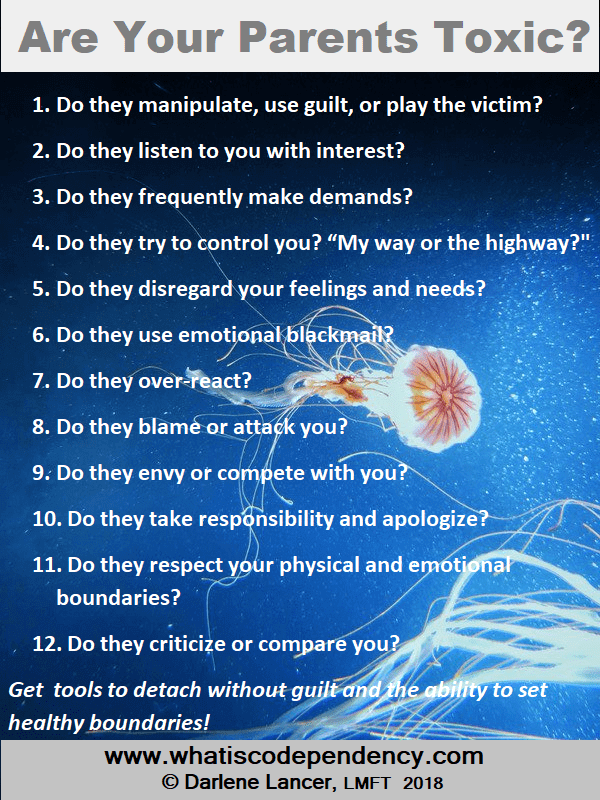
Psych2Go Mental Health Podcast- 10 Toxic Things Parents Say To Their Kids
  1. You look terrible.
  2. You’re a freak.
  3. You’re so immature.
  4. I’m going to send you to boarding school.
  5. Once you’re 18, I’m going to kick you out.
  6. This is your fault.
  7. Show me some respect (when it isn’t due/when it’s toxic).
  8. Do what I say or else.
  9. You are terrible at ___.
  10. You’re the worst student.

I am grateful that I didn’t hear any of these phrases directed at me growing up, but I know of people who have. It is important to show love to your children and allow them to make mistakes, express their own individuality, and overcome obstacles that can turn into learning experiences.

Life Kit- Put your savings to work

When we put money into a traditional savings account when inflation is high, its value is eroding.

Savings account interest rates may be as low as 0.01%, and the average interest rate is currently 0.24%. Some banks have increased interest rates due to inflation, and smaller banks are offering better rates than bigger banks.

Online banks offer better rates due to not having to maintain brick and mortar locations. Be sure to research minimum deposits and hidden fees and read the fine print! I recently created an account for CIT bank online, which offers interest rates between 4.50%-4.75%!

Aside from savings accounts, CDs are another option. The longer the term, the better the rate is. Be sure you can commit to the term, as you can’t withdraw $ during that term without paying a penalty.

Ibonds are inflation bonds where you are lending the government $ and the government agrees to pay you back at a later date with interest. Ibonds increased in popularity in 2022, as the interest rate was over 9%! The government sets Ibond rates every 6 months, and the term is for 5 years, although you can access your money before the 5-year term is up by forfeiting the last 3 months’ interest. The interest rate was just adjusted down to 4.30% in May 2023.

Taxes: the interest earned from savings accounts and CDs is taxable. Ibonds are exempt from state and local taxes, but you will have to pay federal income tax when you cash in on the bonds.

Consider switching savings accounts to one with a better interest rate. You may also want to consider government bonds for medium-term or long-term savings or CDs for short-term savings.

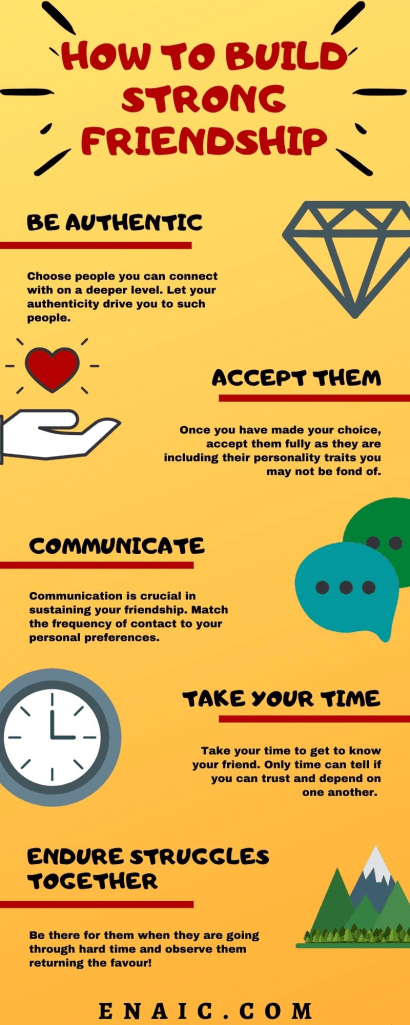
Self Care IRL- 14 Ways to Strengthen Your Friendships
  1. Make your friendships a priority.
  2. Start by staying in touch.
  3. Try to think about what your friend needs right now. How can you be helpful or of value?
  4. Stop judging. You are never going to be 100% approving of anyone or the decisions of anyone, including yourself!
  5. Give an occasional compliment.
  6. Spend time together.
  7. Find common interests that you share, and do those things together!
  8. Take on a new challenge together. Humans become closer with those they suffer with and overcome obstacles with.
  9. Take a road trip.
  10. Try new things together, such as restaurants, events, or activities.
  11. Play fair. Don’t one up your friends.
  12. Express your gratitude. Let them know you value them.
  13. Admit and apologize.
  14. Be authentic and be honest.
How to Be a Better Human- How to keep house while drowning

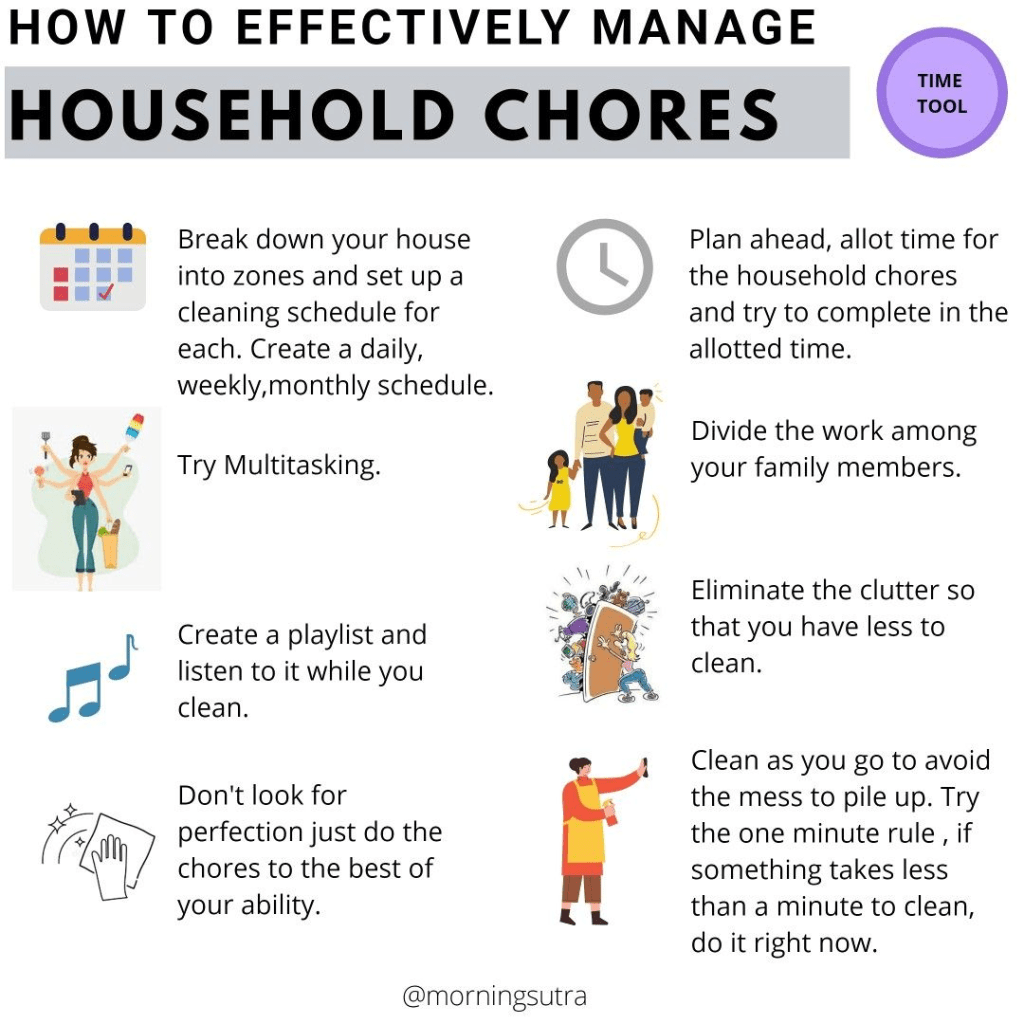
Reframe chores. Chores feel like an obligation. Some chores should be considered care tasks because they are tasks that you do to care for yourself, such as dishes, laundry, cleaning, exercising, cooking, organizing, and changing your sheets.

Ask yourself: What can I do right now in order to ensure that I’m being kind to my tomorrow self?

With other household stuff, acknowledge that good enough is perfect, and everything worth doing is worth doing partially. I struggle with this. I want to put my 100% into everything, so when I can’t dedicate the time and energy, sometimes I just don’t do it at all.

With chores, ask yourself these questions: What is the part you hate? What about it do you hate? Is there a way to skip that step or delegate? How can I add pleasure or joy to it? Ex: use a timer and dedicate a specific amount of time to a task, then stop when the timer goes off. Play your favorite playlist while doing a task you don’t enjoy doing.

Focus on Marriage Podcast- Common Problems and Letting Go of Selfishness

Many newly married couples have unrealistic expectations of marriage, such as “We are always going to agree on spending money. We will draw closer to our family and in-laws once we are married. We will divide up household responsibilities equally. We will have amazing sex often. I will never feel lonely in my marriage.” These unmet expectations are common sources of frustration in marriage.

Despite these common struggles, remember to ask yourself: What do you like about your partner? Why did you marry your partner? Why do you believe you’re married today?

One interesting point made in this podcast is that husbands are often looking for validation, and women feel resentment because they feel they are doing more than their husbands and it goes unnoticed.

Also, husbands often hear more about what they don’t do than about what they do do, leading them to feel unloved and unappreciated. They are seeking affirmations. Provide affirmations, appreciation, and validation, and also put effort into equalizing responsibilities.

Optimal Living Daily- How to Create Time for Self-Care Without Feeling Guilty by Ellen Burgan

When you take care of yourself, you have more energy, patience, and compassion for others AND yourself.

Common obstacles to self-care and what you can do about them:

“I don’t have enough time” ⇛ This is a sign that you’re prioritizing others above yourself. This is a matter of how we choose to use our time. Remember that taking care of yourself will ultimately make you more productive and efficient in the long run.

“I can’t afford it” ⇛ Self-care doesn’t have to be expensive. There are several free or low-cost options, such as going for a walk, doing yoga at home, journaling, reading a book, coloring, or listening to music or a podcast.

“I don’t know how to do it” ⇛ It doesn’t have to be complicated. Find something you enjoy doing, and go do it. Find what works for you and make it a regular part of your routine. For me, self-care includes reading, exercising, listening to podcasts, and journaling + the very occasional massage.

“I’m too tired” ⇛ This is an even better indication to take time for yourself! Self-care can help boost energy levels, relieve stress and burnout, and improve sleep.

“I don’t have anyone to do it with” ⇛ You can still take care of yourself while flying solo.

Tips:

  • Shift the way you think about self-care. Instead of feeling guilty, shift your thoughts to that of well-deserved time to focus on and care for yourself. If you take care of yourself, you will be a more fun person for others to be around.
  • Prioritize self-care. Schedule self-care and include it in your regular routine.
  • Set boundaries. Practice saying no to things that don’t align with your priorities or that are draining you. Every time you say no to another obligation, you are saying yes to yourself.
  • Use small chunks of time. If you can’t find a long burst of time for self-care, use the short bursts of time you have. Maybe spend 10 minutes a couple times a day for yourself, and as you get better at finding dedicated time to yourself, you can increase it to a daily routine.
  • Ask for help and be willing to accept help. Delegate tasks if you are able to so that you can have some time for yourself.
Crina and Kirsten Get to Work- Workplace Mental Health Takes Center Stage: A New Priority for the Surgeon General

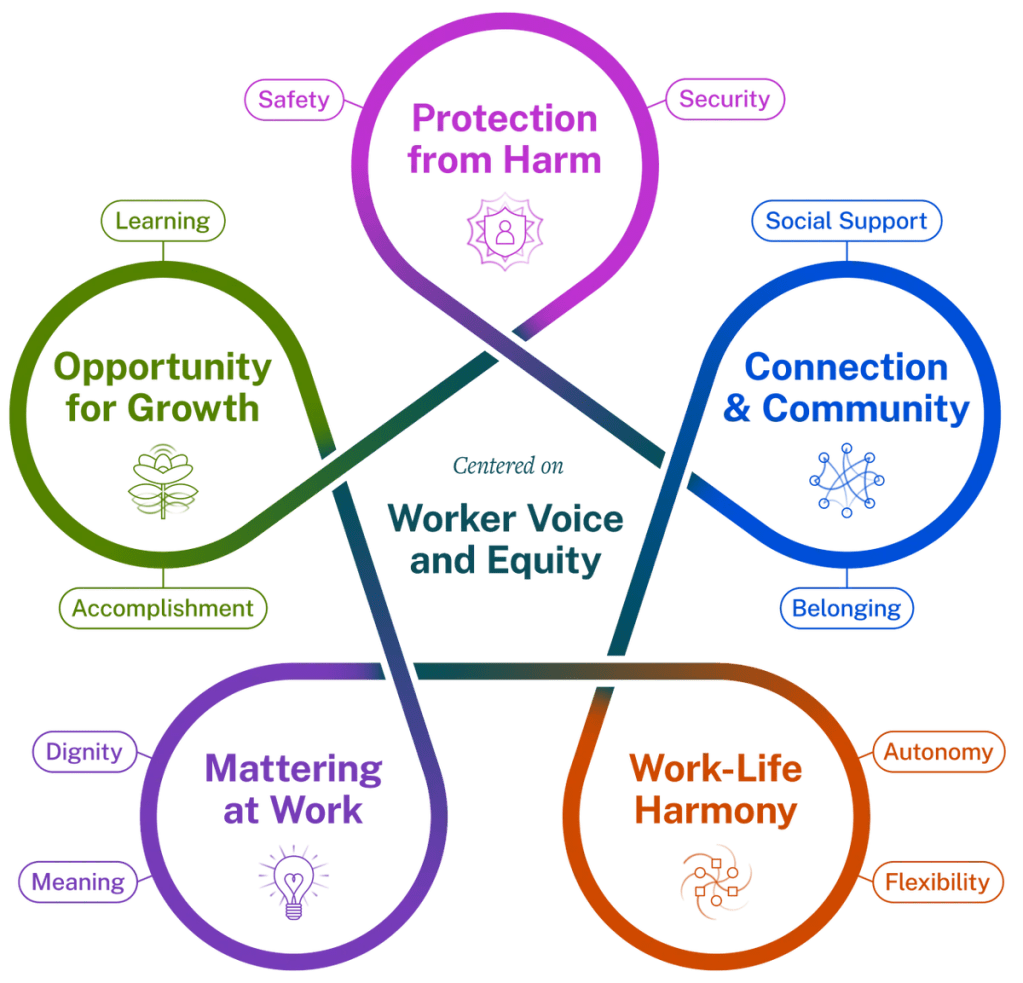
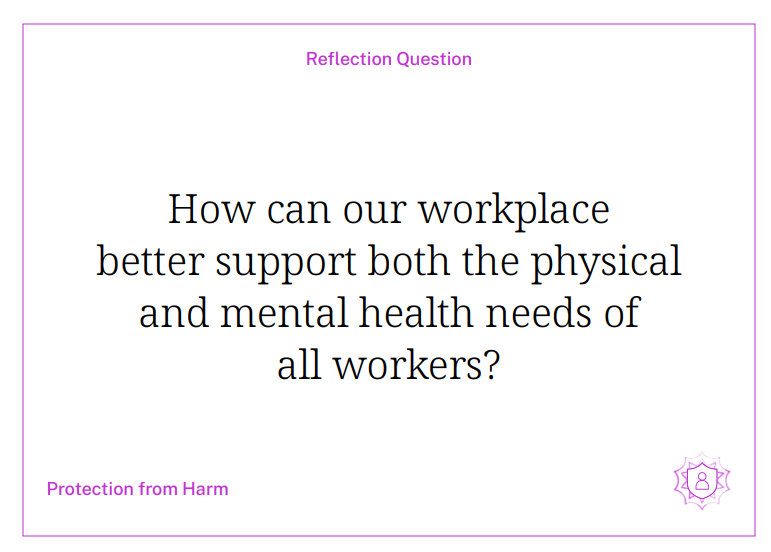
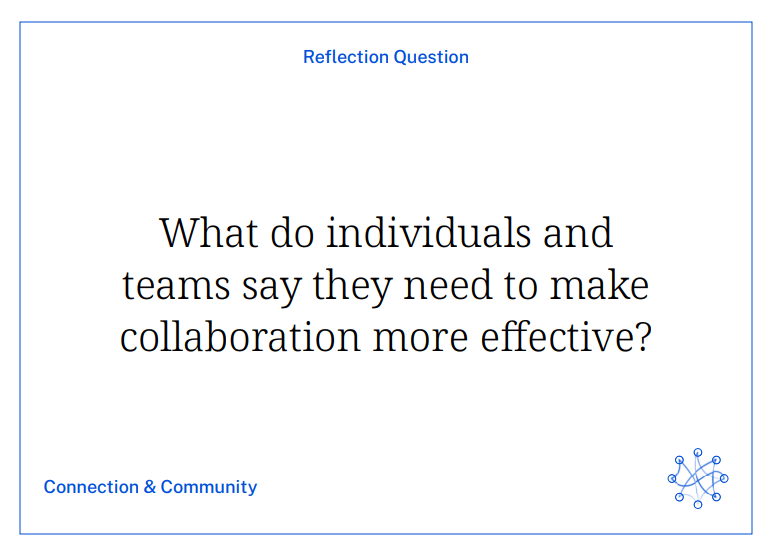
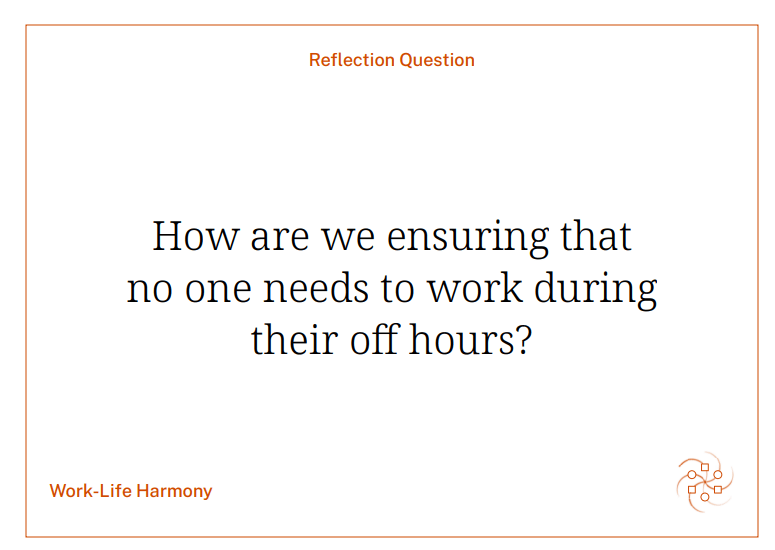
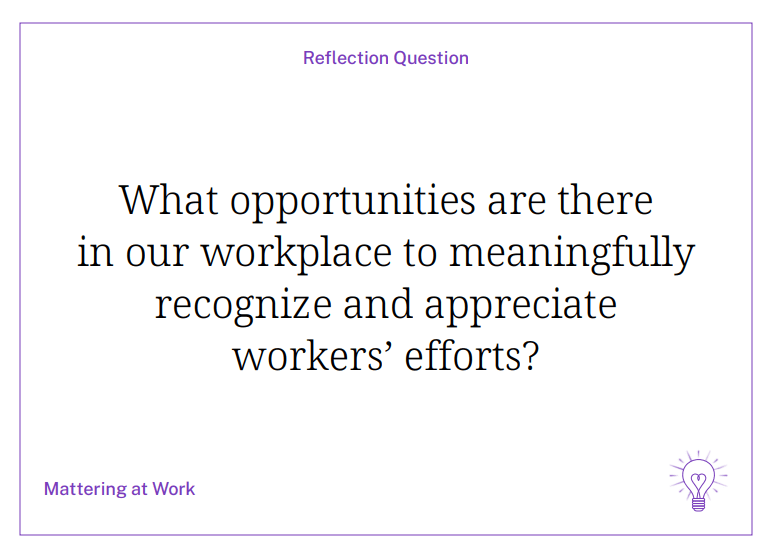
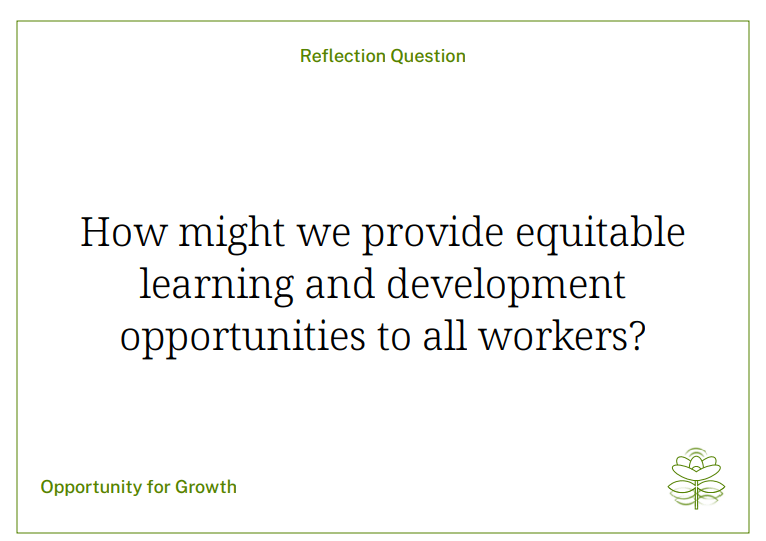
The Office of the Surgeon General created a framework for workplace mental health and well-being. All reflection questions are taken from: https://www.hhs.gov/sites/default/files/reflection-questions-workplace-mental-health-well-being.pdf

  • Protection from harm: safety and security.
    • Prioritize workplace physical and psychological health.
    • Enable adequate rest.
    • Normalize and support mental health by validating challenges, communicating mental health and well-being as priorities, and offering both support and prevention services.
  • Connection and community: social support and belonging.
    • Create cultures of inclusion and belonging.
    • Cultivate trusted relationships.
    • Foster collaboration and teamwork.
  • Work-life harmony: autonomy and flexibility.
    • Provide more autonomy over how work is done.
    • Make schedules as flexible and predictable as possible.
    • Increase access to paid leave.
    • Respect boundaries between work and non-work time.
  • Mattering at work: dignity and meaning.
    • Provide a living wage.
    • Engage workers in workplace decisions.
    • Build a culture of gratitude and recognition.
    • Connect individual work with organizational mission (shared purpose).
  • Opportunity for growth: learning and accomplishment.
    • Offer quality training, education, and mentoring.
    • Foster clear and equitable pathways for career advancement.
    • Ensure relevant and reciprocal feedback.

How is your employer doing with all of these?

I look forward to reading, learning, and sharing more with you soon!
Thoughtful Thursday posts, Uncategorized

Thoughtful Thursday- February 16, 2023

My intention is to post a Thoughtful Thursday column each week and share some of the insights I have learned in the past week. Here are some of the things I’ve learned this week:

Self Improvement Daily- Heck Ya or No Thank You

We tend to overcommit to things out of obligation, guilt, boredom, or an overall lack of boundaries. You can control what you commit to, and you can and should say no to protect your time, boundaries, and self-care. “You deserve to feel like you’re putting your heart into everything you do. That’s a real possibility in your life. And the only way you get there is by raising your standards.”

So the next time you’re making a decision to do something or not, ask yourself “Do I really want to do this?” If your answer is “Heck Ya” then follow the pull of it. If it’s anything else, politely say “No Thank You.”

Brian Ford
How to Be a Better Human- How to get the medical care you deserve

Doctors are often rushing from patient to patient, and many times patients feel unheard. Here are some tips to get the medical care you deserve:

Prepare for your appointment with a chronological written history of your issue/story. This helps because if you feel/look fine at your appointment, you can still get your doctor’s attention with a written chronology of information and also save the doctor time. Also, come prepared with questions. Often doctors are rushed, so having your story written down and organized helps!

  • Try to get your doctor to listen to you. Some sample statements are “I want to really explain to you how this illness has affected my life.” For a chronic health issue, state “These symptoms are different than what I had been experiencing.” Emphasize what you have tried already for treatment. Ask your doctor what diagnosis the doctor thinks this is. It also helps to have a family member or spouse with you to get the doctor’s attention.
  • Have your primary care doctor or referring provider provide the specialist with a note of your symptoms, progress, what has been tried, etc.
  • Try to get to know your provider before an urgent issue comes up to build trust.

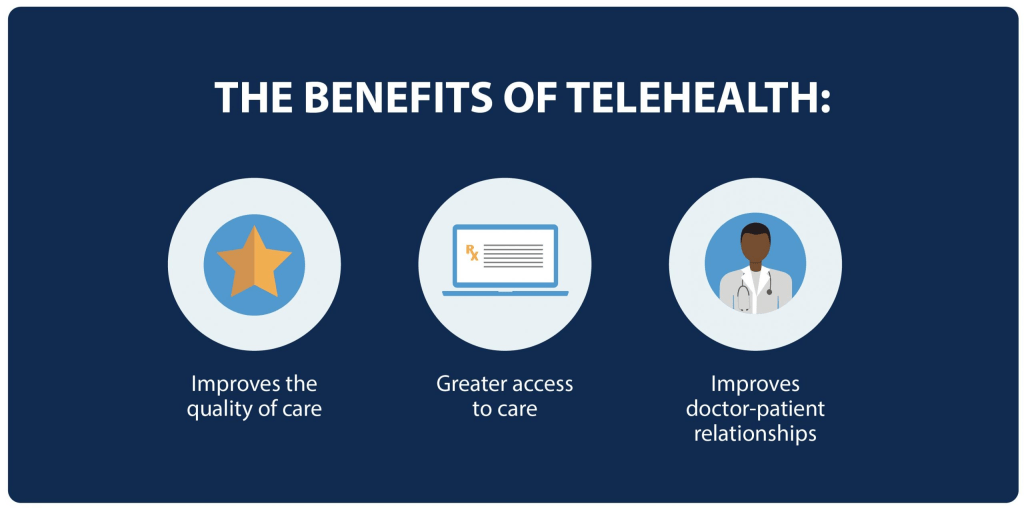
Doctors have more focus during telemedicine visits. There are fewer distractions, as they are only seeing one patient at a time, they aren’t dealing with others knocking on their door, etc. Virtual appointments present a greater opportunity to share your story.

I have learned that you really need to be your own advocate in the healthcare system. Throughout most of my life, I had various symptoms and was (mis)diagnosed with various conditions, and sometimes I was told that it’s “normal” or that it’s “in my head.” Other times, my symptoms worsened and I felt unheard because providers tried to tell me that it’s normal to have those symptoms with my diagnosis. After several doctor visits with different providers, many medications, and worsening symptoms, I decided to be my own advocate and write a chronological history of my symptoms, what medications I’ve tried, etc. and requested to be seen at the notorious Mayo Clinic in Rochester, MN. I am grateful that I was accepted for a second opinion. With my personal written chronological history and a list of questions, I finally left my appointment feeling heard and understood, and I was eventually properly diagnosed and presented with treatments and resources that had not been considered by other providers. Be your own advocate!

TED Talks Daily- The secret to making new friends as an adult

Friendship does not happen organically in adulthood. It is based on effort. In childhood, repeated unplanned interactions and shared vulnerabilities created friendship, which were easy in the school setting. These factors require more effort in adulthood.

Marisa G. Franco
  • Overcome covert avoidance, which is seeing people physically but checking out mentally. Show up and engage with people.
  • For friendship to happen, someone has to be brave and initiate conversation.
  • Having outside friendships is necessary for a healthy marriage and makes you more resilient through the difficulties of marriage.
  • Be vulnerable and assume people like you. For long-distance friendships and breaks in communication, assume people still want to connect but may be busy.
  • In-person connections tend to be stronger than virtual connections.
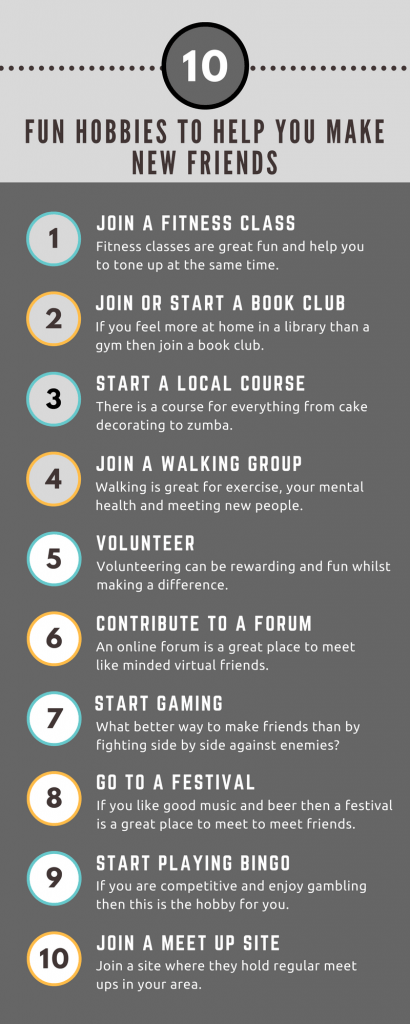
  • Find a group that meets around a hobby (hiking, meditation, book club, football, etc.). We tend to like people who are familiar to us. Ask members if they want to meet up before or after the group meets.

Our personalities are fundamentally a reflection of our experiences of connection or disconnection (coping mechanisms, friendly, open, cynical, aggressive, violent). How we have connected impacts who we are, and who we are impacts how we connect.

Marisa G. Franco
Jordan Harbinger Show- Death- Skeptical Sunday

The average funeral cost in the United States is over $11,000.

The rising cost of funerals leads to 88,000 bodies going unclaimed every year so that families won’t be on the hook for paying a bill.

funerals.org has helpful resources of your rights, ways to cut costs when planning a funeral, and funeral/burial requirements.

Some ways people cut costs:

  • Half of Americans choose to cremate to cut costs. Others proceed with immediate burial to eliminate the embalming process.
  • Shop around.
  • Purchase a casket online. Mortuaries are required to accept a casket from an outside vendor.
  • Plan a memorial service, where there is no need for embalming, refrigeration, a grave site, or a fancy casket.
  • Consider donating your body to a medical school for research.
  • Eliminate the vault. A vault made of concrete, steel, or lightweight fiberglass-type materials completely encloses the casket in the grave, while a less expensive concrete grave liner covers only the top and sides. No state or federal law requires the use of a burial vault, but most cemeteries do. The vault prevents the grave from sinking in after decomposition of the body and casket, making it easier to mow with heavy equipment.

Interesting facts:

  • There is no federal law mandating embalming. Some states require it. Most funeral homes have a policy that they won’t allow a viewing unless you embalm.
  • 4.3 million gallons of embalming fluid are used in the United States each year.

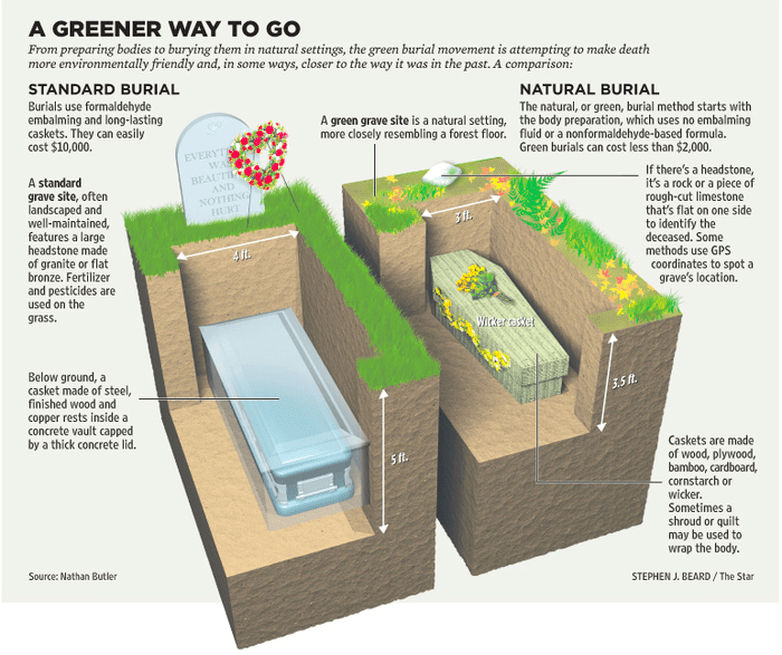
The strangest idea from this podcast was the concept of green burials: no embalming fluids, no concrete vaults, only biodegradable burial containers (a small box that disintegrates into the earth within 3-6 months/after 12 months, there is no evidence of your burial), hand dug graves, and no polished monuments.

When I first heard this, it gave me serial killer vibes! However, the podcast host mentioned that green burials result in you being part of the earth just like every animal who died throughout history.

I look forward to reading, learning, and sharing more with you soon!