
I read three books in July 2024 – the fewest I have read in years. School kept me very occupied in July. Here is a brief synopsis of the three books I read in July, some of which I will post about in greater detail in the future.
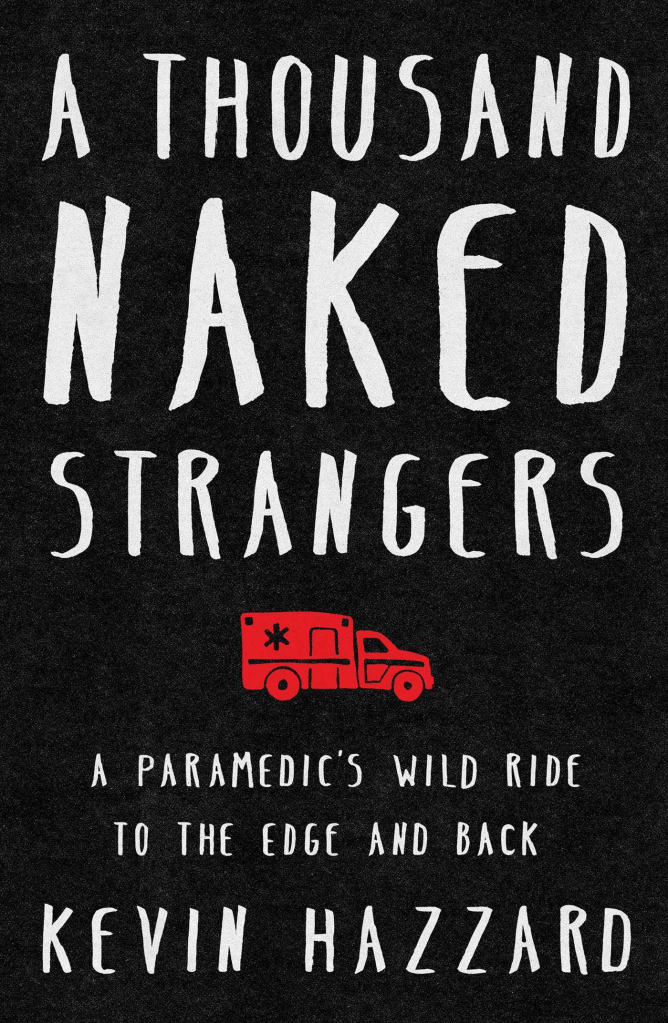
“A Thousand Naked Strangers: A Paramedic’s Wild Ride to the Edge and Back” was written by Kevin Hazzard, who worked as a paramedic from 2004-2013. This book was fascinating and, as one reviewer put it, “gives us a deep, intimate portrait of the toll it takes to every day witness our most vulnerable moments.” Here are a handful of anecdotes that stood out to me:
In some areas, the education of an EMT – one of two people sent to save your life should the worst happen – is an eight-month certificate program. Medics/paramedics undergo an additional 18 months of training.
Memorable quotes:
“Anyone i need of extra cash, who’s been fired, or who is fresh out of jail or rehab can walk through First Med’s squeaky front door and find a spot on an ambulance.”
“This uniform conveys knowledge . . . the feeling is electric, being an insider, knowing that should anything happen, I’ll be the one called out to fix it.” “Medics don’t have to be heroic or tough or even good people. They simply have to enjoy the madness. Aside from a driver’s license and a high school diploma, that’s what this job takes.”
Sometimes the author felt like a Peeping Tom. “I want to explain that I’m here to have fun, to watch. A tourist . . . All of this is real. Except me. I’ve been sleepwalking through someone else’s life.”
“There will always be another dead body, another fetid roach-infested house. We will never escape the smells, the fluids, the unwashable ick of people deep in the throes of a communicable disease.” “I’ve slipped a hand under her head to check for head shots when her eyes pop open. I let go. Her eyes close. I press again. Her eyes open. There’s a firefighter riding with us, and we look at each other as it becomes clear: my finger has slipped through a bullet hole and into her skull, and whatever I’m poking in there is making her eyes open and close.“
4 out of 5 stars

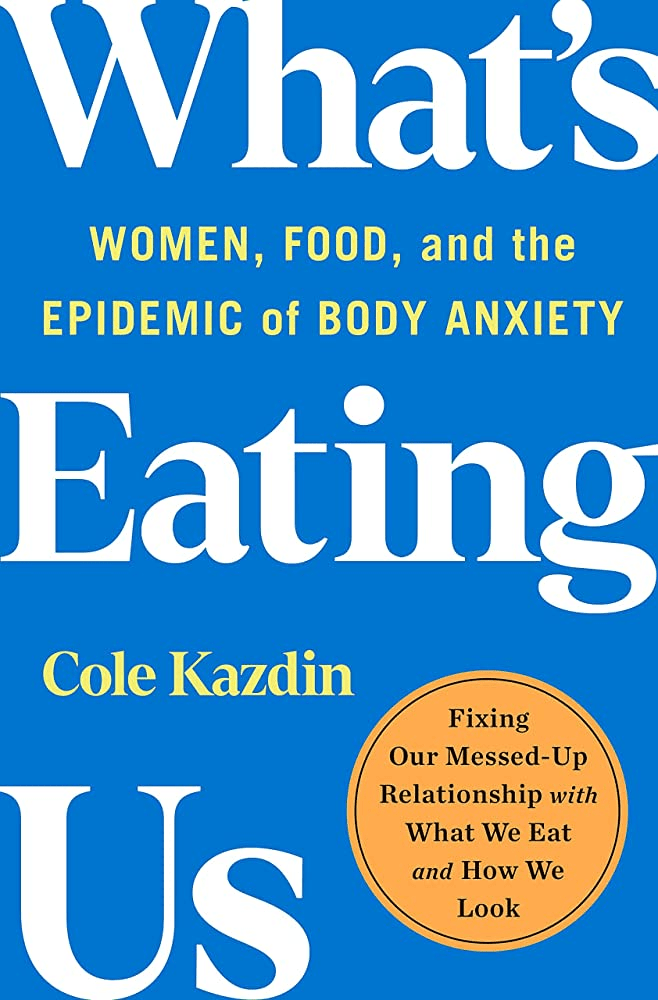
“What’s Eating Us: Women, Food, and the Epidemic of Body Anxiety” was written by Cole Kazdin, a writer, performer, and four-time Emmy Award-winning television journalist. This was an educational, informative book that contained personal stories. Kirkus Reviews sums it up perfectly: “As much a personal story as an examination of body anxiety. Kazdin’s painful honesty is leavened with humor and irony.” I learned so much from this book and highly recommend it to anyone who may be struggling with their body image or may be dieting. I will post about this book in greater detail sometime, but for now, here are a handful of tidbits:
- Thinking of foods as good or bad triggers eating disorders and disordered eating. An important part of developing a healthy relationship with food involves not demonizing or 100% eliminating any one food. Dieting is the most important predictor of developing an eating disorder. Nearly 30 million people in the United States suffer from eating disorders.
- Failure is the business model for the weight loss industry, and companies rely on repeat customers who return after gaining back lost weight. The only way they can have repeat customers is if their product doesn’t work.
- Most standard eating disorder treatments are behavioral therapy-based, focusing on changing behaviors rather than what underlies those behaviors. Chances are high that the root of the disorder will never be explored – thoughts and emotions linger long after treatment is over.
- Author’s recommended questionnaire: Am I bingeing, making myself throw up, or using diuretics, including but not limited to any product with the word “detox” in the title? Am I restricting my food intake or eliminating a food in order to lose weight? Am I on any type of diet (Keto, Paleo, Weight Watchers, etc.)? Does exercise or food restriction dominate my life?
- Various definitions of recovery: no more harmful behaviors, no dieting or wanting to go on a diet, a healthy relationship with movement, not being obsessed with food or your body, not thinking your body is something to fix or change
4 out of 5 stars
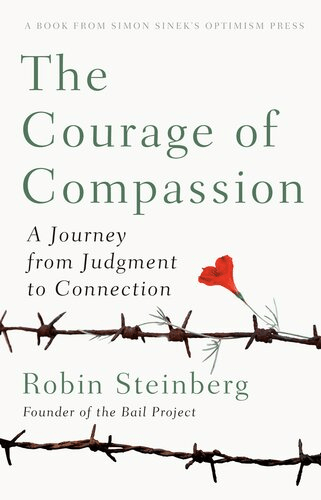
“The Courage of Compassion: A Journey from Judgment to Connection” was written by Robin Steinberg, founder of the Bail Project. Robin spent thirty-five years as a public defender. I read this book to learn more about other perspectives – “the other side.” This book was intriguing and helpful, and some of the stories within it were shocking. Here are several takeaways:
“What if your entire life were defined by the worst thing you ever did? And if we don’t want that for ourselves, then how can we do that to others?” We are all the products of a context and so much more than the sum of our mistakes. Compassion means to suffer together with another. Compassion begins when we accept that we are more than our own worst moment. It is an important lesson you understand when you love individuals who are deeply flawed or when you yourself have been judged on the basis of a single act.
- According to the book, nearly 2/3 of people in jail on any given night are not even serving sentences. They are behind bars awaiting trial, mainly because they cannot afford cash bail. Further, according to the book, “the overwhelming majority of Americans who are booked into jails every year are dealing with issues of drug addiction, mental illness, and crushing poverty. We cannot incarcerate our way out of these social ills.”
- “Years as a public defender had taught me that people don’t wake up one day and decide to commit horrendous violence. There is always a context, a history, experiences that pave the path to doing the unthinkable.”
“How can you defend ‘those people’?” – author’s response is the fundamental importance of the right to counsel, presumption of innocence, and genuine curiosity about how a person arrived at the present moment and the forces and events that shaped their circumstances. “Before you, there is a person whose entire life, worth, and character are being judged by prosecutors, judges, and society through the myopic lens of a single act. As a public defender, you must push past that paradigm and replace judgment with curiosity.”
The author believes three traits define most public defenders:
- You love and have loved deeply flawed individuals, perhaps to your own detriment. We are the sum of our stories and new stories can always be written.
- You have a healthy dose of mistrust for authority. You believe authority must be earned.
- You were once probably idealistic about change and ready for the revolution.
4 out of 5 stars
I look forward to reading, learning, and sharing more with you soon!



 Read Learn Share