Book review posts, Uncategorized

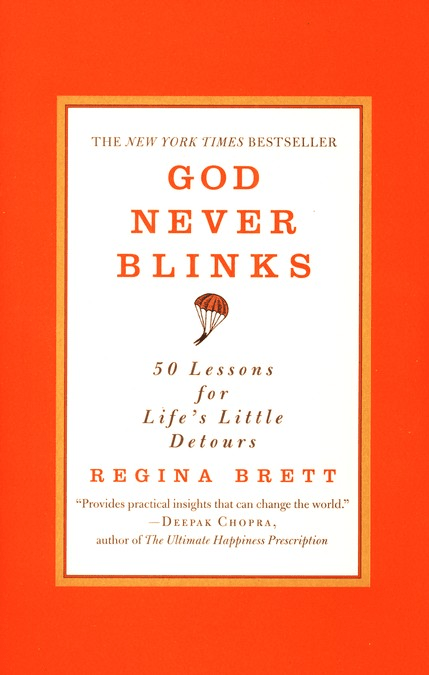
Life Lessons from “God Never Blinks: 50 Lessons for Life’s Little Detours”

“God Never Blinks: 50 Lessons for Life’s Little Detours” was written by Regina Brett, and most of these essays originally appeared in the Plain Dealer (Cleveland) or the Beacon Journal. The author always thought that God must have blinked when she arrived because she ended up confused by nuns at age 6, became a lost soul who drank too much at 16, an unwed mother at 21, a college graduate at 30, a single mother for 18 years, a wife at 40, and got cancer at 41. Here are some of my favorite lessons from the book:
Reframe your mindset. Instead of saying you “have to,” say you “get to.” “I get to go to work today.” “I get to get groceries.”

No one else is in charge of your happiness. You are the CEO of your joy. It takes work to rewire your thoughts about yourself, but when you do, everything in your life changes for the better, especially your most intimate relationships. Get up, dress up, and show up. Do the best you can do today.
Living an abundant life doesn’t mean winning the lottery, marrying rich, or getting a raise. It starts with a raise in consciousness and spreads from there. It starts with knowing that what you want isn’t always what you need and often isn’t what you truly want. It starts with making smart choices that lead to long-term gratification.

When an argument has reached an impasse, get comfortable with saying “You aren’t going to convince me and I’m not going to convince you, so let’s agree to disagree.”

“How will I ever believe that I am good enough?” – By helping others believe that they are good enough.

Get rid of anything that isn’t useful, beautiful, or joyful. Decluttering forces you to let go of the past and creates an opening for the future. When you finally let go of the person you used to be, you get to discover the person you are now and the person you want to become.

Ground rules for relationships – use the mnemonic SAFE:

  • Secret – can the relationship pass public scrutiny? If a relationship has to be kept a secret, you don’t belong in it.
  • Abusive – does it harm or degrade you or your children in any way?
  • Feelings – are you in the relationship to avoid painful feelings? Is it a mood-altering relationship?
  • Empty – is it empty of caring and commitment?

Stay away from unavailable people, keep no secrets, beware of addictions, be the real deal, tell the world what you want in a partner, ignore the wrapper (a tender heart will outlive the washboard tummy), and create a greater you.

How not to write (the condensed version): wait until you have children, wait until they go off to college, wait until you have two hours of uninterrupted time to write, wait until you retire, wait until a doctor says you have six months to live, then die with your words still inside of you.
It’s never too late to have a happy childhood. Go for it. This one is up to you.

3 simple steps can change your life:

  • Choose something you need to say no to – no to an unhealthy relationship, projects that don’t need to be done by you, people who ask you to donate your time and talent to one more committee or commitment.
  • Choose one things you need and want to say yes to. Say yes to what enhances your life and the world around you.
  • Share those two things – the yes and no – with your biggest cheerleader.
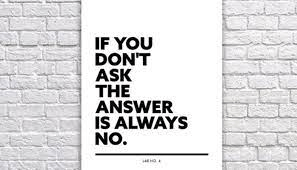
If you don’t ask, the answer is always no. You already gave it to yourself. You don’t ask, you don’t get.
A 40th birthday gift idea for a spouse was to gather 40 letters/cards about how he/she impacted their lives. Too often we don’t hear what we mean to others until it is too late. If you keep your friends high on the priority list, even if you lose your health, you’ll still have what matters most. Your job won’t take care of you when you’re sick, but your friends will. Stay in touch with them.

Read the Psalms. No matter what your faith, they cover every human emotion. They offer praises as well as curses, consolation, desolation, boasts of strength, and cries of weakness and also reveal the many faces of God: powerful rock, shepherd, companion, comforter, provider, host, creator, judge, advocate, and deliverer.

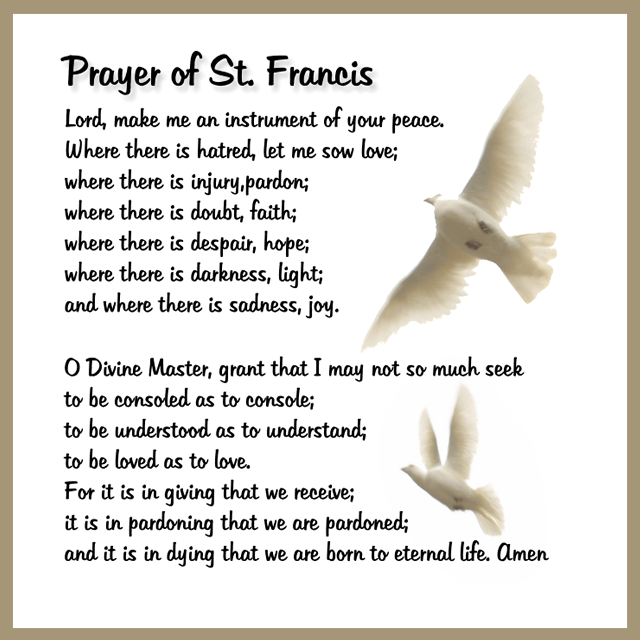
Have a personal mission statement. The author’s personal mission statement is the Prayer of Saint Francis of Assisi.
I look forward to reading, learning, and sharing more with you soon!
Book review posts, Uncategorized

Four Thousand Weeks: Time Management for Mortals + All About Productivity

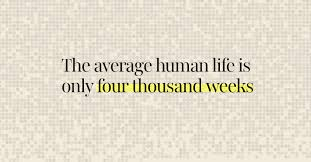
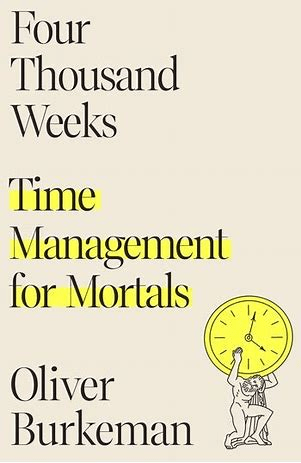
“Four Thousand Weeks: Time Management for Mortals” was written by Oliver Burkeman, published in 2021, was named after the concept of an average lifetime being just 4000 weeks, and is one of the most useful books I have ever read.

If you succeed in getting things done on your to-do list, more things will inevitably seem important, meaningful, or obligatory. Getting things done won’t generally result in the feeling of having “enough time” – the demands will increase to offset any benefits. You’ll be creating more things to do.

Oliver Burkemann

The more you believe you might succeed in “fitting everything in,” the more commitments you naturally take on, and the less you feel the need to ask whether each new commitment is truly worthy of a portion of your time – and so your days inevitably fill with more activities you don’t especially value. This is why it is SO important to learn how to say NO to obligations without feeling guilt, pressure, or obligation.

People complain that they no longer have “time to read,” but the reality, as the novelist Tim Parks has pointed out, is rarely that they can’t locate an empty half hour in the course of the day. What they mean is that when they do find time and use it to try to read, they’re impatient to give themselves to the task because they’re inclined to interruption. Social media and what we think of as “distractions” aren’t the ultimate cause of our being distracted. They’re just the places we go to seek relief from the discomfort of confronting limitation.

Tim Parks

When you get tremendously efficient at answering e-mail, all that happens is you get more e-mail.

“Nobody ever really gets four thousand weeks in which to live – not only because you might end up with fewer than that, but because in reality you never GET a single week, in the sense of being able to guarantee that it will arrive, or that you’ll be in a position to use it precisely as you wish.”

“We treat our plans as though they are a lasso, thrown from the present around the future, in order to bring it under our command. A plan is an expression of your current thoughts about how you’d ideally like to deploy your modest influence over the future. The future, of course, is under no obligation to comply.”

Oliver Burkemann

“The day will never arrive when you finally have everything under control—when the flood of emails has been contained; when your to-do lists have stopped getting longer; when you’re meeting all your obligations at work and in your home life; when nobody’s angry with you for missing a deadline or dropping the ball; and when the fully optimized person you’ve become can turn, at long last, to the things life is really supposed to be about. Let’s start by admitting defeat: none of this is ever going to happen.”

Oliver Burkemann

Spending at least some of your time “wastefully,” focused solely on the pleasure of the experience, is the only way NOT to waste it – to be truly at leisure, rather than covertly engaged in future-focused self-improvement. In order to most fully inhabit the only life you ever get, you have to refrain from using every spare hour for personal growth.

Tips: focus on one big project at a time, keep an open and closed to-do list with a fixed # of entries to have on your current to-do list, establish predetermined time boundaries for your daily work, accept that you can’t dedicate as much time as you want to everything and decide in advance what to not give as much effort to in your life, seek out novelty in the mundane and pay more attention in every moment, and practice doing nothing.

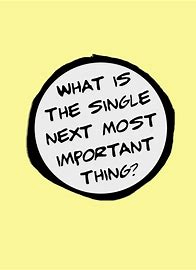
When in doubt, do the next most necessary thing.

Five questions to consider:

1. Where in your life or your work are you currently pursuing comfort, when what’s called for is a little discomfort? We naturally tend to make decisions about our daily use of time that prioritize anxiety-avoidance.

2. Are you holding yourself to, and judging yourself by, standards of productivity or performance that are impossible to meet?

3. In what ways have you yet to accept the fact that you are who you are, not the person you think you ought to be? Once you no longer feel the stifling pressure to become a particular kind of person, you can confront the personality/strengths, weaknesses/talents, and enthusiasm you find yourself with and follow where they lead.

4. In which areas of your life are you still holding back until you feel like you know what you’re doing?

5. How would you spend your days differently if you didn’t care so much about seeing your actions reach fruition?

If you want to learn or hear more, Oliver Burkemann has been featured on many podcasts on Spotify! I highly recommend listening to this link to a Talks at Google YouTube video with Oliver Burkemann:

This book is one of the best books I have read and I highly recommend it!

I look forward to reading, learning, and sharing more with you soon!