
My intention is to post a Thoughtful Thursday column each week and share some of the insights I have learned in the past week. Here are some of the things I’ve learned this week:
Your metabolism determines how many calories you burn. Here are some tips to boost your metabolism.
- Allow yourself to go through different phases of the journey.
- Focus on building high quality muscle.
- Stay active. Incorporate physical activity into your daily routine.
- Increase protein intake. Protein requires more energy to digest compared to carbs or fat. Include protein-rich foods such as lean meats, fish, eggs, dairy, legumes, and nuts in your diet.
- Stay hydrated. Drinking enough water is essential for a healthy metabolism.
- Get enough sleep. Lack of sleep can disrupt your metabolism and lead to weight gain.
- Manage stress. Chronic stress can lead to hormonal imbalances that can slow down your metabolism.
- Remember that individual metabolism can vary based on factors such as age, genetics, and body composition. Focus on overall health and well-being rather than solely on boosting metabolism for weight loss.

- Often our definition of someone being a good human being is someone who doesn’t have boundaries. Our definition of what it means to be a good human needs to change at the core.
- Boundaries are about what we need for ourselves, not what we want or don’t want from others.
- We think boundaries are protecting us from other people, but boundaries are protecting ourselves from ourselves. We can’t control anyone else’s actions, but we can control our own.
- Set up “If” scenarios to set boundaries. If this… then this. Clearly communicate your boundaries.
- You can justify your choice to yourself, but you don’t need to justify your choice to others.
- How can you be honest, kind, and empathetic to their reaction? It’s okay to recognize that someone else has their own values about your situation. Be open to the idea that not everyone will agree with you.

- Don’t have an expectation of how you want someone else to respond. Don’t project how you process things onto other people. If someone doesn’t act in the way you would or the way you think they should, remember that they are not you, and you are not them.
- Become certain about your boundaries.

- Ask yourself these questions when setting a boundary:
- What is the boundary protecting for you? Is it time? Why is time important for you? Is it an idea you are trying to practice? A mindset you are trying to build?
- What happens when you don’t follow that boundary? How would your future self feel about it if you forego the boundary?
- How do you feel when you follow through on the boundary?

- Plan a buffer. Someone will catch you off guard and ask for something at a time you don’t expect. It’s okay to ask for time or some space.
- Observe others do uncomfortable things. Everything you admire in someone else is a skill that can be trained and is a life that you can live.
- Start exposing yourself to simple actions of discomfort: calling to cancel or reschedule an appointment, declining an invite to a friend’s birthday, etc. Allow the exposures to scale. People will be offended and that’s okay.
- Reset people’s expectations of you. Set boundaries.
- The Beanie Babies craze was in the 1990s. Each had a name, birthdate, and little story attached to them.
- I used to collect Beanie Babies and even had a special holder made for them. It resembled a coat rack but had little pieces of elastic to hang them on.
- 1993 – Beanie Babies debuted at the World Toy Fair in New York City and didn’t really take off
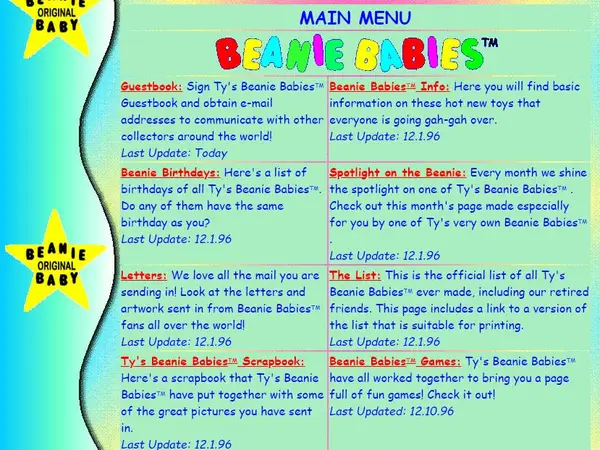
- Scarcity is what set Beanie Babies apart from other stuffed animals.
- Beanie Babies were “retired” instead of “discontinued” – made it seem like a collector’s item and gave Beanie Babies a feeling of scarcity
- Not sold in popular retailers like Walmart or Toys R US – favored small independent stores and gift shops
- The stores that sold them could only offer some of the Beanie Babies, so nobody could get the collection in one place. When people spotted them, they weren’t sure if they would see those Beanie Babies again, so they bought them.
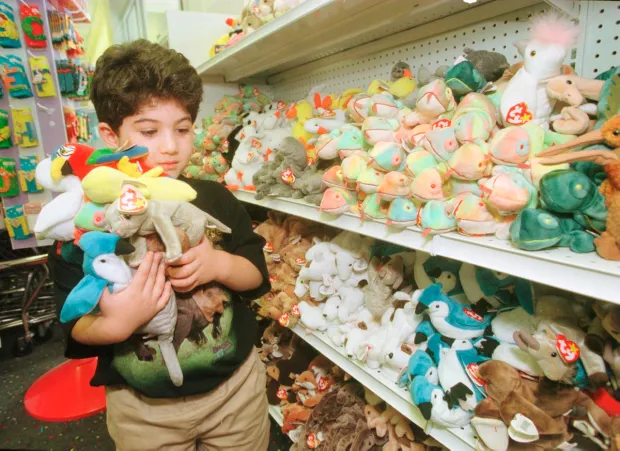
- 1995 – website was created where you could buy the Beanie Babies and get extra intel, such as an online catalog with more information about the Beanie Babies, upcoming release dates, etc. Some sources cite this as the first business-to-consumer sales site on the internet! Demand is so high around the holidays that Ty, Inc. imported 3 737s full of Beanie Babies from Korea.
- 1995 – $28million in sales that year
- Some were sold on Ebay for over $30,000!
- By 1997, the craze was huge! Newsletters, pricing guides, and fan trivia bubbled up across America.
- In May of 1997, Beanie collectors spent $500 million on Ebay auctions for Beanie Babies in one month!
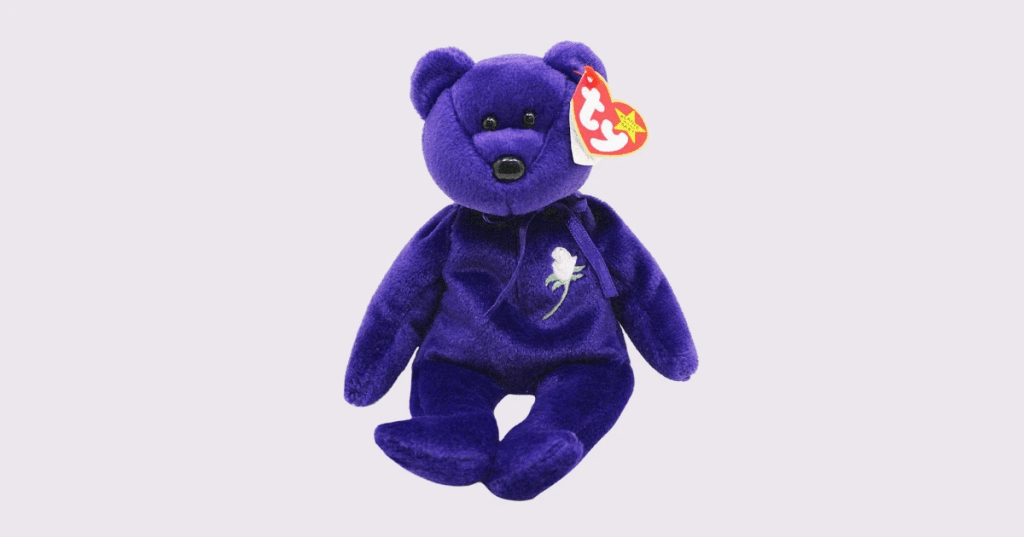
- In October 1997, Ty, Inc. announced they would release a commemorative purple Beanie bear called Princess in honor of the recently deceased Princess Diana. The proceeds would go to Princess Diana’s foundation and were supposed to be sold for $7. Some retailers gouged customers and charged anywhere from $25 to $350 for Princess. Many people were convinced this bear would be worth a fortune someday.
- A McDonalds employee stole $6k in teenie-Beanies and went to prison and a store clerk in LA was robbed at gunpoint for 40 Beanie Bears.
- By 1998, 65% of American homes had at least one Beanie Baby. Ty, Inc’s sales were more than $1.4 billion.
- 1998 – Forbes left Warner off of the Wealthiest Americans to Make Lots of Money list, so he bought a full-page ad in the WSJ to let everyone know that Ty, Inc. made more than $700 million the previous year – more than Hasbro and Mattel combined. In 1999, Forbes listed Warner with an estimated net worth of $4billion.
- Yet, Lina, the creator of the website and the poems on the tags made $12.50 per hour! She asked for a raise, was denied, and she quit.
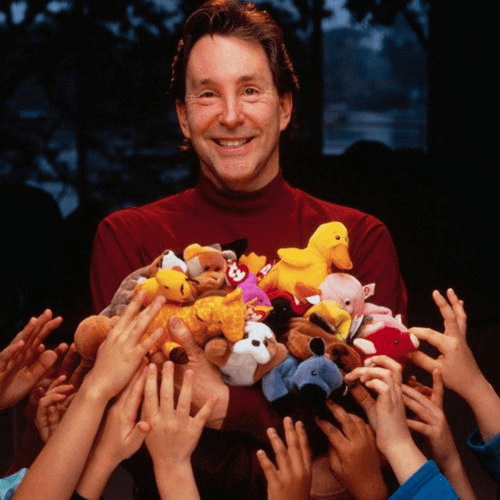
- 3 months before the Christmas shopping season in 1999, Warner announced that all Beanie Babies would be retired on December 31, 1999. It was another marketing stunt to drive up interest and demand. On Christmas Eve, Warner created a poll asking fans to make the decision on whether Beanie Babies would live or die and, in the ultimate money-grabbing move, made people pay money to vote! People aren’t going to pay to vote no.
- The crazy had clearly passed, which was terrible news for people who had invested heavily in Beanie Babies.
- By 2002, Warner was worth $6 billion. In 2009, Ty, Inc. attempted to recapture the magic by releasing Beanie Boos – fluffier Beanie Babies with bigger eyes. Nobody wanted to buy them like they did the original Beanies.
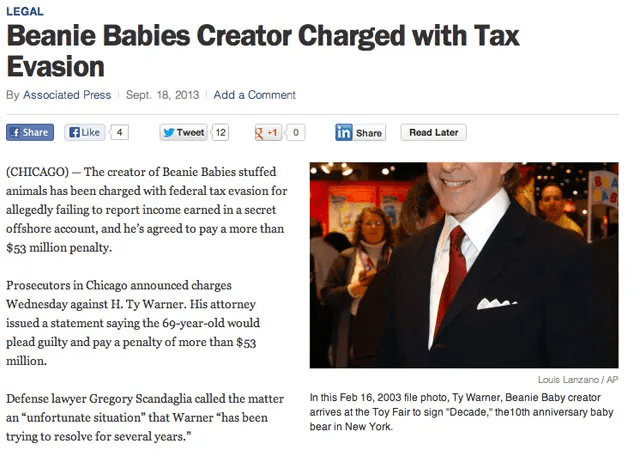
- In 2014, Warner pled guilty to tax evasion and hiding over $20 million from the government due to having a hidden foreign bank account.
- Ty, Inc. still exists. Ty Inc HQ doesn’t have a sign out front. Ty.com recently announced its line of 30th anniversary commemorative Beanies that look like the originals. You can’t buy them on the website but they will be available at select retailers.
I enjoyed this blog post from Gabe the Bass Player this week:
https://www.gabethebassplayer.com/blog/taking-a-shot-on-you
Taking Shot On You
May 16, 2024
“If you’ve had any success there’s probably been a few people who took a shot on you early on…and probably along the way.
And now that you’ve had that success, what would it look like for you to take a shot on someone else?“

I also liked this blog post from Seth’s Blog this week:
The unwarranted smile
“When we do something nice for someone, a ‘thank you’ and a smile is nice to receive. And, in many parts of human culture, it’s a bit expected.
But when something goes wrong, if we drop a plate or miss a turn or make someone late, it’s particularly delightful and memorable if we are greeted warmly instead of stomped on.
The moments when it’s the most difficult to be kind are the moments where it matters the most.”
I look forward to reading, learning, and sharing more with you soon!
 Read Learn Share