
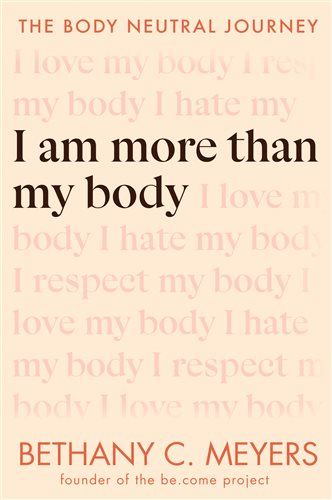
I am more than my body: the body neutral journey” was written by Bethany C. Meyers, CEO of the be.come project. Bethany has over 15 years of experience in the fitness industry as an instructor, teacher, and workout creator. I struggle with my body image, and this book was much needed and thought-provoking. I got SO much out of this book that may be helpful to others.
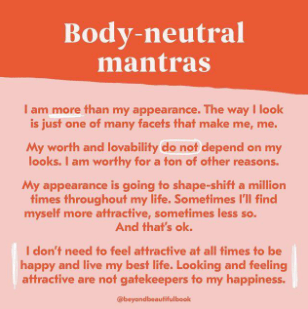
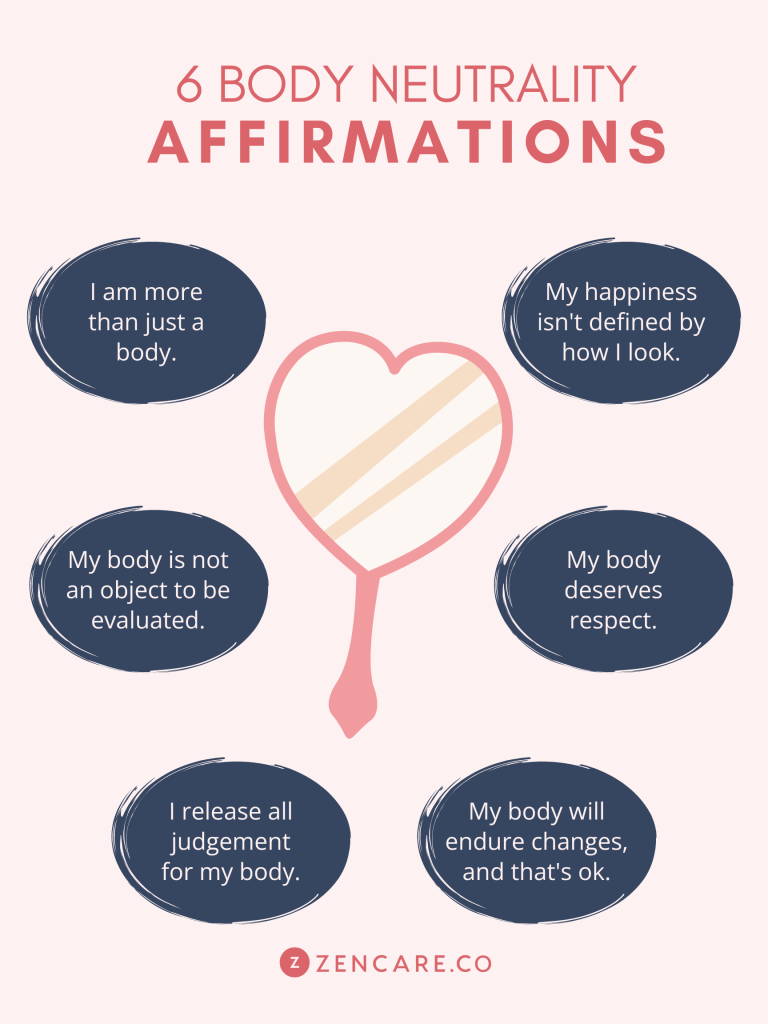
In short, body neutrality is the idea that each of us is more than our body, and our worth is not limited to our physical self. It is respecting our body even though we may feel differently about it on any given day.  Body neutrality involves steering away from self-hate without the pressure of having to love our body.
- Body shame is heavily supported by diet culture. The beauty goal posts keep moving.
- Toxic body positivity suggests people should love their bodies as long as they are healthy and work on their health if they aren’t healthy.
- The body neutral journey is to acknowledge the feelings we have, explore why those feelings came about, and reconnect with our self-worth. Acknowledge your feelings without judgment. Explore the hidden reasons – stress, lack of sleep, emotional distress, sickness, hormones, societal wiring, etc. Reconnect with yourself, and thank your body for what it does for you.

Happiness comes from honest acceptance. Happiness doesn’t come from self-harm, self-abuse, self-delusion, self-hatred, shame, restriction, or punishment.
“All bodies are created equal, but they are not treated equally.” There is discrimination in media, employment, healthcare, relationships, etc. Many people are told to lose weight instead of receiving tests or treatments for other medical concerns. Attaining “health” isn’t a possibility for some people, and many factors (location, income, and socioeconomic status) can make it difficult or even impossible to access.

Things to consider:
- “While we seek compassion for ourselves, we should simultaneously hope to find compassion for others, no matter their appearance.” If you have been speaking poorly to yourself and judging yourself harshly, how much of that is seeping out into your relationships with others? How do your comments about your own body impact those around you who hear them (especially children)?
- Internalizing that this is the one body you have and that even if you’re not always thrilled with how it looks, you can devote yourself to caring for it, is game-changing.
- We’ll likely always be influenced by the environment we live in, the media we consume, and the trends we see around us, but we don’t need to change things about ourselves that we love or start to hate parts of ourselves if they’re not in vogue.
- Many people elect to do body modifications: lip filler, liposuction, Botox, nose jobs, lash extensions, etc. It’s worthwhile to be honest with yourself about why you are getting a procedure done. If it’s for someone else or you think it will make you more popular, attractive, or acceptable, it may not be coming from a neutral place.
Kids are more than their bodies and when we obsess or comment about their size, we teach them that this is where their identity lies. We forget about their interests, their dreams, and their goals, and we hinder development by placing them in a box. We need to be mindful of the language we use around young people to describe bodies, diets, and health.
“Babies cry when they are hungry and we let them eat because we don’t want them to go hungry. It always boggled my mind how we trust infants with this but we have such a hard time trusting ourselves. Often we restrict our food intake even when we are hungry.”

Points to consider about exercising/movement:
- When you separate exercise from having the sole goal of changing your body, and instead allow it to be a place for repair, release, and rejuvenation, it’s likely you’ll find new freedom in your movement practice. Move your body in ways that feel good and that you actually enjoy.
- Our bodies are wise and know how to adapt, evolve, and heal themselves. They know when we need rest, and they know when we need to move. As you connect with your body more intuitively, you will be able to interpret its cues in a new way.
- Ask yourself: Am I appreciating the functions of my body without criticism? Am I focused on my body’s failings? Am I comparing myself to others? Am I pushing my body past its limits for the sake of hitting a certain goal or target?
- Ask yourself: Why am I choosing to move today? Is it based on changing my physical form? Can I reframe my motive to focus on my mental, spiritual, or emotional health? How do I want this movement session to serve me?
- What kind of language does your gym/instructor promote? Is this language in line with your values? What influences or media do you consume that frames exercise as a punishment, a requirement, or a means only to change your physical shape? I have experienced gym class instructors who made comments in classes about exercising to “earn” a shower or exercise to “work off” or “earn” pizza. I don’t surround myself with these environments anymore and have been able to reframe my mindset.
- Change your intent of exercise. Consider the mental or emotional benefits of exercise. Think about how it will feel after, movement as a powerful release, and movement as self-care. Give yourself grace and allow rest.
- “For people with chronic health issues, it is easy to start to lose trust and faith in your body in a lot of ways. There can be a lot of anger toward the body and a desire to control it. The impulse is often to try to make our bodies do what we want them to do.”
This book really resonated with me. I have chronic health issues that often cause bloating and other issues. Sometimes I look somewhat fit and many other times I look nine months pregnant. Sometimes I am frustrated with my body not functioning the way it should be.
Kids participate in movement because it’s fun, not because it’s necessary. They only begin to think about movement as a means to change their body when they receive messages that their body needs to change. It is learned behavior.
TIPS:
- In the context of the body, the more we try to control what we eat, how we exercise, and how our outer self appears to the world, the more these issues will loom large in our life, depleting our health and happiness.
- Whatever you restrict becomes the thing you crave. Deep restrictions lead to more and more cravings and bingeing. Always make sure the pantry is stocked. The more you have access to things, the less power they have over you. Removing restrictions is an important part of the recovery process.
- I agree with this! I used to not allow myself to purchase candy, dairy-free ice cream, popcorn, chips, and many other foods when I lived alone in an apartment, so when I had access to them, I would eat so much that I felt sick. Since being married, we have kept all of these things on hand, and I have exhibited more self-control and less bingeing. I’ve had access to all of these things on a daily basis and have been surprised at how little I have consumed them on a regular basis!
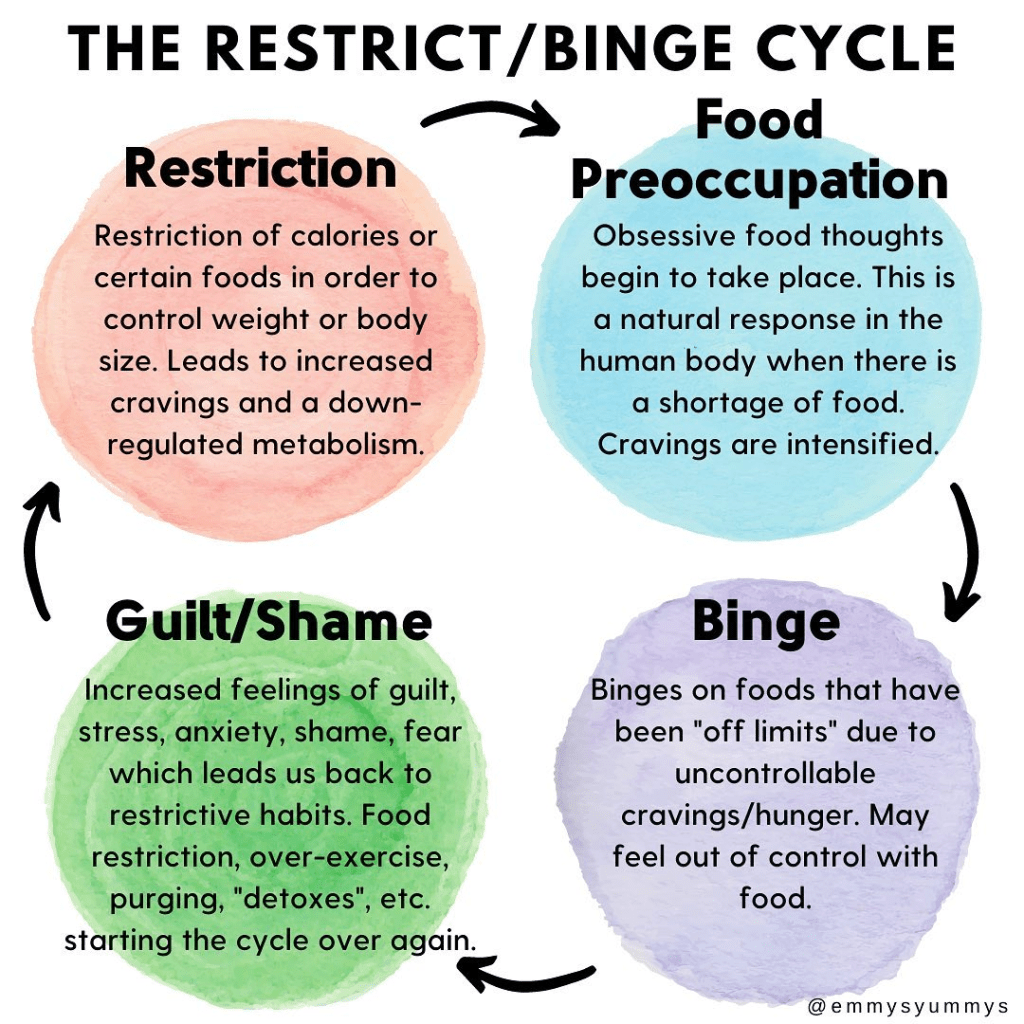
- Examine your relationship with control. Are your habits impeding upon your work schedule or time with family and friends? Do you say no to events. occasions, or activities in order to stick to your regimen? How much are you beating yourself up when you make a misstep? Wanting to control things is okay and natural, but we need to allow ourselves the space and grace to be humans. We can acknowledge what influences our thoughts and explore those factors. We can recognize that our bodies and everything about us is meant to ebb and flow.
- Ignore the size tag on clothes. Different brands will fit differently, and it is not a reflection of your body.
- Stop labeling foods as “good” or “bad” – food is not moral.

- Toss the scale if you are going to obsess over it.
- Be kind to yourself.
- Question your “why.” Why do you feel your body needs to be different?
- Diversify your social media feed to include all body sizes.
- Look in the mirror naked and list positive or neutral comments about yourself.
- Let go of perfection.
- Remember that a thought is just a thought. It is not truth.
- Look how far you’ve come.
- Keep your language neutral in front of children.
- Make the time for what centers you in your body.
- Find like-minded people to move with.

I hope some of this resonated with you in your body neutrality journey.
I look forward to reading, learning, and sharing more with you soon!
 Read Learn Share