I read 4 books in January. Here is a blurb of each of the books I read in January.
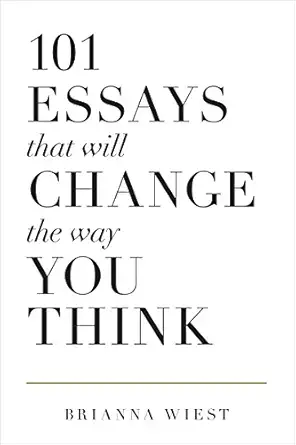
“101 Essays that will Change the way You Think” was written by Brianna Wiest and was recommended by a friend. This book was a thought-provoking collection of reflections to inspire deeper self-awareness and intentional living. Here are some takeaways:
- Your habits create your mood, and your mood is a filter through which you experience your life. You must learn to let your conscious decisions dictate your day, not your fears or impulses. Learning to craft routine is the equivalent of learning to let your conscious choices about what your day will be about guide you, letting all the other temporary crap fall to the wayside. Routine consistently reaffirms a decision you already made.
- Identify what your addictions are keeping you distracted from. Understand that addiction is a disconnection from yourself, and a disconnection from yourself is born of something present that you think you can’t face.
- Stop eating foods you don’t like, keeping plans you don’t want, staying digitally connected with people who annoy you, hoarding clothes for a “someday” that never comes, and putting your life on hold for someone who does not want to commit. The amount of life we waste gathering and holding onto the things that will never really serve us keeps us away from the things that bring us joy and purpose and meaning.
Choose not to be harmed, and you won’t feel harmed. Don’t feel harmed, and you haven’t been.
If you lived today on repeat forever, where would you be? What would you have accomplished? Would you be thriving at work? Would you have made time for the people you love? Your life exists in its days, not your ideas about those days.
I highly recommend this book. I took away many lessons from this book. Two essays really stood out to me as I’ve felt self-conscious about my changing body: “101 Things That Are More Important Than What Your Body Looks Like” and “The Little Things You Don’t Realize Are Affecting How You Feel About Your Body.”
5 out of 5 stars

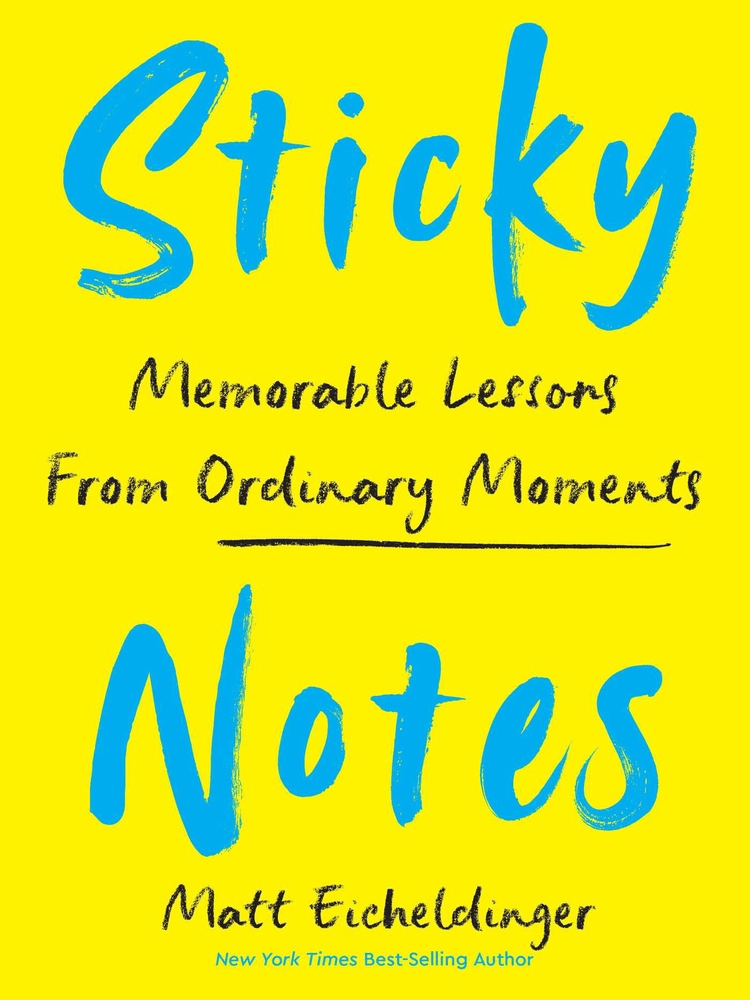
“Sticky Notes: Memorable Lessons From Ordinary Moments” was written by Matt Eicheldinger, whose stories on social media take viewers through hundreds of memories he has collected over the years. Matt wrote down 15 years of daily interactions between himself, students, and families. This book shows how small, everyday moments between teachers and students – captured through years of classroom stories – reveal the profound impact of empathy, encouragement, and human connection. Here are some lessons:
- Heartbreak can be hard, especially when it’s new. When we witness this with friends, family, or students, we often feel a drive to fix and solve, but sometimes you don’t have to do any of those things. Sometimes you just have to be present.
- We forget how many parents are figuring out parenting for the first time, and that can feel pretty overwhelming, especially if it’s not going well. Just because a child’s behavior isn’t changing doesn’t mean parents aren’t doing anything about it. Sometimes it just means they don’t know what to do, and that’s an opportunity to show grace and understanding and offer help where we can.
- We often try to give people space when we think they are in a bad mood, but maybe that’s not always the right move. Maybe they just need to be given a genuine dose of kindness to bring them back.
Measuring success is different for everyone, and you can’t be the judge of it.
You can surround yourself with all kinds of people, but true friends will surround you when you need them the most.
Memories are kind of like key chains, aren’t they? I wonder how many of us have forgotten to truly live the experience rather than just collecting them.
When we have a problem or conflict, we tend to look at others to blame, when in reality, maybe the first place we need to look is at ourselves.
I highly recommend this book. It’s an easy read filled with short stories and life lessons.
5 out of 5 stars
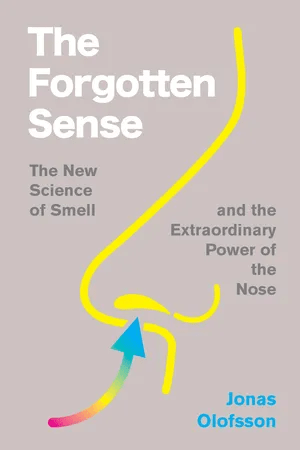
“The Forgotten Sense: The New Science of Smell and the Extraordinary Power of the Nose” was written by Jonas Olofsson, a professor of psychology at Stockholm University, where he directs the Sensory Cognitive Interaction Lab. Jonas has researched the sense of smell for 20 years. Here are some key facts from the book.
Smelling is an intellectual process that starts in the brain. Olfactory processes are shaped by expectations and experiences, which in turn carry with them life experiences and cultural conventions that we are often unaware of.
The sense of smell has a back door to the brain through the throat. So, when we eat and drink, we smell both through our nose and our throat. Odors are released in the mouth when we eat, stimulating the olfactory receptors in the nasal cavity. The smells that enter the nasal cavity via the throat are important to what we call “flavors.” We tend to think they are tastes being perceived in the mouth, when in fact it is the sense of smell working in disguise.
The same smell can be perceived differently depending on whether the olfactory stimulus enters through the nose or from inside the mouth via the pharynx.
Some people have an extreme sensitivity to smell, while others are insensitive to the same odorant. Comparing people who appear to have a perfectly normal sense of smell, it can sometimes take up to 100,000 times more odor molecules for the most insensitive person to detect an odor that the most sensitive person can smell very easily. Something I was most surprised by is that chemically sensitive people do not have particularly sensitive noses. They have sensitive brains. Our brains create expectations that can sometimes be so vivid that they are hard to distinguish from real-life smells. The brain makes predictions and creates stress responses that become overwhelming.
Which smells we love and hate depend largely on the associations, thoughts, and feelings they evoke.
The only method recommended by the world’s leading experts to rehabilitate the sense of smell is olfactory training – smelling things like lemon, eucalyptus, rose, and clove – repeatedly – for months. Thankfully, this helped me rehabilitate my sense of smell after having long COVID-19.
I recommend this book to anyone wanting to learn more about the sense of smell.
4 out of 5 stars

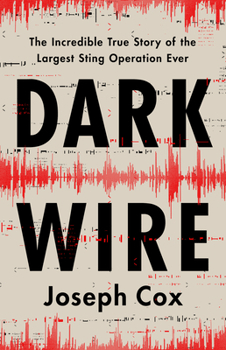
“Dark Wire: The Incredible True Story of the Largest Sting Operation Ever” by Joseph Cox is a gripping piece of investigative journalism from the world’s leading reporter on the Anom story. Joseph Cox has built his career exposing the inner workings of organized crime and the surveillance programs designed to track it, and this book shows exactly why he’s earned that reputation. Drawing on interviews with fugitives wanted by the FBI, members of organized criminal groups, convicted traffickers, law enforcement officials across multiple countries, and even the coders and sellers behind encrypted phone networks, the author reconstructs an operation that feels almost too bold to be real.
- After the FBI shut down Phantom Secure, an encrypted phone network favored by criminal organizations, agents realized those same users would soon be searching for a new platform to hide their communications. Their solution was bold: create that platform themselves.
- The result was Anom, a supposedly secure phone system promising untraceable chats, hidden communication tools, and discreet photo‑editing features. What its users didn’t know was that the entire network was an FBI‑run trap quietly logging every message and image.
- To navigate legal and jurisdictional limits, the U.S. had Lithuania collect Anom messages and pass them along, while Australian authorities—unrestricted by U.S. privacy laws—monitored the devices for threats to life.
Meanwhile, Anom distributors, unaware they were helping a federal sting, put the phones into the hands of criminals around the world. In a shocking twist, many of those same distributors were later charged under the RICO Act for allegedly selling devices to criminals and issuing wipe commands when phones were seized.
Impact:
- 12,000 Anom devices worldwide in 100+ countries
- Law enforcement captured and reviewed 27 million messages from these devices.
- 1,000 arrests globally as a result of the information gathered via Anom and related operations.
- 8+ tons of cocaine, 22 tons of marijuana, 2 tons of meth, 250+ firearms, $48 million in cash, and 17 tons of precursor chemicals used to make drugs were seized.
- 50+ clandestine drug labs dismantled during the operation
This was a fascinating book. In addition to recounting an unprecedented sting, it raises questions about privacy and the future of digital surveillance. I recommend this book to anyone interested in true crime, cybersecurity, or the evolving tactics of global law enforcement.
4 out of 5 stars
I look forward to reading, learning, and sharing more with you soon!



 Read Learn Share