
I read “The 5 Languages of Appreciation in the Workplace” written by Dr. Gary Chapman and Dr. Paul E. White as part of a book club I am in. Dr. Gary Chapman is the #1 New York Times best-selling author of “The 5 Love Languages.” Dr. Paul E. White is a psychologist, author, speaker, and consultant who helps make work relationships work. This book was very intuitive and fascinating!
The number one factor in job satisfaction is not the amount of pay but whether or not the individual feels appreciated and valued for the work they do.
The reality is that what makes one person feel appreciated does not make another person feel appreciated. For recognition and appreciation to be effective, they must be individualized and delivered personally. Appreciation needs to be viewed as valuable to the recipient in order to have an impact. Employees are more likely to “burn out” when they do not feel appreciated or emotionally supported by their supervisors or colleagues.
The greatest need of a human being is psychological survival, to be understood, to be affirmed, to be validated, to be appreciated.
The 5 languages of appreciation in the workplace are:
- Words of affirmation
- Quality time
- Acts of service
- Receiving gifts
- (Appropriate) physical touch

Words of affirmation (my #1 preferred language of appreciation):
- Praise typically focuses on a specific task. Praise can also focus on verbally affirming positive character traits.
- Common settings for words of affirmation: personal, one-on-one, praise in front of others, written affirmation, public affirmation
- You can show words of affirmation by sending an e-mail with kudos, telling others about the good job someone is doing, giving a specific compliment, writing a handwritten note of appreciation, or giving encouragement.
- Be aware that some people dislike public recognition!
Quality time:
- Can consist of quality conversation, shared experiences, small group dialogue, or working in close proximity with coworkers
- Because you have listened to them, they will also listen to you
- Working closely with others can make work feel more valuable.
- Ideas for quality time: go to lunch together, check in with people to see how they are doing, take a walk together, or get together for a sporting or social event.

Acts of service:
- “Don’t tell me you care; show me”
- Ask before you help, and if you’re going to help, do it their way. Clarify how they want it done.
- Serve voluntarily, check your attitude (don’t complain), and complete what you start.
Receiving gifts:
- You need to give gifts primarily to those individuals who appreciate them.
- You must give a thoughtful gift that the person values. Ask questions about their interests (sports, restaurants, spa, theatre, etc.). Giving a coffee mug or pen with the company logo on it will not make the person feel valued.

Appropriate physical touch:
- Appropriate physical touch may include handshakes, fist bumps, high fives, or pats on the back.

The question is not “Do you appreciate your coworkers?” The real question is “Do they feel appreciated?”
To figure out others’ language of appreciation, observe their behaviors, observe what they request of others, and listen to their complaints. The things about which an individual complains may reveal their primary appreciation language.
Another way to figure out others’ language of appreciation is to have them take the Motivating by Appreciation (MBA) Inventory.
Cues that your colleagues need to feel appreciated: discouragement, irritability and resistance, increased absenteeism and tardiness, cynicism and sarcasm, apathy and passivity, social withdrawal, and a negative work environment.
Be aware of your potential blind spot. The language of appreciation least valued by you will seldom be spoken. When a colleague’s least important language of appreciation is words of affirmation, no matter how much you praise them, it misses the mark.
One of the most common reasons we lack appreciation for coworkers is that we have unrealistic expectations of them. Don’t let differences influence you. In the work setting, the question is “Are they performing their job in a satisfactory manner?” If not, consider personal problems at home, inadequate training, or a lack of feedback/review/correction.
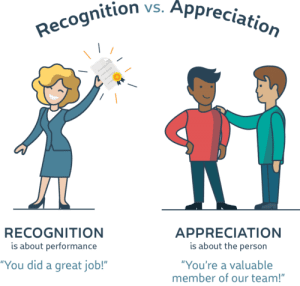
While recognition focuses primarily on performance or achievement, appreciation focuses on the value of the individual employee. Isn’t there a place for appreciation even when someone messes up?
Volunteering:
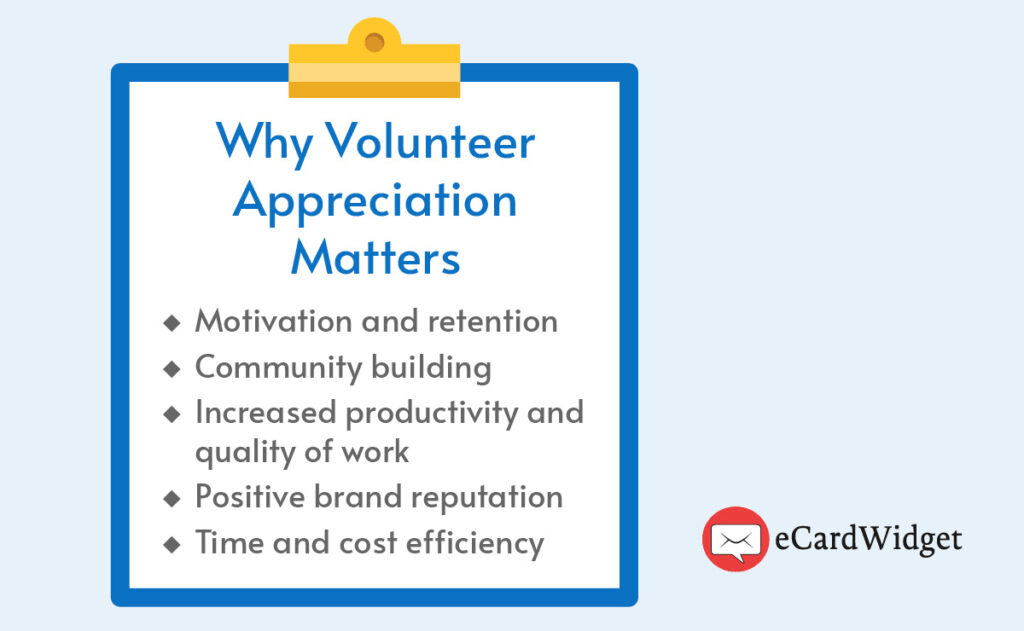
- Low job satisfaction increases job turnover, turnover affects the quality of services delivered, and volunteers are more likely to quit because their efforts go unrecognized.
- Many volunteers report the main reason they quit is a sense of isolation and lack of support from others.
- People continue to volunteer to make a difference, socialize, and receive positive feedback.
- Volunteers need input and perspective from their supervisors in order to understand the impact they’re truly having.
When a person receives an adequate supply of their primary language of appreciation, the secondary language may then become more important. It is reasonable to expect that an individual’s preferred language of appreciation may vary significantly over time in response to different life events, life stages, and the individuals with whom they are interacting.
I look forward to reading, learning, and sharing more with you soon!
 Read Learn Share