
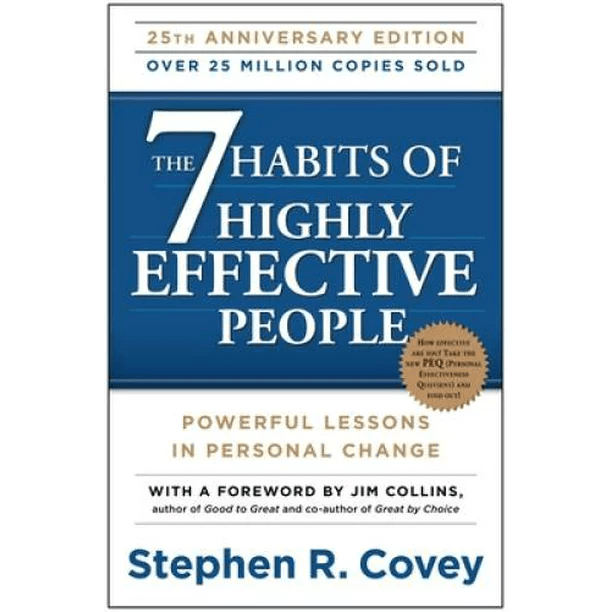
“The 7 Habits of Highly Effective People” is a very interesting and educational book written by Stephen R. Covey. I highly recommend this book and am certain everyone can get something out of this book.
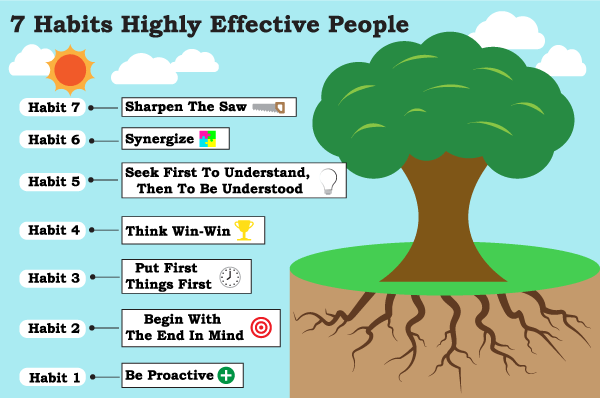
Habit 1: Be Proactive
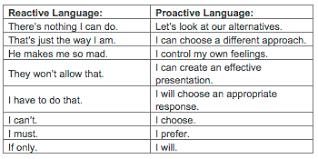
How often do you use and hear reactive phrases such as “If only,” “I can’t,” or “I have to?”
Use your R & I! Use your resourcefulness and initiative when problems arise!
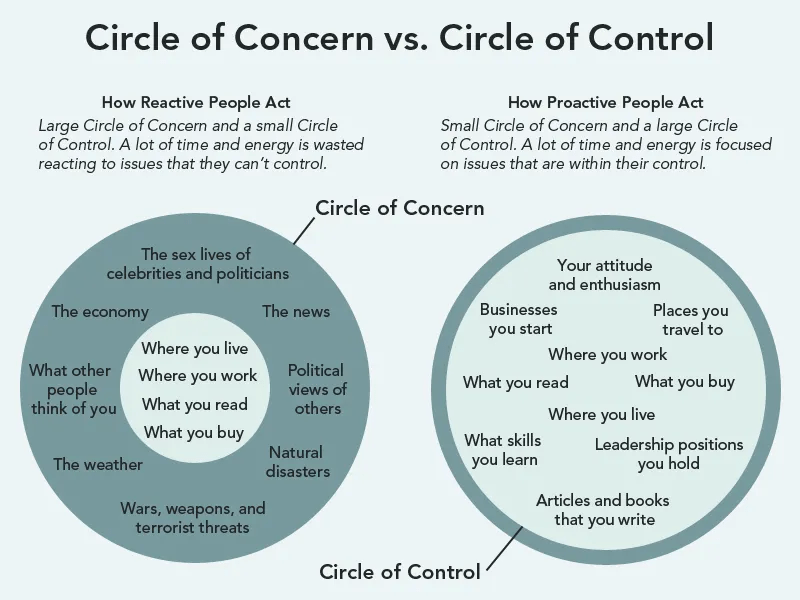
Problems = direct control vs. indirect control vs. no control
- Direct control problems are solved by working on our habits.
- Indirect control problems are solved by changing our methods of influence.
- No control problems involve taking the responsibility to change the line on the bottom of our face — to smile, to genuinely and peacefully acccept these problems and learn to live with them.
Between stimulus and response, man has the freedom to choose.
Viktor Frankl
Habit 2: Begin with the end in mind.
Picture your funeral. What would your family, friends, coworkers, and church members or community say about you? What character would you like them to have seen in you? What contributions or achievements would you want them to remember? What difference would you like to have made in their lives?
Habit 3: Put first things first.
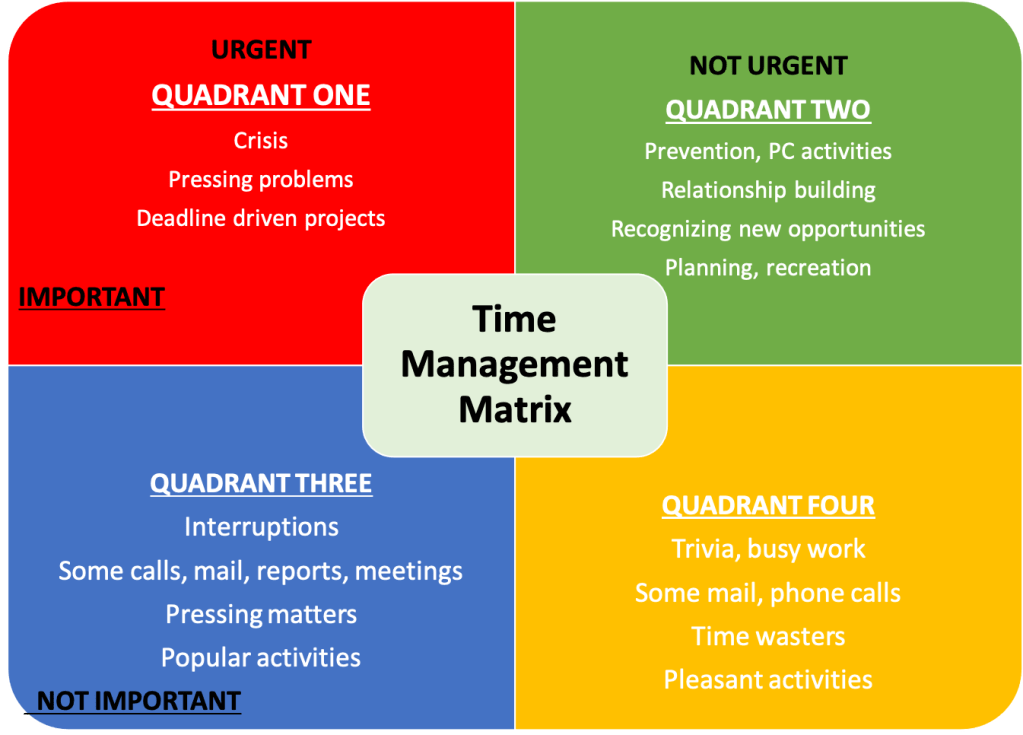
The cause of almost all relationship difficulties is rooted in conflicting or ambiguous expectations around roles and goals. Many expectations are implicit. They haven’t been explicitly stated or announced. It is important to state expectations.
Many people refuse to delegate to other people because they feel it takes too much time and effort and they could do the job better themselves. Transferring responsibility to other skilled and trained people enables you to give your energies to other high-leverage activities. Delegation means growth, both for individuals and for organizations.
You can’t think efficiency with people. You think effectiveness with people and efficiency with things.
Stephen R. Covey
Habit 4: Think win-win.
Win/win = a frame of mind and heart that constantly seeks mutual benefit in all interactions. Seek to understand, identify the key issues and concerns, determine what results would constitute a fully acceptable solution, and identify possible new options and achieve those results.
Habit 5: Seek first to understand, then to be understood.
Seek first to understand, then to be understood. Most people listen with the intent to reply.
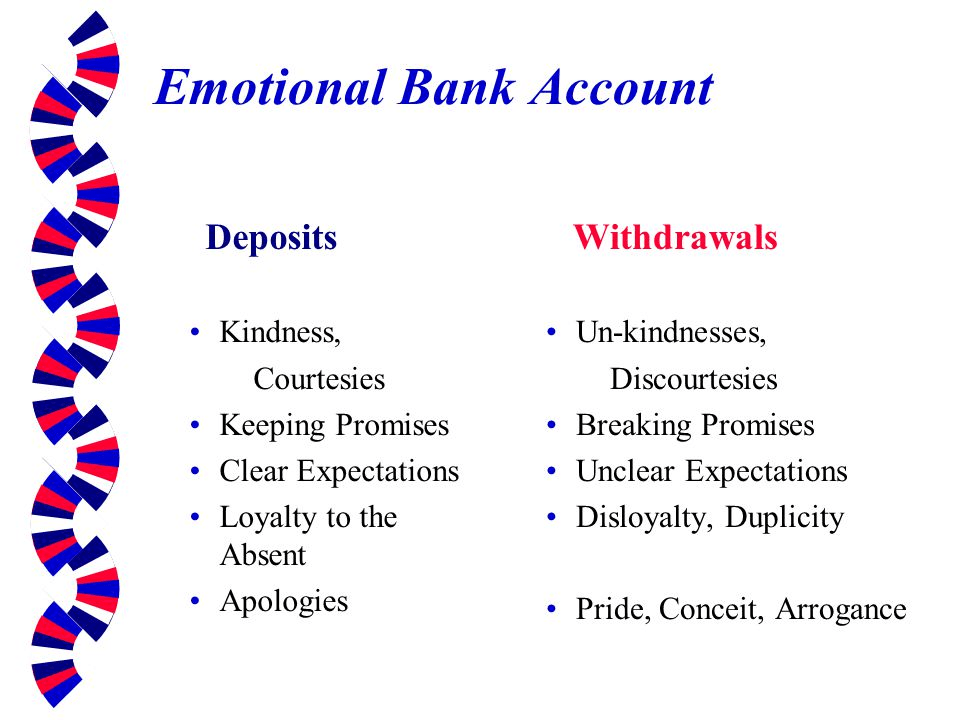
Continuous deposits are needed. 6 major deposits: understanding the individual, attending to the little things, keeping commitments, clarifying expectations, showing personal integrity, apologizing sincerely when you make a withdrawal.
Habit 6: Synergize.
As a principle-centered person, you try to stand apart from the emotion of the situation and from other factors that would act on you and evaluate the options. Looking at the needs that may be involved and the possible implications of various alternative decisions, you’ll try to come up with the best solution, taking all factors into consideration.
The person who doesn’t read is no better off than the person who can’t read.
Stephen R. Covey
Management is doing things right. Leadership is doing the right things.
Stephen R. Covey
Habit 7: Sharpen the saw.
Life life in crescendo. The most important work you will ever do is always ahead of you. Regardless of what you have or haven’t accomplished, you have important contributions to make.
What one thing could you do that, if you did it on a regular basis, would make a tremendous positive difference in your personal life? What one thing in your business or professional life would bring similar results?
4 dimensions of renewal
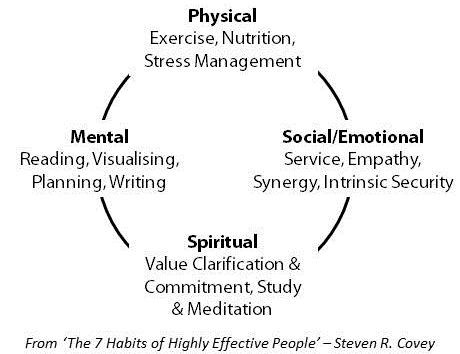
Daily Private Victory- Spend a minimum of one hour a day in renewal of the physical, spiritual, and mental dimensions. This is the key to developing the 7 habits.
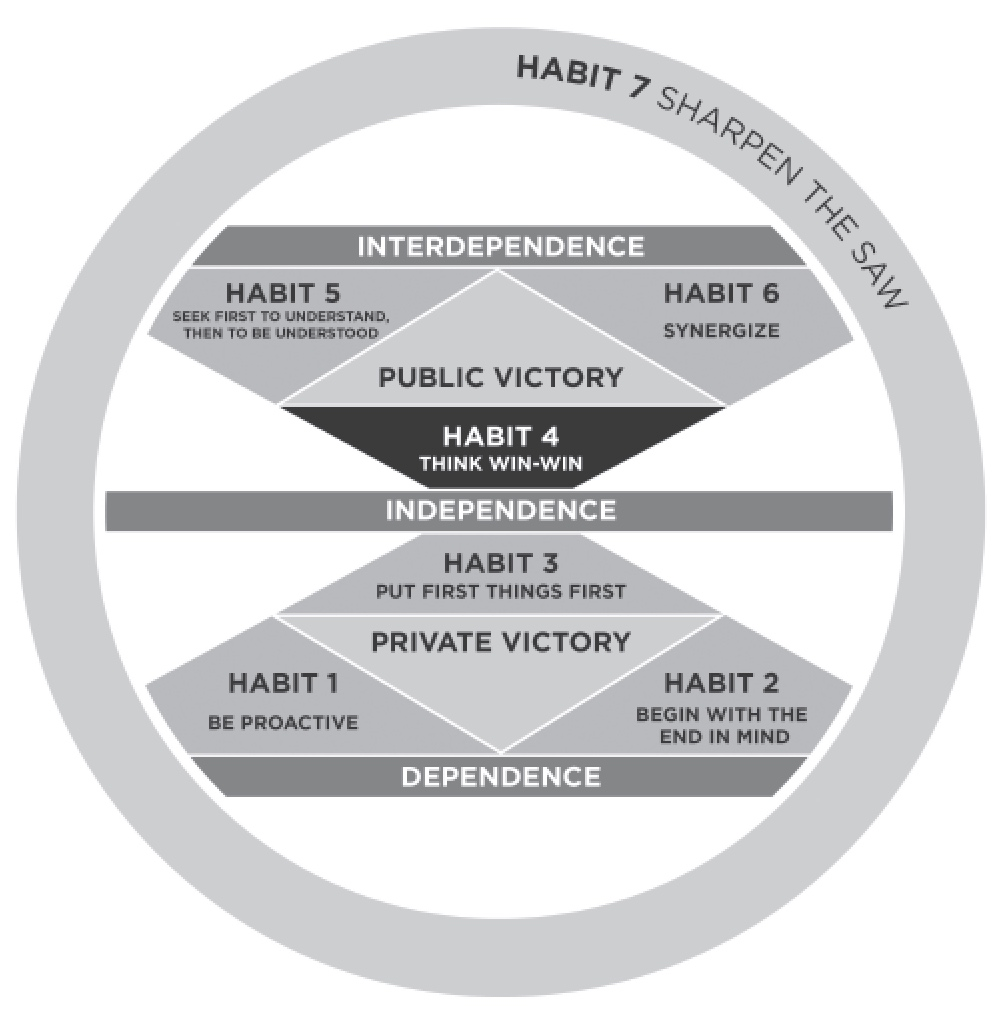
I highly recommend this book!

I look forward to reading, learning, and sharing more with you soon!
 Read Learn Share