Thoughtful Thursday posts, Uncategorized

Thoughtful Thursday – June 29, 2023

My intention is to post a Thoughtful Thursday column each week and share some of the insights I have learned in the past week. Here are some of the things I’ve learned this week:

Science Vs – Who Killed Affordable Housing?

Who killed affordable housing? Accusations are flying around all over the place of the culprit: greedy landlords, developers, the short-term rental industry, and too many baby boomers active in the housing market causing millennials to not have a chance.

  • Developers: often described as “rip-off artists, greedy, bulldozers, opportunists” out to make a profit off of housing.
    • Many people think developers are responsible for raising the price of neighborhoods.
    • Brand new apartments are going to be more expensive than older ones in the same way that new cars are more expensive than older cars. So the new market-rate building on your block is not going to be affordable unless you’re making good money.
    • It’s generally not true that the building itself raises the prices of other buildings/rents in the neighborhood. Sometimes your rent will go up, but it isn’t because of the new development; it’s because you’re living in a desirable neighborhood that is seeing prices rise. That’s why the developers chose to put a new building there.
    • Developers aren’t the heroes, but they aren’t the villains.

Airbnb: draws a lot of criticism and blame – most Airbnbs are entire homes, not a spare room or couch in someone’s home as the company was originally created to provide. Today, the vast majority (79%) of Airbnb supply are entire homes and apartments, and this has been the fastest growing component over the past 3 years as Airbnb grows further from its sharing economy roots. Studies have shown that Airbnbs are responsible for 20% of the increase in rent of the time period studied.

  • Zoning: the rules that a city makes about what can be built and where it can be built.
    • Many cities require a certain percentage of single-family detached homes. Some cities have laws that require 3 parking spots per studio apartment! This is a sneaky way to make it harder to build more housing/apartment buildings.
    • Some zoning codes require minimum lot sizes – for example, in Connecticut, many homes require almost 2 acres of land per house even if not in a rural area! So many houses have doubled in size since the 1950s.
    • Los Angeles is 74% single-family zoned. Seattle is 80% single-family zoned. The bottom line is that research shows that places with more red tape from zoning are more expensive.
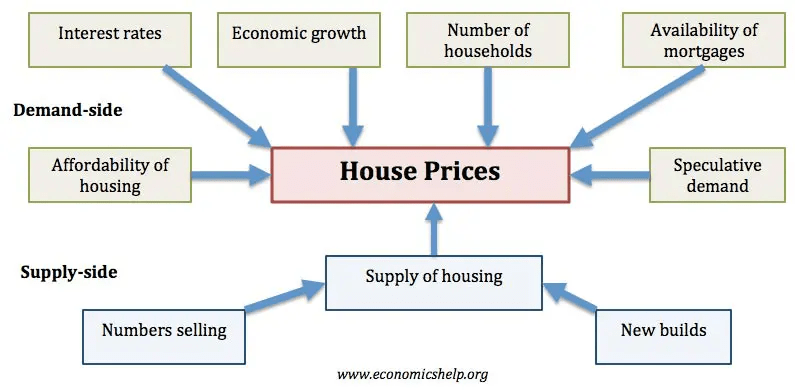
Supply and demand: Demand for housing has gone up. Back in the 1980s, rules changed about how financial institutions could lend money for mortgages. After that happened, more people had access to loans for mortgages, so people who previously weren’t eligible were now eligible, so now we are in a bidding war. When prices go up, housing becomes more valuable, and that attracts investors.

Frugal Friends Podcast – The Best Money Saving Tips for 2023
  • Housing, transportation, groceries, taxes, and healthcare expenses make up about 72% of consumer spending.
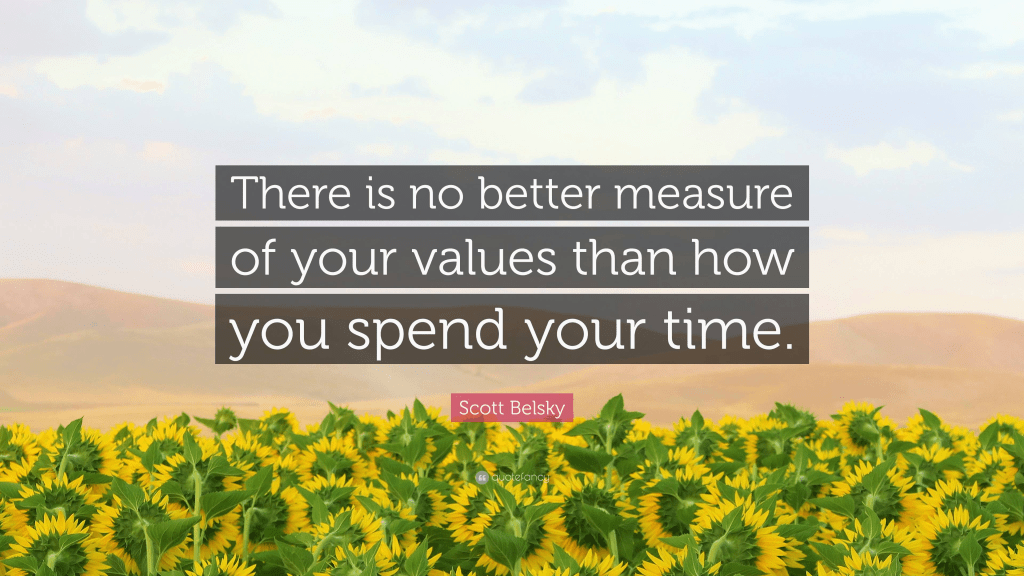
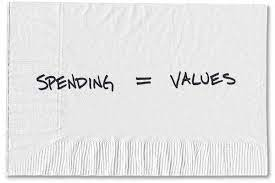
  • The biggest tip to saving money is to figure out what you value. You can spend money on the things you value and focus on saving money on what you don’t value. Example: one of my values is finding and trying gluten-free dairy-free items at a discount grocery store. I allow myself to splurge on these discounted items when I occasionally shop.
  • Work on always aligning your spending with what you value or always trying to increase or decrease your income to be enough for what you value. Can you look at your bank statement and be happy with it?
  • Don’t feel pressured to spend money on things others value. Example: latest fashion, expensive happy hours/restaurants, latest technology. Say no as often as you say yes so that you can empower yourself to know more about yourself and what you value.
  • Simplify to streamline. Simplify your physical space to save money on other important physical products. Simplify your schedule for less takeout and services. Simplify your digital life for fewer online purchases and subscriptions.
Life Kit – How to start running in the body you have
  • Many people struggle with their inner critic: “I’m not a runner.” Name that inner critic and tell it to chill out.
  • Gear: pick up a new pair of running shoes. Go to a running specialty store and get a gait analysis/shoe fit. Get shorts and t-shirts. Avoid chafing by not wearing cotton socks and by wearing body lube.
  • Blisters on your feet when you run can signal that you have the wrong shoes or wrong socks. Cotton socks can stick to your feet from the sweat and can create friction that causes blisters. Synthetic fibers (polyester or bamboo fiber are best).

Signs you’re wearing the wrong running shoes:

  • If you’re going on your first run, start by walking for five minutes to get yourself warmed up and mentally together. You can start by running for 15 seconds and then walking for 1 minutes and slowly build up to longer run times and shorter walk times. Every two weeks, try to increase the intensity.
  • Your natural form is special to you. Form tips: don’t clench your fists, loosely close your hands, don’t look down, look at the horizon 6-8 feet in front of you, and do belly breathing.
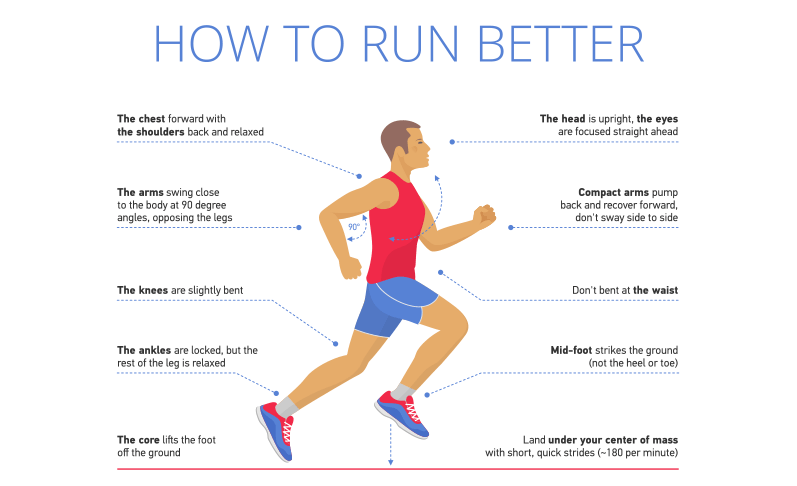
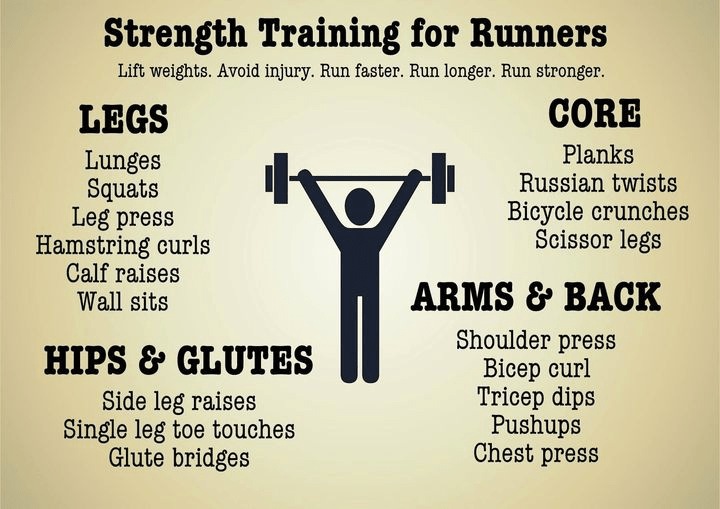
  • On the days when you are not running, cross-train. Exercise your body in other forms that aren’t specific to running, such as cycling, yoga, or lifting weights. Many of us sit on our butts all day, so we need to strengthen our glutes. Make sure you are doing exercises for your glutes: glute bridges, banded clam shells, squats, leg raises, etc.
  • If you are having issues with time, start with 2 days of running and 1 day of cross-training each week. Then, build up to 3 days of running and 2 days of cross-training. Get creative with your time. Can you work out while watching tv?
  • After a while, you will start to notice that running is either not as hard as it used to be when you started, or you will realize that you hate it just as much as you did when you started. If you still hate running after a while, take up something else – cycling, paddle boarding, walking, swimming, etc. Regular exercise is vital.
  • Running affirmations: No struggle, no progress. I’ll run if I have to run by myself. Your race, your pace. This is hard, but I can do hard things. Slow is steady, and steady is fast.
Fit, Healthy & Happy Podcast – 50 Biggest Takeaways from 500 Episodes of Health & Fitness Podcasts

I won’t cover all 50, but here are those that most resonated with me:
  • By changing nothing, nothing changes.
  • Read more and learn more. Reading non-fiction books will change your life. You don’t have to agree with everything in each book, but if you find one golden nugget that you can take with you to make you a little bit better, you will become your best self.

Choose your hard. Being overweight is hard, working out is hard, sleeping in is hard, waking up and getting everything else done is hard. Which hard are you going to choose? Choose the hard that will make you feel your best.

  • Be on a routine that involves progressive overload.
  • Don’t eat out of boredom. Decide if you’re truly hungry.
  • You can’t out-exercise a bad diet. You need to focus on both nutrition and fitness.
  • Work hard and don’t look for shortcuts. A lot of your problems can be solved with

Eat until you’re satisfied, not until you’re stuffed.

  • A clear space = a clear mind. Declutter.
  • Stop hitting snooze! Hop out of bed and make the first decision for your day.
  • Comparison is the thief of joy. Someone is always going to look better than you. Focus on your journey and your growth.
  • Your self-worth isn’t how you look. Instead of being focused on how you look, focus on longevity, strength, and many other traits.

You could be good today. Instead, you choose tomorrow. Get started right now. Not all of the conditions are going to be perfect during any given day.

  • Work hard and don’t look for shortcuts. A lot of your problems can be solved with hard work. Shortcuts are rarely the answer.
  • Discipline trumps motivation. Don’t rely on motivation. Show up every single day.
  • Purpose over pleasure. Think of long-term goals.
  • Dropping one vice can give you amazing results.
  • Small changes and habits + consistency each day = substantial results over time. The power of the compound effect

If you don’t fight for what you want, you deserve what you get. Choose your hard.

If you don’t make time for your wellness, you will be forced to make time for your illness.

The Accidental Creative with Todd Henry – 10 Questions for Finding Your Voice
  1. What angers you? Are there specific things that evoke a compassionate anger in you? We’re talking about the things that evoke a desire to intervene in a situation as an act of compassionate or to rectify a great wrong.
  2. What makes you cry? What moves you with emotion? Think about the last several instances that caused you to cry.
  3. What have you mastered? Are there tasks, skills, or opportunities that you have simply mastered and can do without thinking? Start with what you do well, and work your way toward your goal.
  4. What gives you hope? What do you look forward to? What great vision do you have for your future and the future of others?
  5. As a child, what did you want to be when you grew up? That can give us insight into the deeper seeds of fascination that may still reside within us.
  6. If you had all the time and money in the world, what would you do? We believe that a lack of resources is the obstacle to our happiness and fulfillment, but for many of us the limitation has nothing to do with a lack of money or time. The limitation is our fear of falling short of our own self-perception.
  7. What would blow your mind? List out everything that would thrill you if it were to happen, including relational things, business things, travel, ambitions, hopes, etc. It’s a great way to identify patterns in your motivation.
  8. What platform do you own? What platform do you already have for self-expression? What foundation can you build on to begin affecting the kinds of change you’d like to see?
  9. What change would you like to see in the world? If you could identify a single thing you would like to see before you die, what would it be? You may not be the one to lead this change, but you may be able to play a significant role in it.
  10. If you had one day left, how would you spend it? What questions would you ask? Who would you spend time with? What work would you do? This is a way to begin identifying patterns within your passions, skills, and experiences.
Conscious Fertility – Endometriosis: It’s More Than Period Pain with Shannon Cohn
  • If you have symptoms that interfere with your life, that cause your day to go differently (limitations to school/work/activities you enjoy doing), that is not normal. If the period pain is so bad that it interferes with your daily life, that should be investigated. GI symptoms are also common with endometriosis. People are generally told they have IBS. If you are experiencing nausea, fatigue, pain, migraines, and a lot of GI issues, talk to your OBGYN and advocate for yourself. Symptoms to look for: digestive issues- constipation, diarrhea, pain with bowel movements, severe bloating, body pain, menstrual pain, pain with intercourse, infertility
  • The only definitive way to diagnose endometriosis is a surgery (laparoscopy). An excision surgery is the most important treatment option. Exercise, diet, and birth control alone cannot heal endometriosis.
  • Resource: https://endowhat.com/

https://www.pbs.org/video/below-the-belt-the-last-health-taboo-wmzdvy/

This is a link to a PBS special covering endometriosis.

I look forward to reading, learning, and sharing more with you soon!
Book review posts, Uncategorized

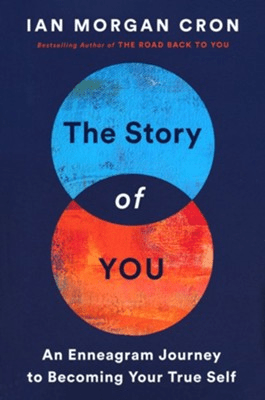
The Story of You – Enneagram Types and Rewriting Your Story

“The Story of You” is a book written by Ian Morgan Cron, an author, psychotherapist, Episcopal priest, songwriter, and founder of the Typology podcast. Using the nine Enneagram types, Ian revealed the broken stories that each type adopts and inhabits in childhood to make sense of the world and explored how to rewrite the self-sabotaging stories you tell yourself about who you are. I had SO many take-aways from this book, and it was among my top 20 favorite books I read in 2022.

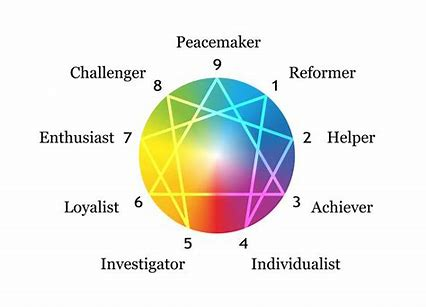
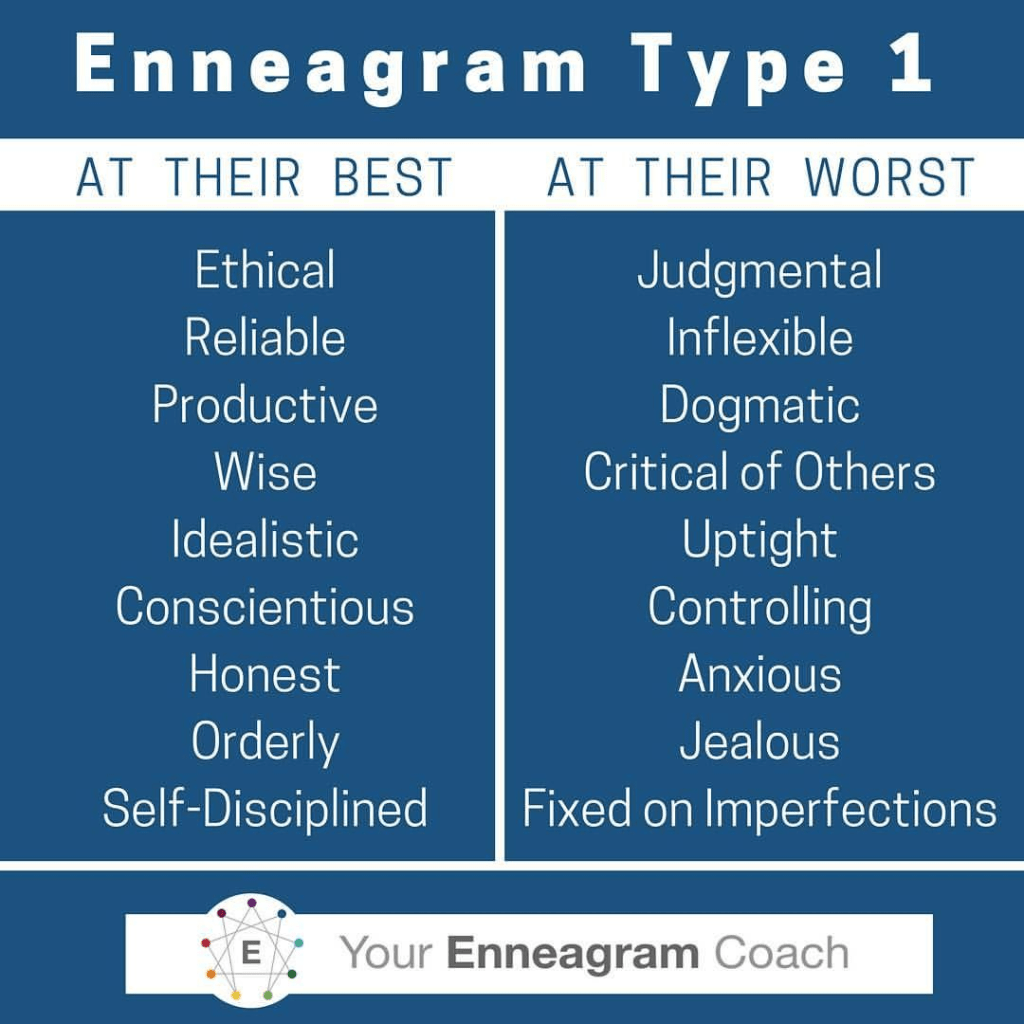
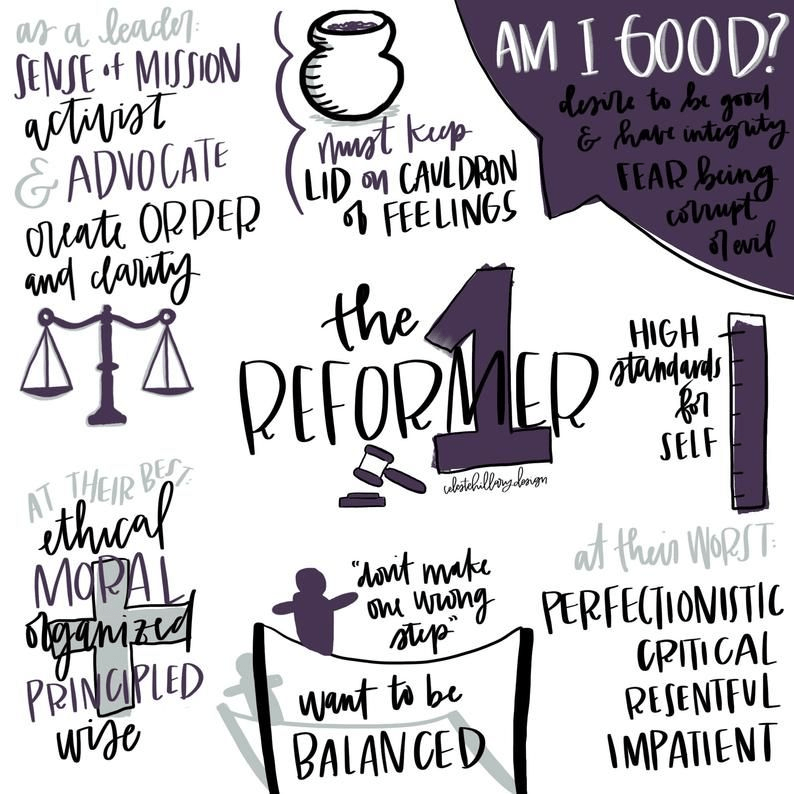
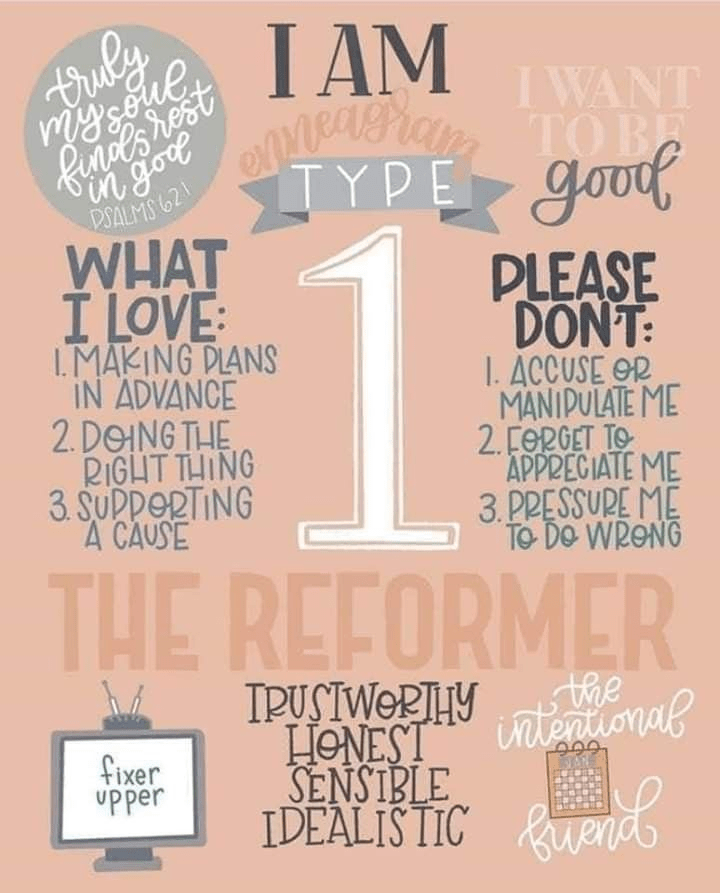
All nine Enneagram types were explored in this book in detail, and it was evident that I am mostly a type ONE on the Enneagram. Ones are well-behaved, mature, inherently principled natural leaders who want to know the standards and principles of morality, decency, and integrity and adhere to them. Ones are perfectionists always working to improve themselves and to be good, often expecting others to be the same way. Ones tell themselves that it’s their job to make the world a better place, so they work harder, do more, and put in extra hours to accomplish that.

Statements ONES relate to (aka the story of my life):

  • What I should do is more important than what I want to do.
  • I’ll finally be happy when I’m perfect.
  • I need to be good so people will like me.
  • I have to maintain control.
  • If I relax, all hell will break loose.
  • The risk of being criticized or judged is not worth the shame and self-judgment it could cause.
  • People will not accept me as a flawed human being.
  • Others won’t do as good a job as me.

For ONES, perfectionism is the source of unhappiness. The story Ones tell themselves includes self-improvement as the starting point for improving the world, so they are eager to pursue new systems, innovative practices, or fresh ideas that help them do more in able to be better. They often experience simmering resentment just below the surface waiting to boil over, self-condemnation for their imperfections, and exhaustion from always striving to improve and do more.

ONES breaking out of their own story:

  • make rest and relaxation a priority
  • schedule vacations/days off/downtime in order to recharge
  • stop worrying about what everyone else is thinking
  • accept themselves as they are, knowing that imperfection is essential
  • forgive themselves when they fall short
  • learn to endure disorder and chaos without running around and correcting others and modeling the right way to do things
  • let go of the need for certainty and extend grace to others for trying
  • realize that God’s love is not predicated on their accomplishments in perfecting themselves, others, and the world
  • Their new story starts when they begin to experience the virtue of serenity that comes when they accept that the world is imperfectly perfect and so are they.

You have control over the choices you make every day. You are the narrator of your own story. Assume control of your new story; don’t let your old story control you.

“Who would I be and what could I achieve if I pushed back against the false story about who I think I am and the nature of the world? What decisions can I make today to inhabit the new story that will help me become the highest and truest expression of myself?”

Ian Morgan Cron

I highly recommend reading this book if you want to rewrite your story!

I look forward to reading, learning, and sharing more with you soon!
Thoughtful Thursday posts, Uncategorized

Thoughtful Thursday – June 22, 2023

My intention is to post a Thoughtful Thursday column each week and share some of the insights I have learned in the past week. Here are some of the things I’ve learned this week:

NerdWallet’s Smart Money Podcast – The Price of Parenthood: What It Costs to Be a Parent

115,000 children were adopted in the United States in 2019. The number of adoptions dropped in 2020 to just over 95,000.

391,000 children are currently in foster care in the United States waiting for homes.

Paths to parenthood include:

  • traditional parenthood
  • surrogacy
  • foster care to permanent placement/adoption
  • private adoption through an agency or independent adoption

This podcast primarily focused on adoption. Here are some take-aways:

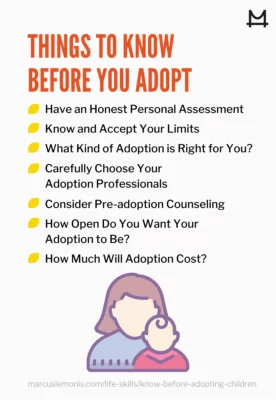
  • Adoption through an agency generally costs $40,000 or so, and it is paid in installments (a certain amount to get started, more after the home study is completed, and more after a placement). In addition to the agency costs, you will need to pay legal fees. Attorney fees vary widely from about $4,000-$15,000.
  • It takes an average of 2-3 years to complete the adoption process.
  • When waiting for a placement, you should be ready with baby stuff, but you should keep it out of sight. Don’t create a baby room. It will remind you of the waiting.
  • Be aware and be emotionally prepared for how long the process can take. Many people wait years.
  • Insurance companies generally do NOT cover adoption expenses. Many people spend over $40,000 to adopt – the price of a new car! Check your employer’s adoption assistance programs and benefits. The government also offers a federal adoptive tax credit. In 2023, the credit was $15,950. This is a tax refund, not a deduction.
  • When considering finances, also have an understanding of your future expenses, such as added costs of groceries, transportation, childcare, and saving for higher education.
  • Do your research and make sure you can cover the adoption expenses or have a plan for it. Be sure to include legal fees on top of the agency fees. You will need a lawyer to get the adoption formalized through the state. Evaluate your finances and research additional resources, such as grants, personal loans, and fundraising.

Questions to consider:

  • Domestic or international adoption? Adopting a newborn is only possible domestically. You will receive a more comprehensive medical history with domestic adoptions. Many adoptive parents who don’t want contact with the birth parents choose to adopt internationally.
  • Foster system – This is the most affordable path to adoption, but does not always guarantee a permanent placement.
  • How much do you want to know about the child prior to adoption? Open adoptions grant adoptive parents access to more background information about the child’s family and provide an opportunity to ask questions.
  • Private agency vs. independent adoption – you can go through an agency and have someone do most of the work for you, or you can try to find your own “match”

This chart is 10 years old, but gives a better picture of the breakdown of costs.

TED Health – The bias behind your undiagnosed chronic pain

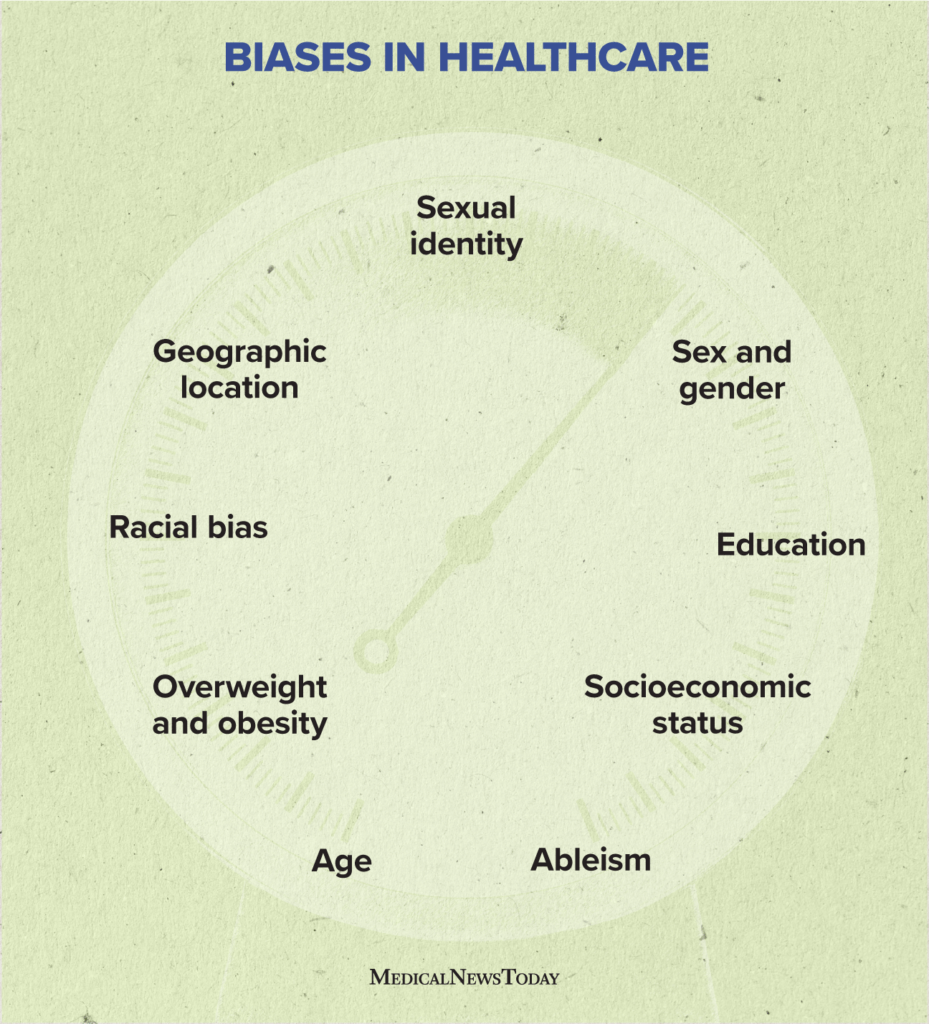
Studies have shown that, regardless of insurance and income status, racial and ethnic minorities received worse care. When it comes to pain, research shows that bias extends beyond minorities to include women and even children.

  • Pain is often dismissed. Many women are told the pain is “all in their heads.” Pain is in everyone’s heads because pain can’t take place without our brain.
  • Not all pain is related to tissue damage. You can have real pain with no physical injury or source. Pain can’t be measured by a lab test.
  • Pain is subjective and doctors must begin by identifying its source. When there is no source, it becomes open to interpretation, which becomes open to implicit bias.

Women are more likely than men to be prescribed anti-anxiety medicines than painkillers when complaining of the same pain as men do. Clinicians often suggest psychosocial causes or stress for women when they order lab tests for men with the exact same symptoms.

What can be done? We can begin by identifying our stereotypes and rewrite the stories of the people we meet. Are you treating men and women differently? Are you treating different cultures or races differently?

Physicians, make sure you aren’t writing a story that the patient hasn’t told you yet. It is your duty to replace the undiagnosed bias with empathy.

Finding the right doctor may feel a bit like dating. You may need to swipe through a few to find the right one for you.

The VeryWell Mind Podcast – Friday Fix: The Best Tool for When You Feel Overwhelmed

There are always going to be multiple things vying for your attention, especially in the age of social media and phone notifications. You will always also have your own personal to-do list.

Stop underestimating how long a task is going to take. We consistently underestimate and then get frustrated when we don’t get everything done that we want to get done.

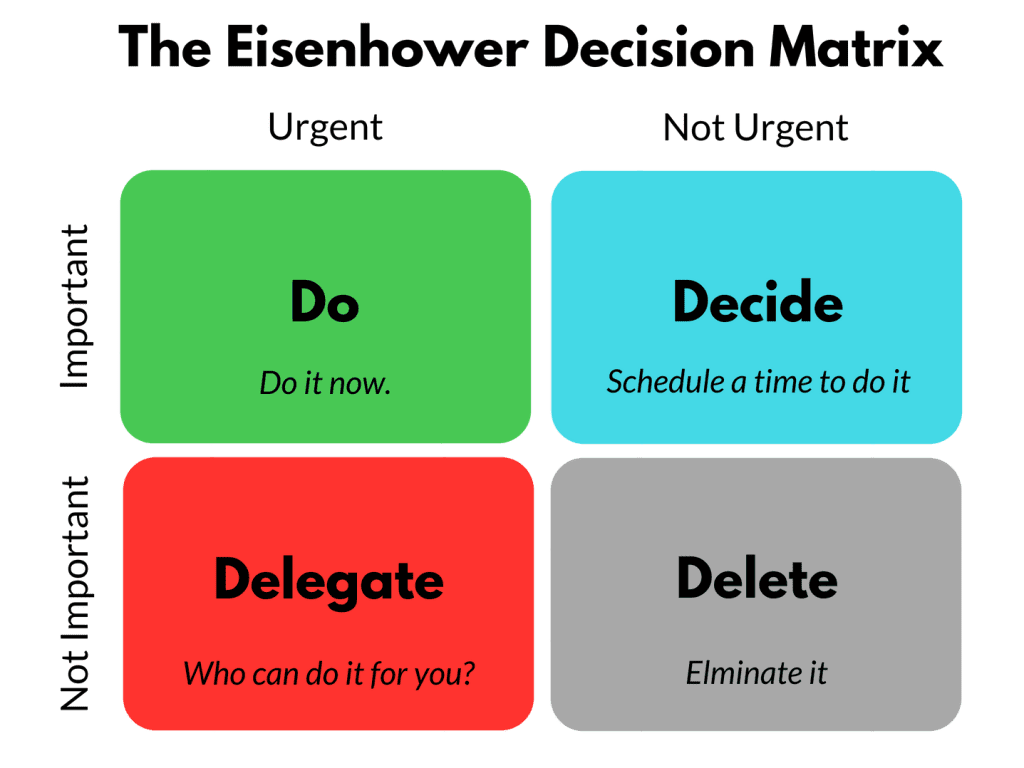
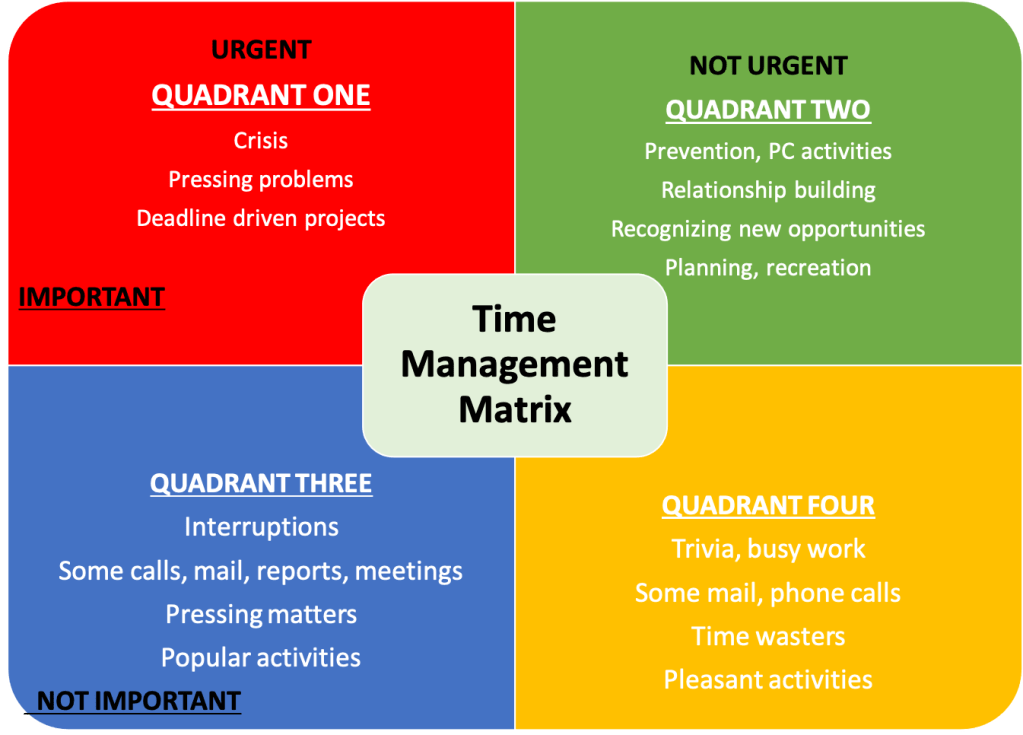
Prioritize what should get done first. Our attention is often drawn to time-sensitive tasks that are less urgent. When you’re busy and overwhelmed, you’re likely to prioritize other tasks that come along with other tight deadlines because you’re already feeling busy. When you feel frenzied, you’d do frenzied things. Introduce rational thinking into the mix with the Eisenhower Matrix. Sort tasks by urgency and importance.

People tend to do the fastest tasks first. People might do urgent things first even though they don’t need to get done. It’s easy to get distracted by the new tasks that come in even though they don’t need to get done.

Life Kit – Ultra-processed foods are everywhere. Here’s how to avoid them
  • Pick up a packaged food at the supermarket and you’ll start to notice the same things: high levels of salt and fat, added sugars, added colorings, added flavors, hydrolyzed protein isolates, high fructose corn syrup, bulking agents like maltodextrin, etc.
  • Read the ingredient list! Ignore the health claims and read the ingredient list instead. If it includes ingredients you don’t recognize and wouldn’t have in your kitchen, it’s usually an ultra-processed food.
  • Overconsumption of ultra-processed foods results in increased risk of type 2 diabetes, obesity, hypertension, dying from cardiovascular disease, dying prematurely from all causes. These foods tend to have a lot of added salt, sugar, and fat.
  • Ultra-processed foods can result in not eating enough fiber. Many ultra-processed foods have added sugars that aren’t needed.
  • If you like salty, crunchy snacks, think about nuts (good source of fats, proteins, and fiber). If you love breakfast cereals, look for something with protein and fiber and fewer ingredients. If you like yogurt, look for something with low or no added sugar and add some berries to sweeten it or look for something with added protein.
  • Cooking more from scratch is a better option to avoid ultra-processed foods. Focus on things you know you should be eating more of, such as fruits and vegetables. For canned vegetables, you can rinse them and let them drain to reduce sodium.
  • Truefood.tech – this is a neat website where you can look up food brands and see how processed your food is. It will also suggest less processed alternatives.
  • Aim to fill your diet with fruits, vegetables, lean meats, whole grains, and some dairy (unless you have allergies). 80/20 Rule- 80% of the time, aim to eat clean.
Frugal Friends Podcast – What We’ve Learned From 75+ Real People Budgets
  • Stay out of the grocery store. Order your groceries online to prevent impulse purchases. If you shop in store, commit to only going once each week. If you forget an ingredient, go without. This will prevent impulse purchases.
  • Check your calendar before you make a budget.
  • Track all of your expenses!
  • Limit time on social media. People use it to highlight what they don’t have and are more likely to make impulse purchases. You’re only seeing the best of the best, not people’s physical, emotional, mental, or relationship stress when it comes to finances.
  • Remember that different people may have different priorities than you do. Their financial situation might look better, but it may not be better for you. Ex: working long hours, having a family, debt, etc.
The Accidental Creative with Todd Henry – Managing Expectations (For Yourself and Your Team)
  • Team members may resent one another and be unable to articulate why. In reality, it’s because there are unmet expectations that may have never been spoken. This doesn’t have to be related to work; it can happen in your personal life, too.
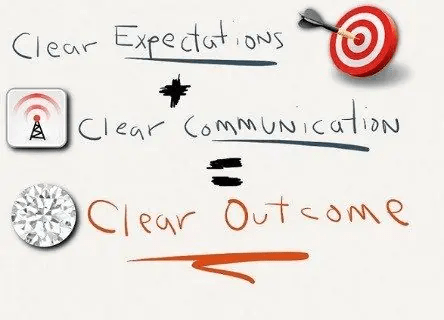
  • Think about a moment in your life when you’ve experienced conflict. How much of the conflict was sourced in expectations that you had of the other person? Were those expectations ever communicated to the other person? The majority of conflict in the workplace is the result of missed expectations. Someone expects something from a team member, customer, or stakeholder, but the expectation was never clearly communicated and agreed to by the other party.
  • We often hold grudges of which the other party is completely oblivious. These corrode our ability to collaborate.
  • Have you communicated your expectations in a clear and empathetic way? Don’t carry the pointless burden of the unmet expectations of others. There’s enough on your plate!
  • On a personal level, you probably have expectations of yourself that you aren’t even aware of. Learn to make agreements with yourself that you can actually keep. Many of us make agreements not based on what we think we should do, but what others think we should do. Identify agreements that you have made with yourself that you may be unaware of.
  • Many creatives live with perpetual guilt because they feel they aren’t doing enough, they’re failing by some arbitrary metric, or feel like they’re falling behind because they’re letting other people establish what getting ahead looks like. They believe they aren’t disciplined because they’re living by someone else’s metric. Who set that metric? Who decided what success or failure looks like for you?
  • What do you truly expect yourself to deliver on today? Do you have an accurate assessment of expectations for yourself? Are you living according to someone else’s metrics? Don’t allow others to “ought” and “should” you into feeling guilty about your level of discipline.
  • Assess, commit, and achieve. Discipline is making a commitment with yourself and keeping it.
  • Leadership is about risk mitigation. Great leaders understand that the goal is to accomplish what they can while mitigating the potential downside – keeping the team in the game.
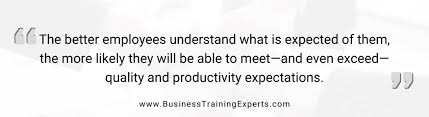
  • Because of the risk involved, many leaders become less than clear about their expectations for the work or for the team. They may speak in vague terms or give opaque direction because they themselves are not certain of the right decision. They want to project themselves into a situation and protect themselves from a mistake, so they lack precision when they communicate. A few team dynamics emerge. Team members wait until you tell them what to do before actually starting their work. Dissonance emerges as each team member interprets what you want, sometimes leading to misalignment and disjointedness among those responsible for executing the work. Dissonance is a gap between the “why” and the “what.” Team members need leaders to be precise about expectations. You need to be clear even when you are uncertain.
  • Aim to use precise language and precise expectations – be clear about what you want, when you want it, who will do it, why it matters, and what the outcome will be if you are successful. All effective expectations include assignment of responsibility, articulation of a timeline, and accountability for results. If your expectations don’t include all three, you aren’t being precise enough.
  • Aim for precise objectives. Where are you leading the team? How will you know you’ve arrived? Why will any of it matter in the long run? Team members need to know that you have clear objectives in mind, you are aware of the obstacles you are going to encounter, and you have a plan to overcome them. You must be clear about where you are leading the team in spite of your personal insecurities.

I look forward to reading, learning, and sharing more with you soon!
Book review posts, Uncategorized

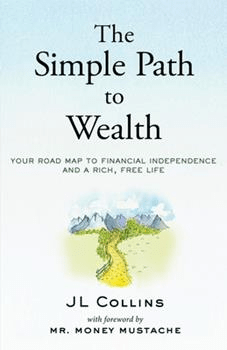
The Simple Path to Wealth

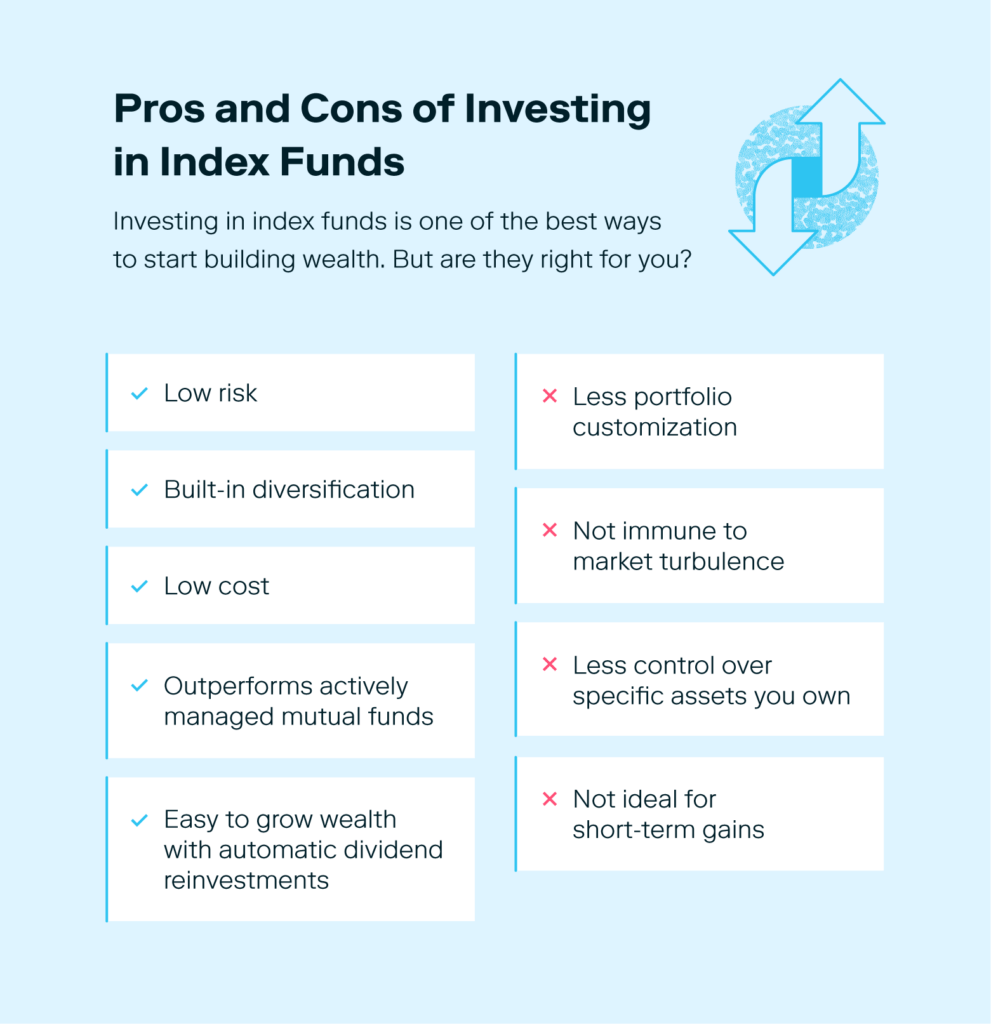
“The Simple Path to Wealth” was a very interesting, educational, easy read written by JL Collins, author of the blog jlcollinsnh.com. This was an excellent book I read as part of a book club I’m in. This book contained so much useful information and emphasized Vanguard as a stellar option for investments due to low fees and the self-cleansing Vanguard Total Stock Market Index Fund (VTSAX).

Main take-aways:

Seek the least house to meet your needs rather than the most house you can technically afford.

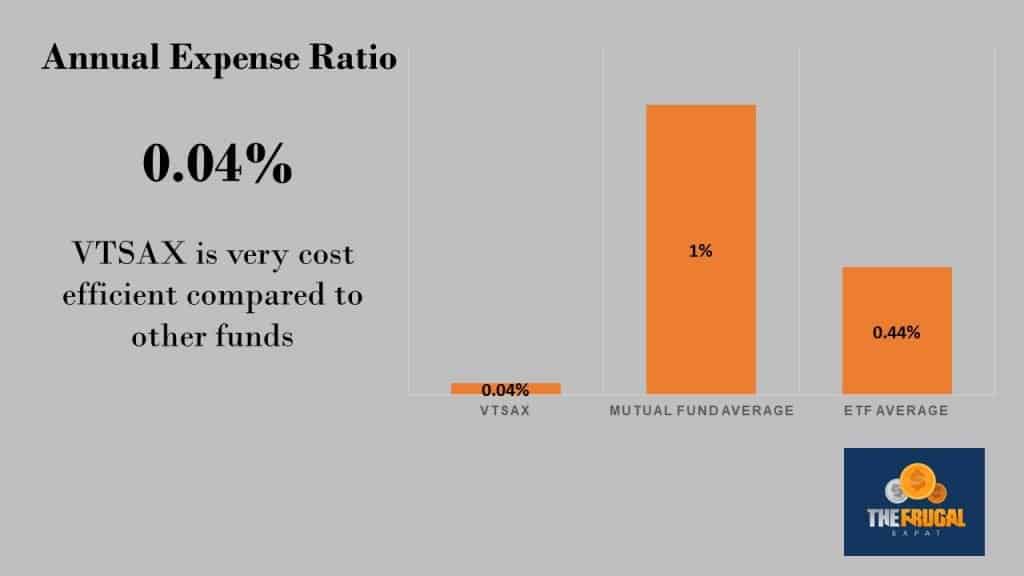
The Vanguard Total Stock Market Index Fund (VTSAX) holds about 3,500 companies and is self-cleansing. The expense ratio is only 0.04% and it is low-maintenance.

International funds are an added risk with added expense and are already covered with VTSAX (U.S. and international businesses). If you still want international funds with Vanguard, you can include VFWAX, VTIAX, or VTWSX.

Target retirement funds (portfolios based on the year you plan to retire) are also an option, although expense ratios are higher (0.14%-0.16%).

3 tools: stocks (VTSAX), bonds (VBTLX), and cash. You can do 100% stocks now (VTSAX) and then later include bonds.

If there is no VTSAX option for your retirement account, look for a low-cost index fund or target retirement fund.

With Vanguard, you own your mutual funds – and through them – Vanguard itself. It operates at cost, resulting in lower expense ratios. There are no shareholders to pay, and no one at Vanguard has access to your money.

Why most people lose $ in the market:

  • We think we can time the market.
  • We believe we can pick individual stocks.
  • We believe we can pick winning mutual fund managers. 82% failed to outperform the unmanaged index in 2013. Only about 1% of active traders outperform the market.

Downsides of having an advisor:

  • Cost
  • Drawn not to the best investments, but to those that pay the highest commissions and management fees
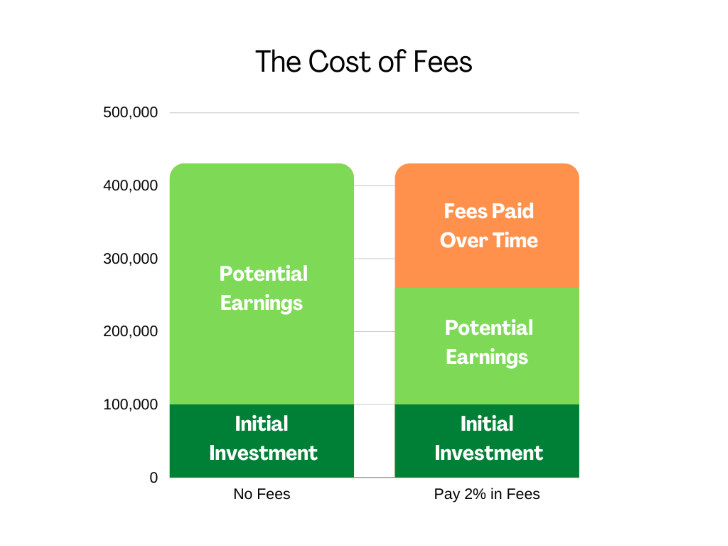
  • Assets under management (AUM) fees cost you a lot in terms of compounding.

You are considered financially independent and ready to retire if you have saved 25x your annual expenses. Let’s say you pay a 1% management fee in retirement (most advisors actually charge more than 1%). If you are living on 4% of your retirement funds each year (the recommended amount), your advisor is costing you at least a full 25% of your income!

Using the 4% model, you may want to have a balance of 50% stocks and 50% bonds. 96% of the time, you will be able to live off of 4% each year for 30 years without fees. If you are paying a 1% fee, this drops to an 84% success rate. If you are paying a 2% fee, this drops to a 65% success rate. The solution is to have more cash saved, withdraw 3% of less, and be open to working part-time or relocate to save money. Do not set up an automatic 4% withdrawal plan! Instead, withdraw as needed.

A 401(k) or IRA is generally better than a Roth IRA. If you put $5,000 into a Roth IRA at a 25% tax bracket, you’d need $6,250. If you fund a 401(k) or IRA instead of a Roth IRA, you would still have the $1,250 to invest and would have huge returns over the years. Fully fund a Roth IRA only if your income is low enough that you’re paying little or no income tax.

When you leave a job, roll over your 401(k) or 403b into a personal IRA.

You are required to take minimum distributions at age 70 1/2 for your IRA/401(k)/403b. Shift your IRA to a Roth IRA to decrease the minimum distributions. Also, fully fund your HSA if you have one because it grows tax-free.

When I was reading this book, I had Roth IRA funds with an advisor that was charging over 1.25% in assets under management (AUM) fees + portfolio fees, and I didn’t even get to pick my investments! My money was not performing well with the portfolios he selected. I also had old 401(k)s with former employers.

Months after reading this book and researching on my own, I decided to combine my old 401(k)s into an IRA at Vanguard and I also transferred my Roth IRA to Vanguard. Through the conversion process, I learned the investments the advisor previously selected were awful, had high expenses, and probably resulted in high commissions, I had to pay various conversion fees to get out of those portfolios, and I transferred everything I previously had over to VTSAX with Vanguard. I also have a retirement savings plan with my current employer that is NOT at Vanguard.

My funds have been performing really well and I am on my way to achieving a big financial goal in the next year or two: have the equivalent of my annual salary saved for retirement (a goal many experts say you should achieve by age 30). I am behind according to experts, but I am grateful for the progress I have made and especially grateful for the low-maintenance portfolio with minimal expenses that Vanguard offers.

This educational video covers VTSAX.

I look forward to reading, learning, and sharing more with you soon!
Thoughtful Thursday posts, Uncategorized

Thoughtful Thursday – June 15, 2023

My intention is to post a Thoughtful Thursday column each week and share some of the insights I have learned in the past week. Here are some of the things I’ve learned this week:

Self Improvement Daily- Breaking Down Productivity

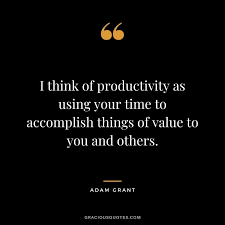
The word productivity is a combination of two words: productive activity. It’s to be active in productive ways. ‘Productive’ is simply having the high ability to produce. To produce what? Society and culture have taught us that we must always be thinking about producing results, revenue, and efficiencies. Can’t we also choose to produce joy, presence, mindfulness, and connection?

You get to decide for yourself what you want to produce. It’s your life, your time, and your attention. Productivity is actually just “doing the things you want to be doing.”

Productivity = Productive activity = Doing things that produce the results you want = Doing the things you want to be doing.

The next time you feel down on yourself for not checking things off of your never-ending to-do list over the weekend, reframe your mind and consider that productivity is doing the things you want to be doing. Resting and hanging out with friends could still be productive; you are taking care of yourself and growing strong relationships with people you care about. If that is what you want to be doing, you were productive!

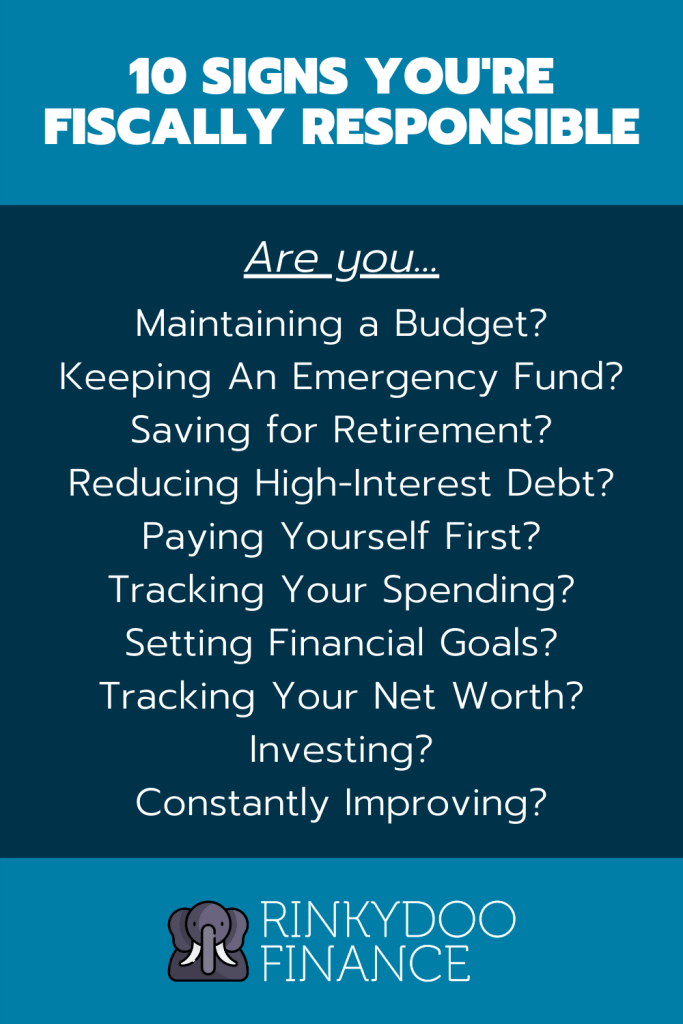
Small Change – 10 Signs You Might Be Financially Immature
  1. You act aggressively when someone asks you about your money.
  2. You are dismissive of others’ success.
  3. You spend when you are depressed.
  4. You tend to look at the individual spending of your partner rather than simply being concerned with how much is being spent. If the “what” is more important than the amount, you may be financially immature.
  5. You are unable to get excited by saving for a big goal. “We can’t do that. That’s crazy.”
  6. You have avoided looking at a bank statement for months.
  7. You fear tax time.
  8. You gloat at parties about your investments that you haven’t actually made or lie about the investments you have.
  9. You are too conscious about the brands you are wearing.
  10. You use spending as a cure for boredom.
Savvy Psychologist- 6 skills of mindfulness you may be missing
  • Observe. Pay attention to your environment and your internal experiences without judgment. This entails wordless watching and being fully present in the moment, observing your thoughts and feelings as they come and go, and noticing the world around you without trying to change it. Use your five senses.
  • Describe. Put your observations into words. Describe your experiences objectively without adding your own interpretations or judgments. Describe your observations from your five senses.
  • Participate. Be fully present and engaged in the present moment. Let go of distractions and focus on the task at hand, whether that be work, hobbies, or relationships.
  • Non-judgmental stance. Accept yourself and others without judgment. Let go of the inner monologue and distorted interpretations. Instead, practice self-compassion and understanding. Cultivate an attitude of acceptance and openness. Let go of the evaluative judgments we often make.
  • One-mindfully. Focus on one moment, task, or thought at a time. Let go of distractions and multi-tasking and focus your attention on the present moment.
  • Effectiveness. Focus on what works in a given situation rather than what is “right or wrong.” Let go of rigid thinking and embrace a more flexible and adaptive mindset. Focus on the outcomes you want to achieve and explore different ways of achieving them. Do what works, not necessarily what you prefer.
FIRE the Family Podcast – 22 Actionable Ways to Invest in Yourself
  1. Go to college. Don’t go into extreme debt to go to college. Be wise and research what your expected income will be before taking out several loans.
  2. Join the military.
  3. Go to a trade school.
  4. Get a job. There’s no better way than to find out what you like and don’t like doing.
  5. Learn how to cook. It increases your independence and reduces your expenses of eating out.
  6. Learn how to exercise properly. You will feel better about yourself and your health, live longer, and improve your mental health.
  7. Open a brokerage account. VTSAX is a great investment.
  8. Join a local young-professional networking group.
  9. Implement an every-dollar budget.
  10. Ask your parents and grandparents for advice. Pick their brains and learn everything you can.
  11. Find the person you want to spend your life with.
  12. Get out there and fail. You learn from failing.
  13. Run a half marathon. It requires a lot of discipline, preparation, and time.
  14. Identify your mentors.
  15. Develop an inner circle.
  16. Cut out negativity. Set proper boundaries for yourself and your family.
  17. Develop SMART goals (specific, measurable, attainable, relevant, time-bound).
  18. Explore materialism and minimalism.
  19. Continue to find ways to compete.
  20. Practice not judging others. Then you will learn to stop judging yourself.
  21. Start reading. Reading teaches your brain to exercise.
  22. Start an online business.
Life Kit- Planning a trip? Here’s how to pack like a pro
  • You never need as much stuff as you think. Eliminate extra baggage before you leave.
  • Pack and then remove 1/3 of the things you pack.
  • Reduce the weight with lightweight versions of what you need and with items that serve multiple purposes.
  • Use packing cubes (lightweight, expandable, zip-up pouches that save space).
  • Lighten your load of liquid toiletries. There are solid versions of items that don’t weigh as much. Use powders, not pastes. Use dry shampoo instead of the real stuff. Leave liquids at home if you can. Most of the time, you can pick up the things you need while on the road, except the things you can’t find everywhere: sunscreen, bug spray, bug bite relief, hair conditioner, and tampons.
  • Do a simple scope out of your destination with reliable sources, not sponsored content.
  • Match your activity plans to the weather forecast. Check a destination’s average monthly weather patterns in advance.
  • Always have a rain jacket, umbrella, or something to cover your backpack.
  • When traveling for leisure, one main event each day is enough. Don’t overbook activities. Build complementary activities around it or leave room for discovery and the unexpected.
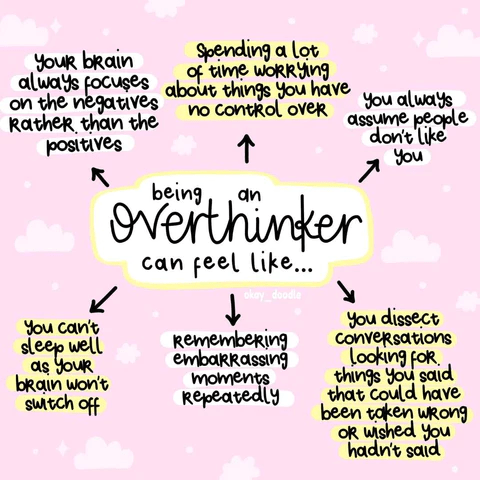
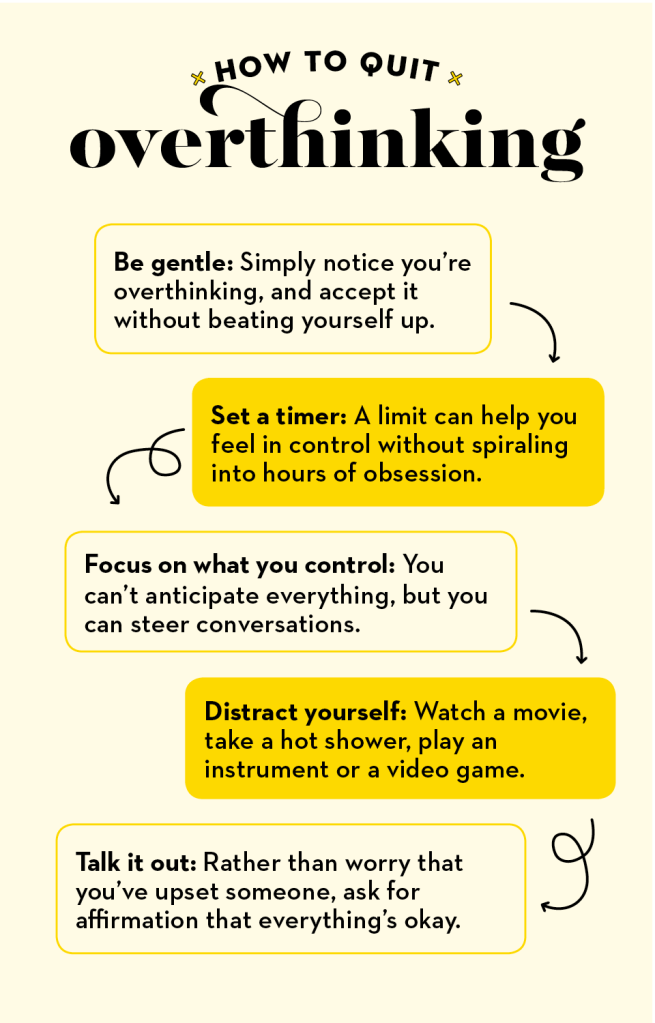
Self Care IRL- Listen to this if you are an overthinker
  • Recognize when you are actually overthinking. Identify the thoughts or situations that are triggering it. Shift your mind back to the present.
  • Journal. Writing down things can help you identify patterns in your thinking. Sometimes you can look back and see that you were overly concerned about something that didn’t end up mattering or turning out the way you worried it would.
  • Give yourself time to calm down and relax before addressing any situation. Try to immediately do things that help you to relax or bring you joy.
  • Talk to someone about the situation. Getting another perspective can help you see things more clearly. Talking about your overthinking can help reduce its frequency and intensity.
  • Learn to focus on the present moment instead of dwelling on the past or the future. This can help you be more aware of your thoughts and feelings.
  • Practice forgiveness for your past self. When we find ourselves trapped in a cycle of overthinking the past, we are stuck there and that prevents us from moving forward in a healthy way. Remember that you are a human first and you will make mistakes. Perfection does not exist. You deserve forgiveness.
  • Think positively for your future self. Think about all of the ways that things could go right. Expand on the beautiful possibilities and let those things lift you up. Reframe your mind when you are worried about what could go wrong, and think about what could go right.
  • Remember that overthinking has never helped us. It hasn’t been serving us the way we think it has.

I am currently reading “Keep Sharp” by Sanjay Gupta, a book about the brain and slowing cognitive decline. Here are some tidbits I have learned so far:

You probably know the five senses: sight (ophthalmoception), smell (olfacoception), taste (gustaoception), touch (tactioception), and hearing (audioception). There are six other senses processed in the brain that give us more data about the outside world:

  • proprioception: a sense of where your body parts are and what they’re doing
  • equilibrioception: a sense of balance/your internal GPS. This tells you if you’re sitting, standing, or lying down. It’s located in the inner ear.
  • nociception: a sense of pain.
  • themo(re)ception: a sense of temperature
  • chronoception: a sense of the passage of time
  • interoception: a sense of your internal needs, like hunger, thirst, and needing to use the bathroom

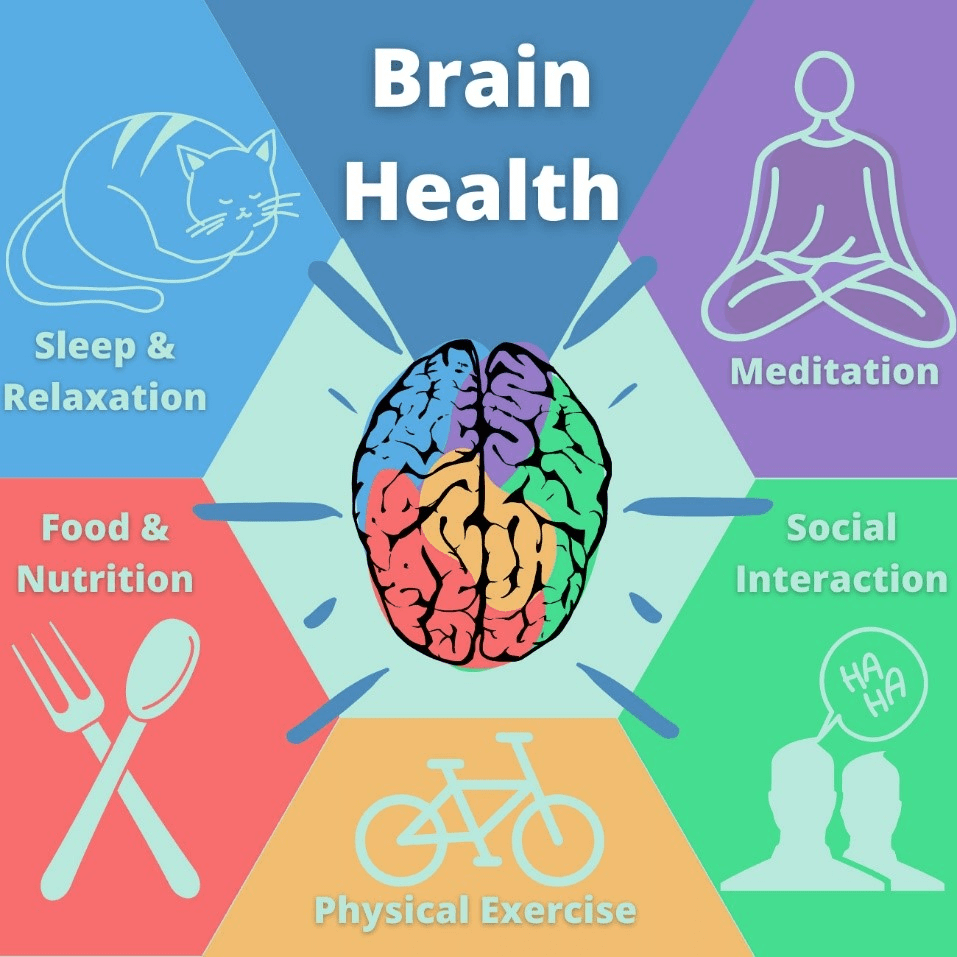
The 5 pillars of brain health:

  • Move – exercise; aerobic and nonaerobic
  • Discover – pick up a new hobby, do something new, or learn something new
  • Relax – unwind, engage in stress-reducing activities
  • Nourish – consuming certain foods like cold-water fish, whole grains, extra virgin olive oil, nuts and seeds, fibrous whole fruits and vegetables, while limiting foods high in sugar, saturated fat, and trans-fatty acids can help avoid memory and brain decline, protect the brain against disease, and maximize its performance
  • Connect – having a diverse social network can improve our brain’s plasticity and help preserve our cognitive abilities

I look forward to reading, learning, and sharing more with you soon!
Book review posts, Uncategorized

The Upstarts (Airbnb & Uber)

“The Upstarts” written by Brad Stone is a fascinating book about the history of Airbnb and Uber and the challenges the companies faced along the way. This was selected as a Best Book of the Year by the Washington Post, Forbes, the New Republic, The Economist, Bloomberg, and Gizmodo.

Airbnb can be considered the biggest hotel company on the planet, yet it possesses no actual hotel rooms. For most of its first year, Airbnb was a side project that many dismissed as wildly outlandish. After 8 years, investors valued the company at $30 billion, more than any hotel chain in the world! It is now valued at $73 billion.

Uber is among the world’s largest car services, yet it doesn’t employ any professional drivers. Uber’s potential was underestimated and thought to be just for San Francisco, but the valuation is now $77 billion, more than any other privately held startup company in the world! Uber brings new transportation options to low-income neighborhoods that aren’t served well by yellow taxis. It creates flexible jobs for the unemployed, immigrants, and students looking to finance their education.

History:

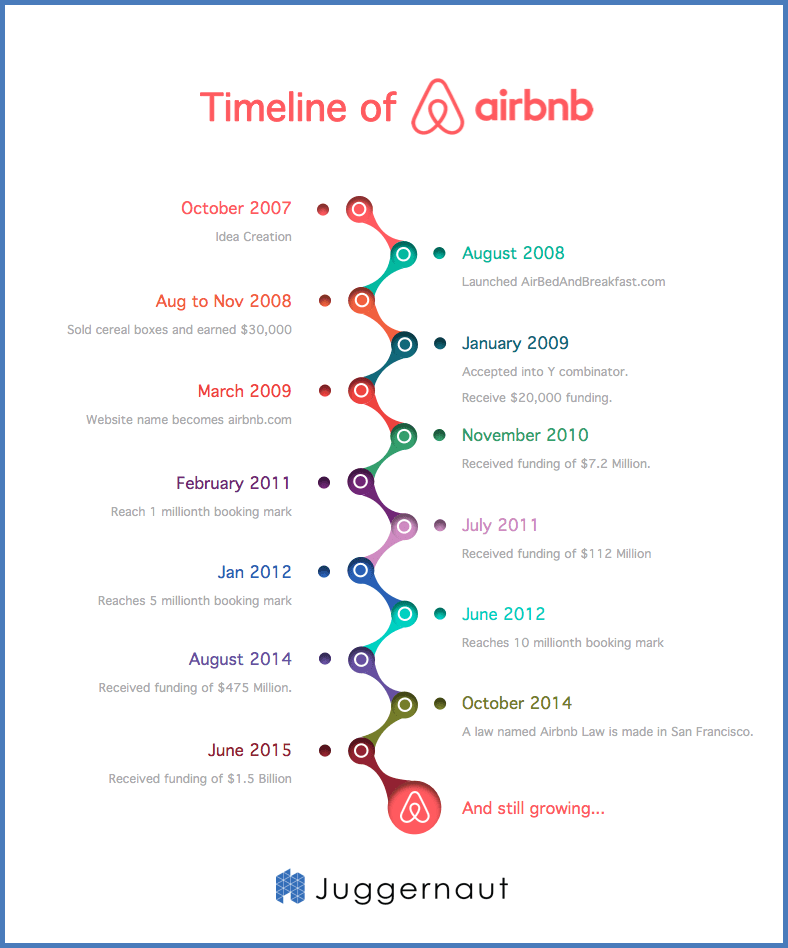
Airbnb’s first rental was on October 16, 2007 during the World Design Conference in San Francisco, in which an airbed was rented for $80/night. This was when the website was a Free WordPress site: airbedandbreakfast.com. On New Year’s Eve in 2015, Airbnb booked 550,000 guests. On New Year’s Eve in 2016, Airbnb booked a whopping 1 million guests!

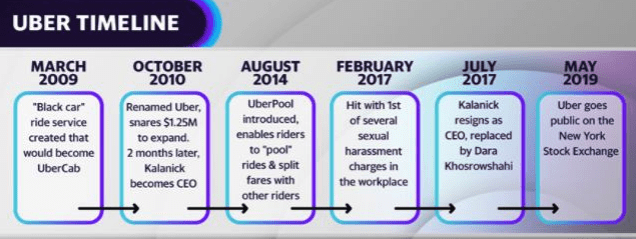
Uber is the partial result of research completed by Tim Ferriss. Tim researched comparable services, market, logistics, feasibility, and cab-industry dynamics and reported to Garrett Camp.

Some investors:

Some Airbnb investors include Jeff Bezos and Ashton Kutcher.

Some Uber investors include Chris Sacca, Ashton Kutcher, Jay Z, and Britney Spears. Chris Sacca was the earliest angel backer and invested $300k

Challenges:

Uber sidestepped laws requiring professional drivers to undergo rigorous training/fingerprint-based background checks and expensive government-issued chauffeur licenses. It faced resistance from taxi companies.

Airbnb is criticized for worsening the housing shortage, driving up housing costs, skirting hotel taxes, and violating short-term rental laws in some cities.

Concerns:

Airbnb concerns include safety, international competition, regulation, and executive recruitment.

Uber concerns include surge pricing to increase the number of rides and UberX to help Uber drivers finance the least of a new vehicle.

The cover of this book featured a wave. I love this quote explaining the cover:

“If you want to build a truly great company, you have got to ride a really big wave. And you’ve got to be able to look at market waves and technology waves in a different way than other folks and see it happening sooner, know how to position yourself out there, prepare yourself, pick the right surfboard – in other words, bring the right management team in, built the right platform underneath you. Only then can you ride a truly great wave. At the end of the day, without that great wave, even if you are a great entrepreneur, you are not going to build a really great business.”

This book was a fascinating read!

I look forward to reading, learning, and sharing more with you soon!

Thoughtful Thursday posts, Uncategorized

Thoughtful Thursday – June 8, 2023

My intention is to post a Thoughtful Thursday column each week and share some of the insights I have learned in the past week. Here are some of the things I’ve learned this week:

Sad to Savage- Habits I Do On Vacation & Reflecting on Turning 26

In this episode, Shelby was reflecting on turning 26 and asked herself these reflection questions. I think these are great for anytime, especially for a personal growth mindset!

Ask yourself:

  • Who is she?
  • What does she say to herself?
  • How does she describe herself?
  • What does her day look like?
  • What are her daily habits?
  • Where does she live?
  • What does she do for work?
  • What does her work day look like?
  • What makes her feel good?
  • When does she work out?
  • How does she view nutrition?
  • Who does she surround herself with?
  • What are the daily choices that she makes?
  • What are the choices that she makes on the weekend?
  • What is she doing to get 1% better?
  • What is her favorite way to habit stack?
  • What is her morning routine?
  • What is her nighttime routine?
  • What is she working towards?
  • What are her top 3 goals, and what are 3 daily habits she can do to help her work towards those goals?
  • What is one area she wants to improve in?
Mental Performance Daily- How Are You vs. What Are You?

Instead of asking yourself how you are doing, ask what you are doing. What should I be doing right now? What is the best use of my time, energy, effort, and focus right now? How I am doing is hit or miss, up and down as part of the human condition. Asking yourself what you are doing is going to help you perform at an elite level; comparing what you are doing vs. what you should be doing.

Optimal Living Daily- Breaking the Dependency to My Phone by Mollie of This EverGreen Home
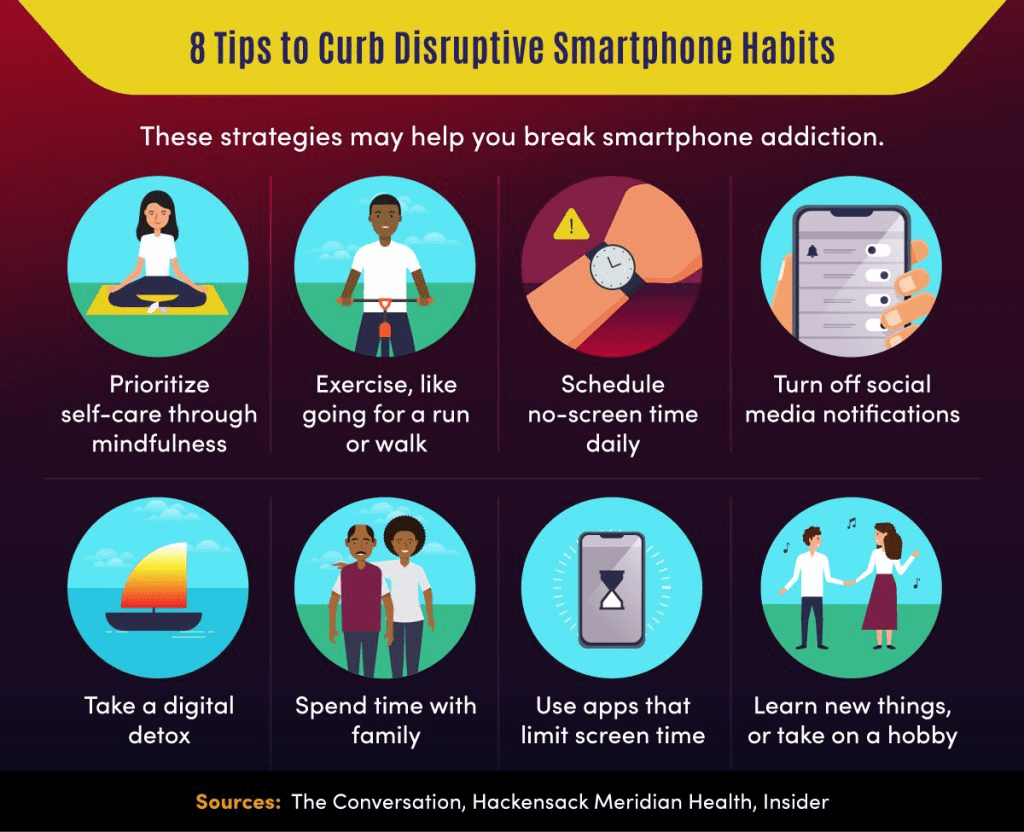
  • Use social media less frequently. Set a daily time limit. You can use apps to limit your screen time.
  • Check e-mail at designated times.
  • Track your app usage.
  • Find a home base for your phone so it isn’t always next to you.
  • Turn off notifications.
  • Begin a new behavior. Ex: instead of browsing on your phone, read a book.
  • Turn on do not disturb.
How to Be a Better Human- What we can learn from great salespeople (w/ Colin Coggins)

Everyone is either selling an idea, themselves, or a product or a service.

  • The greatest sellers on the planet create agency with the person they are speaking with so that they feel like they are part of the decision-making process.
  • Acknowledge what’s happening in real life. That’s what sales is about.
  • You want people to look for the good in you and believe in you. That doesn’t happen unless you can reciprocate that.
  • Realize that who people hope you are and who people expect you are are two different things. People hope you’re like them.
  • The next time you go into a meeting, spend three minutes thinking about three things that you could love about this person.
  • What you get paid to do and what you love doing aren’t always the same thing, but a lot of times there are areas in what you get paid to do that you do love – like the stuff you would do for free. Isolate what you love. See if you can delegate or avoid the things that you don’t love.
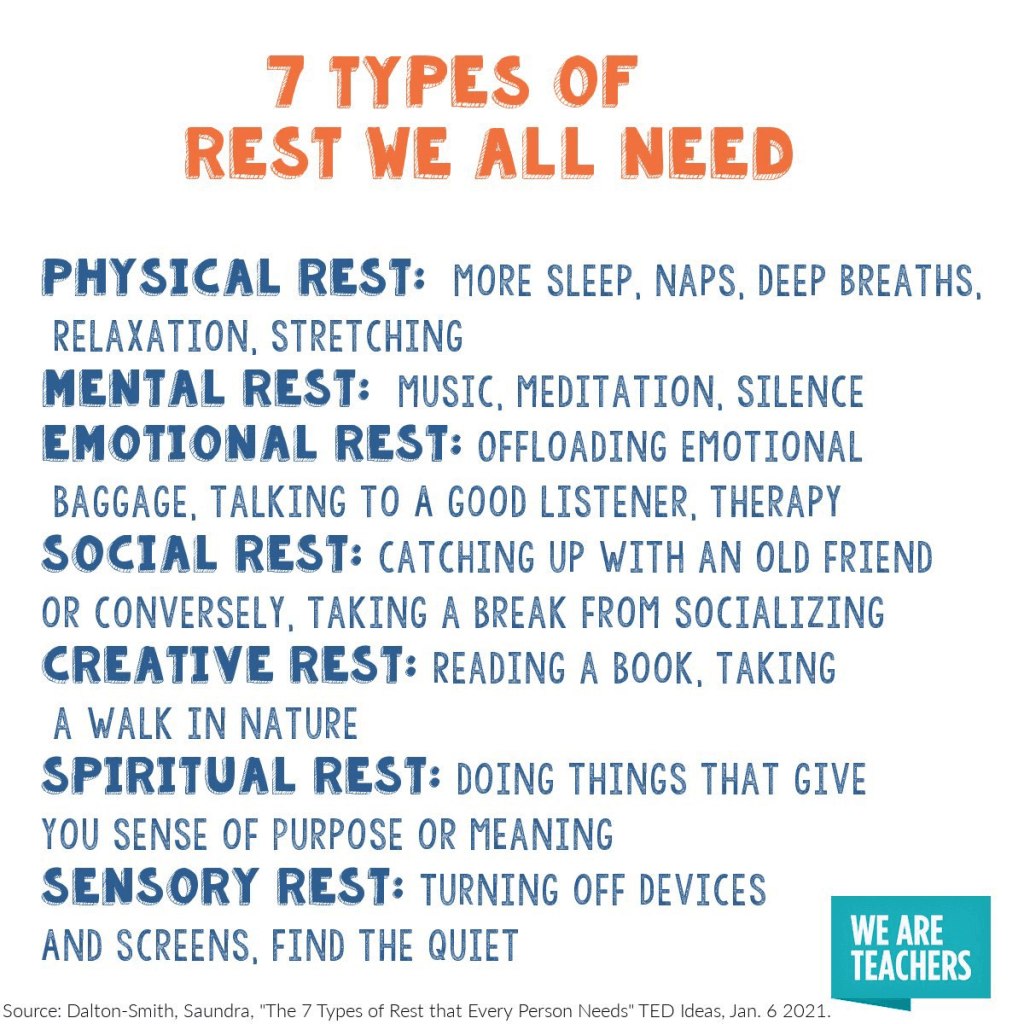
The Savvy Psychologist- 7 types of rest you’ve been missing

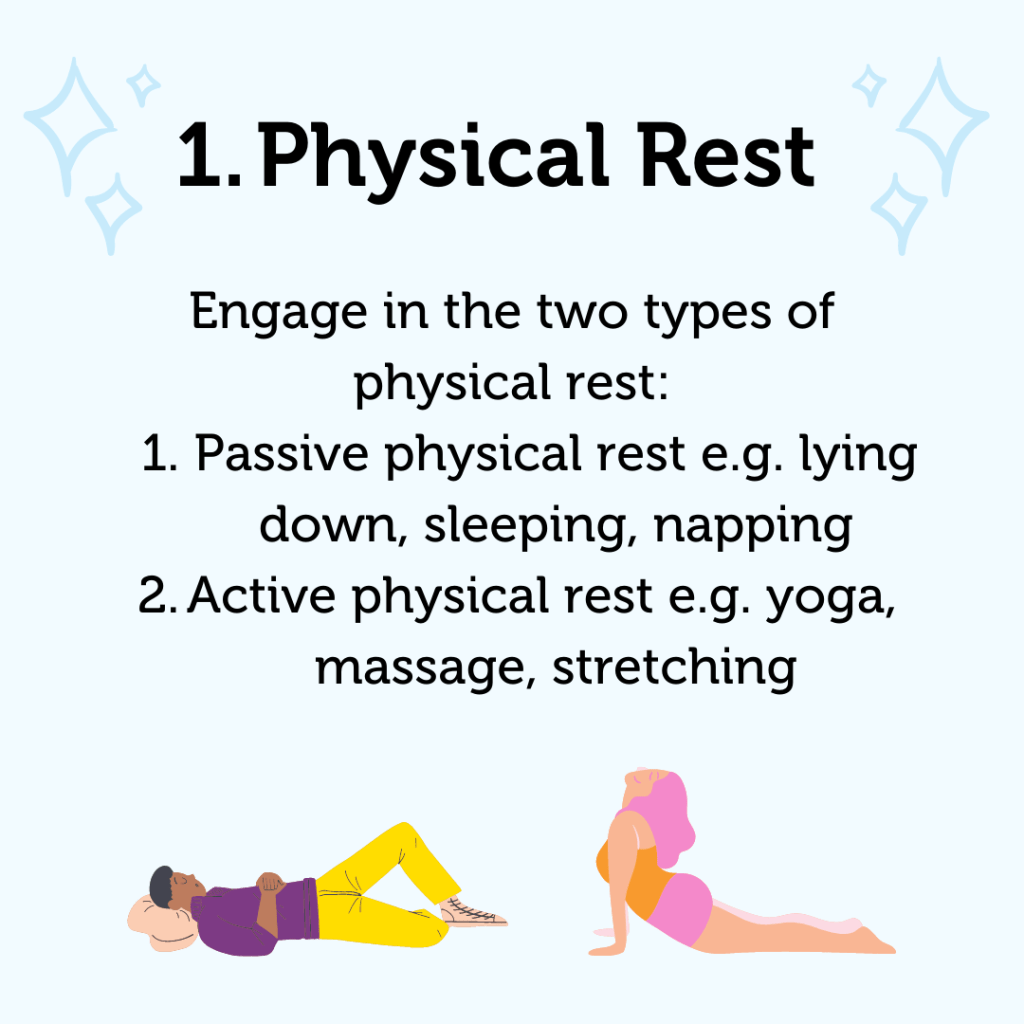
Physical rest (passive and active)– sleeping, napping, FOLLOW A SLEEP PROTOCOL/EVENING ROUTINE, stretching, yoga, breathing exercises, progressive muscle relaxation, hot baths, massages. Watch out for signs that you need physical rest, such as lacking energy to make it through the day, feeling tired but having difficulty falling asleep, reliance on substances to give you energy, and depending on substances to give you more rest.

Mental rest– mental fatigue can result from a variety of things, including negative self-talk, rumination, anxious what-if thinking, being stuck in the past, and judgments. Signs that you may need mental rest include irritability and decreased frustration tolerance, avoiding activities, feeling like you’re in a mental fog throughout the day, and feeling overwhelmed by daily tasks. One way to ease the mental load is through good time management skills. Take into account not only the amount of time a task takes, but the emotional load it takes as well. Another way to give yourself mental rest is through meditation.

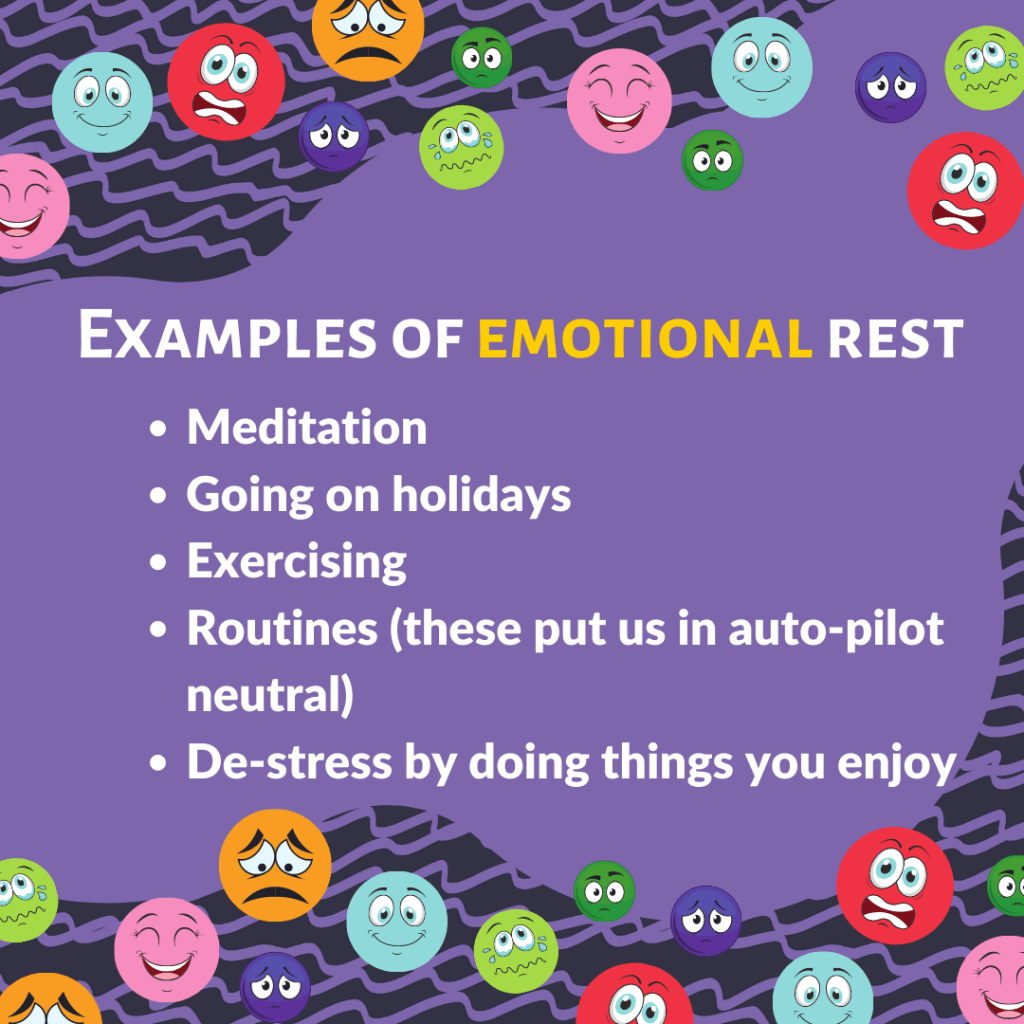
Emotional rest– where are you spending your emotional energy? Frustration, anxiety, inadequacy, sadness, annoyance, etc. Some signs you may be experiencing an emotional rest deficit include beating ourselves up for small mistakes, excessive worry or anxiety, feelings of self-doubt, and over apologizing. Be mindful of your environment and the things/people that drain you and restore you. Emotions are contagious. Modify your environments the best you can. Emotional awareness is key to identifying emotional drains and emotional restores. Reduce the amount of social comparisons that you do.

Spiritual rest– organized religious practices, connecting with something greater than yourself, prayer, feeling a sense of belonging by getting involved with your community, meditation, things that bring you a sense of purpose and make you feel connected

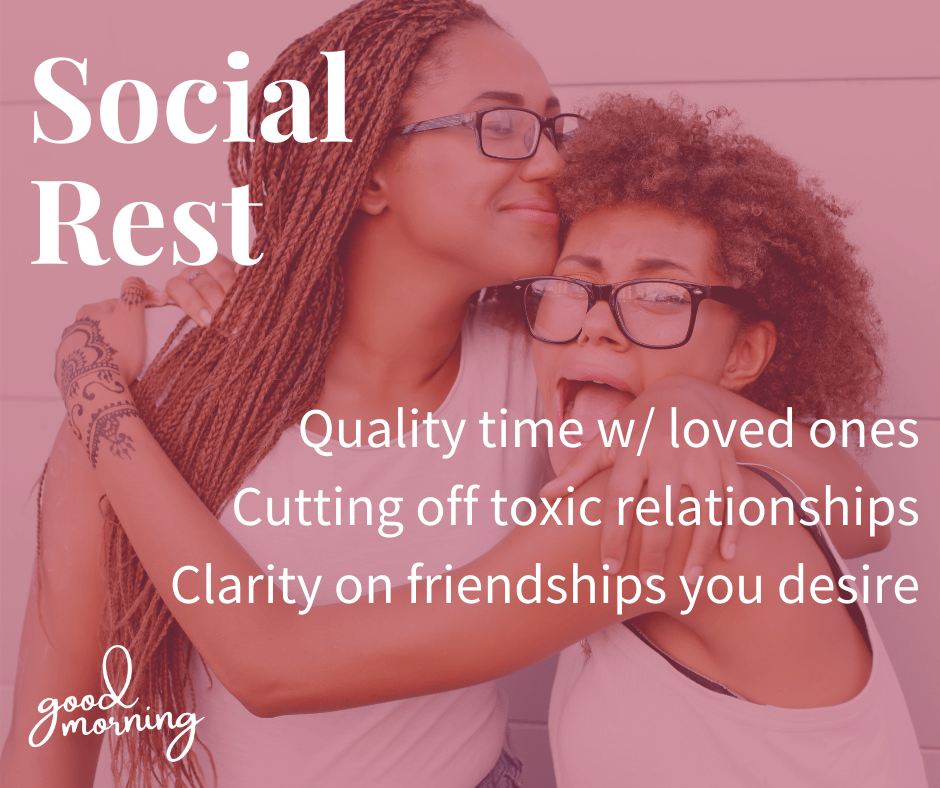
Social rest– A social rest deficit occurs when we fail to differentiate between relationships that restore us and relationships that drain us. It can also occur when we are engaging in too much or too little social interaction. Signs you have a social rest deficit include feeling alone, feeling detached, finding it hard to maintain close relationships, isolating from others, or finding that you are attracted to those that mistreat you. Identify your social needs. If you are introverted and have a customer-facing job, allow yourself alone time to recharge at the end of the day. Listen to your social needs and stop comparing yourself to others. Be present and show up in your social networks. This will aid in deepening relationships and feeling more connected. Find like-minded individuals who share some of your hobbies. Join a group.

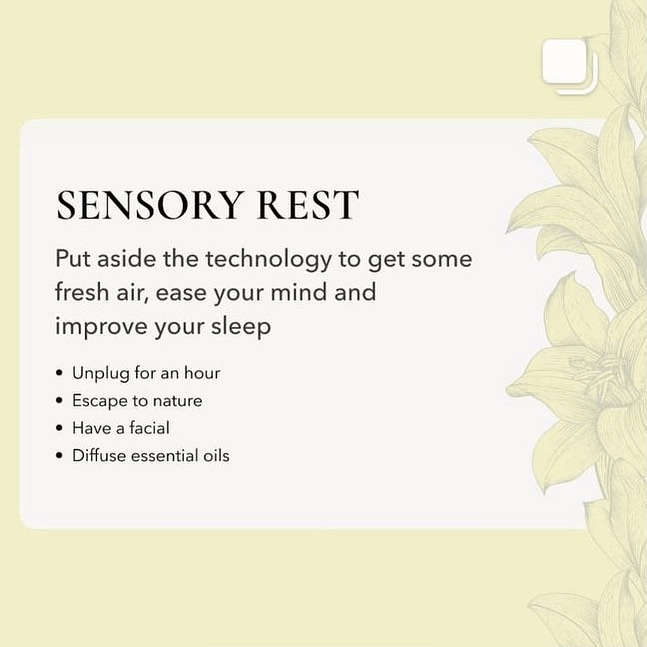
Sensory rest– giving your senses a break- overwhelming senses with constant stimuli. Spend some time away from your electronics. Read a physical book instead. Turn off the lights. Listen to your senses and give the ones that appear agitated a break.

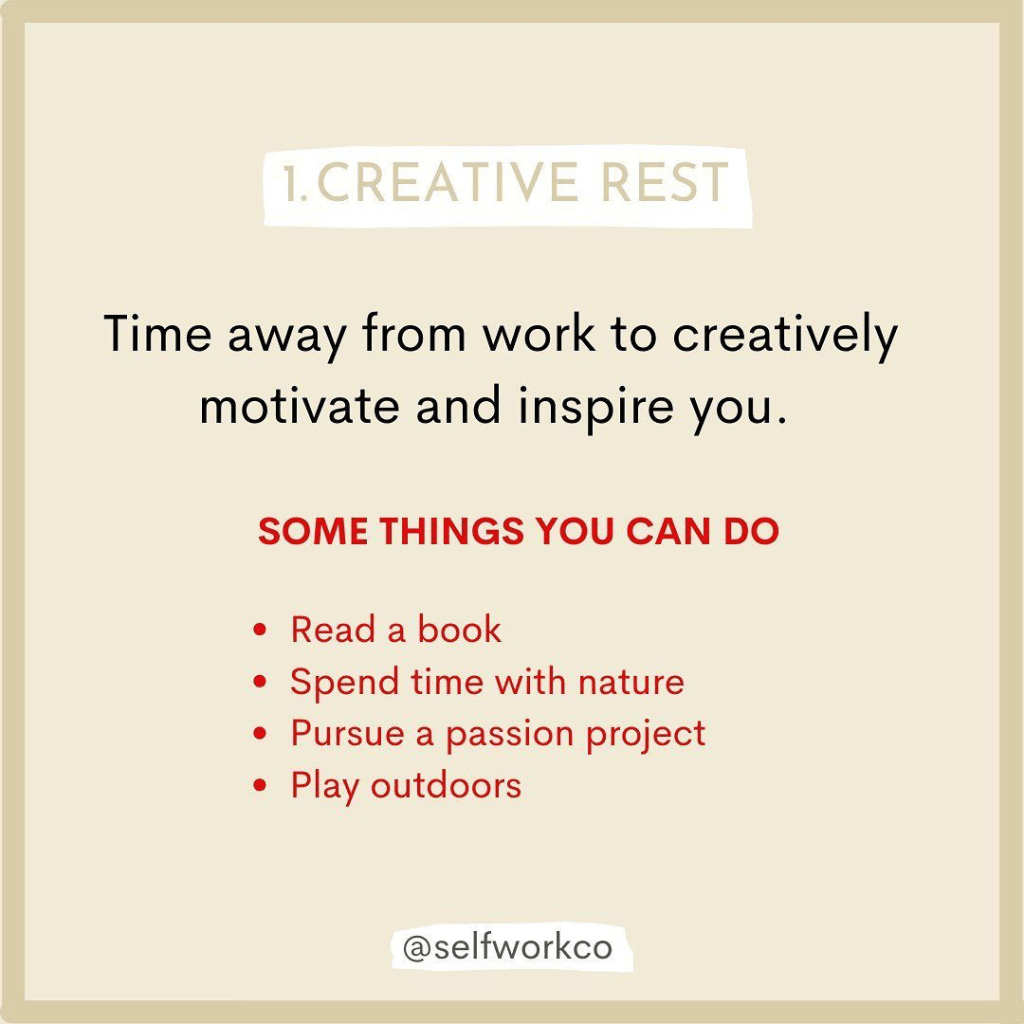
Creative rest– if you’ve ever felt like you’re out of good ideas, you’ve experienced being creatively drained. Creativity is about our ability to be innovative, think outside the box, or be inventive. People require creative rest when they feel stuck, uninspired, and unable to generate new ideas or solutions to problems. The key here is to remove the requirement to produce and get involved with activities that inspire you. Make time for the things you don’t normally make time for to refill your creative cup.

How I Built This with Guy Raz- Angie’s Boomchickapop: Angie & Dan Bastian

I was eager to learn more about Angie’s Boomchickapop, as their sweet and salty kettle corn is my favorite store-bought popcorn!! They also originated in my home state of Minnesota.

Beginnings:

  • Neither Dan nor Angie ever had a particular love for popcorn initially. They needed a way to earn extra money to save for their kids’ college funds, and popping and selling kettle corn seemed like a reasonable way to do it. In 2001, after Dan saw an internet ad for kettle corn equipment, he convinced Angie that they should go for it. They started in their garage in Mankato, Minnesota.
  • They bought a kit using a 0% interest credit card. The kit included a tent, outdoor kettle, and table and paid $8k or $10k. Of note, the kit did not have instructions!
  • Dan was working as a teacher and Angie was working as a nurse at the time.
  • Rainbow Foods was the first place that allowed them to sell it (in front of the door outside) in November 2001. They were limited because they had to pop outdoors due to propane with the kettle. They took 1 hour to set up, bagged using twist-tie bags, and sold $300 of kettle corn.
  • Their business was originally called Kettle Corn Café.
  • Coworkers and students were surprised to see them on the weekends with their kettle corn business.

Growth:

  • In 2002, they started to sell outside of the Minnesota Vikings training camp and gave some free popcorn to the players.
  • The players loved it, but Dan and Angie realized that they would need to pay for a sponsorship fee to be the Minnesota Vikings’ preferred popcorn! They paid an $8k sponsorship fee.
  • Dan quit his job in 2003 after 2 years in the business to focus on the popcorn business.
  • Lunds and Byerlys was interested but wanted them to get their act together for selling. They needed to find a facility, different packaging, etc.
  • They bought a small kitchen 6 months later and moved operation indoors, got the kitchen licensed, and launched 6 months later with a new brand name: Angie’s.
  • They found 2 retired teachers willing to help out and paid $8 an hour for BOTH of them.

Challenges:

  • During their first 7 years, they were buried further and further into debt.
  • They weren’t profitable at first. They used funds to buy a trailer, a heater, and other items. Everything seemed to go back into the business.
  • In 2008, they had to get a million-dollar loan to get a bigger facility to ramp up production. They had debt and didn’t really have collateral and were turned down for a loan by many banks. They had about 20 employees at the time.
  • They eventually found a partner who gave them a line of credit using personal guarantees (home, future earnings – everything but the mini van).

Expansion:

  • In 2008, after years of persistence, they got into Trader Joes after sending products to a contact. Trader Joes put in an order for 25 trucks ($500k worth) that would be distributed across the country to Trader Joes. Jon and Angie didn’t have enough money to buy the materials for this order, so they ordered a new credit card with a $100k line of credit and requested an immediate wire transfer!
  • Due to popularity, Trader Joes came back with another order of 25 truckloads. The business needed to scale up quickly and hire more people.
  • In 2009, revenue was $3-$4 million.
  • In 2011, outside investment firm, Sherbrooke Capital, made an offer and acquired a majority stake in Angie’s.
  • In 2011, Angie’s was in the natural and organic snack section in Costco, Target, and regional grocery chains and was doing very well. Angie’s started with kettle corn but wanted to expand through providing different flavors, messaging, and branding.
  • Dan’s cell phone was on every package because that was the business phone and he received several phone calls at all hours asking if the product is gluten-free. So they decided to get certified gluten-free.
  • Also in 2011, they went to a branding agency to come up with a new name. Boomchickapop, the new name, launched in 2012. It was the first non-GMO branded popcorn on the market. The yellow bags of sea salt popcorn were the #1 selling SKU in four months – after 9 years of business.

$$$:

  • In 2014, TPG Growth, a private equity firm, bought out Sherbrooke. Boomchickapop equity shares became liquid to staff. They distributed millions of dollars! Between 2014 and 2017, Dan and Angie sold a big share of their ownership to TPG Growth.
  • In 2017, 16 years after the business started, ConAgra bought out Boomchickapop for $250 million! When ConAgra bought the company in 2017, they also acquired the old kettle originally bought in 2001.
  • They never imagined they would make it that far with their initial investment.

I look forward to reading, learning, and sharing more with you soon!
Book review posts, Uncategorized

The 7 Habits of Highly Effective People

“The 7 Habits of Highly Effective People” is a very interesting and educational book written by Stephen R. Covey. I highly recommend this book and am certain everyone can get something out of this book.

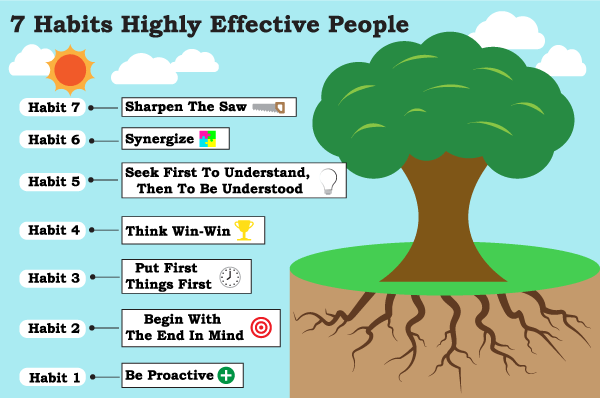
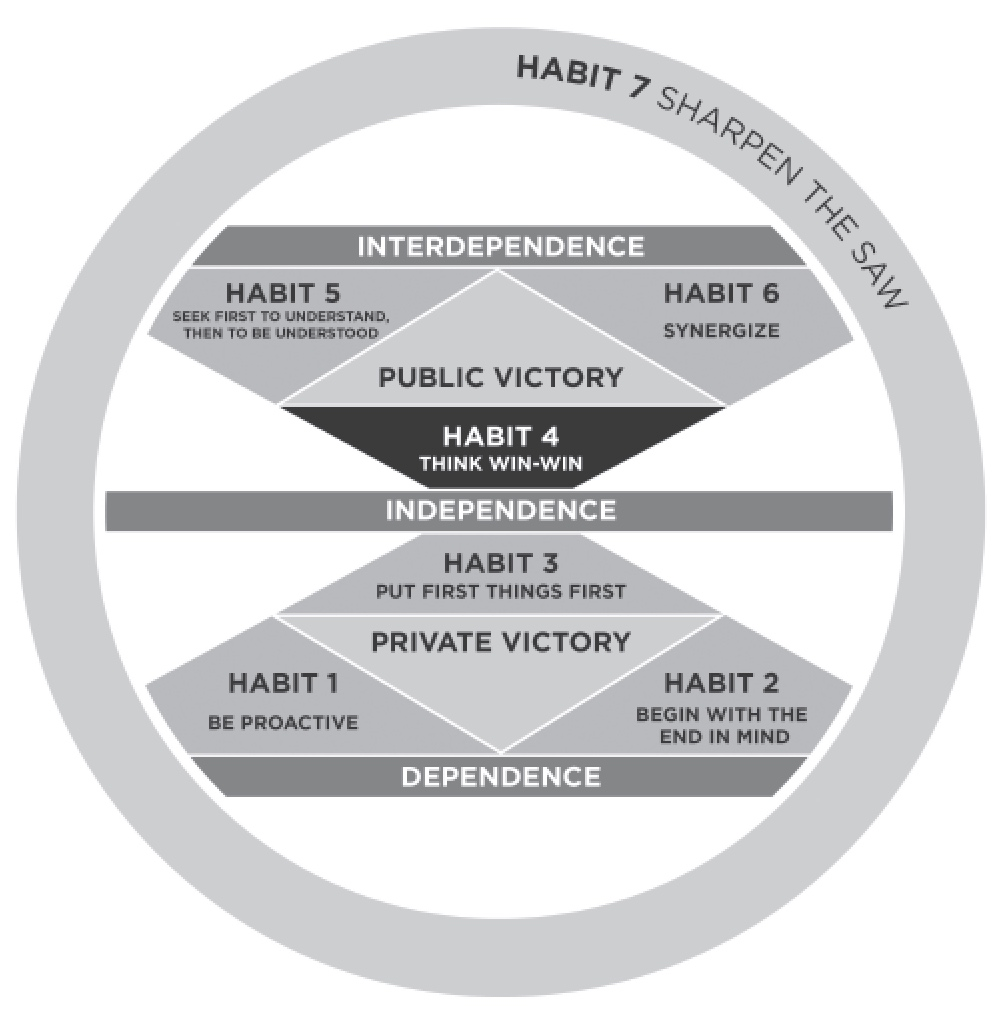
Habit 1: Be Proactive

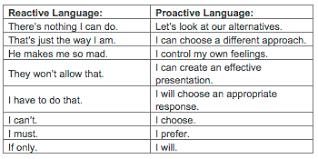
How often do you use and hear reactive phrases such as “If only,” “I can’t,” or “I have to?”

Use your R & I! Use your resourcefulness and initiative when problems arise!

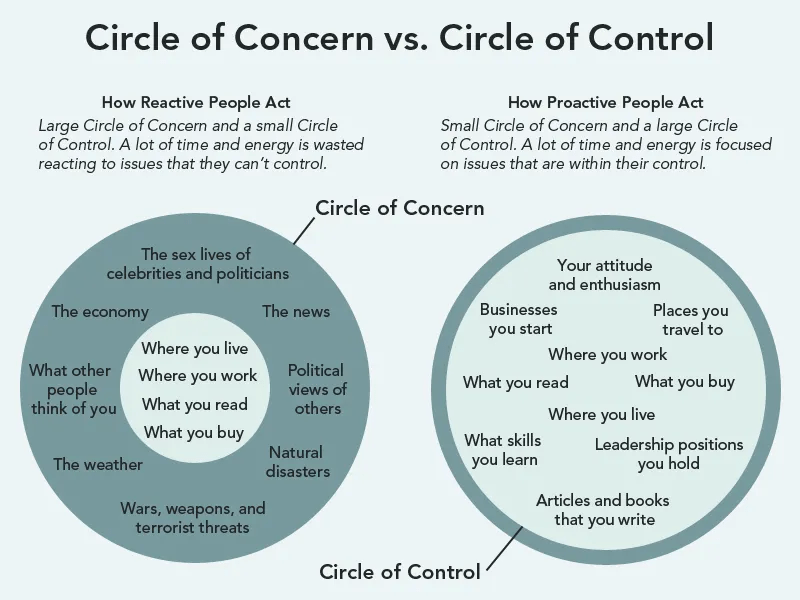
Problems = direct control vs. indirect control vs. no control

  • Direct control problems are solved by working on our habits.
  • Indirect control problems are solved by changing our methods of influence.
  • No control problems involve taking the responsibility to change the line on the bottom of our face — to smile, to genuinely and peacefully acccept these problems and learn to live with them.

Between stimulus and response, man has the freedom to choose.

Viktor Frankl

Habit 2: Begin with the end in mind.

Picture your funeral. What would your family, friends, coworkers, and church members or community say about you? What character would you like them to have seen in you? What contributions or achievements would you want them to remember? What difference would you like to have made in their lives?

Habit 3: Put first things first.

The cause of almost all relationship difficulties is rooted in conflicting or ambiguous expectations around roles and goals. Many expectations are implicit. They haven’t been explicitly stated or announced. It is important to state expectations.

Many people refuse to delegate to other people because they feel it takes too much time and effort and they could do the job better themselves. Transferring responsibility to other skilled and trained people enables you to give your energies to other high-leverage activities. Delegation means growth, both for individuals and for organizations.

You can’t think efficiency with people. You think effectiveness with people and efficiency with things.

Stephen R. Covey

Habit 4: Think win-win.

Win/win = a frame of mind and heart that constantly seeks mutual benefit in all interactions. Seek to understand, identify the key issues and concerns, determine what results would constitute a fully acceptable solution, and identify possible new options and achieve those results.

Habit 5: Seek first to understand, then to be understood.

Seek first to understand, then to be understood. Most people listen with the intent to reply.

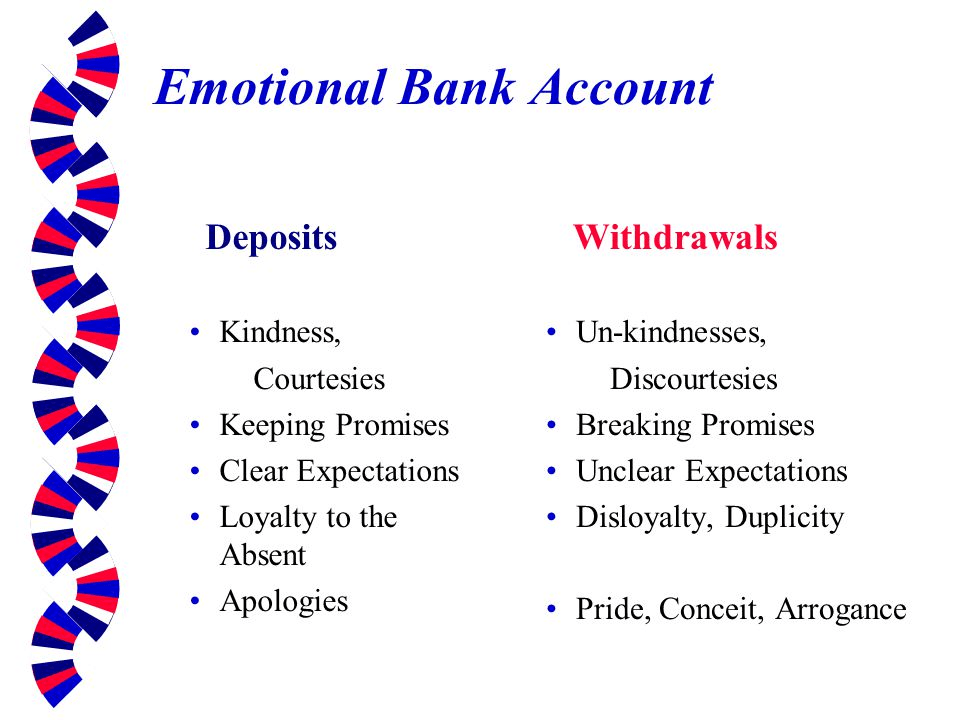
Continuous deposits are needed. 6 major deposits: understanding the individual, attending to the little things, keeping commitments, clarifying expectations, showing personal integrity, apologizing sincerely when you make a withdrawal.

Habit 6: Synergize.

As a principle-centered person, you try to stand apart from the emotion of the situation and from other factors that would act on you and evaluate the options. Looking at the needs that may be involved and the possible implications of various alternative decisions, you’ll try to come up with the best solution, taking all factors into consideration.

The person who doesn’t read is no better off than the person who can’t read.

Stephen R. Covey

Management is doing things right. Leadership is doing the right things.

Stephen R. Covey

Habit 7: Sharpen the saw.

Life life in crescendo. The most important work you will ever do is always ahead of you. Regardless of what you have or haven’t accomplished, you have important contributions to make.

What one thing could you do that, if you did it on a regular basis, would make a tremendous positive difference in your personal life? What one thing in your business or professional life would bring similar results?

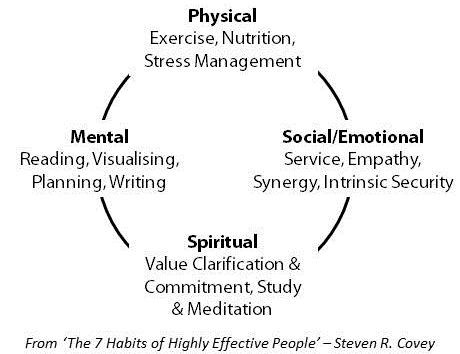
4 dimensions of renewal

Daily Private Victory- Spend a minimum of one hour a day in renewal of the physical, spiritual, and mental dimensions. This is the key to developing the 7 habits.

I highly recommend this book!

I look forward to reading, learning, and sharing more with you soon!

Thoughtful Thursday posts, Uncategorized

Thoughtful Thursday – June 1, 2023

My intention is to post a Thoughtful Thursday column each week and share some of the insights I have learned in the past week. Here are some of the things I’ve learned this week:

One of the best things I’ve heard this week is from this podcast.

Optimal Relationships Daily- If You Want to Know if Someone is Worth Your Time, Use the Ted Lasso Rule

If you want a quick way to determine if someone is worth your time, are they curious? Do they ask your questions? If not, are they worth even getting to know?

Many people skip the small talk in favor of talking about themselves.  They’re the ones missing out because they’re not being curious. Curiosity has been buried by ego.

Optimal Health Daily- Self-Care Ideas for Better Health and Nutrition by Danielle Omar
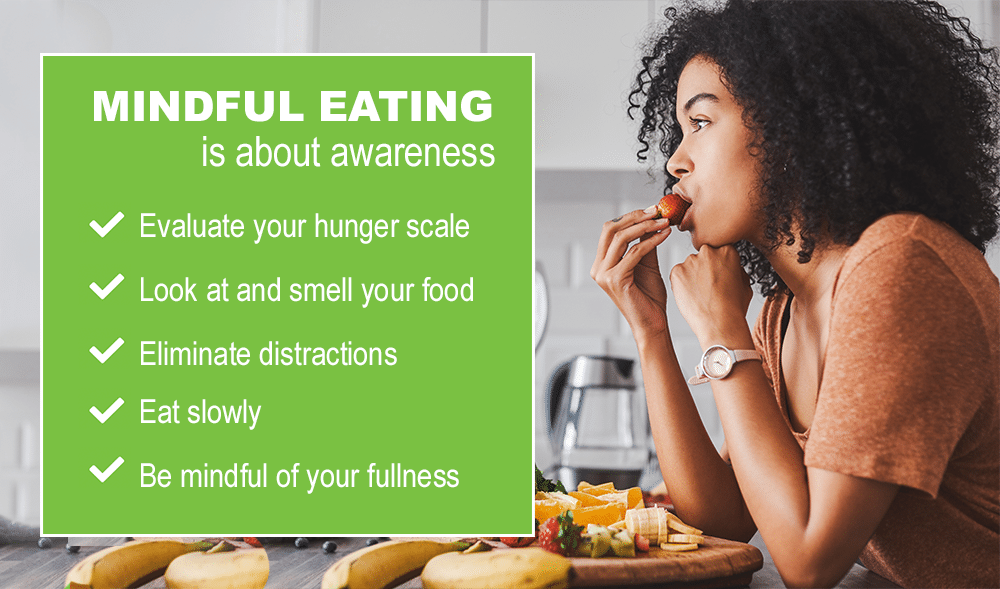
  • Thoroughly chew your food to improve digestion, engage the senses, and reduce energy intake.
  • Assess hunger and fullness to determine when it’s best for you to start and stop eating.
  • Reduce portion sizes and use smaller dishes to prevent overeating.
  • Eliminate distractions at mealtimes to better control food intake and focus on how food makes you feel.
  • Appreciate the food you’re eating without judgment and savor its appearance, smell, taste, and texture.
  • Eat foods that make you feel good.
  • Plan and prep your meals.
  • Satisfy your sweet tooth.

I gathered some dental insights from these two podcasts:

Science Vs – The Dentist: Toss the Floss? Flush the Brush?
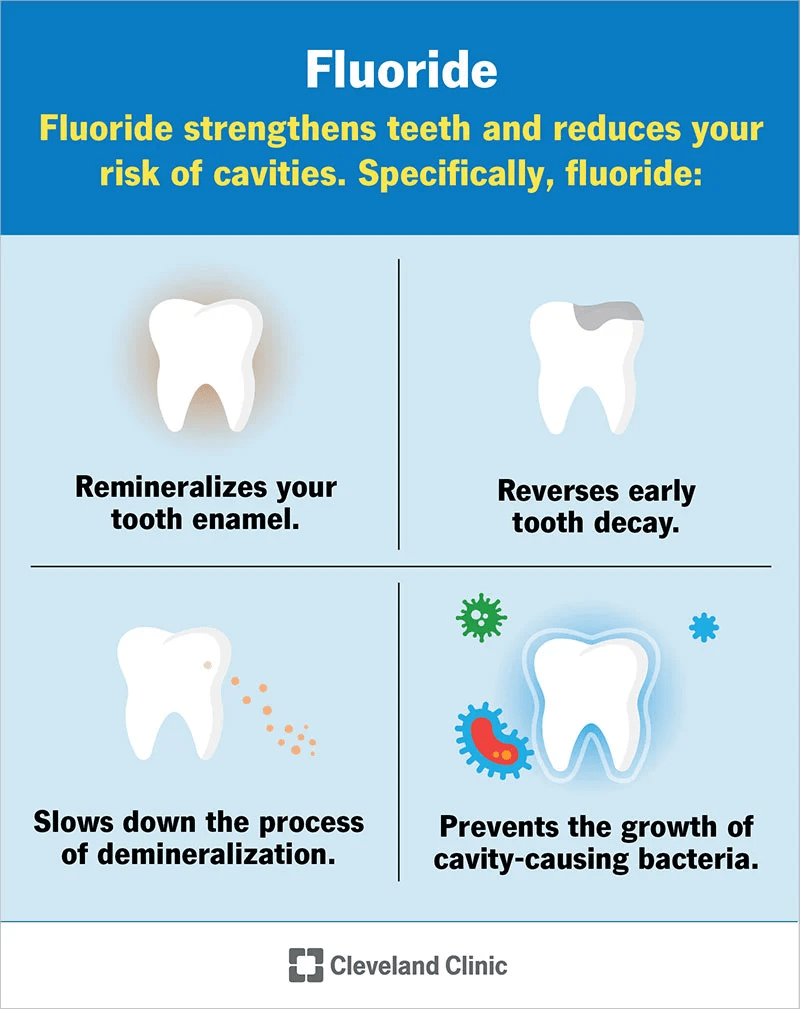
  • Oral hygiene alone did not prevent cavities in studies done. Fluoride was the main component in preventing cavities.
  • Brushing with fluoridated toothpaste helps prevent cavities. Brushing might also prevent gingivitis and gum disease. Flossing may help with tooth loss as you get older. Sugar is bad for teeth. Some dentists are shysters.
Life Kit- ‘Do I really need to floss?’ and other common questions about dental care
  • Finding a dentist is more than just picking from a list. Every procedure that a dental hygienist does is proactive in helping to prevent inflammation and reduce inflammation. A dentist is going to restore or be reactive to disease. A dental assistant assists the dentist.
  • To evaluate if a hygienist is a good fit for you, see how receptive they are to answering your questions. For example, ask about proper brushing techniques. Have the hygienists observe what you do and see what feedback you get. Overall, you want to make sure that the practice is for you, not a random cash grab.
  • Red flags- offices that do a lot of aggressive advertising, free x-rays, free exams, and free goodies to lure you in. Once you are in the chair, those dentists know you are more likely to say yes to extra procedures.
  • Get specific about your fears and then you can talk about them with your dental team. A good practitioner is going to be a great educator and help ease those fears. Is it going to hurt? Is it going to cost a lot? Is my face going to feel numb?
  • Find someone you feel comfortable with who doesn’t shame you.

Saving money:

  • Dental schools are a great option if you are looking to save money. You get the benefit of getting many different opinions and great advice. If you have the time to do it, visits to a dental school may be less expensive, but will take more time. Appointments can take up to 4 hours instead of 1 hour due to many people checking you out and the training involved.
  • Can look for sliding scale or mobile dental clinics

Frequency and technique:

  • Most healthy patients should come in 2x/year. Some patients may only need to come in once a year.
  • Clean teeth are all about technique.  Use a soft, high-quality toothbrush (if manual, switch out every 4-6 weeks), non-nylon floss, tongue scraper, and low abrasive toothpaste.
  • Teeth whitening- health and aesthetics are not the same thing! White teeth are a status symbol, but not necessarily a marker of health. Teeth aren’t naturally white as snow; there is a slight yellow white hue of your teeth due to dentin, an inner layer of the tooth under enamel. So if a dentist is immediately bringing up whitening procedures without any evaluation of cavities, gum disease, or other issues, be wary.
  • Charcoal and whitening toothpastes are so abrasive that they can make your teeth super sensitive and potentially wear down your teeth. They are removing stains,but are not actually changing the color of your teeth.
Life Kit- Why the 5-minute walk break is so powerful
  • People who sit for hours on end develop chronic diseases, including diabetes, heart disease, dementia, and cancer at much higher rates than those who move throughout the day.
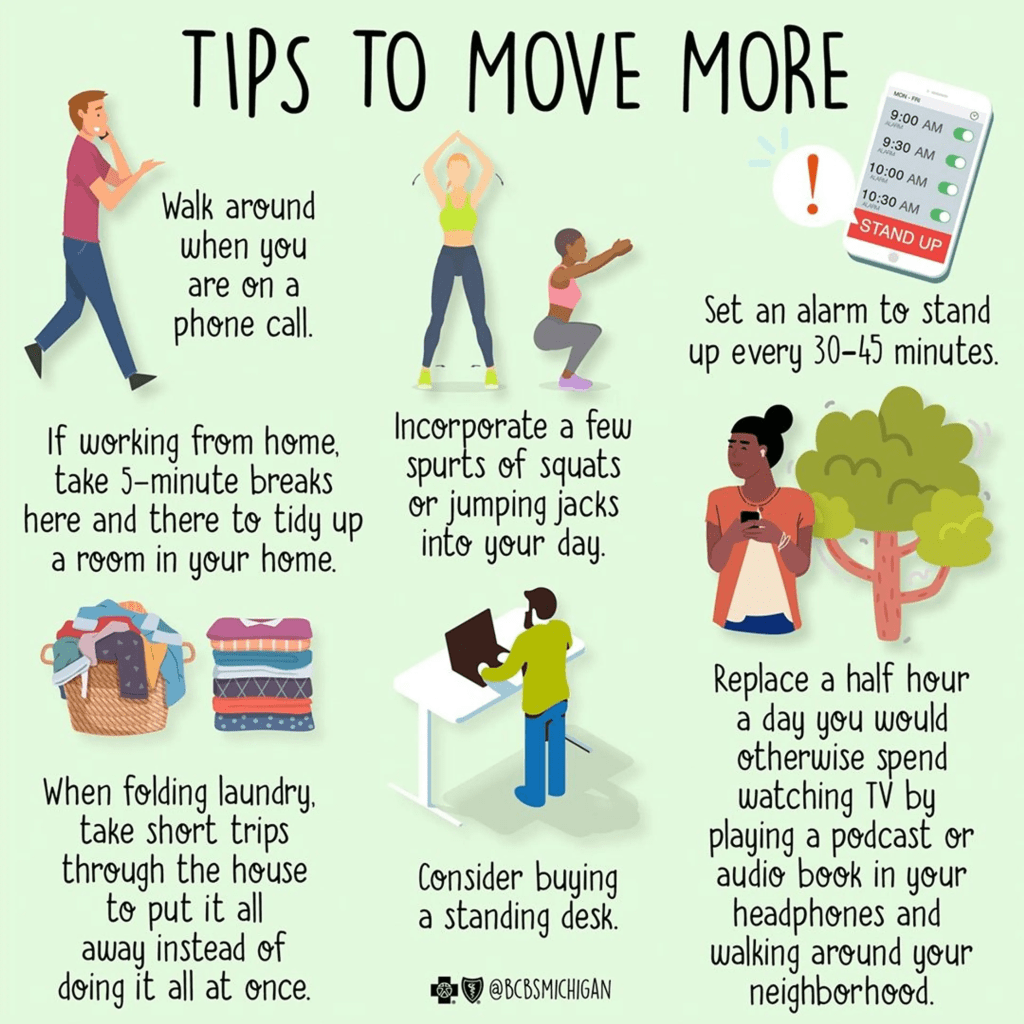
  • Taking a 1-2 minute walk once per hour lowers blood pressure. A 5-minute walk every half hour was able to offset a lot of the harms from sitting. Moving 5 minutes every hour resulted in the blood sugar spike after a meal being reduced by almost 60%. This may not be feasible with most office jobs, as you are losing 10 minutes of productivity each hour.
  • People are advised to get 150 minutes of moderate intensity physical activity each week (getting your heart rate up). You can break this up into 30 minutes a day 5 days a week, but small chunks of fast walking can count as well.
  • You will gain energy by moving every half hour or hour.
  • The whole point is to raise your heart rate—walking, dancing, etc.
Self Care IRL- Habits you have that you need to break TODAY!
  • Emotional eating– eating snacks and junk when you’re happy, sad, stressed, bored, etc. Be intentional with your eating and drink more water. Sometimes you think you’re hungry but you’re just thirsty.
  • Sitting for too long at one time– try to schedule a little break at the top of each hour to get up and move, use a sit-stand desk, etc. Boosts metabolism, reduces stress, and can create a more productive day
  • Hitting the snooze on your alarm clock. Go to sleep earlier than usual if you feel you’re not getting enough sleep each night.
  • Stop spending hours on social media. Daily social media users spend, on average, 2.5 hours on social media (including TikTok). It’s not always being used to relax or escape; it’s being used to procrastinate. Many people use social media to waste time. Limit your time on social media to 1 hour/day. You can use apps to monitor your social media intake. Instead of resorting to scrolling on social media with every spare moment, try reading, learning something from a podcast, moving around, or tackling something on your to-do list.
  • Working overtime. You give up family time, me time, and sleep time, and your physical and mental health starts to decline. If you don’t NEED the money, set time boundaries with your work.
  • These habits are draining our energy and preventing us from reaching our true potential.

I am guilty of most of these! I am focusing on being more intentional with breaking or limiting these habits this month.

Self Improvement Daily- Mistaking Happiness for Pleasure

We are designed to seek immediate gratification. Our unconscious pattern is to do things that make us feel good in the moment, which often conflicts with what makes us feel good later.

Sometimes we overindulge in a meal because we enjoy the taste of delicious food, but we end up feeling sick to our stomach later. Sometimes we scroll on social media when we are bored or procrastinating, and we later regret how we used our time.

You can feel happiness and pleasure in a moment, but pleasure is concerned with the present moment and happiness is concerned with your core values, growth, development, and well-being.

If you can be more discerning between the two, happiness and pleasure, pursue happiness. It will lead to a much more enriching life where you feel good about who you are and how you’re filling your life with genuine joy.

I look forward to reading, learning, and sharing more with you soon!
Thoughtful Thursday posts, Uncategorized

Thoughtful Thursday- May 25, 2023

My intention is to post a Thoughtful Thursday column each week and share some of the insights I have learned in the past week. Here are some of the things I’ve learned this week:

Self Improvement Daily- When You Are Your Own Friend

Let’s say you had a miscommunication, let someone down, and got defensive about it, or you got into a big fight with a family member. In your own head, you may get really critical and get upset that you didn’t have more emotional control. You tell yourself you’re an awful person.

Now look at the example from a different angle. Instead of you being the person involved in the fight that made a few mistakes, you’re a good friend of that person. After they tell you about the event and the circumstances around it, what would you say to them? You likely wouldn’t tell them how awful of a person they are. You would likely be supportive and encouraging. You’d highlight their best qualities and understand that this was an isolated incident.

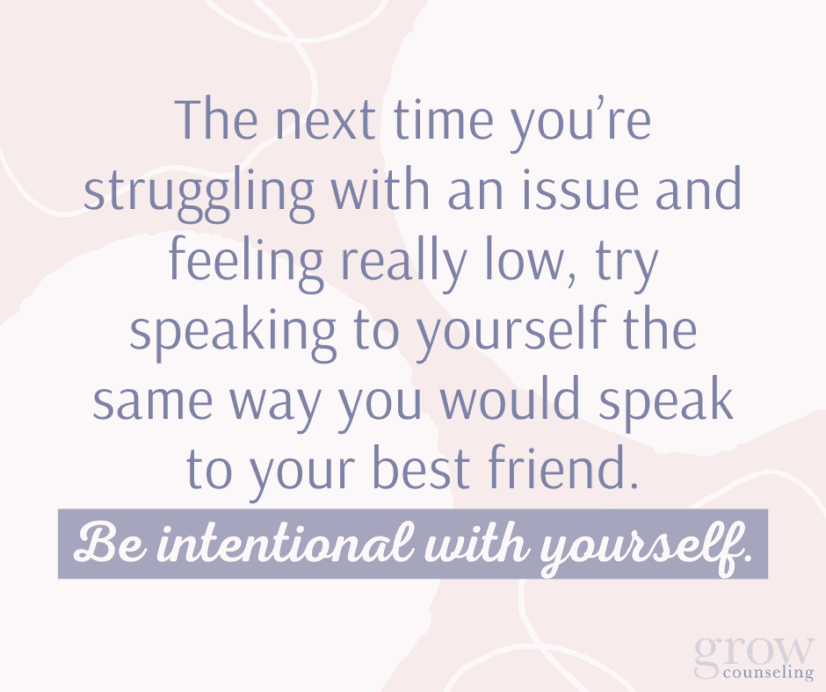
This isn’t about a lack of taking responsibility for our actions. The point is that we are so quick to find the goodness and humanity in others and the flaws within ourselvesSo the next time you catch yourself criticizing or going through self-deprecating thoughts, ask yourself this question – “What would I tell myself if I were my own friend?”

Self Care IRL- The 8 small steps you need to start your self-improvement journey
  1. Do not change everything at once. Start with 1-3 small goals you can easily achieve. Ex: one healthy meal each day, walk 20 minutes every day, etc. You can increase and expand on your habits after a while. Progress is more important than perfection. Perfection does not exist.
  2. Make a plan of action and actually stick to it. Staying focused and motivated requires discipline. Discipline requires planning. Take action every day, even if it’s just a small step.
  3. Habit stacking. Ex: journal while drinking coffee. Listen to a podcast or watch tv while on the treadmill. Read while riding public transportation to work.
  4. Celebrate your wins—both big and small. Every step forward is success. Share your wins with friends to add accountability.
  5. Don’t be too hard on yourself. Everyone makes mistakes. You are bound to have setbacks along the way. Learn from your mistakes and keep going. Be patient with yourself. Progress takes time. Forgiving yourself is the ultimate flex in life. Practicing self-compassion is vital if you want to improve yourself.
  6. Find your support system. It is crucial if you have goals in sight. Whether you need hands-on support or emotional support, knowing that someone is there to lift you up will be incredibly helpful for encouragement and accountability. The podcast host mentioned getting together with a group of people weekly or monthly on a Wednesday to discuss “Wednesday wins”–“wins” each person has had in the past week or month. Lift each other up and encourage each other.
  7. Set goals for yourself. Document how soon you want to achieve it to determine a plan and how hard you need to work. Don’t feel overly committed to that number. Plans can change. Set weekly or monthly goals to track your progress just to see how far you have come.
  8. Be patient and keep working toward your goals, even when things get tough. You will have setbacks.
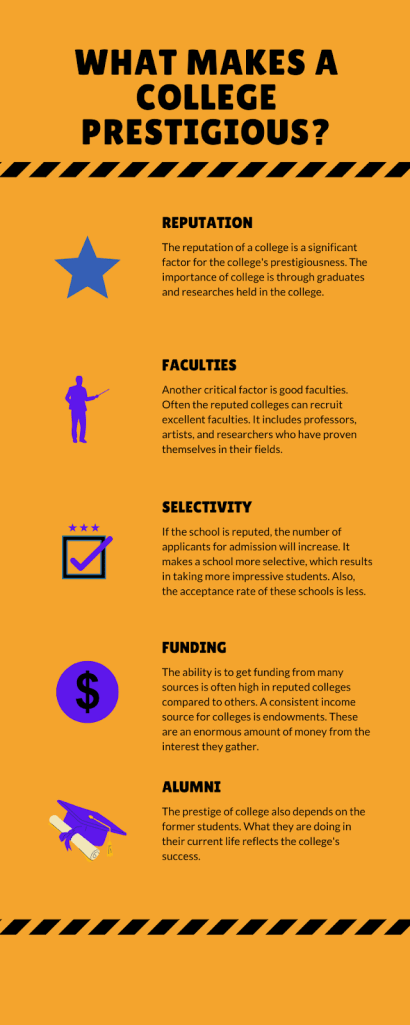
TED Talks Daily- What makes a “good college” — and why it matters – Cecilia M. Orphan
  • We say we want colleges to be more equitable and more accessible. We tend to obsess over a tiny group of colleges most of us could never get into. It’s not because we aren’t smart enough. It’s because there isn’t enough space for all of us. They intentionally cap the number of students that they accept.
  • Instead of calling them prestigious universities, some people refer to them as “highly rejective colleges” – Harvard, Stanford, Yale, Princeton, MIT, etc. These are all major research institutions.
  • Regional public universities (RPUs) are the exact opposite of highly rejective colleges.  They pride themselves in accepting almost everyone who applies — students are more likely to be first-generation college students, students of color, low-income students, veterans, and adults balancing work and family while going to school. RPU students often don’t have the test scores required to get into a highly rejective college. It’s not that they aren’t capable; it’s because they weren’t given the same advantages as other students. RPUs change more lives than prestigious universities by allowing more students access to education.
  • People sometimes criticize RPUs and refer to them as “the 13th grade,” “not real,” or “almost anyone can get in.”
  • The colleges that already have the largest endowments tend to receive the most charitable donations. Imagine if these donations were spread across the many RPUs in the country.
  • In the U.S. and throughout the world, far more public funding goes to highly rejective colleges than to regional public universities, causing RPUs to become more expensive, which hurts low-income students and causes student loan debt to skyrocket.
  • If we really want more low-income students to go to college and equity in higher education, we need to fund regional public universities. Instead of giving to your highly rejective alma mater, consider giving to universities that really need it.
  • Last year, billionaire philanthropist Mckenzie Scott gave $1.5 billion to 73 different colleges and universities that serve low-income students and students of color.
  • There is no better way to make a difference in higher education than to give to the colleges that change the lives of their students and communities. This isn’t all about money. We all have the power to change the way we think about and talk about regional public universities or stop people when they frame them in negative ways.
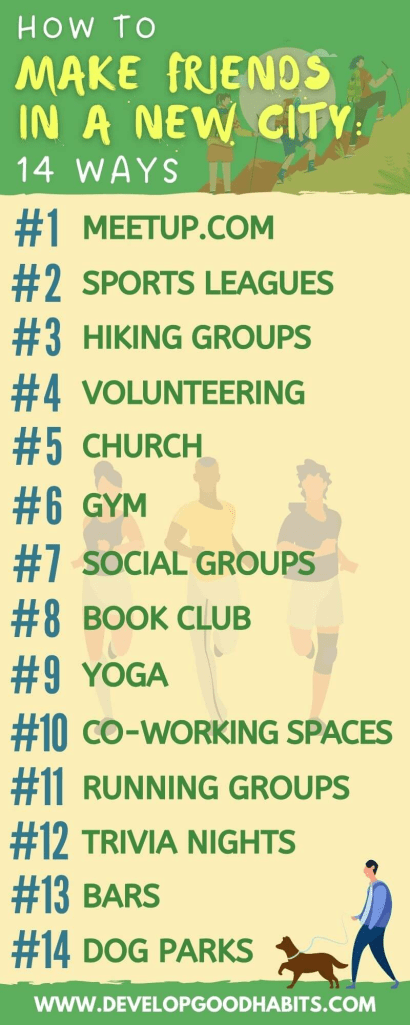
Life Kit- Making friends anywhere you move
  • Be active and intentional about making connections. Alert your network. Post on your socials and ask for introductions. Tell your coworkers, especially if you have a remote job. Communicate what kind of connection you’re looking for – someone to show you around, another couple with school-age kids, etc. We tend to think that it’s going to be so awkward to reach out to people who we aren’t in touch with anymore. You just have to own it.
  • Reconnect with old friends. You might end up better friends with them than before. Acknowledge the gap in time and that you haven’t been the best at keeping in touch. Propose specific plans for catching up. Follow up after meeting in person.
  • Incorporate more routine into your day. Ex: coffee shops. With routine, you are seeing the same faces and it becomes less intimidating to talk to them. You can incorporate any activity, community, or place you love. No matter where you live, you can develop that sense of home. Find a place for yourself that isn’t work and isn’t home: book club, soccer club, etc.
  • Find online groups, event listings, and meetups. Now is your chance to engage in an activity you’ve been thinking about. Ex: book clubs. You don’t have to know anyone there, but you can connect with others about the same book you’ve read. You meet regularly. Commit to showing up more than once. It changes the way you engage with people who are there. Stop trying to form a relationship with the collective and focus on forming relationships with the singular. It can be less intimidating to focus on individual members first.
  • When getting to know people, focus on the connection, not the relationship. Being honest about yourself is key to adult relationships. Get comfortable with the things that make you different and the interests that you have. If you are introverted, only say “yes” to the activities that you know will bring you joy. Focus your energy on one-on-one interactions. Making new friends takes effort, especially when you barely know anyone around you.
  • Take-aways: be open and intentional about making new friends. Tell your network that you’re moving or looking to meet people. Reconnect with old friends and acknowledge the passing of time. Make clear plans to meet. Build your own routines and find places you feel at ease. Go to group gatherings. For recurring groups, commit to going at least three times. Friendships start with one-on-one relationships. Remember that all of this takes time.

When I first moved to my city, I didn’t have any friends in the area aside from former coworkers. I am grateful to have met several girls in an online Facebook group for girls making friends. Through this group, I have joined a book club, hiking groups, and made many quality friends who share similar interests.

Optimal Finance Daily- Understanding the Seven Habits of Wealth by Rob Berger
  1. Hard work– achieving financial security is often the result of consistent diligence.
  2. Modest living– modest living can produce great wealth on a modest income.
  3. Patience– produces thoughtful, long-term decisions that can produce wealth while minimizing risk.  Patiently waiting for the right time to buy a stock or company
  4. Perseverance– working through challenges. Perseverance keeps us focused on our goals and enables us to confront all challenges.
  5. Balance– healthy balance of stocks, bonds, or other investments
  6. Self-awareness– brings into focus the motivations behind the daily decisions we make. Allows us to understand what motivates us to spend money, what investments are best for us given our tolerance for risk, and what will produce contentment in our lives.
  7. Learning– enables us to improve our careers, investments, and spending, as well as other areas of our lives

“What we are and what we have is a result of what we repeatedly do.” Wealth then, is not the result of an act, but the result of our habits.

How to Be a Better Human- How to set boundaries and find peace (w/ Nedra Glover Tawwab)
  • We want kids to be assertive, but we don’t teach them how to be assertive with us.
  • Pay attention to the things you complain most about. This will tell you where you need to set boundaries.
  • Many people right now are having boundary issues around being overwhelmed and overcommitting themselves. You can say no to things! People found pleasure during the pandemic by not having to attend social obligations. You don’t need to do those things if you don’t want to.  Place value on the relationships that are important.

  • Trying to do everything on your own/not asking for help- there are times when we don’t have the skillset, time, or mental capacity to do it all. We need to seek help. It can be hard to be vulnerable and ask for help.
  • Codependency- thinking “if I did this, this person would suffer this consequence because of my lack of support for their issue.” Stop thinking like this!
  • Set boundaries, find peace!

I posted an extensive blog post about this book recently. Check it out here:

Main Accounts: The Story of MySpace- Welcome to MySpace

Popularity:

  • MySpace used to be the most popular website in America. It launched in August 2003. The creators, Tom Anderson and Chris Dewolfe, took inspiration from sites like Friendster and Asian Avenue. There were only 100,000 users in October 2003, but, the following year, after picking up dissatisfied Friendster users, the site exploded to 5 million users! MySpace peaked in 2008 with over 100 million users. At the height of its popularity, 250,000 people were signing up for new accounts every day. Most of the users were young – in their teens and twenties. It was at the center of their social lives.
  • In 2005, MySpace was seeing 16 million visitors per month and was the biggest social network in the world. It was sold to News Corporation, and Intermix negotiated the deal. This was done without the knowledge of the founders of MySpace. Chris and Tom were each paid $30 million. They left the company in 2009, and News Corporation brought in a new CEO and its own people.
  • When MySpace launched, social media was an unknown quantity. People had no idea how to make money off of social networks or even if they could make money off of it. The consequences of social media had yet to be seen.

Origins:

  • Tom Anderson had founded the company with Chris Dewolfe. Before MySpace, Tom had worked for Chris as a copywriter and product tester at another startup. Tom was a musician, went to film school, and dabbled in the hacker community as a teenager. MySpace does not have the typical Silicon Valley origin story.
  •  While at Euniverse, Tom and Chris had at their disposal the company’s database of over 30 million e-mail addresses. The e-mails of everyone who signed up with a new MySpace account could be added to the database. MySpace was a subsidiary of its parent company, Intermix.

What set MySpace apart:

  • MySpace offered opportunities for people to express their creativity and meet people in ways that felt thrilling and scary at the time. People used MySpace in the aftermath of Hurricane Katrina to keep in touch with friends and family after they evacuated Louisiana. Soldiers in Iraq and Afghanistan used it to connect with people back home. It was a place where millions of people could connect to one another. MySpace was one of many projects at the company EUniverse (an early ecommerce company). EUniverse was one of the few survivors of the dot com crash. EUniverse was later renamed Intermix.
  • On Friendster, users related to each other as a chain of connections. On MySpace, it didn’t really matter if your friends were strangers or actually friends. You added who you wanted and showed users who mattered to you by selecting users for your Top 8.
  • Top 8 created competition and encouraged users to curate their friends and spotlight people or bands that reflected on their personalities and personal tastes. From the glittery, sleezy design to the carefree way people communicated on it, MySpace felt like a party on the internet. People talked more casually on MySpace.
  • MySpace allowed you to tweak the HTML on your profile page so that you could change the color of the background, have a song playing while people looked at your page, etc. People put a lot of thought into it. Customizable pages (scrolling text, text that would blink, colorful texts, embedded music) allowed for self-expression.
  • MySpace was giving users free software. Previously, if you wanted to set up a website for yourself, you’d have to buy software. The way users were paying MySpace was with all of their data and information. The legacy of MySpace is the pioneering of this business model – of monetizing user data.
  • Another unique feature is that creator Tom Anderson was automatically everyone’s friend.

Why MySpace did not last:

  • MySpace was sold as “the perfect media company that generates free content through its users. It generates free traffic by its users inviting their friends, and all you have to do is sell the ads.”
  • MySpace was on track to be the biggest mass platform for advertising in the world. Facebook is the biggest single mass platform for advertising in the world. The lack of engineering expertise and talent and the lack of focus on abilities to outcompete on the actual quality of the product is what doomed MySpace to fail against Facebook. You have to have great engineering and great talent, and that is what made Facebook win. MySpace lost relevance because it couldn’t scale up to be mainstream like Facebook.
  • The social network felt chaotic and open in a free-for-all sense much like the city where it was created: Los Angeles. It sometimes felt like a cool nightclub. However massive it was, it was still youth-oriented. With various scenes and clicks, it felt very niche. MySpace was notable and big, but it wasn’t TikTok size.
  • People who were big on the platform could not scale out and achieve mass fame. The internet culture was not mass culture in the 2000s. They were sort of niche. All of this was happening before there was viral content and before algorithms filtered what users would see. There wasn’t a “for you” page. You had to find it yourself.

https://www.gabethebassplayer.com/blog/festival-walking

I loved Gabe The Bass Player’s post on May 16 (all credit to Gabe the Bass Player):

Festival Walking

May 16, 2023

“Summer. The height of the music festival season. The height of…

“Is this band any good? I’m going to decide right now as I walk past the stage for thirty seconds…”

It doesn’t matter if you’re a well established act or a new act. No one gets a pass. You get the time it takes for someone walking past the stage to be compelling enough for them to stay. You gotta be good.

The truth is…you’ve probably got thirty seconds but their question is answered within five. And that interaction is what they’ll carry with them forever and tell their friends about when your name comes up.”

I look forward to reading, learning, and sharing more with you soon!