
I read 3 books in November. Here is a blurb of each of the books I read in November.
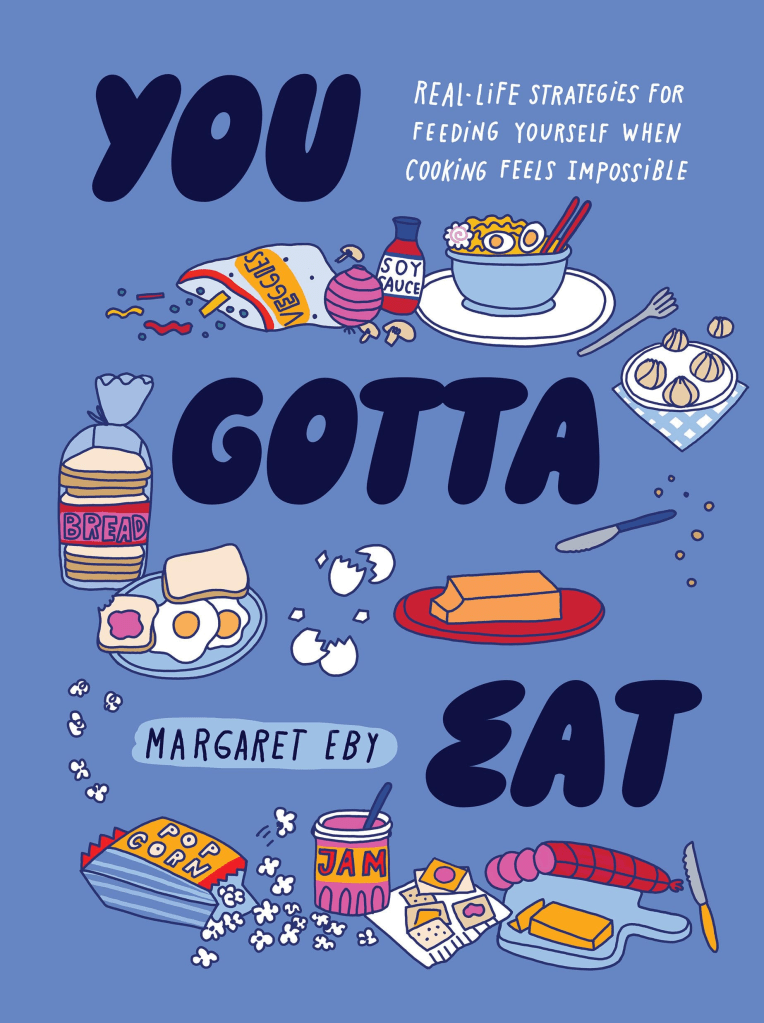
“You Gotta Eat” was written by Margaret Eby, a deputy food editor for the Philadelphia Inquirer. This book contained ideas for living deliciously without impossible effort. Here are some of the many ideas from the book:
- Season mac and cheese with Old Bay seasoning, taco seasoning, Cajun seasoning, or ranch seasoning. Even better: add ground hamburger and taco seasoning.
- For theatre-style popcorn, add Flavacol.
- Baked potato topping ideas: Cajun seasoning, curry powder, taco seasoning, or chili crisp
3-ingredient sauce formulas:
- stir-fry sauce: 4 tbsp soy sauce, 1 tbsp sriracha, and 1 tbsp brown sugar
- sauce for sheet pan vegetables: 2 tbsp tahini (or 1 tbsp peanut butter and 1 tbsp water), 2 tbsp hoisin sauce, and 2 tbsp water
- Thai-inspired sauce: 1 tbsp brown sugar, 1 tbsp fish sauce, and 1 tbsp lime juice
This book was an easy read and contained easy recipe ideas.
4 out of 5 stars

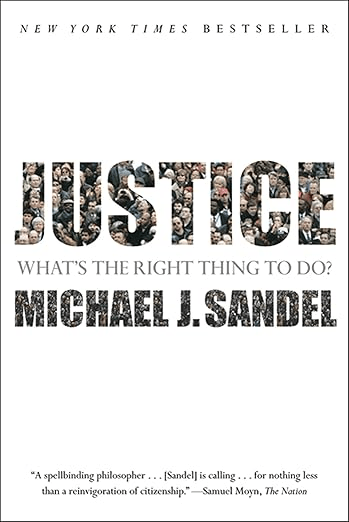
“Justice: What’s the Right Thing to Do?” was written by Michael J. Sandel, who has taught political philosophy to Harvard undergraduates for over three decades. This book was a journey in moral and political reflection and invites readers to subject their own views about justice to critical examination and to figure out what they think and why. This book relates the big questions of political philosophy to the most vexing issues of our time. Here are some of the main ideas:
- utilitarianism = maximize utility/happiness and prevent pain or suffering. Utilitarianism fails to respect individual rights.
- Ex: in ancient Rome, they threw Christians to the lions in the Coliseum for the amusement of the crowd.
- libertarianism = libertarians favor unfettered markets and oppose government regulation, not in the name of economic efficiency but in the name of human freedom.
- Libertarians oppose laws to protect people from harming themselves and believe that these laws violate the rights of the individual to decide what risks to assume.
- Ex: seatbelt laws
- Libertarians oppose using the coercive force of law to promote notions of virtue or to express the mora convictions of the majority.
- Ex: prostitution laws
- Libertarians object to Social Security, minimum wage laws, employment discrimination laws, and occupational licensing requirements. The libertarian sees a moral continuity from taxation (taking my earnings) to forced labor (taking my labor) to slavery (denying that I own myself).
- Libertarians oppose laws to protect people from harming themselves and believe that these laws violate the rights of the individual to decide what risks to assume.
- Kant’s critical philosophy/enlightenment = the moral worth of an action consists not in the consequences that flow from it, but in the intention from which the act is done. What matters is doing the right thing because it’s right, not for some ulterior motive.
- Universalize your maxim. Think “What if everybody did that?”
- John Rawls – equality = the way to think about justice is to ask what principles we would choose in an original position of equality, behind a veil of ignorance.
When engaging in public discourse about justice and rights, we must abide by the limits of liberal public reason. To check whether we are following public reason, we might ask: How would our argument strike us presented in the form of a Supreme Court opinion? Like Supreme Court justices, we should set aside our moral and religious convictions and restrict ourselves to arguments that all citizens can reasonably be expected to accept.
This book contained thought-provoking examples to critically analyze what you think and why.
4 out of 5 stars
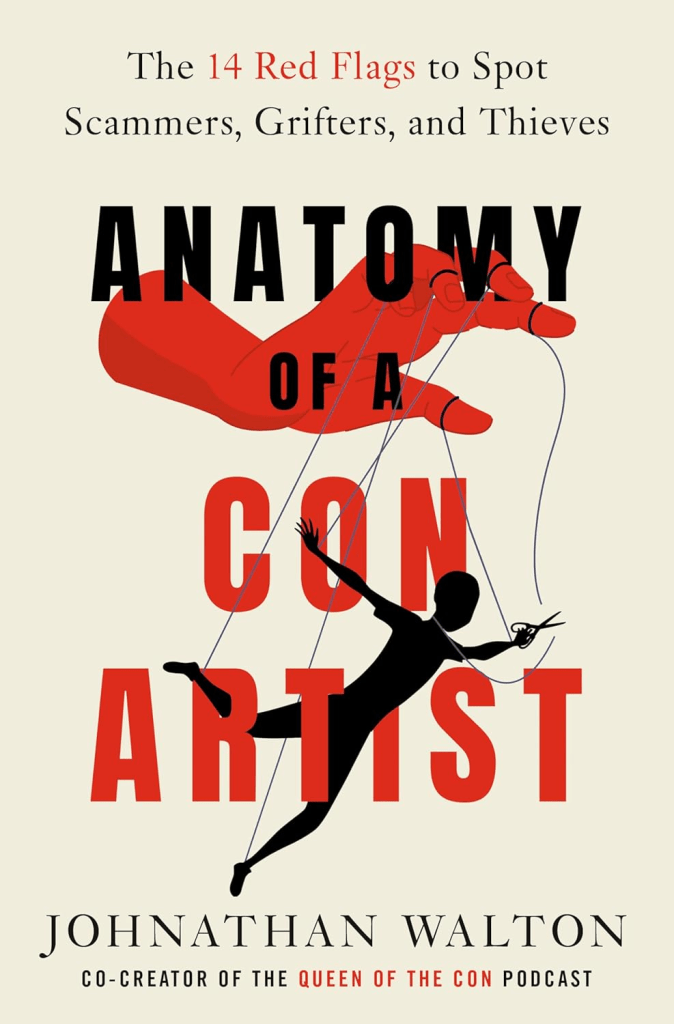
“Anatomy of a Con Artist: the 14 Red Flags to Spot Scammers, Grifters, and Thieves” was written by Emmy-winning former TV reporter and current reality TV producer Johnathan Walton. He is also a host, writer, and executive producer of the hit podcast Queen of the Con and was unfortunately the victim of a con artist. This book contained 14 red flags of con artists and detailed examples of several real cases, including the con artist who scammed him. Here are some main takeaways:
- “I just want to help.” Con artists are rescue merchants. They will suddenly show up when there’s a problem or a disaster or unrest. They’ve learned that if they can offer a solution to a major problem someone’s having, the person in trouble will focus exclusively on the offered solution, and it’ll blind them to everything else – ultimately enabling the con artist to scam them.
- Con artists don’t outsmart you. They out-feel you. One of the biggest ways con artists trick you into giving them money is by using invented drama.
- Once you wire your money to someone, unless you catch it very quickly and alert the bank that there’s a problem, that money is gone forever. Con artists love wires because the transactions are quick and permanent. Never send wires!
- Dale Carnegie techniques con artists use:
- “Arise in the other person an eager want.”
- “To be interesting, be interested.” Con artists learn as much about you as possible as fast as they can.
- “Dramatize your ideas.”
- “Remember that a person’s name is to that person the sweetest and most important sound in any language.” They use your name a lot in conversations.
If you suddenly realize that you are the victim of a con artist, you need to create a timeline with details of what happened. Pitching a criminal case to the police is a lot like pitching a show to a television executive. You have to make it compelling, succinct, easy to follow, easy to understand, and impossible to ignore.
- When and how did you meet this person? What stories did they tell you and on what dates? When did the money change hands? Why did you give them money? What was the lie or lies they told you? How and when did you figure out they were lying?
- Gather up and print all of the texts and emails.
- Do a criminal and civil case search on court websites, PACER, or BeenVerified.com.
- Reach out to people who know this con artist and tell them you were scammed. Ask if they or anyone they know was scammed.
- Write a sworn affidavit and get it notarized.
- Rehearse your speech before going to law enforcement and come with all evidence.
- Call the police frequently and ask for an update.
I highly recommend this book to learn about the red flags of con artists to watch out for!
5 out of 5 stars

I look forward to reading, learning, and sharing more with you soon!

 Read Learn Share
1 thought on “November 2025 Reads”