
My intention is to post a Thoughtful Thursday column each week and share some of the insights I have learned in the past week. Here are some of the things I’ve learned this week:
- Less is more. Ease into your new exercise routine. Increase your workout time and intensity as you get stronger. This will allow your body and mind time to adapt and leave plenty of room for progress.
- Find a way to move your body in a way that you enjoy and do it consistently. If you enjoy it, you will be more inclined to actually do it.
- Stay hydrated. When water is within arm’s reach, you’re more likely to drink it.

- Pack and carry your lunch from home instead of eating out. You will save money and be able to better control your calorie intake and portions.
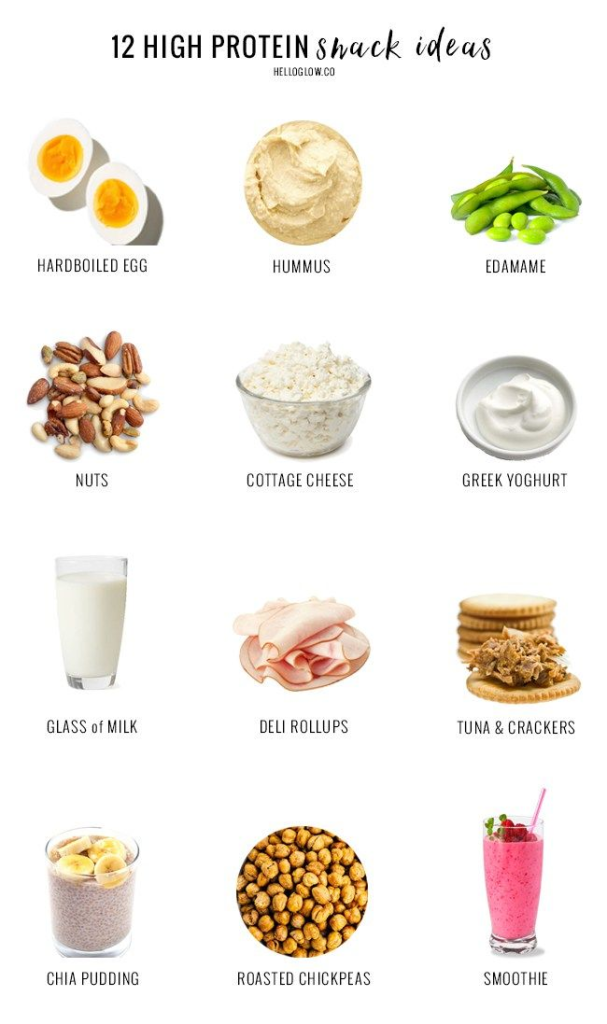
- Snack on protein rich foods. The recommended protein intake for active adults is 0.5 to 0.8 grams of protein per pound of bodyweight each day. Adequate protein intake has many benefits, including building muscle and helping you feel full and satisfied at each meal.
- In addition to your regular exercise routine, make an effort to get more active doing the things you do anyway. Take the stairs instead of the elevator, park further away, etc.
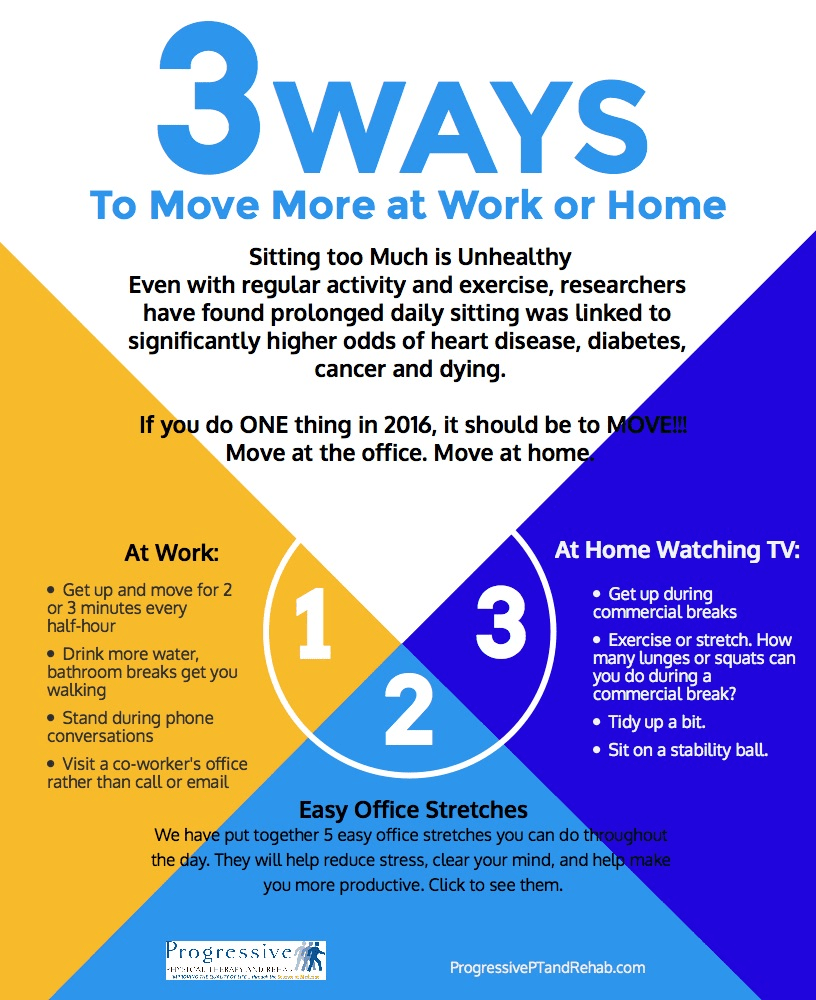
- Always eat breakfast that contains a healthy mix of protein, carbs, and fat.
- Make sure you get enough sleep at night (7 hours). Your body needs the down time to repair and replenish.
- Eat your greens or drink them. Work on adding additional green vegetables to your meals.
- Be flexible. Don’t try to be perfect, but do the best you can with what you have.

- Companies pay $ to get placed on these signs.
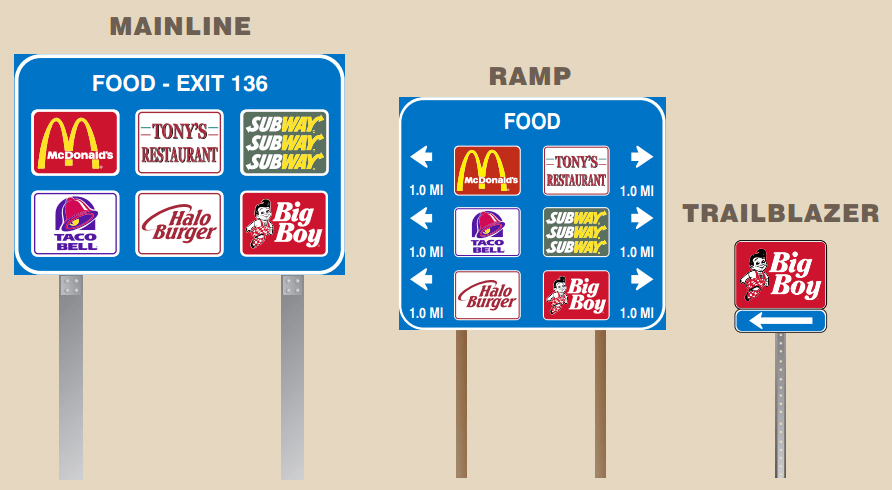
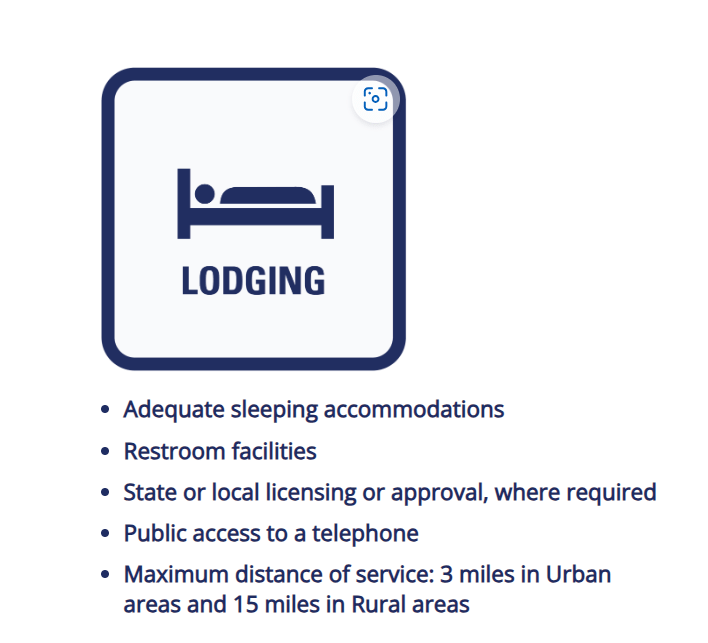
- The first blue sign is called the main line and includes words like gas, food, and lodging. The second blue sign has the specific brands/chains.
- There is some discrimination as to who/what can be on the signs (no movie theatres or churches). The Federal Highway Administration limits the eligible service categories to include gas, food, lodging, 24-hour pharmacies, camping, and attractions.
- The blue signs must be 800 feet apart from each other. If it’s an exit where you can’t get them 800 feet apart, they will not have blue signs.
- Most states prioritize those businesses that are closest to the exit. It can be further away for a tourism site.
- Highway Beautification Act of 1965: standardized government signs (the blue signs) that allow you to display your business
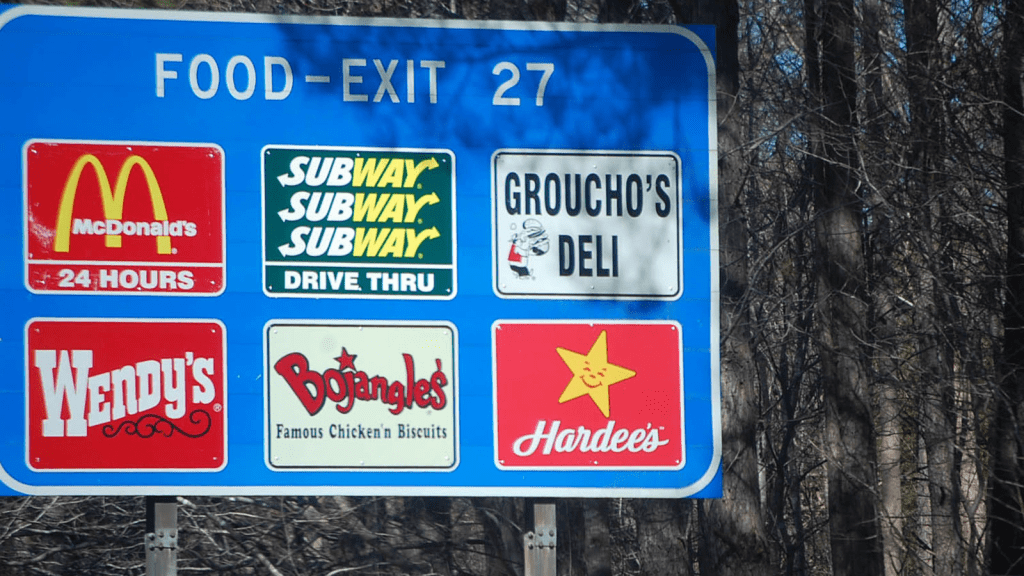

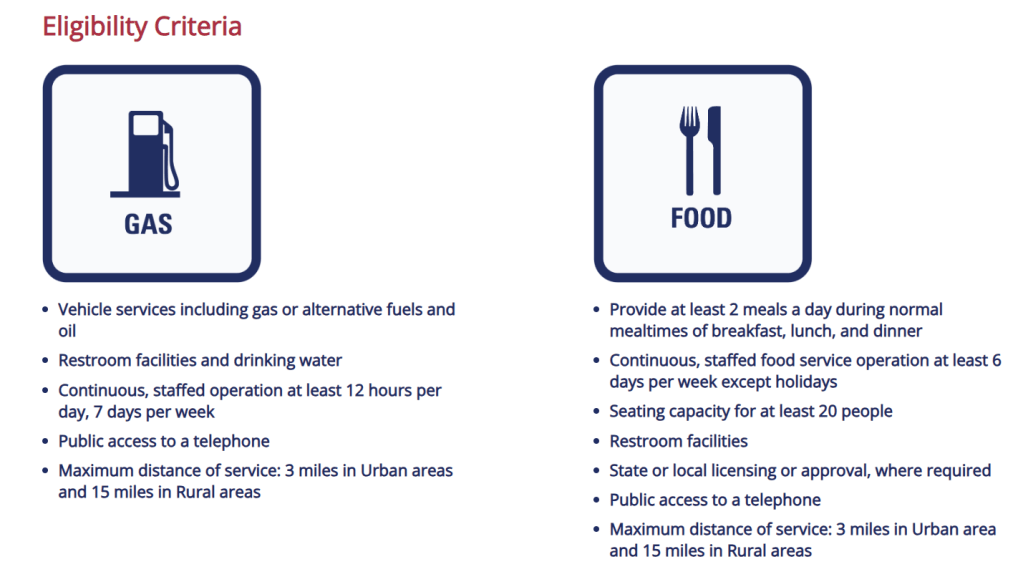
To advertise on the logo sign, you need to have public restrooms, drinking water (even just a fountain), and you need to be open regular business hours (24/7 businesses are prioritized), unless you are in a rural area that has space on the sign.
I live in Minnesota and found this helpful website that lists Minnesota’s requirements. See below for the eligibility criteria. Annual fees in Minnesota are low:
- $600 / Mainline
- $120 / Ramp
https://minnesota.interstatelogos.com/state/eligibilityCriteria.aspx?programId=085


- Greek yogurt (preferably unsweetened plain; add toppings if needed: cinnamon, protein granola, hemp hearts, chia seeds, berries, etc.)
- Protein bar (check the protein, fiber, sugar, and calories). Look for 20-25 grams of protein.
- Jerky (beef or bison)
- Protein powder
- Meal prep of any kind
- Cottage cheese
- Protein shake or smoothie
- Any sort of protein alternative
- Grilled chicken
- A big salad with bulk vegetables and lean meat (Be mindful of dressings and oils. Get sauces on the side when ordering at a restaurant.)
- Chicken breast with veggies and rice
- Any lean meat or fish with veggies
- Nuts
- Burrito bowls with chicken (avoid sauces)
- Greek salad/chicken skewer
- Chicken schwarma
- Egg whites
- Fresh fruit
- Fresh vegetables
- Water or water alternatives
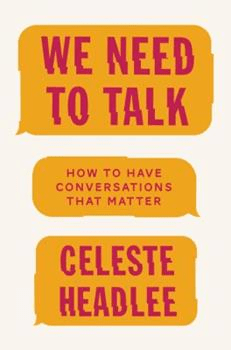
I recently read “We Need to Talk: How to Have Conversations that Matter” by Celeste Headlee. Here are some of the many communication tips discussed in this book:
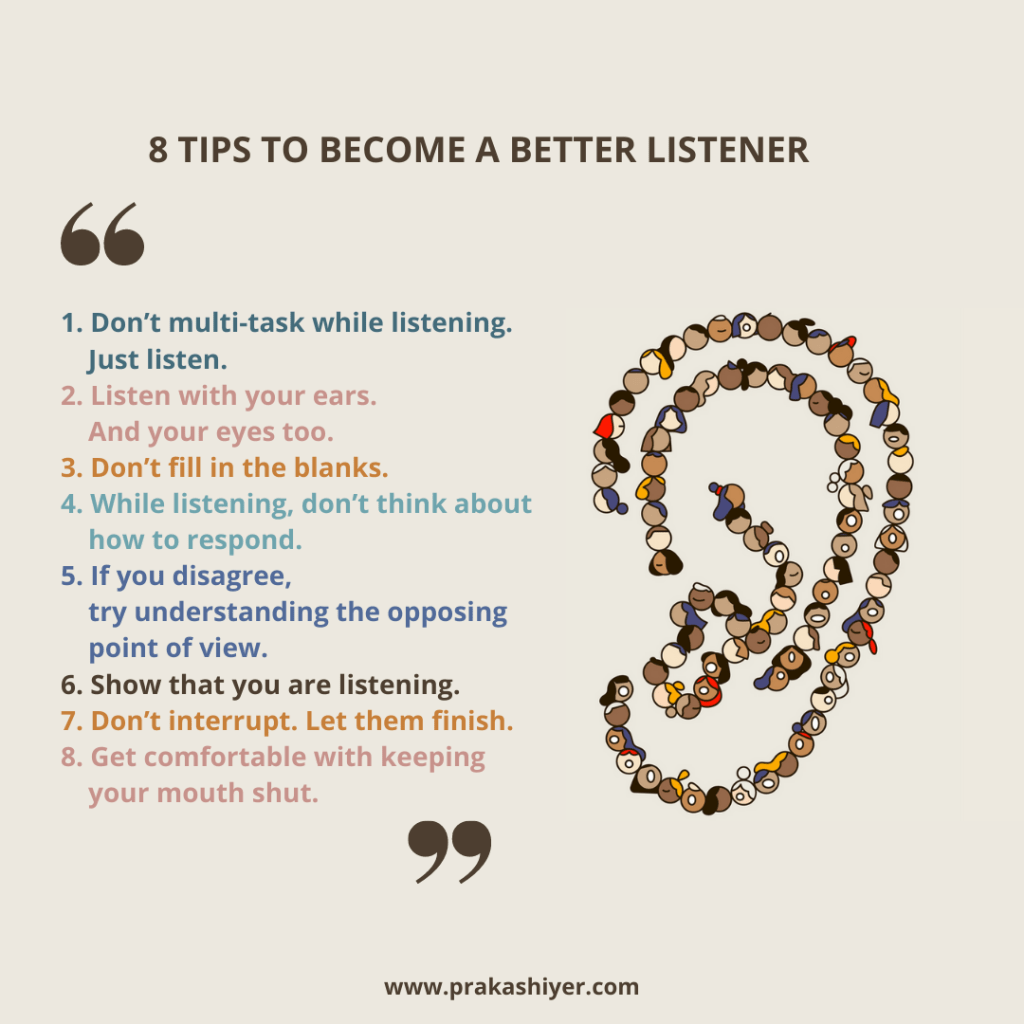
- 5 key strategies for a productive conversation: be curious, check your bias, show respect, stay the course, and end well. Consider how your thinking might be impacted if you’d been exposed to the same experiences. Listen to understand. Be aware of cognitive bias. If we disapprove of someone’s appearance, opinion, occupation, or another personal aspect, we are more likely to disapprove of everything about them. Stick it out. If you have nothing to say, just listen and accept that you may not reach an agreement and that disagreement is okay.
- Be there or go elsewhere. You must fully commit to a conversation or walk away. If you’re too distracted, admit that to both yourself and the other person. Be present or be gone. Don’t build your responses during your partner’s turn. Listen, be present, and put away your phone! Conversations require patience and focus.
- Think of conversations as a game of catch. Instead of shifting the conversation back to yourself, ask support questions that start with who, what, where, when, why, and how. Open-ended questions transfer control to the person responding.
- Remember that everyone has something to teach you. Enter every conversation assuming you have something to learn.

This post was taken directly from Seth’s Blog, a daily blog I read.
Anti-smart
There’s a difference between intellectual and smart. A plumber is smart, they know how to do a skilled and effective job on the task at hand. Intellectualism isn’t about practical results, it’s a passion for exploring what others have said, though this approach is sometimes misused to make others feel uninformed or to stall.
If you want to know what the scholars have written, ask an intellectual.
And if you’ve got a problem worth solving, it might pay to ask a smart person.
And yet, if the GPS is broken and we need directions, sometimes we hesitate to ask a local. And if your computer isn’t working, swearing at it might be less effective than asking an IT pro.
There are a couple of reasons we might resist help from someone who is smart:
–It exposes us to change and all the emotions that come from that. If we insulate ourselves from useful insight, we can stay put, stuck, with no changes required.
–It can make us seem dumb in comparison. It might be better to live with the problem than be seen as someone who didn’t know about it.
Access to smart is easier than ever before. But we need to seek it out.
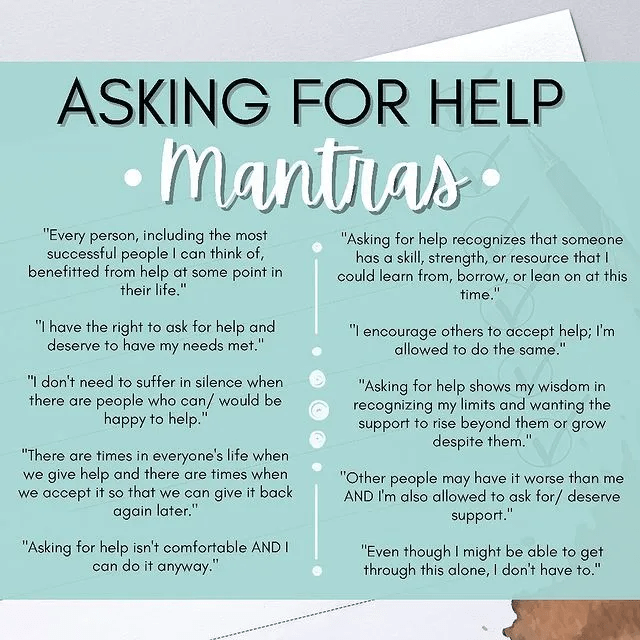
My input: How many times have you refused to ask for help out of embarrassment or fear that it would ruin your ego? How many times have you insisted on figuring things out yourself? We can use our resources and skillset, but sometimes we need to seek out assistance from those who know best.
I look forward to reading, learning, and sharing more with you soon!

 Read Learn Share