
My intention is to post a Thoughtful Thursday column each week and share some of the insights I have learned in the past week. Here are some of the things I’ve learned this week:
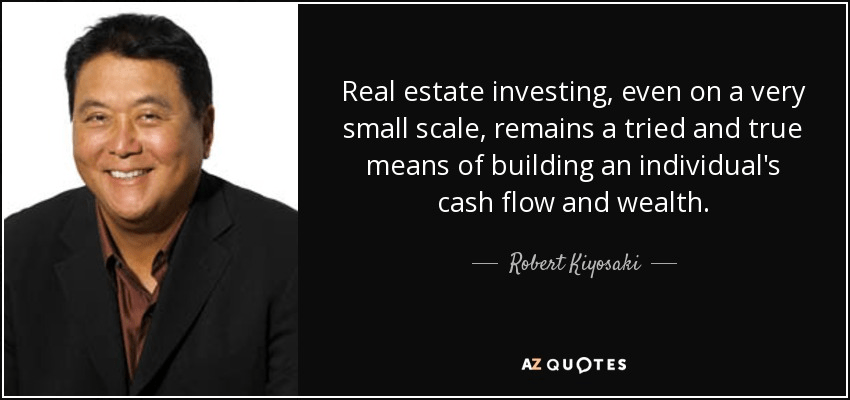
Many people aspire to own rental properties to earn more money and often refer to rental properties as passive income. Here are the facts.
Pros:
- Real estate can outperform index funds.
- You can grow your income stream more quickly.
- House hacking- some people are able to rent a room or area of their homes that covers much of their housing costs.
- You can work with a property manager so that you don’t need to field late-night calls of issues.
Cons:
- *REAL ESTATE INVESTING IS NOT PASSIVE.* You need to dedicate time to ensure you’re doing it right financially, legally, and ethically.
- Taxes and insurance costs can be unpredictable.
- Neighborhoods can be unpredictable. A changing neighborhood can make it difficult to lease your property and can change the type of tenants who want to live there.
- Leverage requires increased risk. You need to really understand how your money is invested and how your properties are generating income.
- Home values can drop in tough times. It’s nearly impossible to predict how the real estate market will move.

“I’m sorry for your loss.” We see this commented on social media and hear this phrase frequently when a loved one dies. Most people don’t know what else to say, and this phrase is so overused that it can come across as insincere. Here are 8 excellent and genuine alternatives to “I’m sorry for your loss.”
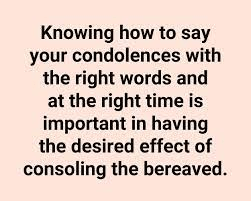
3 things you can say IF YOU ARE WILLING TO HELP/FOLLOW THROUGH:
“I’m so sorry that you’re in pain right now, but I am here with you and for you. I am willing to help in any way I can. Is there anything that you can think of that you need right now?” Tip: be prepared to help if asked. Do not use this if you won’t follow through.
“I know there will be some challenges ahead for you. I want you to know that I’m here and I’m willing to help. Would it be okay if I call next week to check in?” Tip: actually call next week and follow through.
“I know there’s nothing I can say right now to make things better, but also, I know that having someone to talk to at times like this is really important, so if it’s okay, I’ll call you next week when things settle for you.” Tip: actually call next week.
5 things you can say that don’t require you to help or follow through:
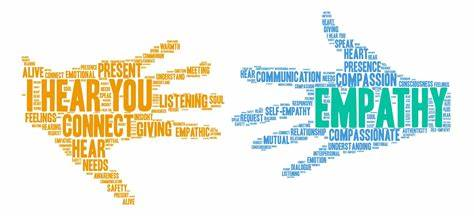
“Your mom was an incredible person. I see so much of her in you. I’m keeping you in my thoughts.”
“Your friendship/relationship was so special. I’m saddened by the news. You’re in my thoughts.” The podcast host said this is a great remark for someone you mostly know on social media.
“May God continue to shine a light on the joyful memories you get to hold in your heart.”
“Sending big hugs your way and wishing you peace, joy, and comfort.” The podcast host said this is perfect for online empathy.
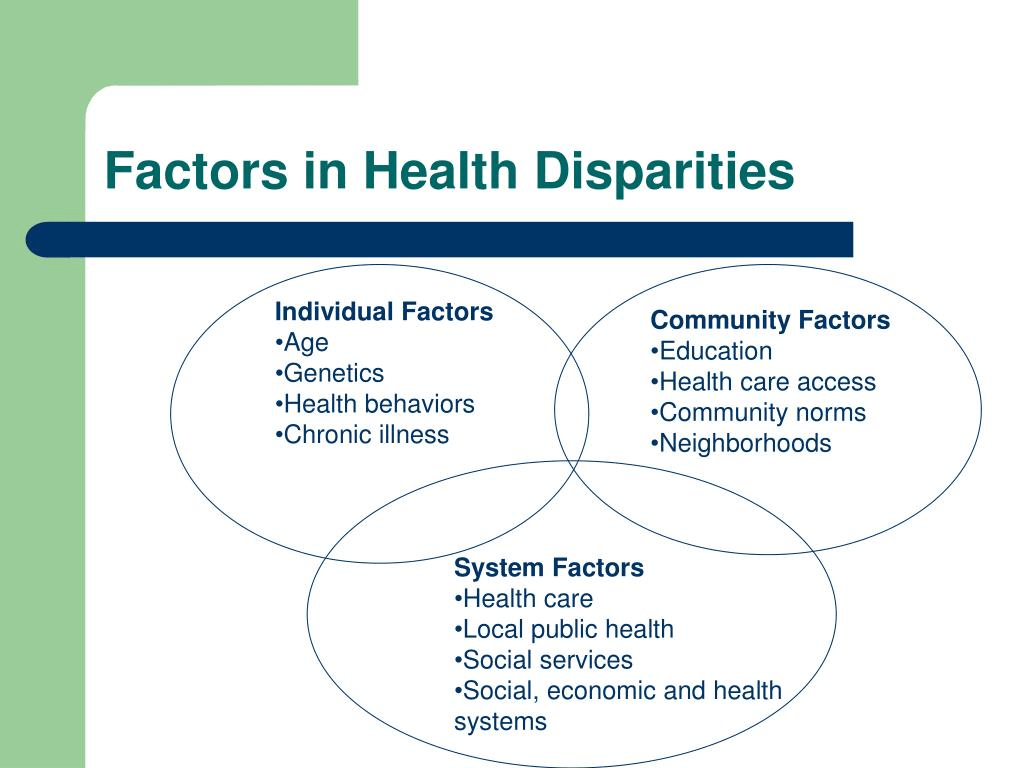
- There are people in America who live on the same street who have very different access to healthcare. It is not just about $; it is about access and systems. This can include access to transportation, access to insurance, and access to networks and facilities covered by insurance.
- Some neighborhoods where a lot of people of color live do not have access to supermarkets with many fresh fruits and vegetables, schools in these neighborhoods often don’t have the same investment, and oftentimes there are fewer businesses. These are all examples of possible health disparities.
- Health disparities are avoidable differences in health among groups that have different levels of wealth, power, or prestige in society. They are unjust and unfair and can impact rural areas, women, people with disabilities, people in poverty, and minorities.
- The first game show was aired in 1938 Great Britain and was called Spelling Bee. It was an actual spelling bee.
- If people are winning more $ than budgeted each episode, sometimes they are presented with lotto options, such as payouts over a number of years instead of all at once.
- Bob Barker was a game show host from 1956-2007 (1956-1975 for Truth or Consequences + 1972-2007 for the Price is Right).

- In 1991, there were 2 game shows still filming: Price is Right and Family Feud. Wheel of Fortune’s daytime show got the axe. Game shows came close to extinction, as they were replaced with daytime talk shows. The Price is Right and Family Feud never went away.
- Game shows are cheap to produce, so you can find them in most countries around the world.
- 3,000 people try out for Wheel of Fortune every year and only 500 make the cut.
- Being on a game show sounds exciting, but 5-6 episodes are usually filmed each day, so there is a lot of standing around (without access to your phone)!
Something to ponder: In a grocery store, there are a wide variety of apples, almost all of which were grown in the United States. Yet, they are more expensive (per pound) than bananas. This is wild to think about considering that bananas in the United States are all imported and have been grown, picked, boxed, washed, and placed in ripening rooms in another country. Bananas are typically the cheapest fruits around!
In 1900, Americans were eating 1.5 million bunches of bananas per year. By 1910, Americans were eating 40 million bunches of bananas per year!
Sailing as an export mode of transportation was not fast enough to reliably keep bananas from over-ripening. In the 1930s, refrigerated trucks allowed for bulk importation of bananas in the United States.
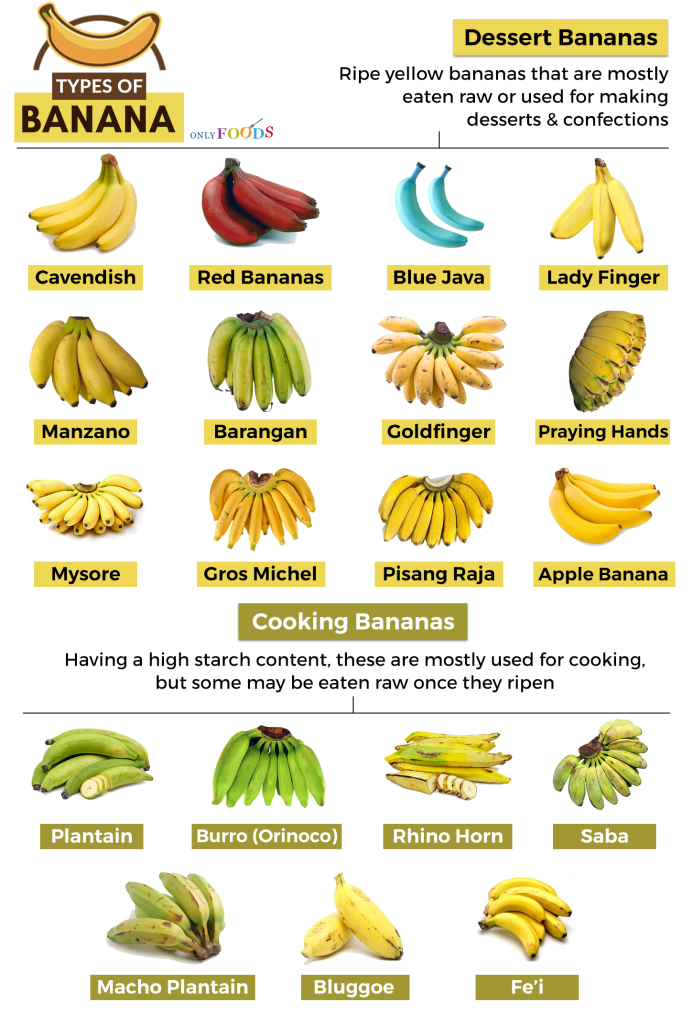
There are over 1,000 varieties of bananas in the world. The first popular one in the United States was the Gros Michel banana, also known as the “Big Mike” banana. This was the most popular banana until the 1950s, when Panama Disease mostly wiped it out. Panama Disease is a fungus that causes the banana plant to wilt. The Gros Michel variety has been virtually extinct since the 1950s, but this variety is still grown in Uganda.
This is a photo of the Gros Michel variety:

Bananas used to have seeds, but the banana was made seed-free using banana hybrids! The Cavendish banana is a human invention.

After Panama Disease wiped out most of the Gros Michel variety, the most popular banana changed to the Cavendish banana, which is what most of us eat today. Although the Cavendish bananas only account for 50% of global banana production, the Cavendish banana takes up 99% of the banana export market. India is the highest producer of bananas. and Ecuador is the largest exporter of bananas.
Bananas were once advertised as “fruit in a germ-proof wrapper.’
Bananas are the fourth most important crop in the world, behind rice, wheat, and corn! 400 million people rely on bananas as a source of food or a source of income.

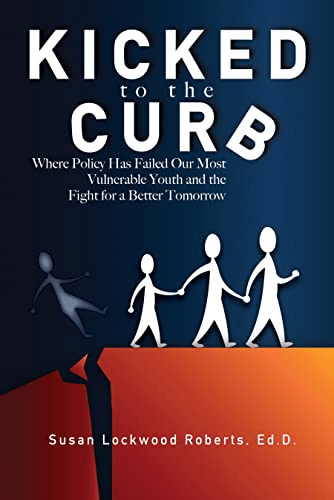
Earlier this week, I read “Kicked to the Curb: Where policy has failed our most vulnerable youth and the fight for a better tomorrow” written by Susan Lockwood Roberts. I learned so much and here is a summary of my thoughts.
This book was a very insightful, easy read. The author addressed the problems with the education system, especially in educating incarcerated youth using the same cookie-cutter approach used in the standard education system, yet with less funding. Under-performing youth are viewed as difficult and are often kicked to the curb, resulting in societal costs of unemployment, non-productivity in the workforce, and crime. Teachers often teach the way they were taught, and this does not usually work when teaching incarcerated children. Students who are at risk due to family relationships, aspiring to be a first-generation high school graduate, or poverty likely need relationships in order to succeed and may require a more individualized, targeted approach. The author worked in engaging policy problems and changing methodologies in order for children, teachers, and staff to succeed. Some of these programs included daily adult mentoring, work-based learning experiences, career exploration and goal setting, professional development for teachers so that they can shift the way they do things according to the backgrounds of the students, reforming curriculum and acquiring updated textbooks, and developing methods of engaging students using a variety of instructional strategies. The author acknowledges that progress has been made, but that more needs to be done.

When youth don’t finish high school, the path to a high school credential is through adult education, and adult education programs receive less than 10% of funding going to K-12 and less than 5% of what is spent to support higher education. As a result, fewer than 10% of the people who need adult education services can access them. As a society, we can’t figure out how to invest more money in education, but we don’t know about the $225 billion lost every year to low literacy and numeracy among our citizens. What do we value?
This blog post (https://www.gabethebassplayer.com/blog/your-contribution) made me consider 3 questions we should ask ourselves frequently in our jobs and our lives. Say you want to make progress toward a goal, such as starting a daily habit or training for a marathon. Ask yourself these questions and reflect:
- Are you content with your contribution (right now)?
- Are you content with what you’re contributing (right now)?
- What are you contributing (right now)?
It used to be that in order to have a polite conversation, we just had to stick to the weather and our health. These days, with climate change and anti-vaxxing, those subjects are not always safe either.
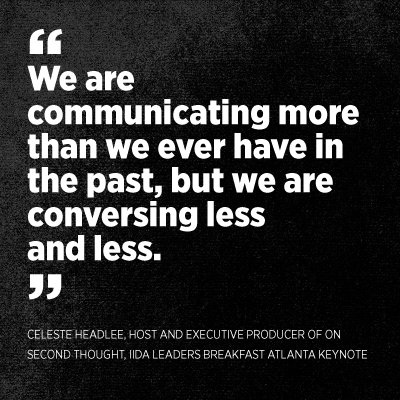
A conversation requires a balance between talking and listening. Conversational competence might be the single most overlooked skill we fail to teach. An important skill is being able to have a coherent and competent conversation.
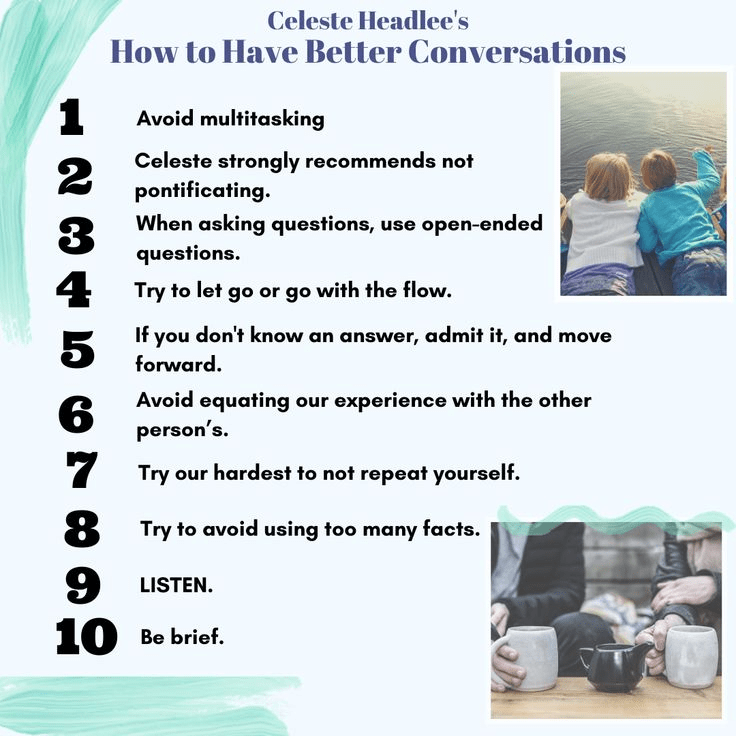
- Don’t multitask. Be fully present.
- Don’t pontificate. Enter every conversation assuming you have something to learn. Sometimes that means setting aside your personal opinion. Everyone you will ever meet knows something that you don’t.
- Use open-ended questions. Start your questions with who, what, where, when, why, or how. This allows people a chance to think about the question and respond with a genuine response.
- Go with the flow. Stories and ideas are going to come to you, but sometimes you need to let them go to fully listen to what the other person is saying.
- If you don’t know, say that you don’t know. Talk should not be cheap.
- Don’t equate your experience with theirs. All experiences are individual, and it is not always about you.
- Try not to repeat yourself. It’s boring and condescending.
- Stay out of the weeds. You don’t need to remember and present all of the details.
- LISTEN. If your mouth is open, you’re not listening and learning. Listen first to understand, then to reply.
- Be brief. Conversations should be short enough to retain interest, but long enough to cover the subject.
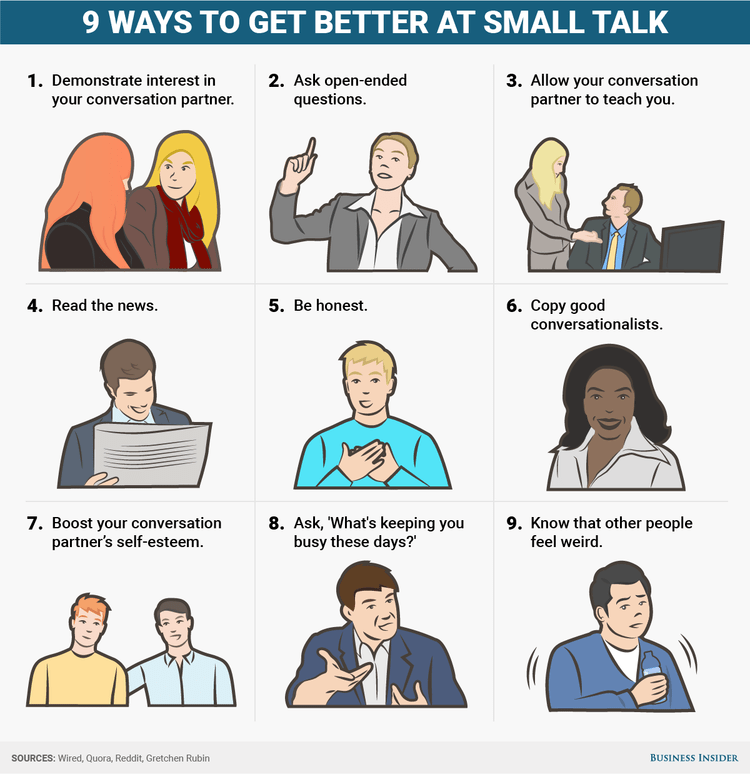
All of this boils down to one sentence: Be interested in other people. Go out, talk to people, listen to people, and be prepared to be amazed.
I look forward to reading, learning, and sharing more with you soon!

 Read Learn Share