
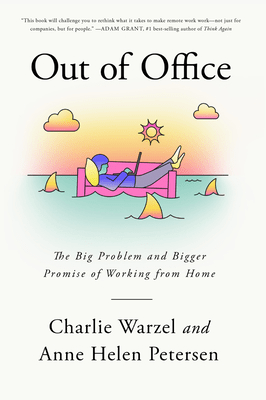
“Out of Office” was published in 2021 and written by Charlie Warzel and Anne Helen Petersen. This book was among my top 20 favorite books I read in 2022 and focused on the transition to white-collar remote work during the pandemic, particularly on HOW we will work.
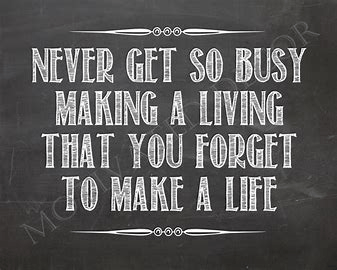
“We worship work. We remain faithful to it because we want to support ourselves and our families, but it’s become more than a simple means of providing needs. Work has taken on such a place of primacy in our lives that it has subsumed our identities, diluted our friendships, and disconnected us from our communities.”
This is increasingly evident in our society. Upon first meeting someone, the most common question asked is “What do you do?” as in, “What do you do for work?” Your identity is whittled down to what you do for work, and someone’s opinion of your work often impacts whether or not the conversation continues and friendship ensues. This is dangerous, especially when people lose their jobs or retire and don’t have an identity outside of work.
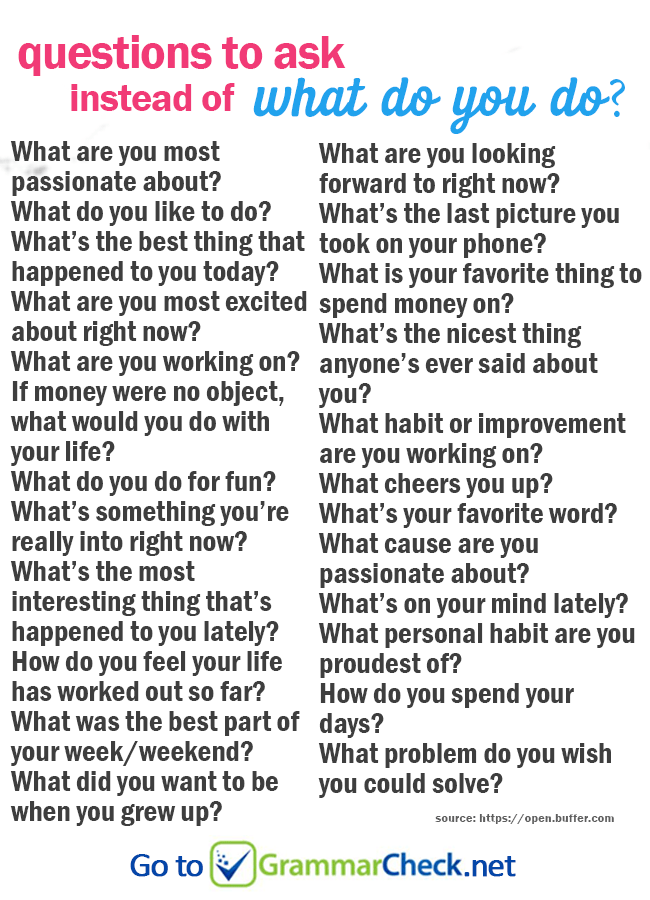
Who would you be if work ceased to be the axis of your life? How would your relationships with friends and family change? What role would you serve within your community at large? What hobbies would you pursue? We are so conditioned to approach our lives as something to squeeze in around work.
Charlie Warzel and Anne Helen Petersen
I once worked for a boss who planned his work day around his desire to sleep longer, have a productive morning before work, and leave in the late afternoon for yoga or rock climbing. Although I thought it was odd, it became clear to me that he truly had a balance and planned work around his life, not life around his work.
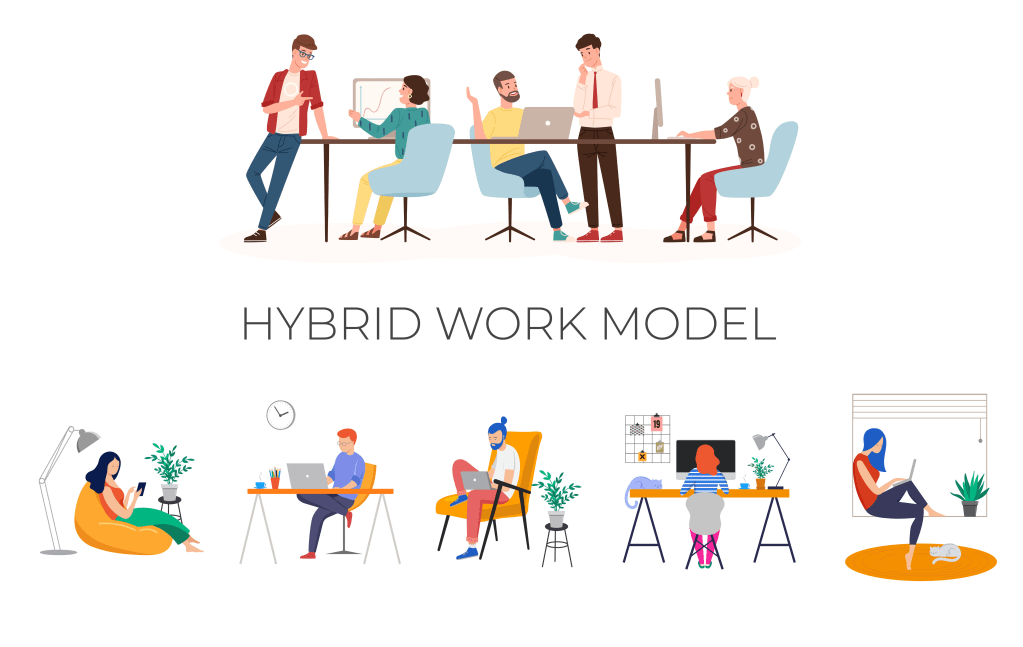
The authors recommended auditing how we spend our time working and whether things need to be done during the standard work hours, getting rid of meetings that aren’t necessary and exploring asynchronous ways of communicating, considering four-day work weeks, setting boundaries to protect time away from work, dismantling any organizational monoculture, leveling the hybrid work playing field, and giving yourself space to explore hobbies and interests and commit to them.
The authors identified and expanded upon four areas critical to achieving ideal work-life balance: flexibility, culture, technology, and community and provided examples of other companies’ approaches to remote work, flexible scheduling, and company culture. This book was particularly appealing to me because, during the pandemic, I have had different jobs and made transitions. One job turned fully remote for a time, one job was in person every day, and one job was a hybrid environment, which appeals to me the most.
The pandemic taught employees and businesses about flexibility. Employees who were told that positions couldn’t be done remotely prior to the pandemic suddenly were required or able to be done remotely. Businesses and employees were challenged to maintain the culture or build a culture outside of the office environment, using technology and community.
“This example from the retail world should be instructive: if you have only enough employees to barely get the work done as is, you’ve engineered a scenario in which employees may have theoretical permission to take time off, but understand that they’ll shoulder the burden of that time off in some way. Either they try to keep doing part of their work while on leave, a colleague takes on an even larger work burden, or a portion of essential work goes undone, slowing everyone on a team.”
I have witnessed this in different roles. At its worst, due to the workload and demands, I worked part-time during a medical leave and regularly made up for time that I was sick. I felt discouraged from taking time off due to the stress of coming back to a fuller plate. I am grateful to have found collaboration and cross-training on a team.
Management is used as a way to reward workers who distinguish themselves for their productivity. As a recent study by Harvard Business Review pointed out, the skills associated with high productivity- including knowledge and expertise, driving for results, taking initiative- are almost all indications of INDIVIDUAL-ORIENTED competencies. Management requires skills that are OTHER-ORIENTED: being open to feedback, supporting colleagues’ development, communicating well, and having good interpersonal skills.
Charlie Warzel and Anne Helen Petersen
I look forward to reading, learning, and sharing more with you soon!

 Read Learn Share